






- How Do I Choose the Right Moving Head Light for My Stage?
- 1. First, Decide What Type of Moving Head You Need
- Beam Moving Heads
- Uplus Recommendation: IP BEAM 420
- 2. Choose a Wash Moving Head for Stage Coverage
- Uplus Recommendation: IP-B750
- Uplus Recommendation: IP-WASH1980
- 3. Choose a BSW Moving Head When You Need More Flexibility
- Uplus Recommendation: 420 LED BSW
- 4. Choose a Profile or BSWF Moving Head for Precise Lighting
- Uplus Recommendation: 600 BSWF
- Uplus Recommendation: IP1000 BSWF
- 5. Consider Your Stage Size
- 6. Calculate Your Throw Distance
- 7. Understand Beam Angle and Zoom Range
- 1°–3°
- 3°–15°
- 15°–30°
- 30°–60°
- 8. Do Not Choose a Moving Head by Wattage Alone
- 9. Choose the Right Color Mixing System
- RGBW LED
- CMY Color Mixing
- 10. Consider CTO and Color Temperature
- 11. Decide Whether You Need Gobos
- Fixed Gobo Wheel
- Rotating Gobo Wheel
- 12. Decide Whether You Need Prisms
- 13. Do You Need Framing Shutters?
- 14. Indoor or Outdoor? Check the IP Rating
- IP65
- IP66
- 15. Check DMX, RDM, and Network Control
- DMX512
- RDM
- Art-Net
- 16. Consider Fixture Weight and Rigging
- 17. Consider Power Consumption
- 18. Match the Moving Head to the Application
- Small Clubs and Bars
- Medium Live Music Venues
- Theater
- Outdoor Concerts
- Large Music Festivals
- 19. Quick Uplus Moving Head Selection Guide
- 20. Common Mistakes When Choosing Moving Head Lights
- Mistake 1: Choosing by wattage only
- Mistake 2: Ignoring throw distance
- Mistake 3: Buying only one fixture type
- Mistake 4: Ignoring IP ratings outdoors
- Mistake 5: Ignoring fixture weight
- Mistake 6: Ignoring DMX channel requirements
- Mistake 7: Ignoring photometric data
- Mistake 8: Choosing features you will never use
- 21. Moving Head Light Buying Checklist
- Conclusion: What Is the Best Moving Head Light for Your Stage?
- FAQ
How to Choose the Right Moving Head Light for Your Stage: Complete 2026 Guide
Choosing the right moving head light depends on your stage size, throw distance, beam angle, brightness, venue type, weather conditions, color requirements, and control system. This guide explains how to compare beam, wash, spot, BSW, and profile moving heads and recommends suitable Uplus Lighting fixtures for concerts, festivals, theaters, clubs, touring productions, and outdoor events.
How Do I Choose the Right Moving Head Light for My Stage?
Choosing the right moving head light for your stage is not simply about buying the fixture with the highest wattage.
A professional lighting designer usually considers several factors together:
-
Stage size
-
Throw distance
-
Fixture mounting height
-
Beam angle and zoom range
-
Required brightness
-
Beam, wash, spot, or profile functions
-
Color mixing system
-
Gobo and prism requirements
-
Framing shutters
-
Indoor or outdoor use
-
IP rating
-
DMX, RDM, or Art-Net control
-
Fixture quantity
-
Power consumption
-
Rigging weight
-
Budget
For example, a narrow-beam moving head may be perfect for creating powerful aerial effects at a music festival but unsuitable for evenly washing performers on a theater stage.
Likewise, a wash moving head may provide excellent stage coverage but may not offer the sharp gobos, beam shaping, or framing control required for theatrical productions.
The best moving head light is therefore the fixture that matches your venue, stage dimensions, lighting position, creative requirements, and control system.
This guide explains how to make that decision step by step.
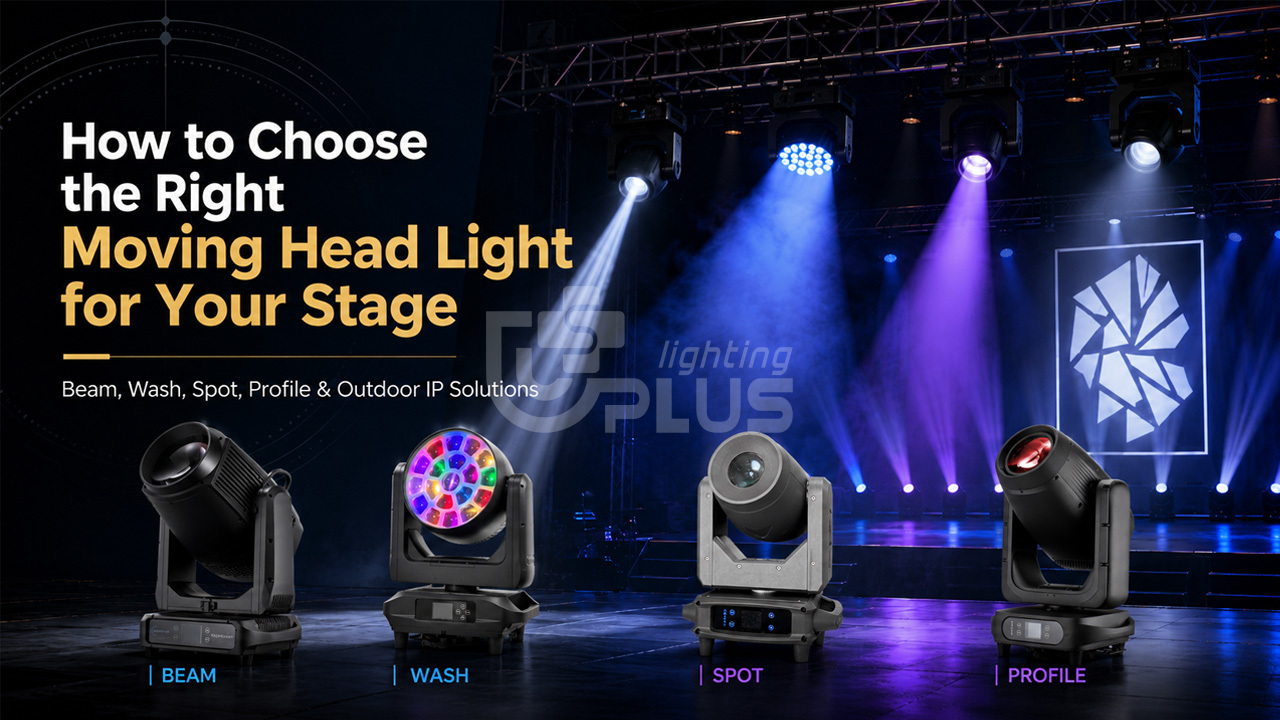
1. First, Decide What Type of Moving Head You Need
Before comparing wattage or brightness, decide what job the fixture needs to perform.
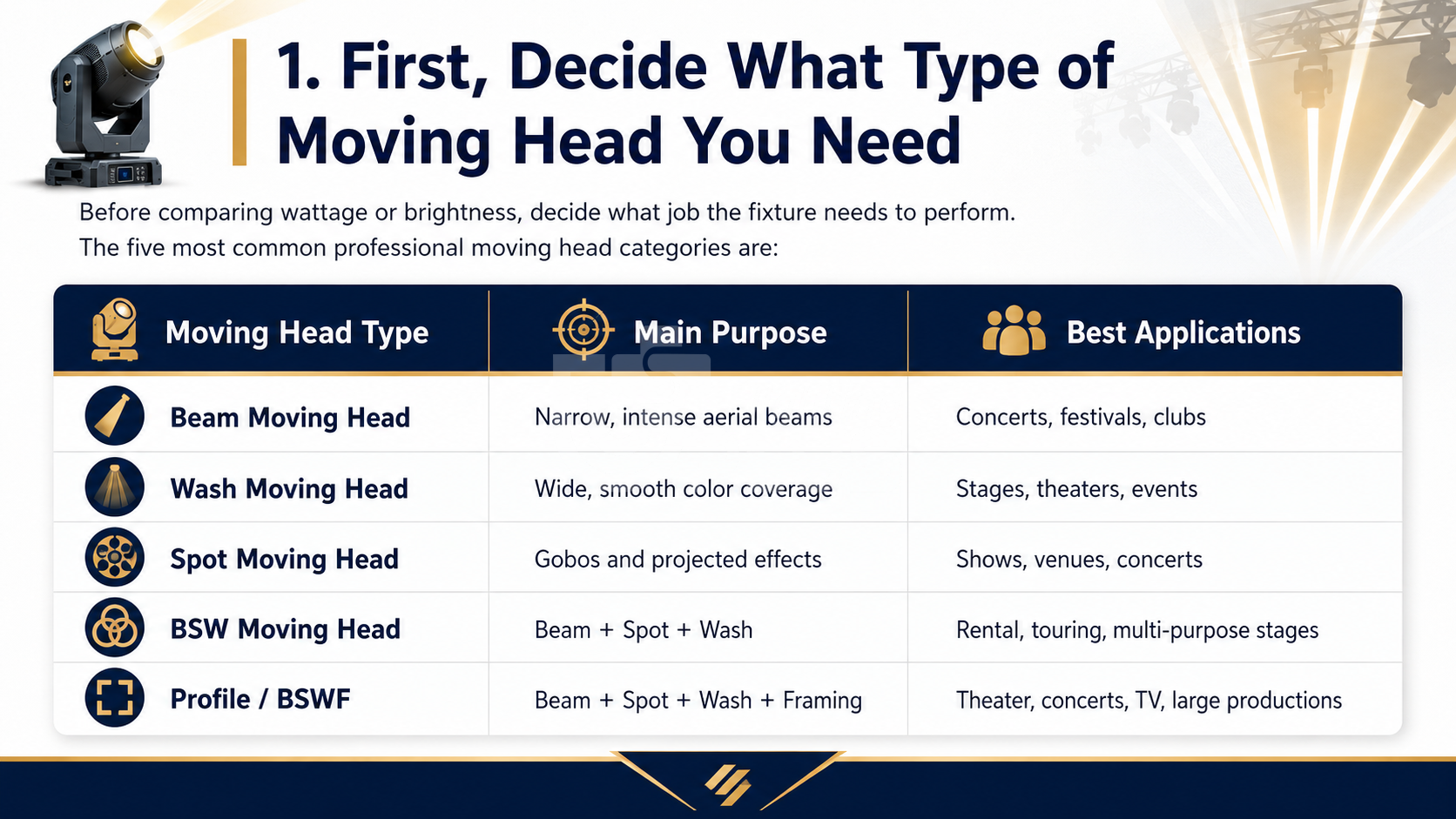
The five most common professional moving head categories are:
| Moving Head Type | Main Purpose | Best Applications |
|---|---|---|
| Beam Moving Head | Narrow, intense aerial beams | Concerts, festivals, clubs |
| Wash Moving Head | Wide, smooth color coverage | Stages, theaters, events |
| Spot Moving Head | Gobos and projected effects | Shows, venues, concerts |
| BSW Moving Head | Beam + Spot + Wash | Rental, touring, multi-purpose stages |
| Profile / BSWF | Beam + Spot + Wash + Framing | Theater, concerts, TV, large productions |
Beam Moving Heads
A beam moving head produces a narrow and concentrated shaft of light.
Beam fixtures are commonly used when you want:
-
Strong aerial effects
-
Long-distance projection
-
Visible beams through haze
-
Fast-moving effects
-
Prism effects
-
Concert and festival looks
Beam moving heads usually have much narrower beam angles than wash or profile fixtures.
Uplus Recommendation: IP BEAM 420
For outdoor concerts, festivals, large events, and productions requiring strong long-distance beam effects, the Uplus IP BEAM 420 is a suitable option.
It uses a Philips MSD Silver 420W/LL source and produces a narrow 1.7° beam angle. It also features IP65 protection, CMY color mixing, two color wheels, multiple prisms, DMX512, and RDM control.
Best for:
-
Outdoor concerts
-
Music festivals
-
Large stages
-
Touring productions
-
Long-throw beam effects
-
City and architectural light shows
For smaller indoor venues, clubs, banquet halls, and stages where extreme output is unnecessary, the Uplus 250 LED BEAM provides a compact 2° beam solution.
2. Choose a Wash Moving Head for Stage Coverage
A wash moving head light is designed to spread light evenly across performers, scenery, or large areas of the stage.
Wash fixtures are ideal when you need:
-
Smooth color coverage
-
Wide beam angles
-
Background lighting
-
Performer illumination
-
Color transitions
-
Pixel effects
-
Large-area stage coverage
A zoom wash is particularly useful because one fixture can change from a relatively narrow beam to a wide wash.
Uplus Recommendation: IP-B750
For compact and medium-sized stages, the Uplus IP-B750 combines seven 50W RGBW LEDs with a 5°–55° zoom range.
It also offers individual LED pixel control, RGB backlighting, variable strobe effects, DMX512, and RDM control in an IP65 magnesium-alloy housing.
This makes it suitable for:
-
Outdoor events
-
Medium stages
-
Corporate events
-
Clubs
-
Rental companies
-
Live performances
-
Decorative stage effects
Uplus Recommendation: IP-WASH1980
For larger stages where significantly more wash output and visual impact are required, consider the Uplus IP-WASH1980.
It uses 19 × 80W RGBW LEDs, offers a 6°–50° zoom range, individual LED pixel control, variable strobe effects, and an IP66 magnesium-alloy housing.
This type of fixture is better suited to:
-
Large outdoor concerts
-
Music festivals
-
Large touring productions
-
Stadium-style stages
-
Entertainment venues
-
Shows requiring pixel effects
-
High-output stage wash applications
3. Choose a BSW Moving Head When You Need More Flexibility
Rental companies and touring productions often need one fixture to perform several jobs.
This is where a BSW moving head becomes valuable.
BSW stands for:
Beam + Spot + Wash
Instead of installing separate fixtures for beam effects, gobo projection, and wash coverage, a BSW moving head combines these functions into one unit.
This can reduce the number of fixture types in a lighting rig and give designers more flexibility when programming different scenes.
Uplus Recommendation: 420 LED BSW
The Uplus 420 LED BSW is a 420W LED Beam, Spot, and Wash moving head with a 3°–48° zoom range.
It includes CMY color mixing, CTO adjustment, fixed and rotating gobos, prism effects, frost, and linear dimming.
It is a good choice for:
-
Concert stages
-
Rental companies
-
Touring productions
-
Live music venues
-
Theaters
-
Multi-purpose event spaces
-
Productions requiring one versatile fixture
If your lighting inventory needs to cover many different types of events, a BSW fixture can be more practical than purchasing a large quantity of single-purpose fixtures.
4. Choose a Profile or BSWF Moving Head for Precise Lighting
For theaters, professional concerts, TV productions, corporate shows, and high-end touring applications, simple beam and wash functions may not be enough.
Lighting designers often need precise control over the shape of the light.
This is where profile moving heads and BSWF moving heads become important.
BSWF typically combines:
Beam + Spot + Wash + Framing
A framing system allows the lighting designer to shape the beam and prevent light from illuminating unwanted areas.
For example, framing shutters can be used to:
-
Light only one performer
-
Match the shape of stage scenery
-
Keep light away from LED screens
-
Create rectangular lighting areas
-
Highlight architectural features
-
Prevent spill onto curtains or audience areas
-
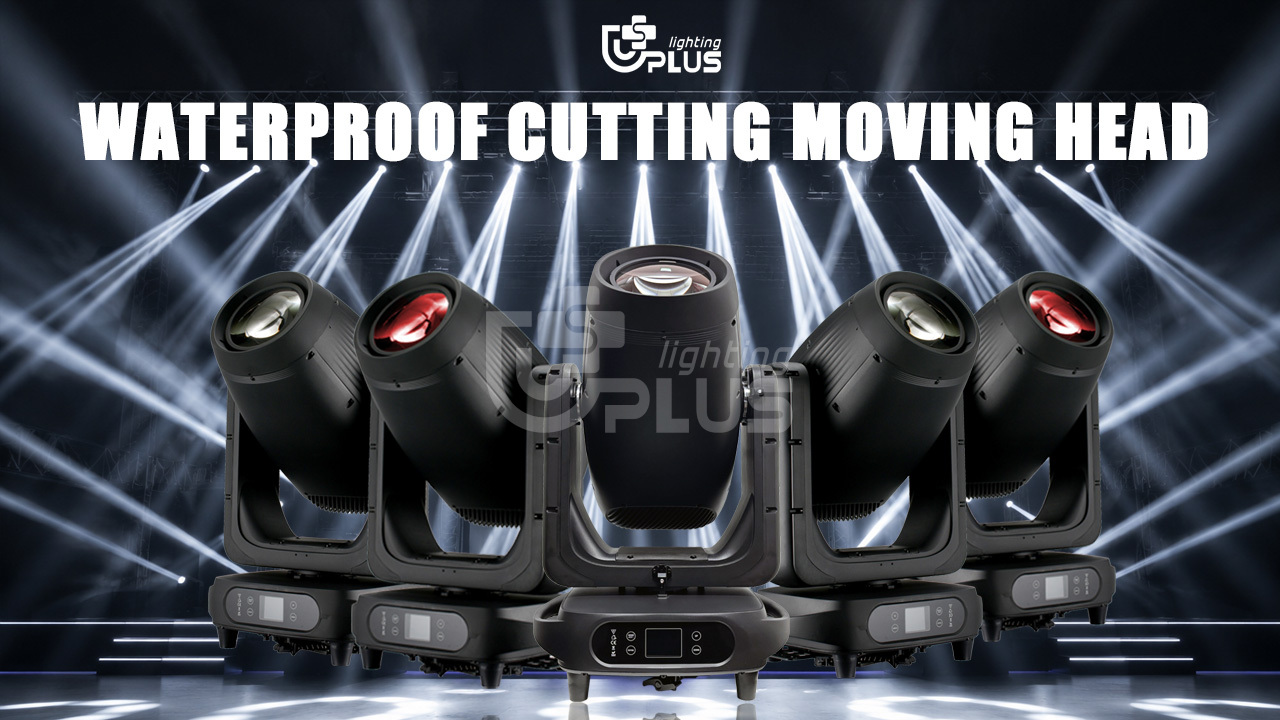
Uplus Recommendation: 600 BSWF
The Uplus 600 BSWF uses a 600W LED source with a 4°–50° zoom range.
It also includes CMY color mixing and linear CTO adjustment, making it suitable for productions that require more precise color and beam control.
It is particularly suitable for:
-
Medium and large theaters
-
Concert venues
-
Touring productions
-
Rental companies
-
Corporate events
-
Professional indoor stages
Uplus Recommendation: IP1000 BSWF
For demanding professional and outdoor applications, the Uplus IP1000 BSWF provides a more powerful solution.
The fixture uses an 850W white LED source and offers a wide 3.8°–50° beam range, multiple DMX channel modes, CMY color mixing, CTO, gobos, dimming, and professional BSWF functionality.
It is especially suitable for:
-
Large concerts
-
Outdoor festivals
-
Large theaters
-
Touring shows
-
Cultural tourism productions
-
Large event stages
-
Professional rental companies
When a production requires beam effects, gobos, wide wash coverage, and precise framing from the same fixture, a BSWF moving head is usually one of the most flexible choices.
5. Consider Your Stage Size
Stage dimensions have a major influence on moving head selection.
A fixture that works well in a 6-meter-wide club may not provide enough output for a 20-meter outdoor festival stage.
A useful starting point is:
| Stage Type | Typical Fixture Requirement |
|---|---|
| Small club / bar | Compact beam, wash, or LED moving heads |
| Small event stage | Compact wash + beam fixtures |
| Medium concert stage | BSW + wash + beam combination |
| Theater | Profile / BSWF + wash |
| Large concert stage | High-output beam + wash + profile |
| Outdoor festival | IP-rated beam + wash + BSWF |
| Touring production | Multi-function, durable, serviceable fixtures |
However, stage width alone should never determine fixture selection.
You should also consider:
-
Truss height
-
Fixture-to-stage distance
-
Front versus back lighting positions
-
Audience viewing distance
-
LED screen brightness
-
Ambient light
-
Number of fixtures
-
Desired visual style
6. Calculate Your Throw Distance
Throw distance is the distance between the fixture and the area it needs to illuminate.
This is one of the most important specifications when selecting moving head lights.
A fixture mounted 5 meters above a small stage has very different optical requirements from a fixture mounted 20 meters from the performer.
For long throw distances, look for:
-
Higher optical output
-
Efficient optics
-
Narrower beam angles
-
Motorized focus
-
Suitable zoom range
For shorter distances, prioritize:
-
Wider zoom
-
Smooth dimming
-
Uniform field
-
Precise positioning
Do not choose a fixture based on wattage alone.
Ask the manufacturer for lux or photometric data at different distances whenever possible.
7. Understand Beam Angle and Zoom Range
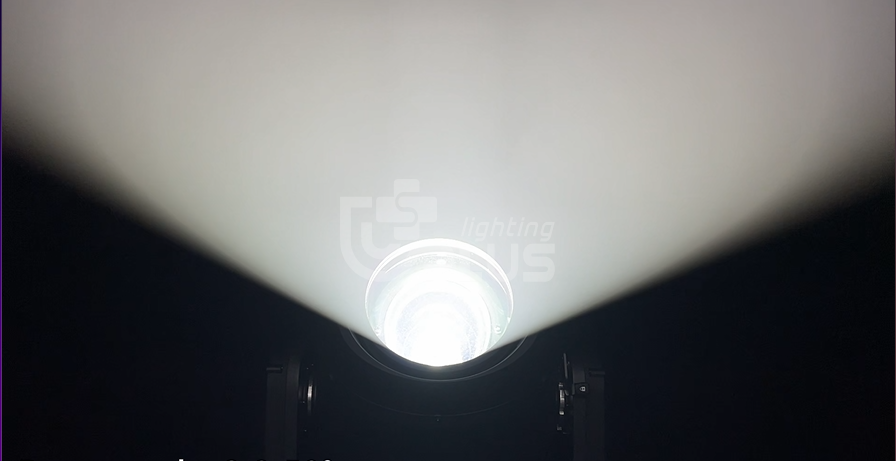
Beam angle determines how narrow or wide the projected light becomes.
A smaller beam angle produces a narrower beam.
A larger beam angle produces wider coverage.
For example:
1°–3°
Best for narrow aerial beams and long-distance effects.
3°–15°
Useful for beam effects and tighter stage looks.
15°–30°
Suitable for general stage illumination and medium wash effects.
30°–60°
Useful for wide wash coverage and short-distance installations.
A motorized zoom dramatically increases fixture flexibility.
For example, the Uplus IP BEAM 420 uses a narrow 1.7° beam, while the IP-B750 covers 5°–55°, the IP-WASH1980 covers 6°–50°, and the IP1000 BSWF covers approximately 3.8°–50°.
This demonstrates why comparing only LED power is not enough: the optical system determines how that light is distributed.
8. Do Not Choose a Moving Head by Wattage Alone
One of the most common mistakes is assuming:
More watts = better moving head.
Wattage mainly tells you about the power rating of the light source or fixture. It does not completely describe usable stage brightness.
Actual performance also depends on:
-
LED or lamp efficiency
-
Optical efficiency
-
Lens diameter
-
Beam angle
-
Zoom system
-
Light transmission
-
Color system
-
Throw distance
When comparing fixtures, check:
-
Light source
-
Lux output
-
Measurement distance
-
Beam angle
-
Zoom range
-
Optical diameter
-
Color temperature
A lower-power fixture with efficient optics may outperform a poorly designed higher-power fixture in certain applications.
9. Choose the Right Color Mixing System
Professional moving heads commonly use either LED color mixing or CMY color mixing.
RGBW LED
RGBW means:
Red + Green + Blue + White
It is commonly used in wash moving heads and provides fast, flexible color creation.
RGBW is particularly effective for:
-
Wash lighting
-
Pixel effects
-
Color chases
-
Concerts
-
Clubs
-
Event lighting
Products such as the Uplus IP-B750 and IP-WASH1980 use RGBW LED sources.
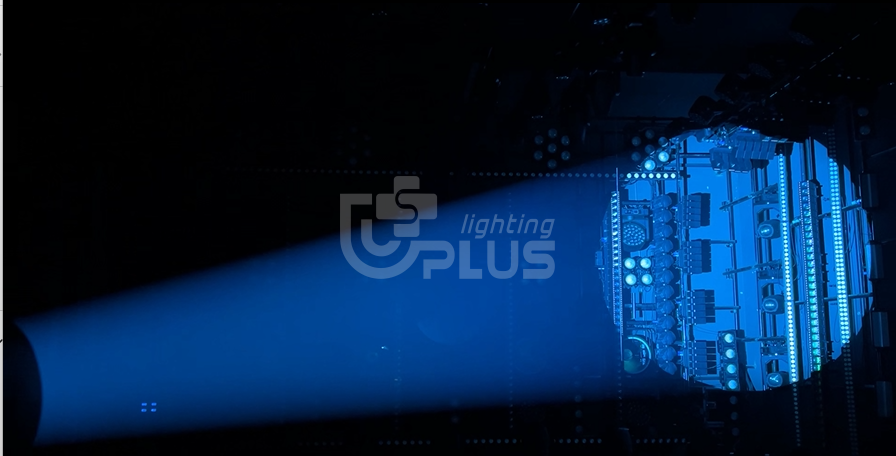
CMY Color Mixing
CMY means:
CMY systems are frequently found in professional spot, BSW, and profile moving heads.
They allow designers to create a large range of colors through subtractive color mixing.
Fixtures such as the Uplus 420 LED BSW and IP1000 BSWF include CMY color mixing systems.
10. Consider CTO and Color Temperature
Color temperature becomes particularly important when lighting:
-
People
-
Theater productions
-
TV broadcasts
-
Corporate events
-
Fashion shows
-
Cameras
A CTO system allows designers to adjust the apparent color temperature of the white light.
This helps match moving heads with other fixtures or achieve warmer looks for performers.
If your production frequently involves cameras or theatrical lighting, prioritize fixtures with:
-
Adjustable CTO
-
Good white-light quality
-
Consistent color
-
Suitable CRI options
11. Decide Whether You Need Gobos
Gobos are patterns placed inside a moving head to shape or texture the projected light.
Typical applications include:
-
Concert visual effects
-
Floor patterns
-
Scenic projections
-
Corporate events
-
Architectural lighting
-
Breakup patterns
There are two common types.
Fixed Gobo Wheel
Provides pre-installed static patterns.
Rotating Gobo Wheel
Allows patterns to rotate, index, and create more dynamic effects.
If your stage design depends heavily on visual texture, choose a spot, BSW, or profile moving head with both fixed and rotating gobos.
12. Decide Whether You Need Prisms
Prisms split one beam into multiple beams.
They are particularly useful for:
-
EDM shows
-
Festivals
-
Clubs
-
Concerts
-
Beam effects
Common options include:
-
5-facet prism
-
8-facet prism
-
24-facet prism
-
Linear prism
The Uplus IP BEAM 420, for example, includes 8-facet, 24-facet, and 6-facet linear prism options.
If dramatic aerial effects are a major part of your lighting design, prism selection can be almost as important as raw brightness.
13. Do You Need Framing Shutters?
Not every production needs framing.
For clubs and basic concerts, framing may not be essential.
However, framing becomes extremely useful for:
-
Theater
-
Corporate productions
-
Large concerts
-
Scenic lighting
-
Architectural applications
Choose a profile or BSWF moving head if precise beam shaping is important.
For professional stages requiring high-output multi-function control, the Uplus IP1000 BSWF is designed to combine beam, spot, wash, and framing functions in one moving head.
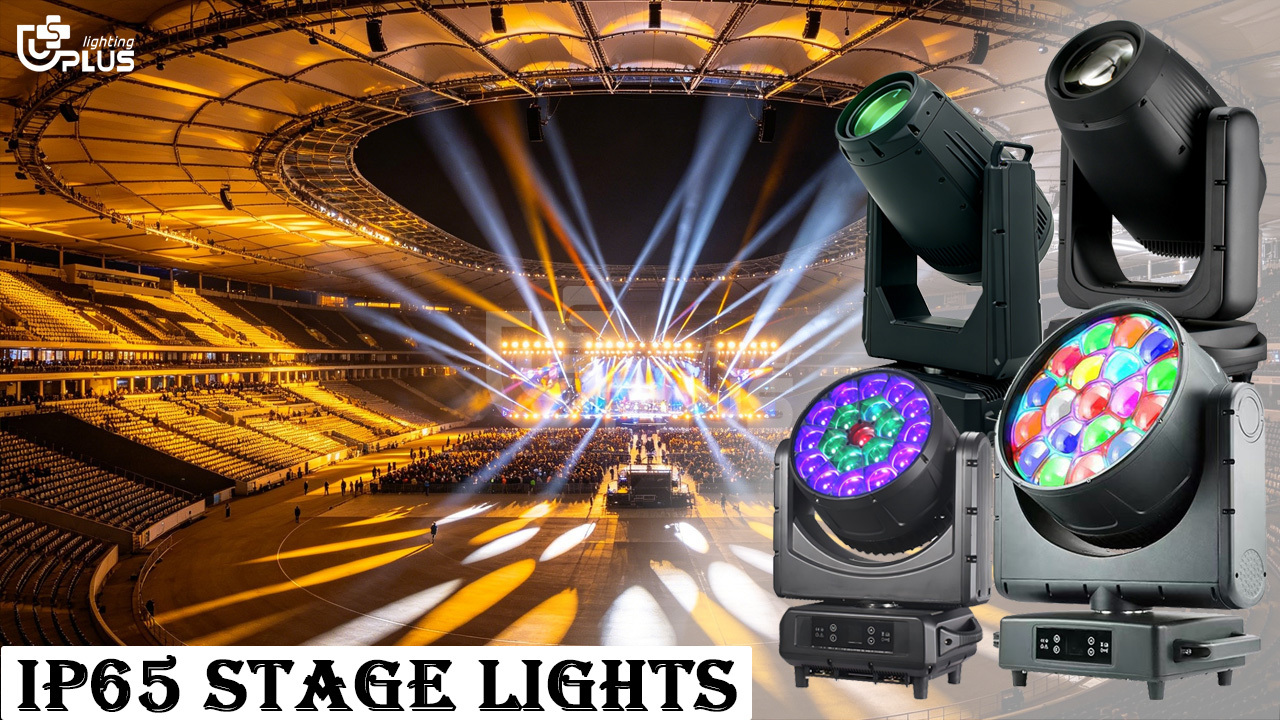
14. Indoor or Outdoor? Check the IP Rating
If your fixtures will be used outdoors, the IP rating should be one of your first considerations.
An indoor moving head should not automatically be assumed to be safe for outdoor operation.
For professional outdoor applications, IP-rated fixtures help protect against dust and water exposure.
IP65
An IP65 fixture is dust-tight and protected against water jets.
It is commonly selected for:
-
Outdoor concerts
-
Festivals
-
Touring shows
-
Temporary outdoor stages
IP66
IP66 provides protection against stronger water jets and is useful for demanding outdoor environments.
For example:
-
IP BEAM 420 — IP65
-
IP-B750 — IP65
-
IP-WASH1980 — IP66
An IP65 or IP66 rating does not mean a fixture should be submerged in water. Always follow the manufacturer's operating and installation instructions.
15. Check DMX, RDM, and Network Control
Professional moving heads should integrate easily with your lighting control system.
DMX512
DMX512 remains the standard control protocol for most professional stage lighting systems.
RDM
RDM adds two-way communication over compatible DMX systems.
It can make configuration and device management more convenient.
Art-Net
Art-Net distributes lighting data over Ethernet networks and becomes especially useful when large productions require many DMX universes.
Before purchasing fixtures, confirm:
-
DMX channel modes
-
RDM support
-
Art-Net support if required
-
Fixture profiles
-
DMX charts
-
Manuals
-
Console compatibility
Uplus Lighting also maintains a download section with product manuals and technical files for a range of fixtures.
16. Consider Fixture Weight and Rigging
Weight becomes extremely important in:
-
Touring
-
Temporary stages
-
Rental inventories
-
Mobile productions
-
Truss-limited venues
A heavier fixture may provide more power and features, but it also affects:
-
Truss load
-
Installation time
-
Flight-case weight
-
Transportation
-
Labor requirements
Always calculate total rigging load rather than looking at individual fixture weight only.
For touring productions, the most powerful fixture is not always the most practical fixture.
17. Consider Power Consumption
A large stage may contain dozens or even hundreds of lighting fixtures.
That means power consumption matters.
Before designing the rig, calculate:
Number of Fixtures × Maximum Fixture Power
Then allow suitable electrical capacity for the complete system.
You should also consider:
-
Power distribution
-
Cable length
-
Connector type
-
Circuit load
-
Voltage
-
Backup capacity
-
Outdoor electrical protection
Never design a large lighting system based only on the nominal power of one fixture.
18. Match the Moving Head to the Application
A practical way to choose is to start from the actual application.
Small Clubs and Bars
Look for:
-
Compact size
-
Fast movement
-
Narrow beams
-
Gobos
-
Prisms
-
Lower power requirements
Suggested type: Compact Beam / BSW
Medium Live Music Venues
Look for:
-
Zoom
-
Beam + wash flexibility
-
Good color mixing
-
Gobos
-
Reliable DMX control
Suggested Uplus products:
420 LED BSW or IP-B750.
Theater
Look for:
-
Framing shutters
-
Smooth dimming
-
Wide zoom
-
CMY
-
CTO
-
Accurate positioning
-
Quiet operation requirements
Suggested Uplus products:
600 BSWF or other Uplus profile moving heads.
Outdoor Concerts
Look for:
-
IP65 or higher protection
-
Strong output
-
Durable housing
-
Long throw
-
Wide zoom options
-
Professional control
Suggested Uplus configuration:
Beam: IP BEAM 420
Wash: IP-B750 or IP-WASH1980
Profile / BSWF: IP1000 BSWF
These products cover beam effects, stage wash, pixel effects, and precise multi-function lighting requirements for professional outdoor rigs.
Large Music Festivals
Large festivals usually require several fixture categories rather than one type of moving head.
A typical design may combine:
-
High-output beam moving heads
-
High-output wash moving heads
-
Profile moving heads
-
Strobe fixtures
-
Pixel bars
-
Effect lighting
For example:
IP BEAM 420 — long-range aerial beams
IP-WASH1980 — powerful RGBW wash and pixel effects
IP1000 BSWF — flexible beam, spot, wash, and framing control
This combination allows lighting designers to build different layers instead of relying on one fixture for every effect.
19. Quick Uplus Moving Head Selection Guide
| Requirement | Recommended Product | Why |
|---|---|---|
| Small-stage beam effects | 250 LED BEAM | Compact 2° LED beam |
| Outdoor long-range beam | IP BEAM 420 | 1.7° beam + IP65 |
| Compact outdoor wash | IP-B750 | 5°–55° RGBW pixel wash |
| Large outdoor wash | IP-WASH1980 | 19×80W RGBW + 6°–50° zoom |
| Flexible Beam/Spot/Wash | 420 LED BSW | 3°–48° BSW + CMY/CTO |
| Professional indoor profile | 600 BSWF | 600W LED + 4°–50° zoom |
| High-output outdoor BSWF | IP1000 BSWF | 850W LED + 3.8°–50° BSWF |
Product specifications are based on the current Uplus Lighting product pages.
20. Common Mistakes When Choosing Moving Head Lights
Avoid these common purchasing mistakes.
Mistake 1: Choosing by wattage only
Optical efficiency and beam angle can be just as important as wattage.
Mistake 2: Ignoring throw distance
A fixture that works at 5 meters may not perform the same way at 25 meters.
Mistake 3: Buying only one fixture type
Professional lighting designs usually combine beam, wash, and profile functions.
Mistake 4: Ignoring IP ratings outdoors
Outdoor stages require fixtures designed for outdoor environmental exposure.
Mistake 5: Ignoring fixture weight
Heavy fixtures significantly affect transportation and truss calculations.
Mistake 6: Ignoring DMX channel requirements
Pixel fixtures and advanced moving heads may require considerably more control channels.
Mistake 7: Ignoring photometric data
Always compare lux measurements at realistic working distances whenever possible.
Mistake 8: Choosing features you will never use
More effects do not automatically make a fixture better for your application.
Choose features that solve real design requirements.
21. Moving Head Light Buying Checklist
Before purchasing a professional moving head, answer these questions:
-
Is my stage indoor or outdoor?
-
How wide and deep is the stage?
-
What is the fixture-to-stage throw distance?
-
How high will the fixtures be mounted?
-
Do I need beam, wash, spot, or framing?
-
What beam angle do I need?
-
Do I need motorized zoom?
-
How much output do I need at the target distance?
-
Do I need RGBW or CMY color mixing?
-
Is adjustable CTO important?
-
Do I need fixed or rotating gobos?
-
Do I need prism effects?
-
Do I need framing shutters?
-
Do I need individual pixel control?
-
Do I need IP65 or IP66 protection?
-
Does my console support the required channel mode?
-
Do I need RDM or Art-Net?
-
What is the fixture weight?
-
What is the maximum power consumption?
-
Can I obtain manuals, DMX charts, photometric data, and technical support?
If you can answer these 20 questions, choosing the correct moving head becomes much easier.
Conclusion: What Is the Best Moving Head Light for Your Stage?
There is no single moving head light that is best for every stage.
The right choice depends on what you need the fixture to accomplish.
Choose a beam moving head when you need narrow, powerful aerial effects.
Choose a wash moving head when you need smooth and wide color coverage.
Choose a BSW moving head when you need Beam, Spot, and Wash functions in one flexible fixture.
Choose a profile or BSWF moving head when you need precise framing and professional beam shaping.
For outdoor productions, prioritize IP65 or IP66 moving head lights designed for demanding environments.
Most importantly, compare moving heads using beam angle, zoom range, photometric output, throw distance, color system, effects, control protocol, weight, and IP rating rather than wattage alone.
Uplus Lighting offers moving head solutions ranging from compact beam fixtures to IP-rated outdoor beam and wash moving heads and professional BSWF profile fixtures, allowing lighting designers, rental companies, distributors, and production companies to select fixtures according to real stage requirements.
FAQ
1. What type of moving head light is best for a concert?
Most professional concert rigs use a combination of beam, wash, and profile or BSWF moving heads. Beam fixtures create aerial effects, wash fixtures provide color coverage, and profile fixtures provide precise projection and beam shaping.
2. How many moving head lights do I need for my stage?
There is no universal number. The correct quantity depends on: Stage width Stage depth Truss positions Fixture output Desired symmetry Type of show Required lighting layers A small stage may use several fixtures, while a major festival stage may require dozens or more.
3. What wattage moving head light do I need?
Choose wattage according to venue size, optics, throw distance, ambient light, and required output. Do not compare fixtures by wattage alone. Compare photometric output, beam angle, zoom, and lux measurements at realistic working distances.
4. What is the difference between beam, spot, and wash moving heads?
A beam-moving head creates narrow aerial beams. A spot moving head produces defined projections and gobo effects. A wash moving head spreads smooth color across a larger area. A BSW fixture combines all three functions.
5. What is a BSWF moving head?
BSWF generally refers to a moving head combining: Beam + Spot + Wash + Framing It is designed for productions requiring multiple effects plus precise beam shaping.
6. What beam angle should I choose for stage lighting?
For narrow aerial effects, choose a small beam angle such as approximately 1°–5°. For general stage lighting and wash applications, wider beam angles are normally required. Zoom fixtures are more versatile because the beam width can be adjusted during a show.
7. Do I need an IP65 moving head for an outdoor stage?
For professional outdoor events where fixtures may encounter dust and water exposure, an IP-rated moving head is strongly recommended. IP65 fixtures are dust-tight and protected against water jets. Always follow the manufacturer's environmental and installation requirements.
8. Is IP66 better than IP65 for stage lighting?
IP66 provides greater protection against powerful water jets than IP65. Both ratings can be useful for outdoor entertainment lighting, but the appropriate choice depends on installation conditions and environmental exposure.
9. Should I choose RGBW or CMY color mixing?
RGBW is widely used in LED wash and pixel fixtures. CMY is commonly used in professional spot, BSW, and profile fixtures where designers want continuous color mixing. Neither is universally better; they serve different optical systems and applications.
10. Do I need framing shutters?
Framing shutters are highly useful in theater, television, corporate events, concerts, and scenic lighting when you need to control exactly where light falls. For basic club or beam effects, framing may not be necessary.
11. What is the best moving head for an outdoor concert?
A professional outdoor rig usually requires more than one fixture type. For example, a lighting designer could combine the Uplus IP BEAM 420 for long-range beam effects, IP-WASH1980 for high-output RGBW wash and pixel effects, and IP1000 BSWF for multi-function beam, spot, wash, and framing applications.
12. Where can I find Uplus moving head specifications and manuals?
Uplus Lighting provides product pages and a download center containing product manuals and technical resources for multiple stage lighting fixtures.


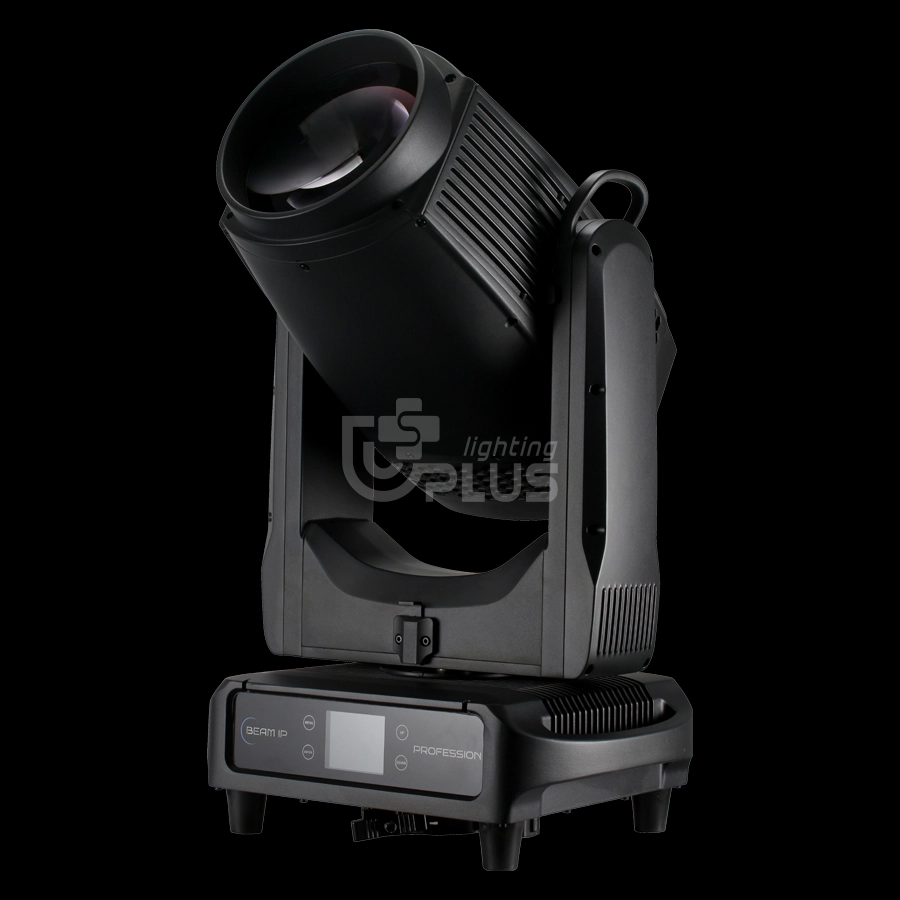
The IP65 420W beam moving head delivers a sharp, powerful beam with long range and strong penetration. IP65 dust and water resistant, it's suitable for complex outdoor environments and supports 360° flexible head movement, along with various dynamic lighting effects and dimming/flicker functions.
Compatible with DMX512/self-propelled mode, it features efficient heat dissipation and durability, making it suitable for outdoor scenarios such as performances, celebrations, and lighting effects.
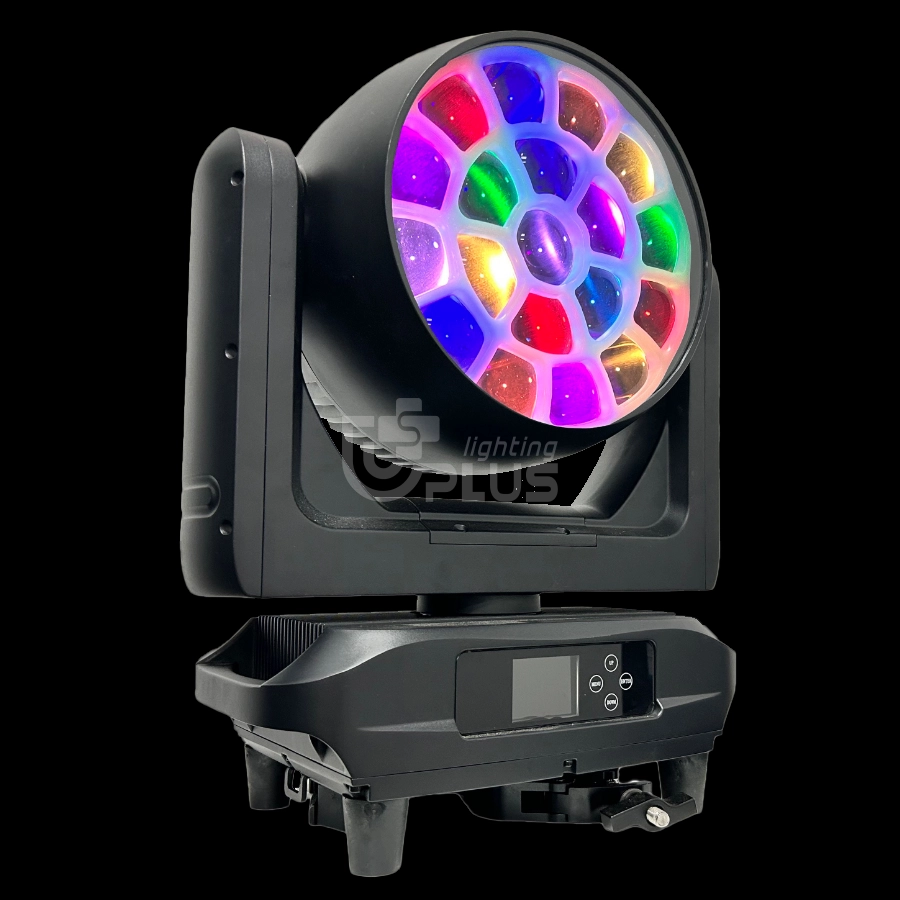
IP66 19*50W Wash Zoom Moving Head with Circle Light: 19 sets of high-power RGBW LEDs combine wall washing and color rendering with a ring light effect. A 6-50° zoom allows for flexible site adaptation.
IP66 high protection against heavy rain and dust. Multiple dynamic lighting effects and DMX control ensure stable application in professional indoor and outdoor environments.
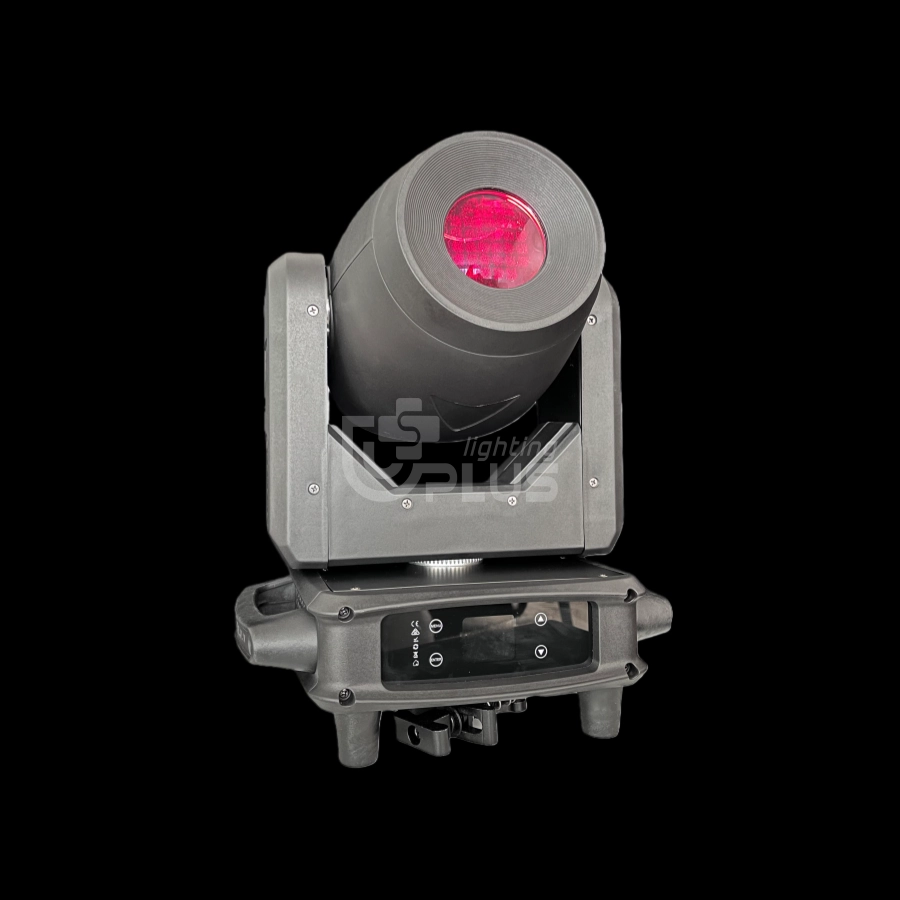
Equipped with high-definition pattern sheets, the light spots are clear and sharp, supporting pattern switching and precise positioning, and flexible light control, making it suitable for creating light and shadow effects in theater performances, wedding banquets, small stages and other scenarios.

1000W Waterproof BSWF 4-in-1 Moving Head combines beam, spot, wash, and frame effects in one. IP-rated waterproof design, high-brightness output, precise control, ideal for outdoor & indoor stage events.
Stay updated on our latest news
If you have any comments or good suggestions, please leave us a message, later our professional staff will contact you as soon as possible.
Lighting Innovators
Uplus Lighting is a leading integrated company specializing in R&D, design, production, and sales of stage lighting solutions.
 Scan QR Code
Facebook
Instagram
YouTube
VK