


10 LED Profile Stage Lights for Theaters and Concerts: A Spec-Based Comparison
Compare ten identifiable LED profile fixtures for theatres and concerts, from static LED ellipsoidals to moving-head framing profiles. This buyer-focused guide explains optics, color quality, control, maintenance and RFQ checks using manufacturer documentation, without claiming hands-on testing or a universal ranking.
- Quick Answer: Static LED Profile or Moving-Head Profile?
- Ten LED Profile Fixtures to Compare
- What to Compare Before Shortlisting
- Beam geometry and throw distance
- Color, skin tone and camera use
- Control and integration
- Environment, rigging and service
- How the Ten Fixtures Differ in Practice
- Static LED profiles: Source Four LED Series 3 and ColorSource Spot V
- An older LED moving-profile reference: SolaFrame 1500
- Professional moving profiles: ESPRITE, MAC Ultra Performance and Axcor Profile 900
- Other moving profiles: Maverick MK3 Profile, VL2600 SE Profile and Eurus
- Weather-exposed production: Proteus Maximus
- Which Models Should Be Excluded from an LED-Only List?
- A Practical RFQ and Demonstration Workflow
- How This Page Fits the Uplus Content Cluster
- Frequently Asked Questions
- Is every moving-head spot an LED profile?
- Is a static LED ellipsoidal better than a moving profile for theater?
- Can I compare brands using LED wattage alone?
- Is an IP65 LED profile safe in any outdoor condition?
- Why is SolaFrame 1500 still shown?
- Should a product be labeled “best” without measured comparison data?
- Conclusion
An LED profile light is chosen for controlled beam edges, projected gobos, framing and repeatable cues—not simply because it produces a bright spot. The category contains two different purchasing decisions: static LED ellipsoidal fixtures for fixed theatrical positions, and motorized LED profile moving heads for changing beam positions, shapes and effects. Comparing the two without identifying the production role can lead to an expensive specification mismatch.
This guide presents ten identifiable fixtures or product families whose LED light sources and profile applications can be checked against manufacturer documentation. It is a buyer comparison, not a laboratory-tested performance ranking or a claim that these ten products are universally superior. Models differ in their age, availability, intended installation and optional configurations. Buyers should verify current status, photometric files, local support and exact SKU before issuing an RFQ.
Quick Answer: Static LED Profile or Moving-Head Profile?
Choose a static LED ellipsoidal when the position can remain fixed and the priority is repeatable shutter cuts, color quality, quiet operation and an existing front-of-house or catwalk inventory. Consider a moving-head LED profile when cues require automated pan/tilt, motorized framing or rapid repositioning across acts. The moving fixture may reduce manual refocusing, but it also adds weight, power, data, movement clearance and maintenance requirements. The selection should begin with the throw and cue plan, not a brand ranking.
Ten LED Profile Fixtures to Compare
| Fixture / family | Type | Main buying context | Manufacturer evidence |
|---|---|---|---|
| ETC Source Four LED Series 3 | Static LED ellipsoidal | Theater front light, controlled color and shuttering | ETC official fixture |
| ETC ColorSource Spot V | Static LED ellipsoidal | Budget-conscious theatrical profile inventory | ETC official fixture |
| High End Systems SolaFrame 1500 | LED moving profile, legacy | Existing fleet support and used-equipment comparison | ETC/High End legacy product |
| Robe ESPRITE | LED moving profile | Touring and theatre where replaceable light-engine architecture matters | Robe official fixture |
| Martin MAC Ultra Performance | LED moving profile | Large-show moving framing and high-output requirements | Martin official fixture |
| Claypaky Axcor Profile 900 | LED moving profile | Profile, spot and framing comparisons in professional productions | Claypaky LED profile source |
| CHAUVET Professional Maverick MK3 Profile | LED moving profile | Large venue framing and effects | CHAUVET official fixture |
| Vari-Lite VL2600 SE Profile | LED moving profile | Versatile theater and touring profiles | Vari-Lite official fixture |
| Elation Proteus Maximus | IP65 LED moving profile | Exposed outdoor or temporary production | Elation official fixture |
| Ayrton Eurus Profile | LED moving profile | High-output or color-fidelity-led profile specification | Ayrton official fixture |
The table deliberately separates fixture identity from a universal ranking. Manufacturer source links substantiate the product family and LED classification; they do not establish current street price, availability, independent reliability or identical option packages. SolaFrame 1500 is retained only as a legacy-fleet comparison and should not be represented as a current-production recommendation without confirmation.
What to Compare Before Shortlisting
Beam geometry and throw distance
Start with the measured distance from the fixture position to the acting area or scenic target. A published lumen figure is not a substitute for illuminance at the planned throw. Request photometric files and compare field uniformity, beam-edge sharpness, iris and zoom coverage, gobo projection, framing travel and focus behavior under the same target conditions. For a static LED ellipsoidal, check lens-tube options and whether existing accessories remain compatible. For a moving profile, verify the useful zoom range, shutter-blade movement and whether pan/tilt positions can be repeated accurately throughout the show.
Color, skin tone and camera use
The appropriate light engine depends on the artistic objective. Theatrical front light often values skin-tone rendering, tint adjustment and dimming behavior more than maximum saturated-color output. Camera work also demands a test at the actual frame rate and shutter angle. Compare manufacturers' CRI/TLCI or other color-quality data where provided, but do not treat one score as proof of an acceptable result for every costume, set color or camera. Obtain samples or a demonstration when the fixture will be used for close-up performance or broadcast.
Control and integration
Document the planned console and data architecture before choosing personalities or accessory packages. Confirm DMX channel footprints, RDM behavior, supported network protocols if required, firmware compatibility, cue response, reset behavior, and how the fixture behaves when data is interrupted. A venue with multiple universes may benefit from network distribution, but that does not make every fixture a direct Art-Net or sACN endpoint; a node may be required. Keep this article focused on fixture qualification rather than duplicating a general DMX controller buying guide.
Environment, rigging and service
Indoor and outdoor profile fixtures are not interchangeable without an environmental check. The Proteus Maximus is documented as an IP65 LED profile; other listed models should not be assumed weatherproof. Confirm mass, center of gravity, rigging hardware, working load, motion clearance, cooling requirements, noise limits and service access. Rental teams should request spares, flight-case arrangements, repair procedures and firmware support; permanent installations also need an agreed cleaning and calibration plan. Always follow the latest manufacturer installation instructions and applicable local rigging rules.
How the Ten Fixtures Differ in Practice
Static LED profiles: Source Four LED Series 3 and ColorSource Spot V
Both are examples of LED theatrical spotlights intended for controlled stage positions. Source Four LED Series 3 offers manufacturer-documented multi-emitter engine choices and lens-tube compatibility, useful where detailed color decisions and precise projected edges are required. ColorSource Spot V belongs in the same static LED profile comparison but addresses a different specification and budget discussion. A buyer should compare the optical accessories actually needed for a venue, not assume that a static fixture with an LED engine replaces motorized framing or moving-head effects.
An older LED moving-profile reference: SolaFrame 1500
The SolaFrame 1500 remains relevant for venues and rental companies already operating the family, but ETC lists it under legacy products. This makes documentation, spare parts, software and resale condition central to the decision. It can be compared for replacement planning and interoperability, yet it must be clearly labeled as legacy rather than mixed into a list of current-production fixtures with an unqualified availability claim.
Professional moving profiles: ESPRITE, MAC Ultra Performance and Axcor Profile 900
Robe ESPRITE is identified by the manufacturer as an LED profile moving light with a transferable LED engine. That architecture is worth asking about when planning long ownership periods, although actual engine replacement cost and local support require quotation. Martin MAC Ultra Performance is a high-output LED moving light with automated framing, which places it in a different category from the older HID-powered MAC Viper Profile. Claypaky Axcor Profile 900 is a genuine LED profile offering; it should not be confused with the discharge-source Scenius Unico. For all three, evaluate published throw charts and cue requirements before comparing marketing brightness figures.
Other moving profiles: Maverick MK3 Profile, VL2600 SE Profile and Eurus
CHAUVET Professional identifies Maverick MK3 Profile as an LED moving profile with a framing system and gobo effects. Vari-Lite's VL2600 SE Profile represents its updated LED profile family and is a candidate where color, effects and service networks are important. Ayrton Eurus has different engine versions oriented toward output and color rendering; specify the exact version rather than treating all Eurus configurations as equivalent. Each can fit touring or installed use, but a purchase comparison needs a common throw distance, noise target, exact accessory set and approved project budget.
Weather-exposed production: Proteus Maximus
Elation specifies Proteus Maximus as an IP65 LED profile fixture, making it relevant where wet or dusty outdoor conditions change the procurement decision. IP rating does not remove the need for compliant cabling, covers where specified, inspection and the manufacturer's environmental limits. An indoor LED profile may provide suitable photometrics yet still be the wrong fixture for an exposed festival rig. Compare the whole installation requirement, not just light output.
Which Models Should Be Excluded from an LED-Only List?
The original version of this page included several comparison rows that did not satisfy its LED-profile promise. Robe BMFL Spot is a discharge-lamp fixture, Martin MAC Viper Profile has a HID/discharge source, and Claypaky Scenius Unico belongs to the traditional discharge-source generation. GLP JDC1 is an LED hybrid strobe/effects fixture, not a like-for-like framing profile. These may be useful in a broader historical or stage-effects comparison, but mixing them into a ten-item LED profile table obscures the buyer's decision. Manufacturer product documentation should be used to verify every model before publication.
A Practical RFQ and Demonstration Workflow
Begin with a fixture schedule: stage dimensions, position, throw, desired beam size, acting-area illuminance, color task, required shutters or gobos, console, universes, available power and rigging limits. Mark whether each unit is a fixed profile or automated moving profile. Share those requirements with shortlisted suppliers and ask for a current datasheet, photometric file, DMX personality, rigging drawing, firmware notes, warranty scope and regional spare-parts plan.
For an apples-to-apples test, create the same cues on each candidate: a tight gobo projection, a shutter cut at the intended throw, a skin-tone front-light look, a slow fade, a repeatable pan/tilt move for moving fixtures and a camera recording test where relevant. Record observations separately from manufacturer claims. Where the test is not conducted, say so plainly; do not invent field experience, measured lux values or a universal winner. Request a quotation under the same accessory, delivery, support and tax terms before calculating total cost of ownership.
How This Page Fits the Uplus Content Cluster
This page answers which verified LED profile fixtures should enter a shortlist and how they differ. Readers who need a definition of a stage spotlight can use the theatre spotlight overview. Readers comparing beam, spot and wash moving heads across all fixture types should use the general moving-head selection guide. A buyer seeking a Chinese OEM supplier should use the separate China-manufacturer comparison. These articles may link to one another, but they should not repeat the same full selection tables or claim the same broad queries.
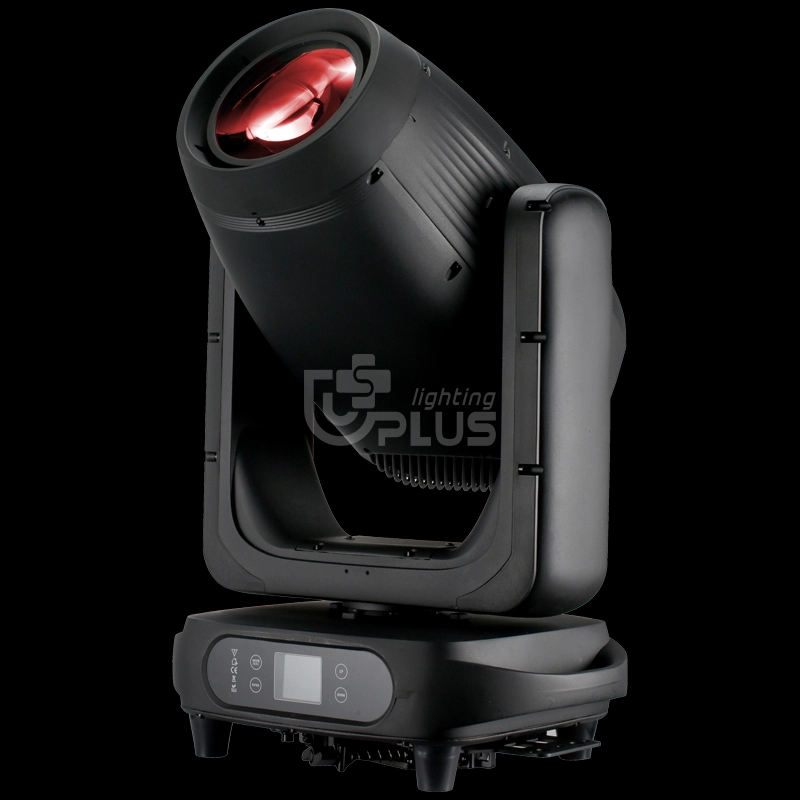
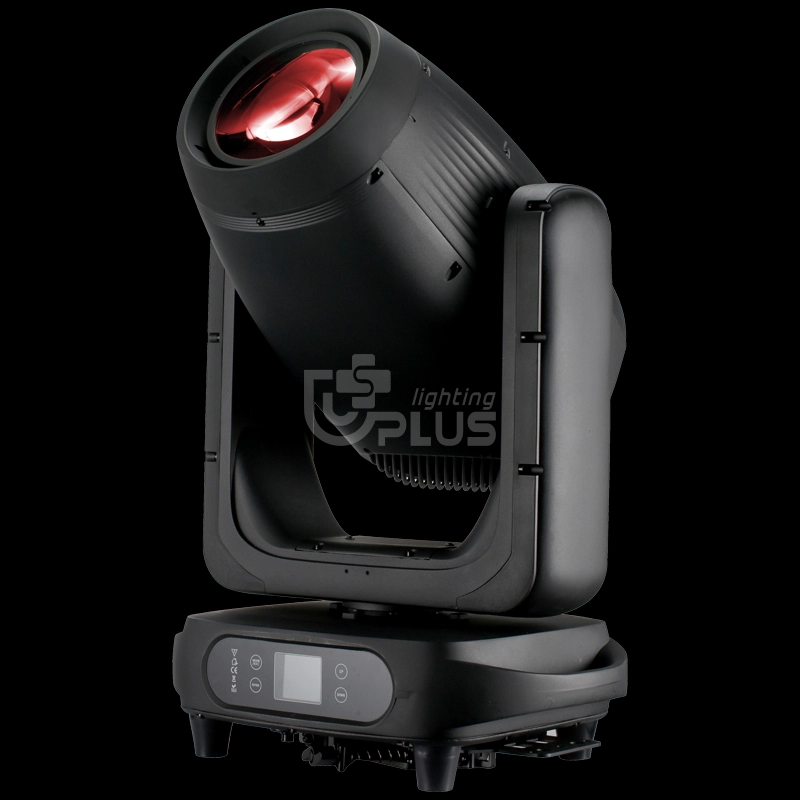
Uplus also offers its own IP1000 BSWF profile-capable moving-head product. That product page is the appropriate location for the exact Uplus model specifications, configuration and quotation—not an excuse to recast this independent manufacturer comparison as a fictional test result or supplier ranking.
Frequently Asked Questions
Is every moving-head spot an LED profile?
No. A moving spot may use an LED or discharge lamp, and not every spot fixture provides a full framing-shutter system. Verify both the light-source technology and the actual optical functions for the named model.
Is a static LED ellipsoidal better than a moving profile for theater?
Neither is universally better. Static ellipsoidals suit positions where repeatable focus, cut and quiet operation matter. Moving profiles add automated repositioning, effects and framing at the cost of additional mechanical and control complexity.
Can I compare brands using LED wattage alone?
No. Power draw is not field illuminance, and a high wattage does not establish beam quality, spectral rendering or output at the actual throw. Use the same measurement setup, optical configuration and manufacturer photometric files.
Is an IP65 LED profile safe in any outdoor condition?
No. The rating relates to defined ingress-protection tests, not unrestricted operation. Confirm the exact fixture rating, connector and cable handling, exposure, ambient temperature and installation manual for the project.
Why is SolaFrame 1500 still shown?
It is explicitly identified as a legacy reference for existing rental fleets and replacements. A buyer seeking newly manufactured inventory should verify current availability and shortlist current production models instead.
Should a product be labeled “best” without measured comparison data?
No. A credible comparison should state the selection criteria and disclose when a ranking is editorial rather than based on controlled tests. Use model-specific documentation and a project demonstration to reach a final decision.
Conclusion
The most useful LED profile comparison begins with a verified LED source and a defined optical role. Static ellipsoidals and moving-head profiles solve different problems; even within a single category, color engine, framing, networking, service and environmental protection vary. Use the ten documented fixture families as a shortlist framework, then validate the exact configuration and the real production requirements before ordering. Contact Uplus for its own product datasheets and project-specific RFQ support.
How to Choose the Best Stage Moving Head Light for Your Venue
Top 10 LED Moving Head Strobe Lights for DJs and Venues
Top 10 led stage light bar Manufacturers and Supplier Brands in 2026
Top 10 led beam moving head light Manufacturers and Supplier Brands

1000W Waterproof BSWF 4-in-1 Moving Head combines beam, spot, wash, and frame effects in one. IP-rated waterproof design, high-brightness output, precise control, ideal for outdoor & indoor stage events.
If you have any comments or good suggestions, please leave us a message, later our professional staff will contact you as soon as possible.
Lighting Innovators
Uplus Lighting is a leading integrated company specializing in R&D, design, production, and sales of stage lighting solutions.
 Scan QR Code
Facebook
Instagram
YouTube
VK