






LED Stage Light Bars for Theaters, Houses of Worship, DJs
- Why LED Bars Are Reshaping Live Production
- Energy efficiency, color versatility and lifecycle benefits
- Form factor and control — why the bar wins for many applications
- Choosing the Right LED Stage Light Bar for Your Venue
- Match the luminaire type to the artistic goal
- Key specs to evaluate
- Typical performance ranges and a quick comparison
- Installation, Rigging, and Safety Considerations
- Power distribution, dimming curves, and thermal management
- Photobiological safety and standards
- Rigging and physical integration
- Use Cases: Theaters, Houses of Worship, and DJs — Real-World Advice
- Theater — prioritize color fidelity and dimming
- Houses of worship — reliability and unobtrusive operation
- DJs and mobile acts — portability and pixel effects
- Why I Recommend Uplus Lighting for Professional Projects
- Company background and proven project experience
- Product range and technical strengths
- Competitive differentiators
- Procurement Checklist and Example Specification
- Checklist I use when specifying led stage light bars
- Example short specification (for a theater cyc wash)
- Frequently Asked Questions (FAQ)
- 1. What is the difference between an LED stage light bar and a traditional strip or cyc light?
- 2. How many LED bars do I need to properly wash a theater stage?
- 3. Are LED bars safe for prolonged audience exposure?
- 4. Can I use battery-powered LED bars for touring DJ rigs?
- 5. How do I ensure smooth dimming and no flicker on camera?
- 6. What maintenance should I expect for led stage light bars?
- Contact and Next Steps
As a stage lighting consultant who has specified and installed LED fixtures in theaters, houses of worship, and touring DJ rigs, I write this to help you quickly determine whether an led stage light bar is the right solution for your venue, which technical attributes matter most, and how to avoid common procurement and installation mistakes. The practical guidance below is focused on decision-making, safety and standards, and optimizing creative control across different types of live events.
Why LED Bars Are Reshaping Live Production
Energy efficiency, color versatility and lifecycle benefits
LED technology fundamentally changed stage lighting over the last decade by offering much higher energy efficiency and longer service life than discharge and incandescent sources. The underlying physics of light-emitting diodes is summarized in the Light-emitting diode article on Wikipedia (https://en.wikipedia.org/wiki/Light-emitting_diode), and U.S. Department of Energy resources on solid-state lighting provide data on LED efficacy and long-term savings (https://www.energy.gov/eere/ssl/solid-state-lighting). For venues managing dimmer racks, HVAC loads, or power distribution constraints, switching to led stage light bar fixtures reduces heat, load, and maintenance needs.
Form factor and control — why the bar wins for many applications
Unlike traditional ellipsoidal or moving head fixtures, a led stage light bar presents a compact linear array of point sources that can be used as a wash, a pixel-mapped effect source, or a cyc/strip replacement. The form factor simplifies mounting along battens, trusses, or proscenium trims and enables new creative techniques such as curtain backlighting, floor-line accents, side-light washes, and synchronized pixel choreography for concerts and theatrical effects.
Choosing the Right LED Stage Light Bar for Your Venue
Match the luminaire type to the artistic goal
My first recommendation is to define the primary use case: continuous high-CRI front/side wash for theater, color-saturated looks and pixel effects for concerts, or discreet, low-glare worship lighting. Bars emphasizing CRI (or extended TLCI) and smooth dimming are better for theatrical and broadcast work; multi-zone pixel bars or RGB/RGBW bars are more appropriate for DJs and concerts. For houses of worship, I prioritize reliability, quiet thermal performance, and presets that support services.
Key specs to evaluate
When evaluating an led stage light bar, I focus on the following measurable attributes:
- Color rendering (CRI, Ra / TLCI) — important for accurate skin tones and scenic color.
- Color temperature options — tunable white vs fixed white; tunable gives more flexibility (2700K–6500K ranges are common).
- Pixel control and DMX/Art-Net/sACN compatibility — necessary if you plan pixel mapping or complex timecode cues.
- Optics and beam angle — determines throw and spread; choose narrow beams for accents, wide for washes.
- Luminous output and efficacy (lumens/watt) — affects how many fixtures you need to achieve stage lux targets.
- Power consumption and inrush — critical for circuit planning and touring rigs.
- Ingress protection and build quality — IP ratings for outdoor or humid worship spaces.
Typical performance ranges and a quick comparison
Below I present a compact comparison of common led stage light bar categories to help you plan and budget. These are typical ranges used in industry specifications and procurement; for exact numbers always check manufacturer datasheets.
| Category | Primary Use | Typical Beam / Optics | Typical Power (W) | Control |
|---|---|---|---|---|
| Wash / Cyclorama Bar | Theater cyc/backdrop wash | Wide 30°–90° | 50–300 W | DMX, DALI (some) |
| Pixel / LED Effect Bar | Concerts, synchronized effects | Individual LEDs with narrow secondary optics | 100–500 W | DMX, Art-Net/sACN, pixel mapping |
| Battery / Remote Bars | Mobile DJs, temporary stages | Varies; optimized for portability | 20–200 W (battery dependent) | Wireless DMX, Bluetooth |
| Architectural / Static Bars | Permanent installs, house light accents | Diffused to semi-tight | 20–200 W | DALI, DMX, analog options |
For energy and efficacy context, the U.S. Department of Energy's solid-state lighting guidance gives an overview of LED performance improvements and expected lumens per watt for different fixtures (DOE SSL).
Installation, Rigging, and Safety Considerations
Power distribution, dimming curves, and thermal management
I always coordinate with venue engineers early in the procurement phase. Key items include total run current, inrush characteristics (LED drivers can present high inrush currents), and dimming protocol compatibility. If your bars are replacing warm incandescent sources, reconciling dimmer curves and achieving smooth fade profiles may require compatible LED drivers or dedicated LED-compatible dimmers. For guidance on workplace electrical safety and practices, OSHA provides regulatory and safety information (https://www.osha.gov).
Photobiological safety and standards
LEDs emit high-intensity narrow-band light that can present photobiological risks if not used correctly at close range or with intense blue peaks. Relevant standards include IEC and international guidance on photobiological safety of lamps and lamp systems; while the full standard is technical and vendor-specific, the International Electrotechnical Commission (IEC) provides the framework for these assessments (https://www.iec.ch). When selecting fixtures for prolonged audience exposure (e.g., worship services), choose products tested to recognized photobiological safety standards and request the manufacturer’s photobiological assessment.
Rigging and physical integration
Mounting an led stage light bar is straightforward but must follow safe rigging practice: rated clamps, secondary safety cabling, and attention to weight distribution. For proscenium or ceiling installations, ensure the structure and hanging points are rated for the cumulative load, and consider aesthetic integration (blackout trims, glare shields) for sightline control. Where outdoor or semi-outdoor use is expected, IP ratings and corrosion-resistant finishes are essential.
Use Cases: Theaters, Houses of Worship, and DJs — Real-World Advice
Theater — prioritize color fidelity and dimming
In repertory and drama theaters, the ability to reproduce natural skin tones and consistent scenic color is critical. I specify led stage light bar fixtures with high CRI (typically ≥ 90 or TLCI ≥ 90) and smooth low-end dimming curves for crossfades and subtle cues. Where broadcast or recording is possible, ensure fixtures have low flicker at camera frame rates; manufacturers will supply flicker test data when asked.
Houses of worship — reliability and unobtrusive operation
Houses of worship often require long runtimes, quiet operation (fans), and presets for recurring services. For these venues, I look for bars with dependable thermal management, optional battery backup for key set pieces, and simple preset recall through onboard controllers or lighting consoles. IP and corrosion resistance help in humid climates or churches with open-air lobbies.
DJs and mobile acts — portability and pixel effects
For mobile DJs and club rigs, I prioritize fixtures that are lightweight, robust, and fast to rig. Pixel-mappable led stage light bars with wireless DMX or simple networked control allow impressive synchronized effects. If running off battery, check runtime claims versus measured output and verify the manufacturer's battery management specs to avoid mid-show failures.
Why I Recommend Uplus Lighting for Professional Projects
Company background and proven project experience
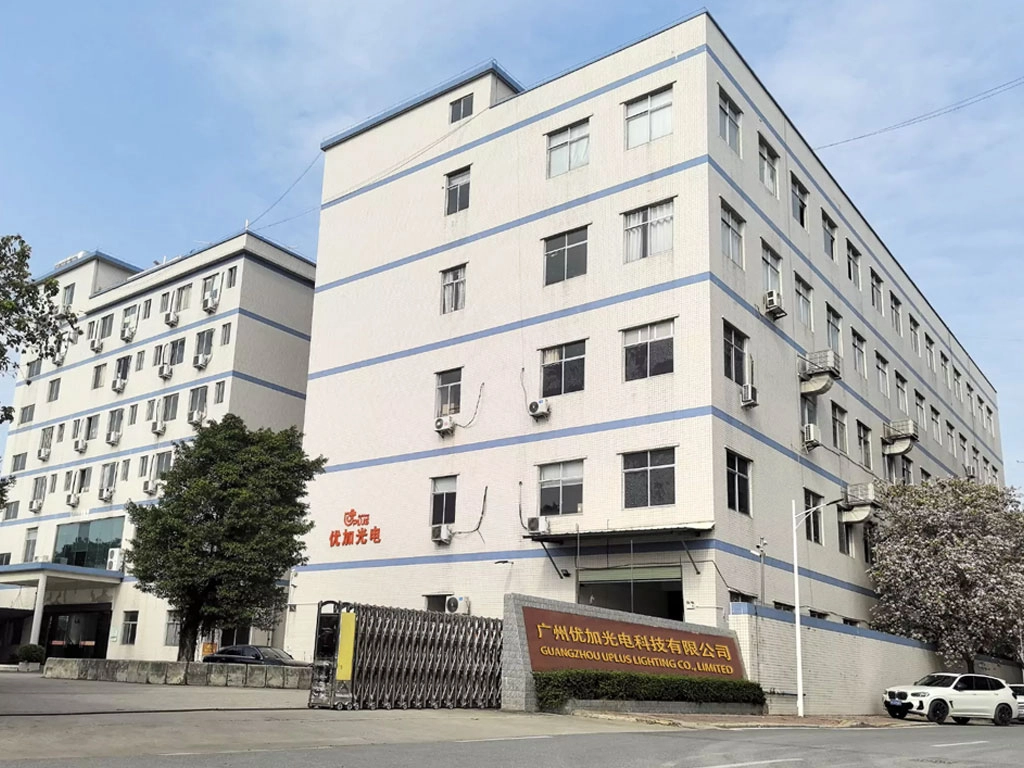
Uplus Lighting was established in 2012 in Guangzhou, China, and is a professional manufacturer specializing in high-end stage lighting products. I have evaluated their approach to R&D and quality control and find it aligns with professional project needs: they support OEM and customization, and their products have been used in concerts, opera houses, and TV programs since 2015, demonstrating both export experience and project reliability.
Product range and technical strengths
Uplus offers a wide product range including moving head lights, strobe lights, led battery lights, static lights, led theatre lights, led follow spot light, stage effect lights, and laser lights. Their vertical manufacturing and rigorous QC help ensure consistent photometric performance and stable firmware across product batches — a critical advantage for rental companies and system integrators managing replicate fixtures.
Competitive differentiators
What stands out to me about Uplus Lighting is the combination of:
- Hands-on product development focused on durability and serviceability (spare parts and firmware updates).
- Customization options and willingness to support OEM orders, which benefits venues needing specific control or mechanical integration.
- Track record in major events and broadcast projects, indicating both product maturity and export logistics expertise.
Procurement Checklist and Example Specification
Checklist I use when specifying led stage light bars
- Confirm intended use (wash, pixel, architectural) and required beam angles.
- Request photometric files (IES/IESNA LM-63) and dimming/flicker test reports.
- Verify control protocols (DMX, Art-Net, sACN, wireless) and required universes for pixel mapping.
- Obtain driver/power specs including typical and maximum current draw.
- Check IP rating, operating temperature range, and warranty/MTBF data.
Example short specification (for a theater cyc wash)
“Linear LED wash bar, tunable white 2700K–6500K, CRI ≥ 92, 6–12 individually addressable zones per meter, 60° optical lens, 150 W nominal per 1 m section, flicker-free at 24/25/30/50/60 fps, DMX/RDM and Art‑Net support, IEC connectors, IP20.”
Frequently Asked Questions (FAQ)
1. What is the difference between an LED stage light bar and a traditional strip or cyc light?
An led stage light bar typically contains discrete LED modules with individual optics and often individual addressability (pixels), whereas traditional strip or cyc lights may use linear lamps or continuous diffusers. This enables bars to do pixel effects, tighter beam control, and more complex color mixing compared to older strip fixtures.
2. How many LED bars do I need to properly wash a theater stage?
That depends on stage size, lens/beam angle, desired lux level, and mounting positions. A lighting designer will calculate required lux using photometric files (IES) or a lighting plot. As a rule of thumb, choose bars with the correct beam spread to minimize the number of fixtures and then validate with photometrics.
3. Are LED bars safe for prolonged audience exposure?
Most professional led stage light bar fixtures are designed and tested for safe audience exposure. Request the manufacturer's photobiological safety assessment (reference standards from IEC) and check the spectral output to ensure there are no dangerous levels of blue light for long durations. For authoritative background on standards and safety frameworks see the International Electrotechnical Commission (https://www.iec.ch).
4. Can I use battery-powered LED bars for touring DJ rigs?
Yes — battery-powered led stage light bars are popular for mobile acts. Verify real runtime under the desired output level (manufacturers often quote runtimes at limited intensity) and confirm battery charge cycles and safe transport procedures. For fixed installations, mains-power fixtures are generally more cost-effective.
5. How do I ensure smooth dimming and no flicker on camera?
Ask for flicker test reports from the manufacturer showing behavior at common frame rates (24, 25, 30, 50, 60 fps) and for the entire dimming range. Use LED fixtures with well-designed drivers and, when integrating with legacy dimmers, ensure the control system is compatible with LED dimming curves.
6. What maintenance should I expect for led stage light bars?
Maintenance is typically lower than for conventional fixtures but includes periodic cleaning of optics, firmware updates, driver checks, and replacement of fans or power supplies depending on duty cycle. Keep spare drivers and connectors in rental inventories to minimize downtime.
Contact and Next Steps
If you are specifying fixtures for a theater, upgrading a house of worship, or outfitting a DJ rig, I can help create a lighting specification, compare manufacturer datasheets, and produce a photometric plan. To evaluate Uplus Lighting products and request datasheets, photometrics, or OEM/custom options, contact their sales and technical team. For direct assistance with selection and project quoting, feel free to reach out to a Uplus Lighting representative or request samples to verify photometrics in your space.
Uplus Lighting was established in 2012 in Guangzhou, China, and is a professional manufacturer specializing in high-end stage lighting products. We provide innovative and reliable lighting solutions for theaters, studios, cultural projects, concerts, and live events worldwide. With rich experience in product development, manufacturing, and export, we offer a wide product range covering professional lighting, entertainment lighting, and theater lighting to meet the needs of large performances, rental companies, distributors, and project clients. Since 2015, our products have been widely applied in major concerts, opera houses, TV programs, and large-scale events in China and abroad. We also support OEM orders and customized product development. A skilled production team and strict quality control ensure stable performance, consistent quality, and professional service trusted by global partners.
Uplus Lighting main products include moving head lights, strobe lights, led battery lights, static lights, led theatre lights, led follow spot light, stage effect lights, and laser lights. If you want fixtures optimized for accurate color reproduction, pixel-mapped effects, or rugged touring use, Uplus Lighting is a manufacturer I regularly consider for specifications and supply chain reliability.
Contact Uplus Lighting to request product catalogs, IES files, and pricing, or to discuss OEM/custom development for your next project.
Profile Stage Lights Maintenance: Extend Lifespan & Reduce Costs
How to Choose the Best LED DJ Moving Head Strobe Light
Top 10 led stage light bar Manufacturers and Supplier Brands
Moving Head Lights for Concerts: Beam, Spot, Wash & Hybrid Buying Guide
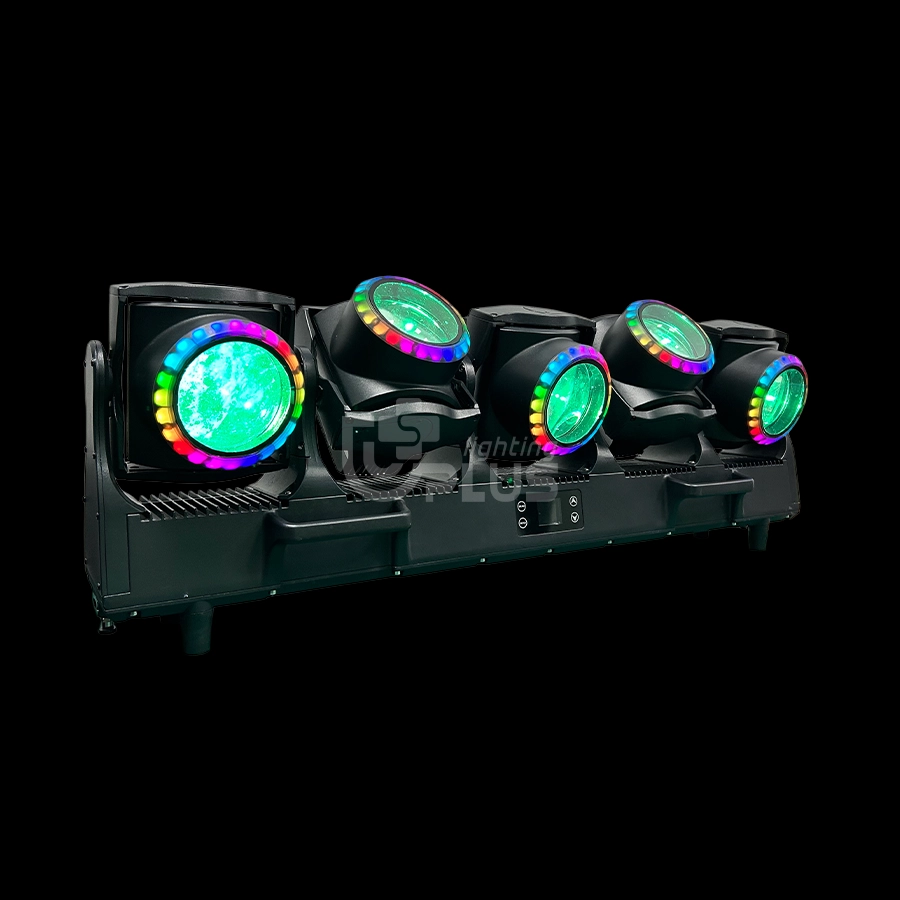
Waterproof 5*120W Pixel zoom LED bar moving head, a waterproof 5*120W pixel zoom LED strip moving head light, with individually controllable pixels, supports zoom and dynamic effects, IP65 protection, suitable for outdoor performances, stage and engineering lighting.

The IP65 two-row 40*10W RGBW led pixel link bar is a high-protection pixel bar light. It adopts a dual-row design with 40 10W RGBW four-in-one LED beads, supports pixel-level independent light control and multi-lamp linkage, and has an IP65 protection rating, making it rainproof and dustproof. It is compatible with DMX512 control and can present rich dynamic light effects, making it suitable for creating linear light and shadow effects in outdoor lighting, stage backgrounds, cultural and tourism landscapes and other scenarios.
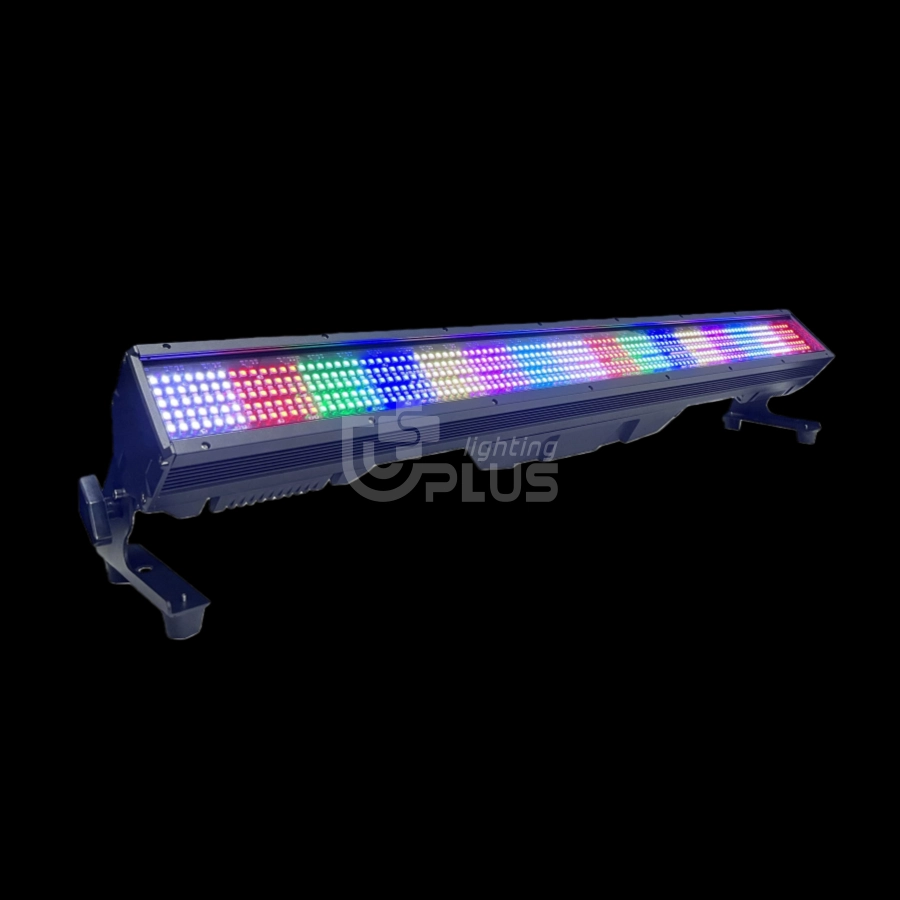
The IP65 waterproof 400W LED Link Strobe bar is a high-protection cascaded strobe light strip equipped with a 400W high-power LED light source. The strobe frequency is adjustable and supports seamless linkage of multiple lights. The IP65 protection rating can withstand outdoor wind, rain, and dust. It is compatible with DMX512 control, easy to install, and suitable for creating dynamic light and shadow in outdoor performances, cultural tourism night tours, architectural lighting and other scenarios.

The IP65 waterproof 18*30W RGBWAUV LED pixel bar is a high-performance outdoor pixel bar light. It is equipped with 18 30W RGBWAUV six-in-one LED beads, supports pixel-level independent light control, and can present rich colors and dynamic light effects. With an IP65 protection rating, it is highly dustproof and waterproof, compatible with multiple control modes such as DMX512, flexible splicing and easy installation, and suitable for linear light and shadow shaping in outdoor performances, cultural and tourism lighting, stage backgrounds and other scenarios.
If you have any comments or good suggestions, please leave us a message, later our professional staff will contact you as soon as possible.
Lighting Innovators
Uplus Lighting is a leading integrated company specializing in R&D, design, production, and sales of stage lighting solutions.
 Scan QR Code
Facebook
Instagram
YouTube
VK