






DMX LED Pixel Bars: Pixel Mapping, Control & Buying Guide
- Quick Answer: What Is a DMX LED Pixel Bar?
- 1. Pixel Control vs Simple Zone Control
- 2. How Pixel Mapping Works
- 3. RGB, RGBW and Other Color Systems
- 4. DMX Modes and Channel Planning
- 5. Dimming, Refresh Behavior and Cameras
- 6. Beam Shape, Diffusion and Visual Effect
- 7. Rigging, Power and Data
- 8. Indoor and Outdoor Pixel Bars
- 9. DMX LED Pixel Bar Buying Checklist
- 10. Where Uplus Lighting Fits
- FAQ
- What is an LED pixel bar?
- What is pixel mapping in stage lighting?
- Do all DMX pixel bars control every LED individually?
- Why do pixel modes use many DMX channels?
- Are LED pixel bars suitable for cameras?
- What should I check before buying a DMX LED pixel bar?
Quick Answer: What Is a DMX LED Pixel Bar?
A DMX LED pixel bar is a linear lighting fixture in which the LEDs are divided into controllable zones or pixels. Depending on the fixture, each pixel may be controlled individually or in groups, allowing chases, gradients, animated effects and pixel-mapped content. The exact number of pixels, channel modes and control options vary by model.
1. Pixel Control vs Simple Zone Control
Not every LED bar marketed as a pixel bar offers full individual-pixel control. Some fixtures divide the bar into a smaller number of controllable segments, while others expose each pixel or LED group separately. Buyers should verify the actual pixel count, segment structure and DMX mode before planning a pixel-mapping system.
2. How Pixel Mapping Works
Pixel mapping treats the controllable sections of a fixture as visual elements that can be addressed from a lighting console, media server or compatible control system. The controller sends intensity and color data to each mapped zone. The practical channel count can grow quickly, so fixture mode selection and system capacity should be planned together.
3. RGB, RGBW and Other Color Systems
LED pixel bars can use different emitter configurations, including RGB and RGBW. Additional white or other color emitters can expand the available mixing options, but the result depends on the LED package, optics, control curve and fixture design. Buyers should evaluate the required colors and camera performance using the actual model rather than assuming one emitter format is always superior.
4. DMX Modes and Channel Planning
| Mode type | Typical use |
|---|---|
| Basic mode | Whole-fixture color and intensity control with fewer channels |
| Segment mode | Several independently controlled zones for chases and gradients |
| Pixel mode | Maximum spatial control for mapped effects, with higher channel requirements |
Check the channel chart for the exact fixture. High-resolution pixel modes can require substantially more DMX or network data than basic modes.
5. Dimming, Refresh Behavior and Cameras
For concerts, television, streaming or camera-heavy events, evaluate dimming behavior and flicker performance using the real fixture and camera system. Suitable refresh behavior depends on camera settings, frame rate, shutter configuration and the fixture electronics; there is no single frequency that guarantees flicker-free performance in every production.
6. Beam Shape, Diffusion and Visual Effect
Pixel bars can be used as visible eye-candy fixtures, scenic lines, wall grazers or effect sources depending on their optics and diffusion. Narrower optics can create more defined beams, while diffusion can produce a smoother luminous line. Select the optical treatment for the intended stage picture.
7. Rigging, Power and Data
Check fixture length, weight, mounting options, safety attachment, power input and linking, data connectors and cable routing. Large arrays can create significant power, addressing and cabling requirements, so system planning should include the full fixture count rather than one bar in isolation.
8. Indoor and Outdoor Pixel Bars
Outdoor or exposed installations require the appropriate environmental rating and connector design for the project. Verify the actual IP rating, operating conditions and installation guidance of the selected fixture instead of assuming all LED pixel bars are weather resistant.
9. DMX LED Pixel Bar Buying Checklist
- Number of controllable pixels or zones
- RGB, RGBW or other emitter configuration
- Basic, segment and pixel DMX modes
- Console, media-server or network compatibility
- Dimming and camera-performance requirements
- Optics or diffusion
- Rigging, power and data linking
- Indoor or outdoor environmental requirements
10. Where Uplus Lighting Fits
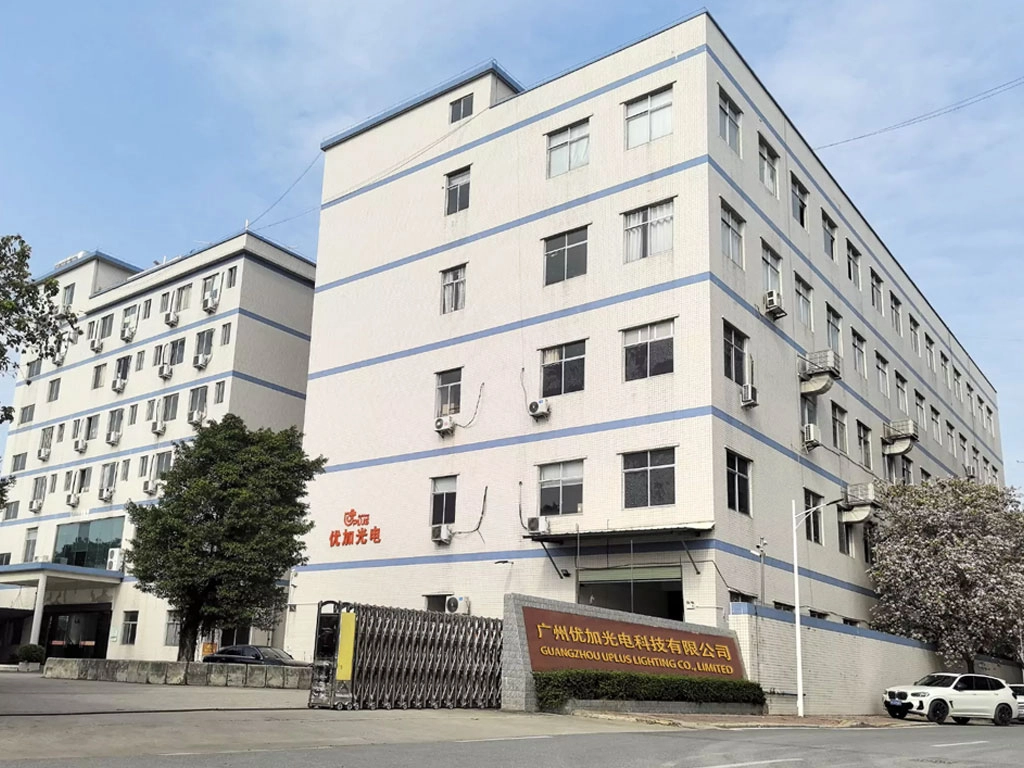
Uplus Lighting was established in 2012 in Guangzhou, China, and manufactures stage-lighting products including moving head lights, strobe lights, static lights, theatre lights, follow spot lights, stage effect lights and laser lights. The company also supports OEM orders and customized product development. Buyers should verify the exact pixel-control, color, DMX and environmental specifications required for the selected product.
FAQ
What is an LED pixel bar?
It is a linear LED fixture divided into controllable zones or pixels so different sections can display separate colors or intensity values, depending on the model.
What is pixel mapping in stage lighting?
Pixel mapping assigns controllable fixture zones to positions in a visual layout so a console or media system can send coordinated color and intensity data to them.
Do all DMX pixel bars control every LED individually?
No. Some use grouped segments rather than individual pixels, so buyers should check the channel chart and pixel structure of the exact model.
Why do pixel modes use many DMX channels?
Each independently controlled zone requires its own color or intensity data, so higher-resolution control increases channel usage.
Are LED pixel bars suitable for cameras?
They can be, but dimming and flicker behavior should be tested with the actual camera settings and fixture model used by the production.
What should I check before buying a DMX LED pixel bar?
Check pixel count, color system, DMX modes, controller compatibility, camera requirements, optics, rigging, power, data and environmental rating.
Mini LED Moving Heads vs Conventional Moving Heads: ROI
Top 10 bee eye moving head light Manufacturers and Supplier Brands

The Ultimate Guide to Spot Beam LED Light Bars for 2026: Penetrate the Darkest Trails
Top 10 Laser Light Moving Head Fixtures for Touring Shows

1000W Waterproof BSWF 4-in-1 Moving Head combines beam, spot, wash, and frame effects in one. IP-rated waterproof design, high-brightness output, precise control, ideal for outdoor & indoor stage events.
If you have any comments or good suggestions, please leave us a message, later our professional staff will contact you as soon as possible.
Lighting Innovators
Uplus Lighting is a leading integrated company specializing in R&D, design, production, and sales of stage lighting solutions.
 Scan QR Code
Facebook
Instagram
YouTube
VK