






Energy-Efficient Mini LED Moving Heads: Save Power & Costs
- Why energy efficiency matters in modern stage lighting
- Operational costs and environmental impact
- Regulatory and sustainability drivers
- relevance and discoverability
- Technical advantages of mini LED moving head lights
- High efficacy in a compact package
- Lower heat load and infrastructure benefits
- Longevity and maintenance savings
- Quantifying savings: power, cost, and ROI
- Typical power comparisons
- Sample ROI calculation
- Data sources and validation
- Choosing and deploying mini LED moving head lights
- Selecting the right beam/wash characteristics
- Power management and control considerations
- Retrofit vs full replacement strategy
- Uplus Lighting: practical solutions and competitive strengths
- Company background and product range
- Core competencies and differentiation
- Why choose Uplus for energy-efficient solutions
- Installation, maintenance, and long-term considerations
- Best practices for installation
- Maintenance schedules and monitoring
- Planning for obsolescence and scalability
- Frequently asked questions (FAQ)
- 1. How much energy can I realistically save by switching to mini LED moving head lights?
- 2. Do mini LED moving heads have the same brightness and effects as larger discharge fixtures?
- 3. Are there trade-offs in color quality or gobos with LED fixtures?
- 4. How should I size circuits and power distribution for many LED moving heads?
- 5. What maintenance should I expect for LEDs versus lamp-based fixtures?
- 6. Can Uplus Lighting provide customized fixtures or OEM options?
I write this as a lighting professional with years of experience designing and specifying fixtures for theatres, touring productions, and permanent installations. In this article I summarize how mini LED moving head lights can dramatically reduce energy consumption and operating costs while maintaining creative flexibility and output. I also provide practical selection criteria, comparison data, and deployment tips that are useful for lighting designers, rental companies, and venue managers focused on sustainability and lifecycle cost reduction.
Why energy efficiency matters in modern stage lighting
Operational costs and environmental impact
Energy costs and carbon footprints are increasingly important for venues and production companies. Lighting is frequently one of the largest electricity consumers in a performance rig, particularly when multiple moving heads are used for long runs. Replacing older discharge-based moving heads with mini LED moving head light fixtures reduces power draw and heat output, which cuts electricity bills and HVAC load. For context, the U.S. Department of Energy documents how LEDs achieve higher lumens per watt compared with traditional light sources, directly translating to lower energy use for equivalent luminous output (energy.gov - LED Lighting).
Regulatory and sustainability drivers
Many venues now face sustainability targets or reporting requirements. Choosing high-efficacy fixtures — such as mini LED moving head lights — helps operators meet these targets and qualify for incentives or rebates that some jurisdictions provide for energy-efficient lighting. Industry best practice organizations like the Illuminating Engineering Society (IES) provide guidance on recommended illuminance levels and energy-conscious design (ies.org), which I use when advising projects to balance performance and efficiency.
relevance and discoverability
From a discoverability point of view, specifying energy-efficient products and documenting measurable savings improves online visibility for local and geo-targeted searches . Clear product specifications, energy usage numbers, and local application case studies help search engines and potential clients find solutions that match their operational needs.
Technical advantages of mini LED moving head lights
High efficacy in a compact package
Mini LED moving head lights combine multi-die LED engines with efficient optics and thermal management, allowing small form factors to produce effects comparable to much larger fixtures. Compared to legacy discharge-based fixtures that used lamps (e.g., 575W HPL, 1kW discharge), modern mini LED fixtures often consume a fraction of that power while offering faster startup, instant color changes, and dimming without lamp replacement. The Wikipedia overview of moving head fixtures explains how different light sources evolved in the industry (Wikipedia - Moving head).
Lower heat load and infrastructure benefits
LEDs generate less radiant heat than discharge lamps, reducing cooling requirements in enclosed spaces or on compact stages. This reduces HVAC running hours and extends equipment life near the fixture. For touring shows or rented rigs, reduced heat improves safety and lowers shipping/touring constraints associated with heavy ballast and cooling systems.
Longevity and maintenance savings
LEDs typically have far longer useful lives than lamps; typical LED engines can operate tens of thousands of hours depending on drive current and thermal conditions. This reduces lamp replacement costs, stock inventory, and downtime—especially important for rental companies and long-running theatre productions.
Quantifying savings: power, cost, and ROI
Typical power comparisons
Below I present a pragmatic comparison between typical mini LED moving head lights and two conventional fixture types (discharge moving head and halogen/older sources). The numbers below are representative ranges I have observed across products and rental inventories; always check specific fixture datasheets for exact figures.
| Fixture Type | Typical Power Draw (W) | Typical Useful Lumen Output | Notes |
|---|---|---|---|
| Mini LED moving head light | 80–300 W | 7,000–35,000 lm (fixture-dependent) | Compact, multi-die LEDs, efficient optics |
| Discharge moving head (older) | 600–1,200 W | 40,000–80,000 lm | Higher output but heavy power draw and lamp replacement |
| Halogen/Incandescent fixtures | 500–2,000 W | Varied | Low efficacy, high heat and maintenance |
These numbers align with general LED efficacy trends outlined by energy authorities (DOE - Solid-State Lighting) and the industry understanding of moving head lamp evolution (Wikipedia - LED).
Sample ROI calculation
Here's a simplified example I use when advising clients to estimate payback when replacing older discharge moving heads with mini LED moving head lights. Assume a rental company operates 20 fixtures for 200 shows/year, each show averaging 8 hours lighting-on time, and electricity cost of $0.12/kWh.
| Item | Discharge (W) | Mini LED (W) |
|---|---|---|
| Average fixture power | 900 W | 200 W |
| Annual hours (200 shows × 8 h) | 1,600 h | |
| Energy per fixture (kWh) | 1,440 kWh | 320 kWh |
| Energy per fleet (20 fixtures) | 28,800 kWh | 6,400 kWh |
| Annual cost (@ $0.12/kWh) | $3,456 | $768 |
| Annual savings | $2,688 | |
At $2,688 saved per year, the investment in new mini LED moving head lights can pay back quickly depending on unit price and additional savings from lower maintenance and HVAC. These calculations are conservative; in regions with higher electricity costs or longer runtimes the payback is faster.
Data sources and validation
For rigorous projects I reference fixture datasheets and measure in-situ power consumption with power meters, corroborating estimates with industry sources such as DOE/SSL guidance and IES recommendations (DOE SSL, IES).
Choosing and deploying mini LED moving head lights
Selecting the right beam/wash characteristics
Mini LED moving head lights come in beam, spot, and wash variants. I always match the fixture type to the application: tight beams for aerial effects, spot for gobos and framing, and wash for coverage. Consider lumen output, beam angle, zoom range, and color system (CMY vs RGB+mint) when specifying for a theatre or touring rig.
Power management and control considerations
Even with lower per-fixture draw, a large count of fixtures needs proper power distribution. Use inrush-limited dimmer racks or LED-friendly power supplies, and distribute circuits to avoid N-1 issues on a single breaker. For DMX/RDM and network control, ensure firmware compatibility and consider using architectural control gateways for integration with venue systems.
Retrofit vs full replacement strategy
Deciding between retrofitting (e.g., replacing lamps or adding LED retrofit modules) and full fixture replacement depends on fixture age, mechanical reliability, and feature needs. In many cases I advise replacing old discharge moving heads with modern mini LED moving head light fixtures because the performance and operational savings outweigh the retrofit costs, especially for rental fleets and long-term installations.
Uplus Lighting: practical solutions and competitive strengths
Company background and product range
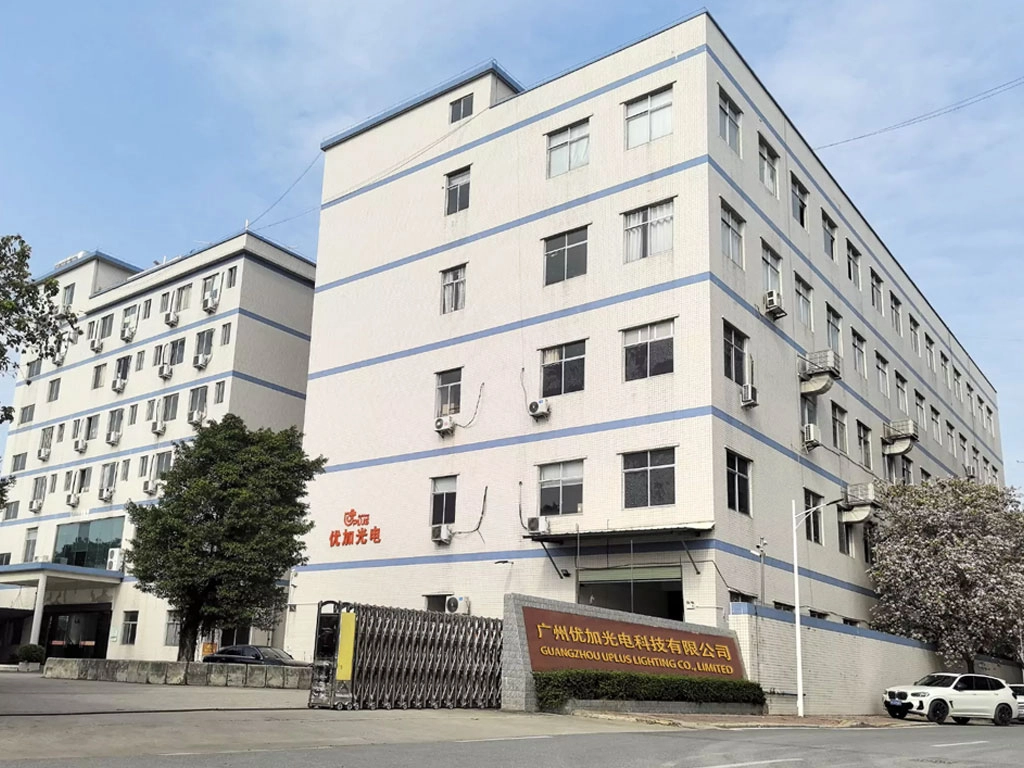
Uplus Lighting was established in 2012 in Guangzhou, China, and is a professional manufacturer specializing in high-end stage lighting products. We provide innovative and reliable lighting solutions for theaters, studios, cultural projects, concerts, and live events worldwide. With rich experience in product development, manufacturing, and export, we offer a wide product range covering professional lighting, entertainment lighting, and theater lighting to meet the needs of large performances, rental companies, distributors, and project clients. Since 2015, our products have been widely applied in major concerts, opera houses, TV programs, and large-scale events in China and abroad. We also support OEM orders and customized product development. A skilled production team and strict quality control ensure stable performance, consistent quality, and professional service trusted by global partners.
Core competencies and differentiation
In my work with Uplus Lighting products, I’ve observed several competitive strengths: rigorous QC processes throughout production, flexible OEM/customization capabilities, and a broad portfolio that includes moving head lights, strobe lights, led battery lights, static lights, led theatre lights, led follow spot light, stage effect lights, and laser lights. Uplus emphasizes stable optical performance and thermal design, which are critical to reliable mini LED moving head light operation across touring and fixed-install applications.
Why choose Uplus for energy-efficient solutions
Uplus combines product-level efficiency with practical after-sales support. For clients seeking to reduce operating costs, Uplus offers fixtures engineered for lower power draw without compromising color fidelity or beam quality. The company’s experience in large productions and OEM capability allow for customized optics, control options, and mechanical frames tuned to a project’s energy and creative requirements.
Installation, maintenance, and long-term considerations
Best practices for installation
Mount fixtures with adequate airflow and follow manufacturer thermal guidelines. For touring, protect lenses and optics during transit and perform regular firmware and calibration checks. Properly securing fixtures and providing service loops for data and power reduces downtime and improves fixture lifespan.
Maintenance schedules and monitoring
Although LED engines require less routine replacement, I recommend scheduled inspections for fans (if present), connectors, and moving parts. Use power meters and logging to monitor real consumption versus rated values; discrepancies often indicate firmware or driver issues that can be addressed proactively.
Planning for obsolescence and scalability
Plan procurement cycles to maintain cross-compatibility in control protocols and spare-parts inventory. Selecting fixtures with modular optics and replaceable LED engines can extend usable life and simplify future upgrades.
Frequently asked questions (FAQ)
1. How much energy can I realistically save by switching to mini LED moving head lights?
Savings depend on current fixtures and usage patterns. In many cases, operators see 50–80% lower power consumption per fixture compared with older discharge moving heads. Use measured power draws and the sample ROI table above for project-specific estimates. For general LED efficacy guidance see energy.gov.
2. Do mini LED moving heads have the same brightness and effects as larger discharge fixtures?
Modern mini LED moving head lights can match or exceed perceived brightness in many applications thanks to efficient optics and color mixing, but very large-scale wash or projection tasks may still call for higher-output fixtures. Evaluate requirements for beam punch, projection distance, and gobo fidelity when specifying.
3. Are there trade-offs in color quality or gobos with LED fixtures?
Advances in LED color mixing and high-CRI white engines have minimized earlier color-rendering issues. Gobo definition depends on optics more than the light source; high-quality mini LED fixtures with precise optics deliver crisp gobos comparable to discharge fixtures.
4. How should I size circuits and power distribution for many LED moving heads?
Even though each fixture uses less power, total load matters. Distribute fixtures across multiple breakers, plan for inrush currents, and use LED-compatible power management hardware. Measure actual current draw in-situ and plan with an N-1 contingency for circuits used by rigs.
5. What maintenance should I expect for LEDs versus lamp-based fixtures?
LED fixtures reduce lamp replacements, but you should still schedule inspections for cooling fans, connectors, and mechanical moving parts. Firmware updates and occasional LED module servicing may be needed over a multi-year lifecycle.
6. Can Uplus Lighting provide customized fixtures or OEM options?
Yes. Uplus supports OEM orders and customized product development, offering tailored optics, control options, and branding to meet project needs. Their production team and QC processes support reliable outcomes for both fixed-install and touring applications.
If you want to discuss specific projects, request power consumption measurements, or see sample mini LED moving head light specifications, contact us for a consultation or view our product range. For product inquiries and custom projects, please contact Uplus Lighting to get detailed datasheets and pricing for moving head lights, strobe lights, led battery lights, static lights, led theatre lights, led follow spot light, stage effect lights, and laser lights.
Contact/See products: reach out via Uplus Lighting channels for quotes, technical consultations, and OEM partnerships.
Safety Standards and Compliance for LED Laser Stage Lighting
Stage Lighting Setup: Integrating Moving Head Lights with DMX
Top 10 LED Moving Head Strobe Lights for DJs and Venues
How to Choose Beam, Spot, and Wash LED Moving Heads

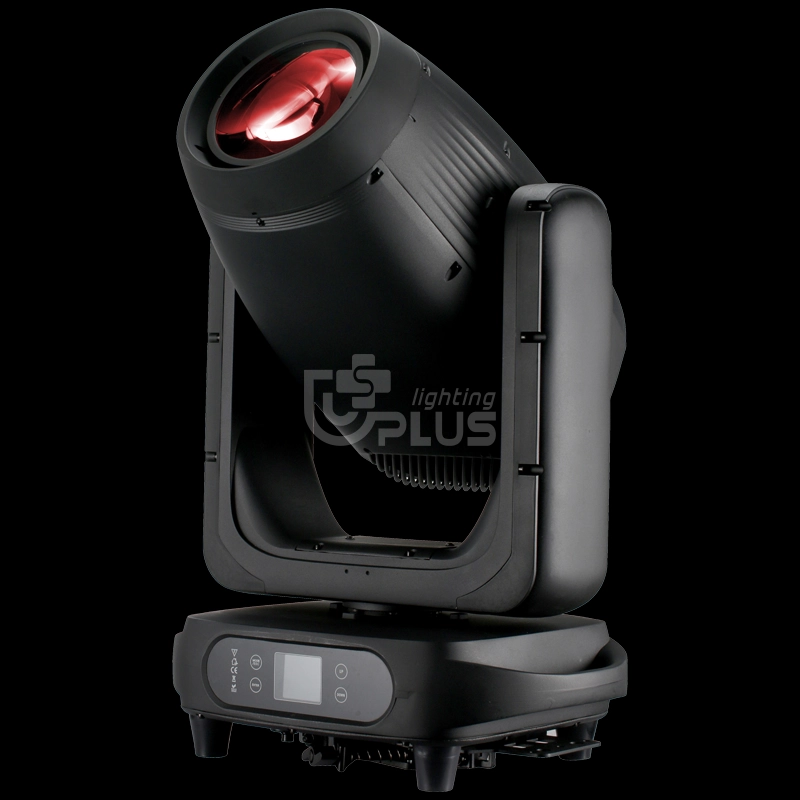
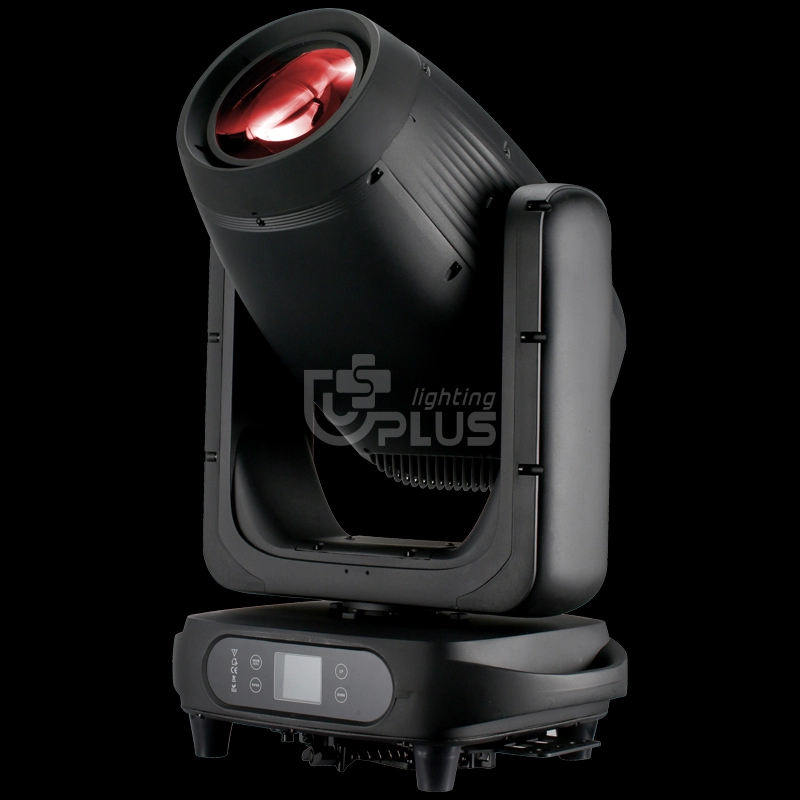
1000W Waterproof BSWF 4-in-1 Moving Head combines beam, spot, wash, and frame effects in one. IP-rated waterproof design, high-brightness output, precise control, ideal for outdoor & indoor stage events.
If you have any comments or good suggestions, please leave us a message, later our professional staff will contact you as soon as possible.
Lighting Innovators
Uplus Lighting is a leading integrated company specializing in R&D, design, production, and sales of stage lighting solutions.
 Scan QR Code
Facebook
Instagram
YouTube
VK