






- How to choose white point for mixed LED bar arrays?
- What CRI metrics matter beyond CRI70 or CRI80 ratings?
- How to specify LED bar color temperature under dimming?
- How to account for spectral power distribution and metamerism?
- What binning tolerances ensure consistent CCT across production?
- When to specify TM-30 metrics instead of traditional CRI?
How to specify color temperature and CRI for LED bars? | Insights by Uplus Lighting
Stage lighting buyers need concrete, measurable specs—not vague CRI numbers or single Kelvin targets. This FAQ explains how to define correlated color temperature, color rendering, spectral requirements, binning tolerances, and dimming behavior so LED bars match across fixtures and productions.
How to choose white point for mixed LED bar arrays?
Specify the white point both as a correlated color temperature (CCT in Kelvin) and as precise chromaticity coordinates (CIE 1931 x,y or u',v'). CCT alone is insufficient because it compresses SPD differences; two 3200K sources can have different chromaticities and SPDs producing visible mismatch.
Practical spec to avoid crew headaches: require a target CCT (e.g., 3200K or 5600K) plus a maximum SDCM (Standard Deviation of Color Matching) tolerance—typically 3-step SDCM or tighter for theatrical work where skin tones and flesh rendering are critical. Ask for the supplier’s measured x,y coordinates and an SDCM report on delivered units. Also require SPD plots at 100% output and at key dim levels so you can confirm visual match after dimming and diffusion.
What CRI metrics matter beyond CRI70 or CRI80 ratings?
CRI Ra (the common “CRI” number) is an average of R1–R8 and omits strong reds (R9) and saturated colors important for skin, costumes, and scenic paints. For stage lighting, insist on published R9 and, ideally, TM-30 metrics (Rf and Rg). TM-30 gives a more complete picture of fidelity and gamut: Rf indicates average color fidelity across 99 color samples and Rg indicates gamut change.
Rule of thumb: avoid fixtures that only advertise CRI80 without R9; target CRI or Ra ≥90 for critically lit drama and R9 ≥50 for convincing skin tones, or evaluate using TM-30 where Rf ≥90 and Rg close to 100 indicates faithful reproduction. Always request measured SPD data so you can evaluate rendering of key fabrics and pigments, not just single-number claims.
How to specify LED bar color temperature under dimming?
Dimming frequently introduces color shift due to LED driver type, LED phosphor behavior, and LED bin variation. The correct spec requires the supplier to provide chromaticity or CCT drift figures at multiple dim levels (e.g., 100%, 50%, 10%). Specify acceptable limits either as Δuv or as SDCM across the dimming range—for stage applications, require color stability within 3 SDCM down to the lowest operational dim point (commonly 10% or 5%).
Ask for the dimming method (PWM frequency, current reduction, or linear dimming curve) and for spectroradiometer traces at each dim level. Where precise color control is mandatory, require per-fixture calibration or factory-programmed LUTs to linearize output and preserve chromaticity through ramping.
How to account for spectral power distribution and metamerism?
Spectral Power Distribution (SPD) is the only complete description of a light source’s color behavior. Two sources with identical CCT and CRI can render colors differently because their SPDs differ. Metamerism occurs when objects match under one SPD but diverge under another—critical for costumes and painted sets.
Require SPD files (text or plotted) from the manufacturer measured with a calibrated spectroradiometer and request SPD comparisons between fixture models or production lots. For absolute control, evaluate fabrics, makeup, and paint samples under the SPD of your chosen LED bars prior to selection to detect metameric failures. When matching legacy tungsten fixtures, compare SPDs directly rather than relying on CCT number alone.
What binning tolerances ensure consistent CCT across production?
Specify binning in terms of chromaticity bins and SDCM rather than vendor bin labels alone. Manufacturers often use ANSI bins or proprietary bins; require the supplier to commit to a max SDCM (e.g., ≤3-step) and to ship from a single bin lot for each production run to avoid run-to-run variation.
Also request LED bin codes and batch traceability so that replacements or additional fixtures come from a matching bin or are re-sorted/graded by the factory. For larger arrays where adjacent bars are visible, specify LED spacing, diffuser type, and optical mixing length to prevent perceivable color striping that bin-to-bin variance can reveal.
When to specify TM-30 metrics instead of traditional CRI?
Use TM-30 when you need a comprehensive, quantitative evaluation of color performance across a broad set of real-world samples. TM-30’s Rf (fidelity) and Rg (gamut) explain color shifts and gamut expansion/contraction more clearly than Ra alone. For theatrical, museum, and film applications where faithful reproduction of saturated colors and skin tones matters, require TM-30 data in addition to CRI and R9.
Request both TM-30 and full SPD measurements and ask suppliers to provide example renderings or photos of typical costumes under the measured light so stakeholders can judge practical performance rather than just numbers.
Conclusion: Specifying color temperature and CRI for LED bars requires measurable chromaticity, SPD data, binning and SDCM limits, dimming stability reports, and modern color metrics (R9, TM-30). Merely asking for a Kelvin value or a single CRI number invites mismatches and costly rework.
Uplus Lighting can provide measured SPD charts, per-lot bin traceability, dimming chromaticity reports, and consultation on SDCM and TM-30 targets so your LED bars match on stage and in production environments.
Contact us for a quote at www.upluslighting.com or albee@upluslighting.com.


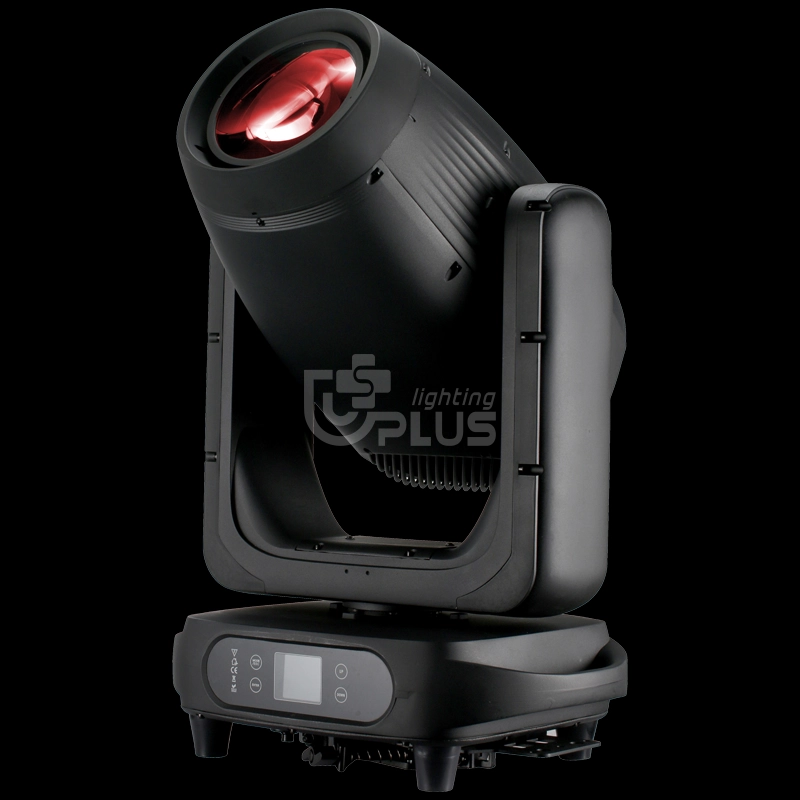
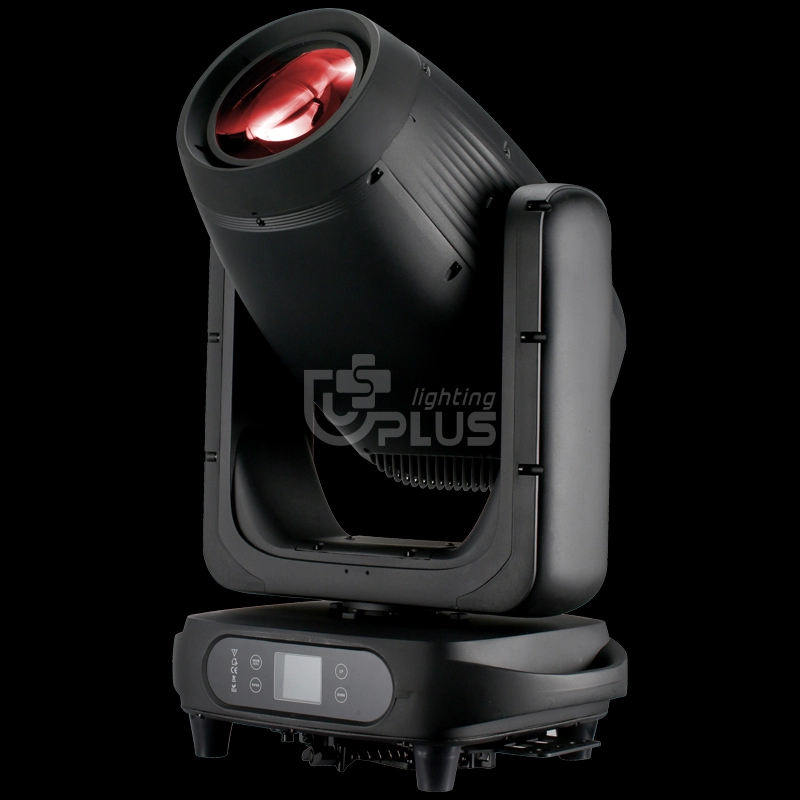
1000W Waterproof BSWF 4-in-1 Moving Head combines beam, spot, wash, and frame effects in one. IP-rated waterproof design, high-brightness output, precise control, ideal for outdoor & indoor stage events.
Stay updated on our latest news
If you have any comments or good suggestions, please leave us a message, later our professional staff will contact you as soon as possible.
Lighting Innovators
Uplus Lighting is a leading integrated company specializing in R&D, design, production, and sales of stage lighting solutions.
 Scan QR Code
Facebook
Instagram
YouTube
VK