






- Which IP rating matters for indoor versus outdoor LED bars?
- How important is CRI and color consistency for stage washes?
- What power, connectivity and control protocols should be prioritized?
- How to evaluate thermal design, LED lifespan, and lumen maintenance?
- Which optics, beam angles, and pixel density suit theatrical applications?
- What mounting, serviceability, and safety features reduce operational downtime?
What features should buyers prioritize in an LED stage light bar?
Article Title: What features should buyers prioritize in an LED stage light bar?
Choose LED stage light bars by prioritizing ingress protection, spectral fidelity, control protocols, thermal validation, optics and maintainability; these six factors determine performance, reliability and total cost of ownership for touring, theatre and install applications.
Which IP rating matters for indoor versus outdoor LED bars?
Don’t treat IP as marketing copy. The IEC 60529 IP code has two digits: the first for solid ingress and the second for liquids. For dry, permanent indoor venues an IP20 fixture is common and acceptable. For semi-exposed front-of-house rigs where dust or condensation is present, specify at least IP44 to protect against solid objects and water splashes. For true outdoor exposure, public events, or wash fixtures that may encounter rain, choose IP65 or higher with sealed optics and corrosion-resistant housings. For touring use evaluate not only IP rating but connector sealing, gasket quality, and whether external vents have filters or membrane vents that maintain protection while allowing thermal dissipation. Insist on vendor documentation showing the tested IP rating and details on cable glands and connector types used for outdoor-rated products.
How important is CRI and color consistency for stage washes?
Color fidelity is mission-critical for skin tones and scenic color matching. CRI alone is dated; use CRI as a baseline and request TM-30 metrics and the spectral power distribution curve from suppliers. Aim for fixtures with CRI 90+ for theatrical work and TM-30 Rf close to 90 for fidelity and stable color rendition. Be aware of color mixing strategies: RGB-only mixing can produce saturated colors but may lack accurate whites and skin tones; RGBW or RGBA plus dedicated white or amber emitters often give better whites and gentler gel-like mixes. Also ask for color binning tolerances and delta u'v' data — low delta indicates consistent color output across fixtures. For broadcast or camera work check for flicker-free control and spectral spikes that can create metamerism on camera sensors.
What power, connectivity and control protocols should be prioritized?
Control and power choices determine integration complexity and reliability. DMX512 with RDM remains the baseline for per-fixture control and remote configuration; for large installs prefer sACN or Art-Net over Ethernet with proper network architecture. Ensure fixtures offer 5-pin XLR as well as 3-pin compatibility if needed and an EtherCON rated port for network transport. For pixel mapping and media patterns request fixtures compatible with SPI or pixel protocols and check maximum pixel chain lengths before signal boosters are required. On the power side, verify actual wattage at maximum white, inrush current, and whether power linking is fused; PowerCON TRUE1 and IP-rated power connectors increase safety for touring. Also specify fixtures with power factor correction and, where necessary, soft-start circuitry to avoid nuisance breaker trips when many units power up simultaneously.
How to evaluate thermal design, LED lifespan, and lumen maintenance?
Thermal engineering governs long-term performance. Ask for LM-80 test data on the LED packages and TM-21 lifetime projections from the manufacturer; these are industry-standard reports and credible indicators of lumen maintenance. Typical quality LEDs are tested to LM-80 and project L70 lifetimes of 50,000 hours or more under given thermal conditions; accept only quoted Lx values with the associated ambient and case temperatures. Inspect the fixture cooling approach: passive heatsinking is preferred for quiet venues and rugged touring; active fan cooling can extend output but introduces noise and a field-service item. Check rated junction temperatures, long-term lumen depreciation curves, and whether optics and driver electronics are thermally isolated from the LEDs to avoid driver failures. Require manufacturer documentation for L70/L80 projections and real-world burn-in procedures.
Which optics, beam angles, and pixel density suit theatrical applications?
Match optics to purpose. Wide washes typically require beam angles between 60 and 120 degrees and homogeneous diffusion to avoid hot spots on cyclorama and cyc surfaces. Narrower angles, 10 to 30 degrees, are better for backlighting, side-lighting, or accenting. For dynamic pixel effects evaluate per-pixel addressability, pixel pitch, and the number of individually controllable segments in the LED stage light bar; smaller pixel pitch produces finer gradients but reduces output per pixel and increases control and bandwidth requirements. Inspect the optical design: quality TIR lenses or engineered diffusers give better mixing and preserve lumen efficacy; cheap diffusers can reduce output and create color fringing. Request measured lux tables at multiple distances and confirm uniformity scores rather than trusting only degree specifications.
What mounting, serviceability, and safety features reduce operational downtime?
Operational uptime is driven by mechanical design and serviceability. Look for robust rigging points, standard clamp compatibility, and clear center-of-gravity marks so units fly safely. Modular construction with removable LED strips, replaceable drivers, and accessible connectors decreases mean time to repair in the field. RDM and firmware update support ease commissioning and troubleshooting. Verify safety certifications required for your market such as CE and UL listings, and demand specified load ratings, safety bond points, and anti-rotation features for touring rigs. Finally, require clearly documented spare-part lists and expected service intervals; long warranties combined with available local service networks materially reduce lifecycle costs.
Conclusion: When evaluating an LED stage light bar prioritize environmental protection, proven color science, control interoperability, validated thermal performance, optics matched to application, and field-serviceable mechanics. These six vectors determine the fixture's real-world reliability and visual quality more than headline lumen numbers or trendy feature checklists.
Uplus Lighting combines product-level engineering criteria, LM-80/TM-21 validation expectations, and hands-on touring and installation insight to help buyers select fixtures that reduce operational risk and maximize creative control.
Contact us for a quote at www.upluslighting.com or albee@upluslighting.com.


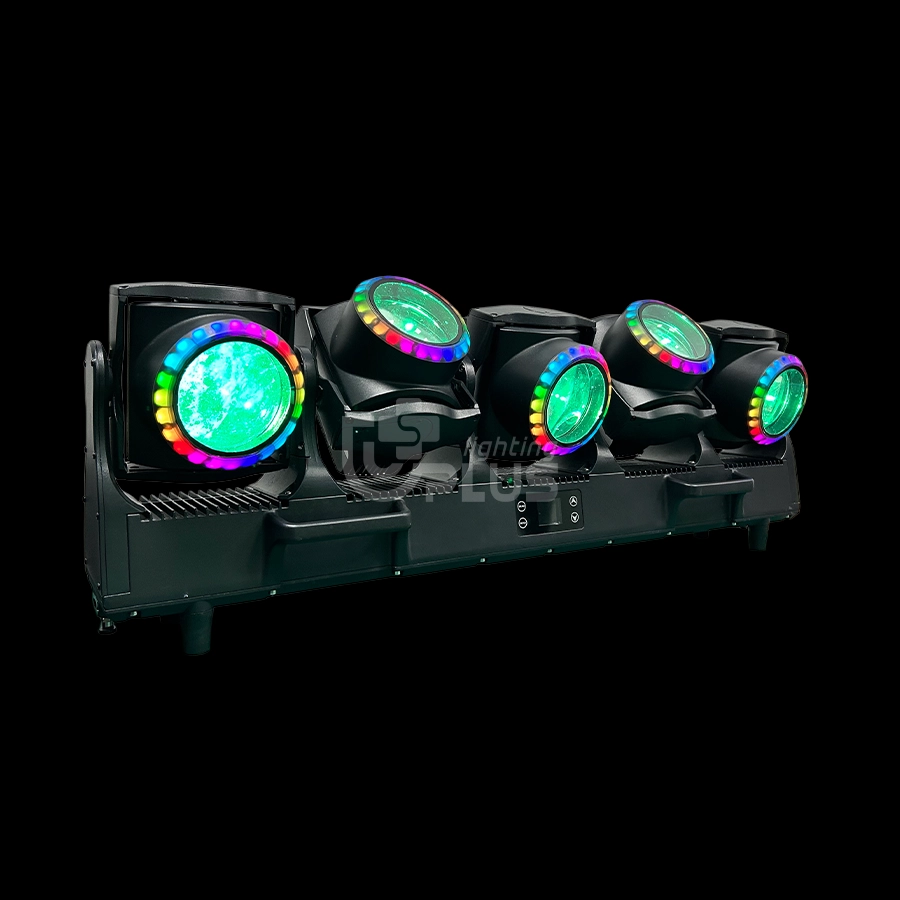
Waterproof 5*120W Pixel zoom LED bar moving head, a waterproof 5*120W pixel zoom LED strip moving head light, with individually controllable pixels, supports zoom and dynamic effects, IP65 protection, suitable for outdoor performances, stage and engineering lighting.

The IP65 two-row 40*10W RGBW led pixel link bar is a high-protection pixel bar light. It adopts a dual-row design with 40 10W RGBW four-in-one LED beads, supports pixel-level independent light control and multi-lamp linkage, and has an IP65 protection rating, making it rainproof and dustproof. It is compatible with DMX512 control and can present rich dynamic light effects, making it suitable for creating linear light and shadow effects in outdoor lighting, stage backgrounds, cultural and tourism landscapes and other scenarios.
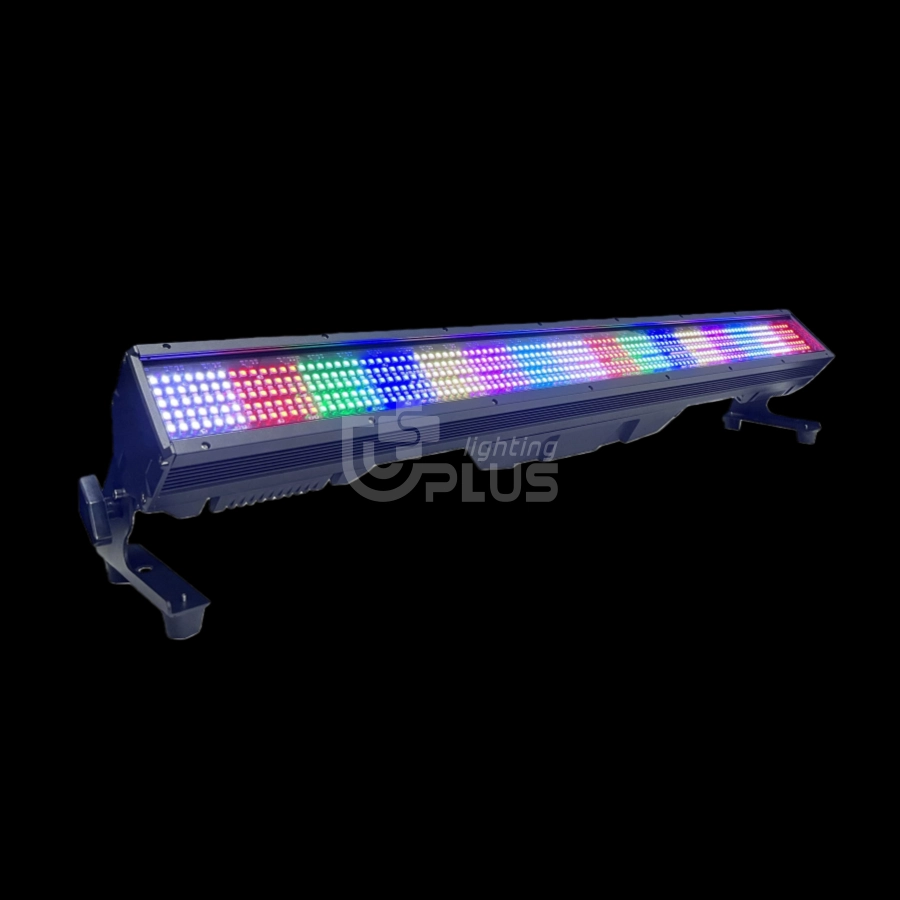
The IP65 waterproof 400W LED Link Strobe bar is a high-protection cascaded strobe light strip equipped with a 400W high-power LED light source. The strobe frequency is adjustable and supports seamless linkage of multiple lights. The IP65 protection rating can withstand outdoor wind, rain, and dust. It is compatible with DMX512 control, easy to install, and suitable for creating dynamic light and shadow in outdoor performances, cultural tourism night tours, architectural lighting and other scenarios.

The IP65 waterproof 18*30W RGBWAUV LED pixel bar is a high-performance outdoor pixel bar light. It is equipped with 18 30W RGBWAUV six-in-one LED beads, supports pixel-level independent light control, and can present rich colors and dynamic light effects. With an IP65 protection rating, it is highly dustproof and waterproof, compatible with multiple control modes such as DMX512, flexible splicing and easy installation, and suitable for linear light and shadow shaping in outdoor performances, cultural and tourism lighting, stage backgrounds and other scenarios.
Stay updated on our latest news
If you have any comments or good suggestions, please leave us a message, later our professional staff will contact you as soon as possible.
Lighting Innovators
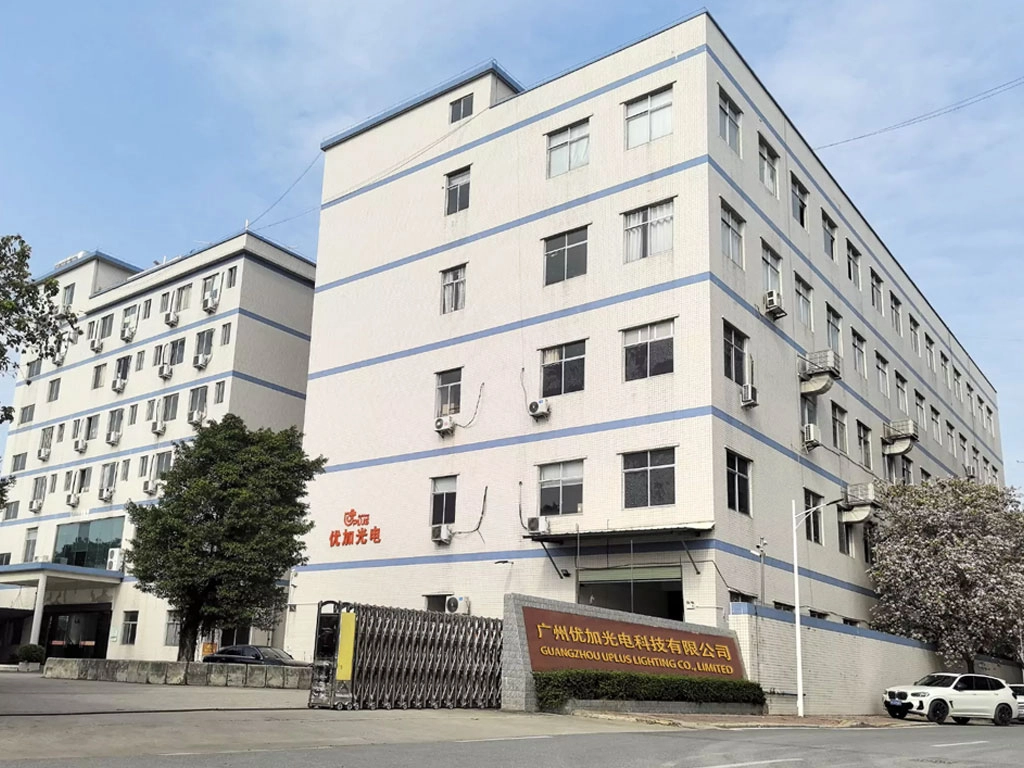
Uplus Lighting is a leading integrated company specializing in R&D, design, production, and sales of stage lighting solutions.
 Scan QR Code
Facebook
Instagram
YouTube
VK