






- How do I measure beam angle and consistency on Bee Eye?
- What tools accurately quantify lux and lumens from Bee Eye?
- How to assess color rendering (CRI/TLCI) on Bee Eye fixtures?
- How to evaluate color mixing and CMY/CTO performance practically?
- What tests detect beam artifacts, hotspots, and fringing in Bee Eye?
- How to document and specify Bee Eye beam/color performance for buyers?
How to evaluate beam and color performance of bee eye moving lights?
Article Title: How to evaluate beam and color performance of bee eye moving lights?
Quickly validate beam and color of Bee Eye moving lights with practical lab-grade tests: measure beam angle (FWHM), luminous flux (LM-79/integrating sphere), lux distribution, spectral power distribution with a spectrometer, and CRI/TM‑30/TLCI metrics; document results and identify hotspots.
How do I measure beam angle and consistency on Bee Eye?
Beam angle should be measured as a photometric profile, not by eyeballing: record the angular intensity distribution and calculate full width at half maximum (FWHM) and spill at 10% for a complete picture. Use a goniophotometer or rotate the fixture in front of a calibrated lux meter on a protractor rig, and derive angle from distance versus lux falloff. Measure at multiple focus positions and at least three pan/tilt orientations to reveal optic alignment shifts under movement. Always warm the fixture to stable operating temperature (typical 20–30 minutes) before testing. For moving fixtures, compare static head-on profile and off-axis profiles at ±15° to simulate practical rigging. Document environmental conditions and measurement distance so results are reproducible and comparable to manufacturer claims.
What tools accurately quantify lux and lumens from Bee Eye?
Use the right instrument for the parameter: a calibrated lux/photopic meter (NIST/ISO traceable) for spot illuminance readings; a goniophotometer or integrating sphere plus spectroradiometer to determine total luminous flux (lumens) and luminous intensity distribution; and an imaging photometer or beam profiler camera to map beam uniformity and hot spots. For colorimetric data, a spectroradiometer records spectral power distribution (SPD), chromaticity coordinates (CIE 1931 x,y), and correlated color temperature (CCT). Follow ANSI/IES LM‑79 procedures for luminous flux and chromaticity measurements of LED luminaires when formal reporting is required. Always note meter calibration date, measurement geometry, and ambient stray light controls.
How to assess color rendering (CRI/TLCI) on Bee Eye fixtures?
Assess color rendering from measured SPD: compute CRI (Ra) for quick legacy comparison, but use TM‑30 metrics (Rf and Rg) for a fuller depiction of fidelity and gamut; for broadcast/video applications run a TLCI evaluation to estimate camera response. CRI Ra averages the first eight reference samples and can hide spectral deficiencies; TM‑30 reports a fidelity index (Rf) and a gamut index (Rg) with color vector graphics to expose hue shifts. Measure after warm‑up and report Δuv (distance from the blackbody locus) to show tint stability—large Δuv values cause visible green/magenta casts and camera mismatches. For color-critical stage work, require objective thresholds in specifications (for example, TM‑30 Rf or CRI targets and maximum Δuv tolerance) rather than vendor descriptive words.
How to evaluate color mixing and CMY/CTO performance practically?
Test color mixing by stepping individual color channels through a defined ramp while recording SPD and chromaticity at each step. For CMY systems, verify linearity by measuring chromaticity drift across intensity levels and by checking repeated presets for reproducibility. For CTO and white point adjustment, measure CCT and Δuv at nominal and extreme CTO values to ensure consistency without spectral spikes. Look for channel interpolation artifacts or sudden hue jumps that indicate poor color lookup tables or LED bin mismatch. If multiple fixtures will be used together, perform cross‑fixture checks and compare SPDs; consistent SPD shape across fixtures is more important than identical CCT numbers for skin tones and saturated color mixes.
What tests detect beam artifacts, hotspots, and fringing in Bee Eye?
Detect optics-related artifacts with a flat‑field projection test: project a uniform white target at working distance, photograph with neutral exposure, and analyze luminance cross‑sections for spikes, rings, or asymmetry. Use a beam profiler to measure spatial intensity and look for grid or ring artifacts caused by LED array imaging, lens segmentation, or misaligned mixing chambers. Rotate gobos and run focus sweeps to reveal edge fringing and show whether artifacts shift with focus or pan/tilt—motion‑dependent artifacts often point to mechanical tolerance issues. Compare clean versus dusty optics and swapped lens elements to isolate contamination versus alignment problems. For acceptance testing, capture reference images and numeric line‑scan plots to include in the test report.
How to document and specify Bee Eye beam/color performance for buyers?
Create a concise acceptance test protocol that becomes part of the purchase or commissioning contract: include fixture serial, firmware, warm‑up time, ambient conditions, test distance, lux at specified distances, FWHM and 10% spill angles, lumens (LM‑79 if available), SPD, CCT, chromaticity (x,y), Δuv, CRI/TM‑30/TLCI scores, beam uniformity images, and pass/fail criteria. Require supplier LM‑79 reports for luminous metrics and provide a template for TM‑30/TLCI output for color acceptance. Define corrective actions for failures (replacement, recalibration, firmware update) and require cross‑fixture consistency checks for touring or multi‑fixture installs. Structured documentation reduces disputes and ensures fixtures perform in the real rig, not just on paper.
Uplus Lighting provides methodical test protocols, on‑site validation, and factory QC workflows to close these knowledge gaps: we supply LM‑79 style photometric measurements, spectroradiometric color reports, beam imaging, and clear pass/fail documentation tailored for stage lighting procurement and rental houses.
For a detailed LM‑79/TM‑30 test quote and on‑site validation, contact us at www.upluslighting.com or albee@upluslighting.com.


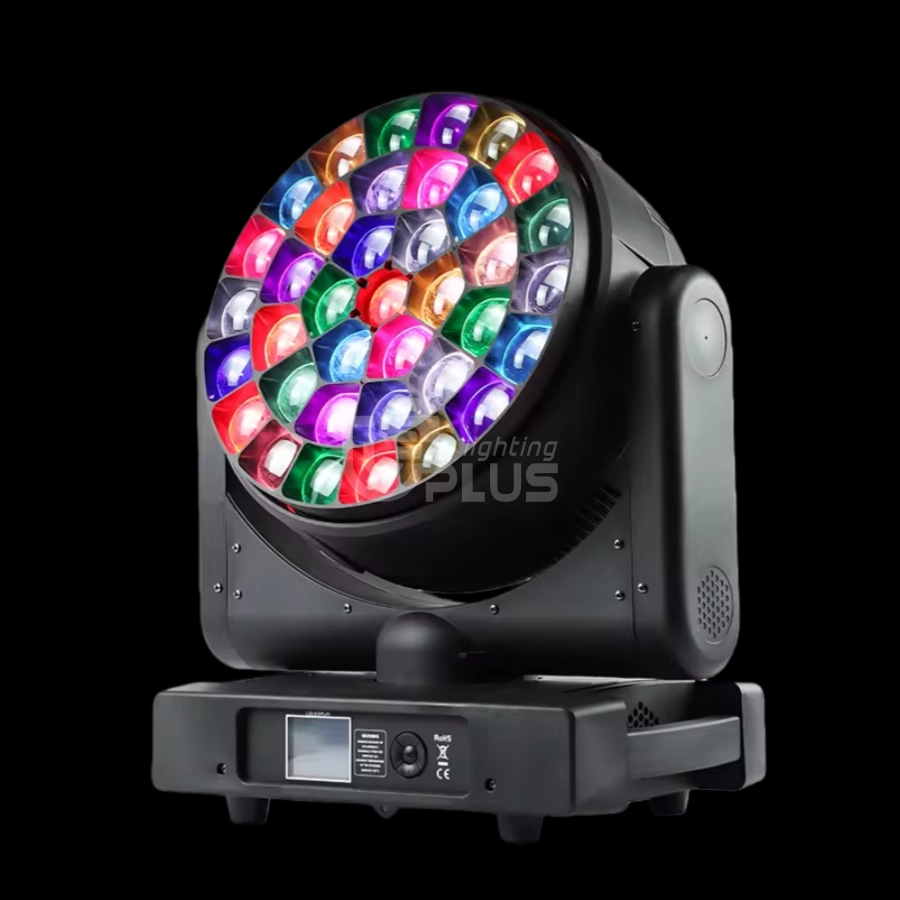
K25: 37*40W Wash zoom & Bee eye moving head, 37*40W LEDs integrate wall washing, zoom and bee eye triple light effects, precise light control, rich light effect layers, suitable for professional scenarios such as stage performances and cultural tourism lighting.

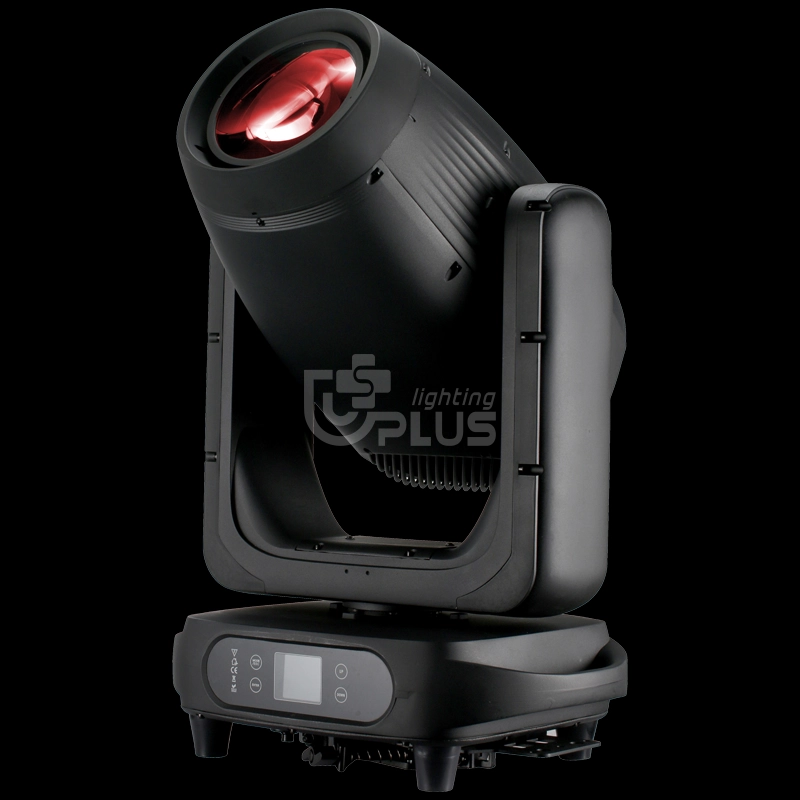
1000W Waterproof BSWF 4-in-1 Moving Head combines beam, spot, wash, and frame effects in one. IP-rated waterproof design, high-brightness output, precise control, ideal for outdoor & indoor stage events.
Stay updated on our latest news
If you have any comments or good suggestions, please leave us a message, later our professional staff will contact you as soon as possible.
Lighting Innovators
Uplus Lighting is a leading integrated company specializing in R&D, design, production, and sales of stage lighting solutions.
 Scan QR Code
Facebook
Instagram
YouTube
VK