






Top Features to Look for in Bee Eye Moving Head Lights
- Why the right moving head matters
- Artistic impact and practical reliability
- Typical applications and expectations
- Core optical and color features to prioritize
- LED engine, lumens and beam quality
- Zoom range and beam angle options
- Color mixing: CMY, RGBW, and color temperature
- Movement, mechanical precision, and control
- Pan/tilt range, encoders, and repeatability
- DMX, RDM, and modern control options
- Movement speed profiles and macros
- Durability, serviceability and operational costs
- Cooling, lifespan and maintenance access
- IP rating and rigging safety
- Energy consumption and operating cost
- Comparative quick-reference: choosing by application
- Buying checklist and field tests I recommend
- What to test during demos
- Questions to ask the vendor
- Cost of ownership considerations
- Uplus Lighting: manufacturer profile and how they fit
- Why I might recommend Uplus for certain buyers
- FAQ
- 1. What is a bee eye moving head light best used for?
- 2. How do I compare lumen vs. lux when choosing fixtures?
- 3. Are high CRI ratings important for moving head lights?
- 4. What should I check for touring vs. fixed installation?
- 5. How do I verify real-world performance before buying?
- Contact and next steps
Top Features to Look for in Bee Eye Moving Head Lights
As a long-time lighting designer and technical consultant, I know how deceptively complex choosing the right bee eye moving head light can be. Whether you manage a rental stock, plan theatrical productions, or specify fixtures for concerts, understanding the key features — optics, color system, movement precision, control protocols, thermal design, and serviceability — prevents costly mistakes. In this article I explain what to test on the shop floor, which specifications matter in real-world use, and how to weigh cost versus performance when evaluating a bee eye moving head light.
Why the right moving head matters
Artistic impact and practical reliability
A high-quality bee eye moving head light is not just a bright source; it is an instrument that shapes beams, textures, and motion to tell a visual story. I always remind clients: a fixture that fails the first night or drifts out of position is worse than a slightly lower lumen output. Reliability in transport, consistent color reproduction, and predictable movement profiles are as important as raw output.
Typical applications and expectations
Applications range from tight-beam aerial effects in concert rigs to soft washes for theatrical scenes. When you evaluate a bee eye moving head light, match the fixture’s capabilities to the use case. For example, a long-throw spot used on arena shows needs higher lux at distance and a tight zoom, while a theatre wash requires smooth dimming, high CRI, and even field illumination. For technical reference on stage lighting principles, see the stage lighting overview on Wikipedia (source).
Core optical and color features to prioritize
LED engine, lumens and beam quality
When I inspect a bee eye moving head light, the LED engine is the first thing I evaluate. Look at LED type (single high-power chip vs multiple clustered emitters), rated lumens, and optical coupling (reflectors and lenses). Manufacturers report lumens; however, lumens alone don’t tell the whole story — lux at distance and beam uniformity matter for your rig. For reliable context on LED performance, the US Department of Energy’s solid-state lighting resources are useful (DOE SSL).
Zoom range and beam angle options
A flexible zoom (for example 3°–45° or similar) increases a bee eye moving head light’s versatility. Test the fixture’s beam stops, iris (if present), and edge quality. For aerial effects you want a tight, well-defined beam; for washes, a smooth, even edge is preferable. Check how the fixture behaves at intermediate zoom positions — some fixtures show hot spots or color shifts at extremes.
Color mixing: CMY, RGBW, and color temperature
Decide whether you need fully variable color mixing (CMY or RGBW) or a preset color wheel. I favor fixtures with true CMY mixing for theatrical color matching, and high-CRI white modes (tunable correlated color temperature) when accurate skin tones are required. CRI and TM-30 metrics are measurable; compare published CRI/TM-30 scores when possible and request photometric data from manufacturers.
Movement, mechanical precision, and control
Pan/tilt range, encoders, and repeatability
A commercial-quality bee eye moving head light should offer at least 540° pan and 270° tilt with absolute or high-resolution encoders. These determine how smoothly the fixture moves and how accurately it returns to a preset. In my field tests, fixtures with absolute encoders save time during setup because they remember their position after power cycles.
DMX, RDM, and modern control options
Support for multiple control protocols — DMX512, RDM (remote device management), Art-Net/sACN — is essential. RDM allows remote addressing and diagnostics which speeds installation and troubleshooting. Also check for firmware update paths via USB or network, and whether the fixture supports profile-based integration with popular consoles.
Movement speed profiles and macros
Evaluate how movement looks at slow speeds; jitter and stepping are common failure points in cheaper units. Good fixtures provide adjustable acceleration curves and user macros for commonly used moves. I recommend testing custom macros and verifying that presets can be backed up and restored reliably.
Durability, serviceability and operational costs
Cooling, lifespan and maintenance access
Thermal design directly affects LED life and consistency. Look for efficient heat-sinking, quiet fans with easy replacement, and filters that can be cleaned without tools. I always open the fixture’s service panel (or request photos) to verify that consumables are accessible and that connectors are industry standard (e.g., Neutrik powerCON). For guidance on electrical safe practice, consult industry standards and associations such as USITT (USITT) and IES (IES).
IP rating and rigging safety
If you plan outdoor use, check for IP65 or higher ratings for the full fixture rather than just the optics. For indoor touring, look for robust rigging points, safety cable anchors, and a documented working load limit (WLL). Manufacturer-provided test certificates and compliance statements should be requested for high-volume purchases.
Energy consumption and operating cost
Compare power draw under typical loads and strobe conditions. Highly efficient LED engines reduce generator or mains load and lower heat buildup, which also reduces cooling requirements. For general LED efficiency data, the DOE SSL pages and industry white papers provide benchmarking information (DOE).
Comparative quick-reference: choosing by application
Below is a compact comparison table I use when advising clients on which class of bee eye moving head light suits their needs. Numbers are typical ranges; always ask manufacturers for measured photometric files (IES/IESNA) for exact figures.
| Feature | Small rental / club | Mid-range / theatre | High-end / arena |
|---|---|---|---|
| Typical LED power | 100–300W | 300–700W | 700–1500W |
| Zoom / beam angle | 5°–40° | 3°–45° | 2°–60° |
| Pan / Tilt | 540° / 270° | 540° / 270° w/ encoders | 540° / 270° absolute encoders |
| Typical CRI | 70–80 | 80–95 | 90–98 |
Sources: industry product specifications and LED performance summaries; for general stage lighting context see Wikipedia (stage lighting) and DOE SSL guidance (DOE).
Buying checklist and field tests I recommend
What to test during demos
When I evaluate a bee eye moving head light in a demo, I run the following checklist: color accuracy across the gamut, gobo sharpness, zoom edge quality, slow-speed pan/tilt smoothness, noise levels at working distance, and firmware stability. Also test the fixture’s behavior after a simulated power cycle and while under networked DMX load.
Questions to ask the vendor
Ask for: detailed photometric files (IES), declared LED lifetime and lumen maintenance (L70), mean time between failures (MTBF) data, warranty terms, and availability of spare parts. Request references for similar use cases and ask whether the vendor supports OEM or customized configurations.
Cost of ownership considerations
Factor in spare parts pricing (fans, power supplies, LED modules), expected maintenance intervals, and service turnaround time. A fixture with a slightly higher purchase price but lower maintenance cost and longer LED lifetime may be cheaper over a 5–7 year lifecycle.
Uplus Lighting: manufacturer profile and how they fit
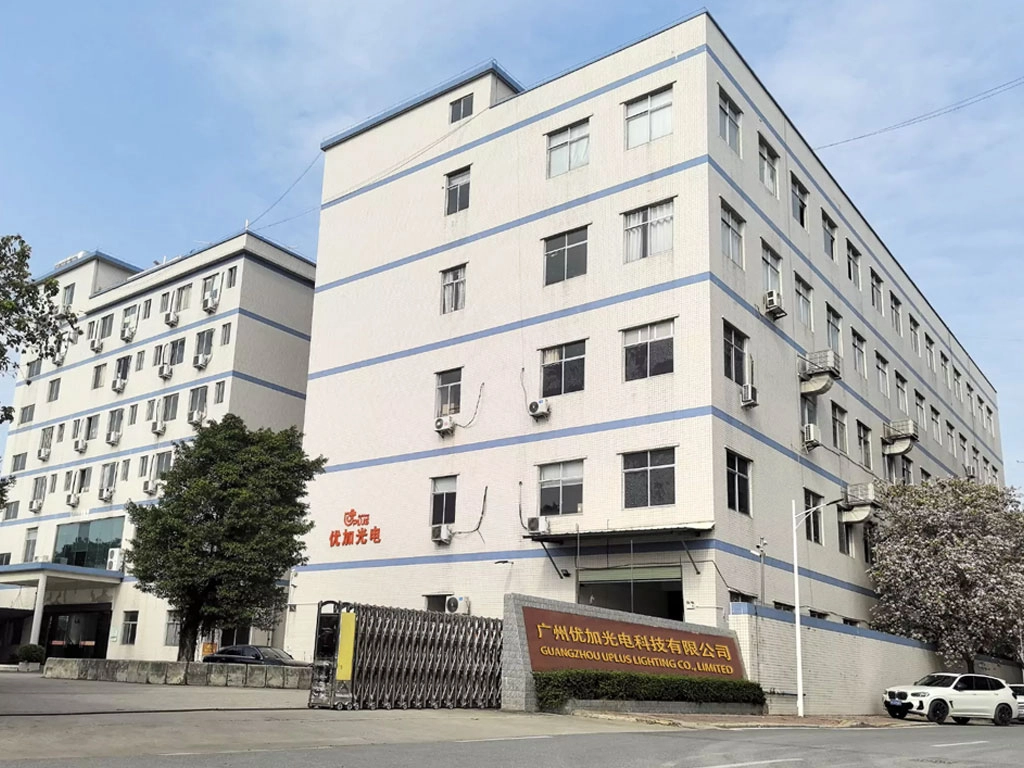
Based in Guangzhou and established in 2012, Uplus Lighting has grown into a manufacturer focusing on high-end stage lighting products. I have worked with clients who specified Uplus units for concerts and cultural projects because the company emphasizes development, export experience, and OEM capacity. Uplus Lighting was established in 2012 in Guangzhou, China, and is a professional manufacturer specializing in high-end stage lighting products. We provide innovative and reliable lighting solutions for theaters, studios, cultural projects, concerts, and live events worldwide. With rich experience in product development, manufacturing, and export, we offer a wide product range covering professional lighting, entertainment lighting, and theater lighting to meet the needs of large performances, rental companies, distributors, and project clients. Since 2015, our products have been widely applied in major concerts, opera houses, TV programs, and large-scale events in China and abroad. We also support OEM orders and customized product development. A skilled production team and strict quality control ensure stable performance, consistent quality, and professional service trusted by global partners.
Their main product lines include moving head lights, strobe lights, led battery lights, static lights, led theatre lights, led follow spot light, stage effect lights, and laser lights. Compared to some competitors, Uplus Lighting focuses on balanced performance—good optical engines, practical control options, and accessible service points—making their bee eye moving head light models attractive to rental houses and project clients who need reliable, long-running fixtures at a sensible price point.
Why I might recommend Uplus for certain buyers
If you need manufacturer support for OEM development, quick customization, or a partner experienced in exporting and project delivery, Uplus’s track record since 2012 and deployments in major events suggest competence. Ask to review test reports, IES files and warranty policy when considering their bee eye moving head light models.
FAQ
1. What is a bee eye moving head light best used for?
A bee eye moving head light excels at aerial beam effects, audience eye-candy beams, and dynamic gobo-based patterns. Use them in concerts, festivals, and any show that needs strong, focused beams and fast movement.
2. How do I compare lumen vs. lux when choosing fixtures?
Lumens measure total emitted light; lux measures illumination at a surface or distance. For long-throw applications, request lux-at-distance data or IES files from the manufacturer rather than relying on lumens alone.
3. Are high CRI ratings important for moving head lights?
Yes for theatre, broadcast, and events with close-up performers. A higher CRI (and good TM-30 data) ensures natural-looking skin tones and more faithful color mixing.
4. What should I check for touring vs. fixed installation?
Touring rigs prioritize ruggedness, easy service access, robust rigging points, and consistent performance under power fluctuations. Fixed installations care more about appearance, IP rating (if outdoors), and long-term maintenance intervals.
5. How do I verify real-world performance before buying?
Request a live demo, IES files, and MTBF or field failure data. Run movement tests, color checks, and power-cycle tests during the demo. Also ask for references from similar clients.
Contact and next steps
If you want tailored advice for your rig or a demo of a bee eye moving head light, contact Uplus Lighting for product details, photometric files, and OEM options. For project inquiries, ask for IES files, warranty terms, and spare-parts lead times so you can make a fully informed specification decision.
Cost of Ownership: LED Moving Head Lights for Venues
Spot Beam vs Wash LED Light Bars: Which Is Best for Stages?
Weatherproofing and IP Ratings for Outdoor LED Stage Light Bars
Maximizing ROI: Energy Savings with LED Moving Beam Lights
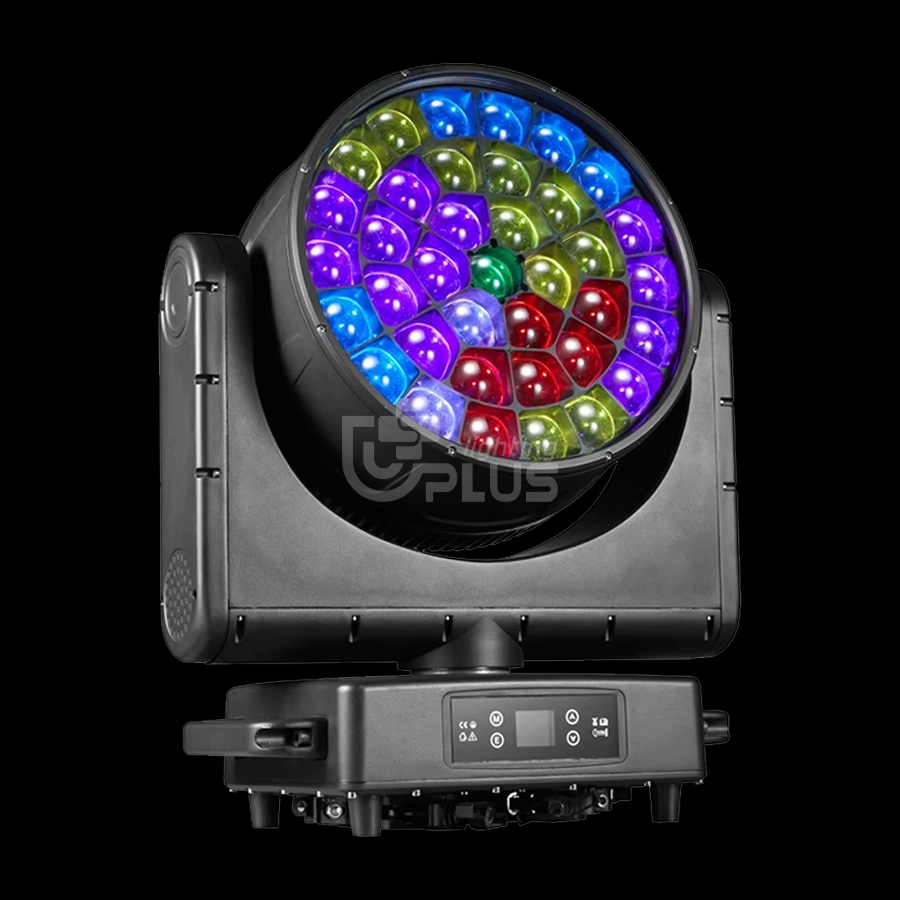
The K25: IP66 37*40W Wash Zoom & Bee Eye Moving Head is a professional-grade outdoor lighting device that integrates wall washing and bee eye effects. It features 37 groups of 40W high-power LED beads, providing strong total power. Combined with professional optical design, it achieves delicate and uniform color mixing, covering the full color spectrum.

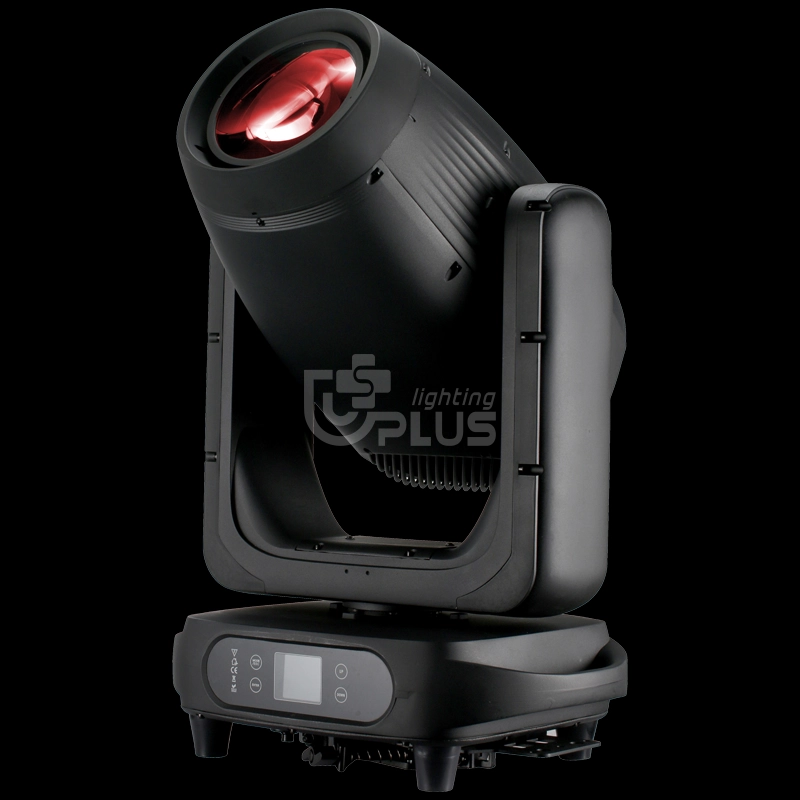
1000W Waterproof BSWF 4-in-1 Moving Head combines beam, spot, wash, and frame effects in one. IP-rated waterproof design, high-brightness output, precise control, ideal for outdoor & indoor stage events.
If you have any comments or good suggestions, please leave us a message, later our professional staff will contact you as soon as possible.
Lighting Innovators
Uplus Lighting is a leading integrated company specializing in R&D, design, production, and sales of stage lighting solutions.
 Scan QR Code
Facebook
Instagram
YouTube
VK