


Weatherproofing and IP Ratings for Outdoor LED Stage Light Bars
- Outdoor performance challenges for stage lighting
- Environmental hazards that matter
- Operational reliability and show continuity
- Maintenance, serviceability and total cost of ownership
- Understanding IP ratings and standards
- What the IP code means (IEC 60529)
- Common IP ratings for LED stage light bars
- IP vs NEMA and other regional standards
- Design considerations for weatherproof LED stage light bars
- Mechanical design: housings, gaskets and fasteners
- Connectors, cabling and service interfaces
- Thermal and optical considerations
- Specification, testing and selection guide
- Testing protocols you should ask about
- Choosing the right IP rating for your use case
- Installation, sealing and maintenance best practices
- Testing and comparison data
- IP rating comparison (quick reference)
- Common tests and standards (summary)
- Uplus Lighting: capabilities and why it matters
- FAQ
- 1. What IP rating do I need for an outdoor led stage light bar?
- 2. Does IP65 mean the fixture is fully waterproof?
- 3. How do I maintain weatherproof fixtures in the field?
- 4. Are sealed fixtures harder to cool?
- 5. Should rental companies favour higher IP ratings?
- 6. How reliable are manufacturer IP claims?
- Contact & next steps
I’m a stage lighting consultant based in Guangzhou, China, and I’ve specified and tested hundreds of outdoor fixtures for tours, festivals, and permanent installations. In this article I summarize how weatherproofing and ingress protection affect the performance of an led stage light bar, explain relevant standards and tests, compare typical IP ratings, and give practical guidance on purchase, installation, and maintenance to ensure lights survive the weather and perform reliably.
Outdoor performance challenges for stage lighting
Environmental hazards that matter
When I evaluate an outdoor led stage light bar, I classify the environmental risks into four groups: water (rain, spray, immersion), dust and particulate ingress (sand, stage smoke residue), corrosion (salt air for coastal venues), and mechanical impact or vibration (road cases, rigging). Each of these factors degrades optics, electronics, connectors, and mechanical parts in different ways — for example, salt accelerates corrosion of alloy housings and connectors, while dust can clog heatsinks and optical lenses reducing light output and thermal dissipation.
Operational reliability and show continuity
Outdoor shows demand continuous operation under variable weather and rapid rigging turns. I judge an led stage light bar not only by its listed IP rating but also by how the manufacturer addresses cable entry, connector sealing, thermal management, and firmware resilience. A single failed fixture can disrupt a cue or cause an on-stage hazard; redundancy planning and proactive component selection (sealed connectors, marine-grade finishes) reduce that risk.
Maintenance, serviceability and total cost of ownership
Weatherproofing can make service more complex — sealed housings complicate field repairs and lamp or driver replacement. I weigh the trade-off between a fully sealed, maintenance-free product and one designed for easier servicing. For rental companies, ruggedness and field-repairability will often be more important than absolute immersion protection.
Understanding IP ratings and standards
What the IP code means (IEC 60529)
IP (Ingress Protection) ratings come from the IEC 60529 standard and describe protection against solids and liquids using two digits (e.g., IP65). The first digit (0–6) indicates protection against solids and dust; the second digit (0–9K) indicates protection against water and moisture. Read the IEC/IP explanation here: IP Code (Wikipedia) and for the formal standard see IEC 60529 references.
Common IP ratings for LED stage light bars
In my experience, the following IP ratings are most relevant for outdoor led stage light bar use:
- IP54 — Protected against dust ingress to a degree that won’t interfere with operation; protected against splashing water. Suitable for covered outdoor areas or temporary protection during light showers.
- IP65 — Dust tight and protected against water jets. Typical minimum for exposed outdoor fixtures where rain and spray are expected.
- IP66 — Dust tight and protected against powerful water jets. Better for splash zones and venues with heavy spray or wash-down cleaning.
- IP67 — Dust tight and protected against immersion up to 1m for 30 minutes. Useful for fixtures that may be temporarily submerged or for very wet locations, though immersion-rated fixtures often require additional drainage considerations for long-term reliability.
- IP68/IP69K — Continuous immersion (IP68, manufacturer-specified depth/time) or high-pressure, high-temperature washdown (IP69K). These are common in industrial washdown contexts and rarely necessary for touring stage lighting but may be used for permanent installations near water features.
IP vs NEMA and other regional standards
North America often references NEMA enclosure types; while NEMA and IP ratings overlap, they are not identical. See the NEMA enclosure types overview: NEMA enclosure types (Wikipedia). For corrosion resistance testing, common standards include ASTM B117 (salt spray) and ISO 9227; these tests evaluate surface finishes and coatings' resilience in corrosive atmospheres (Salt spray test (Wikipedia)).
Design considerations for weatherproof LED stage light bars
Mechanical design: housings, gaskets and fasteners
A robust led stage light bar begins with housing design. I look for marine-grade aluminum alloys (e.g., 6061-T6) with appropriate anodizing or powder-coat finishes, continuous EPDM or silicone gaskets at seams, captive stainless-steel fasteners, and gasketing around pan/tilt joints where applicable. Cable glands should be rated for the IP level claimed and use O-rings with a compatible chemical profile to avoid degradation.
Connectors, cabling and service interfaces
Connector selection can make or break outdoor reliability. IP-rated XLRs, PowerCONs, or proprietary sealed power/data connectors should be used instead of exposed or unsealed wiring. Where fixtures are frequently connected/disconnected (rental), I prefer sealed, locking connectors with replaceable boots. Conformal coating on PCBs increases moisture resistance but shouldn’t be relied on alone without proper enclosure sealing.
Thermal and optical considerations
Waterproofing can trap heat if not managed correctly. I evaluate thermal paths — conduction to the housing, adequate heatsinking, and ventilation strategies (desiccant breather vents, thermal vias). Optical components (lenses, diffusion) must resist fogging; anti-reflective and hydrophobic coatings can help maintain beam quality during rain.
Specification, testing and selection guide
Testing protocols you should ask about
When I qualify a supplier, I ask for test reports for:
- IEC 60529 ingress testing for the claimed IP rating (third-party lab preferred).
- Salt spray (ASTM B117 / ISO 9227) for coastal corrosion exposure where applicable.
- Vibration and shock testing for touring/rental use (per IEC 60068 series or manufacturer test protocols).
- Electrical surge and transient immunity (IEC 61000 series) for reliability in live events with heavy power switching.
Relevant references: IEC IP Code: https://en.wikipedia.org/wiki/IP_Code; Salt spray testing: https://en.wikipedia.org/wiki/Salt_spray_test.
Choosing the right IP rating for your use case
Match the IP rating to the exposure level and business model:
| Use case | Recommended minimum IP | Notes |
|---|---|---|
| Covered outdoor stages (shelter overhead) | IP54 | Good for light rain/splashes; lower cost; easier serviceability. |
| Fully exposed festival stages / touring | IP65–IP66 | Protects against jets of water and heavy rain; balance of sealing and cooling. |
| Coastal venues / water-edge installations | IP66–IP67 + corrosion protection | Combine IP rating with salt-spray tested finishes (ASTM B117/ISO 9227). |
| Permanent fixtures submerged/near water features | IP68 / IP69K | High protection levels, often require specialized seals and drainage design. |
Installation, sealing and maintenance best practices
From my field work, these practical steps reduce weather-related failures:
- Use sealed conduit or IP-rated cable glands at entry points; avoid exposed splices.
- Apply threadlocker and corrosion-resistant lubrication on fasteners in coastal venues.
- Schedule periodic inspections: check gaskets, desiccant indicators (if fitted), and clean heat sinks and lenses.
- Where possible, design runways and rigging so fixtures aren’t water reservoirs — maintain small drainage holes if manufacturer permits.
Testing and comparison data
IP rating comparison (quick reference)
The table below summarizes protection characteristics for common IP ratings that I encounter when sourcing led stage light bar products:
| IP rating | Solid particle protection | Liquid protection | Common suitability |
|---|---|---|---|
| IP54 | Protected against limited dust ingress | Water splashes from any direction | Covered outdoor stages, temporary protection |
| IP65 | Dust tight | Protection against water jets | Exposed outdoor stages, touring |
| IP66 | Dust tight | Powerful water jets | Heavy rain, washdown cleaning |
| IP67 | Dust tight | Temporary immersion up to 1m | Flood-prone locations, short immersion risk |
| IP68 / IP69K | Dust tight | Continuous immersion / high-pressure wash | Specialized installations |
Common tests and standards (summary)
| Test/Standard | Purpose | Reference |
|---|---|---|
| IEC 60529 (IP Code) | Defines ingress protection levels for solids & liquids | IP Code (Wikipedia) |
| ASTM B117 / ISO 9227 | Salt spray / corrosion resistance | Salt spray test (Wikipedia) |
| IEC 61000 series | Electromagnetic compatibility and surge immunity | IEC Standards |
Uplus Lighting: capabilities and why it matters
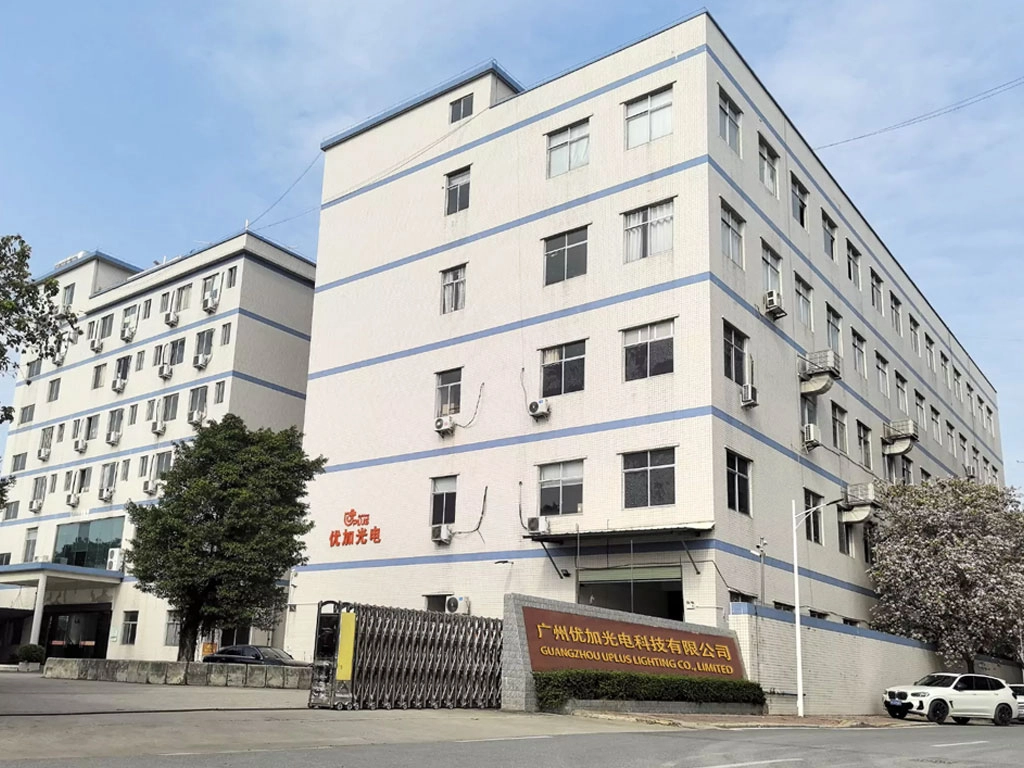
As someone who works directly with manufacturers and specifiers, I evaluate suppliers on product performance, testing transparency, and after-sales support. Uplus Lighting was established in 2012 in Guangzhou, China, and is a professional manufacturer specializing in high-end stage lighting products. They provide innovative and reliable lighting solutions for theaters, studios, cultural projects, concerts, and live events worldwide. With rich experience in product development, manufacturing, and export, they offer a wide range covering professional lighting, entertainment lighting, and theater lighting to meet the needs of large performances, rental companies, distributors, and project clients.
Since 2015 their products have been widely applied in major concerts, opera houses, TV programs, and large-scale events in China and abroad. They support OEM orders and customized product development. A skilled production team and strict quality control ensure stable performance, consistent quality, and professional service trusted by global partners.
Uplus Lighting’s core product categories relevant to outdoor led stage light bar projects include moving head lights, strobe lights, led battery lights, static lights, led theatre lights, led follow spot light, stage effect lights, and laser lights. Their competitive advantages include:
- Proven field experience with large-scale events and touring (references since 2015).
- In-house product development enabling tailored weatherproofing solutions and OEM customization.
- Strict quality control, third-party testing support, and stable performance guarantees.
- Comprehensive product range allowing integrated system solutions (fixtures, control, and effects).
If you’re specifying outdoor led stage light bar fixtures, consider asking Uplus Lighting for certified IP and corrosion test reports, details on connector types, thermal management strategies, and field-repair options — these details materially affect long-term reliability and total cost of ownership.
FAQ
1. What IP rating do I need for an outdoor led stage light bar?
For most exposed outdoor festival and touring use I specify IP65 as a minimum. If the fixture will be regularly exposed to heavy jets of water, coastal salt spray, or occasional immersion, step up to IP66/IP67 and require corrosion-resistant finishes and salt-spray test results.
2. Does IP65 mean the fixture is fully waterproof?
No. IP65 protects against water jets but does not guarantee protection against immersion. For immersion protection you need IP67 or IP68, with the specific immersion depth and duration defined by the manufacturer.
3. How do I maintain weatherproof fixtures in the field?
Regularly inspect and replace gaskets, clean heat sinks and lenses, check connector boots and cable glands, and perform salt-spray inspections in coastal locations. Keep firmware and drivers updated and maintain a spare-parts inventory for wear items like connectors and seals.
4. Are sealed fixtures harder to cool?
They can be. Proper thermal design (heatsinking to the housing, thermal conduction paths, and use of thermally conductive potting or phases) is critical. Ask manufacturers for thermal performance data at expected ambient temperatures.
5. Should rental companies favour higher IP ratings?
Rental companies should balance ruggedness with serviceability. IP65/IP66 is usually the best compromise; choose products designed for field service (replaceable seals, accessible electronics) and tested for vibration and shock.
6. How reliable are manufacturer IP claims?
IP claims are meaningful when backed by independent lab test reports to IEC 60529. I always request third-party test certificates or witnessed test reports before specifying high-value fixtures for critical events.
Contact & next steps
If you need help choosing the right led stage light bar for your venue, tour, or installation, I can review your environmental conditions and specification requirements. For reliable, tested solutions, contact Uplus Lighting to request detailed IP and corrosion test reports, or to discuss OEM/custom options. Visit Uplus Lighting’s product pages or contact their technical sales team to arrange sample testing, third-party certification copies, and quotation.
For product details, technical data sheets, or to request a quote for outdoor led stage light bar solutions, contact Uplus Lighting or email their sales team to begin a specification review and sample test plan.
DMX Features: Best Moving Head Lights for sale Companies
Case Studies: Successful Events Using LED Moving Beam Lights

10 Best LED DJ Moving Head Strobe Lights of 2026: [Ultimate Review & Comparison]
Waterproof DMX LED Pixel Bars: Outdoor Use and IP Ratings
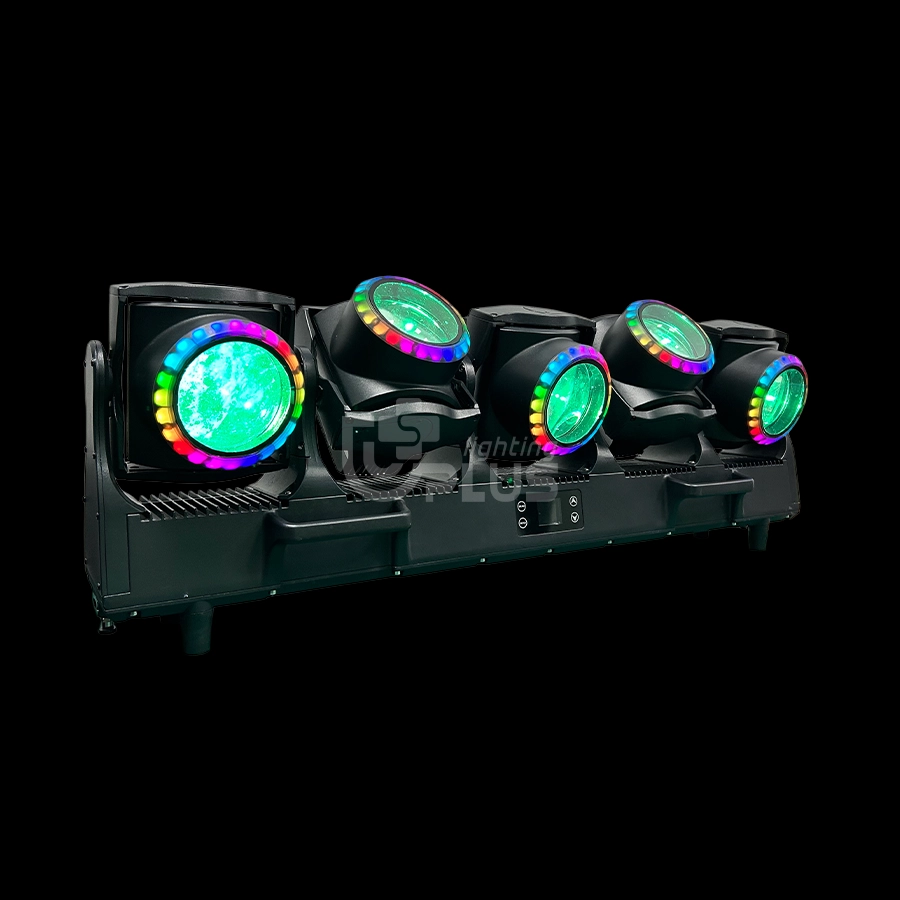
Waterproof 5*120W Pixel zoom LED bar moving head, a waterproof 5*120W pixel zoom LED strip moving head light, with individually controllable pixels, supports zoom and dynamic effects, IP65 protection, suitable for outdoor performances, stage and engineering lighting.

The IP65 two-row 40*10W RGBW led pixel link bar is a high-protection pixel bar light. It adopts a dual-row design with 40 10W RGBW four-in-one LED beads, supports pixel-level independent light control and multi-lamp linkage, and has an IP65 protection rating, making it rainproof and dustproof. It is compatible with DMX512 control and can present rich dynamic light effects, making it suitable for creating linear light and shadow effects in outdoor lighting, stage backgrounds, cultural and tourism landscapes and other scenarios.
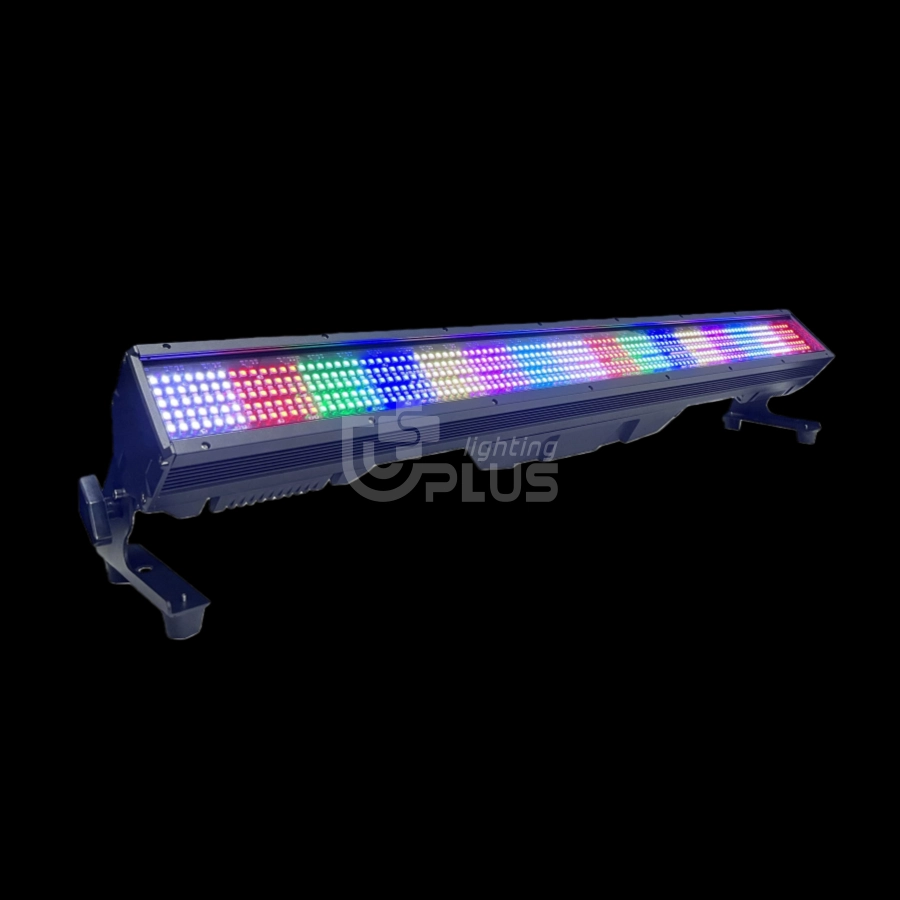
The IP65 waterproof 400W LED Link Strobe bar is a high-protection cascaded strobe light strip equipped with a 400W high-power LED light source. The strobe frequency is adjustable and supports seamless linkage of multiple lights. The IP65 protection rating can withstand outdoor wind, rain, and dust. It is compatible with DMX512 control, easy to install, and suitable for creating dynamic light and shadow in outdoor performances, cultural tourism night tours, architectural lighting and other scenarios.

The IP65 waterproof 18*30W RGBWAUV LED pixel bar is a high-performance outdoor pixel bar light. It is equipped with 18 30W RGBWAUV six-in-one LED beads, supports pixel-level independent light control, and can present rich colors and dynamic light effects. With an IP65 protection rating, it is highly dustproof and waterproof, compatible with multiple control modes such as DMX512, flexible splicing and easy installation, and suitable for linear light and shadow shaping in outdoor performances, cultural and tourism lighting, stage backgrounds and other scenarios.
If you have any comments or good suggestions, please leave us a message, later our professional staff will contact you as soon as possible.
Lighting Innovators
Uplus Lighting is a leading integrated company specializing in R&D, design, production, and sales of stage lighting solutions.
 Scan QR Code
Facebook
Instagram
YouTube
VK