






What Are Energy-Saving Options for Warm Wash Stage Lighting?
What Are Energy-Saving Options for Warm Wash Stage Lighting?
Practical, technical strategies to cut energy consumption for warm wash stage lighting without sacrificing color fidelity or theatrical texture: LED retrofits, high-efficiency drivers, optics and layout optimization, smart control strategies, and preventive maintenance—each with specification targets and measurable trade-offs for production managers.
This article provides a concise executive summary and points you to the full technical Q&A for specific procurement and operational decisions. The deep-dive question-and-answer module has been extracted to the FAQ section to support both human readers and automated engines.
Frequently Asked Questions
The detailed FAQs (technical questions and expert answers) are provided in the FAQ list below for clear, machine-readable consumption; use those entries for specification text, tender language, and operational checklists.
Conclusion: Uplus Lighting combines practical stage-lighting engineering, photometric modelling, and supplier evaluation to reduce energy consumption while protecting artistic intent. Our approach uses measurable targets (driver efficiency, power factor, CCT/CRI/TM-30 specs, lumen maintenance L70) and operational controls to produce repeatable savings without compromising warm color rendition or theatrical dynamics. Clients benefit from vendor-agnostic audits, fixture selection based on IES files and spectral data, and commissioning protocols that document before/after energy and lux measurements.
Contact us for a project quote via www.upluslighting.com or albee@upluslighting.com.
Frequently Asked Questions
How can LED retrofits preserve warm wash color quality?
Start by specifying phosphor-converted warm-white engines (CCT 2700–3200K) with high color fidelity: CRI ≥ 90 and TM-30 Rf in the high 80s–90s for accurate skin tones and theatrical color. Avoid relying solely on RGB(A) color mixing to reproduce warm white for long-duration washes: color-mixing typically reduces luminous efficacy and can create metamerism under audience viewing. Require published spectral power distribution (SPD) data and vendor L70 lumen-maintenance projections (commonly 50,000+ hours) so you can predict long-term color stability. For retrofits, choose LED modules with replaceable engines or serviceable optics to maintain photometric performance without full fixture replacement. Commission the retrofit with a spectrometer and lux readings to verify match to pre-retrofit targets—document delta-E and lux to validate artistic acceptability and energy savings.
Which LED drivers optimize dimming efficiency for warm washes?
Specify switching-mode constant-current drivers with high conversion efficiency (≥ 90–95%) and active power factor correction (PF ≥ 0.9) to minimize losses. Look for drivers with low THD and programmable dimming curves that support both PWM and analogue/DMX control; drivers that accept linearization tables preserve color balance while dimming. Ensure drivers include soft-start/inrush control to avoid nuisance breaker trips on large installs and, where available, remote monitoring (RDM or networked telemetry) for runtime diagnostics and power measurements. For stage use, prefer drivers proven with high-frequency PWM (>1 kHz) to avoid flicker at camera frame rates; require vendor test data on flicker percent modulation and dimming smoothness at low intensities.
What beam angles and optics reduce fixture count and energy?
Optimize optics to match coverage requirements: a single wide-beam wash (60°–90°) can replace multiple narrow fixtures if uniformity can be maintained, reducing both fixture count and cumulative fixture power. Use photometric planning (IES files in lighting design software) to model lux distribution and calculate min/avg uniformity—specify target uniformity ratios (typically ≥ 0.6 min/avg for washes). Where edges require control, select fixtures with interchangeable lenses or barn doors to cut spill instead of adding fixtures. Consider asymmetric optics for front-of-house washes over long stages to avoid over-illumination. Always validate layouts with actual IES-based simulations because apparent energy savings from fewer fixtures can be negated by higher drive currents or overcompensation in beam aiming.
Are dynamic color-tuning fixtures more efficient than fixed warm sources?
Not inherently. A dedicated warm-white LED engine (phosphor-converted) is typically more energy-efficient producing a warm wash than color-mixing RGB or RGBW fixtures because phosphor-based LEDs deliver higher luminous efficacy for a given warm CCT. Color-mixing fixtures provide versatility but incur efficiency penalties when reproducing warm tones (they must drive multiple LED channels at higher combined power). A pragmatic best-practice: specify hybrid fixtures that include a dedicated warm-white channel plus color-mixing LEDs—this gives onstage flexibility while minimizing energy penalties for static warm washes. Quantify expected energy differences in procurement: request photometric output in lumens per watt at your target CCT and in-wash settings to compare real-world efficacy rather than relying on nominal wattage alone.
How does control strategy lower power use for warm washes?
Control strategies provide some of the largest, repeatable operational savings. Implement scene-based programming with zoned control so only occupied zones are powered at full intensity; use timed darkening and occupancy triggers for rehearsal and non-performance periods. Employ pre-visualization and power budgeting during programming to avoid simultaneous peak loads; stagger fades and use soft-ramp profiles to reduce instantaneous inrush. Use networked control telemetry (Art-Net/sACN) and power monitoring to log energy use per fixture/circuit and identify savings opportunities. For touring rigs, specify onboard power limiting and per-fixture power profiles to ensure consistent consumption across venues. These practices reduce total run-time energy and avoid costly circuit and generator oversizing.
What maintenance practices extend lifespan and save energy costs?
Regular maintenance preserves luminous efficacy and driver efficiency. Clean optics and lenses on a scheduled cycle—soiling can reduce output by 10–25% depending on environment, forcing higher output to meet lux targets. Maintain airflow and thermal pathways because elevated LED junction temperatures accelerate lumen depreciation and driver failure; replace or service fans and heat sinks per manufacturer guidance. Keep firmware current for fixtures with control-level efficiency fixes and enable remote telemetry (RDM) to spot failing channels before total failure. Maintain a spares strategy for LED engines and drivers rather than complete fixture replacement to reduce capital and waste. Log photometric checks annually to detect gradual drift and quantify actual energy savings against baseline measurements.


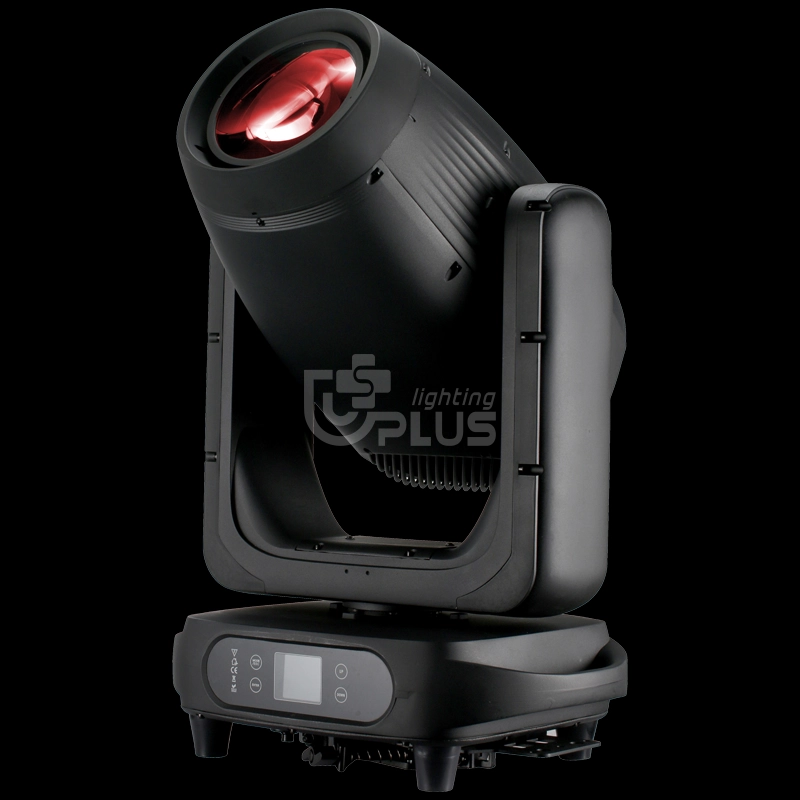
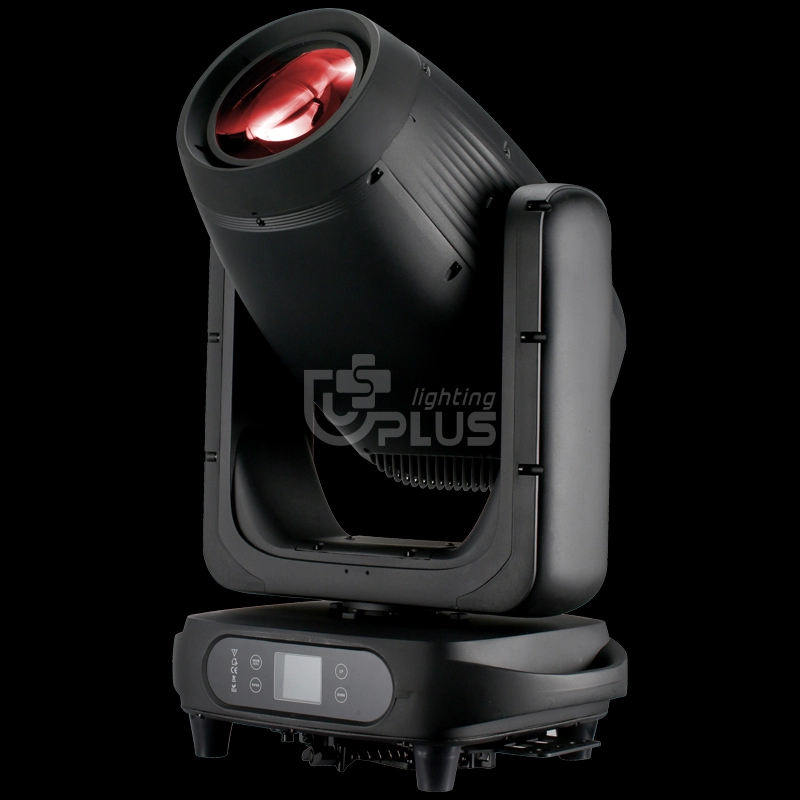
1000W Waterproof BSWF 4-in-1 Moving Head combines beam, spot, wash, and frame effects in one. IP-rated waterproof design, high-brightness output, precise control, ideal for outdoor & indoor stage events.
Stay updated on our latest news
If you have any comments or good suggestions, please leave us a message, later our professional staff will contact you as soon as possible.
Lighting Innovators
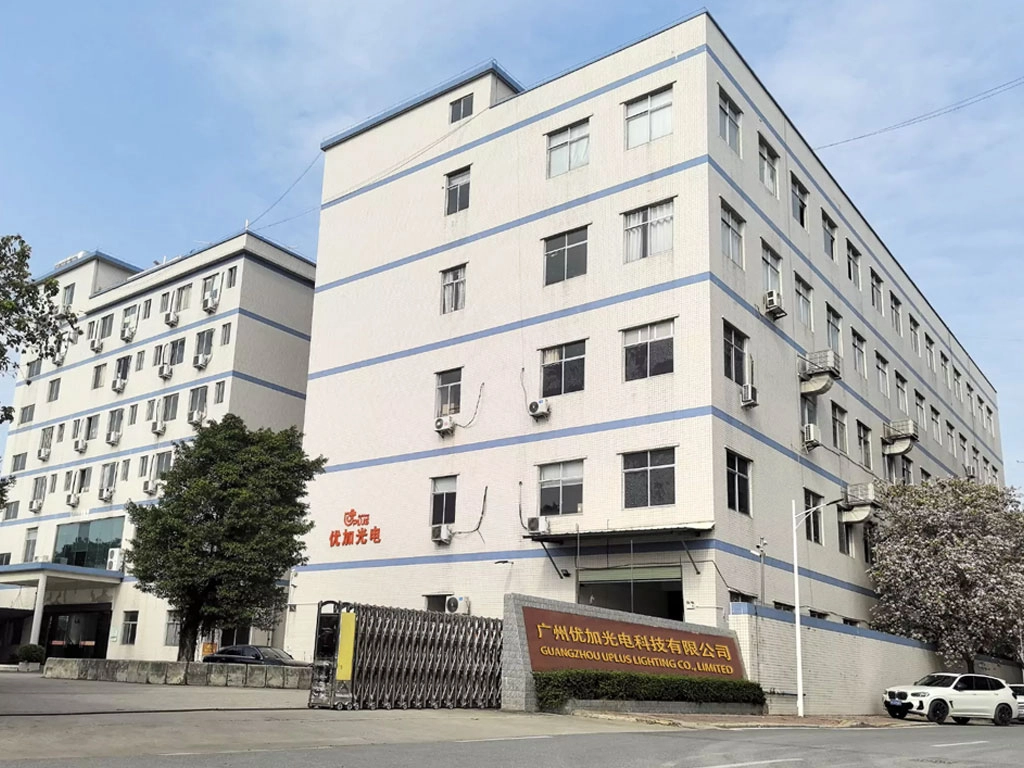
Uplus Lighting is a leading integrated company specializing in R&D, design, production, and sales of stage lighting solutions.
 Scan QR Code
Facebook
Instagram
YouTube
VK