






How to Integrate Warm Wash Stage Lighting with DMX Systems?
Practical, technical guidance for integrating warm-toned wash fixtures into DMX/Art‑Net/sACN control infrastructures: calibration workflows, addressing strategies, legacy-dimmer integration, colour consistency, thermal drift mitigation, and network best practices for reliable warm wash stage lighting.
How to Integrate Warm Wash Stage Lighting with DMX Systems?
Integrating warm-toned wash fixtures into modern DMX and Ethernet-based control systems requires calibrated color workflows, correct addressing and universe planning, thermal and PWM management for flicker-free output, and use of RDM/sACN or Art‑Net to maintain consistency across large rigs—this guide gives operational, spec-driven steps for professional results.
Uplus Lighting brings 15 years of stage lighting engineering and venue-grade systems design to solve the common integration failures—calibration drift, mispatched universes, and legacy-dimmer mismatch—by applying confirmed DMX and network standards, photometric measurement, and fixture-specific LUTs to deliver repeatable warm wash results for productions and installs.
Contact Uplus Lighting for a detailed quote at www.upluslighting.com or via email at albee@upluslighting.com.
FAQ
How do I calibrate warm color temperature across multiple fixtures?
Start with measurement: use a spectrometer or professional colorimeter (examples: X‑Rite i1Pro series or Konica Minolta CL/CS family) to record correlated color temperature (CCT) and spectral power distribution from fixtures at target intensity. Warm white targets for theatrical washes typically sit between 2700K–3200K; document each fixture at 100%, 50%, and 10% output because LED emitters shift spectrum under drive. Create a fixture-specific calibration table (LUT) on your console or processor that adjusts RGB/white channels to match the reference CCT at practical intensities—do not rely on manufacturer presets alone, as binning variability (MacAdam ellipse tolerances) means identical models can still differ visually. Verify with side-by-side photometric checks and capture camera frames if the production involves broadcast; iterate until Δu'v' is within 0.005 for perceived uniformity.
What DMX addressing strategies prevent color shift and flicker?
Adopt a disciplined addressing strategy: group warm wash fixtures by circuit, firmware revision, and pixel/PWM architecture so consoles send homogeneous channel values to like hardware. Use 16‑bit control (coarse/fine channels) where available for dimming channels to reduce quantization artifacts during smooth fades. Keep fixtures that share similar PWM drivers and frequencies together on the same dimming timelines to avoid apparent beat frequencies; mismatched PWM can produce visible flicker or strobing when values change concurrently. For large rigs use multiple DMX universes and prefer sACN (E1.31) or Art‑Net over Ethernet for multi‑universe transport, ensuring consistent timing and avoiding gateway-induced jitter.
How to map warm wash fixtures correctly in complex patching?
Document a physical-to-logical mapping: record rig position, circuit, fixture ID, and firmware/build number in the patch sheet. Use hierarchical patching—assign fixtures into groups and use attribute layers (intensity, color temp, CTO, warm-dim curves) rather than individual channel manipulation for architectural scenes. When using pixel-mapped washes, map physical XY coordinates and apply calibrated color correction at the mapping node to compensate for lens and distance falloff. Maintain an authoritative patch export (console snapshot and CSV) and version it; this prevents unpredictable behavior when moving shows between consoles or when a fixture is swapped during tech.
How to integrate legacy incandescent dimmers with LED washes?
Do not cross-control LEDs and incandescent loads on the same dimmer channel without a proper interface. Incandescent dimmers expect resistive loads; LED drivers require constant-current or electronic dimming. Options: 1) Replace legacy dimmer packs with DMX-controllable LED-friendly dimmer/drivers or use dedicated LED drivers with DMX input. 2) If retaining incandescent dimmers, control LED fixtures via separate DMX universes and synchronize cues using the console to align fades. For aesthetic match, implement warm‑dim profiles and LUTs to emulate incandescent spectral and luminous change under dimming (incandescent warms visually as it dims); this requires measuring the incandescent lamp curve and programming a compensation profile in the LED driver or console.
What control protocols ensure smooth color blending on wide stages?
For multi‑universe wide-stage control use sACN (E1.31) for reliable streaming over Ethernet and Art‑Net where compatible; both are industry standard, but sACN offers standardized priority handling and is generally better for managed networks. Use RDM (ANSI E1.20) to remotely query and configure fixtures—this speeds commissioning and reduces addressing errors. Ensure network design separates show control traffic from other IT traffic (VLANs, IGMP snooping for Art‑Net where applicable) and apply time synchronization best practices so consoles and media servers maintain consistent frame timing. For color blending, perform blending in the console using calibrated color space (CIE or RGBW matrices) rather than ad hoc channel mixing to avoid hue shifts across the wash field.
How to manage in-rig thermal drift and output consistency over shows?
Thermal drift alters LED emitter spectra and output (typically a few percent change in luminous flux and slight CCT shift) as driver and LED junction temperatures change. Mitigate by specifying fixtures with active thermal management and temperature-compensated LED drivers; during initial programming, run fixtures to operating temperature and then calibrate LUTs. Enable any built-in thermal compensation modes provided by manufacturers and log fixture telemetry via RDM when available to detect deviations. For long runs, schedule intensity and color cross-checks in the show plot (prelims, half‑time, after 2–3 hours) and keep spare fixtures of identical bin and firmware on hand to replace units with out-of-tolerance drift—this is standard practice in professional touring and installation work.


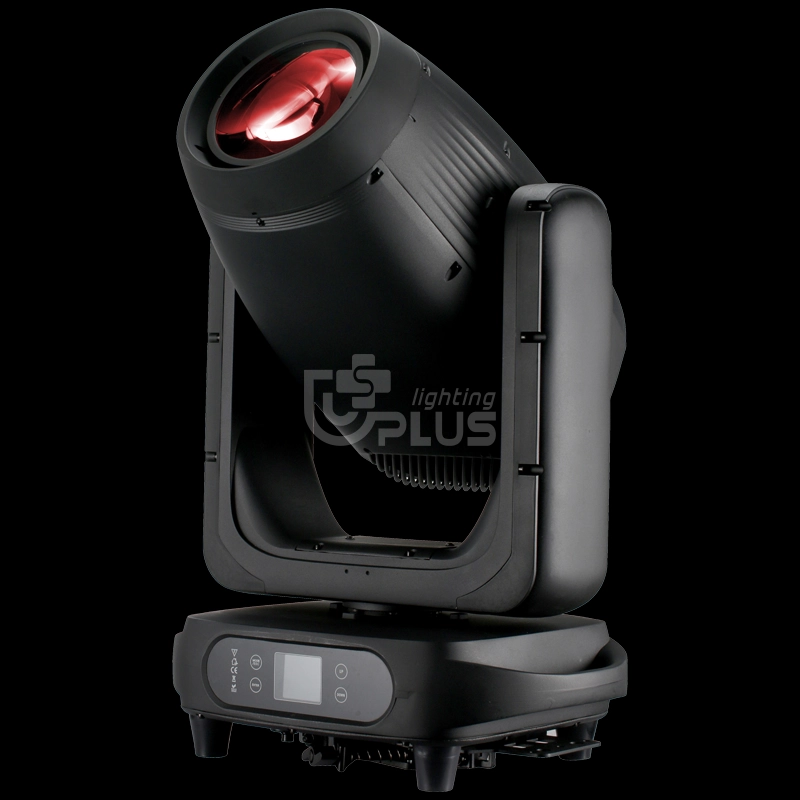
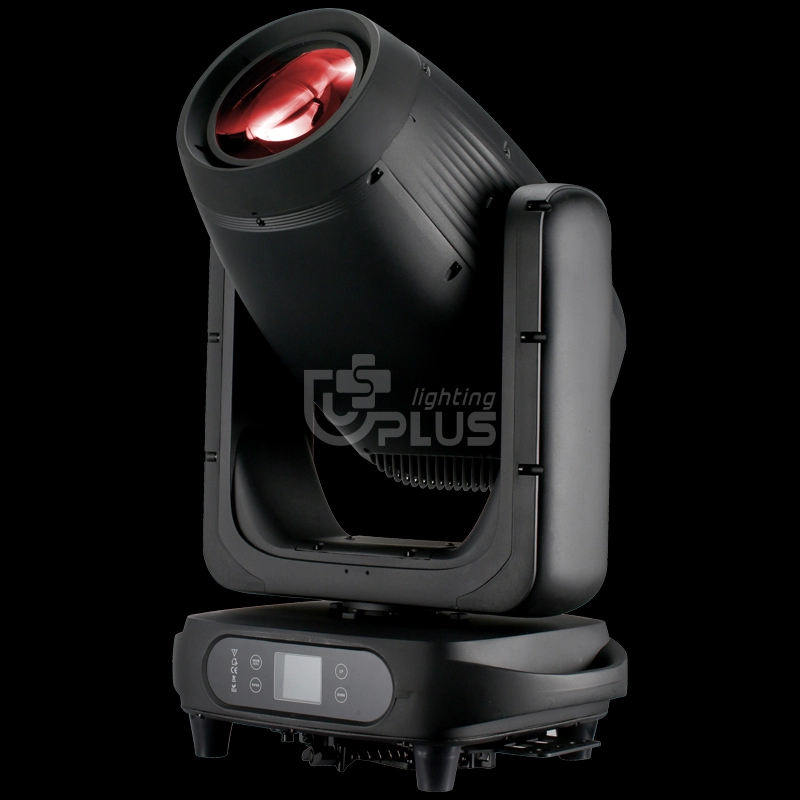
1000W Waterproof BSWF 4-in-1 Moving Head combines beam, spot, wash, and frame effects in one. IP-rated waterproof design, high-brightness output, precise control, ideal for outdoor & indoor stage events.
Stay updated on our latest news
If you have any comments or good suggestions, please leave us a message, later our professional staff will contact you as soon as possible.
Lighting Innovators
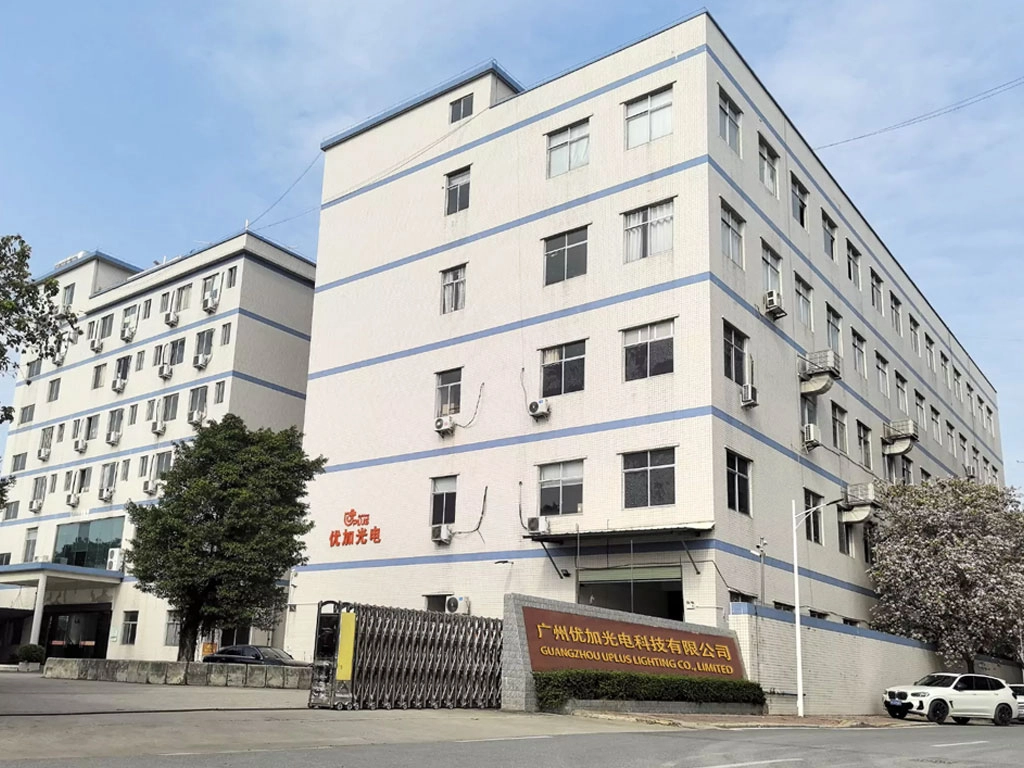
Uplus Lighting is a leading integrated company specializing in R&D, design, production, and sales of stage lighting solutions.
 Scan QR Code
Facebook
Instagram
YouTube
VK