






How Many Warm Wash Fixtures Do I Need for My Stage?
Calculate warm wash fixture counts using target lux, stage area, beam geometry, and per‑fixture photometrics. This guide gives formulas, overlap and angle rules, power and DMX channel planning, and practical decision trees to turn manufacturer data into an accurate fixture count.
How Many Warm Wash Fixtures Do I Need for My Stage?
Calculate warm wash fixture counts using target lux, stage area, beam geometry, and per-fixture photometrics. This guide gives formulas, overlap and angle rules, power and DMX channel planning, and practical decision trees to turn manufacturer data into an accurate fixture count.
Scope: This article is focused on planning and specifying warm wash stage lighting for live performance stages (theatre, houses of worship, corporate events, and small broadcast). It explains the practical calculations lighting designers and technical directors use—throw geometry, lux targets, overlap strategy, and electrical/DMX planning—so you can convert a photometric into a reliable fixture count rather than relying on rules of thumb.
Conclusion: Properly sizing a warm wash rig is a calculation exercise, not guesswork. Use photometric IES/Goni data from the fixture manufacturer, decide a realistic target illuminance for the production context, apply beam geometry and overlap rules, and budget power and DMX channels with margin. Uplus Lighting provides specification support, photometric modelling, and rigging-safe products to translate these calculations into installable systems for live events and venues.
Contact Uplus Lighting for a tailored quote and photometric review at www.upluslighting.com or email albee@upluslighting.com.
How many warm wash fixtures per linear meter of stage?
How many warm wash fixtures per linear meter of stage?
Answer: Treat this as a photometric tiling problem, not a fixtures-per-meter rule. Start by specifying: 1) your usable stage width in meters, 2) desired average horizontal illuminance (lux), and 3) the specific warm wash fixture photometrics (lumens output, beam angle, candela distribution, or IES file). Practical workflow: • Determine desired target lux for the production type (typical live-theatre targets often range 300–800 lux on stage; musicals or broadcast need higher—see production brief). Choose the lower or higher end depending on TV/broadcast requirements and scenic reflectivity. • From the fixture IES, calculate the beam footprint at your planned truss height using: footprint diameter = 2 × distance × tan(beam_angle/2). • Calculate lux at that distance using photometric outputs or by dividing useful lumens by the beam area (lux ≈ lumens / beam_area). Manufacturers often provide lux-at-distance tables—use those. • Define overlap: aim for 30–50% edge overlap between adjacent wash footprints for even blending (more overlap if fixtures have hot centers or narrow Fresnel-like profiles). • Finally, compute the number of fixtures along the width by tiling the footprints with the required overlap. Example: a 10m wide stage with a 10° narrower beam will need more fixtures than one using 45° wash optics. Key point: don’t assume a universal fixtures-per-meter value; use the fixture’s photometric data and your lux target to derive the correct count.
What lux level should warm wash stage lighting provide for performances?
Answer: Set the lux target to the production and distribution needs—there is no single correct lux. Common practice: • Small drama/theatre (non-broadcast): average horizontal illuminance 300–600 lux. This supports clear visibility without overpowering contrast or scenic effects. • Musicals, dance, and high-energy productions: 600–1000 lux to support vibrant color and faster camera shutter speeds where capture is required. • Broadcast or multi-camera capture: 800–2000+ lux is often necessary to meet camera exposure and colorimetry demands; check with camera department for required lux and skin-tone rendering (TLCI). • Accent or background warm wash for non-critical areas: 100–300 lux as fill without eating into key light budgets. Remember that these are target ranges; the critical step is to consult the fixture IES/TLCI/CRI data and perform a photometric study. Also plan for audience sightlines and scenic reflectances, which materially affect perceived brightness and contrast.
How do I calculate throw distance for warm wash fixtures?
Answer: Throw distance planning is a geometry problem using the fixture’s beam angle. Use the formula below for beam footprint and then relate photometric values: • Beam width (diameter) at distance D: W = 2 × D × tan(θ/2), where θ is the beam angle in radians or degrees (convert to radians for trig functions). • Beam area (approximate circular): A = π × (W/2)^2. • If a manufacturer provides lumen output (Φ), a first-order horizontal illuminance estimate at distance D is: lux ≈ Φ × CU / A, where CU is the combined utilization/efficiency factor (accounts for optics, fixture losses, and scenic absorption). For accurate results use the manufacturer’s lux-at-distance chart or IES file in lighting design software (WYSIWYG, Physically Based Renderers, or AGi32). Practical considerations: • Choose a mounting height where footprint covers the desired throw with 30–50% overlap to adjoining fixtures. • Avoid mounting at angles that produce hot spots on cycloramas or scenic elements; consider using wider beam optics or diffusers if footprint edges are visible. • Run simple checks: if you need a 6m diameter wash and your fixtures are 8m above the deck, solve W = 6m for D to determine the required beam angle or select optics to match. Always prefer using IES files in modeling software for final placement rather than pure lumens/divide-area math for higher accuracy.
Can warm wash fixtures replace front lights for facial modeling?
Answer: Short answer: No—warm wash fixtures should not be relied on as the primary source for facial modeling. Explanation: • Directional quality matters: Facial modeling needs focused, directional key light to sculpt features and provide shadowing that reads to the audience and cameras. Warm wash fixtures typically produce broad, diffuse field light designed to evenly illuminate scenery and backgrounds. • Complementary roles: Use warm wash stage lighting as a low-contrast, color-warm fill or backdrop illumination. For facial definition, keep dedicated key/front fixtures (ellipsoidals, fresnels, or profile LED fixtures) aimed with appropriate angles (around 30–45° from the performer centerline for classic modeling) and intensity ratios that prioritize key over fill (typical key:fill ratios are between 1.5:1 and 3:1 depending on look). • Color rendering: Ensure both wash and key fixtures have high CRI/TLCI (90+ where skin tones must be accurate). Mismatched spectral outputs between wash and key can create color shifts—plan gel or LED whitepoint to match within a tight tolerance (for example 3200K vs 3000K can be acceptable but test on camera). In practice, specify warm wash fixtures for even stage coverage and use front key lights for facial modeling and center-stage highlights.
What beam angles and overlap recommended for even warm wash coverage?
Answer: Beam angle and overlap are the primary tools for achieving even wash coverage. Recommended starting points: • Beam angles: Typical wash optics used for warm wash stage lighting span 25°–60°. Narrower angles (25°–35°) are used for higher throw mounting heights or where long throw distances are required; wider optics (40°–60°) work better from lower positions to create broader even fields. • Overlap strategy: Aim for 30–50% centerline overlap between adjacent fixtures. This means the edge of one fixture’s usable beam sits inside the neighboring beam’s usable edge enough to blend intensity falloff and avoid visible striping. Use greater overlap if fixtures have pronounced hot centers or strong falloff. • Staggering vertical planes: When fixtures are hung in a single truss row, stagger the pitch slightly or use multiple truss rows when possible to reduce banding from fixture optical profiles. • Photometric blending: Always validate with IES-based render or on-site focus to verify there are no mottled hotspots; if hotspots appear, use broader optics or diffusion rather than simply adding more fixtures. These rules are practical starting points; final choices should be validated with the exact fixture photometrics and a software render or mock focus.
How to budget power and dimmer channels for warm wash rigs?
Answer: Electrical and control planning is as important as photometrics. Follow these steps: • Collect per-fixture electrical data: nominal power (W), nominal voltage (V), inrush current, and DMX/channel footprint from the manufacturer datasheet. • Power calculations: total watts = sum of fixture wattages. Circuit current (A) ≈ total_watts / system_voltage. For safety, design with a continuous load limit (e.g., 80% of circuit rating) and include a 20–30% spare capacity to accommodate inrush and future additions. • Inrush and drivers: LED drivers can produce high inrush currents even if steady-state wattage is modest. Confirm recommended breaker sizes and diversity factors from the manufacturer and consult a qualified electrician for feeder sizing. • DMX and channel budgeting: modern warm wash LED fixtures vary—many use between 1 and 20 DMX channels depending on per-fixture color zones and effects. For simple RGBW single-point control, expect 4–8 channels; for pixel-mapped or zoned LED battens, expect many more. Catalog the channel count and plan universes (512 channels per DMX universe) accordingly. • Distribution and circuit placement: cluster fixtures to minimize long cable runs and balance load across available distro. Use trunking or distro boxes with appropriately sized connectors and breakers. • Redundancy and safety: allocate spare breakers and a secondary control path (e.g., backup DMX over Art-Net/sACN) for critical events. Document all numbers in a rig book and perform a power distribution check during pre-rig to verify actual consumption against estimates.


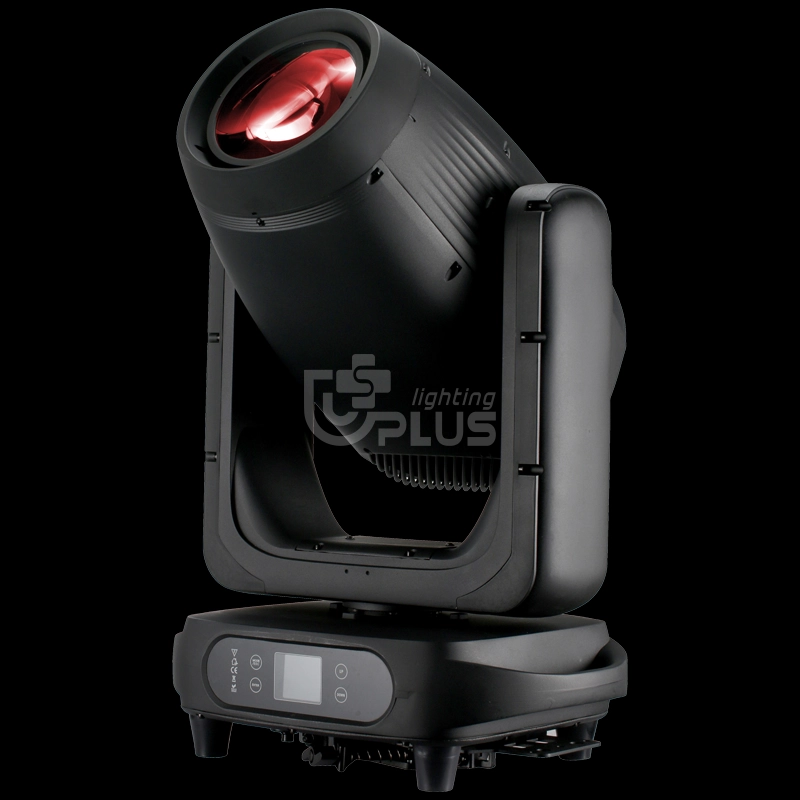
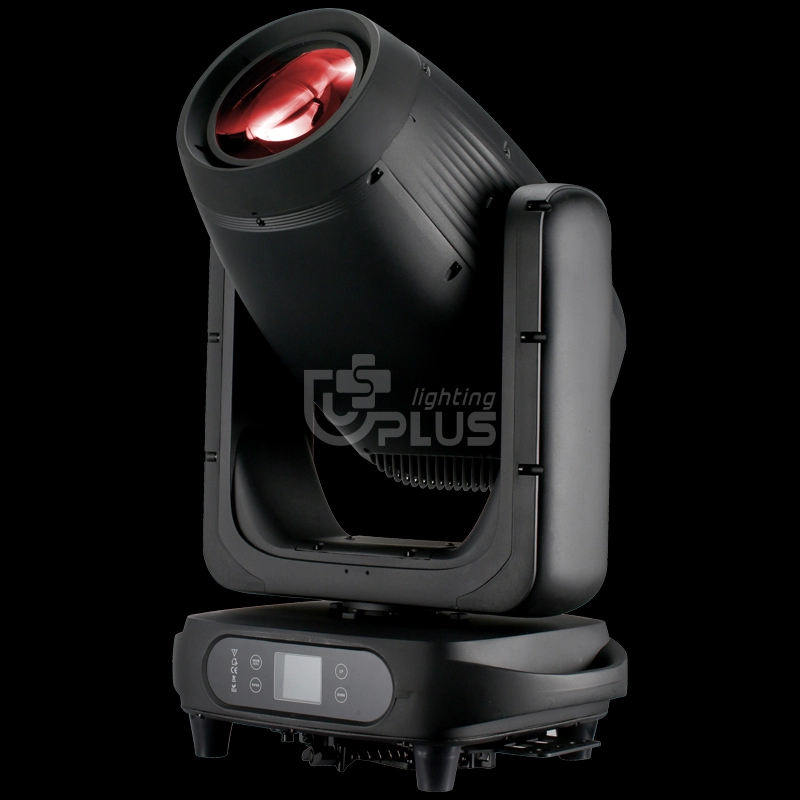
1000W Waterproof BSWF 4-in-1 Moving Head combines beam, spot, wash, and frame effects in one. IP-rated waterproof design, high-brightness output, precise control, ideal for outdoor & indoor stage events.
Stay updated on our latest news
If you have any comments or good suggestions, please leave us a message, later our professional staff will contact you as soon as possible.
Lighting Innovators
Uplus Lighting is a leading integrated company specializing in R&D, design, production, and sales of stage lighting solutions.
 Scan QR Code
Facebook
Instagram
YouTube
VK