






- How to judge LED beam quality on mini beam heads?
- What beam angle and lens sizes matter for tight shafts?
- How to compare luminous intensity (lux) across mini beam heads?
- Which motor specs affect pan/tilt accuracy on small moving heads?
- How important is thermal management for high-output mini beams?
- What power, DMX and control options should buyers prioritize?
- Conclusion & Brand Advantage
- How to judge LED beam quality on mini beam heads?
What Are the Key Specs Buyers Should Check on Mini Beam Heads?
Practical buyer checklist for mini beam moving head light specifications: how to read beam angle and lux, evaluate optics and lens type, verify motor resolution and thermal envelope, check control protocols (DMX/RDM/Art‑Net), and validate electrical, mechanical, and service specs for reliable stage lighting decisions.
What Are the Key Specs Buyers Should Check on Mini Beam Heads?
Practical buyer checklist for mini beam moving head light specifications: how to read beam angle and lux, evaluate optics and lens type, verify motor resolution and thermal envelope, check control protocols (DMX/RDM/Art‑Net), and validate electrical, mechanical, and service specs for reliable stage lighting decisions.
This FAQ-style guide answers the six most common, technical buying questions beginners ask when comparing mini beam moving head light options for touring, clubs, or fixed installs. Each answer cuts through marketing claims and shows which numeric specs and standards to request from manufacturers for objective comparison.
How to judge LED beam quality on mini beam heads?
Beam quality is primarily optical: lens geometry, beam angle (FWHM), and center‑to‑edge intensity profile. Ask suppliers for the beam angle defined at 50% center intensity (FWHM) and for published beam profiles or photometric files (IES or LDT format). A stated lumen value is nearly meaningless for narrow beams; instead request measured lux at specific distances (e.g., 5 m and 10 m) and the FWHM graph so you can judge how tight and even the shaft will be. Inspect whether the fixture uses TIR optics, aspheric glass, or multi‑element glass lenses — TIR is common in compact LEDs because of compactness and efficiency, while higher‑end glass optics typically yield sharper edges and better color uniformity. Finally, check for artifacts: color separation (chromatic aberration), visible pixelation from multi‑LED arrays, and whether the manufacturer supplies field measurements rather than calculated values.
What beam angle and lens sizes matter for tight shafts?
For a true “beam” look you should focus on beam angle expressed in degrees and the optic type. Mini beam heads intended for shafts commonly have beam angles between roughly 1° and 4° — narrower angles produce long, tight shafts but demand better optics and higher intensity. Lens diameter and focal length determine how tightly the light is collimated; vendors will often quote lens assembly type or focal distance rather than a simple diameter. Request both the declared beam angle (FWHM) and an IES file so you can simulate throw at your venue. Also confirm whether there is a selectable “flood/frost” element — a removable frost will broaden the beam to a wash; knowing the presence and effect of a frost is essential for multi‑purpose rigs.
How to compare luminous intensity (lux) across mini beam heads?
Compare lux at fixed distances instead of raw lumens. Because beams concentrate flux into a small angular area, lux (illuminance) measured at 5 m or 10 m is the practical spec. Reliable manufacturers publish lux at defined distances and include photometric files you can load into lighting design software. If photometrics are not available, ask for measured lux and the measurement geometry (distance and meter position). Also check spectral output: many fixtures use RGBW or COB LEDs; while lumen totals can be high, spectral distribution affects perceived intensity, especially through haze. Finally, check for luminous maintenance data (Lx at time zero vs Lx after X hours) or L70 projections based on IES TM‑21 extrapolation — this tells you how the beam output will decline over the fixture’s usable life.
Which motor specs affect pan/tilt accuracy on small moving heads?
Motor performance determines positioning speed, accuracy, and repeatability. Key specs to request: whether the unit uses DC stepper motors, brushless servos, or direct‑drive with encoder feedback; pan/tilt resolution (8‑bit vs 16‑bit control), and specified repeatability or positional accuracy in degrees. Look for 16‑bit (high‑resolution) pan/tilt control if your programming requires smooth camera‑style moves or precise cueing. Ask about backlash and homing behavior, microstepping capability, and whether positional feedback or absolute encoders are used — closed‑loop systems retain position after power cycles and reduce cumulative error. Also verify declared maximum speeds (deg/sec), torque or load ratings (relevant if adding accessories), and maintenance/replacement procedures for motors and gearboxes.
How important is thermal management for high-output mini beams?
Thermal design directly affects output, color stability, and LED life. Ask for the fixture’s maximum Tc (case) temperature and its recommended ambient operating temperature range. Professional LED modules often quote L70 life (time to 70% initial lumen output) calculated per IES TM‑21; many market fixtures target 50,000 hours L70, but thermal stress can shorten that. Check whether the fixture relies on passive cooling (heat sinks) or active cooling (fans) — fans can increase maintenance but are often necessary in compact, high‑flux designs. Also request thermal derating curves that show output vs ambient temperature, and ask about driver current settings or options for lower‑power modes; excessive drive current increases initial output but accelerates lumen depreciation if cooling is marginal.
What power, DMX and control options should buyers prioritize?
Ensure electrical and control compatibility with your deployment. For power, confirm universal input range (typically 100–240 VAC), actual power draw (watts), inrush current, and power factor — inrush affects dimmer racks and generator sizing. For control, DMX512 is the baseline; look for RDM support (ANSI E1.20) for remote addressing and status. For networked setups prefer fixtures that support Art‑Net and sACN and include an on‑board Ethernet port or a clear pathway via gateway. Check the DMX channel modes (simple and full-feature) to ensure the fixture supports your console and required feature set. Finally verify available control curves and firmware update pathways — fixtures that permit firmware updates over DMX/RDM or Ethernet are easier to maintain long term.
Conclusion & Brand Advantage
Buying mini beam moving head light fixtures requires reading objective engineering specs, not marketing blurbs: request FWHM beam angle and photometric files, lux at distance, optical construction details, motor type and resolution, thermal ratings and L70 data per IES TM‑21, and complete control/electrical specs including DMX/RDM and network protocols. Also prioritize serviceability, certifications (CE/UL/RoHS), and published inrush/Power Factor data for system planning. Uplus Lighting brings 15 years of stage lighting expertise to specification-level comparisons, providing transparent photometrics, rigorous thermal data, and practical installation intelligence so buyers get predictable on‑stage results rather than optimistic datasheet claims.
Contact us for a tailored quote and specification pack at www.upluslighting.com or albee@upluslighting.com.
How to judge LED beam quality on mini beam heads?
How to judge LED beam quality on mini beam heads?
Beam quality is primarily optical: lens geometry, beam angle (FWHM), and center‑to‑edge intensity profile. Ask suppliers for the beam angle defined at 50% center intensity (FWHM) and for published beam profiles or photometric files (IES or LDT format). A stated lumen value is nearly meaningless for narrow beams; instead request measured lux at specific distances (e.g., 5 m and 10 m) and the FWHM graph so you can judge how tight and even the shaft will be. Inspect whether the fixture uses TIR optics, aspheric glass, or multi‑element glass lenses — TIR is common in compact LEDs because of compactness and efficiency, while higher‑end glass optics typically yield sharper edges and better color uniformity. Finally, check for artifacts: color separation (chromatic aberration), visible pixelation from multi‑LED arrays, and whether the manufacturer supplies field measurements rather than calculated values.
What beam angle and lens sizes matter for tight shafts?
For a true “beam” look you should focus on beam angle expressed in degrees and the optic type. Mini beam heads intended for shafts commonly have beam angles between roughly 1° and 4° — narrower angles produce long, tight shafts but demand better optics and higher intensity. Lens diameter and focal length determine how tightly the light is collimated; vendors will often quote lens assembly type or focal distance rather than a simple diameter. Request both the declared beam angle (FWHM) and an IES file so you can simulate throw at your venue. Also confirm whether there is a selectable “flood/frost” element — a removable frost will broaden the beam to a wash; knowing the presence and effect of a frost is essential for multi‑purpose rigs.
How to compare luminous intensity (lux) across mini beam heads?
Compare lux at fixed distances instead of raw lumens. Because beams concentrate flux into a small angular area, lux (illuminance) measured at 5 m or 10 m is the practical spec. Reliable manufacturers publish lux at defined distances and include photometric files you can load into lighting design software. If photometrics are not available, ask for measured lux and the measurement geometry (distance and meter position). Also check spectral output: many fixtures use RGBW or COB LEDs; while lumen totals can be high, spectral distribution affects perceived intensity, especially through haze. Finally, check for luminous maintenance data (Lx at time zero vs Lx after X hours) or L70 projections based on IES TM‑21 extrapolation — this tells you how the beam output will decline over the fixture’s usable life.
Which motor specs affect pan/tilt accuracy on small moving heads?
Motor performance determines positioning speed, accuracy, and repeatability. Key specs to request: whether the unit uses DC stepper motors, brushless servos, or direct‑drive with encoder feedback; pan/tilt resolution (8‑bit vs 16‑bit control), and specified repeatability or positional accuracy in degrees. Look for 16‑bit (high‑resolution) pan/tilt control if your programming requires smooth camera‑style moves or precise cueing. Ask about backlash and homing behavior, microstepping capability, and whether positional feedback or absolute encoders are used — closed‑loop systems retain position after power cycles and reduce cumulative error. Also verify declared maximum speeds (deg/sec), torque or load ratings (relevant if adding accessories), and maintenance/replacement procedures for motors and gearboxes.
How important is thermal management for high-output mini beams?
Thermal design directly affects output, color stability, and LED life. Ask for the fixture’s maximum Tc (case) temperature and its recommended ambient operating temperature range. Professional LED modules often quote L70 life (time to 70% initial lumen output) calculated per IES TM‑21; many market fixtures target 50,000 hours L70, but thermal stress can shorten that. Check whether the fixture relies on passive cooling (heat sinks) or active cooling (fans) — fans can increase maintenance but are often necessary in compact, high‑flux designs. Also request thermal derating curves that show output vs ambient temperature, and ask about driver current settings or options for lower‑power modes; excessive drive current increases initial output but accelerates lumen depreciation if cooling is marginal.
What power, DMX and control options should buyers prioritize?
Ensure electrical and control compatibility with your deployment. For power, confirm universal input range (typically 100–240 VAC), actual power draw (watts), inrush current, and power factor — inrush affects dimmer racks and generator sizing. For control, DMX512 is the baseline; look for RDM support (ANSI E1.20) for remote addressing and status. For networked setups prefer fixtures that support Art‑Net and sACN and include an on‑board Ethernet port or a clear pathway via gateway. Check the DMX channel modes (simple and full-feature) to ensure the fixture supports your console and required feature set. Finally verify available control curves and firmware update pathways — fixtures that permit firmware updates over DMX/RDM or Ethernet are easier to maintain long term.


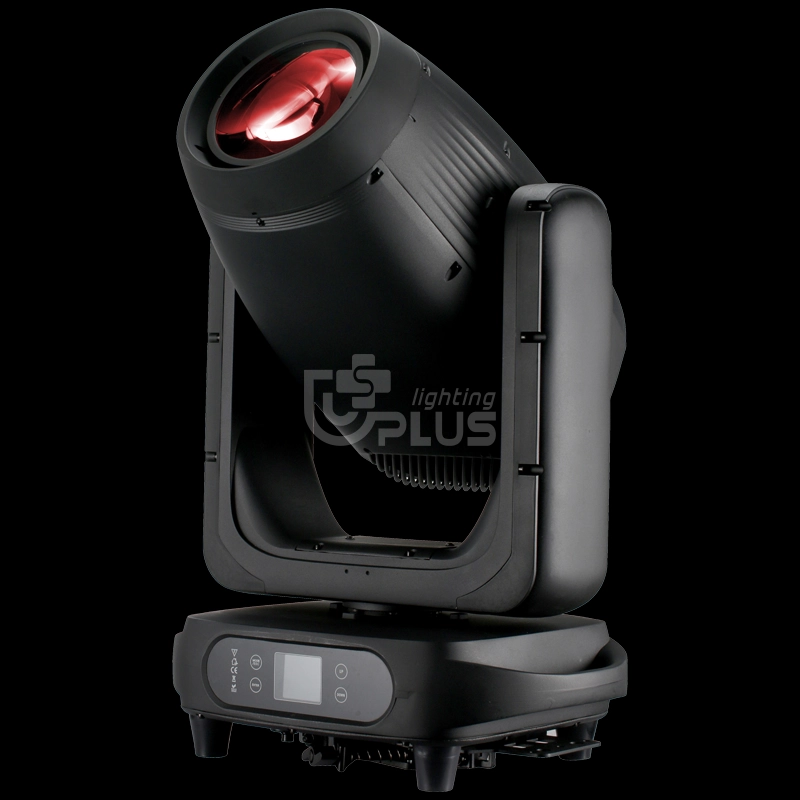
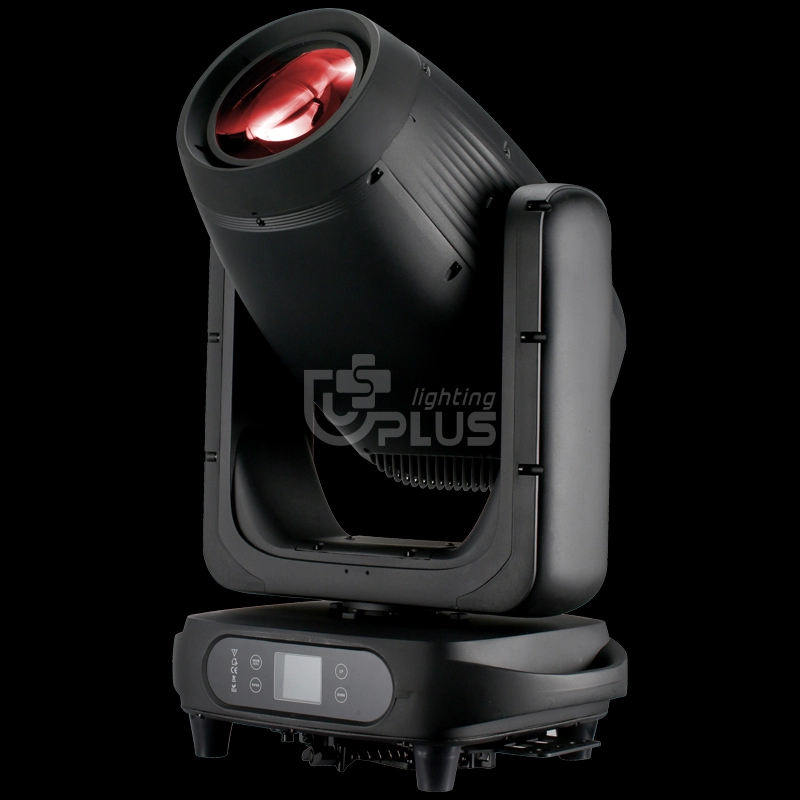
1000W Waterproof BSWF 4-in-1 Moving Head combines beam, spot, wash, and frame effects in one. IP-rated waterproof design, high-brightness output, precise control, ideal for outdoor & indoor stage events.
Stay updated on our latest news
If you have any comments or good suggestions, please leave us a message, later our professional staff will contact you as soon as possible.
Lighting Innovators
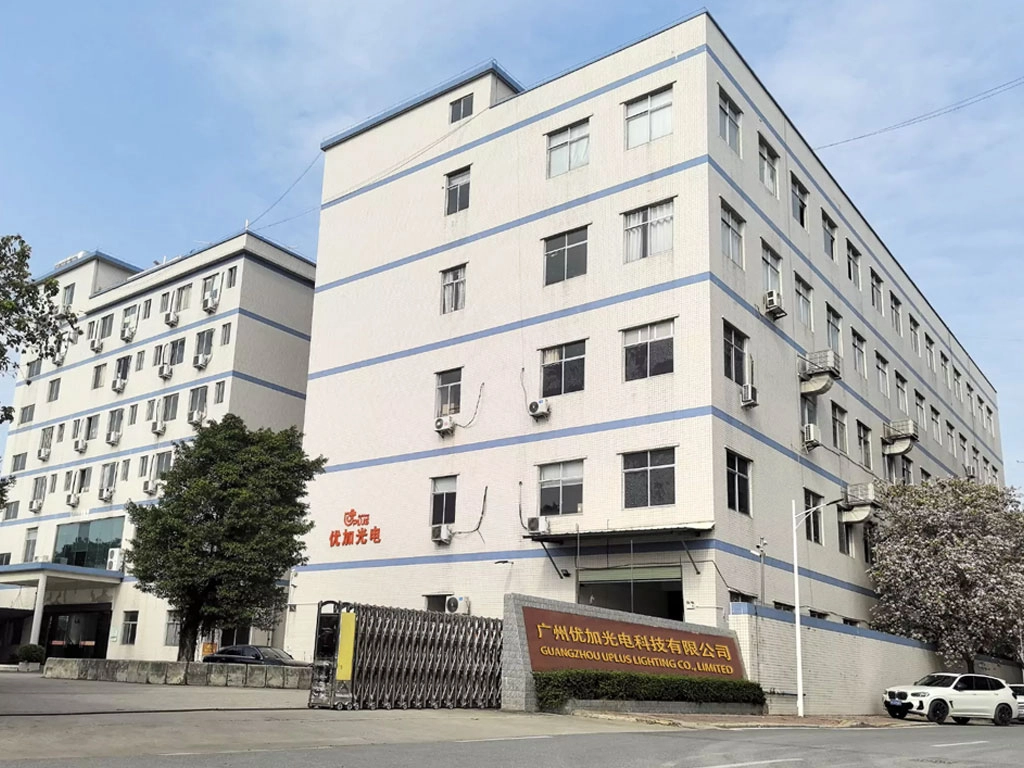
Uplus Lighting is a leading integrated company specializing in R&D, design, production, and sales of stage lighting solutions.
 Scan QR Code
Facebook
Instagram
YouTube
VK