






How to choose reliable manufacturers of LED laser stage lighting?
How to choose reliable manufacturers of LED laser stage lighting?
Select manufacturers by verifying optical and thermal tests, supply-chain traceability, LM-80/TM-21 reports, IEC 60825 compliance, independent lab certifications, and documented after-sales SLAs—use a factory-audit checklist and third-party inspection to reduce procurement risk and ensure long-term serviceability.
Buying professional stage lighting requires different evidence than buying commodity lamps. For LED laser stage lighting, buyers must validate optical specs, diode sourcing, thermal design, EMC and laser-safety compliance, and operational support—not marketing sheets. The following FAQs (extracted separately) provide targeted checks and actions to evaluate a manufacturer before placing POs or launching rigs into touring or fixed-install projects.
In procurement and technical acceptance, insist on verifiable lab reports, a clear spare-parts policy, and an RMA process with defined turnaround times; these are the items that determine total cost of ownership far more than headline lumen or wattage figures.
Uplus Lighting brings 15 years of stage lighting R&D and supply-chain experience to independent factory audits, test verification, and acceptance testing protocols tailored to tour and installation contexts—ensuring your fixtures meet performance and safety expectations.
Contact us for a customized quotation and factory-assessment plan: www.upluslighting.com and albee@upluslighting.com
FAQ
How to verify optical component quality in laser fixtures?
Start with the test data manufacturers provide and verify the methodology. Request raw beam-measurement reports (ISO 11146 for beam width and M2 where applicable), spectral data (central wavelength and FWHM), and divergence measured at a specified aperture. Inspect full-aperture homogeneity and optical assembly drawings: forgiveness in alignment is low for laser-based sources, so tolerances, lens AR coatings, and mount stability matter. Ask for interferometry or MTF data for imaging optics when fixtures include projection. Require sample inspection: measure beam profile with your own power meter and spectrometer or a trusted third-party lab (e.g., TÜV/Intertek) to confirm the vendor’s numbers. Finally, validate the vendor’s alignment process—does the factory use laser-alignment jigs, automated optical benches, and records showing post-assembly verification? If they cannot show measurement traceability, treat optical specs as unverified marketing claims.
What factory tests guarantee beam alignment and chromatic stability?
Demand documented burn-in and final acceptance tests that cover thermal cycling and optical stability. Key tests include extended burn-in (recommend at least 72 hours at representative drive currents), thermal cycling to detect mechanical drift, wavelength stability under operating temperature range (report nm drift), and continuous-run spectroradiometer traces to show color-wavelength stability over time. Manufacturers should provide drift data under defined ambient conditions and duty cycles; for laser diodes, wavelength shifts of several nanometres are normal with temperature—what matters is the vendor’s compensation strategy (thermoelectric control, temperature feedback). Require run-in reports and sample trace logs; if the vendor offers closed-loop wavelength stabilization or VBG elements, request validation data. Finally, require post-assembly alignment verification records and a tolerance table—how many arc-minutes or milliradians of deviation are acceptable—so you can validate acceptance on delivery.
Which certifications and compliance documents should manufacturers provide?
For laser-based stage lighting, the critical documents are laser safety and EMC/EMI test reports plus quality-system certification. Laser safety: IEC 60825-1 classification (show the report identifying accessible emission limits and user/operator warnings), and region-specific approvals (e.g., evidence of compliance with applicable FDA CDRH guidance for laser light shows where required). EMC/EMI: regional test reports (EN 55032/EN 55015 family or FCC Part 15) and any required harmonized standards for lighting. Quality systems: ISO 9001 certificate and factory scope. For LED longevity, request LM-80 reports for LED modules and TM-21 projections for lumen maintenance when fixtures rely on LED engines. Also ask for component traceability paperwork, RoHS compliance declarations, and third-party lab test reports (TÜV, Intertek, UL) rather than only internal test certificates. If a vendor supplies counterfeit or substandard components, these documents are where defects are most often discovered.
How to evaluate thermal management in LED laser stage lighting?
Thermal management is the system-level limiter of performance and lifetime. Ask for Tc-point measurements, published junction or case temperatures under typical and worst-case duty cycles, and thermal-resistance (Rth) numbers for diode packages. Vendors should provide thermal simulation data (CFD results) and empirical thermal imaging from full-power runs showing steady-state temperatures on LED modules, driver boards, and heat sinks. Verify that thermal interfaces use proven materials (soldered or properly bonded MCPCBs, TIMs rated for long-term use) and that airflow or conduction paths are not relying on ephemeral gaps. Good practice: require vendor-provided lifetime estimates based on LM-80/TM-21 data and an explanation of how operating temperature affects TM-21 projections. During acceptance, perform a thermal soak test with an IR camera and measure Tc to ensure it matches vendor data; any significant mismatch indicates a manufacturing or design problem that will accelerate lumen depreciation and diode failure.
What supply chain risks exist for laser diode sourcing?
Major risks include single-source dependence, long lead times for established diode vendors, and counterfeit or mismarked parts. Laser diodes and specialized optics are often supplied by a small number of tier-1 manufacturers; if your vendor cannot demonstrate multi-sourcing or allocation contracts, you risk sudden price spikes or delivery delays. Ask for supplier lists (redacted as needed), purchase-order history, and contingency plans. Traceability is key: require lot numbers and certificate of conformity for diode shipments. Also consider obsolescence risk—request a component-obsolescence policy and guaranteed minimum parts availability (ideally 3–5 years) in contract. For high-volume or long-life installations, negotiate fixed supply agreements or ask the manufacturer to hold buffer stock. Finally, validate authenticity via serial-number traceability and independent component testing when scaling up production.
How to verify after-sales support and spare parts availability?
Before signing, obtain the manufacturer’s published SLA and spare-parts policy. Key items to verify: guaranteed spare-parts list with expected availability windows (years), typical RMA turnaround times, local service partners or authorized repair centers, and firmware-update policies. Ask for references from other customers about real-world RMA experience and repair lead times. Contractually require a parts-obligation clause (for example, commitment to supply critical spares for a minimum number of years) and defined credit or replacement terms for DOA/early-life failures. For touring equipment, insist on express-shipping options and modular replaceable units (e.g., replaceable diode modules and drivers) so field techs can swap parts quickly. Finally, confirm the vendor’s firmware/version control and remote-support capabilities—how are bug fixes and safety updates issued, and what is the policy for securing legacy fixtures?


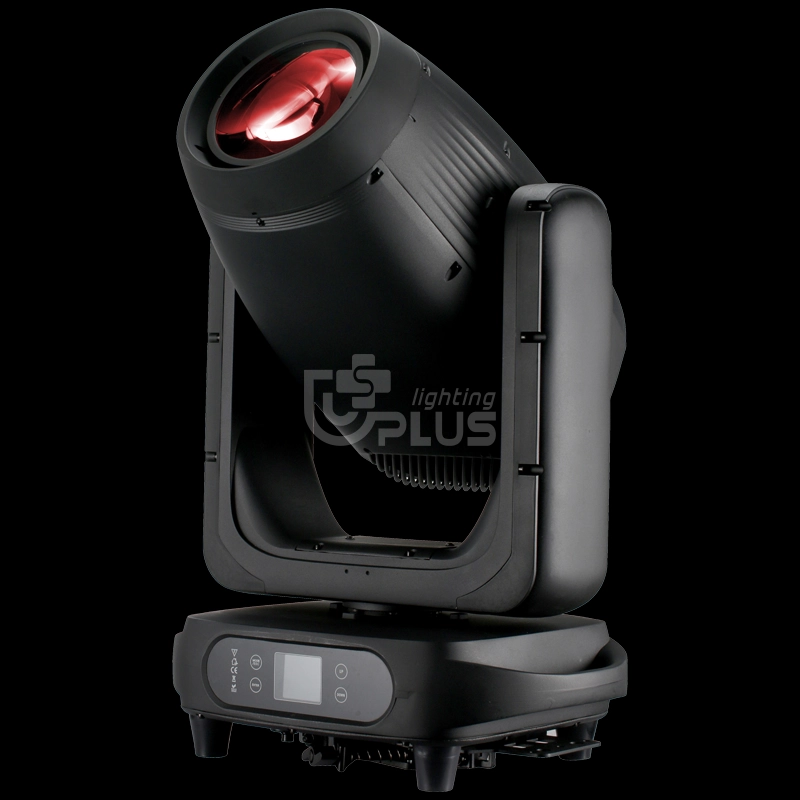
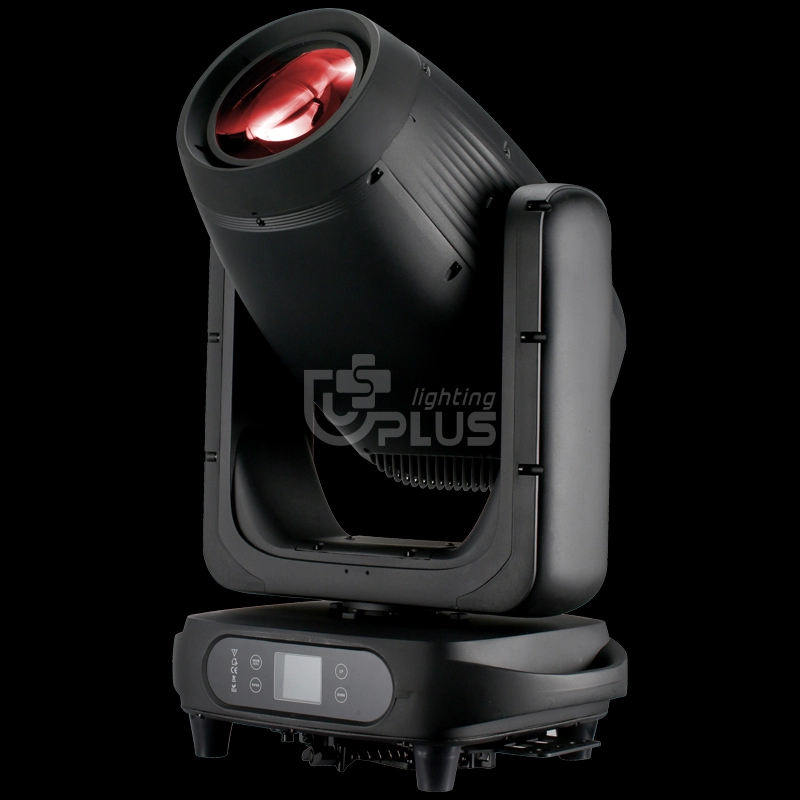
1000W Waterproof BSWF 4-in-1 Moving Head combines beam, spot, wash, and frame effects in one. IP-rated waterproof design, high-brightness output, precise control, ideal for outdoor & indoor stage events.
Stay updated on our latest news
If you have any comments or good suggestions, please leave us a message, later our professional staff will contact you as soon as possible.
Lighting Innovators
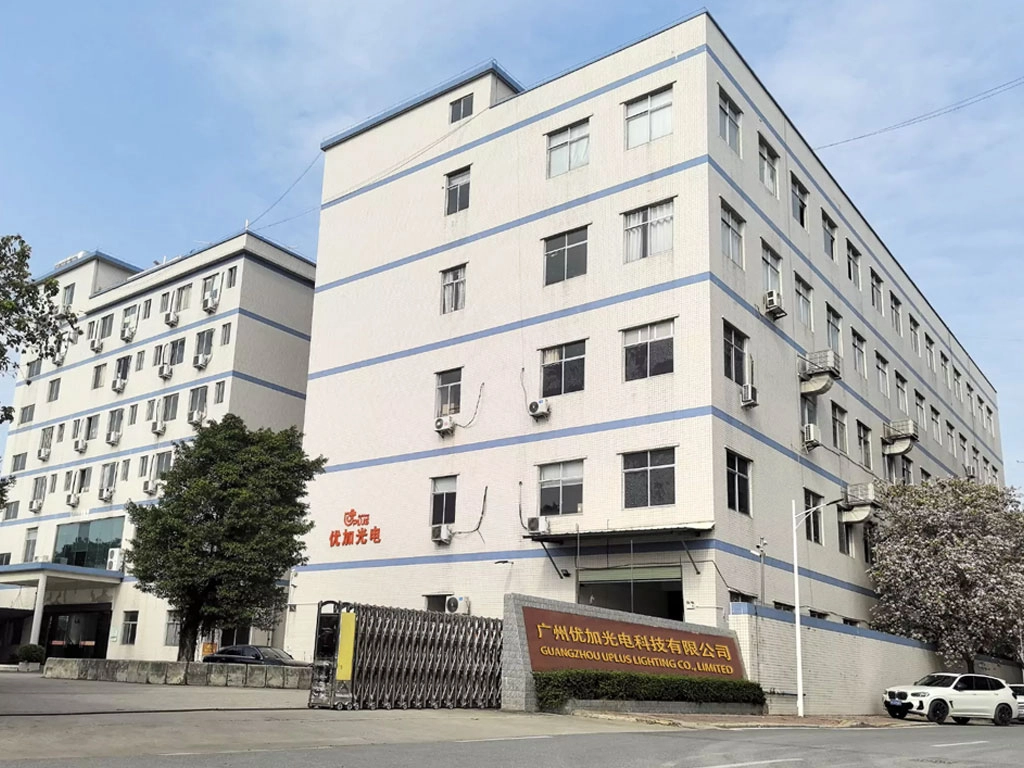
Uplus Lighting is a leading integrated company specializing in R&D, design, production, and sales of stage lighting solutions.
 Scan QR Code
Facebook
Instagram
YouTube
VK