






IP Rating and Outdoor Use of LED Moving Beam Head Fixtures
- Environmental challenges for outdoor moving head installations
- Common failure modes outdoors
- Why form factor matters for outdoor use
- Site-specific risk assessment
- Understanding IP ratings and what they mean for moving heads
- IP code basics and authoritative references
- How to interpret IP ratings in practice
- IP vs. other environmental standards
- Practical guidelines for outdoor deployment and maintenance
- Choosing the right IP level by scenario
- Installation best practices
- Maintenance schedule and routine checks
- Design strategies and protective accessories
- Enclosures and weather hoods
- Electrical protection and grounding
- Material and connector choices
- Uplus Lighting: product suitability and competitive advantages
- Company background and product range
- How Uplus addresses outdoor requirements
- Competitive differentiators and technical strengths
- FAQ — Common questions about IP ratings and outdoor moving heads
- Q1: Is an IP65 moving head sufficient for an outdoor concert?
- Q2: Can I use a moving head with fans outdoors?
- Q3: How does IP67 differ from IP66 for moving heads?
- Q4: Does IP rating cover salt corrosion?
- Q5: Are sealed enclosures better than IP-rated fixtures?
- Q6: What maintenance extends outdoor fixture life?
As a lighting consultant with years of hands-on experience specifying and deploying led moving beam head stage light fixtures for concerts, touring rigs, and permanent outdoor installations, I’ve seen the difference that correct environmental protection makes. This article summarizes how to interpret IP ratings for moving heads, which ratings are appropriate for different outdoor scenarios, and practical steps to mitigate risk on-site. I write from real-world deployments and industry standards so you can quickly decide whether a fixture is suitable for your project or what additional protection is required.
Environmental challenges for outdoor moving head installations
Common failure modes outdoors
LED moving beam head stage light fixtures exposed outdoors face several failure modes beyond simple electrical faults: ingress of dust and grit that abrades optics and mechanics; water intrusion from rain, spray, or condensation; corrosion from humidity and salt air; thermal stress from sunlight and ambient temperature swings; and mechanical damage from wind-driven debris. These lead to reduced lumen output, gobo/beam irregularities, pan/tilt motor wear, and in severe cases, short circuits.
Why form factor matters for outdoor use
Compact moving heads often have tighter mechanical tolerances and integrated electronics, which increases sensitivity to particulates and moisture. Larger touring fixtures sometimes permit better sealing and service access. When I evaluate an led moving beam head stage light for outdoor use, I look at housing seams, connector type, lens protection, and whether the unit uses internal fans for cooling—fans can compromise ingress protection unless specially designed.
Site-specific risk assessment
Not every outdoor situation demands the highest IP rating. I advise clients to perform a simple risk assessment: exposure (fully exposed, covered, under eaves), environment (coastal, urban dust, desert sand), expected storm/spray (occasional rain, frequent storms, direct seawater spray), and project duration (single-day event vs permanent installation). This informs whether an IP65 or IP67 rated strategy—or additional enclosures and maintenance—makes sense.
Understanding IP ratings and what they mean for moving heads
IP code basics and authoritative references
The International Protection (IP) Code defined by the IEC/ISO family of standards (officially IEC 60529) uses two digits: the first for solid particle protection (0-6) and the second for liquid ingress protection (0-9). The most commonly referenced resources are the Wikipedia IP Code summary and the IEC’s documentation for IEC 60529. I recommend reviewing IEC 60529 if you need the full test procedures and limits: IEC Webstore.
How to interpret IP ratings in practice
Interpreting IP ratings for moving heads requires mapping the coded tests to real-world threats. For example, IP54 indicates protection against limited dust ingress and splashing water from any direction—suitable for short-term covered outdoor use. IP65 guarantees dust-tight construction and protection from low-pressure water jets and is commonly accepted for semi-exposed outdoor fixtures. IP66 and IP67 provide higher water protection; IP67 means temporary immersion (useful where submersion risk exists). For true long-term outdoor exposure—especially in coastal or high-pressure wash scenarios—I typically specify IP66 or IP67-rated solutions.
IP vs. other environmental standards
IP rating addresses ingress only. It does not directly measure UV resistance, salt-spray corrosion resistance (ISO 9227), or mechanical shock/vibration tolerance (IEC 60068). Because moving heads include moving parts and precision optics, you must consider these other standards. For example, a fixture with IP67 housing but no corrosion-resistant fasteners will still fail in a salt-air environment. I always cross-reference IP with manufacturer corrosion testing and MTBF data when advising clients.
Practical guidelines for outdoor deployment and maintenance
Choosing the right IP level by scenario
Below is a practical recommendation table I use routinely. It maps common outdoor scenarios to minimum IP ratings and additional notes.
| Scenario | Minimum IP rating | Notes |
|---|---|---|
| Covered outdoor stage (sheltered from direct rain) | IP54 | Acceptable for short-term events; schedule frequent maintenance and check vents/fans. |
| Open-air concerts, occasional rain | IP65 | Dust tight and protected against water jets; suitable for rental touring if cleaned between shows. |
| Permanent exterior lighting with exposure to storms | IP66 or IP67 | High protection; consider corrosion-resistant hardware and sealed connectors. |
| Coastal or washdown environments | IP67+ and corrosion protection | Salt spray can corrode connectors—use stainless steel hardware, marine coatings, and sacrificial anodes where needed. |
Sources: IP definitions from Wikipedia / IEC 60529.
Installation best practices
My checklist for outdoor installations of led moving beam head stage light fixtures includes:
- Use IP-rated cable glands and marine-grade DMX/ethernet connectors. Any cable entry is a potential leak point.
- Orient fixtures so lenses are not flat up—reduces pooling water and debris accumulation.
- Specify sunshades or polycarbonate hoods if fixtures are sun-exposed to reduce UV heating and lens soiling.
- Design service access into mounting positions—typical moving heads need filter/air path cleaning, lubrication, and occasional bearing replacement.
Maintenance schedule and routine checks
Routine maintenance extends outdoor life dramatically. I recommend the following schedule for outdoor moving heads:
- Daily (events): visual inspection for water ingress, loose fasteners, and obvious lens contamination.
- Monthly: check seals and gaskets, clean optics, operate full pan/tilt range to spot motor drag.
- Biannually: open housings for internal inspection, clean PCBs with approved methods, replace desiccant packs if present.
Design strategies and protective accessories
Enclosures and weather hoods
For fixtures that are not fully rated for permanent outdoor use, custom enclosures can bridge the gap. A properly ventilated IP-rated housing with filtered air intake, or a housing with a positive-pressure system (in which clean, dry air is pumped through at low pressure) helps keep dust out while preventing condensation. When I specify enclosures, I insist on maintenance access panels and filtered vents that are replaceable in the field.
Electrical protection and grounding
Outdoor electrical protection must include surge protection devices, GFCI/earth leakage protection, and robust grounding. Lightning and transient surges are real risks for outdoor rigs; I always include SPD (surge protection devices) at distribution panels and dedicated ground points for trusses and metal enclosures.
Material and connector choices
Choose stainless steel or electroplated fasteners and IP-rated connectors (e.g., IP68-rated circular connectors for power/data). Consider conformal coating on PCBs for moisture-prone sites. Always verify manufacturer spec sheets for ingress testing methodology and ask for salt-spray (ISO 9227) test reports if installing in coastal environments.
Uplus Lighting: product suitability and competitive advantages
Company background and product range
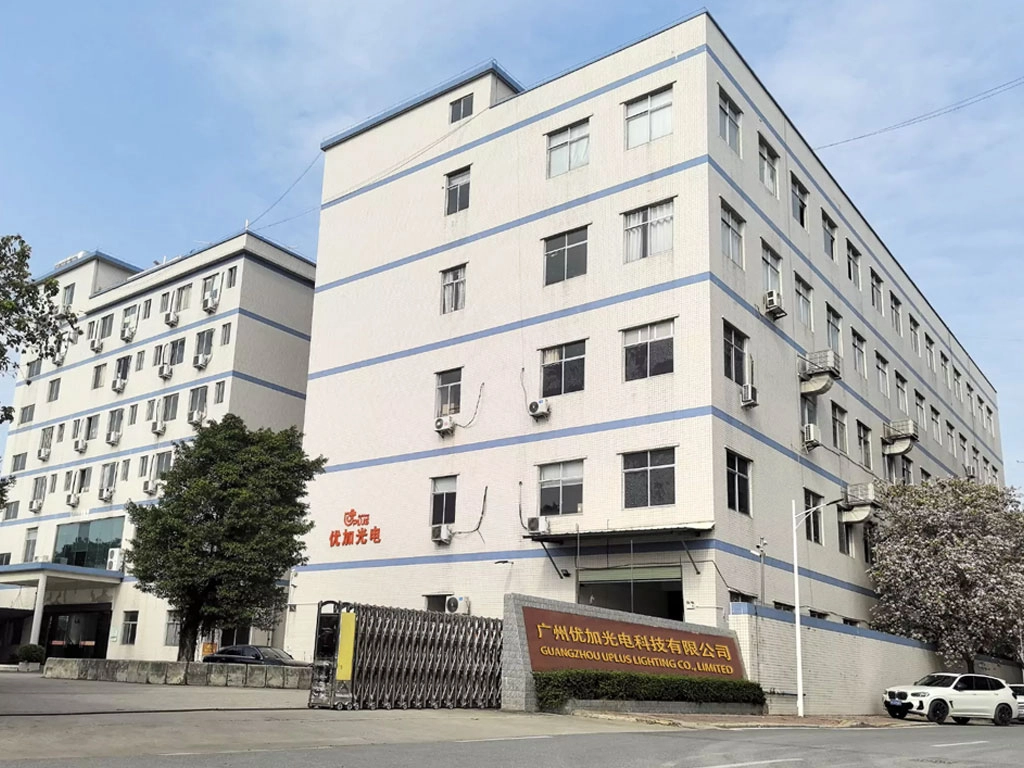
Uplus Lighting was established in 2012 in Guangzhou, China, and is a professional manufacturer specializing in high-end stage lighting products. We provide innovative and reliable lighting solutions for theaters, studios, cultural projects, concerts, and live events worldwide. With rich experience in product development, manufacturing, and export, we offer a wide product range covering professional lighting, entertainment lighting, and theater lighting to meet the needs of large performances, rental companies, distributors, and project clients. Since 2015, our products have been widely applied in major concerts, opera houses, TV programs, and large-scale events in China and abroad. We also support OEM orders and customized product development. A skilled production team and strict quality control ensure stable performance, consistent quality, and professional service trusted by global partners.
How Uplus addresses outdoor requirements
When specifying led moving beam head stage light fixtures for outdoor use, Uplus focuses on:
- Robust housings with IP-rated designs or compatibility with outdoor enclosures
- High-quality optics that resist UV degradation and soiling
- Serviceable mechanical assemblies and sealed electrical compartments
- Support for OEM/customization so clients can request higher ingress protection, upgraded connectors, and corrosion-resistant components
Uplus Lighting’s main product lines include moving head lights, strobe lights, led battery lights, static lights, led theatre lights, led follow spot light, stage effect lights, and laser lights. These lines are engineered with touring reliability and project-grade durability in mind.
Competitive differentiators and technical strengths
Compared with many competitors, Uplus combines responsive R&D with hands-on production control. That translates to shorter development cycles for custom sealing solutions, consistent QA, and flexible OEM support. On technical grounds, Uplus emphasizes thermal management (important for LED longevity), serviceability (accessible modules), and documentation—critical when you need to justify outdoor deployment specs to venue owners or regulatory bodies.
FAQ — Common questions about IP ratings and outdoor moving heads
Q1: Is an IP65 moving head sufficient for an outdoor concert?
A: For one-off outdoor concerts where fixtures are exposed to rain but not submerged, IP65 is commonly sufficient. It provides dust-tight protection and defense against low-pressure water jets. However, consider wind-driven spray and salt air—if those are factors, step up to IP66/IP67 or use protective enclosures.
Q2: Can I use a moving head with fans outdoors?
A: You can, but fans increase the risk of ingress unless the air pathway includes filters and positive-pressure measures. For outdoor use, sealed housings or fans with IP-rated filters are preferable.
Q3: How does IP67 differ from IP66 for moving heads?
A: IP66 protects against high-pressure water jets; IP67 allows temporary immersion up to 1 meter. For moving heads, IP67 implies a higher sealing degree—good for flood-prone sites—but you must still verify the fixture’s mechanical and connector corrosion resistance.
Q4: Does IP rating cover salt corrosion?
A: No. IP ratings do not address chemical corrosion from salt. For coastal installations, request salt-spray (ISO 9227) test results or specify corrosion-resistant materials and coatings.
Q5: Are sealed enclosures better than IP-rated fixtures?
A: Both approaches work. IP-rated fixtures are convenient and tested; enclosures add flexibility (ventilation, positive pressure, accessory mounts). For retrofit situations, an enclosure is often the practical choice; for new purchases, choose fixtures with the right IP rating out-of-the-box.
Q6: What maintenance extends outdoor fixture life?
A: Regular cleaning of optics and vents, gasket replacement, desiccant changes, and corrosion checks are the most effective measures. Schedule a more thorough internal inspection at least twice per year for permanent outdoor installations.
If you need help evaluating fixtures for a specific site or want customized outdoor-ready led moving beam head stage light solutions, contact Uplus Lighting. We can provide datasheets, IP test reports, salt-spray results, and tailored recommendations for enclosures or OEM modifications.
Contact & product inquiry: Email: sales@uplus-lighting.com | Website: https://www.uplus-lighting.com. Request product catalogs for moving head lights, strobe lights, led battery lights, static lights, led theatre lights, led follow spot light, stage effect lights, and laser lights.
IP Rating and Outdoor Use of LED Profile Stage Lights
Where to Buy mini beam moving head light
LED Moving Beam Head vs Spot/Wash: Buyer Comparison
How to Choose the Best LED Stage Light Bar for Concerts

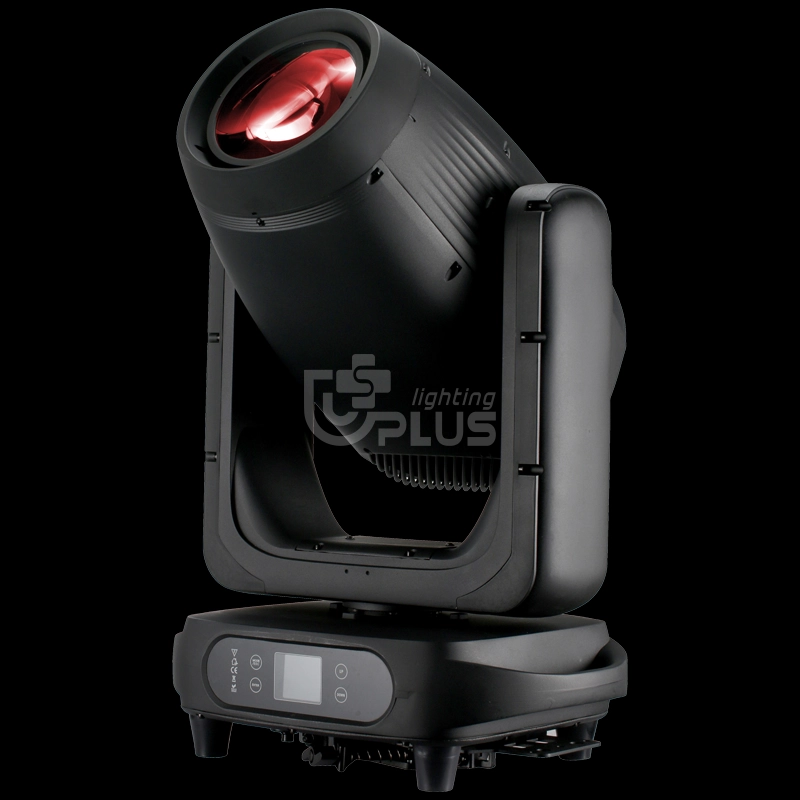
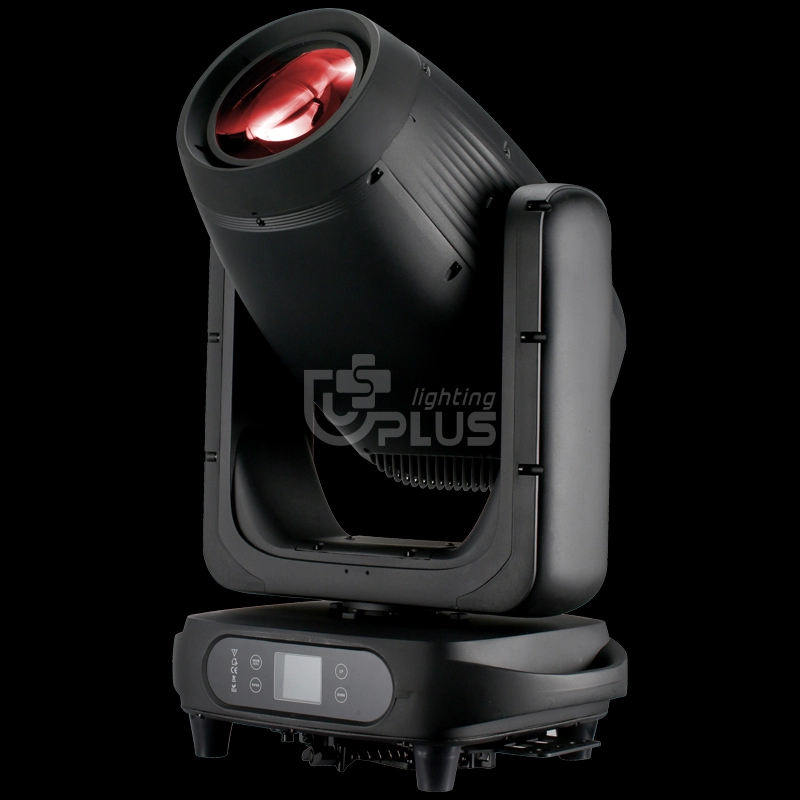
1000W Waterproof BSWF 4-in-1 Moving Head combines beam, spot, wash, and frame effects in one. IP-rated waterproof design, high-brightness output, precise control, ideal for outdoor & indoor stage events.
If you have any comments or good suggestions, please leave us a message, later our professional staff will contact you as soon as possible.
Lighting Innovators
Uplus Lighting is a leading integrated company specializing in R&D, design, production, and sales of stage lighting solutions.
 Scan QR Code
Facebook
Instagram
YouTube
VK