






LED Laser Stage Lighting Buyer’s Guide: Key Features to Compare
- Choosing the right optical performance for shows
- Beam characteristics: divergence, coherence, and speckle
- Perceived brightness vs. raw lumen numbers
- Color fidelity and color mixing
- Control, connectivity, and operational workflow
- Control protocols: DMX, Art-Net, sACN, ILDA
- Software, presets, and automation
- Maintenance, serviceability, and mean time between failures (MTBF)
- Safety, compliance, and venue constraints
- Laser safety classes and audience exposure
- Electrical, thermal, and ingress protection
- Insurance, certification, and documentation
- Cost, lifecycle economics, and fit-for-purpose selection
- Upfront cost vs. total cost of ownership
- When to choose hybrid LED-laser fixtures
- Vendor support, warranties, and spares strategy
- How I specify led laser stage lighting for different buyers
- Theatre and broadcast specifications
- Concerts and large-scale events
- Rental companies and integrators
- Why I recommend Uplus Lighting for led laser stage lighting projects
- Proven manufacturing and project experience
- Product breadth and technical capability
- Quality control, warranties, and service
- Frequently Asked Questions
- What is led laser stage lighting and how does it differ from traditional LED fixtures?
- Are lasers safe to use in audience-facing shows?
- How should I compare brightness between LED and laser units?
- What control protocols should I require for modern fixtures?
- How do I plan maintenance and spares for a fleet of laser fixtures?
- When should I choose a hybrid LED-laser fixture?
I combine industry-proven selection criteria, technical benchmarks, and real-world deployment advice to help buyers compare led laser stage lighting options quickly and confidently—covering beam coherence, divergence, lumen-equivalent brightness, safety classification, control and connectivity (DMX, ILDA, Art-Net), lifetime cost, and venue-scaling strategies, with references to authoritative sources for safety and performance testing such as Wikipedia - Stage lighting, IEEE Spectrum - LEDs, and Laser Institute of America.
Choosing the right optical performance for shows
Beam characteristics: divergence, coherence, and speckle
When I evaluate led laser stage lighting units, I start with beam divergence (degrees or milliradians) because it dictates throw distance and spot size on stage. Lasers typically offer sub-degree divergence, giving tight long-throw beams suitable for arena shows, while LED-based moving head fixtures have broader beams optimized for washes. Coherence and speckle are unique to laser sources; I always ask manufacturers for their speckle mitigation method (multi-mode sources, scanning divergence, or hybrid optics) because visible speckle reduces image quality on textured surfaces.
Perceived brightness vs. raw lumen numbers
Bright-looking laser beams are not directly comparable to lumens from an LED wash. I advise assessing lux at distance (measured lux at 10 m or 30 m) rather than raw lumens; lasers concentrate energy and measure differently. For client proposals I deliver lux charts for typical venue distances so technical buyers can compare effective illumination rather than spec-sheet lumens.
Color fidelity and color mixing
True RGB laser sources often give saturated, narrowband colors that look dramatic in haze, but they can lack smooth white blends for theatrical work. I look at whether a unit includes white diodes or multiple wavelengths for better color temperature control when shows require natural skin tones—important for theaters or televised events where CRI and color temperature stability matter.
Control, connectivity, and operational workflow
Control protocols: DMX, Art-Net, sACN, ILDA
From day one on tour rigs I demanded consistent control. For led laser stage lighting you need fixtures that support DMX512 for basic shows, and Art-Net or sACN for networked large rigs. When using dedicated laser control (for beam animation), ILDA connectivity is still the industry standard—so I verify ILDA compatibility and show controllers’ integration early in procurement discussions.
Software, presets, and automation
I evaluate vendor software for scene recall, pixel-mapping, and show automation. Good led laser stage lighting fixtures expose programmable macros, cueing, and pan/tilt smoothing—features that save labor hours during load-in and playback. Ask for a demo showfile from the vendor that mirrors your typical runtime to validate automation behavior.
Maintenance, serviceability, and mean time between failures (MTBF)
In my experience, moving parts and optical assemblies determine uptime. Check the manufacturer’s MTBF for the laser diodes and cooling system, and confirm whether key modules (scan heads, driver boards, power supplies) are modular and replaceable in the field. For rental houses I insist on hot-swappable components and clear service manuals to minimize downtime between gigs.
Safety, compliance, and venue constraints
Laser safety classes and audience exposure
Laser safety is non-negotiable. I always require laser class documentation and an outline of controlled-beam strategies. Show lasers can be classified as Class 3R, 3B, or Class 4 depending on power; Class 3B and 4 require a safety officer and audience exposure evaluations. Consult institutional guidance and regional regulations; many operators follow standards promoted by Laser Institute of America and local authorities.
Electrical, thermal, and ingress protection
I compare IP ratings, cooling method (convection vs. forced-air), and input power tolerance. For outdoor festivals an IP65-rated laser or IP65 accessory kit is essential; for touring racks I prefer forced-air with filtered intakes and redundant thermal cutoffs to prevent premature diode failure. Voltage tolerance also matters for international tours—verify rated voltage ranges and auto-switching supplies.
Insurance, certification, and documentation
When procuring equipment for venues I insist on CE/UL certifications and available test reports. Compliance documentation shortens venue approval times and reduces insurance friction—especially for installations at opera houses or television studios where regulators may request technical files and maintenance logs.
Cost, lifecycle economics, and fit-for-purpose selection
Upfront cost vs. total cost of ownership
I always model three-year and five-year TCO scenarios. LED sources often save operating costs via high lm/W efficiency and long rated lifetimes (50,000+ hours), while laser sources can reduce the number of fixtures needed because of their concentrated output. Balance acquisition cost, reduced rigging complexity, and expected maintenance when making purchasing decisions.
When to choose hybrid LED-laser fixtures
For a lot of productions I recommend hybrid fixtures that combine LED wash and laser beam modules. Hybrids offer operational flexibility—wash for singers and laser beams for crowd effects—reducing the number of dedicated fixtures and simplifying rigging and control. I typically specify hybrids for multi-use venues that need both theatrical color fidelity and large-scale beam effects.
Vendor support, warranties, and spares strategy
From my procurement experience, strong vendor support and available spares separate good purchases from costly mistakes. Insist on a clear warranty for laser diodes, moving mechanisms, and power supplies, and negotiate spare-part kits for tour-critical items. For rental companies I recommend stocking at least one spare scan head and one spare power module per 20 fixtures.
| Parameter | LED Wash (Typical) | Laser Beam | Hybrid LED-Laser |
|---|---|---|---|
| Beam divergence | 3°–40° (broad wash) | <1°–2° (tight beam) | Hybrid: separate optics per module |
| Effective brightness at distance | Good at short/medium range; lux drops with throw | High long-throw lux, visible in haze | Flexible—wash + long-throw beam options |
| Color mixing / CRI | Better white balance and CRI (when designed for theatre) | Highly saturated colors; white balance limited | Best of both—use LED for white/skin tones |
| Typical rated lifetime | 30,000–100,000 hours (LED diodes) | 10,000–30,000+ hours (laser diodes vary) | Depends on modules; often LED lifespan dominates |
| Safety and regulation | Standard electrical & EMC compliance | Laser classification (3R/3B/4) and safety officer often required | Requires both sets of compliance documents |
| Typical use cases | Theatre, TV, architectural washes | Concert beams, aerial effects, nightclub shows | Multi-venue use, festivals, touring companies |
How I specify led laser stage lighting for different buyers
Theatre and broadcast specifications
For theatres and TV studios I prioritize color fidelity, CRI, and flicker-free dimming. I favor LED-centric or hybrid fixtures that provide stable white points and high CRI values. Flicker rates and PWM strategies must be documented for camera work to avoid banding.
Concerts and large-scale events
For arena concerts I select high-power laser modules or hybrids with narrow divergence and festival-rated IP options. I specify ILDA and Art-Net to integrate with existing laser consoles and lighting desks, and insist on safety interlocks and beam termination plans to protect audiences and operators.
Rental companies and integrators
Rental houses need durable, serviceable gear with clear warranty and spare parts. I prefer fixtures with modular components, common control protocols (Art-Net, sACN, DMX), and manufacturer-backed training for rigging and safety. This reduces downtime and improves client satisfaction on tight schedules.
Why I recommend Uplus Lighting for led laser stage lighting projects
Proven manufacturing and project experience
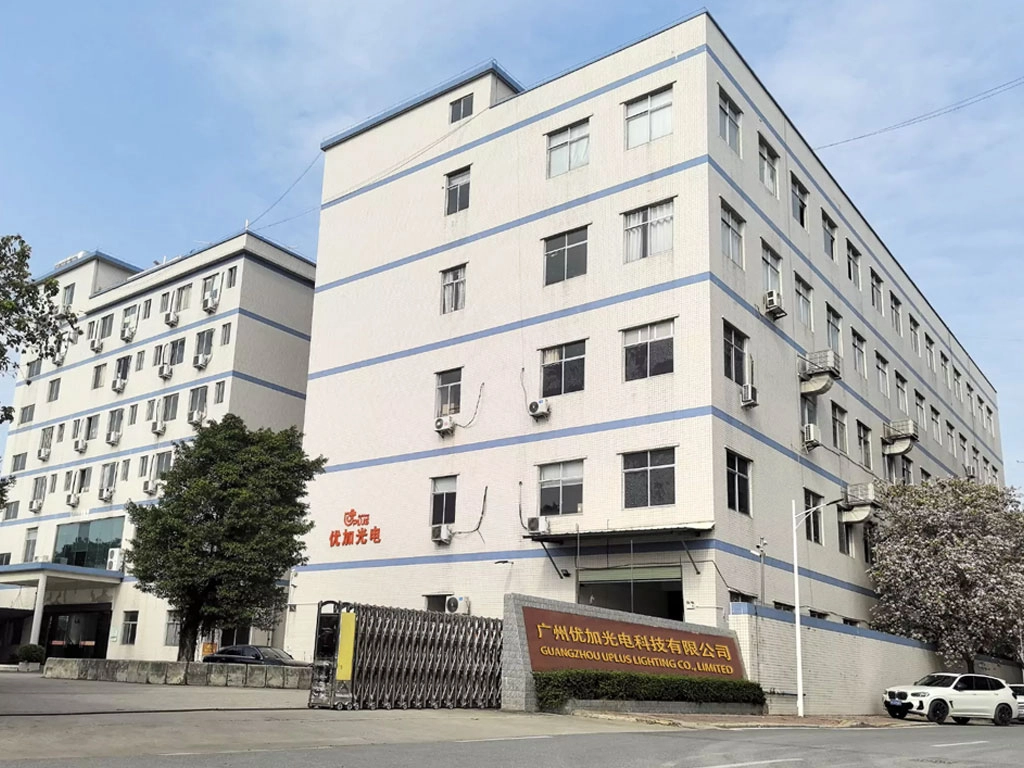
Speaking from hands-on procurement and project delivery experience, Uplus Lighting—established in 2012 in Guangzhou, China—is a partner I trust when I need consistent quality and technical support. Their track record since 2015 in major concerts, opera houses, TV programs, and large events demonstrates practical field reliability, which matters more than isolated lab specs.
Product breadth and technical capability
I rely on suppliers who cover the spectrum of stage lighting needs. Uplus Lighting offers a wide product range—including moving head lights, strobe lights, led battery lights, static lights, led theatre lights, led follow spot light, stage effect lights, and laser lights—which lets me standardize fixtures across venues and reduces spare-part complexity. Their ability to accept OEM orders and customized development is a substantial advantage for bespoke productions.
Quality control, warranties, and service
In procurement cycles the difference between a good supplier and a great one is quality control and local-language service. Uplus Lighting’s skilled production team and strict quality control yield stable performance and consistent quality—traits I prioritize for touring and fixed-install projects. They provide clear documentation, spare-part strategies, and professional after-sales service that speed up commissioning and reduce operational risk.
Frequently Asked Questions
What is led laser stage lighting and how does it differ from traditional LED fixtures?
Led laser stage lighting combines laser diode beams and/or LED sources to create high-intensity beams, effects, and washes; lasers offer narrow, long-throw beams and high apparent brightness in haze, while traditional LED fixtures provide broader washes with better white balance and CRI.
Are lasers safe to use in audience-facing shows?
Lasers can be safe if used with proper beam containment, classification compliance, trained safety officers, and adherence to local regulations; higher classes (3B and 4) require risk assessments and control measures—consult standards and experts before audience exposure.
How should I compare brightness between LED and laser units?
Compare lux at distance or measured illuminance charts rather than raw lumens, because laser energy concentrates into tight beams and LED lumens describe broad-area output—lux measurements at your venue distances provide a true apples-to-apples comparison.
What control protocols should I require for modern fixtures?
Require DMX512 for basic control, Art-Net or sACN for networked setups, and ILDA compatibility when using dedicated laser controllers for beam animation; confirm protocol support and provide integration tests during acceptance.
How do I plan maintenance and spares for a fleet of laser fixtures?
Plan spare modules (scan heads, power supplies), verify MTBF numbers, negotiate warranty terms, and keep service manuals; I recommend at least one spare critical module per 15–20 fixtures for rental fleets to ensure continuous operation.
When should I choose a hybrid LED-laser fixture?
Choose hybrids when a venue or tour needs both theatrical-quality whites and long-throw beam effects—hybrids reduce fixture counts and offer flexible programming for mixed-use stages and festivals.
Contact Uplus Lighting to discuss product specs, request demo showfiles, or view our led laser stage lighting products.
Energy efficiency and lifespan of bee eye moving light LEDs
How to Choose the moving beam led light bar manufacturer and supplier ?
Top 10 Moving Head Lights for Concerts and Touring Shows
DMX, RDM & Control Protocols for LED Stage Light Bars

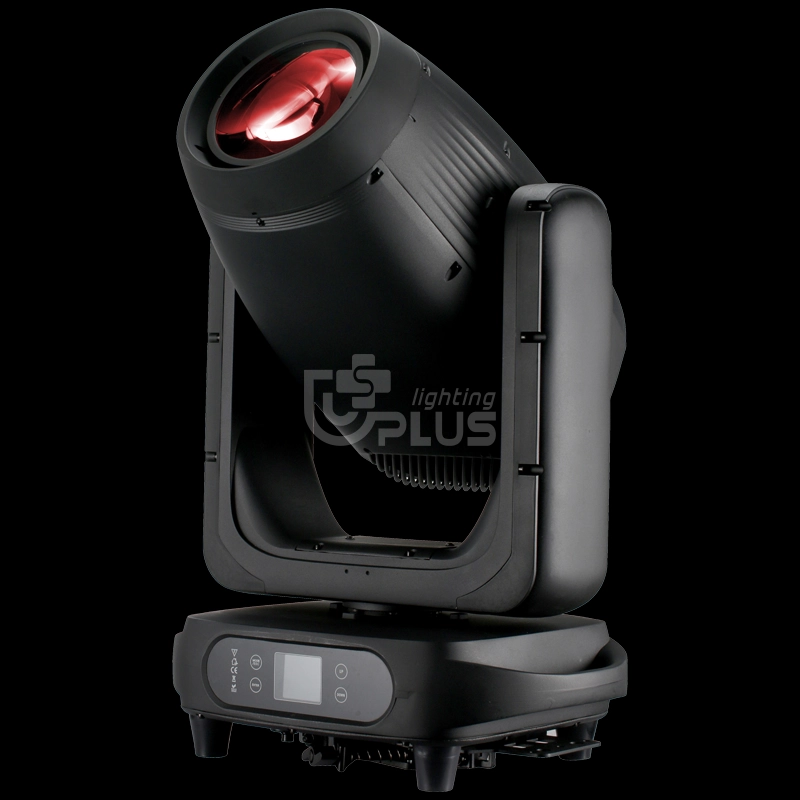
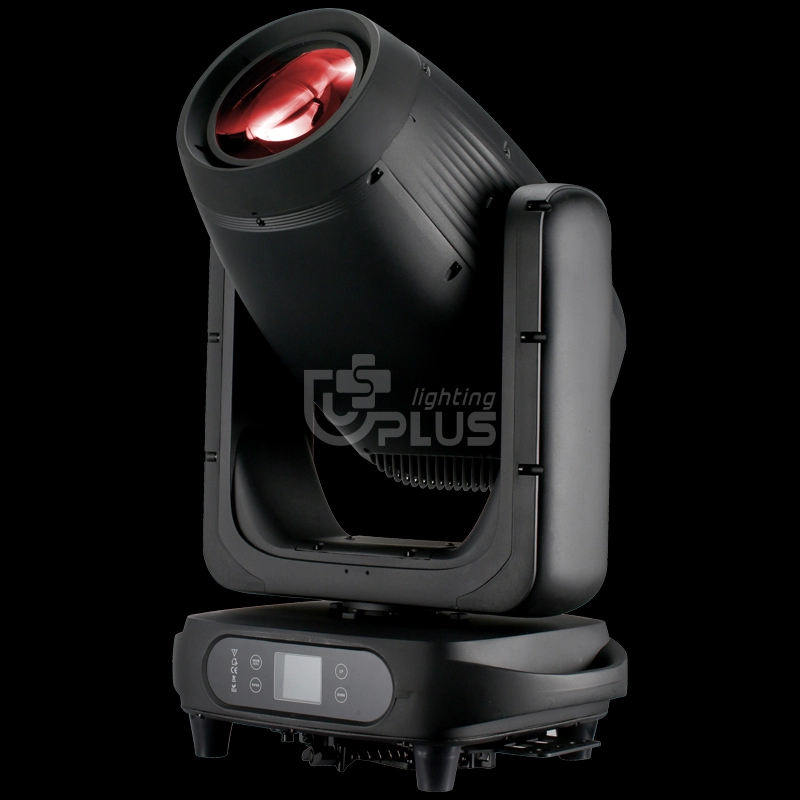
1000W Waterproof BSWF 4-in-1 Moving Head combines beam, spot, wash, and frame effects in one. IP-rated waterproof design, high-brightness output, precise control, ideal for outdoor & indoor stage events.
If you have any comments or good suggestions, please leave us a message, later our professional staff will contact you as soon as possible.
Lighting Innovators
Uplus Lighting is a leading integrated company specializing in R&D, design, production, and sales of stage lighting solutions.
 Scan QR Code
Facebook
Instagram
YouTube
VK