






- How does LED wattage influence brightness in wash moving head zoom?
- Which LED color mixing and binning affect perceived wash brightness most?
- How do lens zoom ranges change lumen output and beam uniformity?
- What measurement methods compare brightness across wash moving head zoom?
- Can thermal management and LED drivers limit sustained brightness over time?
- Which specific fixture models deliver top measured lux per watt?
- FAQ
Which LED wash moving head zoom offers best brightness?
Decades of stage lighting analysis show that peak brightness depends less on headline wattage and more on LED efficacy, optics, thermal design, driver headroom and verified LM‑79 photometrics; this guide explains how to objectively evaluate which LED wash moving head zoom will perform brightest in real venues.
Article Title: Which LED wash moving head zoom offers best brightness?
Decades of stage lighting analysis show that peak brightness depends less on headline wattage and more on LED efficacy, optics, thermal design, driver headroom and verified LM‑79 photometrics; this guide explains how to objectively evaluate which LED wash moving head zoom will perform brightest in real venues.
How does LED wattage influence brightness in wash moving head zoom?
Wattage alone is a blunt indicator. Electrical power input gives an upper bound for potential light output, but real luminous output depends on LED package efficacy (lumens per watt), driver losses and optical transmission. In professional fixtures the LED chip can be 80–160 lm/W at device level, but system-level lumens are lower after optics, secondary lenses and thermal effects. Always require LM‑79 photometric reports from manufacturers — LM‑79 is the industry standard test for LED luminaire electrical and photometric measurements — rather than relying on nominal wattage. Practical tip: compare measured lux at a standard distance or request candela/IES files; two fixtures with identical wattage can differ by 30% or more in usable lux on stage if optics and thermal design differ.
Which LED color mixing and binning affect perceived wash brightness most?
Perceived brightness changes with spectral distribution and CCT. Cooler whites (higher CCT) often appear brighter to the human eye because photopic response favors shorter wavelengths. Binning determines chromatic consistency — tighter binning reduces channel imbalance in multi‑LED engines and preserves luminous efficacy across color mixes. High-end moving wash zoom fixtures use tightly binned LEDs and calibrated color engines to keep output consistent across CCT and color blends. When comparing models, request LED binning data and chromaticity tolerances (ANSI/ANSI C78.377 references) and review TM‑30 or CRI reports to ensure color quality doesn’t come at the cost of lumen loss.
How do lens zoom ranges change lumen output and beam uniformity?
Zoom optics trade beam angle for intensity. Narrower beam angles concentrate luminous flux into a smaller solid angle, increasing lux and candela on target, while wider zoom settings spread the same lumens, reducing lux. Beam-engineered lenses, anti‑reflective coatings and well-designed internal baffling preserve transmission; cheap zoom mechanics can introduce hotspots or falloff. For objective comparison, compare measured candela and beam angle at both minimum and maximum zoom, and inspect photometric files (IES/LM‑63). Formula reminder for measurement conversions: candela = lux × distance^2; luminous flux (lumens) ≈ candela × solid angle (Ω = 2π(1−cos(half‑angle))). Use these to convert a lux reading at a set distance into comparable lumen/candela metrics.
What measurement methods compare brightness across wash moving head zoom?
Use standardized testing: integrating sphere and goniophotometer tests reported per IES LM‑79 produce reproducible lumen and spatial intensity data. For field checks, a calibrated lux meter at a fixed, repeatable distance and mounting geometry gives practical comparatives; convert lux to candela with candela = lux × distance^2 for point‑source approximations, then compute lumens from candela and beam solid angle. Beware vendor marketing figures; insist on LM‑79 reports, IES files and LM‑63 photometric data. When LM‑79 is unavailable, ask for on‑axis lux at multiple distances and zoom positions to evaluate real-world audience illuminance rather than headline lumen claims.
Can thermal management and LED drivers limit sustained brightness over time?
Yes. Thermal design governs junction temperature; higher junction temperatures reduce LED efficacy and accelerate lumen depreciation. Good fixtures use heat sinks, controlled airflow and specification of lumen maintenance (TM‑21 extrapolation and L70 values). Drivers that lack headroom or use aggressive dimming curves can throttle output under overload. When brightness longevity matters, compare driver specifications (constant current stability, THD, dimming linearity), heat‑sink design, and provided TM‑21/L70 projections. Real-world: two fixtures with identical initial lux can diverge significantly after hours of operation if one lacks adequate thermal path or headroom in the driver.
Which specific fixture models deliver top measured lux per watt?
Model-level performance must be validated by photometric reports — there is no universal ‘‘brightest’’ model because fixture architecture, LED engines and optics vary. Prioritize fixtures that publish LM‑79 reports, measured lux at defined distances, and complete IES files. In procurement, request on‑axis lux, candela and beam angle at multiple zoom settings and ask for long‑term lumen maintenance data. For production-grade brightness choose fixtures with high LED device efficacy, efficient optical trains, robust thermal engineering and verified photometrics rather than relying solely on wattage or marketing lumen figures.
Conclusion: Objective brightness evaluation requires LM‑79 photometrics, IES files, verified lux/candela measurements at representative distances, and attention to LED efficacy, optics, driver headroom and thermal management. Avoid headline wattage and marketing lumens alone; use standardized measurements and field tests to predict real venue performance.
Uplus Lighting applies rigorous photometric testing, transparent LM‑79/IES documentation and engineering-first design to resolve these brightness pain points for rental houses, theatres and fixed installations.
Contact us for a quote at www.upluslighting.com or albee@upluslighting.com.
FAQ
How does LED wattage influence brightness in wash moving head zoom?
Wattage alone is a blunt indicator. Electrical power input gives an upper bound for potential light output, but real luminous output depends on LED package efficacy (lumens per watt), driver losses and optical transmission. In professional fixtures the LED chip can be 80–160 lm/W at device level, but system-level lumens are lower after optics, secondary lenses and thermal effects. Always require LM‑79 photometric reports from manufacturers — LM‑79 is the industry standard test for LED luminaire electrical and photometric measurements — rather than relying on nominal wattage. Practical tip: compare measured lux at a standard distance or request candela/IES files; two fixtures with identical wattage can differ by 30% or more in usable lux on stage if optics and thermal design differ.
Which LED color mixing and binning affect perceived wash brightness most?
Perceived brightness changes with spectral distribution and CCT. Cooler whites (higher CCT) often appear brighter to the human eye because photopic response favors shorter wavelengths. Binning determines chromatic consistency — tighter binning reduces channel imbalance in multi‑LED engines and preserves luminous efficacy across color mixes. High-end moving wash zoom fixtures use tightly binned LEDs and calibrated color engines to keep output consistent across CCT and color blends. When comparing models, request LED binning data and chromaticity tolerances (ANSI/ANSI C78.377 references) and review TM‑30 or CRI reports to ensure color quality doesn’t come at the cost of lumen loss.
How do lens zoom ranges change lumen output and beam uniformity?
Zoom optics trade beam angle for intensity. Narrower beam angles concentrate luminous flux into a smaller solid angle, increasing lux and candela on target, while wider zoom settings spread the same lumens, reducing lux. Beam-engineered lenses, anti‑reflective coatings and well-designed internal baffling preserve transmission; cheap zoom mechanics can introduce hotspots or falloff. For objective comparison, compare measured candela and beam angle at both minimum and maximum zoom, and inspect photometric files (IES/LM‑63). Formula reminder for measurement conversions: candela = lux × distance^2; luminous flux (lumens) ≈ candela × solid angle (Ω = 2π(1−cos(half‑angle))). Use these to convert a lux reading at a set distance into comparable lumen/candela metrics.
What measurement methods compare brightness across wash moving head zoom?
Use standardized testing: integrating sphere and goniophotometer tests reported per IES LM‑79 produce reproducible lumen and spatial intensity data. For field checks, a calibrated lux meter at a fixed, repeatable distance and mounting geometry gives practical comparatives; convert lux to candela with candela = lux × distance^2 for point‑source approximations, then compute lumens from candela and beam solid angle. Beware vendor marketing figures; insist on LM‑79 reports, IES files and LM‑63 photometric data. When LM‑79 is unavailable, ask for on‑axis lux at multiple distances and zoom positions to evaluate real-world audience illuminance rather than headline lumen claims.
Can thermal management and LED drivers limit sustained brightness over time?
Yes. Thermal design governs junction temperature; higher junction temperatures reduce LED efficacy and accelerate lumen depreciation. Good fixtures use heat sinks, controlled airflow and specification of lumen maintenance (TM‑21 extrapolation and L70 values). Drivers that lack headroom or use aggressive dimming curves can throttle output under overload. When brightness longevity matters, compare driver specifications (constant current stability, THD, dimming linearity), heat‑sink design, and provided TM‑21/L70 projections. Real-world: two fixtures with identical initial lux can diverge significantly after hours of operation if one lacks adequate thermal path or headroom in the driver.
Which specific fixture models deliver top measured lux per watt?
Model-level performance must be validated by photometric reports — there is no universal ‘‘brightest’’ model because fixture architecture, LED engines and optics vary. Prioritize fixtures that publish LM‑79 reports, measured lux at defined distances, and complete IES files. In procurement, request on‑axis lux, candela and beam angle at multiple zoom settings and ask for long‑term lumen maintenance data. For production-grade brightness choose fixtures with high LED device efficacy, efficient optical trains, robust thermal engineering and verified photometrics rather than relying solely on wattage or marketing lumen figures.


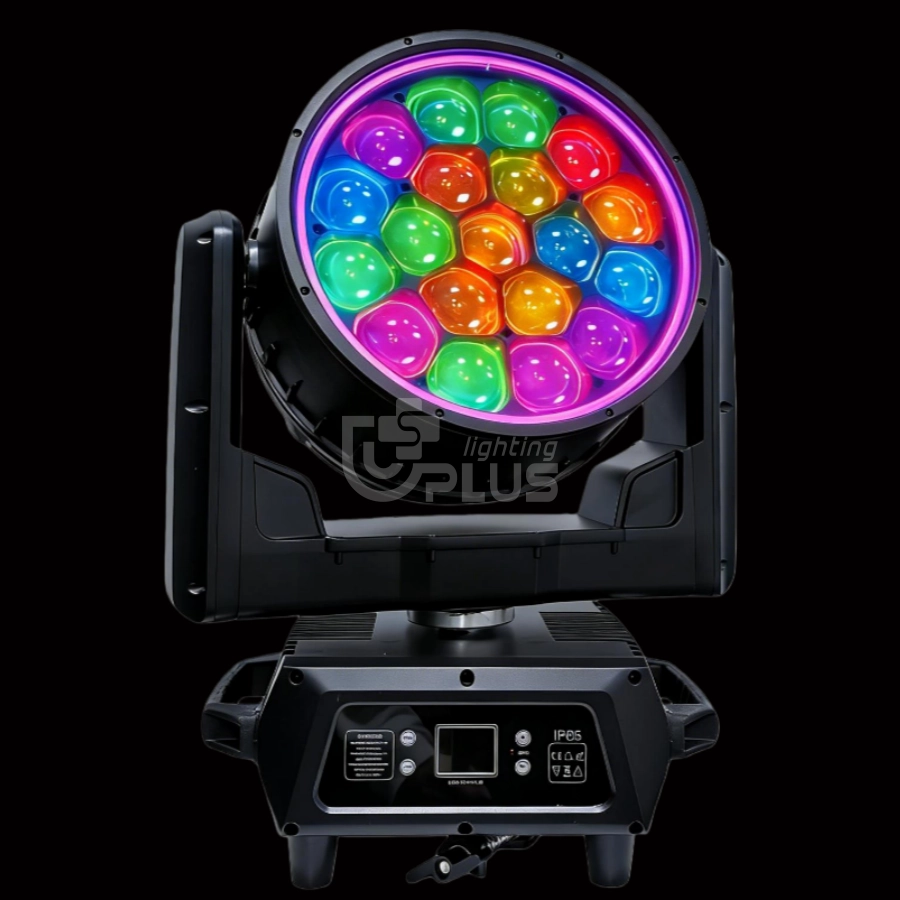
IP66 19*40W bee eye & zoom moving head with 19 LED beads supporting individual bee light control, integrating bee eye and zoom functions, LED ring to add atmosphere, IP66 waterproof, suitable for outdoor performances, cultural tourism lighting and other scenarios.
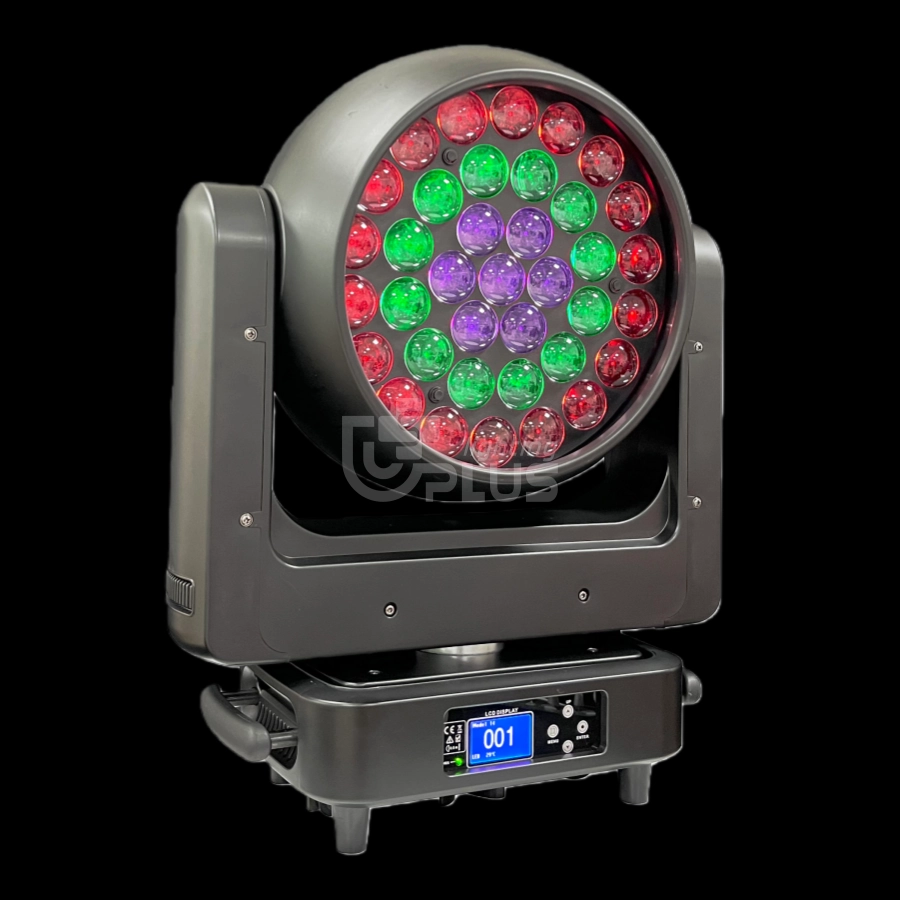
The 37*25W Wash zoom moving head features an array of 37 high-power 25W LEDs, providing wide-angle zoom and washing light. It delivers uniform and wide-coverage light with rich and vibrant colors and precise light control to suit various scenarios, meeting the needs of large-area coloring and ambient lighting for stage performances, venue events, and large-scale commercial performances.
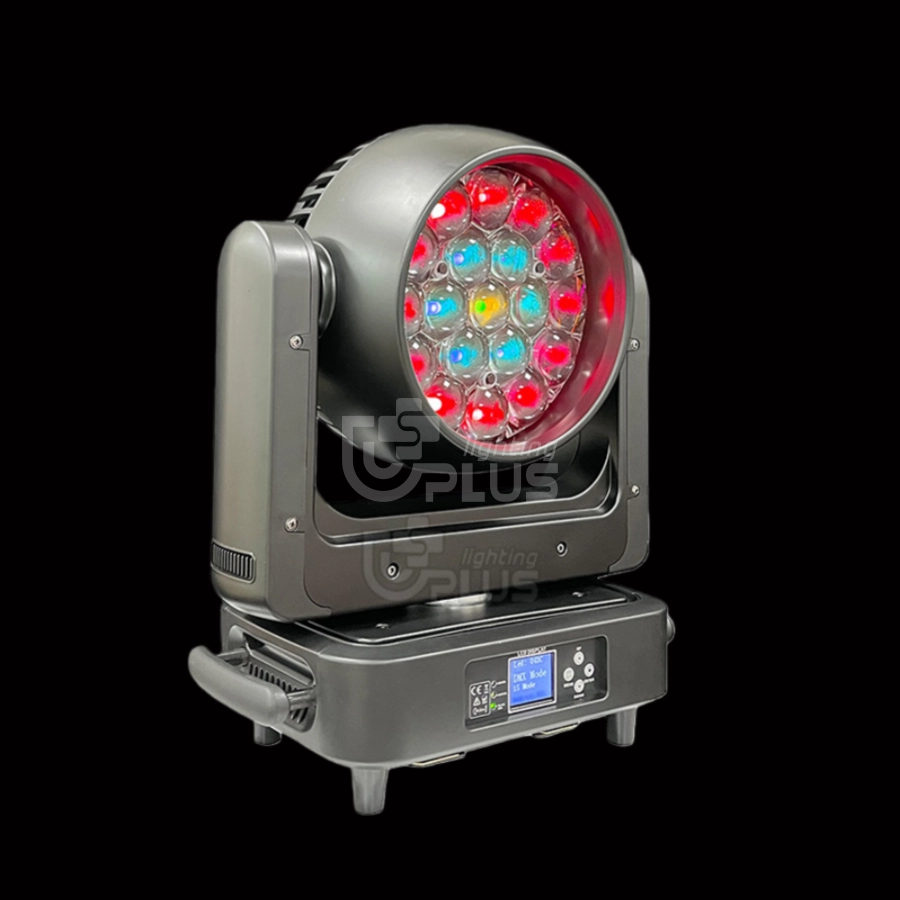
19*30W Wash zoom moving head with high CRI 19 30W high-power LED beads, high CRI to restore true colors, supports zoom, wash light output, uniform light coverage, and precise light control with rich layers, suitable for large-area color coloring and true color lighting in stage performances, exhibition halls, commercial events and other scenarios.
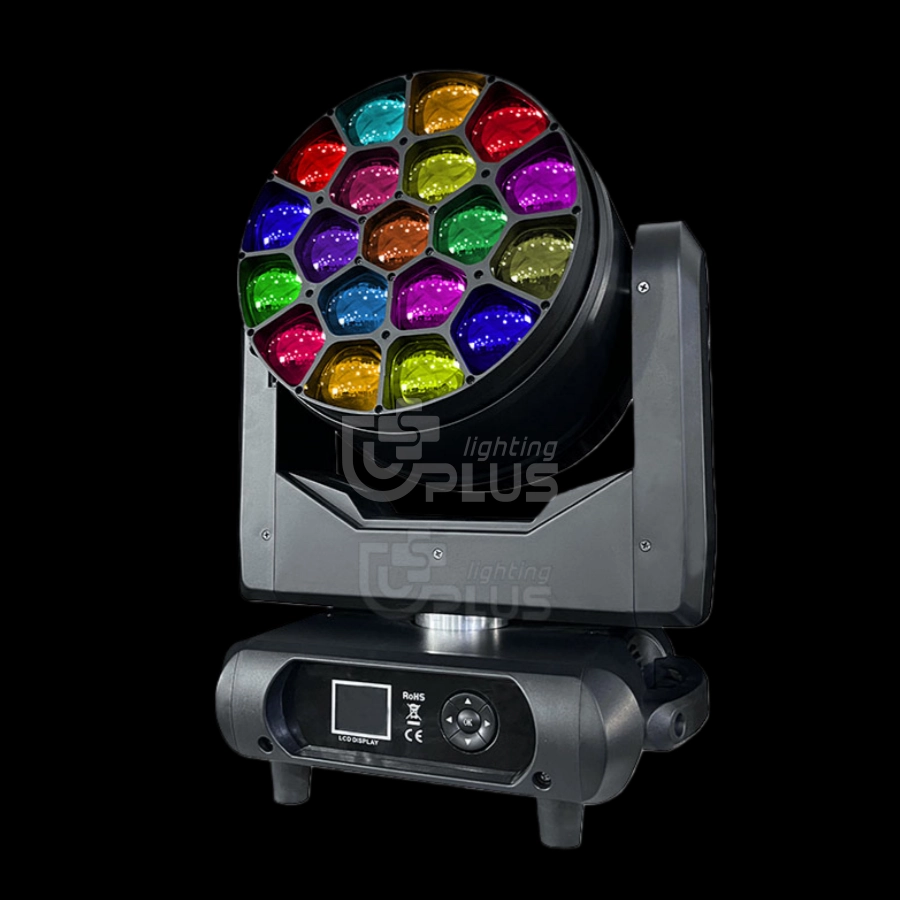
The K10 19*15W Wash Zoom & Bee Eye Moving Head features 19 15W RGBW LEDs, 4°-60° electronic zoom, and supports three modes: Wash Zoom, Beam Zoom, and Bee Eye Effect. It allows independent control of the LEDs and a rotating front mirror, enabling the creation of dynamic graphics such as petal opening and closing, and aerial dot matrix effects. With 540° horizontal and 210° tilt, it is suitable for multi-layered atmospheres and special effects in stage performances, variety show recordings, and bar parties.
Stay updated on our latest news
If you have any comments or good suggestions, please leave us a message, later our professional staff will contact you as soon as possible.
Lighting Innovators
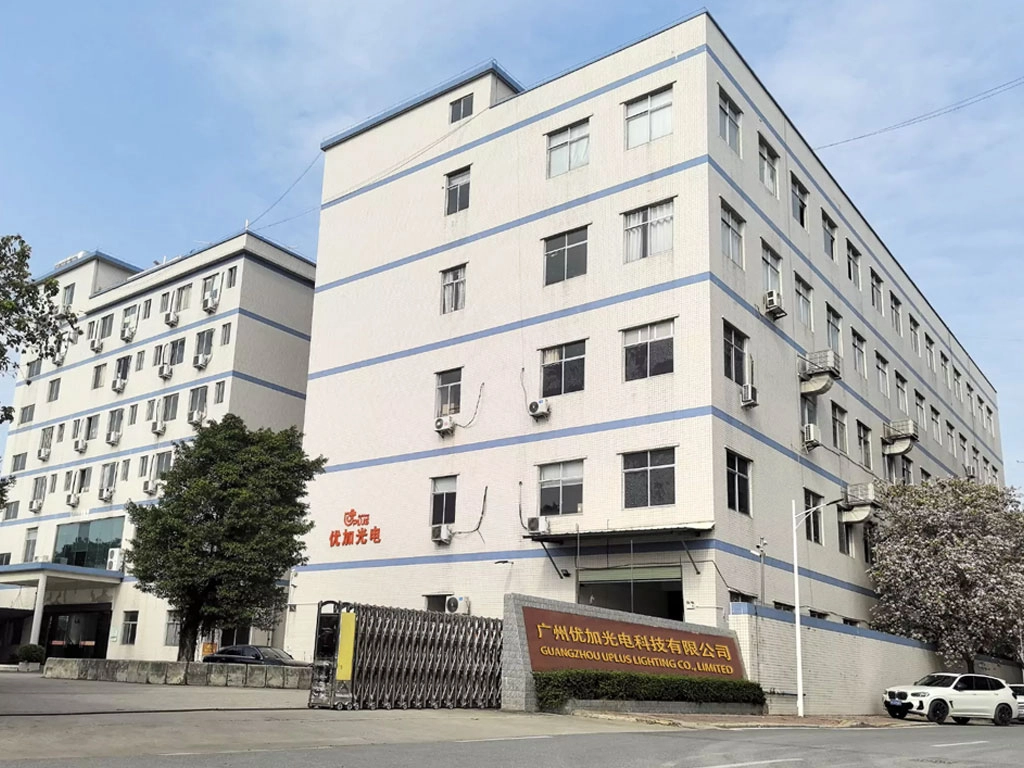
Uplus Lighting is a leading integrated company specializing in R&D, design, production, and sales of stage lighting solutions.
 Scan QR Code
Facebook
Instagram
YouTube
VK