






What factors affect LED laser stage lighting brightness and beam?
What factors affect LED laser stage lighting brightness and beam?
Brightness and beam quality in stage fixtures are controlled by emitter physics, optics/etendue, thermal and driver engineering, and environmental interaction; understanding junction temperature, collimation, modulation and scattering lets you specify, commission and maintain predictable results for live events.
Uplus Lighting brings 15 years of stage lighting engineering experience to these exact problems, focusing on measurable controls (current accuracy, M2/etendue, thermal resistance and optics tolerances) so production teams get repeatable on-stage results without guessing. Contact us for system-level consultation.
Contact Uplus Lighting for a quote at www.upluslighting.com or albee@upluslighting.com.
FAQ
How do LED emitter type and binning affect beam brightness?
Distinguish emitter families first: white or colored LEDs and laser diodes have different radiometric behavior. LED binning groups parts by forward voltage, dominant wavelength and luminous flux; typical production bins can differ by ±5–15% in luminous flux, so fixture-to-fixture consistency depends on selecting narrow bins or matched-bin assemblies. Laser diodes are binned for threshold current and wavelength (nm) — small bin shifts change perceived color and coupling to optics. Practical actions: specify bin ranges on purchase orders, require vendor flux or power histograms, and design the optical train expecting the worst-case bin; use closed-loop current control so the driver compensates part-to-part variation rather than relying on open-loop voltage drives.
What role does thermal management play in sustained laser output?
Junction temperature is one of the single largest determinants of both short-term output and long-term reliability. For both high-power LEDs and laser diodes, optical power and wavelength shift with temperature: output typically falls as junction temperature rises and wavelength shifts by fractions of a nanometer per °C for diodes. Poor heat sinking raises thermal resistance (°C/W), accelerating output roll-off, inducing mode-hops in multimode lasers, and shortening lifetime. Mitigation: design for low thermal resistance (use metal-core PCBs, thermal vias, high-conductivity TIMs), implement temperature sensing at the diode and closed-loop control (constant-current drivers with temp compensation), and set safe operating junction temperatures per the diode datasheet. For live events, include thermal headroom rather than running parts at maxima to avoid visible output sag during long sets.
How do optics and collimation influence beam divergence and intensity?
Optical design determines how source radiance maps to beam radiance; etendue (optical throughput) is conserved — you cannot increase radiance by passive optics. Beam divergence is defined in mrad or degrees and is set by emitter size and collimator aperture. Single-mode laser diodes and well-collimated small emitters produce low-divergence beams suitable for long-range shafts; LED-based fixtures inherently have larger etendue and produce wider cones. Key practical points: choose precision aspheric or glass collimators with proper AR coatings, avoid small-diameter cheap plastics that increase scatter, and specify M2 or beam quality for lasers when you need tight focus. For applications needing both wide wash and narrow shafts, use separate optical channels or homogenizers rather than attempting to squeeze etendue beyond physical limits.
How does source modulation and PWM dimming impact perceived brightness?
Dimming method changes both measured and perceived brightness. Analog current modulation alters optical power linearly with drive current (subject to diode slope efficiency), while PWM controls average power by duty cycle. Low-frequency PWM produces visible flicker and strobing with moving elements or cameras; high-frequency PWM reduces perception issues but may interact with camera frame rates (beat frequencies). For scanning lasers, modulation bandwidth and linearity matter for color mixing and pattern fidelity. Driver design must minimize ripple, offer stable constant-current regulation, and include linearization/gamma correction in control firmware to maintain perceptual uniformity. For pro stage use, specify PWM frequencies above audible and visible thresholds (typically >4–10 kHz for LEDs; higher for precise laser scanning) and prefer high-precision analog modulation or DAC-driven analog paths where quality of color mixing and beam stability are mission-critical.
What environmental factors reduce laser luminosity during live events?
Atmosphere and ambient conditions dominate how a beam appears in a venue. Particulate scattering (Mie scattering) from haze, fog, smoke or dust increases beam visibility but attenuates forward power; visibility is a function of particle size distribution relative to wavelength. High relative humidity, fogging, or aerosol loading attenuate and scatter beams following Beer–Lambert exponential decay; practical consequence: the same fixture can look stronger in a hazy club than in a clean-air outdoor festival at distance. Thermal gradients cause beam wander and reduced coherence over long paths. Also account for ambient luminance — high background light lowers perceived contrast. Mitigation: choose wavelength strategically (red/green/blue scatter differently), control atmospheric effects deliberately (calibrated haze machines), and commission fixtures in the actual venue environment to set realistic expectations.
How does electrical supply and driver quality affect laser stability?
Laser diodes and high-power LEDs require precision current regulation; voltage-based supplies are inadequate. Noise, ripple and supply transients translate directly to optical noise, flicker and potential mode instability. Important driver attributes are low RMS current ripple, accurate constant-current regulation (error <1% for critical applications), thermal foldback and overcurrent protection. Good drivers provide slow-start and soft-fail behaviors to avoid sudden brightness spikes. On the electrical side, use star-grounding, appropriate EMC filtering, and transient suppression (TVS, MOV) where mains instability is common. For touring rigs, prioritize ruggedized, well-filtered drivers with documented electrical noise figures and vendor support — that’s where real-world reliability and stable beam output are won.


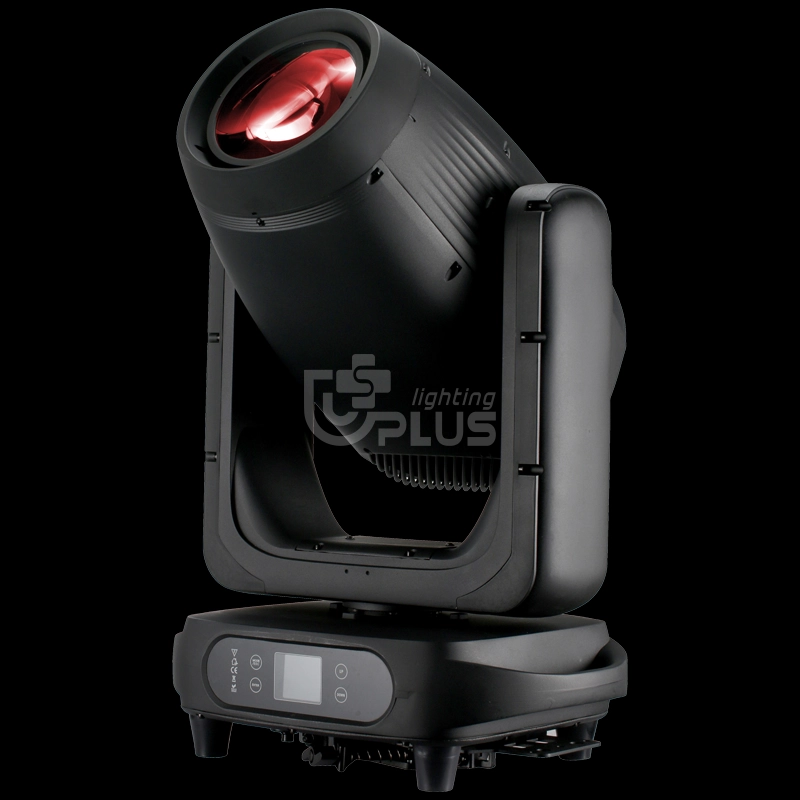
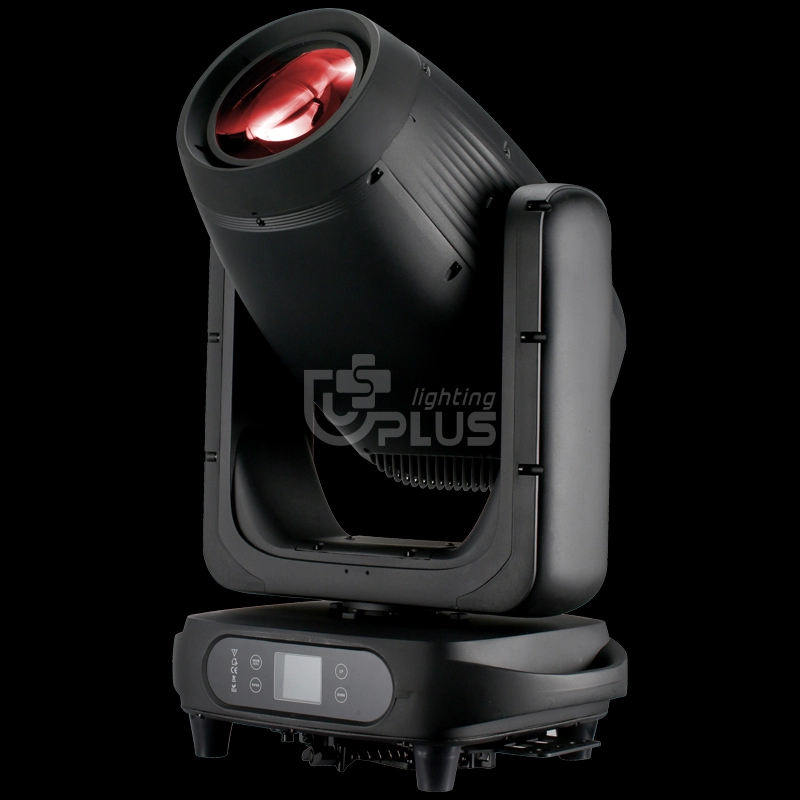
1000W Waterproof BSWF 4-in-1 Moving Head combines beam, spot, wash, and frame effects in one. IP-rated waterproof design, high-brightness output, precise control, ideal for outdoor & indoor stage events.
Stay updated on our latest news
If you have any comments or good suggestions, please leave us a message, later our professional staff will contact you as soon as possible.
Lighting Innovators
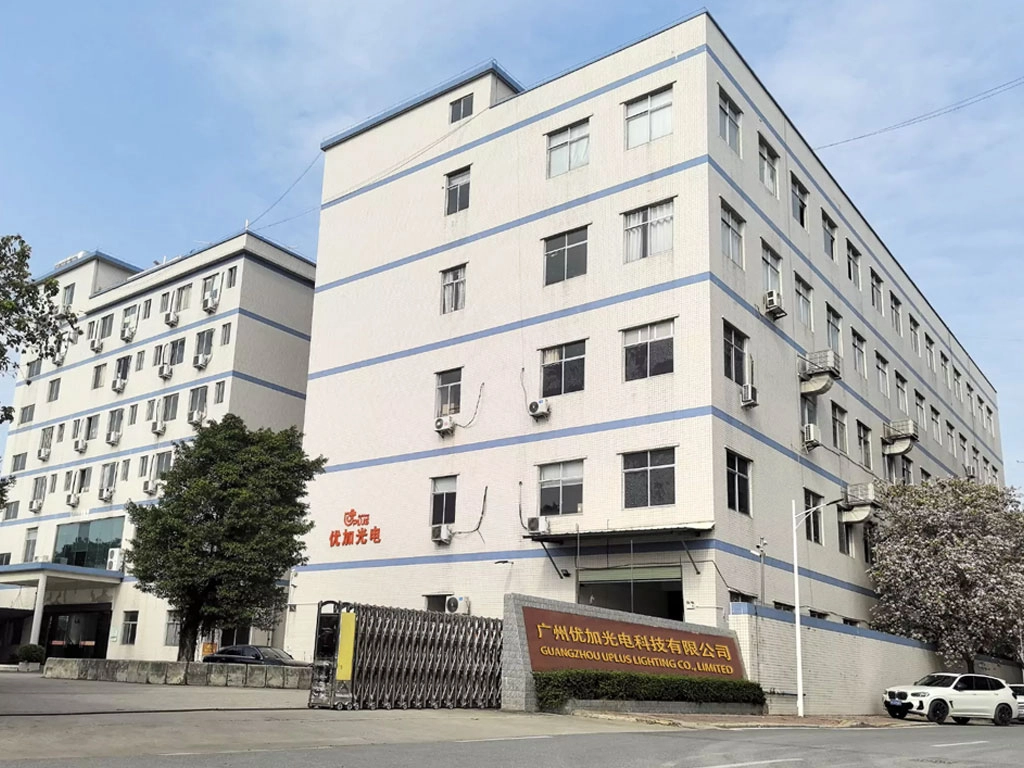
Uplus Lighting is a leading integrated company specializing in R&D, design, production, and sales of stage lighting solutions.
 Scan QR Code
Facebook
Instagram
YouTube
VK