






What certifications and warranties for led laser stage lighting?
What certifications and warranties for led laser stage lighting?
Certifications, test reports, and warranty contracts determine whether a laser-equipped fixture is safe, legal, and cost-predictable in professional stage lighting use — request the right documents and scope service terms before procurement.
Every buyer of LED laser stage lighting must insist on documentary evidence rather than vendor claims. For safety and regulatory compliance, the decisive documents are laser safety classifications and test reports (IEC/EN 60825-1), photobiological risk assessments (IEC 62471), EMC and electrical safety test reports (EN/IEC standards and applicable regional marks), and LED/optical performance certificates (LM-79, LM-80, TM-21). Operational risk is mitigated through warranty scope (what failures are covered), lumen-maintenance guarantees (L70/Lumen depreciation), clearly defined RMA and repair SLAs, and optional service contracts or spares programs for touring fleets. Below you will find the focused issues to check and contract language to insist on.
Frequently Asked Questions
Uplus Lighting draws on 15 years of industry practice advising production buyers on certificates, acceptance testing, and warranty contracts for live events and fixed installations.
Contact us for procurement-level specification review and quotations: www.upluslighting.com and albee@upluslighting.com.
Frequently Asked Questions
Which safety certifications must laser fixtures for live events have?
Insist on an IEC/EN 60825-1 laser classification report as the primary safety certificate. That report must state the measured accessible emission limits, the laser class (1, 1M, 2, 3R, 3B or 4) and the measurement geometry used (divergence, aperture). For photobiological exposure beyond laser coherence (flicker, blue light hazard), demand an IEC 62471 photobiological risk assessment or equivalent. For EU buyers, a signed Declaration of Conformity referencing harmonized standards (including 60825-1 and 62471) and CE/UKCA marking should be supplied; for North America, confirm manufacturer compliance with FDA/CDRH rules (21 CFR 1040.10/1040.11) and provide any applicable registration or listing documents. Finally, require the product labelling and user manual to include the laser class label, required safety notices, and recommended control measures — shipping a device without that documentation creates regulatory and safety risk at the venue.
Do LED laser stage lighting modules require IEC or FDA approvals?
Both regimes matter but serve different purposes: IEC/EN standards (notably IEC 60825-1 for lasers and IEC 62471 for photobiological effects) provide the internationally harmonized safety basis you should verify for export and venue acceptance. In the United States, the FDA/CDRH regulates laser products; manufacturers generally must meet applicable federal requirements under 21 CFR. That does not always mean a single "FDA sticker" — it means compliance with the federal requirements and, where applicable, proper labeling and reporting. Practical procurement steps: request the manufacturer’s IEC/EN test reports and Declaration of Conformity, plus a written statement about FDA/CDRH compliance and whether the product has required U.S. registrations or reporting. If your operations include multiple jurisdictions, verify compliance documentation for each region (CE/UKCA for Europe/UK, FDA for U.S., and any local telecom/EMC registrations if required).
How to verify Class 3R versus Class 4 compliance documents?
Class identification must be traceable to measured output power/irradiance at defined distances and apertures. Ask for the raw measurement data and the test lab report (ideally from an accredited lab) that shows output power, beam divergence, pulse characteristics, and measurement uncertainty. The difference between Class 3R/3B and Class 4 is operationally critical: Class 4 lasers can pose fire and diffuse-reflection hazards and have stricter control, enclosure, and operator requirements. For Class 3B/4 devices, confirm the manufacturer provides: recommended engineering controls, interlocks, key-switch operation, and a documented risk assessment for typical entertainment configurations. If measurements were performed in pulsed-mode, ensure peak-power and pulse-width data are present. Never accept a label alone — the supporting test report and the measurement methodology (IEC 60825-1 clause references) are mandatory for venue safety officers and insurers.
What electrical and EMC certifications are critical for touring fixtures?
For electrical safety and immunity, require test reports that reference the applicable IEC/EN standards: lighting products typically reference EN 55015 (or EN 55032 for multimedia), EN 61547 immunity, and the Low Voltage Directive or relevant national standards for safety (for example EN 60335/EN 60598 derivatives or component-level standards such as IEC 62368/UL 8750 for LEDs). For North American touring, request UL/ETL certification copies for the luminaire or the PSU components. EMC failures in a rig cause intermittent faults and show-stopping noise — so obtain the full EMC test reports (emissions and immunity) with test setups that match the intended operational environment (line voltage ranges, cable lengths). Also check for transient protection and surge immunity specs, and confirm the manufacturer provides recommended grounding/earthing practices in the manual. Finally, verify ingress protection (IP) per IEC 60529 if the fixtures are used outdoors or in dusty venues.
Which warranty terms protect against LED lumen depreciation and failures?
A robust warranty separates components and defines measurable performance guarantees. Industry best practice is to require: (1) explicit coverage periods for electronics (drivers, power supplies) and for optical/laser engines (laser diodes, scanners, optics); (2) a lumen-maintenance clause — e.g., a guaranteed L70 at X hours based on LM-80 and TM-21 extrapolation — and remedies if actual output falls below guaranteed thresholds; (3) clear exclusions for misuse, unauthorized repairs, water damage beyond rated IP, and operation outside specified voltage/temperature ranges. Because LED and laser diode aging differs, ask for the LM-80 data for LEDs and manufacturer diode life data for laser sources, plus how warranty remedies handle gradual lumen loss versus sudden failure. Typical market terms vary: 2–3 years for electronics, and 3–5 years (or L70 guarantees) for light engines; but negotiate multi-year or fleet warranties and consider uptime-based SLAs for touring packages.
How do service contracts and RMA policies affect total cost ownership?
RMA terms and service contracts materially affect downtime and cash flow. Key contract elements to negotiate: advance replacement (cross-ship) versus depot repair, guaranteed turnaround times (e.g., 48–72 hours for critical spares or 10–20 business days depot), who pays return shipping, and end-of-life spares provisioning. For touring fleets, a proactive service contract with scheduled preventive maintenance, periodic recalibration of scanners/galvos, and spare modules on consignment reduces TCO. Require RMA flow documentation (how to initiate an RMA, diagnostics steps, repair time-tracking) and insist on spares availability commitments for at least the warranty period plus recommended extended duration. Factor these operating costs into procurement decisions — a lower initial price with slow RMA turnaround can cost more in lost events than a slightly higher-priced fixture paired with a responsive service program.


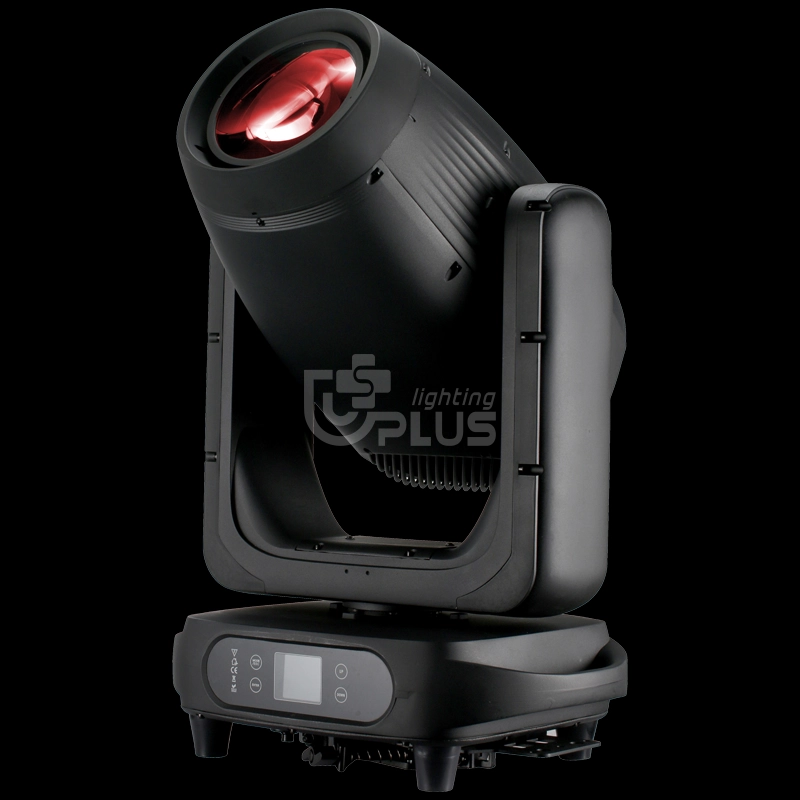
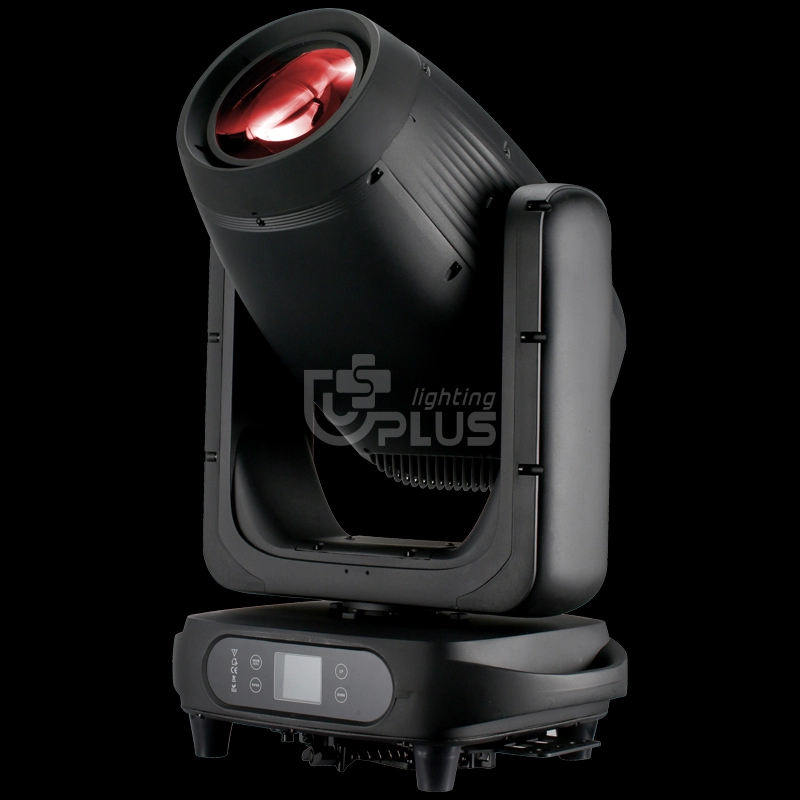
1000W Waterproof BSWF 4-in-1 Moving Head combines beam, spot, wash, and frame effects in one. IP-rated waterproof design, high-brightness output, precise control, ideal for outdoor & indoor stage events.
Stay updated on our latest news
If you have any comments or good suggestions, please leave us a message, later our professional staff will contact you as soon as possible.
Lighting Innovators
Uplus Lighting is a leading integrated company specializing in R&D, design, production, and sales of stage lighting solutions.
 Scan QR Code
Facebook
Instagram
YouTube
VK