






- Frequently Asked Questions
- How much energy can a wash moving head zoom save?
- What wattage differences exist between LED and discharge fixtures?
- How to calculate touring power budgets with moving head zoom fixtures?
- Do LED wash moving head zooms require different dimming strategies?
- Can fixture count reductions offset higher upfront LED costs?
- What rigging or distribution affects power draw on tours?
- Frequently Asked Questions
Can LED wash moving head zoom reduce power costs for touring?
LED wash moving head zoom fixtures rarely change electrical draw when zooming, but their higher efficacy, superior power factor, reduced cooling load, and lower maintenance can cut touring energy costs substantially when correctly specified, balanced, and controlled.
Can LED wash moving head zoom reduce power costs for touring?
LED wash moving head zoom fixtures rarely change electrical draw when zooming, but their higher efficacy, superior power factor, reduced cooling load, and lower maintenance can cut touring energy costs substantially when correctly specified, balanced, and controlled.
Frequently Asked Questions
How much energy can a wash moving head zoom save?
Begin by separating optics from electrical consumption: the zoom mechanism only redistributes light spatially and does not materially change electrical power draw. Energy savings come from efficacy (lumens per watt) and system-level decisions. Modern LED wash moving head zoom fixtures commonly deliver higher lumens per watt than legacy discharge or tungsten-based moving washes; this allows designers to achieve the same stage lux with lower total wattage. Savings are realized when you replace older fixtures with LED units of comparable delivered lumens or when you reduce fixture count because a single LED zoom covers multiple angles and distances. Practically, expect material electricity reductions when you switch wholesale from discharge sources — often tens of percent on total lighting load — but quantify savings by measuring delivered lux per watt on target surfaces rather than relying on lamp-to-lamp nominal wattage alone.
What wattage differences exist between LED and discharge fixtures?
Ranges vary by manufacturer and product class. A legacy discharge-based moving wash could have required 575–1200W lamp modules plus ballast losses; a modern LED wash moving head zoom that produces comparable on-stage output typically consumes in the 200–700W range depending on LED engine size and drivers. More important than nominal wattage is effective delivered lumens and beam/form-factor: LED engines are more optically efficient and have higher system efficacy, and integrated power supplies often include active power factor correction (PFC), reducing apparent power draw on the supply. For accurate comparison use measured lumen output and measured wattage at the dimmer or distro under representative output levels rather than nameplate lamp watts.
How to calculate touring power budgets with moving head zoom fixtures?
Use a three-step practical method: (1) measure actual runtime current and inrush per fixture with a clamp meter or manufacturer RMS watt figures; (2) compute continuous load = sum of measured wattages × expected duty cycle (e.g., average programmed intensity across a show); (3) include electrical contingencies: diversity for duty cycle, inrush allowance (LEDs often have high startup current pulses from capacitors), and generator derating. Example formula: Total kW = Σ(measured W per fixture)/1000; Energy cost = Total kW × show hours × $/kWh. For peak sizing include power factor: real kW = VA × PF. Plan distro with 20–30% headroom for live switching and unexpected load changes. Always validate with a local run-in prior to first show to capture real-world behavior (DMX levels, strobe usage, and blackout sequences change consumption patterns).
Do LED wash moving head zooms require different dimming strategies?
Yes. LED fixtures are driver-controlled and do not behave like resistive or incandescent loads. Use linearized dimming curves (often labeled as LED or Gamma in consoles) to match human perception and avoid perceived flicker at low levels. Avoid rapid full-power strobes as they increase thermal stress and can spike current draw. Where energy management is the goal, implement channel grouping, use intensity zoning, and exploit zoom and beam shaping to lower overall output while maintaining the perceived scene—narrower beams concentrate perceived brightness, letting you reduce total lumens. Also leverage onboard calibration (white-point and CTO) to avoid over-driving color channels to compensate for spectral shifts, which wastes power.
Can fixture count reductions offset higher upfront LED costs?
Yes — in many touring scenarios optical flexibility from zoom and wide field coverage of LED engines lets you replace multiple fixed-angle fixtures with fewer moving heads, reducing per-show power and logistics costs. Upfront capital for higher-end LED moving heads can be offset by operational savings: lower generator fuel consumption, reduced transit weight, fewer road cases, and dramatically reduced lamp and ballast maintenance. To determine payback, calculate Total Cost of Ownership (TCO): acquisition + spare-parts + lamp replacement + labor + fuel/energy over expected tour lifetime. For most intensive tours the TCO favors LEDs within 2–5 years depending on usage intensity and spare-part policies.
What rigging or distribution affects power draw on tours?
Distribution choices impact losses, thermal loading, and generator efficiency. Longer cable runs increase I2R losses; undersized cabling or overloaded distro causes voltage drop, which can make drivers work less efficiently and increase heating. Centralized single-phase vs three-phase layout matters: balance phases to avoid neutral loading and take advantage of generator/genset efficiency curves. Account for inrush current at power-up— LED fixtures often have built-in soft-start but racks and in-rush diversity planning is essential. Finally, cooling and HVAC on vehicles and venues interacts with lighting heat load: LED reductions lower venue cooling demand, which further reduces total touring energy consumption beyond just the fixtures.
Conclusion: zoom itself does not lower electrical draw, but selecting the right LED wash moving head zoom architecture, correctly measuring delivered lumens, and designing control and distro strategies will reduce touring power costs, maintenance, and logistic burden.
Uplus Lighting brings 15 years of touring stage lighting expertise, rigorous measurement-driven fixture selection, and field-tested distro and control workflows to minimize energy and operational costs; our approach emphasizes measurable savings, reliability, and vendor-grade support for touring professionals.
Contact us for a tailored quote at www.upluslighting.com or albee@upluslighting.com.
Frequently Asked Questions
How much energy can a wash moving head zoom save?
Begin by separating optics from electrical consumption: the zoom mechanism only redistributes light spatially and does not materially change electrical power draw. Energy savings come from efficacy (lumens per watt) and system-level decisions. Modern LED wash moving head zoom fixtures commonly deliver higher lumens per watt than legacy discharge or tungsten-based moving washes; this allows designers to achieve the same stage lux with lower total wattage. Savings are realized when you replace older fixtures with LED units of comparable delivered lumens or when you reduce fixture count because a single LED zoom covers multiple angles and distances. Practically, expect material electricity reductions when you switch wholesale from discharge sources — often tens of percent on total lighting load — but quantify savings by measuring delivered lux per watt on target surfaces rather than relying on lamp-to-lamp nominal wattage alone.
What wattage differences exist between LED and discharge fixtures?
Ranges vary by manufacturer and product class. A legacy discharge-based moving wash could have required 575–1200W lamp modules plus ballast losses; a modern LED wash moving head zoom that produces comparable on-stage output typically consumes in the 200–700W range depending on LED engine size and drivers. More important than nominal wattage is effective delivered lumens and beam/form-factor: LED engines are more optically efficient and have higher system efficacy, and integrated power supplies often include active power factor correction (PFC), reducing apparent power draw on the supply. For accurate comparison use measured lumen output and measured wattage at the dimmer or distro under representative output levels rather than nameplate lamp watts.
How to calculate touring power budgets with moving head zoom fixtures?
Use a three-step practical method: (1) measure actual runtime current and inrush per fixture with a clamp meter or manufacturer RMS watt figures; (2) compute continuous load = sum of measured wattages × expected duty cycle (e.g., average programmed intensity across a show); (3) include electrical contingencies: diversity for duty cycle, inrush allowance (LEDs often have high startup current pulses from capacitors), and generator derating. Example formula: Total kW = Σ(measured W per fixture)/1000; Energy cost = Total kW × show hours × $/kWh. For peak sizing include power factor: real kW = VA × PF. Plan distro with 20–30% headroom for live switching and unexpected load changes. Always validate with a local run-in prior to first show to capture real-world behavior (DMX levels, strobe usage, and blackout sequences change consumption patterns).
Do LED wash moving head zooms require different dimming strategies?
Yes. LED fixtures are driver-controlled and do not behave like resistive or incandescent loads. Use linearized dimming curves (often labeled as "LED" or "Gamma" in consoles) to match human perception and avoid perceived flicker at low levels. Avoid rapid full-power strobes as they increase thermal stress and can spike current draw. Where energy management is the goal, implement channel grouping, use intensity zoning, and exploit zoom and beam shaping to lower overall output while maintaining the perceived scene—narrower beams concentrate perceived brightness, letting you reduce total lumens. Also leverage onboard calibration (white-point and CTO) to avoid over-driving color channels to compensate for spectral shifts, which wastes power.
Can fixture count reductions offset higher upfront LED costs?
Yes — in many touring scenarios optical flexibility from zoom and wide field coverage of LED engines lets you replace multiple fixed-angle fixtures with fewer moving heads, reducing per-show power and logistics costs. Upfront capital for higher-end LED moving heads can be offset by operational savings: lower generator fuel consumption, reduced transit weight, fewer road cases, and dramatically reduced lamp and ballast maintenance. To determine payback, calculate Total Cost of Ownership (TCO): acquisition + spare-parts + lamp replacement + labor + fuel/energy over expected tour lifetime. For most intensive tours the TCO favors LEDs within 2–5 years depending on usage intensity and spare-part policies.
What rigging or distribution affects power draw on tours?
Distribution choices impact losses, thermal loading, and generator efficiency. Longer cable runs increase I2R losses; undersized cabling or overloaded distro causes voltage drop, which can make drivers work less efficiently and increase heating. Centralized single-phase vs three-phase layout matters: balance phases to avoid neutral loading and take advantage of generator/genset efficiency curves. Account for inrush current at power-up— LED fixtures often have built-in soft-start but racks and in-rush diversity planning is essential. Finally, cooling and HVAC on vehicles and venues interacts with lighting heat load: LED reductions lower venue cooling demand, which further reduces total touring energy consumption beyond just the fixtures.


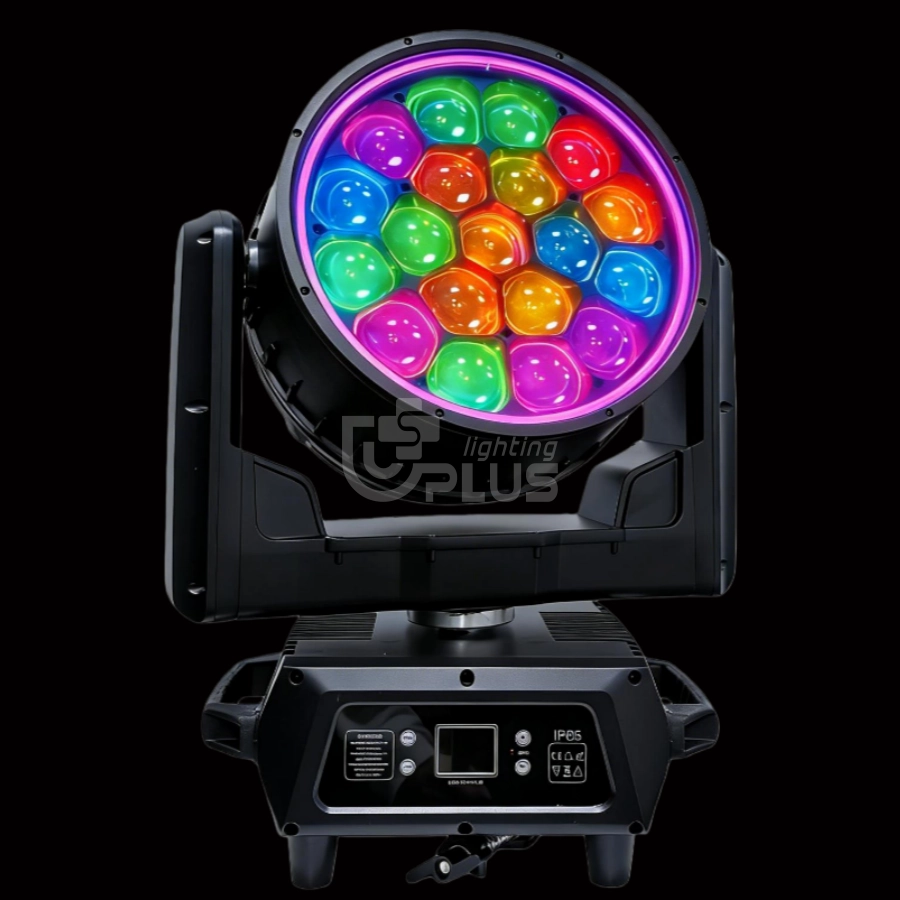
IP66 19*40W bee eye & zoom moving head with 19 LED beads supporting individual bee light control, integrating bee eye and zoom functions, LED ring to add atmosphere, IP66 waterproof, suitable for outdoor performances, cultural tourism lighting and other scenarios.
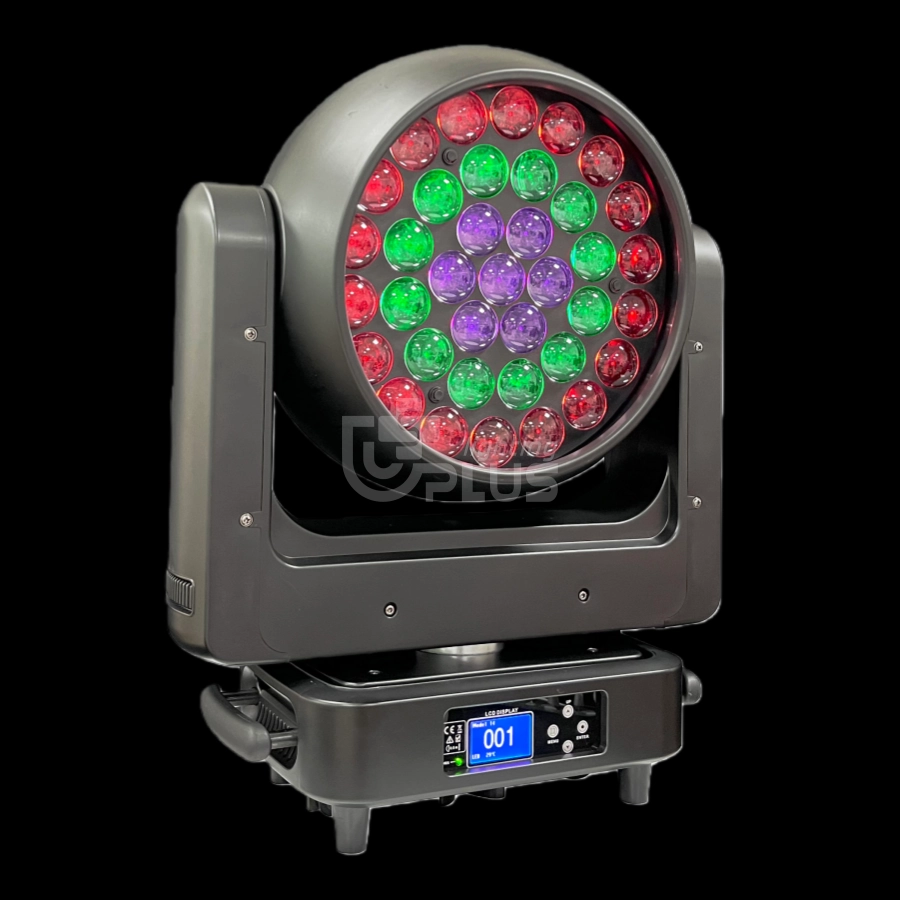
The 37*25W Wash zoom moving head features an array of 37 high-power 25W LEDs, providing wide-angle zoom and washing light. It delivers uniform and wide-coverage light with rich and vibrant colors and precise light control to suit various scenarios, meeting the needs of large-area coloring and ambient lighting for stage performances, venue events, and large-scale commercial performances.
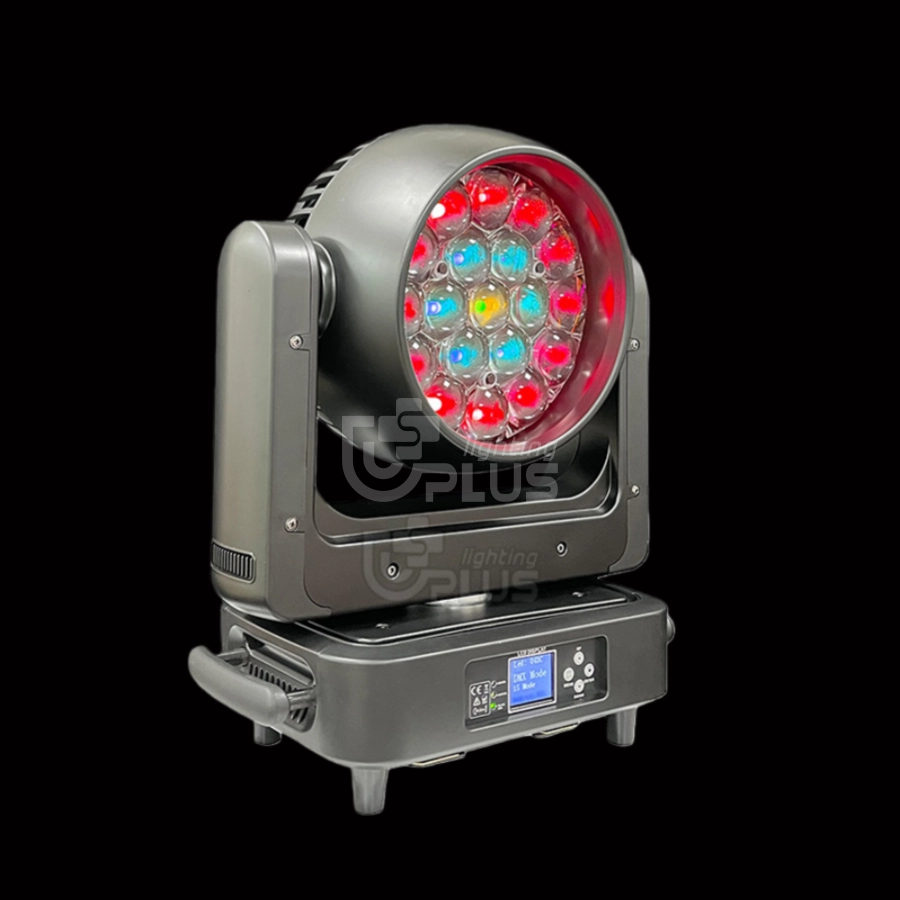
19*30W Wash zoom moving head with high CRI 19 30W high-power LED beads, high CRI to restore true colors, supports zoom, wash light output, uniform light coverage, and precise light control with rich layers, suitable for large-area color coloring and true color lighting in stage performances, exhibition halls, commercial events and other scenarios.
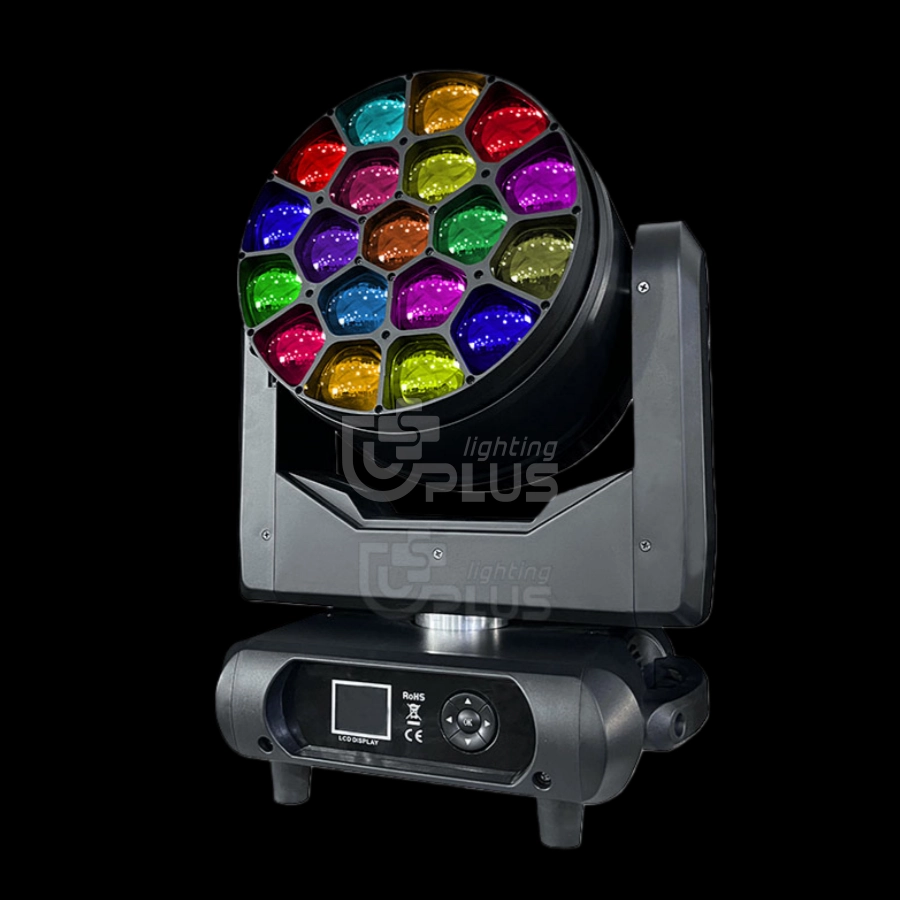
The K10 19*15W Wash Zoom & Bee Eye Moving Head features 19 15W RGBW LEDs, 4°-60° electronic zoom, and supports three modes: Wash Zoom, Beam Zoom, and Bee Eye Effect. It allows independent control of the LEDs and a rotating front mirror, enabling the creation of dynamic graphics such as petal opening and closing, and aerial dot matrix effects. With 540° horizontal and 210° tilt, it is suitable for multi-layered atmospheres and special effects in stage performances, variety show recordings, and bar parties.
Stay updated on our latest news
If you have any comments or good suggestions, please leave us a message, later our professional staff will contact you as soon as possible.
Lighting Innovators
Uplus Lighting is a leading integrated company specializing in R&D, design, production, and sales of stage lighting solutions.
 Scan QR Code
Facebook
Instagram
YouTube
VK