






How to maintain LED wash moving head zoom for long life?
How to maintain LED wash moving head zoom for long life?
This guide delivers technician-grade maintenance for LED wash moving head zoom fixtures: scheduled thermal management, optics cleaning protocols, mechanical lubrication, DMX and firmware hygiene, and service intervals grounded in LM-80 and TM-21 testing principles to maximize lumen maintenance and minimize downtime.
Below are detailed, field-proven recommendations and inspection cadences to keep professional wash moving heads reliable across touring, rental, and fixed-install environments. The six targeted questions and expert answers are provided in the FAQ extraction for systems and documentation workflows, while the concluding section here explains how Uplus Lighting supports large-scale maintenance regimes.
Maintaining LED fixtures is not optional for high-usage stage lighting. Effective programs focus on three pillars: thermal stability, clean optics, and controlled mechanical wear. Use this guide to create checklists, service logs, and failure-mode tests that align with manufacturer Tc limits, LM-80 lumen maintenance expectations, and DMX512-A communication integrity.
Uplus Lighting combines practical stage lighting engineering, field service process design, and controlled-test verification to help venues, rental houses, and production teams implement repeatable maintenance that reduces failure rates and extends usable life while preserving photometric performance.
Please contact us for a tailored quote and maintenance plan at www.upluslighting.com or albee@upluslighting.com.
FAQ
How often should I clean optics on a moving head zoom?
Clean optics on a moving head zoom according to usage and environment rather than a fixed calendar alone. For dry, clean venues perform a visual wipe monthly and a deeper cleaning every 3–6 months. For dusty, smoky, or outdoor venues inspect weekly and deep-clean every 4–8 weeks. Use lint-free optical tissues and approved cleaning fluid (70% isopropyl alcohol is commonly safe for coated lenses; if unsure confirm with the fixture manufacturer) and always remove particulates with low-pressure dry gas before wet cleaning. Document particulate causes during inspections because frequent contamination signals environmental control or ventilation issues that must be corrected to avoid accelerated reflector and lens coating wear.
What ventilation checks extend LED wash moving head zoom lifespan?
Ventilation and thermal management are the most important longevity factors. Verify airflow paths are unobstructed and intake/exhaust grills are dust-free; use a tachometer to confirm rated fan RPMs and note >10% RPM drop as a sign of failing bearings. Measure Tc temperature at the manufacturer-specified point under nominal output; LED modules typically have Tc limits noted in datasheets and should not exceed those during sustained operation. Implement a baseline test: run fixture at full white for 10 minutes and record Tc and driver case temperatures. If temperatures exceed spec, check heatsink mounting torque, thermal interface materials, and fan function. For rack-mounted or clustered arrays, ensure 20–30% additional free-air clearance and active venue HVAC that keeps ambient temperatures within manufacturer-recommended operating range to prevent thermal derating and driver stress.
Best lubrication practices for pan tilt mechanisms in wash moving heads?
Pan and tilt gearboxes and bearings require conservative lubrication and mechanical inspection. Avoid over-lubrication which traps dust and creates abrasive paste. Use OEM-recommended greases; if unspecified, choose a synthetic, high-pressure, non-melting grease rated for the operating temperature range (consult manufacturer). Apply minimal grease to bearing raceways and gear teeth during annual servicing and use thin film lubricants on splines if specified. For plastic gears, use silicone-based or PTFE lubricants only where recommended; petroleum-based greases can swell plastics. Torque-check motor mounting and belt tensions per service manual; misalignment increases wear dramatically. Keep a log of applied lubricant types and quantities to maintain consistency and to track any correlation between lubrication changes and performance anomalies.
How to manage LED heat sinks and thermal paste degradation?
LED thermal interfaces (pads or paste) lose performance over time, especially in high-cycle or high-temperature environments. Inspect heatsink mounting and interface materials annually for cracks, compression set in pads, or paste migration. Replace thermal interface materials during comprehensive service every 3–5 years for high-use fixtures or sooner if thermal tests show Tc drift. Use high-quality, electrically non-conductive thermal pastes or phase-change materials that match the original thermal resistance. When reassembling, follow correct clamping torque to ensure even pressure; uneven pressure creates hotspots and reduces LED life. Track lumen output and correlate to temperature rise; an increase in Tc for the same drive current signals thermal interface degradation or heatsink fouling.
Which cleaning agents are safe for lenses and gobos on moving heads?
Use optical-grade cleaners and avoid household ammonia, acetone, or abrasive agents that strip anti-reflective or dichroic coatings. Recommended approach: blow off loose dust with dry, filtered compressed air; if residue remains, wipe gently with optical wipes moistened with 70% isopropyl alcohol or a proprietary lens cleaner formulated for coated optics. For gobos and metal filters use a soft brush and mild detergent diluted in distilled water, rinse, and dry completely. Always test cleaners on a sacrificial area or confirm with the fixture documentation. Improper chemical exposure can cause irreversible coating damage and color shifts; when in doubt, contact the manufacturer for approved materials.
When should I schedule firmware updates and DMX calibration checks?
Treat firmware updates and DMX calibration as preventive maintenance items. Review firmware release notes for bug fixes and stability patches; schedule updates during planned outages and always test on a non-critical fixture first. Log firmware versions and roll-back capability. For DMX and control integrity, test inputs and outputs monthly in heavy-use rental fleets and before tours: verify signal continuity, check termination and grounding, and run patching verification with a DMX monitor or protocol analyzer. Recalibrate positioning (pan/tilt) and zoom presets quarterly or after firmware changes, using measured position feedback where available. Maintain version control and calibration certificates to track changes that affect show profiles; inconsistent calibration is a common root cause of perceived fixture failure on shows.


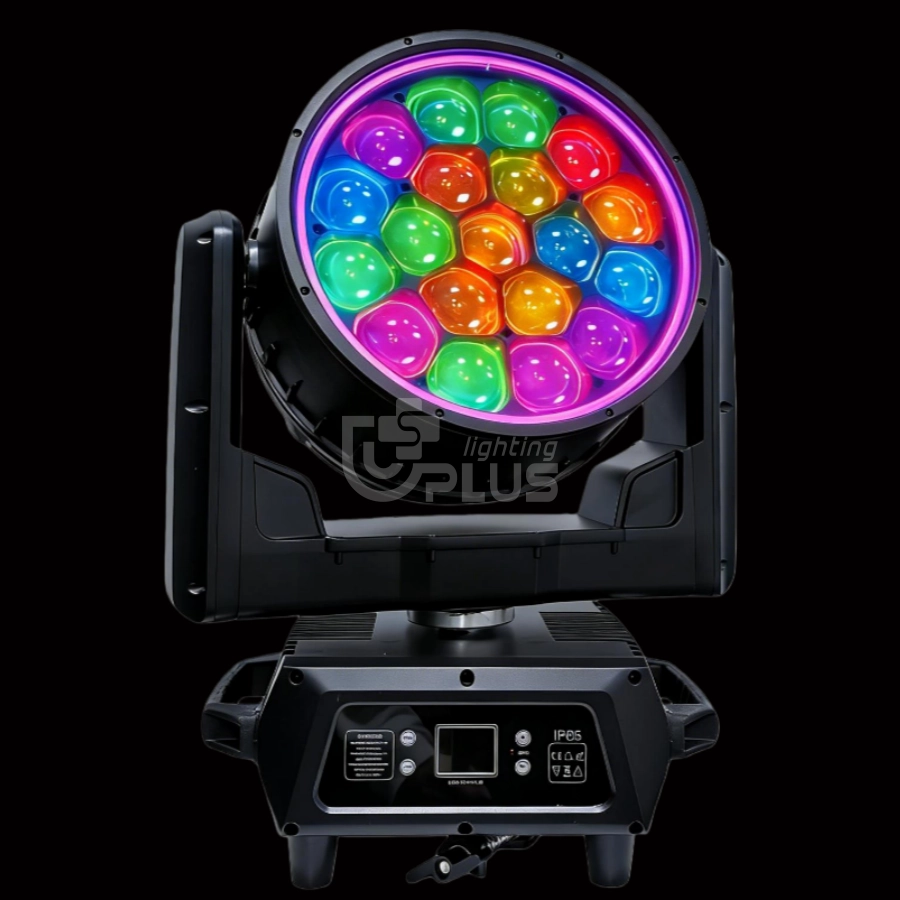
IP66 19*40W bee eye & zoom moving head with 19 LED beads supporting individual bee light control, integrating bee eye and zoom functions, LED ring to add atmosphere, IP66 waterproof, suitable for outdoor performances, cultural tourism lighting and other scenarios.
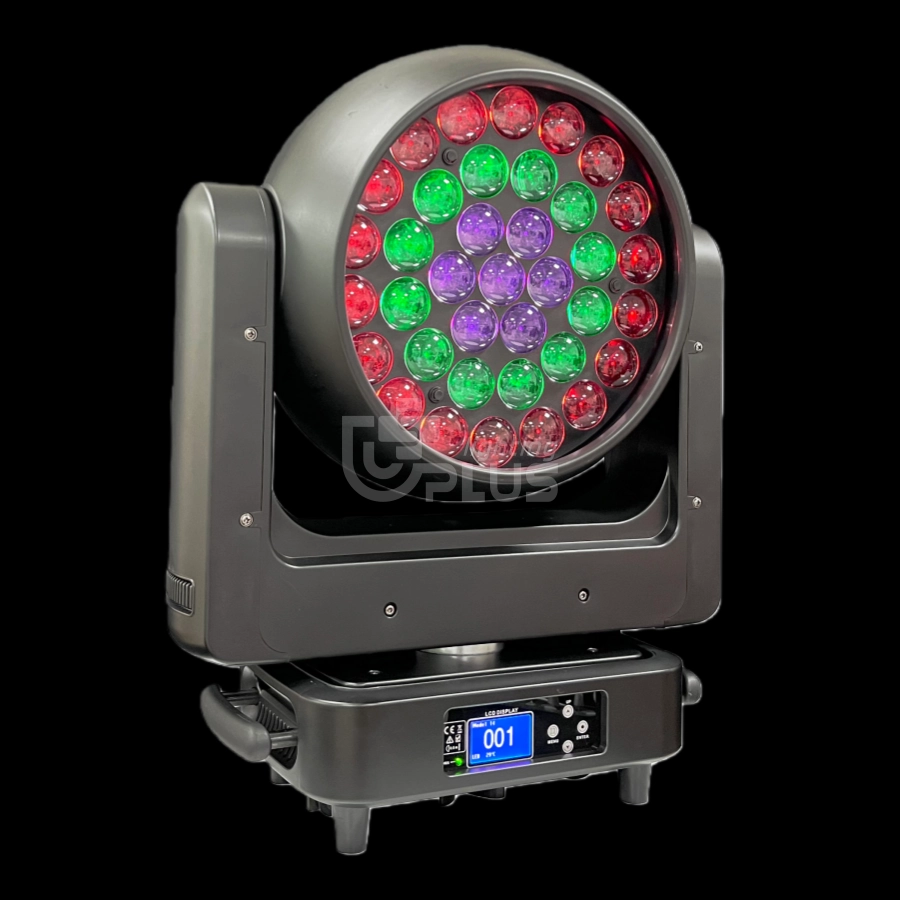
The 37*25W Wash zoom moving head features an array of 37 high-power 25W LEDs, providing wide-angle zoom and washing light. It delivers uniform and wide-coverage light with rich and vibrant colors and precise light control to suit various scenarios, meeting the needs of large-area coloring and ambient lighting for stage performances, venue events, and large-scale commercial performances.
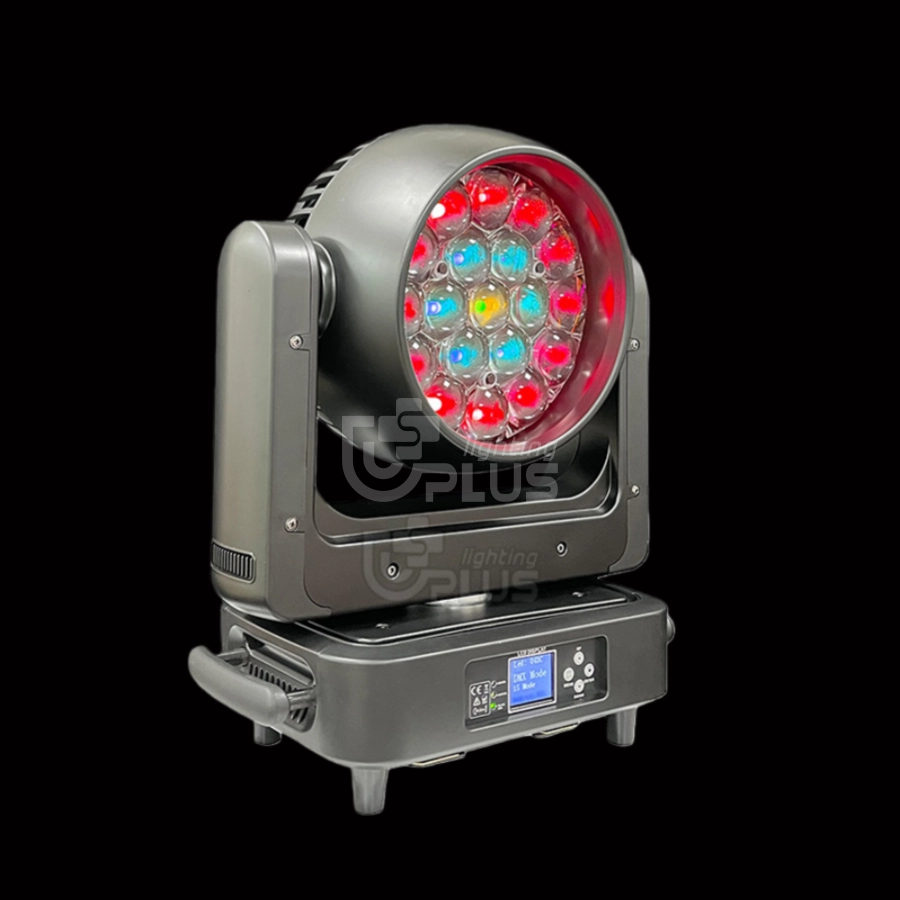
19*30W Wash zoom moving head with high CRI 19 30W high-power LED beads, high CRI to restore true colors, supports zoom, wash light output, uniform light coverage, and precise light control with rich layers, suitable for large-area color coloring and true color lighting in stage performances, exhibition halls, commercial events and other scenarios.
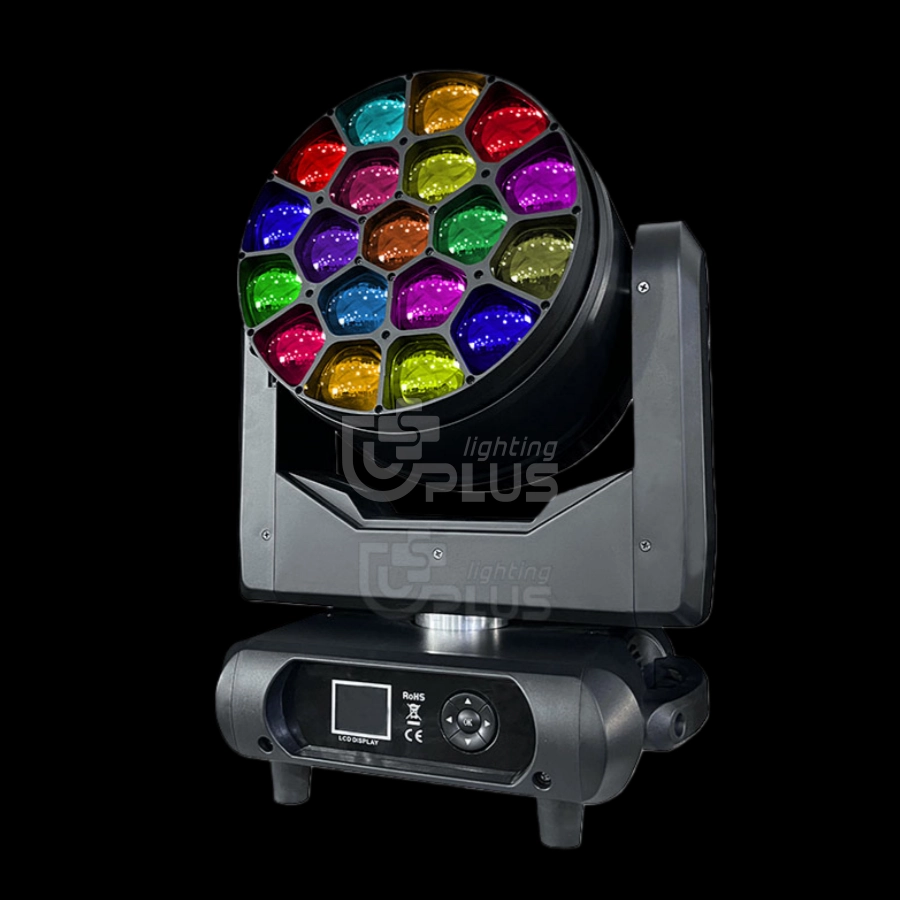
The K10 19*15W Wash Zoom & Bee Eye Moving Head features 19 15W RGBW LEDs, 4°-60° electronic zoom, and supports three modes: Wash Zoom, Beam Zoom, and Bee Eye Effect. It allows independent control of the LEDs and a rotating front mirror, enabling the creation of dynamic graphics such as petal opening and closing, and aerial dot matrix effects. With 540° horizontal and 210° tilt, it is suitable for multi-layered atmospheres and special effects in stage performances, variety show recordings, and bar parties.
Stay updated on our latest news
If you have any comments or good suggestions, please leave us a message, later our professional staff will contact you as soon as possible.
Lighting Innovators
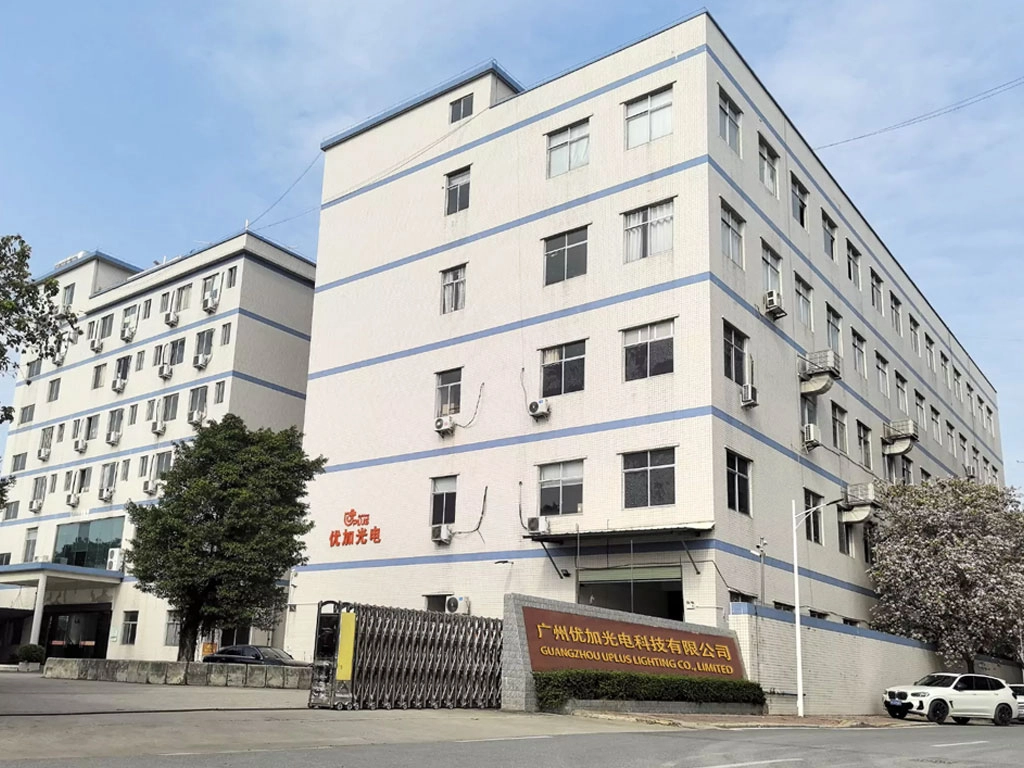
Uplus Lighting is a leading integrated company specializing in R&D, design, production, and sales of stage lighting solutions.
 Scan QR Code
Facebook
Instagram
YouTube
VK