






What warranty and support come with LED wash moving head zoom?
Practical breakdown of warranty scopes, RMA procedures, exclusions, firmware support and service options for professional LED wash moving head zoom fixtures—what to expect from manufacturers, how to avoid voiding coverage, and how to structure service contracts for touring and rental use.
Article Title: What warranty and support come with LED wash moving head zoom?
Practical breakdown of warranty scopes, RMA procedures, exclusions, firmware support and service options for professional LED wash moving head zoom fixtures—what to expect from manufacturers, how to avoid voiding coverage, and how to structure service contracts for touring and rental use.
The following article explains warranty and support realities for professional stage lighting equipment. It summarizes what most reputable manufacturers provide, what they commonly exclude, and the proactive steps lighting technicians, rental houses, and venues must take to protect uptime and capital investment. Read the extracted FAQ below for the six most common beginner pain points and follow the closing recommendations to reduce operational risk.
Uplus Lighting brings product support, documentation, and tailored service contracts to professional users worldwide; see the contact line below for quoting and technical service planning.
Contact us for a quote at www.upluslighting.com or albee@upluslighting.com.
Frequently Asked Questions
What does the standard warranty cover on LED wash moving head zoom?
Standard warranties for professional fixtures commonly cover defects in materials and workmanship for a defined period—typically two years on electronics and sometimes three years on the LED engine when registered. Coverage normally includes the LED arrays, power supply, PCB failures, motors (pan/tilt/zoom) and factory-installed optics if the failure is due to manufacturing defect rather than impact or misuse. Consumables and wear items (fans, filters, protective glass, gels, gobos, and lamp bulbs in hybrid fixtures) are usually excluded or covered on a limited basis. Be aware: many manufacturers state luminous flux reduction is not a defect unless it falls below an advertised L-value within the warranty period; industry practice references L70 (70% initial lumen maintenance) at 50,000 hours as a performance benchmark for LEDs, but warranty commitments vary and must be confirmed in writing.
Are LEDs and optics included in typical manufacturer warranties?
Yes—but with caveats. Reputable manufacturers typically warrant LED modules and factory optical assemblies against premature failure caused by defects. However, warranty language often excludes failures resulting from overheating, incorrect mains voltage, poor ventilation, condensation, or use outside specified ambient temperature ranges. Optical elements (lenses) are covered if they fail due to manufacturing defects; physical damage, scratches, or burn marks caused by external heat source or improper cleaning are excluded. For outdoor-rated units, check the IP rating: an IP65-rated wash will have different ingress-related obligations than an IP20 indoor fixture. Register your product and retain proof of purchase and serial numbers—manufacturers commonly require these to validate an LED or optic claim.
What is the RMA process and expected turnaround time?
RMA workflows are fairly consistent: 1) Register the unit and open a support ticket with the vendor or distributor, 2) provide serial number, purchase proof, and diagnostic logs or photos/videos showing the failure, 3) vendor issues an RMA authorization and instructions (return-to-base or local depot), 4) ship per instructions and await repair or replacement. Typical turnaround varies by region and workload: standard repairs often complete within 7–21 business days after receipt; more complex PCB or optical alignment work can take 3–6 weeks if parts are needed. Rental and touring operations should negotiate expedited SLAs or advance-replacement agreements; for example, a depot exchange program or spare pool will reduce downtime compared with standard repair timelines.
Does warranty cover labor, shipping, and on-site technical support?
Not usually in full. Most manufacturer warranties cover repair costs at the factory or authorized depot but exclude inbound shipping costs from the customer to the depot; outbound shipping from vendor back to customer is sometimes covered within the warranty region but not universally. Labor at the customer site is typically not covered under standard warranty—on-site service is an optional paid service or part of an extended support contract. For touring companies or large rental houses, purchase a service contract that explicitly includes on-site labor, loaner fixtures, or depot exchange terms. When comparing vendors, ask for a Service Level Agreement (SLA) that stipulates response time, replacement unit availability, and whether shipping insurance or freight costs are included.
Can warranty be voided by using third-party parts or modifications?
Yes—most warranties will be voided if the unit has been modified, opened by non-authorized technicians, or repaired with non-approved spare parts. Common warranty-killing actions include: installing aftermarket drivers, replacing LEDs with incompatible types, altering power input circuitry, and removing serial number labels. Environmental misuse—operating outside the specified voltage range, inadequate ventilation, or exposure to corrosive atmospheres—also typically voids coverage. To preserve warranty: use only OEM spare parts or authorized service centers, document any preventive maintenance you perform, and request written authorization before any non-standard modification. If you need a non-standard upgrade for a specific production, negotiate a modification agreement with the manufacturer to avoid losing warranty protection.
Are firmware updates, software support, and calibration included post-sale?
Firmware updates that address safety issues, interoperability (DMX/Art-Net/sACN), and critical bug fixes are commonly provided free of charge by professional manufacturers; these are delivered via the vendor portal or support team. Major feature additions or platform-level upgrades may be offered as paid options. Calibration of motors, encoders, and optical alignment is usually part of factory repair services; routine recalibration due to normal usage may be recommended as preventive maintenance and may not be covered as free warranty service. Best practice: maintain a firmware/update log, subscribe to the manufacturer’s support notifications, and perform updates in a controlled environment using a backup of your show files. For mission-critical deployments, purchase a maintenance contract that includes scheduled calibration and priority firmware support to minimize production risk.


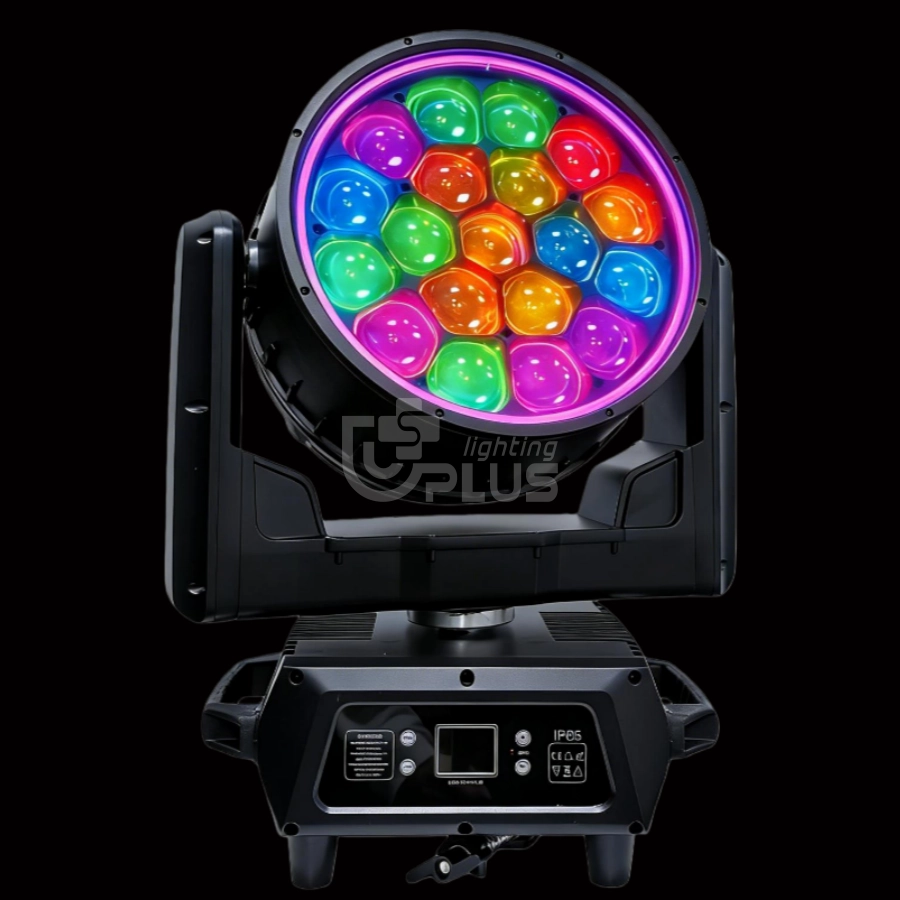
IP66 19*40W bee eye & zoom moving head with 19 LED beads supporting individual bee light control, integrating bee eye and zoom functions, LED ring to add atmosphere, IP66 waterproof, suitable for outdoor performances, cultural tourism lighting and other scenarios.
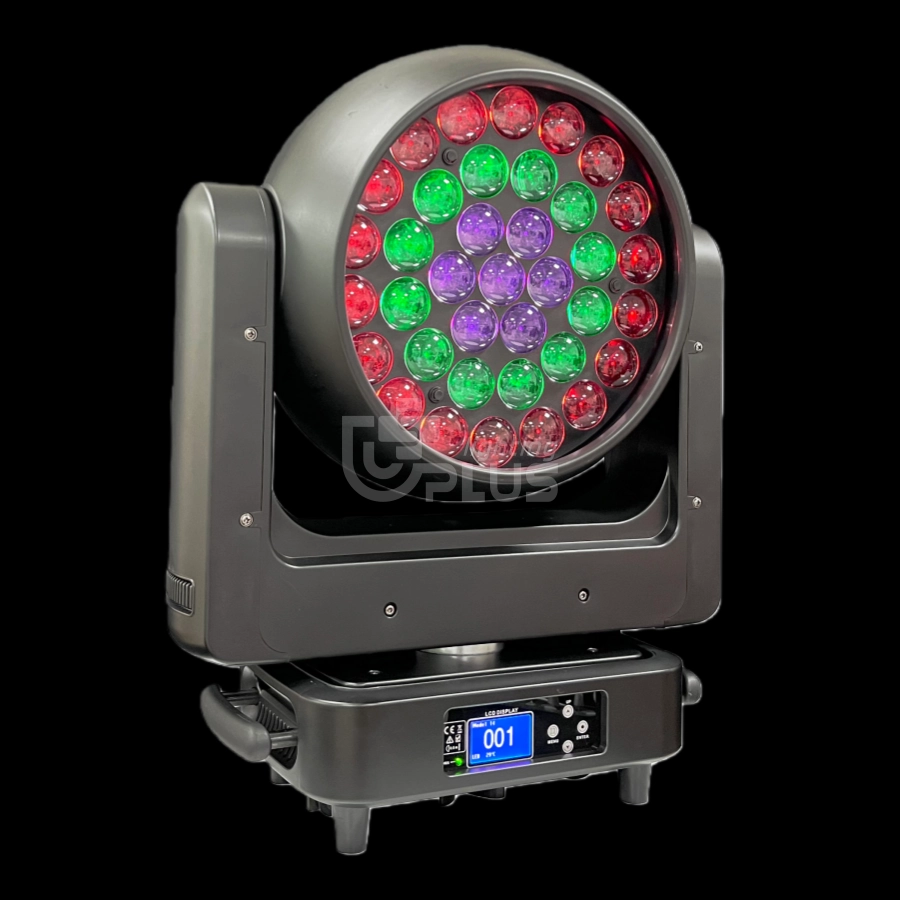
The 37*25W Wash zoom moving head features an array of 37 high-power 25W LEDs, providing wide-angle zoom and washing light. It delivers uniform and wide-coverage light with rich and vibrant colors and precise light control to suit various scenarios, meeting the needs of large-area coloring and ambient lighting for stage performances, venue events, and large-scale commercial performances.
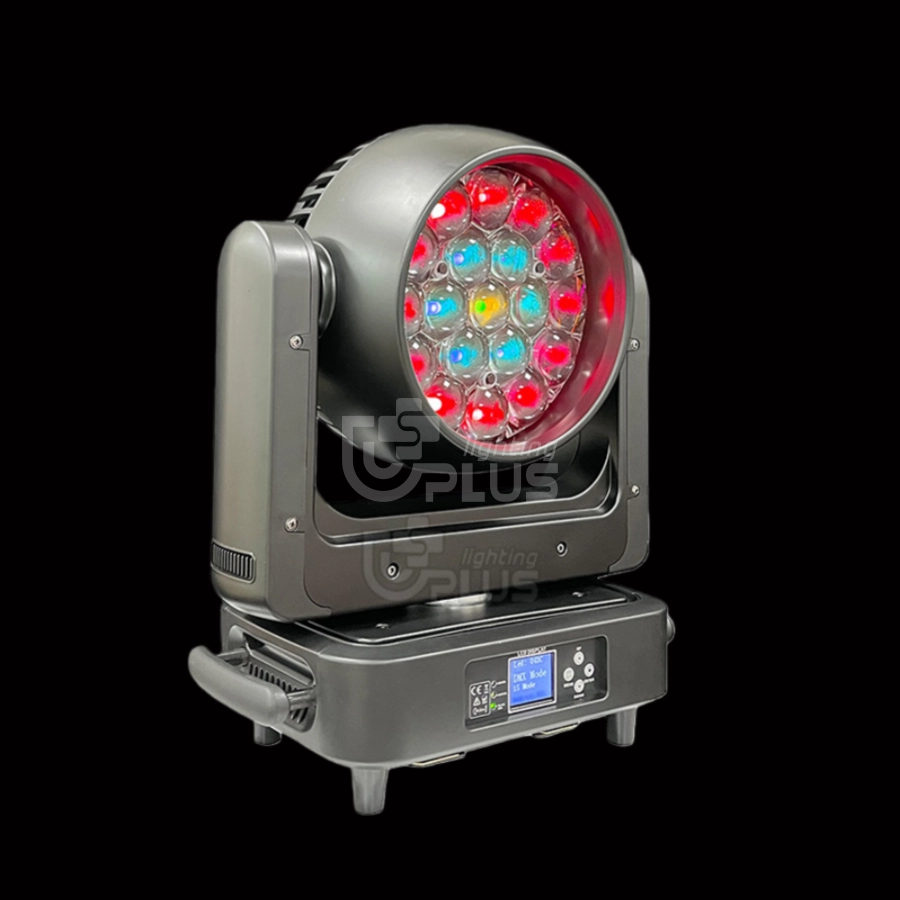
19*30W Wash zoom moving head with high CRI 19 30W high-power LED beads, high CRI to restore true colors, supports zoom, wash light output, uniform light coverage, and precise light control with rich layers, suitable for large-area color coloring and true color lighting in stage performances, exhibition halls, commercial events and other scenarios.
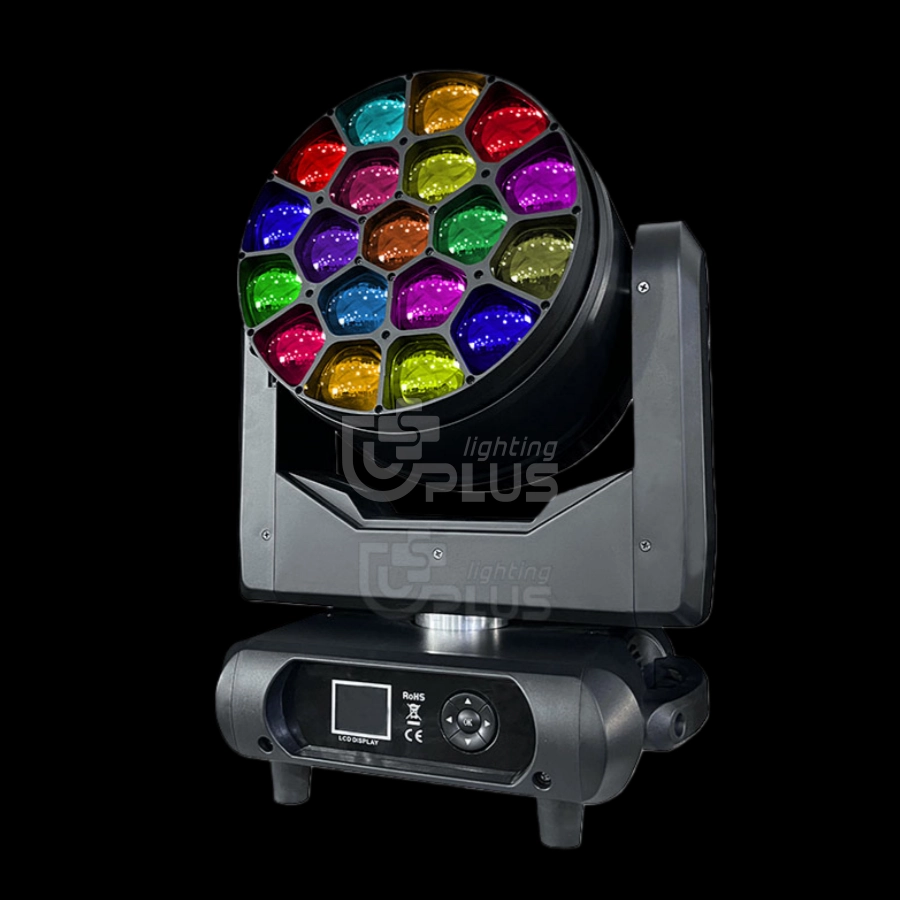
The K10 19*15W Wash Zoom & Bee Eye Moving Head features 19 15W RGBW LEDs, 4°-60° electronic zoom, and supports three modes: Wash Zoom, Beam Zoom, and Bee Eye Effect. It allows independent control of the LEDs and a rotating front mirror, enabling the creation of dynamic graphics such as petal opening and closing, and aerial dot matrix effects. With 540° horizontal and 210° tilt, it is suitable for multi-layered atmospheres and special effects in stage performances, variety show recordings, and bar parties.
Stay updated on our latest news
If you have any comments or good suggestions, please leave us a message, later our professional staff will contact you as soon as possible.
Lighting Innovators
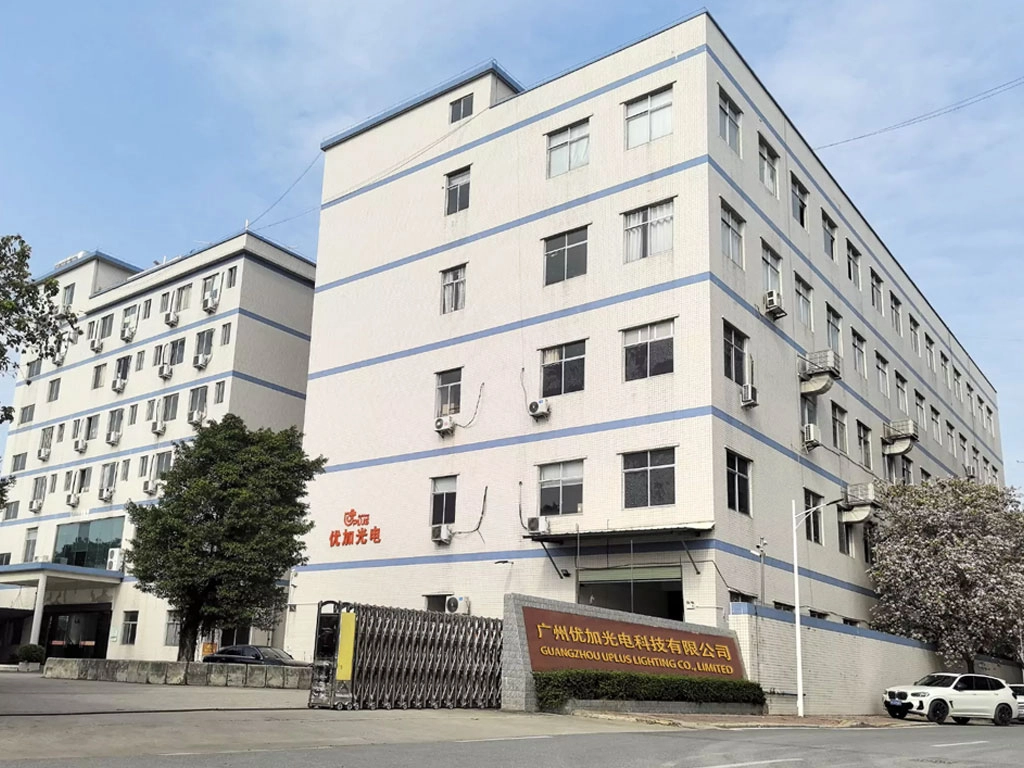
Uplus Lighting is a leading integrated company specializing in R&D, design, production, and sales of stage lighting solutions.
 Scan QR Code
Facebook
Instagram
YouTube
VK