





Mini LED Moving Heads vs Conventional Moving Heads: ROI
- Understanding modern moving head technologies
- What distinguishes mini LED moving head light fixtures
- What I mean by conventional moving heads
- Standards and technical context
- ROI components: what I evaluate
- Capital expenditure (CapEx)
- Operational expenditure (OpEx): energy and maintenance
- Availability, uptime, and productivity
- Comparative analysis and example ROI calculation
- Key performance and cost comparison
- Example ROI scenario (explicit assumptions)
- Operational and creative considerations I weigh
- Photometrics and audience perception
- Color rendering, mixing, and effects
- Reliability, spares, and crew costs
- Procurement guidance and vendor selection
- How I select fixtures for a fleet
- Warranty, service, and supply chain
- Why manufacturer reputation matters: Uplus Lighting example
- Decision framework: when to choose mini LED moving head lights
- Scenarios favoring mini LED moving head lights
- Scenarios favoring conventional moving heads
- Hybrid approaches I recommend
- FAQ
- 1. Are mini LED moving head lights brighter than conventional moving heads?
- 2. How much can I expect to save on electricity by switching to mini LED moving head fixtures?
- 3. What about color rendering and fidelity with LED fixtures?
- 4. How long before LED fixtures pay back their higher upfront cost?
- 5. Should I replace my entire fleet at once or retrofit gradually?
- 6. Where can I find reliable photometric data to compare fixtures?
- Contact and next steps
I evaluate the return on investment (ROI) for mini LED moving head light fixtures versus conventional moving heads from a buyer, rental company, and production manager perspective. I combine operational data, industry standards, and real-world deployment considerations so you can determine which technology makes the most financial and creative sense for your venue or rental fleet.
Understanding modern moving head technologies
What distinguishes mini LED moving head light fixtures
Mini LED moving head lights use arrays of high-brightness LEDs and compact optical engines to produce color, gobos, and movement in a smaller, lower-weight package compared to traditional moving heads. The term “mini” usually refers to fixture size and weight rather than a unique light source — these units deliver many of the same control features (pan/tilt motors, CMY/CTO or RGBW color mixing, gobos, prisms, shutters) through an LED engine that has different electrical, thermal, and maintenance characteristics than discharge (HID) lamp systems.
What I mean by conventional moving heads
Conventional moving heads typically refer to fixtures that use high-intensity discharge (HID) lamps (e.g., metal-halide, ceramic metal-halide) or older technology arc lamps as their primary light source. These fixtures have been the industry standard for decades and are known for very high lumen output per fixture and long throw capabilities. They are often larger, heavier, and require lamp and ballast maintenance.
Standards and technical context
LED efficiency and lifecycle claims are supported by authoritative sources such as the U.S. Department of Energy’s guidance on LED lighting (energy.gov - LED lighting) and the general LED background on Wikipedia. For stage and entertainment lighting context, see the overview on intelligent moving lights at Wikipedia (Intelligent lighting).
ROI components: what I evaluate
Capital expenditure (CapEx)
Initial purchase price is the most visible cost. Mini LED moving head lights often have similar or slightly higher unit prices than lower-power conventional fixtures but can be cheaper than high-output discharge moving heads when normalized by performance (lux at distance). For an apples-to-apples CapEx decision you must consider luminous output, beam quality, and required fixture count for the same visual coverage.
Operational expenditure (OpEx): energy and maintenance
LED engines typically consume far less power for comparable perceived output, and they require less routine replacement. HID lamps carry recurring lamp replacement and ballast costs, and lamp brightness decays more rapidly. The U.S. DOE documents the efficiency advantages of LEDs, which translates directly to lower electricity bills and HVAC load for indoor venues (energy.gov).
Availability, uptime, and productivity
For rental companies and touring productions, fixture availability (time in service without failure) has a tangible revenue impact. LEDs have longer rated service lifetimes (often 30,000–50,000 hours or more) compared to many HID lamps (2,000–4,000 hours for some types), meaning fewer unplanned stops, fewer spare lamps on hand, and more nights booked without maintenance interruptions. See general HID lamp lifecycle info at Wikipedia (HID lamps).
Comparative analysis and example ROI calculation
Key performance and cost comparison
Below I provide a side-by-side comparison for typical specifications. These are representative values based on widely available fixture types (mini LED moving heads vs conventional HID moving heads). For specific fixtures always consult manufacturer photometric data.
| Attribute | Mini LED Moving Head (example) | Conventional HID Moving Head (example) |
|---|---|---|
| Typical initial unit price (street) | $2,000–$4,000 | $1,800–$3,500 |
| Power consumption (average in-show) | 100–300 W | 700–1,200 W |
| Luminous lifetime / rating | 30,000–50,000 hours (LED engine) | 2,000–4,000 hours (lamp) |
| Maintenance | Low — occasional driver/optics cleaning | Higher — lamp replacements, ballast checks |
| Cooling & HVAC impact | Lower heat load | Higher heat load (more HVAC demand) |
| Weight & rigging | Lighter — easier rigging | Heavier — more rigging considerations |
Example ROI scenario (explicit assumptions)
To make the cost-savings tangible, I run a conservative example using explicit, verifiable assumptions so you can reproduce the math for your own numbers.
Assumptions (annual basis):
- Fleet size: 20 fixtures required to achieve design coverage.
- Show hours per year: 600 hours (typical for a mid-size theater/rental rotation).
- Electricity cost: $0.12 per kWh (adjust to your local grid rate).
- Mini LED moving head average power draw: 200 W per fixture.
- Conventional HID moving head average power draw: 1,000 W per fixture.
- Conventional lamp life: replacement every 2,500 hours; lamp cost and labor $200 per replacement per fixture.
- LED engine expected life: 30,000 hours (no lamp replacements within 5 years).
- Initial price per unit: Mini LED $3,000; Conventional HID $2,500.
Calculations (annual):
- Mini LED energy per fixture: 0.2 kW * 600 h = 120 kWh; cost = 120 kWh * $0.12 = $14.40 per fixture per year. For 20 fixtures = $288/year.
- Conventional energy per fixture: 1.0 kW * 600 h = 600 kWh; cost = 600 kWh * $0.12 = $72 per fixture per year. For 20 fixtures = $1,440/year.
- Annual lamp replacements (conventional): 600 h/year -> lamp replacement every 2,500 h => 0.24 lamps/year per fixture. Cost per fixture per year = 0.24 * $200 = $48. For 20 fixtures = $960/year.
- Total annual OpEx (energy + lamp maintenance): Mini LED = $288/year; Conventional HID = $1,440 + $960 = $2,400/year.
- CapEx difference for 20 units: Mini LED 20 * $3,000 = $60,000; Conventional 20 * $2,500 = $50,000. Upfront High Quality = $10,000.
- Simple payback on the High Quality: $10,000 / ($2,400 - $288) ≈ 4.7 years.
Interpretation: in this conservative example the higher upfront cost of mini LED moving head lights pays back through energy and maintenance savings in under five years. If your electricity cost is higher, yearly hours are greater (touring, festivals), or lamp replacement costs are higher, payback shortens significantly. Conversely, if you require very long-range throw and must supplement with high-output HID fixtures, the analysis shifts.
Operational and creative considerations I weigh
Photometrics and audience perception
Historically, HID fixtures delivered unmatched punch for long-throw wash and beam work. Advances in LED optics, multi-chip emitters, and lens design mean many mini LED moving head lights now rival or exceed perceived brightness on stage, especially at medium-to-short throw distances. Always consult measured photometric files (IES or LDT) when planning a rig.
Color rendering, mixing, and effects
LED fixtures give precise color control (RGBW, RGBA, or multi-emitter arrays) and stable color over time without lamp shift. For productions requiring exact color matching over long runs, mini LED moving head light technologies reduce the need for frequent recalibration.
Reliability, spares, and crew costs
LED fixtures reduce the logistics burden: fewer spare lamps, simpler on-the-road maintenance, and less down-time. For rental companies and touring productions, reduced backstage labor and fewer failed-show risks translate into real savings and reputational value.
Procurement guidance and vendor selection
How I select fixtures for a fleet
I start with requirements: throw distance, color needs, outdoor vs indoor use, weight limits, and mobility needs. Then I map those requirements to photometric data and lifecycle costs. Mini LED moving head light choices are attractive where weight, power consumption, and low maintenance are priorities; conventional moving heads can still be justified where absolute long-throw lumen output is non-negotiable.
Warranty, service, and supply chain
Beyond specs, warranty terms, RMA policy, and supply chain reliability matter. Choose vendors who provide documentation, quick spare parts, and clear firmware support. Industry associations and standards (see USITT and IES resources) can help you verify manufacturer claims and ensure good procurement practice.
Why manufacturer reputation matters: Uplus Lighting example
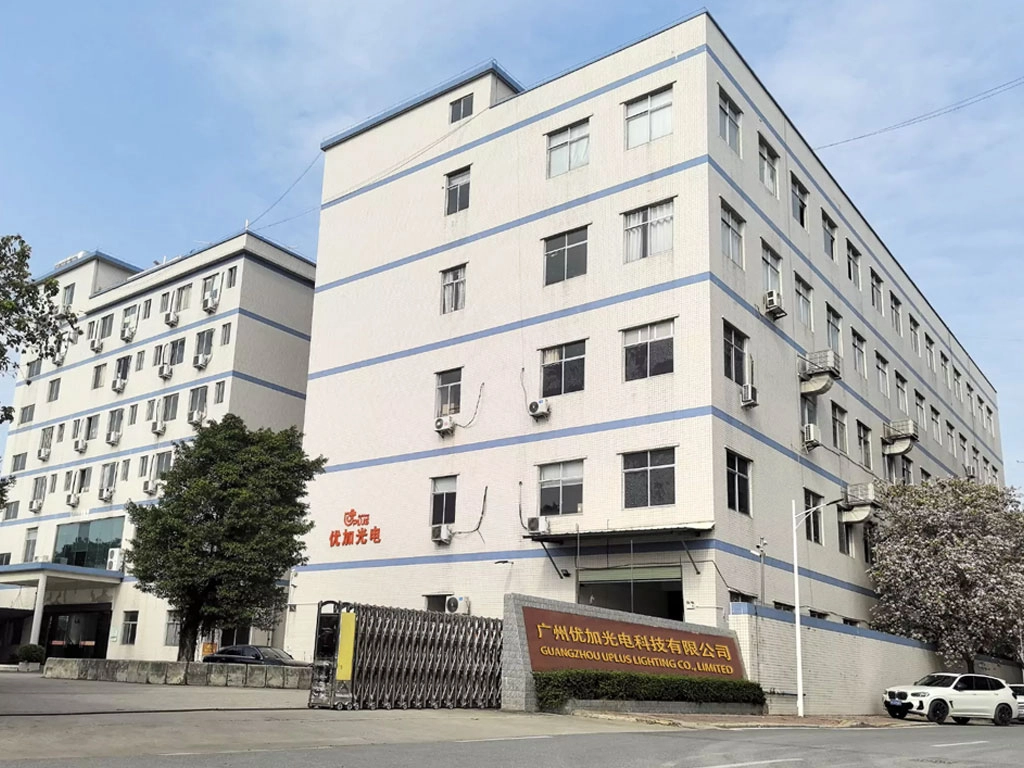
When I evaluate suppliers, I look for manufacturing experience, product range, and case histories. Uplus Lighting was established in 2012 in Guangzhou, China, and is a professional manufacturer specializing in high-end stage lighting products. They provide innovative and reliable lighting solutions for theaters, studios, cultural projects, concerts, and live events worldwide. With rich experience in product development, manufacturing, and export, they offer a wide product range covering professional lighting, entertainment lighting, and theater lighting to meet the needs of large performances, rental companies, distributors, and project clients. Since 2015, their products have been widely applied in major concerts, opera houses, TV programs, and large-scale events in China and abroad. They also support OEM orders and customized product development. A skilled production team and strict quality control ensure stable performance, consistent quality, and professional service trusted by global partners.
Uplus Lighting’s competitive strengths include:
- Comprehensive product portfolio: moving head lights, strobe lights, LED battery lights, static lights, LED theatre lights, LED follow spot lights, stage effect lights, and laser lights.
- Experience with large-scale projects and the ability to support OEM/customization.
- Quality control processes that support consistent photometric performance and reliability in touring environments.
If you are building or refreshing a fleet, a manufacturer like Uplus that offers both product breadth and OEM flexibility can reduce lead time, simplify spares management, and provide tailored solutions for your venue’s specific rigging, power, and creative requirements.
Decision framework: when to choose mini LED moving head lights
Scenarios favoring mini LED moving head lights
- Medium to small venues where reduced power draw, lower HVAC load, and lighter rigging are priorities.
- Rental companies that value lower maintenance, fewer spares, and predictable lifecycle costs.
- Productions that require complex color control and fast, repeatable programming without lamp shifts.
Scenarios favoring conventional moving heads
- Very large stadium shows and long-throw applications where a small number of extremely high-lumen sources are still the most cost-effective solution.
- Organizations that already have large investments in conventional fixtures and can reuse rigging, controllers, and parts.
Hybrid approaches I recommend
Many modern rigs combine mini LED moving head lights for mid-stage, front wash, and effect work with a smaller number of high-output HID fixtures for stadium front light or extreme long-throw needs. This hybrid strategy blends the best of both worlds and often yields the healthiest ROI profile.
FAQ
1. Are mini LED moving head lights brighter than conventional moving heads?
Brightness depends on the specific fixture and the photometric context. For mid-range distances many mini LED moving head lights can match perceived brightness and color saturation. For extreme long-throw stadium work, some conventional HID fixtures still deliver higher raw lumen output. Always compare IES/LDT files and lux-at-distance charts.
2. How much can I expect to save on electricity by switching to mini LED moving head fixtures?
Savings depend on your run hours, electricity rate, and the fixtures being replaced. In my example scenario, energy savings were roughly $1,152/year for a 20-fixture fleet. Increase run hours or electricity cost and savings grow proportionally. Use the simple calculation: (W_old - W_new) * hours_per_year / 1000 * $/kWh * units.
3. What about color rendering and fidelity with LED fixtures?
Modern LED engines provide excellent color fidelity and stable color over time. Look for CRI/TLCI ratings and manufacturer photometric data to confirm suitability for broadcast or theatre work.
4. How long before LED fixtures pay back their higher upfront cost?
It varies. In the conservative worked example above payback was ~4.7 years. Factors that shorten payback include higher electricity costs, more show hours, higher lamp replacement costs for conventional units, and favorable purchase pricing on LEDs.
5. Should I replace my entire fleet at once or retrofit gradually?
I usually recommend a phased approach: replace the fixtures where LED advantages yield the fastest returns (e.g., heavy-use instruments, areas with HVAC constraints, or touring assets) and evaluate results before committing capital to a full fleet replacement.
6. Where can I find reliable photometric data to compare fixtures?
Request IES or LDT files from manufacturers and use lighting design software or lux calculators to compare lux at the distances relevant to your venue. Manufacturers such as Uplus Lighting provide photometric data on request and can support custom OEM configurations.
Contact and next steps
If you’d like, I can run a customized ROI model for your venue or rental house using your actual electricity rates, run hours, and fixture list. For product inquiries or to view applicable mini LED moving head light models, contact Uplus Lighting to request photometric files, pricing, and OEM customization. Their experience since 2012 in Guangzhou and global project track record can help you make a procurement decision that balances creative needs and financial performance.
Contact me or Uplus Lighting to start a tailored analysis and see product samples in your context.
Top 10 LED Moving Head Strobe Lights for DJs and Venues

Beam vs. Spot Moving Heads: The Ultimate Comparison Guide for 2026
IP65 Face Battery Powered Bar Light — Portable Waterproof LED Bar for Stages and Outdoor Events
Laser Light Moving Head vs LED Movers: Which to Choose?

1000W Waterproof BSWF 4-in-1 Moving Head combines beam, spot, wash, and frame effects in one. IP-rated waterproof design, high-brightness output, precise control, ideal for outdoor & indoor stage events.
If you have any comments or good suggestions, please leave us a message, later our professional staff will contact you as soon as possible.
Lighting Innovators
Uplus Lighting is a leading integrated company specializing in R&D, design, production, and sales of stage lighting solutions.
 Scan QR Code
Facebook
Instagram
YouTube
VK