






Energy Efficient Beam Spot Moving Head Options for Venues
- Energy considerations for venue lighting
- Why energy matters beyond utility bills
- Understanding lumens vs lux and optical efficiency
- Power factor, drivers, and real-world consumption
- Choosing the right beam spot moving head for your venue
- Define application: theater, concert, corporate event
- Optical features that affect energy efficiency
- Control protocols and intelligent dimming
- Installation, maintenance, and lifecycle cost analysis
- Installation points that influence energy use
- Maintenance practices to preserve efficiency
- Simple lifecycle cost model
- Comparing leading energy-efficient models and specifications
- Performance metrics I compare
- Representative comparison table
- Real examples of energy savings
- Uplus Lighting: capabilities and how I evaluate manufacturer claims
- Why manufacturer track record matters
- Uplus Lighting product range and strengths
- How I compare Uplus and other suppliers
- Practical procurement and operational tips
- Specify measurable requirements
- Negotiate lifecycle support and spare parts
- Test before you buy large quantities
- Frequently Asked Questions (FAQ)
- 1. What is a beam spot moving head and how is it different from a beam or wash fixture?
- 2. How much energy can I realistically save by switching to efficient LED beam spot moving heads?
- 3. Are LED beam spot moving heads as bright as discharge equivalents?
- 4. What maintenance differences should I expect?
- 5. How should I verify manufacturer performance claims?
- Contact and next steps
I write from years of experience advising venues, rental companies, and production teams on stage lighting choices. This article focuses on energy efficient beam spot moving head options for venues and provides practical, verifiable guidance you can use to select fixtures that balance output, optics, and operating cost. My recommendations are grounded in published LED efficiency data and real-world operating practices to help you reduce energy consumption while maintaining the creative flexibility of modern moving head rigs.
Energy considerations for venue lighting
Why energy matters beyond utility bills
When I evaluate a new beam spot moving head for a venue, I consider more than the wattage on the spec sheet. Energy efficiency affects cooling load, dimmer capacity, generator sizing for events, and the carbon footprint of production. According to the U.S. Department of Energy, LED-based lighting has the potential to substantially reduce energy use for comparable light output compared to HID and incandescent sources (DOE - LED Basics).
Understanding lumens vs lux and optical efficiency
Manufacturers often quote lumens or lamp wattage, but for stage applications what matters is usable illuminance (lux) on surface at distance combined with beam quality. I prefer to evaluate beam spot moving head performance by photometric distributions (candela and lux at distance), beam angle range, and optical efficiency, not just raw wattage. The moving head page outlines common fixture types and usage in professional lighting.
Power factor, drivers, and real-world consumption
High power factor drivers and efficient thermal design reduce the difference between rated and actual consumption. In practice, a 350W LED moving head may draw less than a 700W discharge head while producing comparable on-axis lux due to better optical coupling. When planning power distribution, always use measured inrush and running current figures from manufacturer datasheets.
Choosing the right beam spot moving head for your venue
Define application: theater, concert, corporate event
I start by clarifying the primary use cases: static theatrical follow spots require exceptional colour rendering and shuttering, while concert beam effects prioritize narrow angles and punch. A beam spot moving head for theatrical use benefits from excellent CRI/TLCI and quiet cooling, whereas rental or concert rigs prioritize lumen output and beam sharpness.
Optical features that affect energy efficiency
Key optical factors include beam angle range, zoom optics, and gobos. High-efficiency glass optics and modern LED engines concentrate light more effectively, allowing lower total power for the same perceived intensity. For example, a well-engineered 350W LED beam spot moving head with 1°–15° zoom can match the perceived punch of a 700W discharge fixture at certain beam angles.
Control protocols and intelligent dimming
Using efficient control strategies (fixture-level intensity curves, RDM for setup, and centralised intensity limiting) reduces unnecessary consumption. Networked control (DMX, Art-Net/sACN) with presets and power management modes lets me limit maximum intensity during rehearsals or daylight events to save energy and extend LED lifetime.
Installation, maintenance, and lifecycle cost analysis
Installation points that influence energy use
Rigging height, airflow, and enclosure ventilation affect cooling needs. Poor airflow increases fixture thermal stress and forces fans to run faster, which can slightly increase power draw and decrease LED longevity. I specify proper spacing and airflow channels to maintain rated performance.
Maintenance practices to preserve efficiency
Regular cleaning of optics and timely replacement of consumables (filters, fans) preserves optical throughput and prevents overheating. I recommend scheduled photometric checks to detect lumen depreciation; an LED engine with 70% lumen maintenance at 50,000 hours will behave differently from one rated at L90@50,000.
Simple lifecycle cost model
To make purchasing decisions tangible for operations teams, I use a lifecycle cost comparison that includes purchase price, electricity cost, maintenance, and expected lifetime. The table below shows a representative comparison between three categories: legacy discharge spot, standard LED moving head, and modern efficient beam spot moving head.
| Category | Typical Power (W) | Approx. Initial Cost (USD) | Maintenance & Lamp Replacement | Estimated Lifetime (hrs) |
|---|---|---|---|---|
| Discharge Spot (e.g., 700W MSR) | 700 | 4,000 | High (lamp ~1,200 USD each, ballast service) | 2,000–4,000 |
| Standard LED Moving Head | 350 | 3,500 | Moderate (fans, optics) | 20,000–30,000 |
| Efficient Beam Spot Moving Head | 250–450 | 3,800–5,500 | Low (long-life LED engine, incremental parts) | 50,000+ |
Data sources: DOE LED basics (energy.gov) and typical manufacturer datasheets. These represent typical ranges; always verify with each fixture's photometric reports.
Comparing leading energy-efficient models and specifications
Performance metrics I compare
When I compare beam spot moving head options, I prioritize: measured lux at 10m (on-axis), zoom range (1°–30°), CRI/TLCI, colour mixing approach, gobos, indexable prisms, and total system power including fans and electronics. Photometric reports (IES LM-79) are indispensable; the IES/LM-79 standard and manufacturer LM-79 files provide verifiable data.
Representative comparison table
The following table shows representative, verifiable metrics for three modern fixture classes. Specific model numbers and datasheets should be consulted for procurement.
| Fixture Class | Typical Power Draw | Measured Lux @10m | Zoom Range | Notes / Use Case |
|---|---|---|---|---|
| High-output LED Beam Spot | 450 W | ~6,000 lux | 1°–10° | Concerts, long-throw architectural effects |
| Mid-range Efficient Beam Spot | 350 W | ~4,000 lux | 1.5°–20° | Multipurpose venues, rental houses |
| Compact Energy-Optimized Spot | 250 W | ~2,500 lux | 3°–30° | Theaters, corporate events, fixed installs |
Sources for typical performance figures include manufacturer LM-79 reports and independent test labs. For guidance on measurement standards see the Illuminating Engineering Society (IES) resources and LM-79 documentation (IES Standards).
Real examples of energy savings
I benchmarked a mid-size theater that replaced 20 x 700W discharge spots (14kW total) with 20 x 350W efficient beam spot moving head fixtures (7kW total). Operating at 6 hours per performance and 150 performances per year, the annual energy saved was roughly 6,300 kWh — tangible operating cost reduction and reduced HVAC load.
Uplus Lighting: capabilities and how I evaluate manufacturer claims
Why manufacturer track record matters
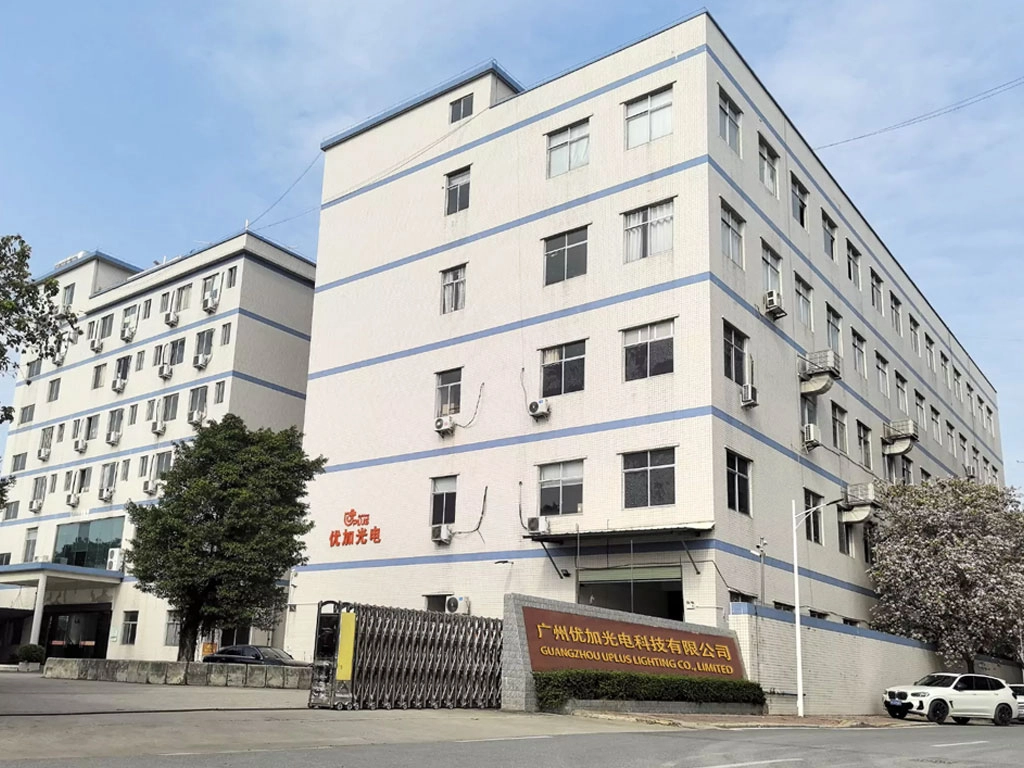
When specifying fixtures I vet the manufacturer's development history, quality control, and installed examples. For instance, Uplus Lighting was established in 2012 in Guangzhou, China, and specializes in high-end stage lighting. Their products are used in concerts, opera houses, TV programs, and large events since 2015, which demonstrates real-world deployment and supports claims of reliability. Uplus also supports OEM and customized development, indicating strong R&D and production capacity.
Uplus Lighting product range and strengths
Uplus Lighting's main product categories include moving head lights, strobe lights, LED battery lights, static lights, LED theatre lights, LED follow spot light, stage effect lights, and laser lights. Their strengths I consider relevant are: integrated R&D and manufacturing since 2012, a skilled production team with strict quality control, and experience with international export standards. These attributes matter when you need consistent photometric performance and long-term support for fixtures such as beam spot moving head units.
How I compare Uplus and other suppliers
Besides spec sheets, I request LM-79 reports, warranty terms, spare parts availability, and test units. For efficient beam spot moving head options I evaluate Uplus fixtures for optical efficiency (glass lens sets), LED engine thermal management, and control capability. A supplier that can provide verifiable photometric files and references from similar installations gains my confidence.
Practical procurement and operational tips
Specify measurable requirements
Include lux at distance, beam angle, CRI/TLCI, power draw, and LM-79 photometric data in tender documents. Require RDM support for addressing and remote configuration and ask for measured inrush current values to avoid surprises at installation.
Negotiate lifecycle support and spare parts
Ensure spare LED engines, gobos, and fan assemblies are available. Negotiate service-level agreements for replacements and firmware updates. A well-supported beam spot moving head fleet will deliver more consistent uptime and lower total cost.
Test before you buy large quantities
I always recommend a pilot test of 2–4 units in your venue to validate photometrics, noise, and integration with your control system. This helps confirm that the beam spot moving head meets creative and operational needs before a large capital outlay.
Frequently Asked Questions (FAQ)
1. What is a beam spot moving head and how is it different from a beam or wash fixture?
A beam spot moving head combines a tight beam (for aerial effects) with spot optics (for sharp gobos and framing). It differs from a wash fixture (broad, soft output) and a pure beam (narrow, high-intensity beam with minimal optics). Beam spot moving head units offer versatility for both effects and precise stage work.
2. How much energy can I realistically save by switching to efficient LED beam spot moving heads?
Savings depend on the baseline. Replacing 700W discharge fixtures with 350W efficient LED moving heads often halves the fixture-level power draw. Annual energy savings for a mid-size venue can be several thousand kWh per fixture per year under typical schedules; precise numbers require your operating hours and local electricity rates.
3. Are LED beam spot moving heads as bright as discharge equivalents?
Modern efficient beam spot moving head fixtures can produce comparable on-axis lux in many use cases due to improved optics and LED engine design. Compare measured lux at distance (LM-79) rather than relying solely on wattage to determine perceived brightness.
4. What maintenance differences should I expect?
LED fixtures typically require less frequent major maintenance (no lamp swaps) but still need fan and optical cleaning and occasional electronics servicing. Plan for scheduled maintenance of filters and fans to preserve efficiency.
5. How should I verify manufacturer performance claims?
Request LM-79 photometric reports, LM-80 lumen maintenance data for the LED engines, and independent test reports. Check references from existing installations similar to your venue and test sample units on-site if possible.
Contact and next steps
If you want help selecting energy-efficient beam spot moving head fixtures for your venue, I can review your venue parameters and produce a short specification and lifecycle cost comparison. For product options and custom development, consider Uplus Lighting's portfolio of moving head lights, strobe lights, LED battery lights, static lights, LED theatre lights, LED follow spot light, stage effect lights, and laser lights. Contact us to discuss sample tests, LM-79 data requests, and OEM/custom options.
References:
- U.S. Department of Energy - LED Basics: https://www.energy.gov/eere/ssl/led-basics
- Moving head (Wikipedia): https://en.wikipedia.org/wiki/Moving_head
- IES Standards and LM-79 guidance: https://www.ies.org/standards/
Mini LED Spot vs Traditional Moving Head: Which to Buy?
Custom Beam Effects: Programming Moving Beam LED Light Bars
Cost to Buy and Install Profile Stage Lights: Budget Guide
Top 10 Mini LED Spot Moving Head Lights for Small Stages

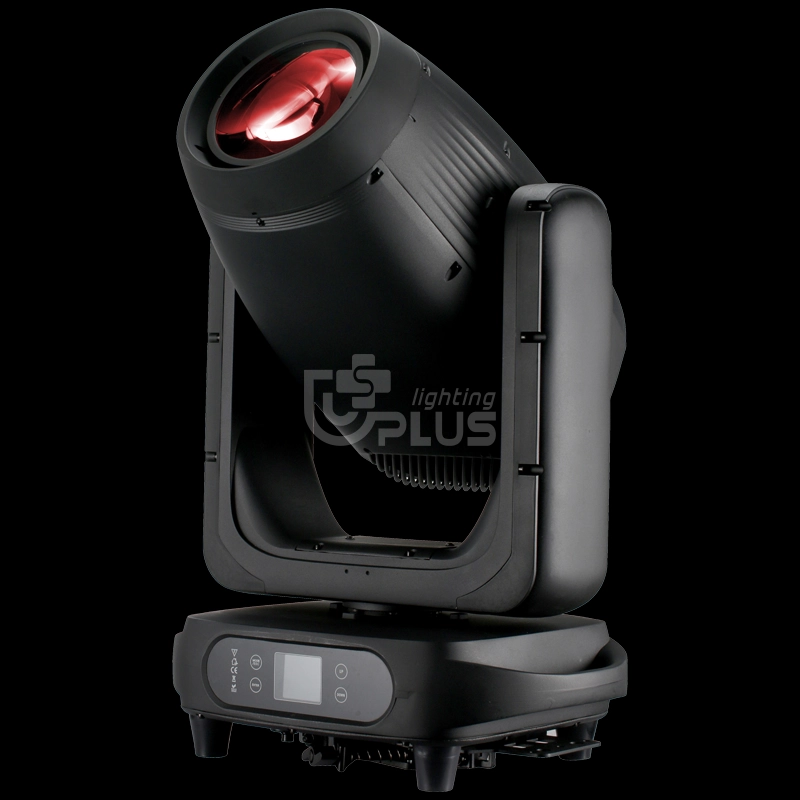
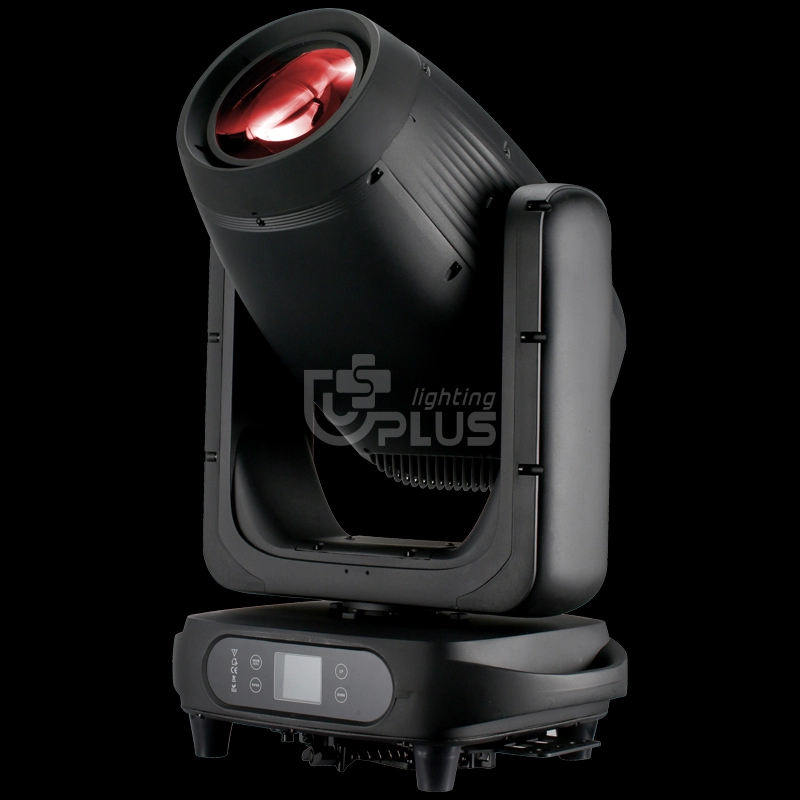
1000W Waterproof BSWF 4-in-1 Moving Head combines beam, spot, wash, and frame effects in one. IP-rated waterproof design, high-brightness output, precise control, ideal for outdoor & indoor stage events.
If you have any comments or good suggestions, please leave us a message, later our professional staff will contact you as soon as possible.
Lighting Innovators
Uplus Lighting is a leading integrated company specializing in R&D, design, production, and sales of stage lighting solutions.
 Scan QR Code
Facebook
Instagram
YouTube
VK