






led wash moving head zoom | Insights by Uplus Lighting
LED Wash Moving Head Zoom: Engineering-Grade Buying Guide
Practical, engineering-led answers for buying and specifying LED wash moving head zoom fixtures for live events and installs. This guide debunks common myths about lux measurement, zoom optics, DMX/RDM channels, thermal design, color uniformity and rigging so buyers make data-driven stage lighting decisions.
Introduction: Buyers new to stage lighting often see product pages filled with lumen and wattage claims but lack the engineering context needed to predict real-world performance. Below are targeted, technical insights intended to close that gap and help you specify fixtures that perform reliably on tour or in permanent installs.
Conclusion: When you must translate photometric data into on-stage reality, a supplier that couples optical engineering with repeatable factory measurement and responsive technical support is critical. Uplus Lighting focuses on providing calibrated photometry, customizable DMX mappings, and engineering guidance so specifiers can validate fixture performance before purchase; this reduces on-site surprises and shortens integration time.
Contact Uplus Lighting for a tailored quote at www.upluslighting.com or email albee@upluslighting.com.
Frequently Asked Questions
How to compare lux output across different zoom angles?
Compare lux correctly by converting advertised lumen or lux numbers into a common measurement geometry and by understanding optics math. Lumens are total luminous flux; lux is illuminance at a surface (lumens/m^2). For a moving head with variable zoom, beam angle changes the illuminated area: beam diameter ≈ 2 × distance × tan(beam_angle/2). Because illuminance follows geometry, reducing beam angle concentrates the same luminous flux into a smaller area and raises lux approximately by the area ratio (neglecting optical losses). Practical steps: 1) Always request measured lux at a specified distance and zoom angle (e.g., lux at 10 m at 15°). 2) Ask for an IES or LDT photometric report from the manufacturer so you can integrate the published candela distribution to calculate lux for your rig distances. 3) Watch for manufacturer claims that mix lumen totals with beam lux numbers—these are not directly comparable without the beam angle and distance. 4) Consider the fixture’s optical efficiency and diffuser losses: a wider zoom with diffusion will have lower center lux than a tight beam even if total lumen output is unchanged. Using these measurement conventions eliminates common buyer mistakes and predicts on-stage illuminance reliably.
What DMX channels and protocols do beginners need?
Start with protocol fundamentals: DMX512 (ANSI E1.11) provides 512 channels per universe and remains the industry standard for lighting control; Remote Device Management (RDM, ANSI E1.20) is the bi-directional supplement that enables discovery, addressing and remote configuration. Moving head wash fixtures with zoom typically offer multiple DMX modes—compact modes with 8–16 channels for basic pan/tilt/zoom/color control and extended modes (24–40+ channels) that expose fine control for motors, color macros, dimmer curves and diagnostics. Beginners should: 1) Confirm whether you require one DMX universe per group of fixtures or more—pan/tilt movement and high-resolution zoom can require additional channels per head. 2) Choose fixtures that support both 8-bit and 16-bit channel resolutions where precise, slow-moving pan/tilt or smooth zoom is needed. 3) Prefer RDM-capable fixtures for faster addressing and firmware updates on larger rigs. 4) Verify control desk compatibility and whether the manufacturer provides pre-built channel maps or personality files for popular consoles. Understanding these protocol choices prevents later mapping surprises and ensures consistent remote configuration and firmware management.
How does zoom optics affect color mixing and uniformity?
Zoom optics significantly influence color homogeneity across the wash field. Color mixing in LED wash heads generally uses spatial mixing (multi-chip LED arrays) combined with lenses and diffusion. As zoom changes beam angle, the projection cone and overlap of individual LED sources change; tight beams increase the risk of hotspots from discrete LED clusters, while wider zooms rely more on diffusion to flatten the field. Engineering considerations: 1) Lens design and the distance from LED emitter to lens (optical path length) determine individual source imaging—well-designed zoom optics maintain even overlap across the zoom range. 2) Multi-element zoom lenses and graded diffusers reduce chromatic separation by blending sources before they reach the beam edge. 3) For video or broadcast, choose fixtures with high TLCI (Television Lighting Consistency Index) and good CRI where color rendition matters; TLCI is more relevant for camera workflows. 4) Ask for photometric maps (lux & chromaticity across field) at multiple zoom positions—these maps reveal uniformity and tint shifts that simple lumen or CRI numbers cannot. In short, specify based on measured photometry across zoom steps rather than trusting nominal color mixing claims.
What maintenance extends LED lifespan in moving head zoom?
Maximize LED longevity by managing thermal, mechanical and electrical stresses. LEDs are temperature-sensitive: higher junction temperatures accelerate lumen depreciation and color shift. Industry practice is to evaluate LED lifetime using Lx metrics (for example, L70 or L80 hours—the time when output falls to 70% or 80% of initial). Many modern LED engines are rated for tens of thousands of hours, but actual lifetime depends on thermal path design and operating environment. Maintenance actions: 1) Keep heatsinks and air intakes/exhausts free of dust—blocked airflow increases junction temperature rapidly. 2) Use manufacturer-recommended cleaning intervals (dry air or low-pressure blower) and avoid corrosive cleaning agents. 3) Monitor fan health in fixtures with active cooling—replace bearings or fans before failure to avoid thermal spikes. 4) Maintain stable mains supply or use line conditioning to avoid driver stress; voltage spikes and poor regulation shorten driver life. 5) Review firmware updates and calibration tools offered by the manufacturer to maintain correct dimming curves and thermal profiles. A proactive maintenance program that prioritizes thermal control and electrical stability will yield the advertised LED lifetime in the field.
How to evaluate heat dissipation and cooling systems?
Evaluate cooling by examining the thermal engineering approach rather than fan count alone. Two primary cooling strategies exist: passive conduction to large heatsinks (relying on surface area) and active cooling using fans to increase convective heat transfer. Key evaluation points: 1) Thermal path integrity—trace heat from LED junction through thermal interface materials to the heatsink; poor thermal interfaces or thin copper planes compromise dissipation. 2) Manufacturer-provided thermal curves and driver temperature derating data explain how output is reduced under elevated ambient conditions. 3) For touring use, active cooling is common because compact fixtures must dissipate high power densities; however, fans introduce failure points and potential noise—ask about fan MTBF and whether fans are user-replaceable. 4) Look for controlled thermal management like temperature-based dimming profiles to prevent overheating while preserving lamp output. 5) Test fixtures at expected maximum ambient temperatures or request stress-test reports from the factory. These engineering checks prevent in-service thermal-related failures and preserve photometric performance over time.
What rigging and weight considerations for truss-mounted fixtures?
Rigging decisions should be made from the fixture’s published weight, its Center of Gravity (COG), and the truss or mounting hardware’s Working Load Limit (WLL). Practical guidance: 1) Always use rated clamps and stainless steel safety cables sized to the fixture’s WLL and local codes; never rely on the clamp’s appearance—use the data plate. 2) Confirm the fixture’s weight and COG to avoid asymmetric loads that can induce torque on the clamp and truss connection. 3) Consider dynamic loads during movement—moving head fixtures introduce additional dynamic forces; factor those into rigging plans and consult structural engineers for large arrays. 4) Use manufacturer installation manuals which list recommended clamp types, torque values, and required secondary safety devices. 5) For permanent installs, verify that electrical and control cabling routes follow local regulations and allow service access. Properly applied rigging discipline and adherence to published WLL data eliminate the most common safety and serviceability issues with truss-mounted wash heads.


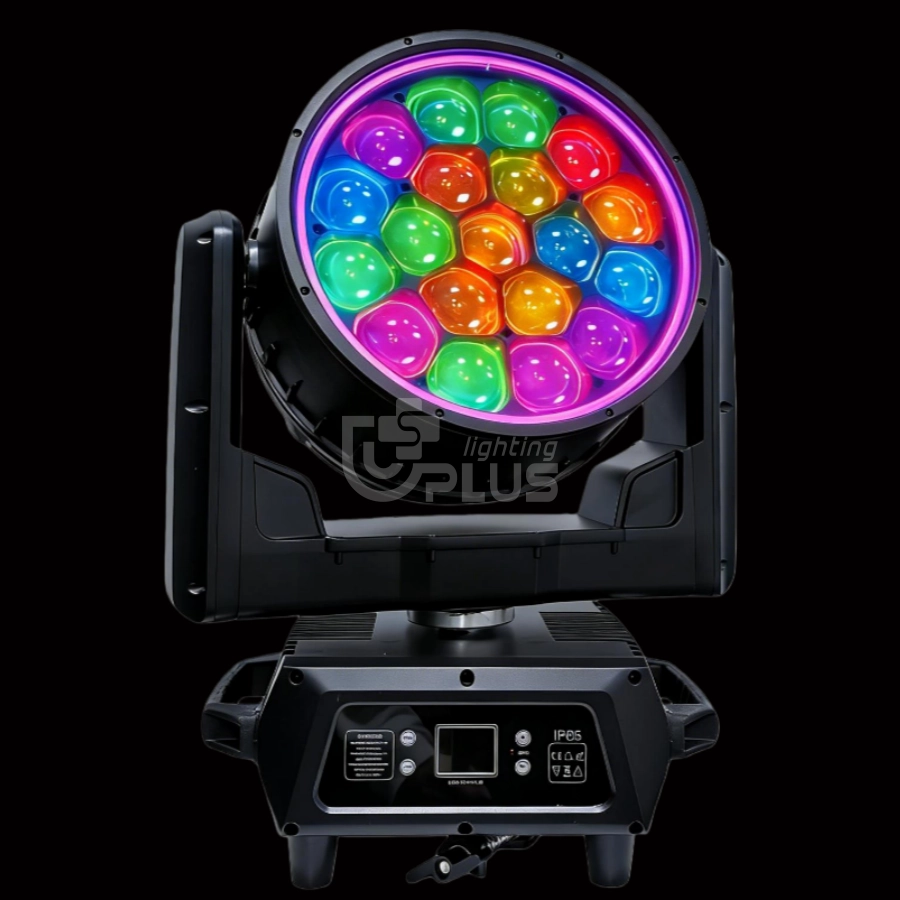
IP66 19*40W bee eye & zoom moving head with 19 LED beads supporting individual bee light control, integrating bee eye and zoom functions, LED ring to add atmosphere, IP66 waterproof, suitable for outdoor performances, cultural tourism lighting and other scenarios.
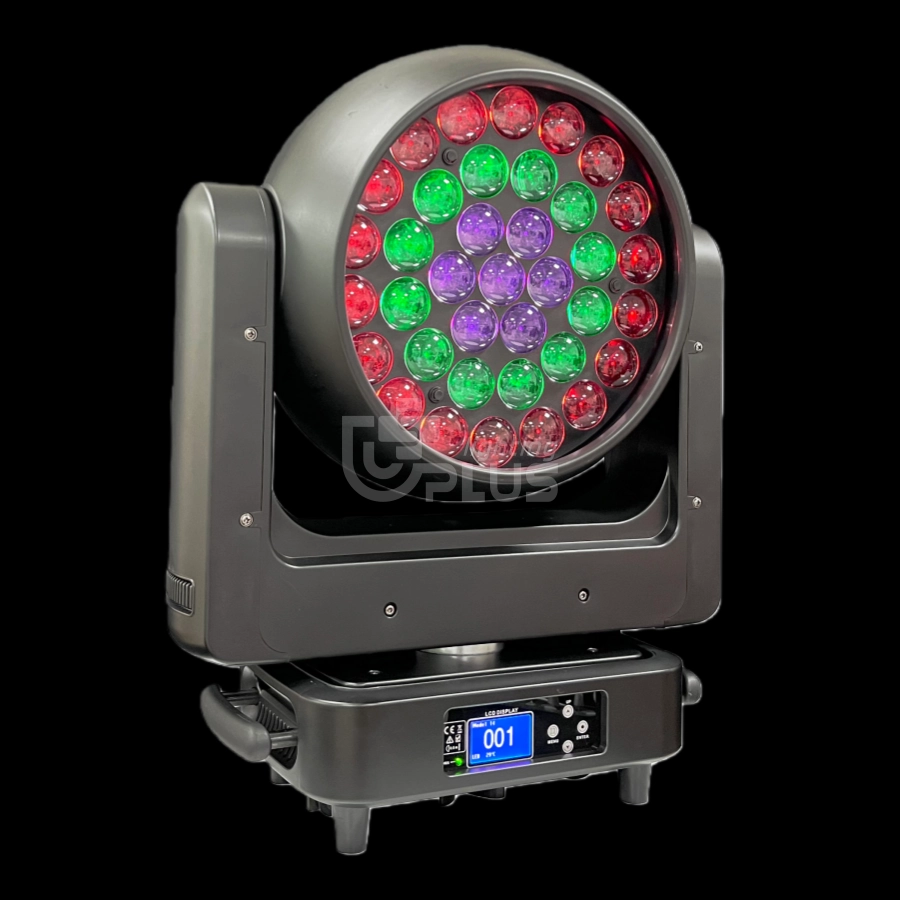
The 37*25W Wash zoom moving head features an array of 37 high-power 25W LEDs, providing wide-angle zoom and washing light. It delivers uniform and wide-coverage light with rich and vibrant colors and precise light control to suit various scenarios, meeting the needs of large-area coloring and ambient lighting for stage performances, venue events, and large-scale commercial performances.
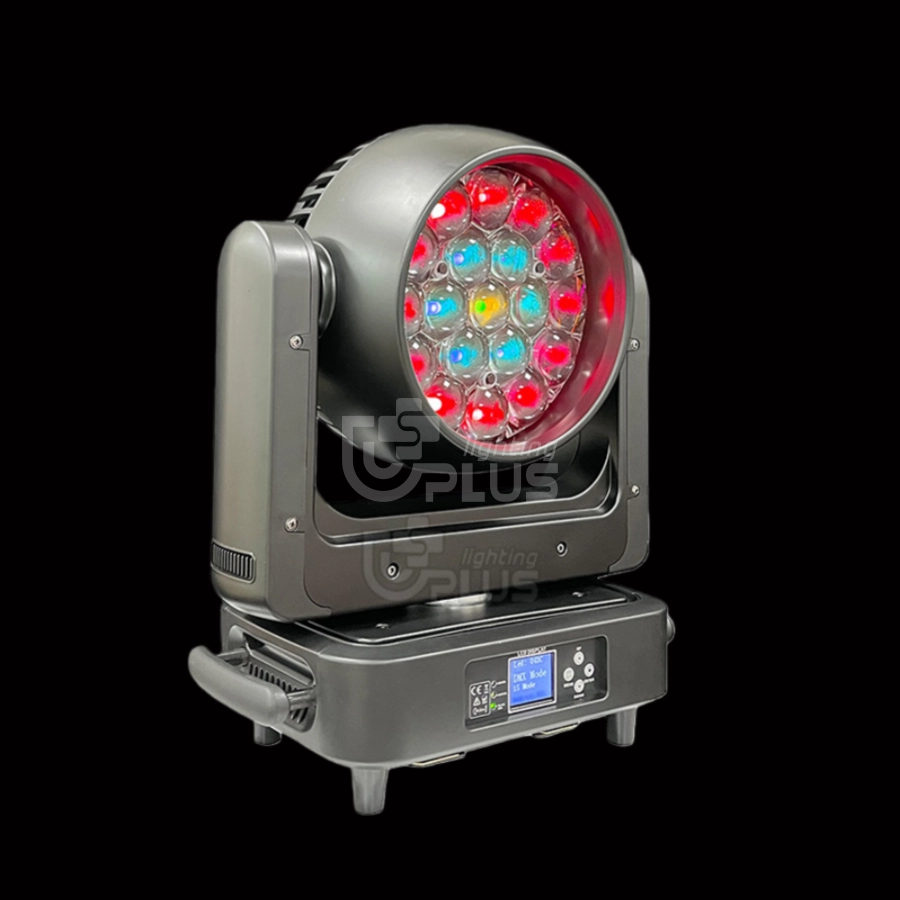
19*30W Wash zoom moving head with high CRI 19 30W high-power LED beads, high CRI to restore true colors, supports zoom, wash light output, uniform light coverage, and precise light control with rich layers, suitable for large-area color coloring and true color lighting in stage performances, exhibition halls, commercial events and other scenarios.
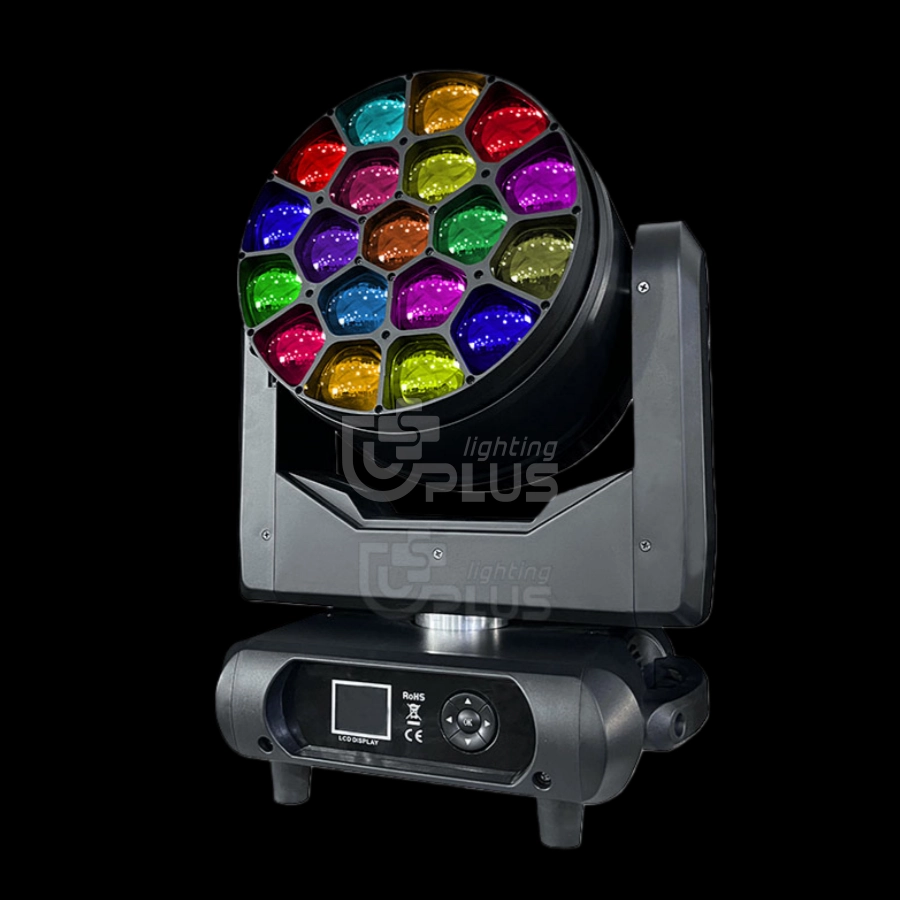
The K10 19*15W Wash Zoom & Bee Eye Moving Head features 19 15W RGBW LEDs, 4°-60° electronic zoom, and supports three modes: Wash Zoom, Beam Zoom, and Bee Eye Effect. It allows independent control of the LEDs and a rotating front mirror, enabling the creation of dynamic graphics such as petal opening and closing, and aerial dot matrix effects. With 540° horizontal and 210° tilt, it is suitable for multi-layered atmospheres and special effects in stage performances, variety show recordings, and bar parties.
Stay updated on our latest news
If you have any comments or good suggestions, please leave us a message, later our professional staff will contact you as soon as possible.
Lighting Innovators
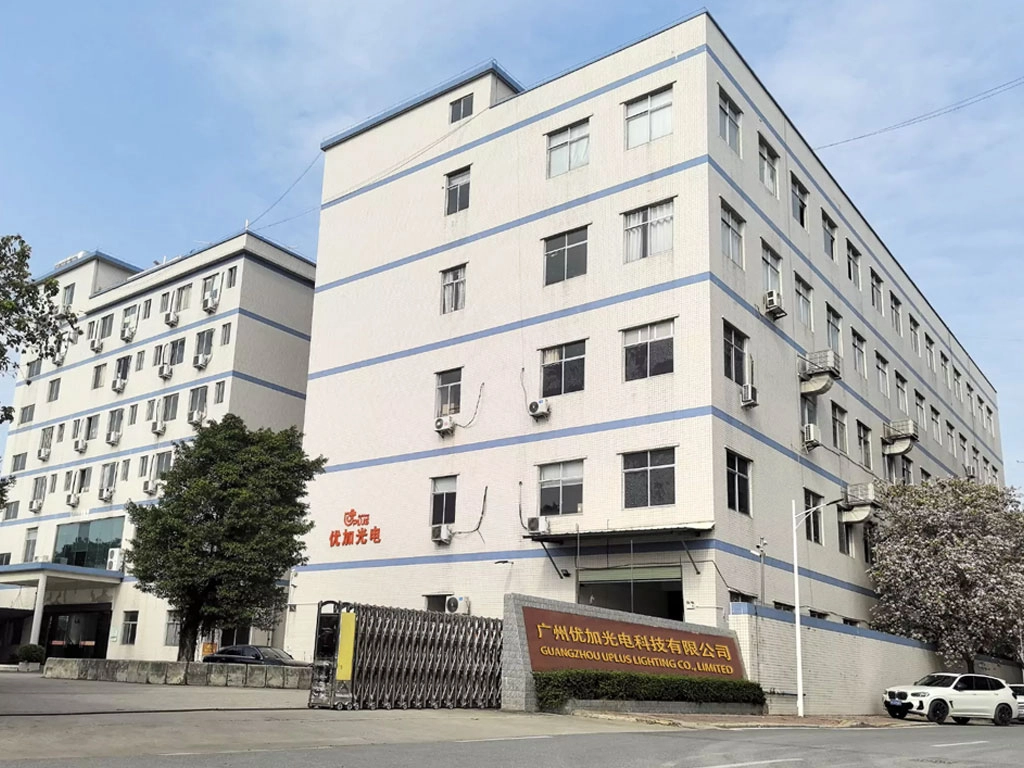
Uplus Lighting is a leading integrated company specializing in R&D, design, production, and sales of stage lighting solutions.
 Scan QR Code
Facebook
Instagram
YouTube
VK