


- What IP rating is truly required for outdoor LED bars?
- Can IP65 LED bars survive heavy rain and stage wash?
- Do IP ratings cover salt corrosion and UV degradation outdoors?
- How to seal connectors and cabling on outdoor LED bars?
- Are fan-cooled LED bars appropriate for outdoor installations?
- What maintenance and testing schedule prevents outdoor LED bar failures?
- FAQ
IP ratings and waterproofing: are LED bars safe for outdoors?
Understand IEC IP levels and real-world waterproofing for LED bars stage lighting: which IP ratings matter, what IP doesn’t cover (UV, salt), sealing best practices for connectors, and maintenance steps to keep outdoor installations reliable and safe.
Article Title: IP ratings and waterproofing: are LED bars safe for outdoors?
Understand IEC IP levels and real-world waterproofing for LED bars stage lighting: which IP ratings matter, what IP doesn’t cover (UV, salt), sealing best practices for connectors, and maintenance steps to keep outdoor installations reliable and safe.
What IP rating is truly required for outdoor LED bars?
IP ratings are a baseline defined by IEC 60529; they describe protection against ingress of solids and liquids but not environmental abuse like UV or salt corrosion. For temporary outdoor use and light showers, IP65 is commonly accepted because it guarantees dust-tight enclosures and protection against water jets. For permanent exterior installations exposed to heavy rain, washdowns, or where accidental immersion is possible, specify at least IP66 or IP67: IP66 resists powerful water jets and IP67 survives immersion to 1 m for 30 minutes. For continuous immersion or submersion beyond 1 m, require IP68 with manufacturer-defined test parameters. Also verify the fixture’s operating temperature, driver enclosure class, and LM-80/TM-21 luminaire thermal data because sealed enclosures rely on conductive cooling; a high IP number alone does not guarantee long life if thermal design is inadequate.
Can IP65 LED bars survive heavy rain and stage wash?
IP65 protects against water jets from any direction but is not rated for high-pressure washdown or prolonged, concentrated sprays typical of power washers. In practice an IP65 LED bar will survive ordinary rain and most stage rain exposure, but it may fail sooner if spray pressures are high, nozzles are focused on seams, or connector entries are compromised. If your rig will be subject to washdowns, muddy stages, or directional water at close range, choose IP66 or IP67-rated fixtures and ensure connectors and glands are rated to the same level. For venues using sanitation or disinfectant power-washes, request proof of testing from the manufacturer and consider potting critical joints or specifying IP68 connectors for maximum tolerance to repeated wash cycles.
Do IP ratings cover salt corrosion and UV degradation outdoors?
No. IEC 60529 IP ratings do not address UV exposure, salt spray, or chemical corrosion. For coastal or marine environments you must specify corrosion-resistant materials and coatings—stainless hardware in 316 grade, anodized or powder-coated housings with marine-grade primers, and silicone gaskets formulated for UV stability. Request salt-spray testing per ASTM B117 or equivalent from suppliers for coastal deployments. Similarly, for high-UV environments ask for UV-stable plastics and gaskets, and review long-term lumen maintenance data; heat plus UV accelerates polymer degradation and gasket hardening, which undermines seals faster than the IP test would indicate.
How to seal connectors and cabling on outdoor LED bars?
Connector and cable entry failure is the most common real-world cause of ingress. Use system-level sealing: IP-rated cable glands sized and torqued to spec, factory-potting or molded over cable terminations for permanent installs, and IP67/IP68-rated circular connectors or sealed XLR/ethernet variants for modular rigs. Include breathable pressure-equalization vents such as Gore vents to avoid pressure-driven ingress while preventing condensation, or use fully potted driver compartments for permanent outdoor fixtures. Field repairs should not rely solely on silicone tape; instead implement heat-shrink with adhesive, re-pot joints where feasible, and replace damaged glands. Always verify connector sealing with the same IP class as the luminaire; an IP67 fixture with an IP44 connector at the cable entry is only as good as the weakest link.
Are fan-cooled LED bars appropriate for outdoor installations?
Fan-cooled fixtures can work outdoors but they introduce failure points: fans draw in air and contaminants unless filtered and sealed, and fans reduce achievable IP ratings. For outdoor stage lighting, sealed, fanless designs are preferred because they maintain IP levels and resist dust and moisture ingress. Fanless fixtures must be designed for conduction cooling—adequate heat-sinking and a defined Tc point—so confirm derating curves from the manufacturer for high ambient temperatures. If high-output levels require active cooling, ensure the cooling subsystem is weatherproofed and specify replaceable, screened, and easily serviceable fan modules, understanding that maintenance frequency will increase compared with sealed fixtures.
What maintenance and testing schedule prevents outdoor LED bar failures?
Implement a documented inspection and maintenance schedule: visual seal and gasket inspection every 6–12 months depending on exposure, torque-checks on glands and fasteners, and electrical insulation resistance tests annually. Use thermal imaging during commissioning and after heavy-use seasons to detect hot spots caused by failed drivers or thermal degradation. For coastal locations, increase inspection frequency and include salt-spray checks; record lumen output and compare to LM-80/TM-21 projections to identify accelerated lumen depreciation caused by overheating or moisture ingress. Keep spares for commonly failing items—gaskets, glands, and connectors—and require manufacturers to provide IP test certificates (IEC 60529) and any additional corrosion or UV test reports before purchase.
Conclusion: Selecting and deploying outdoor LED bars requires more than picking an IP number; it requires coordinated specification of IP class, corrosion resistance, connector ratings, thermal management, and a maintenance regime. Uplus Lighting engineers assess site exposure, recommend appropriate IP/NEMA equivalency, specify materials for coastal or high-UV sites, and validate thermal and ingress protection through test documentation to reduce field failures and lifecycle cost.
Contact us for a quote at www.upluslighting.com or albee@upluslighting.com.
FAQ
What IP rating is truly required for outdoor LED bars?
IP ratings are a baseline defined by IEC 60529; they describe protection against ingress of solids and liquids but not environmental abuse like UV or salt corrosion. For temporary outdoor use and light showers, IP65 is commonly accepted because it guarantees dust-tight enclosures and protection against water jets. For permanent exterior installations exposed to heavy rain, washdowns, or where accidental immersion is possible, specify at least IP66 or IP67: IP66 resists powerful water jets and IP67 survives immersion to 1 m for 30 minutes. For continuous immersion or submersion beyond 1 m, require IP68 with manufacturer-defined test parameters. Also verify the fixture’s operating temperature, driver enclosure class, and LM-80/TM-21 luminaire thermal data because sealed enclosures rely on conductive cooling; a high IP number alone does not guarantee long life if thermal design is inadequate.
Can IP65 LED bars survive heavy rain and stage wash?
IP65 protects against water jets from any direction but is not rated for high-pressure washdown or prolonged, concentrated sprays typical of power washers. In practice an IP65 LED bar will survive ordinary rain and most stage rain exposure, but it may fail sooner if spray pressures are high, nozzles are focused on seams, or connector entries are compromised. If your rig will be subject to washdowns, muddy stages, or directional water at close range, choose IP66 or IP67-rated fixtures and ensure connectors and glands are rated to the same level. For venues using sanitation or disinfectant power-washes, request proof of testing from the manufacturer and consider potting critical joints or specifying IP68 connectors for maximum tolerance to repeated wash cycles.
Do IP ratings cover salt corrosion and UV degradation outdoors?
No. IEC 60529 IP ratings do not address UV exposure, salt spray, or chemical corrosion. For coastal or marine environments you must specify corrosion-resistant materials and coatings—stainless hardware in 316 grade, anodized or powder-coated housings with marine-grade primers, and silicone gaskets formulated for UV stability. Request salt-spray testing per ASTM B117 or equivalent from suppliers for coastal deployments. Similarly, for high-UV environments ask for UV-stable plastics and gaskets, and review long-term lumen maintenance data; heat plus UV accelerates polymer degradation and gasket hardening, which undermines seals faster than the IP test would indicate.
How to seal connectors and cabling on outdoor LED bars?
Connector and cable entry failure is the most common real-world cause of ingress. Use system-level sealing: IP-rated cable glands sized and torqued to spec, factory-potting or molded over cable terminations for permanent installs, and IP67/IP68-rated circular connectors or sealed XLR/ethernet variants for modular rigs. Include breathable pressure-equalization vents such as Gore vents to avoid pressure-driven ingress while preventing condensation, or use fully potted driver compartments for permanent outdoor fixtures. Field repairs should not rely solely on silicone tape; instead implement heat-shrink with adhesive, re-pot joints where feasible, and replace damaged glands. Always verify connector sealing with the same IP class as the luminaire; an IP67 fixture with an IP44 connector at the cable entry is only as good as the weakest link.
Are fan-cooled LED bars appropriate for outdoor installations?
Fan-cooled fixtures can work outdoors but they introduce failure points: fans draw in air and contaminants unless filtered and sealed, and fans reduce achievable IP ratings. For outdoor stage lighting, sealed, fanless designs are preferred because they maintain IP levels and resist dust and moisture ingress. Fanless fixtures must be designed for conduction cooling—adequate heat-sinking and a defined Tc point—so confirm derating curves from the manufacturer for high ambient temperatures. If high-output levels require active cooling, ensure the cooling subsystem is weatherproofed and specify replaceable, screened, and easily serviceable fan modules, understanding that maintenance frequency will increase compared with sealed fixtures.
What maintenance and testing schedule prevents outdoor LED bar failures?
Implement a documented inspection and maintenance schedule: visual seal and gasket inspection every 6–12 months depending on exposure, torque-checks on glands and fasteners, and electrical insulation resistance tests annually. Use thermal imaging during commissioning and after heavy-use seasons to detect hot spots caused by failed drivers or thermal degradation. For coastal locations, increase inspection frequency and include salt-spray checks; record lumen output and compare to LM-80/TM-21 projections to identify accelerated lumen depreciation caused by overheating or moisture ingress. Keep spares for commonly failing items—gaskets, glands, and connectors—and require manufacturers to provide IP test certificates (IEC 60529) and any additional corrosion or UV test reports before purchase.


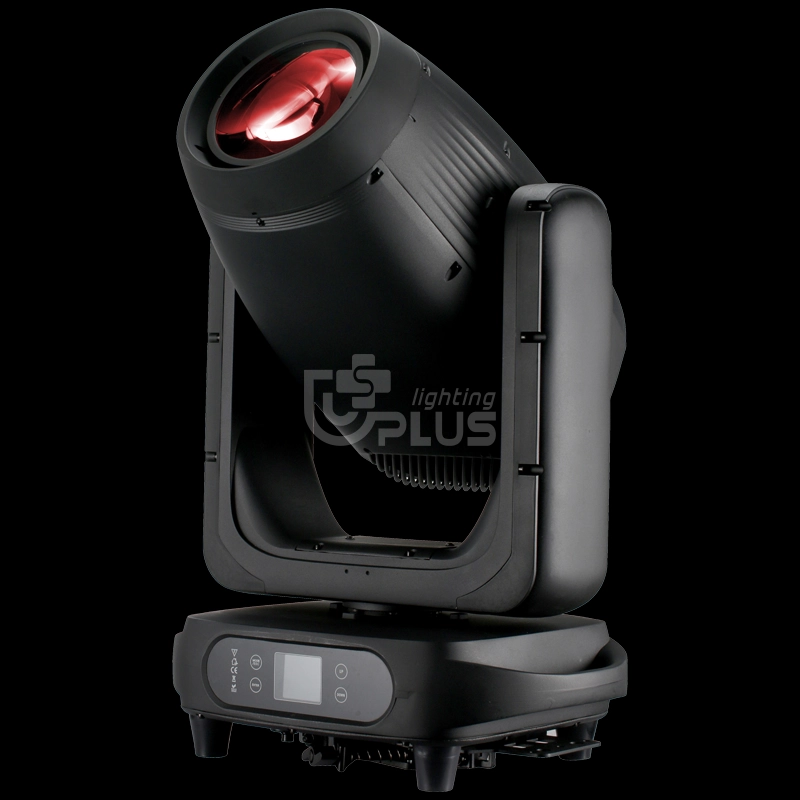
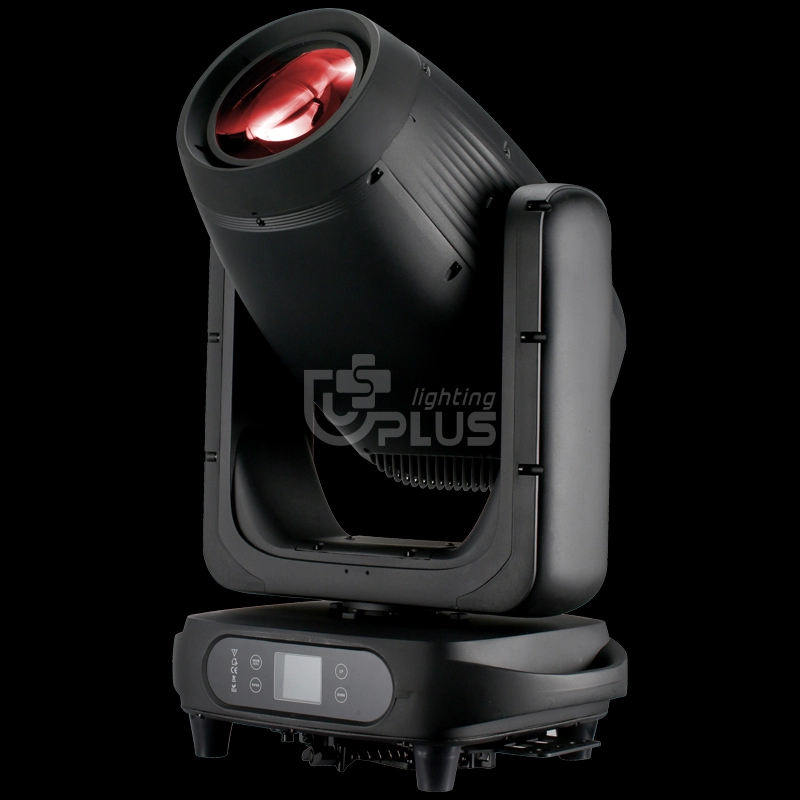
1000W Waterproof BSWF 4-in-1 Moving Head combines beam, spot, wash, and frame effects in one. IP-rated waterproof design, high-brightness output, precise control, ideal for outdoor & indoor stage events.
Stay updated on our latest news
If you have any comments or good suggestions, please leave us a message, later our professional staff will contact you as soon as possible.
Lighting Innovators
Uplus Lighting is a leading integrated company specializing in R&D, design, production, and sales of stage lighting solutions.
 Scan QR Code
Facebook
Instagram
YouTube
VK