






- How to distinguish LED output versus true laser diode beam?
- What instruments measure beam power, divergence, and profile accurately?
- How do I calculate Nominal Ocular Hazard Distance (NOHD) correctly?
- Which safety standards and classifications apply to stage lasers?
- How to assess audience scanning risks and safe scanning parameters?
- What engineering controls minimize beam exposure for live performances?
How to evaluate beam, power, and safety for LED laser stage lighting?
Practical, standards-based guidance to evaluate beam geometry, optical power, and audience safety for LED laser stage lighting. Learn measurement methods, instruments, NOHD calculation, standards (IEC 60825‑1, ANSI Z136.1), and engineering controls to mitigate eye and skin hazards in live events.
How to evaluate beam, power, and safety for LED laser stage lighting?
Practical, standards-based guidance to evaluate beam geometry, optical power, and audience safety for LED laser stage lighting. Learn measurement methods, instruments, NOHD calculation, standards (IEC 60825‑1, ANSI Z136.1), and engineering controls to mitigate eye and skin hazards in live events.
How to distinguish LED output versus true laser diode beam?
Begin with optics and coherence: LEDs emit incoherent, Lambertian light with wide angular spread and no speckle; laser diodes emit a coherent, collimated beam with low divergence and visible speckle. Many stage fixtures combine high‑power LEDs for wash and separate laser diode modules for beams—marketing may call a product an “LED laser” but the safety and measurement approach differs fundamentally. Inspect the aperture and beam: a true laser diode will produce a small, high‑irradiance spot centimeters to meters away, whereas LEDs will not form a tight, long‑range beam. Verify with a beam profiler or simple spot‑size test at multiple distances: if spot diameter scales linearly with distance and remains small (mm to a few cm at tens of meters), you have coherent laser output. Treat any coherent, collimated emitter as a laser hazard regardless of product naming.
What instruments measure beam power, divergence, and profile accurately?
Use radiometric instruments, not photometric lux meters. For optical power: calibrated laser power meters with appropriate detectors—thermopile heads for high average power (hundreds of mW to watts), silicon or InGaAs photodiode sensors for low‑power visible/near‑IR—traceable to NIST or equivalent. For divergence and beam diameter: beam profilers (camera‑based with known pixel calibration) or knife‑edge/scan methods to measure 1/e2 diameter; report divergence in milliradians (mrad). For spectral verification use a spectrometer to confirm wavelength bands (important for MPE selection). For scanning systems, combine a fast photodiode and oscilloscope to capture pulse/dwell time and peak power—average power meters will under‑report pulsed or scanned exposures unless corrected for duty cycle. Ensure all instruments are recently calibrated and specify measurement geometry (distance from aperture, aperture alignment, and whether measurements are at the aperture or under free‑space propagation).
How do I calculate Nominal Ocular Hazard Distance (NOHD) correctly?
Calculate NOHD using standards as the basis: select the correct Maximum Permissible Exposure (MPE) from ANSI Z136.1 or IEC 60825‑1 for the wavelength and exposure duration. A common approximation for continuous beams is NOHD = sqrt((4·P)/(π·MPE)), where P is the measured continuous optical power (W) and MPE is irradiance (W/m²) for the relevant exposure time. For scanned sources, determine the worst‑case single‑pixel dwell time and effective power per dwell before applying MPE. Important caveats: the formula assumes a small source and does not apply without confirming source angular subtense; MPE varies strongly with wavelength and exposure duration; for pulsed systems use the pulse MPE formulas in the standards. Always document assumptions (measurement distance, beam diameter, MPE table references) and, for public shows, have NOHD and risk assessments reviewed by a qualified Laser Safety Officer (LSO) or certified tester.
Which safety standards and classifications apply to stage lasers?
Primary standards are IEC 60825‑1 (international) and ANSI Z136.1 (U.S.). These define laser classes, MPEs, labeling, and engineering controls. Key practical points: Class 3B devices can cause immediate eye injury from direct exposure; Class 4 devices can injure eyes and skin and present fire hazards and significant diffuse reflection risks. Many stage projectors with scanning laser diodes used for audience effects operate in Class 3B or Class 4 regimes—assume higher‑class controls until proven otherwise by measurements and documentation. Compliance requires correct classification based on measured output, wavelength, and temporal characteristics; correct fixed labeling; and operational controls (scanner interlocks, key switches, service modes). For installations in Europe, confirm compliance with EN/IEC requirements and local regulations for public events.
How to assess audience scanning risks and safe scanning parameters?
Audience scanning introduces transient exposures over many angles; assessment must account for beam dwell time, repetition rate, and scan pattern density. Determine the maximum irradiance any audience point could receive by combining measured beam profile, scan velocity, and pattern geometry. Use worst‑case dwell time per pixel to compare against the visible‑band MPE for that exposure duration. Implement engineering limits: enforce minimum scan speeds, limit peak power, use automatic scan‑fail circuitry (blanking if the scanner stalls), and set software boundaries so beams do not dwell near spectator sightlines. Avoid direct eye‑level scanning when classification or measurements indicate potential exceedance of MPE. For public performances, follow local regulatory requirements for audience scanning and have calculations audited by an LSO or competent authority.
What engineering controls minimize beam exposure for live performances?
Adopt layered controls: (1) Administrative: SOPs, operator training, and pre‑show safety checks; (2) Engineering: interlocks, key switches, emergency stop, shutter/beam‑blockers, enclosed beam paths where practical, scanner fail‑safe circuits, and tamper‑resistant covers; (3) Optical: beam apertures, beam shaping to reduce peak irradiance where feasible, and using diffusers or enclosures for close‑range effects. Eliminate specular reflection hazards by treating stage surfaces (painted matte finishes) and specifying non‑reflective fixtures. Maintain accurate labels and documentation and keep calibrated measurement records onsite. For high‑power systems, appoint a Laser Safety Officer, perform a written risk assessment, and maintain insurance and incident procedures. These controls, combined with verified measurements and compliance with IEC 60825‑1 / ANSI Z136.1, form the defensible safety posture event organizers need.
Uplus Lighting brings 15 years of stage lighting technical leadership and equipment‑level measurement experience; our teams perform instrumented surveys, NOHD calculations, classification verification, and design engineering controls for live events. We emphasize radiometric measurement, standards compliance, and operational procedures tailored to touring rigs and fixed installations, ensuring both performance and safety for audiences and crews.
Contact us for a detailed, standards‑compliant risk assessment and quotation at www.upluslighting.com or albee@upluslighting.com.


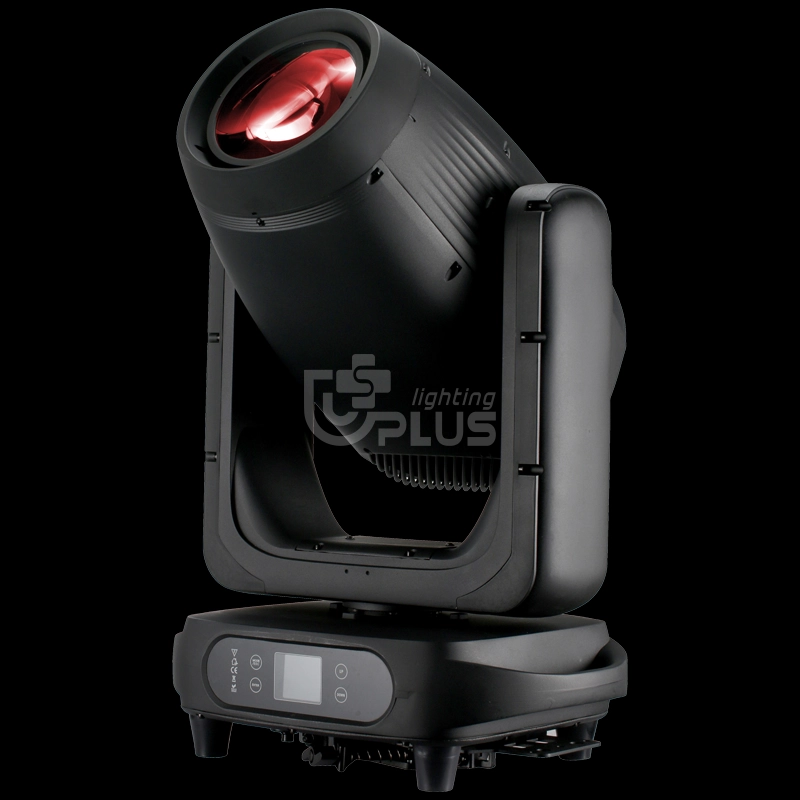
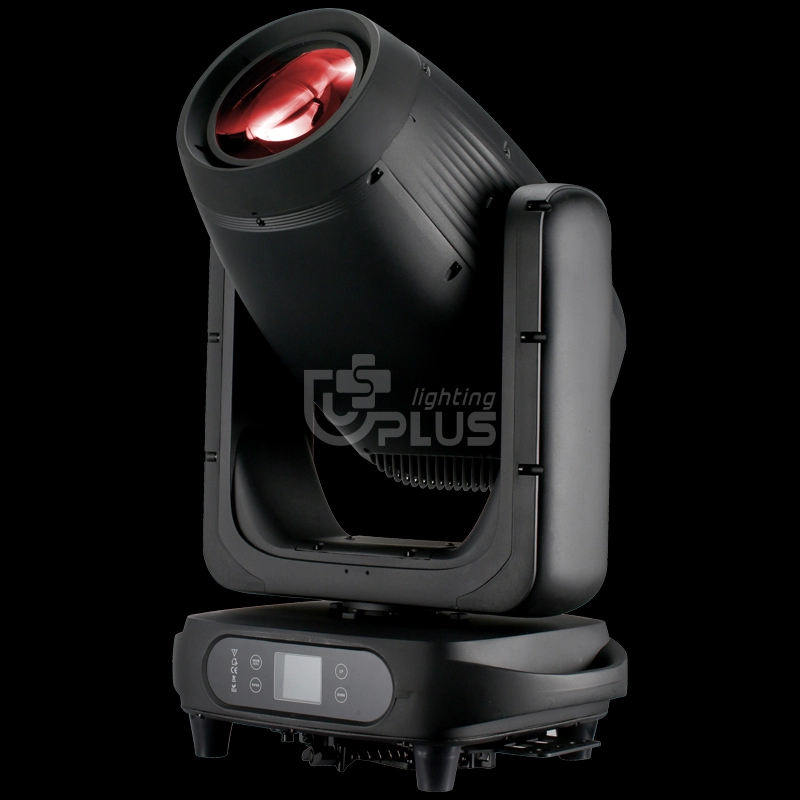
1000W Waterproof BSWF 4-in-1 Moving Head combines beam, spot, wash, and frame effects in one. IP-rated waterproof design, high-brightness output, precise control, ideal for outdoor & indoor stage events.
Stay updated on our latest news
If you have any comments or good suggestions, please leave us a message, later our professional staff will contact you as soon as possible.
Lighting Innovators
Uplus Lighting is a leading integrated company specializing in R&D, design, production, and sales of stage lighting solutions.
 Scan QR Code

Facebook
Instagram
YouTube
VK