






Compare LED Stage Light Bar Specs: Power, Beam, Color
- How LED Stage Bars Solve Common Lighting Challenges
- Why specs on paper can mislead
- Which metrics I check first
- Power and Output: Watts, Lumens, and Efficiency
- Understanding watts vs lumens
- How to verify luminous output on the stage
- Typical power/output classes
- Beam and Optics: Angle, Spot vs Wash, Lux Calculations
- Beam angle and throw
- Spot vs wash vs pixel bars
- Practical lux calculation example
- Color: RGB, RGBW, Color Temperature, CRI
- RGB vs RGBW vs tunable white vs CMY
- CRI, TM-30, and real-world color accuracy
- Flicker, PWM, and camera safety
- Choosing the Right LED Stage Light Bar
- Step 1 — Define the role
- Step 2 — Match power and optics to space
- Step 3 — Confirm control and integration
- Vendor Profile: Why supplier choice matters — Uplus Lighting
- Comparison and Decision Checklist
- Frequently Asked Questions (FAQ)
- 1. What is the most important spec for a LED stage light bar?
- 2. How do I convert lumen claims to expected lux on stage?
- 3. Are RGB bars good enough for theater skin tones?
- 4. Do I need pixel-mappable bars for concerts?
- 5. How important is PWM frequency and flicker for cameras?
- 6. What standards should I reference when evaluating fixtures?
In this article I examine how to compare LED stage light bar specs—power, beam and color—so you can select the best lighting for your venue or rental inventory. I approach the topic from practical project experience: what specs matter on paper, how they translate on stage, and which values you should prioritize for theaters, concerts, houses of worship, and corporate events. I'll reference standards and measurement basics so you can verify claims and make informed purchasing or rental decisions.
How LED Stage Bars Solve Common Lighting Challenges
As a lighting designer and consultant, I've tested many led stage light bar units in different environments. A properly specified LED bar addresses three common challenges: delivering enough usable light (output and efficiency), controlling the beam to match the fixture's role (spot, wash, or pixel effect), and reproducing color accurately for skin tones and set colors (color mixing, CRI/CRI-equivalent metrics). Where possible I prioritize measurable metrics—lumens, lux, beam angle, and CRI—over marketing adjectives.
Why specs on paper can mislead
Manufacturers often highlight peak numbers (max lumen output, peak LED efficacy) or show beam widths under ideal lab conditions. In practice, lens losses, diffusion, and driver dimming curves reduce usable output. I always cross-check datasheet numbers against photometric tests (lux at distance) or ask for IES files if the supplier has them. The Illuminating Engineering Society (IES) provides useful methodologies for measuring and interpreting photometric performance (IES).
Which metrics I check first
- Power consumption (W) and nominal LED efficacy (lm/W) to estimate realistic lumen output.
- Beam angle and lens type (Fresnel-style, narrow/medium/wide) to determine coverage and throw.
- Color system—RGB, RGBW, RGBA, or tunable white—and CRI or TM-30 values for color fidelity.
Power and Output: Watts, Lumens, and Efficiency
Power and luminous output are the backbone of any comparison. I avoid relying solely on watts: wattage tells you electrical load, not necessarily how much visible light reaches the stage. Instead I read watts together with lumens (or lux at distance) and efficacy (lm/W).
Understanding watts vs lumens
Watts measure electrical consumption. Lumens measure emitted visible light. Modern LEDs vary in efficacy; typical efficacies for white LEDs range from ~80 to 170 lm/W depending on binning and driver efficiency. For a technical baseline, see Wikipedia's summary on luminous efficacy (Luminous efficacy — Wikipedia).
How to verify luminous output on the stage
Ask for photometric data (lux at specific distances) or an IES file. If unavailable, request an integrating sphere lumen measurement or run an on-site lux test using a calibrated meter. Lux = lumens per square meter; you can convert an on-axis lumen claim into an expected lux at a given distance using standard illuminance relations (see Illuminance explanation: Illuminance — Wikipedia).
Typical power/output classes
In practice I classify LED stage light bars into three practical categories—compact, high-output wash, and pixel-mappable effect bars. The table below summarizes typical spec ranges you will see on datasheets. These are normative examples for comparison, not specific product endorsements; always confirm with the vendor's test reports.
| Type | Power (W) | Approx. Lumen Output | Efficacy (lm/W) | Typical Use |
|---|---|---|---|---|
| Compact wash bar | 30–120 W | 2,400–8,000 lm | 60–90 lm/W | Small stages, accents, low-ceiling venues |
| High-output wash bar | 150–500 W | 12,000–60,000 lm | 80–120 lm/W | Concert front wash, theaters, large events |
| Pixel-mappable bar | 50–400 W (variable by pixel count) | 4,000–40,000 lm (aggregate) | 40–110 lm/W (depends on dense RGB pixels) | Effects, video-like surfaces, architectural accents |
Sources for LED efficacy and testing methodology include LED and lighting technology references and industry bodies (see LED — Wikipedia and IES guidance at ies.org).
Beam and Optics: Angle, Spot vs Wash, Lux Calculations
If power tells you how much light is available, optics determine how that light is used. Beam angle and lens design control coverage and peak intensity. For theatrical work I consider both beam angle and beam profile (uniform wash vs hot spot) and how the fixture integrates with gobos or diffusers.
Beam angle and throw
Beam angle is the full-angle where intensity falls to 50% of on-axis (FWHM). Narrow beams concentrate light for greater throw and peak lux; wide beams cover more area with lower peak lux. For calculation methods, see illuminance relations (Illuminance — Wikipedia).
Spot vs wash vs pixel bars
Spot bars use narrow optics for sharper edges and higher center intensity; wash bars use diffusers or wide-angle lenses for smooth coverage; pixel-mappable bars combine many small emitters with individual control for effects and low-resolution video. Choose based on role: a front wash needs smooth color mixing, while a pixel bar is for effects and video textures.
Practical lux calculation example
To translate lumens to lux at a distance for a roughly circular beam: Lux ≈ Lumens × Beam Factor / Area. A more direct approach uses the on-axis candela figure; for practical use, ask your vendor for lux at distances. For formula references, consult photometry basics (Illuminance — Wikipedia).
Color: RGB, RGBW, Color Temperature, CRI
Color capability is where many LED bars differ most visibly. I judge color systems not by the number of color chips, but by how they meet the creative need: saturated colors, pastel pastels, or accurate white light. I also look at color fidelity metrics and the fixture's mixing behavior at low dim levels.
RGB vs RGBW vs tunable white vs CMY
RGB mixes red, green, blue to produce color, but lacks a true white which can affect skin tones. RGBW adds dedicated white LEDs (often 3000K–6000K) improving pastel and white rendering. Some high-end fixtures implement RGBA or add amber/UV for extended gamut. Tunable white (variable correlated color temperature, CCT) is important for balancing with practical stage white light such as followspots. For broad color fidelity evaluation see CIE guidance (CIE).
CRI, TM-30, and real-world color accuracy
CRI (Color Rendering Index) is widely used but has limits for LEDs and saturated colors. TM-30 offers a more complete picture, but CRI Ra (or CRI R9 for deep red) remains commonly quoted. For theatrical work, R9 (saturated red) and TM-30 fidelity/gamut values help predict how costumes and skin tones will render. See background on CRI: Color rendering — Wikipedia.
Flicker, PWM, and camera safety
If your fixtures will be filmed, ask about flicker mitigation and PWM frequency. Cameras are more sensitive to LED drive schemes; professional bars intended for broadcast list camera-safe PWM frequencies or provide linear dimming curves. The DMX512 standard handles control signaling (DMX512 — Wikipedia).
Choosing the Right LED Stage Light Bar
When I recommend a bar I balance spec numbers with the project context: venue size, rigging infrastructure, power availability, control requirements, and budget. Below I list the practical decision steps I use on a specification sheet or tender.
Step 1 — Define the role
Is the bar a front wash, footlight, cyclorama wall, or pixel effect? For uniform wash you prioritize CRI/tunable white and beam smoothing. For effects you prioritize individual pixel control and refresh rate.
Step 2 — Match power and optics to space
Estimate required lux at the working distance. Use vendor photometric data wherever possible. For example, a 20 m throw for concert FOH needs a higher-output bar (150–500 W class) with narrower beam or secondary optics to retain lux; a 3–6 m ceiling wash needs wide-angle optics and lower wattage.
Step 3 — Confirm control and integration
Check DMX channel requirements, whether sACN/Art-Net is needed for large pixel counts, and whether the fixture supports RDM for remote addressing. Ensure power input (single-phase, 110–240 VAC) and any in-rack power distribution align with your infrastructure.
Vendor Profile: Why supplier choice matters — Uplus Lighting
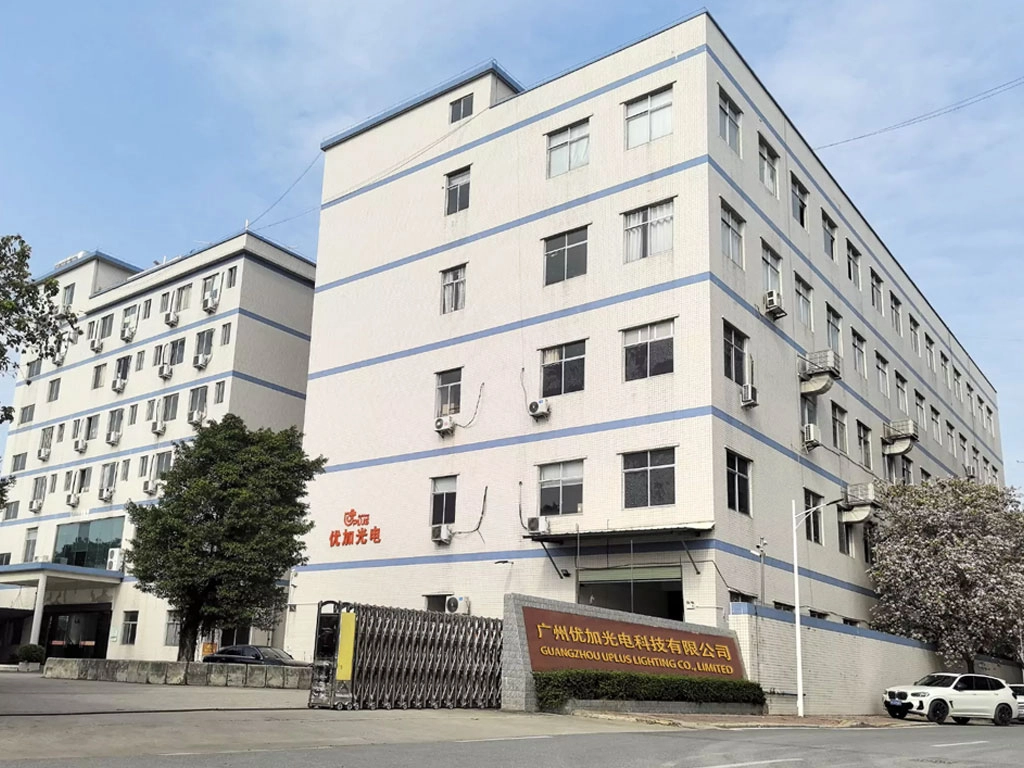
Uplus Lighting was established in 2012 in Guangzhou, China, and is a professional manufacturer specializing in high-end stage lighting products. We provide innovative and reliable lighting solutions for theaters, studios, cultural projects, concerts, and live events worldwide. With rich experience in product development, manufacturing, and export, we offer a wide product range covering professional lighting, entertainment lighting, and theater lighting to meet the needs of large performances, rental companies, distributors, and project clients. Since 2015, our products have been widely applied in major concerts, opera houses, TV programs, and large-scale events in China and abroad. We also support OEM orders and customized product development. A skilled production team and strict quality control ensure stable performance, consistent quality, and professional service trusted by global partners.
I have worked with several manufacturers; Uplus Lighting stands out on three fronts I value as a specifier:
- Product breadth and clarity: their portfolio includes moving head lights, strobe lights, led battery lights, static lights, led theatre lights, led follow spot light, stage effect lights, and laser lights—so you can standardize across many fixture roles.
- Engineering and customization: they support OEM/custom development which matters when a project requires a unique beam or control integration.
- Track record and QC: documented use in major concerts and TV programs since 2015 demonstrates production maturity and quality systems that reduce field failures.
If you evaluate LED stage light bars for a venue or rental fleet, consider Uplus Lighting as a candidate—especially where product customization, reliable supply, and support for large events are priorities.
Comparison and Decision Checklist
To summarize, here's a checklist I use when comparing LED stage light bars. Each line maps to a measurable spec or a verification step.
| Checklist Item | Why it matters | Verification |
|---|---|---|
| Watts & power factor | Ensures rack/venue power capacity | Datasheet & on-site measurement |
| Lumen output / lux data | Shows usable light at distance | IES files or lux tests |
| Beam angle & optics | Determines coverage and throw | Datasheet beam plots & on-axis lux |
| Color system & CRI/TM-30 | Color fidelity, skin tones, whites | Spectral data or TM-30/CRI numbers |
| Control (DMX/sACN/pixel protocol) | Integration with control networks | Protocol support list & RDM |
| Cooling & durability | Reliability in long shows | MTBF data, warranty, user references |
Frequently Asked Questions (FAQ)
1. What is the most important spec for a LED stage light bar?
There is no single most important spec—context matters. For general stage wash, prioritize lumen output/lux and color fidelity (CRI/TM-30). For effects and video, pixel density and refresh rate matter most.
2. How do I convert lumen claims to expected lux on stage?
Use vendor photometrics (lux at distance) or convert lumens to lux using beam angle and distance calculations. For authoritative methodology see illuminance documentation (Illuminance — Wikipedia).
3. Are RGB bars good enough for theater skin tones?
Not usually. RGB lacks a dedicated white emitter; RGBW or tunable white solutions produce more natural skin tones and better pastel reproduction. Check CRI and R9 values to assess red rendering for skin tones.
4. Do I need pixel-mappable bars for concerts?
Only if you require dynamic pixel effects or low-resolution video. Pixel bars add complexity (power, data) but enable powerful visual effects. For pure wash or conventional lighting cues, high-output wash bars are typically preferable.
5. How important is PWM frequency and flicker for cameras?
Very important. If fixtures will be filmed or live-streamed, ensure camera-safe PWM or linear dimming. Ask suppliers for flicker test reports or camera footage captured under broadcast conditions.
6. What standards should I reference when evaluating fixtures?
Common references include DMX512 for control (DMX512 — Wikipedia), IES guidance for photometry (IES), and CIE documents for color metrics (CIE).
If you want a tailored recommendation—based on venue dimensions, desired lux levels, and control architecture—I can run a short analysis and provide a prioritized shortlist of LED stage light bars (including fixtures from Uplus Lighting and alternatives for comparison).
Contact us to discuss your project or view product catalogs and IES files: reach out to Uplus Lighting for detailed specs, OEM/custom options, and sample photometrics. For direct inquiry and product listings, please contact Uplus Lighting's sales team or visit their product pages to request datasheets and IES files.
Mini LED Moving Heads vs Conventional Moving Heads: ROI
Weatherproofing and IP Ratings for Outdoor LED Stage Light Bars
LED vs Halogen Profile Stage Lights: Pros, Cons, Cost
Top 10 Mini LED Spot Moving Head Lights for Small Stages
IP-WASH1980
Does it support custom lighting effect programming? Which control consoles are compatible?
Supports full-function DMX512 programming, allowing customization of dimming, flicker, color, and other parameters, compatible with mainstream professional lighting consoles on the market.
IP BEAM 420
Can multiple lights achieve synchronized oscillation and lighting effects?
Supports DMX512 or master-slave mode linkage, ensuring synchronized operation across multiple lights without deviation.
IP Mini Blinder
Is the installation method flexible? What types of venues is it suitable for?
Supports hanging, wall mounting, and floor mounting; its mini design adapts to various outdoor venues.
IP-BF60
What environments can IP65 protection handle?
It's dustproof and waterproof, resisting rain, dew, and splashes, making it safe for both indoor and outdoor use.
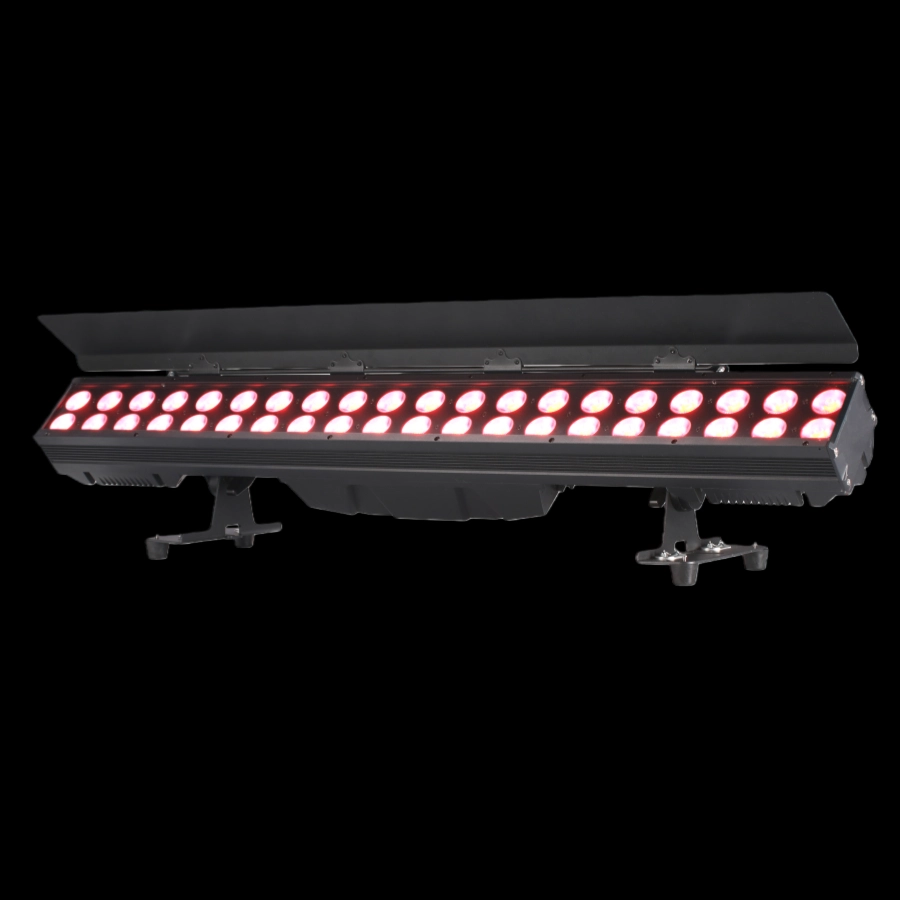
The IP65 two-row 40*10W RGBW led pixel link bar is a high-protection pixel bar light. It adopts a dual-row design with 40 10W RGBW four-in-one LED beads, supports pixel-level independent light control and multi-lamp linkage, and has an IP65 protection rating, making it rainproof and dustproof. It is compatible with DMX512 control and can present rich dynamic light effects, making it suitable for creating linear light and shadow effects in outdoor lighting, stage backgrounds, cultural and tourism landscapes and other scenarios.
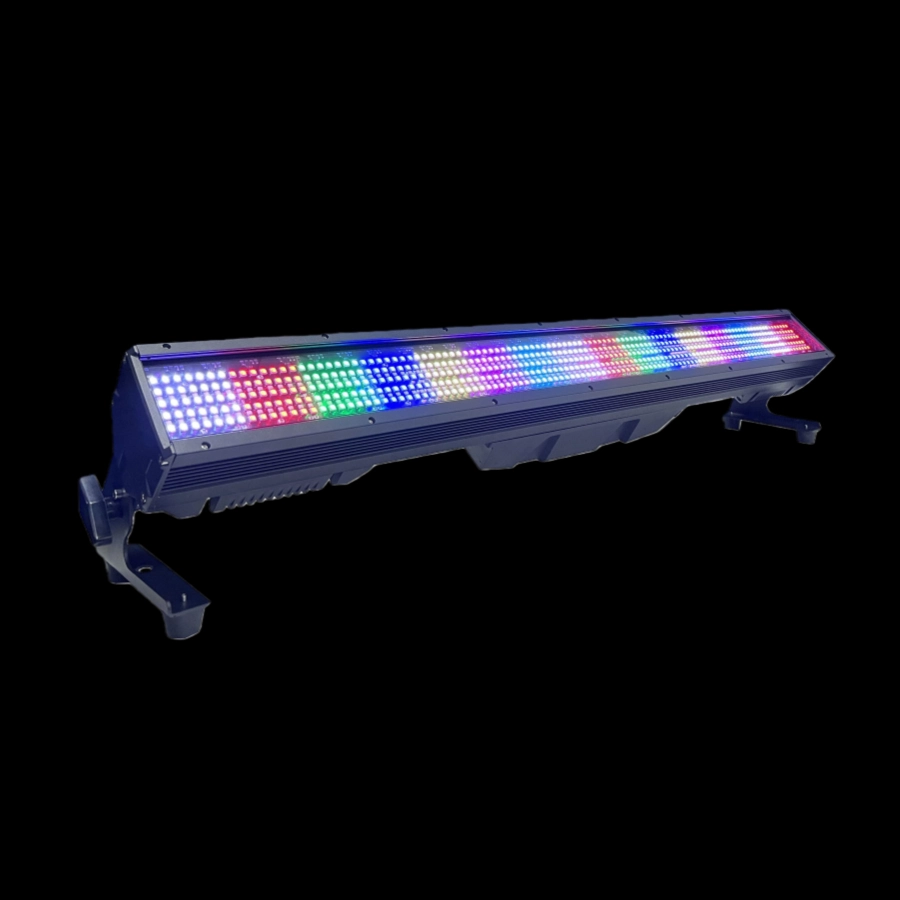
The IP65 waterproof 400W LED Link Strobe bar is a high-protection cascaded strobe light strip equipped with a 400W high-power LED light source. The strobe frequency is adjustable and supports seamless linkage of multiple lights. The IP65 protection rating can withstand outdoor wind, rain, and dust. It is compatible with DMX512 control, easy to install, and suitable for creating dynamic light and shadow in outdoor performances, cultural tourism night tours, architectural lighting and other scenarios.
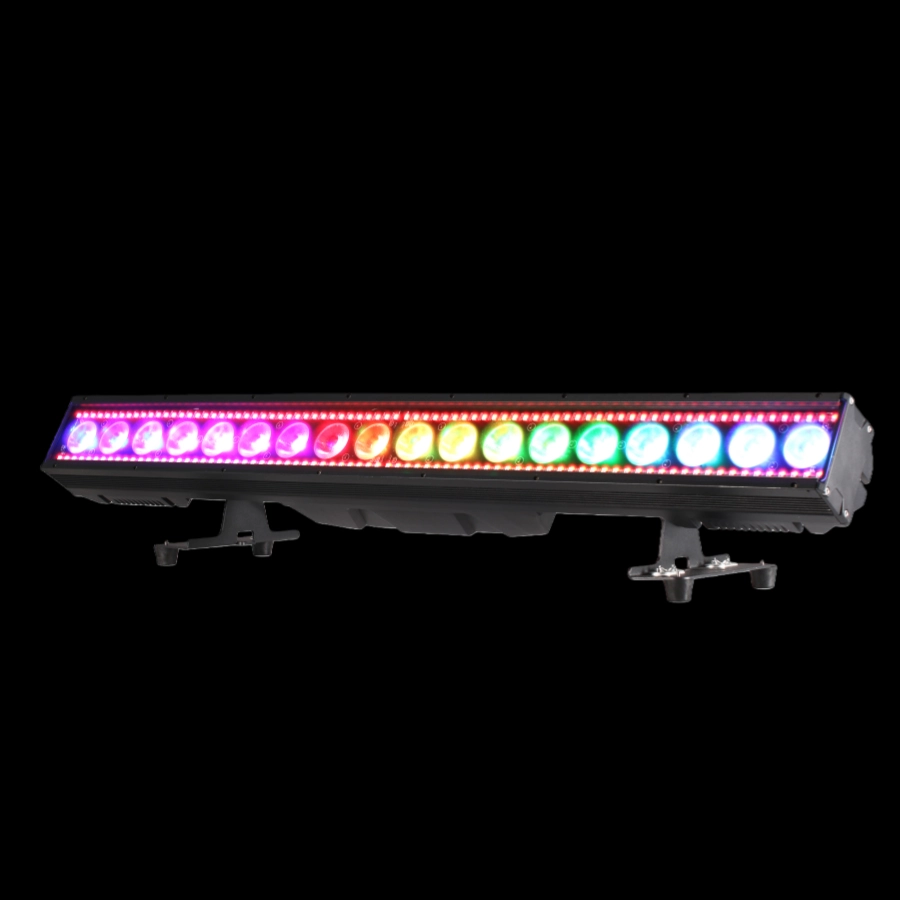
The IP65 waterproof 18*30W RGBWAUV LED pixel bar is a high-performance outdoor pixel bar light. It is equipped with 18 30W RGBWAUV six-in-one LED beads, supports pixel-level independent light control, and can present rich colors and dynamic light effects. With an IP65 protection rating, it is highly dustproof and waterproof, compatible with multiple control modes such as DMX512, flexible splicing and easy installation, and suitable for linear light and shadow shaping in outdoor performances, cultural and tourism lighting, stage backgrounds and other scenarios.
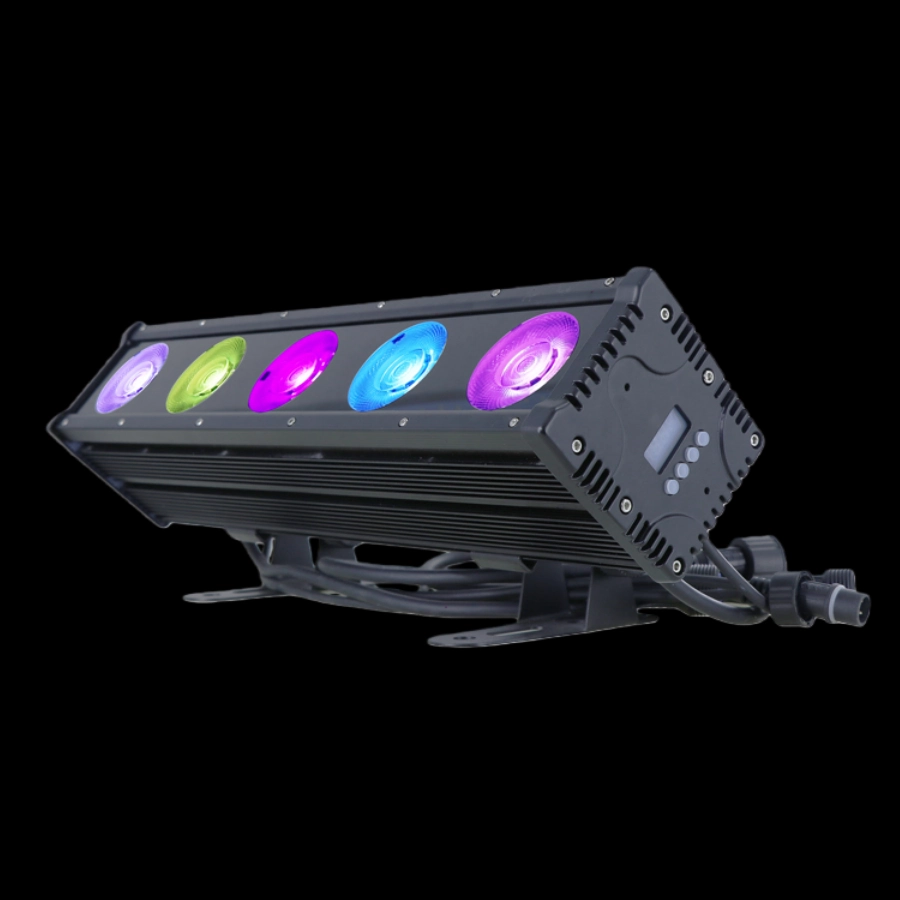
The Outdoor 5x45W COB Pixel BAR is a high-performance outdoor COB pixel light strip, equipped with five 45W RGBW four-in-one COB LEDs, each of which can be independently controlled, resulting in smooth color transitions and abundant brightness. It is IP65 protected against wind, rain, and dust, and supports DMX512/RDM/master-slave control, making it suitable for creative lighting designs in scenarios such as cultural and tourism landscape lighting, dynamic lighting of building facades, and outdoor stage effect lighting.
If you have any comments or good suggestions, please leave us a message, later our professional staff will contact you as soon as possible.
Lighting Innovators
Uplus Lighting is a leading integrated company specializing in R&D, design, production, and sales of stage lighting solutions.
 Scan QR Code
Facebook
Instagram
YouTube
VK