






How to Size Beam Angle and Lux for Moving Head Stage Lights
- Understanding Beam Angle, Lux and Their Impact
- Beam angle versus beam profile
- Lux, lumens and the math you need
- Why beam angle and lux matter in live events
- Practical Steps to Size Beam Angle and Lux for Moving Head Lights
- Step 1 — Define the application and target lux
- Step 2 — Measure throw distance and calculate beam diameter
- Step 3 — Translate lumen output to lux at target
- Worked example and comparison table
- Design Considerations, Fixtures and Measurement
- Fixture output, optics and real photometrics
- Using a lux meter and validating design on-site
- Common mistakes and troubleshooting
- Uplus Lighting: Capabilities, Products and How We Support Sizing Decisions
- Company overview and track record
- How our moving head lights meet sizing needs
- Products, differentiation and customization
- Measurement Tools, Standards and Further Reading
- Standards and authoritative sources
- Recommended measurement equipment
- When to request photometric files
- FAQs
- 1. How do I convert manufacturer lumens to on-stage lux?
- 2. Which beam angle should I pick for a 20 m throw to a mid-stage focus?
- 3. Do fog/haze/clouds change lux?
- 4. How accurate are manufacturer lumen specs?
- 5. Can one moving head serve both wash and beam roles?
- Contact & Product Inquiry
I have spent years specifying and deploying led moving beam head stage light systems for theatres, TV studios, concerts, and touring shows. In this article I summarize the essential theory and practical workflow you need to correctly size beam angle and target illuminance (lux) for moving head fixtures — including formulas, worked examples, measurement best practices, and vendor/fixture considerations. I also show how to translate a fixture's photometric data into on-stage lux predictions and provide a comparison table to help you choose the appropriate beam for a given throw distance and application.
Understanding Beam Angle, Lux and Their Impact
Beam angle versus beam profile
Beam angle defines the full spread of a light beam where the intensity falls to 50% of the central axis value (often called the FWHM — full width at half maximum). A tight beam angle (e.g., 1–5°) produces a narrow, high-intensity shaft useful for aerial effects and long-throw applications; a wide beam angle (e.g., 15–40°) produces softer, flood-like coverage. The physical optics inside an led moving beam head stage light (reflectors, lenses, apertures, and gobos) determine the beam profile and how intensity is distributed across that angle.
Lux, lumens and the math you need
Illuminance (lux, lx) is luminous flux per unit area (lumens per square meter). The core relationship is:
lux = lumens / area
For a conical beam at distance d and beam half-angle θ (θ = beam_angle/2), beam radius r = d × tan(θ), so beam area A = π × r² = π × (d × tan(θ))². You can find the formal definition of lux and illuminance on Wikipedia: https://en.wikipedia.org/wiki/Lux_(unit).
Why beam angle and lux matter in live events
Choosing the wrong beam angle produces either blown-out hotspots or wasted light and insufficient coverage. The correct combination ensures visual focus, even coverage of acting areas or set pieces, and predictable intensity for camera-controlled productions. In practice I always start by defining the target lux range for the task (e.g., key area, general wash, effect) and then match fixtures and positions to that target.
Practical Steps to Size Beam Angle and Lux for Moving Head Lights
Step 1 — Define the application and target lux
Start by answering: what is the lighting role? Typical target ranges used in practice (industry guidelines and manufacturer recommendations vary):
- Accent / aerial beam: 5,000–50,000 lx at focus point (very dependent on throw/dist and fixture).
- Spot / performer key light: 300–2,000 lx (stage depending, TV or HD requires higher levels).
- General wash: 200–800 lx.
These are practical ranges used by designers; exact values depend on camera requirements, distance, and artistic intent. For general reading on stage lighting principles see the overview on Wikipedia: https://en.wikipedia.org/wiki/Stage_lighting.
Step 2 — Measure throw distance and calculate beam diameter
Measure the distance from fixture to target (d). Choose candidate beam angles from your fixture's spec sheet (e.g., 2°, 5°, 15°, 30°). Compute beam diameter (D = 2 × d × tan(beam_angle/2)) and area A = π × (D/2)².
Step 3 — Translate lumen output to lux at target
Manufacturers often provide either total luminous flux (lumens) or on-axis luminous intensity (candelas). If you have total lumens (Φ), a first-order estimate of average lux across the beam at distance d is:
lux_avg ≈ Φ / A
Note: this assumes uniform distribution inside the beam cone which is an approximation — most moving heads have higher center intensity. If you have peak candela (I_peak), illuminance on-axis is:
lux_on-axis = I_peak / d²
Use the data provided by the manufacturer where possible (photometric files, IES files) and verify with a lux meter in-situ.
Worked example and comparison table
I will demonstrate with an example fixture that has a nominal total lumen output of 20,000 lm (example value for a high-output LED moving beam — use your fixture's published lumen or IES file for accurate results). I calculate lux at 10 m for three beam angles: 2°, 10°, and 30°.
| Parameter | 2° beam | 10° beam | 30° beam |
|---|---|---|---|
| Distance (d) | 10 m | ||
| Beam radius r = d × tan(θ/2) | r = 10 × tan(1°) ≈ 0.175 m | r = 10 × tan(5°) ≈ 0.873 m | r = 10 × tan(15°) ≈ 2.679 m |
| Beam area A = πr² (m²) | 0.096 m² | 2.392 m² | 22.55 m² |
| Estimated average lux = Φ / A (Φ = 20,000 lm) | ≈ 208,333 lx | ≈ 8,364 lx | ≈ 887 lx |
Interpretation: the narrow 2° beam concentrates the same 20,000 lumens into a tiny area producing extremely high lux suitable for aerial shafts and long-throw beams. The 30° beam produces a usable wash-level illuminance at 10 m. These numbers are illustrative; real fixtures have non-uniform distributions and losses (optical inefficiencies, beam shaping), so always consult IES/photometric data and verify on-site with a meter. See the lux unit definition here: https://en.wikipedia.org/wiki/Lux_(unit).
Design Considerations, Fixtures and Measurement
Fixture output, optics and real photometrics
Not all manufacturers provide total lumen figures; many provide lux-at-distance tables or IES files that represent the fixture's real-world distribution. I always ask suppliers for photometric files (IES/LM-63) and, if possible, on-axis candela charts. Photometric files remove guesswork because they model the actual beam falloff and central peak. The Illuminating Engineering Society (IES) is an authoritative resource for photometry and standards: https://www.ies.org/.
Using a lux meter and validating design on-site
After calculating target lux and selecting beam angles/positions, validate with a calibrated lux meter. Measure at the same tilt/pan and distance you used in calculations. For television or broadcast, measure with camera present because reflectance and camera exposure can change the perceived brightness. I recommend logging several measurements (center, mid-beam, edge) to understand falloff and uniformity.
Common mistakes and troubleshooting
Common pitfalls include:
- Using total lumens as if distribution were uniform — this overestimates edge lux.
- Neglecting optics losses from gobos, prisms, frost filters, or haze which reduce on-target lux.
- Assuming manufacturer lumen numbers are directly comparable across technologies without checking measurement standards.
To troubleshoot: swap to a tighter or wider beam angle and re-measure; check fixture firmware or lamp mode that may change output; and account for environmental conditions (haze improves visible beams but not target lux).
Uplus Lighting: Capabilities, Products and How We Support Sizing Decisions
Company overview and track record
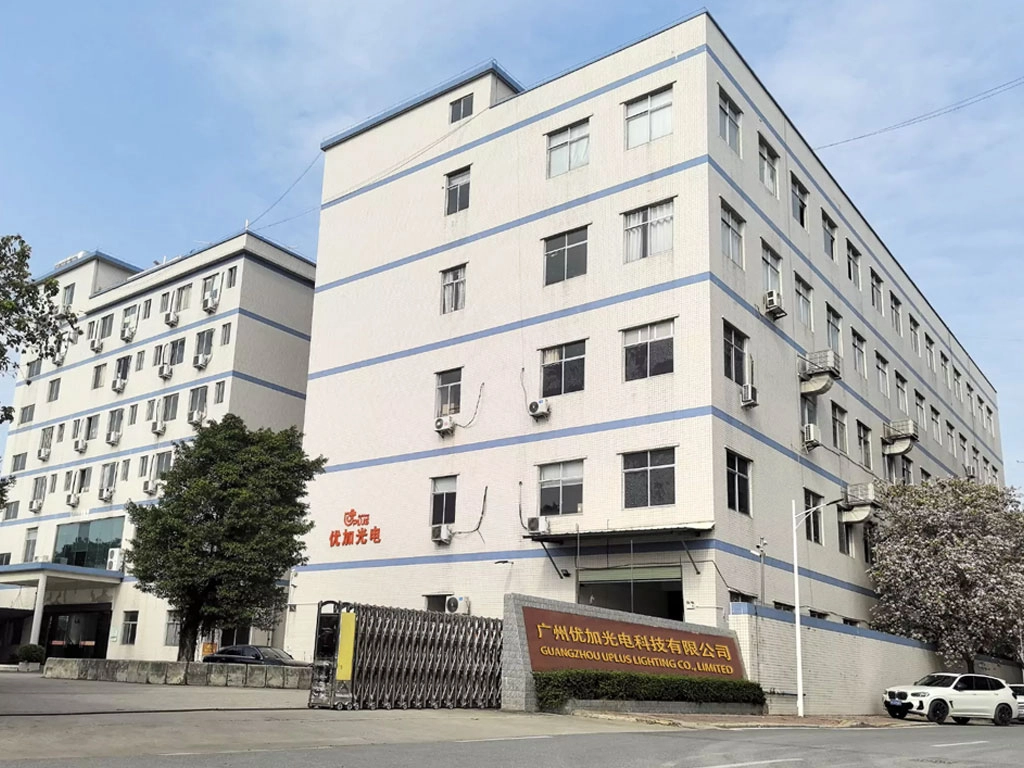
Uplus Lighting was established in 2012 in Guangzhou, China, and is a professional manufacturer specializing in high-end stage lighting products. We provide innovative and reliable lighting solutions for theaters, studios, cultural projects, concerts, and live events worldwide. With rich experience in product development, manufacturing, and export, we offer a wide product range covering professional lighting, entertainment lighting, and theater lighting to meet the needs of large performances, rental companies, distributors, and project clients. Since 2015, our products have been widely applied in major concerts, opera houses, TV programs, and large-scale events in China and abroad. We also support OEM orders and customized product development. A skilled production team and strict quality control ensure stable performance, consistent quality, and professional service trusted by global partners.
How our moving head lights meet sizing needs
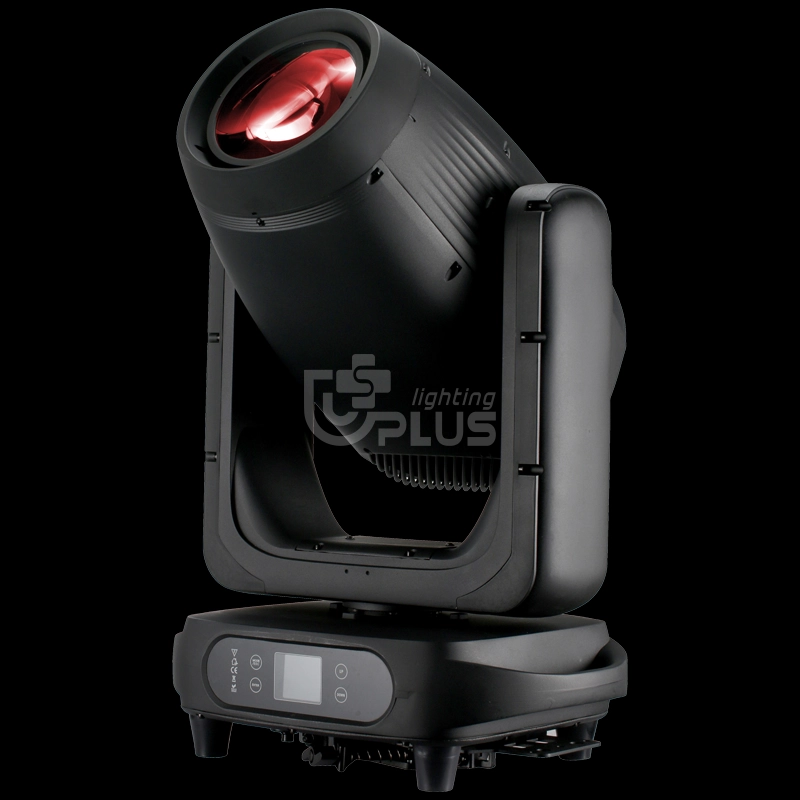
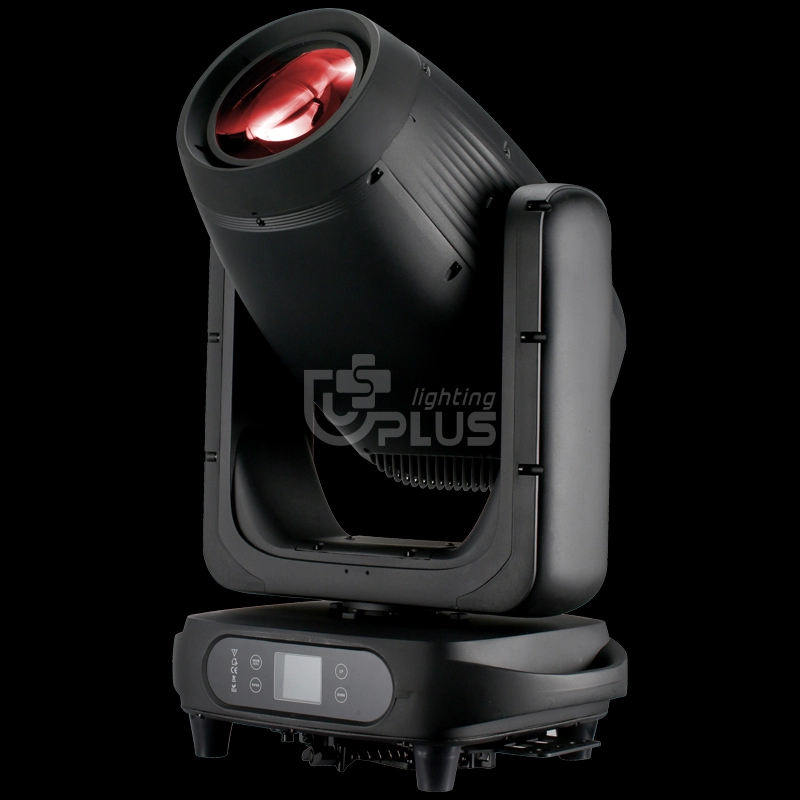
Our led moving beam head stage light portfolio includes tight-beam (1–5°) narrow-beam fixtures and selectable zoom fixtures (e.g., 2–40°) enabling a single fixture to perform both aerial beam and wash roles. We publish photometric files for many models to help designers predict lux levels and beam profiles. Our fixtures are engineered with high-efficiency optics and modular LED engines to maintain output while controlling thermal performance — this consistency simplifies lux predictions across long events or tours.
Products, differentiation and customization
Uplus Lighting's main product lines include moving head lights, strobe lights, led battery lights, static lights, led theatre lights, led follow spot light, stage effect lights, and laser lights. Our competitive strengths are:
- Strong R&D and optics engineering to produce stable beam profiles and reliable photometric data.
- Extensive field experience in concerts and broadcast events ensuring products meet real-world durability and serviceability requirements.
- Custom OEM capability for tailored beam/optical packages and photometric requirements.
If you'd like help translating fixture photometric files into on-stage lux predictions, or need custom beam angles and output tuning for a project, my team and I can provide photometric analysis, sample lux layouts, and on-site commissioning.
Measurement Tools, Standards and Further Reading
Standards and authoritative sources
For photometric methodology and industry best practices consult authoritative organizations such as the Illuminating Engineering Society (IES) for measurement and reporting guidance: https://www.ies.org/. For general definitions of lux and illuminance see the Lux page on Wikipedia: https://en.wikipedia.org/wiki/Lux_(unit). For practical lighting basics used by technicians, manufacturer knowledge bases such as ETC provide valuable primers (manufacturer resources vary by vendor): https://www.etcconnect.com/.
Recommended measurement equipment
Use a calibrated lux meter from a reputable brand (ensure measurement resolution covers your expected range). For beam profiling, a camera with neutral density filters and photometric software can help visualize distribution. Always document height, fixture mode, beam-settings, and any modifiers (gobos, frost) when recording measurements.
When to request photometric files
Always request an IES or LDT file before firming fixture choices. These files allow you to import the fixture into lighting design software (Vectorworks, WYSIWYG, Capture) and produce accurate lux plots. If a vendor cannot supply photometric data, demand on-site testing or choose a manufacturer that provides full photometric transparency.
FAQs
1. How do I convert manufacturer lumens to on-stage lux?
Use lux ≈ lumens / beam area as a first approximation. Better accuracy comes from IES files or manufacturer lux-at-distance charts. Always validate with a lux meter on-site.
2. Which beam angle should I pick for a 20 m throw to a mid-stage focus?
Decide desired beam diameter on mid-stage. For example, a 5° beam at 20 m gives a diameter ≈ 3.49 m (D = 2 × 20 × tan(2.5°)). If that diameter and the fixture’s luminous output meet your lux target, use 5°. Otherwise pick tighter or wider beams accordingly and re-calculate lux.
3. Do fog/haze/clouds change lux?
Haze makes the beam visible (scattering light), improving the perceived beam but it does not increase the lux incident on the target surface significantly. It redistributes some light via scattering but does not replace accurate on-surface measurements.
4. How accurate are manufacturer lumen specs?
Manufacturer lumen specs vary in measurement method; prefer IES photometric files or candela curves. Lumen specs alone can be misleading for directed beams because distribution matters more than total flux.
5. Can one moving head serve both wash and beam roles?
Yes — zoom moving head fixtures with a large adjustable beam angle (e.g., 2–40°) can serve both roles, but note that optical compromises affect peak intensity and distribution. High-output narrow-beam fixtures often outperform zoom fixtures for tight aerial beams.
Contact & Product Inquiry
If you need a customized lux study, photometric export, or product recommendation for led moving beam head stage light fixtures, contact Uplus Lighting. We can provide IES files, sample measurements, and OEM customization to meet your project requirements. View our product range or request a quotation for moving head lights, strobe lights, led battery lights, static lights, led theatre lights, led follow spot light, stage effect lights, and laser lights by contacting our sales team.
References
- Lux unit (definition): https://en.wikipedia.org/wiki/Lux_(unit)
- Stage lighting overview: https://en.wikipedia.org/wiki/Stage_lighting
- Illuminating Engineering Society: https://www.ies.org/
- Manufacturer resources and technical guidance (example): https://www.etcconnect.com/
DMX Moving Head Lights: Types, Control, Specs & Buying Guide
Top 10 bee eye moving head light Manufacturers and Supplier Brands
Best Moving Head Lights 2026: Buyer's Guide for Stage Pros
Top 10 LED Moving Head Strobe Lights for DJs and Venues

1000W Waterproof BSWF 4-in-1 Moving Head combines beam, spot, wash, and frame effects in one. IP-rated waterproof design, high-brightness output, precise control, ideal for outdoor & indoor stage events.
If you have any comments or good suggestions, please leave us a message, later our professional staff will contact you as soon as possible.
Lighting Innovators
Uplus Lighting is a leading integrated company specializing in R&D, design, production, and sales of stage lighting solutions.
 Scan QR Code
Facebook
Instagram
YouTube
VK