





Mini LED Moving Head Light vs Standard Moving Head: Comparison
- Understanding Moving Head Lighting
- Types and roles: spot, wash, beam
- What I mean by mini and standard
- Industry context and standards
- Technical Comparison: Mini LED vs Standard Moving Head
- Optical performance: lumen output, beam quality, CRI
- Power, heat, and longevity
- Serviceability and maintenance
- Practical Considerations for Buyers and Rental Houses
- Cost of ownership: purchase price and operating cost
- Weight, rigging, and transport
- Control, protocols, and integration
- Side-by-Side Comparison (Typical Ranges)
- Choosing the Right Fixture: Match Technology to Use Case
- Small venues and TV studios
- Touring and rental fleets
- Fixed installs and houses of worship
- Real-World Tests and Metrics I Use
- Photometric testing
- On-site reliability and failure modes
- Operational checklist
- Uplus Lighting — Manufacturer Profile and Why It Matters
- Buying Recommendations — My Practical Advice
- Match feature set to the venue
- Evaluate service and spares
- Test before purchase
- Frequently Asked Questions (FAQ)
- 1. Are mini LED moving head lights as bright as standard moving heads?
- 2. How long do LED moving heads last compared to HID fixtures?
- 3. Can mini LED moving heads be used outdoors?
- 4. Which is better for touring: mini LED or standard moving head?
- 5. How important is CRI / TLCI in choosing moving heads?
- 6. What control protocols should I look for?
- Contact and Next Steps
I have worked with theatres, touring productions, rental houses, and fixed install projects for over a decade, and I frequently evaluate new fixture classes against the established standards. In this article I compare the mini LED moving head light against standard moving head fixtures, focusing on performance, reliability, operating cost, control, and application fit. I use verifiable sources where appropriate and include practical guidance for lighting designers, production managers, and rental buyers deciding which technology best meets their needs.
Understanding Moving Head Lighting
Types and roles: spot, wash, beam
Moving head fixtures fall into three practical categories: spot (with gobos and framing), wash (soft field, variable beam), and beam (narrow high-intensity shaft). Both mini LED moving head lights and standard moving heads (historically lamp-based or larger LED engines) are available across these categories. The choice depends on the required beam quality, gobo/shaping features, zoom range, and on-stage function. For a quick technical background on stage lighting roles, see the stage lighting overview on Wikipedia.
What I mean by mini and standard
When I say mini LED moving head light I refer to compact LED moving heads using concentrated LED arrays, often with smaller form factors (lightweight housings, integrated optics) designed for tight rigging, TV/streaming studios, small theatres, and mobile rigs. Standard moving head refers to full-size fixtures: larger LED moving heads with more powerful LED engines or traditional discharge/HID lamp-based moving heads still in service in many rental fleets and venues. The differences impact power, cooling, optics, and serviceability.
Industry context and standards
Lighting fixtures must meet electrical and photometric standards. Organizations like the Illuminating Engineering Society (IES) and theatre technology bodies (e.g., USITT) set recommended practices for photometry, beam measurement, and safety. These frameworks guide how we compare luminous flux, beam uniformity, and color metrics across fixture types.
Technical Comparison: Mini LED vs Standard Moving Head
Optical performance: lumen output, beam quality, CRI
Mini LED moving head lights use denser LED arrays and advanced small-scale optics. They often deliver respectable lumen output for their size and good color mixing, but their physical optic aperture limits maximum absolute output and tightness of the beam compared to larger standard fixtures. Color rendering (CRI/TLCI) has improved across LED fixtures; high-end mini LED engines now achieve CRI values suitable for broadcast and theatre. For detailed information on LED technology differences, see the mini-LED overview.
Power, heat, and longevity
LEDs generally run cooler and last longer than discharge lamps. Mini LED moving head lights favor lower power consumption (and lower heat load) because of their efficient optics and LED binning. Standard moving heads with larger LED engines or HID lamps may require more robust cooling and periodic lamp replacement. For lifecycle considerations, LED fixtures commonly have rated LED lifetimes (e.g., 30,000–50,000 hours) compared to HID lamp lifetimes measured in thousands of hours and replacement lamp costs.
Serviceability and maintenance
Because of their compact packaging, mini LED moving head lights can be harder to service in the field; component access is often more constrained. Standard moving heads (especially larger models used by rental companies) are designed for modular servicing (swap-out lamp modules, fans, or optics). For rental businesses requiring rapid turnaround, modular maintenance is a significant operational advantage.
Practical Considerations for Buyers and Rental Houses
Cost of ownership: purchase price and operating cost
Purchase price varies widely by brand and features. Mini LED moving head lights are attractive for their lower upfront cost and lower power consumption. However, total cost of ownership must include maintenance, expected lifespan, and resale value. Standard fixtures may command higher purchase prices but can offer higher output and easier field servicing, delivering value in high-demand rental and touring environments.
Weight, rigging, and transport
Mini LED fixtures are lighter and smaller, reducing rigging time and freight costs—an important factor for touring acts and tight flyspace installations. Standard moving heads can be heavier, requiring more substantial truss and motor considerations, but they often provide features (larger zoom, more robust framing shutters) necessary for large-scale productions.
Control, protocols, and integration
Both mini LED and standard moving heads typically support DMX, RDM, Art-Net, and sACN. Advanced fixtures may include pixel-mapping and networked control features. Confirm firmware update policies and manufacturer support; in my experience, strong remote firmware support and robust RDM implementation significantly reduce setup issues on show day.
Side-by-Side Comparison (Typical Ranges)
| Parameter | Mini LED Moving Head Light (typical) | Standard Moving Head (typical) |
|---|---|---|
| Form factor / weight | Compact; 6–15 kg | Larger; 12–30+ kg |
| Power consumption | 60–300 W | 150 W–1,200 W (LED engines or HID lamps) |
| Luminous output | 5,000–40,000 lumens (engine dependent) | 10,000–100,000+ lumens |
| Beam angle / zoom | Tighter optics but narrower zoom range (e.g., 2°–40°) | Wider zoom options and larger optic apertures (e.g., 1.5°–55°) |
| CRI / color quality | High-end models CRI 90+, suitable for broadcast | Comparable CRI with High Quality LED engines; older HID units rely on lamp color temp |
| Maintenance | Low maintenance, but less modular (component-level service needed) | Modular replacement parts; lamp swaps (if HID) |
| Typical applications | TV/streaming, small theatres, clubs, fringe events, mobile rigs | Large concerts, festivals, theatres, houses of worship, high-output installations |
Data above represents typical ranges seen across manufacturers and product lines. For industry context on lighting photometry and fixture roles, consult Wikipedia: Stage lighting and guidance from professional bodies such as the Illuminating Engineering Society (IES).
Choosing the Right Fixture: Match Technology to Use Case
Small venues and TV studios
If you run a TV studio, webstream setup, or small theatre, mini LED moving head lights are compelling because of low noise (smaller fans), compact footprint, efficient power draw, and sufficient output for controlled environments. They often provide excellent color mixing and low maintenance—ideal where staff resources for fixture servicing are limited.
Touring and rental fleets
Rental houses that service large shows still rely heavily on standard moving head fixtures for their absolute output, rugged modularity, and feature sets (large zoom, multiple gobo wheels, framing shutters). Mini LED units complement fleets by offering lightweight options and cost-effective fills, but they rarely replace high-output heads in arena tours where long throws and aerial beams are required.
Fixed installs and houses of worship
For fixed installs, the decision centers on long-term reliability and maintenance cycles. LED fixtures reduce lamp replacement costs and lower energy bills. If the venue requires high-output front-of-house luminaires or very narrow beams for architectural effects, larger standard moving heads may still be preferable.
Real-World Tests and Metrics I Use
Photometric testing
I always request photometric files (IES/LM-79) where available and run the fixtures in representative configurations to measure lux at focus distances, beam uniformity, and gobo projection sharpness. A proper test helps confirm manufacturer claims and ensures the mini led moving head light meets expected performance in-situ. Industry-standard photometric practices are described by IES documents and photometry standards.
On-site reliability and failure modes
On-site testing reveals common failure modes: fan wear, motor backlash, encoder drift in pan/tilt, and LED driver issues. In my experience, mini fixtures with high-quality drivers and thermal management perform very well; cheaper units cut corners in cooling and motor quality, leading to higher failure rates under tour stress.
Operational checklist
Before procurement I recommend checking: control protocol support (Art-Net/sACN), firmware update path, spare parts availability, fan noise levels (dBA at 1 m), IP rating for outdoor use, and modularity for field repairs. This checklist reduces surprises during load-in or installation.
Uplus Lighting — Manufacturer Profile and Why It Matters
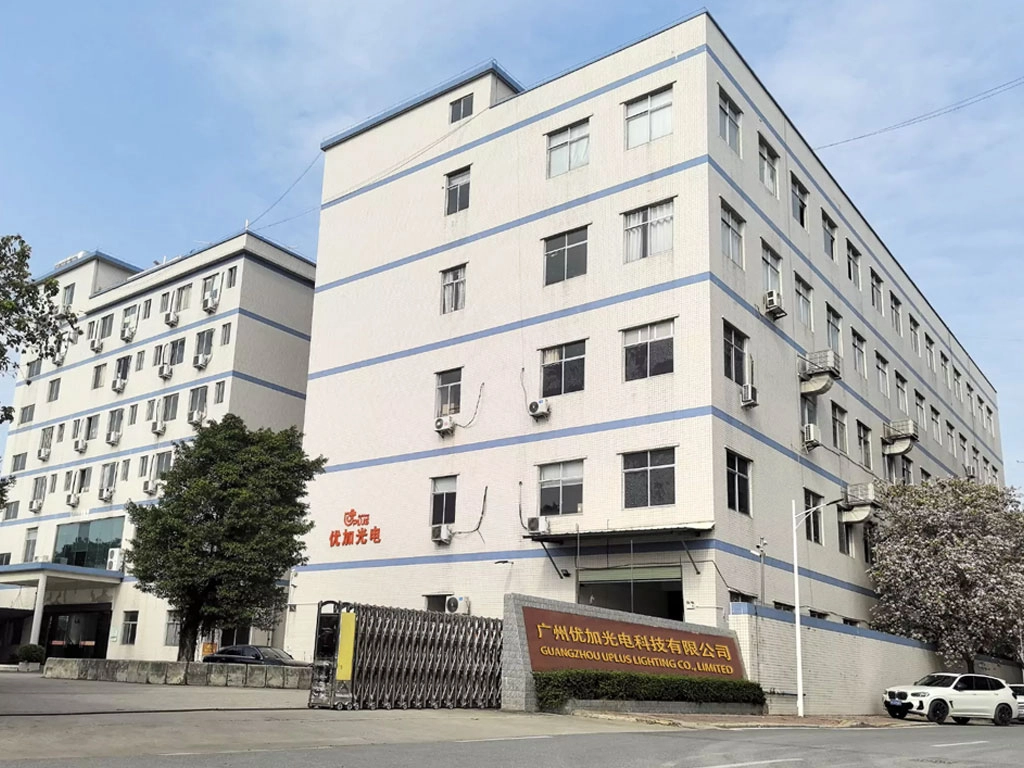
Uplus Lighting was established in 2012 in Guangzhou, China, and is a professional manufacturer specializing in high-end stage lighting products. I have reviewed their product philosophy and factory capabilities: they provide innovative and reliable lighting solutions for theaters, studios, cultural projects, concerts, and live events worldwide. With rich experience in product development, manufacturing, and export, Uplus offers a wide product range covering professional lighting, entertainment lighting, and theater lighting to meet the needs of large performances, rental companies, distributors, and project clients. Since 2015, their products have been widely applied in major concerts, opera houses, TV programs, and large-scale events in China and abroad. They also support OEM orders and customized product development. A skilled production team and strict quality control ensure stable performance, consistent quality, and professional service trusted by global partners.
Uplus Lighting's core product families include moving head lights, strobe lights, led battery lights, static lights, led theatre lights, led follow spot light, stage effect lights, and laser lights. What stands out to me about Uplus is their combined focus on product R&D and factory-level QC: this helps bridge the gap between cost-effective mini LED moving head light designs and the reliability standards expected by rental fleets and broadcasters. For buyers, that means access to compact, energy-efficient solutions as well as larger, high-output fixtures—backed by OEM capability and export experience.
Buying Recommendations — My Practical Advice
Match feature set to the venue
Prioritize beam output, zoom range, and gobo options for large venues. For broadcast and small stages, prioritize low noise, compactness, and high CRI. If budget is constrained, a mix of mini led moving head light for fills and a smaller number of high-output standard heads for beams/front wash is often the optimal combination.
Evaluate service and spares
Ensure the manufacturer provides spare parts, firmware support, and clear maintenance documentation. For rental operations, request a support SLA and volume discount on spare modules—these lower lifecycle costs and downtime.
Test before purchase
Ask for loan units or sample photometric tests. Seeing the fixtures in your actual environment—under the rigging, with your control system, and in the client’s sightlines—avoids specification mismatches.
Frequently Asked Questions (FAQ)
1. Are mini LED moving head lights as bright as standard moving heads?
Short answer: Generally no—mini LED units have excellent lumen efficiency for their size but cannot match the absolute lumen output of the largest standard moving heads. However, for many applications (studio, small theatre, club), a mini led moving head light provides sufficient brightness and better energy efficiency.
2. How long do LED moving heads last compared to HID fixtures?
LED engines typically have rated lifespans of 30,000–50,000 hours or more. HID lamps require periodic replacement (usually a few thousand hours depending on lamp type). LEDs therefore offer lower replacement cost and predictable depreciation, but driver electronics and fans remain wear items.
3. Can mini LED moving heads be used outdoors?
Only if the fixture has an appropriate IP rating (commonly IP65 for outdoor-rated luminaires). Many mini led moving head light models are designed for indoor use; check the IP rating for outdoor events and whether the fixture has corrosion-resistant finishes and sealed optics.
4. Which is better for touring: mini LED or standard moving head?
Both have roles: standard moving heads provide necessary high output and modular repairability for arena tours; mini led moving head lights reduce freight weight and power draw and excel as stage fills or for set pieces. A hybrid fleet is the practical approach.
5. How important is CRI / TLCI in choosing moving heads?
For broadcast and television, high TLCI/CRI is crucial to ensure accurate skin tones and color fidelity. For concerts and architectural effects, color saturation and output may be prioritized. Verify photometric data and camera tests when specifying fixtures for film/TV.
6. What control protocols should I look for?
Ensure support for DMX512, RDM (for remote device management), and modern network protocols like Art-Net and sACN. For pixel-mapped effects, check for pixel mapping or built-in matrix control features.
Contact and Next Steps
If you want to evaluate specific mini led moving head light models or need a mixed-fleet specification for a project, I recommend starting with a short list of required beam angles, throw distances, and noise constraints. For product options and custom OEM support, contact Uplus Lighting — their product range includes moving head lights, strobe lights, led battery lights, static lights, led theatre lights, led follow spot light, stage effect lights, and laser lights, and they support customization and OEM orders to fit project needs.
To discuss your project requirements or request photometric files and loan units, please reach out to Uplus Lighting or your local distributor to arrange a demo and get tailored recommendations for your venue or tour.
Top 10 stage and theatre lighting Manufacturers and Supplier Brands in China
Weatherproofing and IP Ratings for Outdoor LED Stage Light Bars
Top 10 led wash light moving head Manufacturers and Supplier Brands in China
Top 10 stage moving head light Manufacturers and Supplier Brands

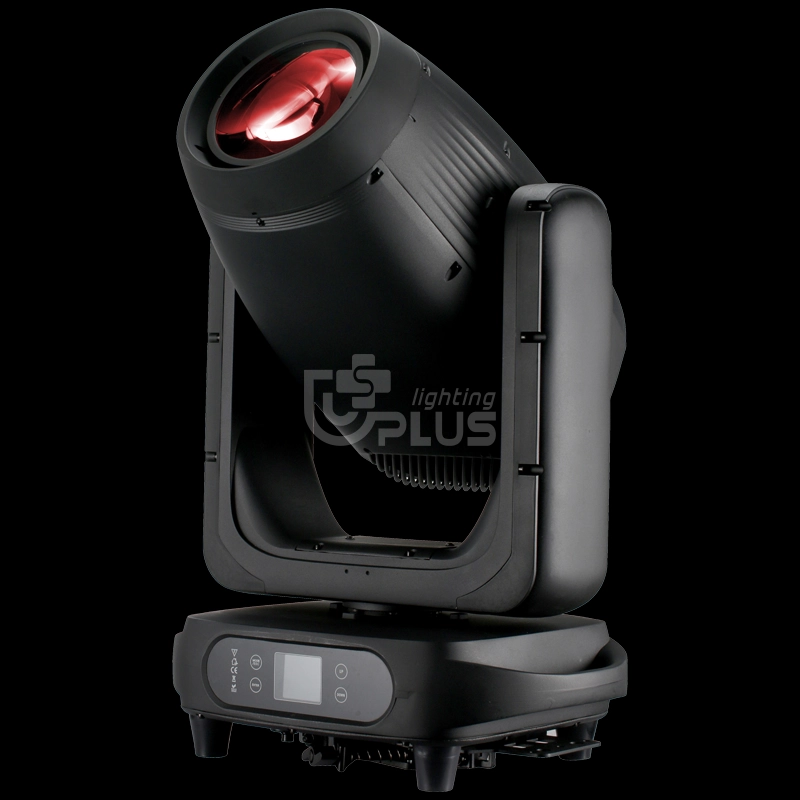
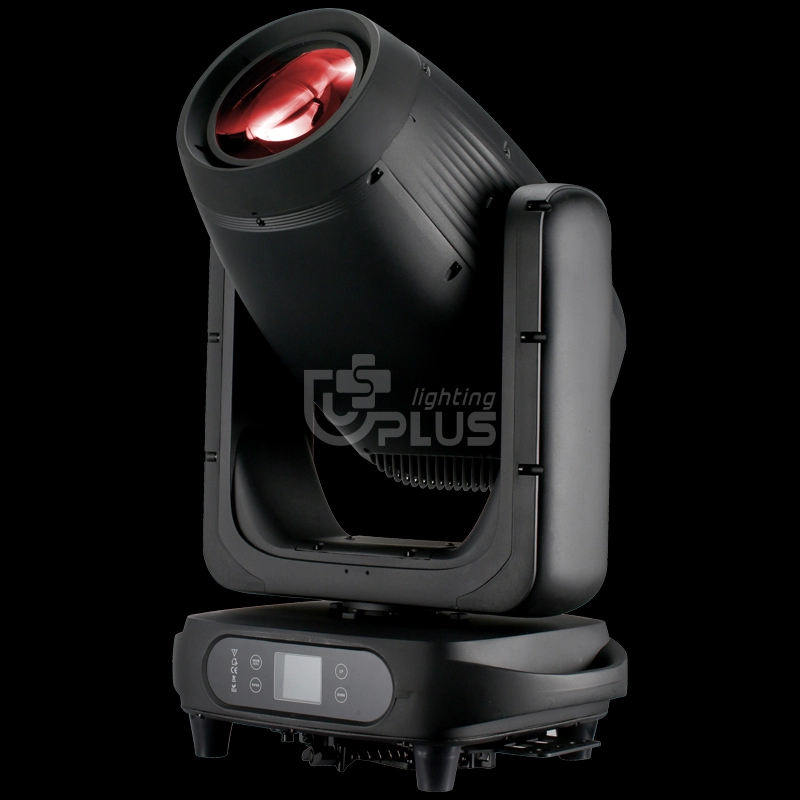
1000W Waterproof BSWF 4-in-1 Moving Head combines beam, spot, wash, and frame effects in one. IP-rated waterproof design, high-brightness output, precise control, ideal for outdoor & indoor stage events.
If you have any comments or good suggestions, please leave us a message, later our professional staff will contact you as soon as possible.
Lighting Innovators
Uplus Lighting is a leading integrated company specializing in R&D, design, production, and sales of stage lighting solutions.
 Scan QR Code
Facebook
Instagram
YouTube
VK