






How to Spec Moving Head Wash Lights for Theaters and Clubs
- Understanding venue needs and artistic goals
- 1. Venue type and sightlines
- 2. Programming and control requirements
- 3. Operational constraints: power, rigging and maintenance
- Key technical specifications to evaluate
- Optical output and beam control
- Color quality: LEDs, CRI/TLCI and color mixing
- Control, effects and refresh/flicker performance
- Practical selection and deployment considerations
- Power, thermal management and duty cycle
- Rigging, weight and mounting options
- Serviceability and spare parts
- Comparative guidance: what to spec for theaters vs clubs
- Cost vs performance trade-offs
- Procurement checklist and commissioning tips
- Pre-purchase test and verification
- Specification checklist
- Commissioning and documentation
- Why brand and supplier selection matters — a practical case
- How I evaluate supplier claims
- FAQ
- Q1: What’s the difference between a moving head wash and a spot or beam fixture?
- Q2: How many moving head wash lights do I need for a 12 m × 8 m stage?
- Q3: Are LED moving head washes flicker-free for TV broadcasts?
- Q4: Should I prioritize CRI or TLCI for theatre work?
- Q5: What maintenance should I plan for moving head wash lights?
- Q6: How important is IP rating for clubs?
- Contact and next steps
I write from long experience specifying stage lighting for theaters, houses of worship, touring rental companies and nightclubs. Choosing the right moving head wash light is more than picking the highest lumen number: it requires matching photometrics, color fidelity, beam shaping, control architecture, and serviceability to the venue’s artistic and operational needs. Below I walk through a structured process—venue needs, technical specs, deployment, and procurement—so you can produce a concrete bill-of-materials and justify choices to directors, production managers, or buyers.
Understanding venue needs and artistic goals
1. Venue type and sightlines
Theatre and club environments impose different priorities. In a proscenium theatre or opera house, my focus is uniform stage coverage, smooth color mixing for flesh tones, and reduced stray light to protect audience sightlines. In clubs, priority often shifts toward peak visual impact: saturated color washes, dynamic movement, and high contrast beam effects for cameras and large LED walls. For a quick reference of what moving head fixtures are and their common functions, see the moving head overview on Wikipedia (https://en.wikipedia.org/wiki/Moving_head).
2. Programming and control requirements
Ask early whether the venue or production uses console-based cues (e.g., grandMA, Hog), timecode, or simple DJ control. That determines the importance of robust DMX512 connectivity, RDM for remote addressing, and potential for sACN/Art-Net over Ethernet. The DMX512 protocol remains the industry baseline (https://en.wikipedia.org/wiki/DMX512), and fixtures that support RDM simplify large-rig commissioning.
3. Operational constraints: power, rigging and maintenance
Before final spec, audit truss weight limits, dimmer room capacity, and available circuits. Clubs often have constrained backstage access and must manage quick lamp swaps or firmware updates during short changeovers; theatres can support heavier, higher-power units with centralized maintenance workflows. I always request the venue’s electrical single-line and rigging load chart to avoid surprises.
Key technical specifications to evaluate
Optical output and beam control
Lumens alone don't tell the whole story. For moving head wash lights, consider lux at distance (photometric distribution), beam angle or zoom range, and lens quality. Theatre specs typically favor smooth, wide coverage (beam angles 20°–60° or soft-edge zoom) while clubs may want tighter beams or faster zoom to create narrow beams for aerial effects. When available, always ask manufacturers for photometric files (IES/IESNA LM-63) so you can model lux levels in Vectorworks/Lightwright or similar tools.
Color quality: LEDs, CRI/TLCI and color mixing
Color fidelity matters more in theatre where skin tones and set colors must render accurately. Look for high CRI (≥90) or high TLCI scores for camera work. Many moving head wash fixtures use multi-LED engines (RGBW, RGBA, or full-spectrum LEDs) and CMY emulation via LED mixing. For film/TV or musically driven theatre, prefer models with calibrated spectral outputs and tunable white points (2700K–6500K). For additional reading on CRI and color metrics, see Wikipedia’s Color Rendering Index page (https://en.wikipedia.org/wiki/Color_rendering_index).
Control, effects and refresh/flicker performance
Ensure fixtures offer the control channels and resolution you need: pan/tilt resolution (16-bit preferred for smooth moves), color wheels or continuous color mixing, dimming curves, and electronic strobe. Crucially, for camera use, confirm the LED driver’s PWM frequency or flicker-free mode. Modern fixtures advertise flicker-free operation at common camera frame rates; verify with manufacturer test reports or ask for a camera test before purchase.
Practical selection and deployment considerations
Power, thermal management and duty cycle
High-output moving head wash lights are electrically hungry and generate heat. Check rated power (W), inrush current specs, and recommended duty cycle. For theatre installations with long-run cues, thermal throttling can change color output; reputable manufacturers provide thermal derating curves. Consult fixture manuals and, where applicable, IEC standards for luminaire safety (see IEC/ISO lighting standards overview on Wikipedia: https://en.wikipedia.org/wiki/IEC_60598).
Rigging, weight and mounting options
Weight and mounting footprint affect truss loading and motorized rigging choices. Low-weight fixtures reduce labor and rigging costs for touring. Also evaluate locking clamps, safety cable points, and orientation limits (some fixtures allow 360° pan, others less). I insist on obtaining the mechanical CAD or specification sheet before finalizing truss positions.
Serviceability and spare parts
For rental companies and venues with frequent shows, fast interchangeability of modules (LED engine, power supply, gobos if present) is critical. Ask for MTBF (mean time between failures) and typical LED lumen maintenance curves (L70) so you can budget replacement units and handle warranty claims proactively.
Comparative guidance: what to spec for theaters vs clubs
Below I summarize recommended target ranges and a practical comparison table that I use when writing a lighting equipment list. These targets are based on experience and typical manufacturer datasheets; always confirm with the specific product photometrics.
| Parameter | Theaters (Recommended) | Clubs (Recommended) | Why it matters |
|---|---|---|---|
| Output (nominal) | 10,000–30,000 lumens / high lux at 10–20 m | 8,000–25,000 lumens / peak beam punch at 10–30 m | Ensure stage coverage vs club aerial impact |
| Beam angle / zoom | 20°–60° smooth zoom | 6°–40° fast zoom or tight beam | Wider for even washes; narrower for aerial beam effects |
| Color fidelity | CRI/TLCI ≥90; tunable white | CRI 80–90 acceptable; saturated color priority | Skin tones in theatre; saturated effects in clubs |
| Pan/Tilt resolution | 16-bit preferred for subtle moves | 8–16-bit; fast moves prioritized | Smoother moves for theatrical cues |
| Control | DMX512, RDM, Art-Net/sACN support | DMX512, Art-Net/sACN; pixel mapping less common | Remote addressing and network control ease management |
| Weight | Less critical if rigging supports load | Lower weight preferred for flexible installs | Affects truss selection and tour labor |
| IP rating | IP20 usually fine (indoor) | IP20 indoors; consider IP44+ for open-air events | Moisture and dust considerations for outdoor events |
Sources: typical manufacturer datasheets and industry practice; consult fixture IES files for precise lux modeling.
Cost vs performance trade-offs
High-end fixtures deliver better color fidelity, more stable optics and longer lifetime, but also carry higher upfront cost. I recommend a total cost-of-ownership approach: factor in power consumption (kW per fixture averaged over runtime), expected LED lumen maintenance (L70), and service/parts availability. If you plan to run continuous multiple-show weeks, prefer models with field-replaceable power supplies and widely available spares.
Procurement checklist and commissioning tips
Pre-purchase test and verification
Always request a demo unit or sample photometric files. Test fixtures under real-world cues and camera conditions where relevant. For camera-heavy events, perform frame-rate flicker tests across the camera’s shutter settings.
Specification checklist
- Photometric files (IES) and manufacturer lux charts
- Electrical specs: nominal power, inrush current, power factor
- Control: DMX512 channel modes, RDM, sACN/Art-Net
- Color data: LED engine type, CRI/TLCI, white-point tuning
- Mechanical: weight, mounting hardware, dimensions
- Service: MTBF, L70 lumen maintenance, spare parts lead times
- Compliance: CE/UL/ETL and relevant IEC standards
Commissioning and documentation
During commissioning, I record fixture personalities, DMX addresses, pan/tilt limits and macros. Keep firmware images in a version-controlled repository and maintain a replacement kit of common parts. Good communication with the supplier about lead time and RMA process is essential for operational resilience.
Why brand and supplier selection matters — a practical case
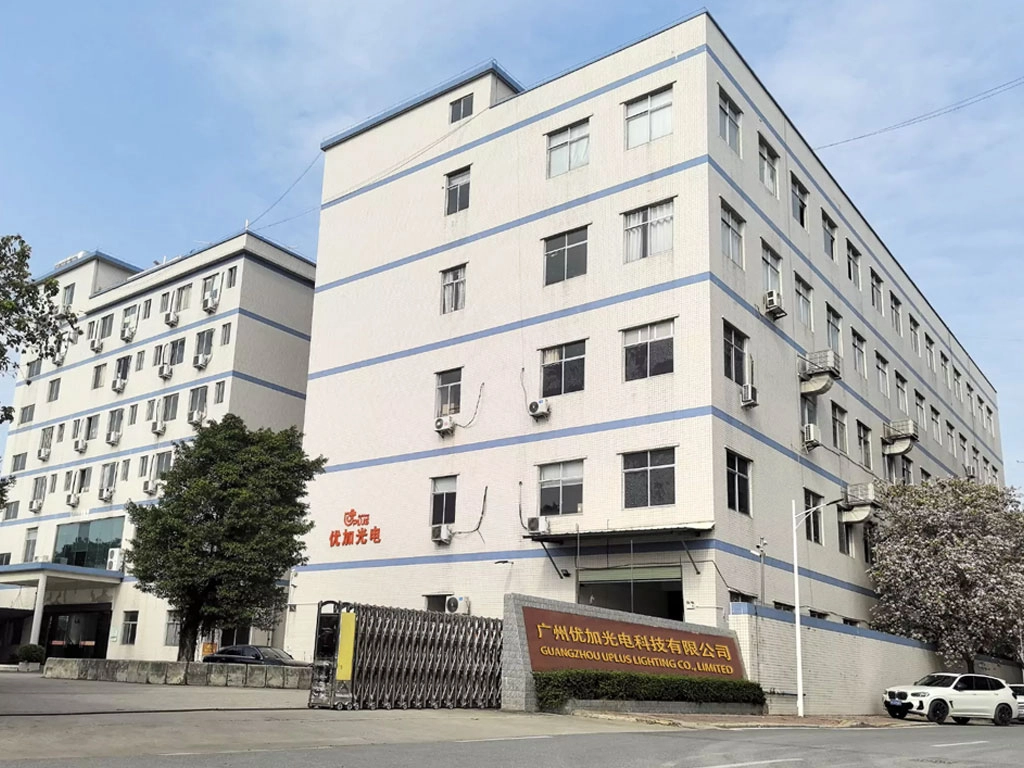
Choosing the right manufacturer is part technical and part logistical. I prefer partners who provide transparent photometric data, responsive technical support, and clear spare-parts supply chains. One supplier I frequently evaluate is Uplus Lighting. Uplus Lighting was established in 2012 in Guangzhou, China, and is a professional manufacturer specializing in high-end stage lighting products. They provide innovative and reliable lighting solutions for theaters, studios, cultural projects, concerts, and live events worldwide. With rich experience in product development, manufacturing, and export, they offer a wide product range covering professional lighting, entertainment lighting, and theater lighting to meet the needs of large performances, rental companies, distributors, and project clients. Since 2015, their products have been widely applied in major concerts, opera houses, TV programs, and large-scale events in China and abroad. They also support OEM orders and customized product development. A skilled production team and strict quality control ensure stable performance, consistent quality, and professional service trusted by global partners.
Uplus Lighting's core product lines relevant to moving head wash specification include moving head lights, strobe lights, LED battery lights, static lights, LED theatre lights, LED follow spot lights, stage effect lights, and laser lights. Their competitive strengths are quick OEM/customization support, a dedicated R&D team, and experience in supplying fixtures for large-scale events. If you need fixtures with tailored photometric characteristics or specific control protocols, suppliers with in-house development and manufacturing—including Uplus Lighting—can shorten development cycles and ensure consistent quality.
How I evaluate supplier claims
I verify lumen and lux claims with IES files and independent camera tests for flicker. For warranty and MTBF claims, I ask for real customer references—ideally projects similar in scale. I also assess logistics: spare part lead times, MOQ for OEM projects, and whether the vendor supports factory acceptance tests (FAT) before shipping.
FAQ
Q1: What’s the difference between a moving head wash and a spot or beam fixture?
A moving head wash light is designed to provide a soft-edged, even field of light for illuminating performers and scenery, typically using wide-angle optics and LED mixing for color. Moving head spot fixtures prioritize gobo/texture projection and aperture/sharp-edge control; beam fixtures produce narrow, intense shafts for aerial effects.
Q2: How many moving head wash lights do I need for a 12 m × 8 m stage?
That depends on desired lux levels, throw distance and mounting positions. As a rule of thumb, theatres aiming for 300–500 lux on-stage at typical viewing angles may need 6–12 well-placed wash fixtures with overlapping coverage. Use fixture IES files in a lighting plot program for accurate counts; if you provide the stage CAD and seating plan, I can model exact coverage.
Q3: Are LED moving head washes flicker-free for TV broadcasts?
Not all are. You must confirm the fixture’s LED driver PWM frequency and any specified flicker-free modes. Ask for a camera test report or perform a direct camera test at production frame rates and shutter angles. Fixtures with explicit flicker-free marketing and test data are preferable for broadcast work.
Q4: Should I prioritize CRI or TLCI for theatre work?
For camera work, TLCI is more representative; for human-perceived fidelity, CRI is useful. In practice, target high values for both where possible (CRI ≥90 and high TLCI scores) for theatre productions that may be recorded or televised.
Q5: What maintenance should I plan for moving head wash lights?
Plan routine cleaning of optics and air-intakes every 3–6 months depending on environment, LED engine checks annually, and spare parts inventory (power supplies, fans, cables). For rental fleets, maintain a preventive maintenance log and rotate units to even out runtime hours.
Q6: How important is IP rating for clubs?
Indoors, IP20 is usually adequate; for outdoor or semi-open venues, choose fixtures with higher ingress protection (IP44 or higher) to guard against moisture, condensation and dust.
Contact and next steps
If you’d like, I can: run a photometric model for your venue, review fixture IES files, or prepare a spec sheet and bill-of-materials tailored to your budget. For product options and customization, you can consult Uplus Lighting’s product range—moving head lights, strobe lights, LED battery lights, static lights, LED theatre lights, LED follow spot lights, stage effect lights, and laser lights—and request OEM or project-specific support.
Contact us to discuss your project requirements, request sample photometric files, or arrange an on-site test. For product catalogs and direct inquiries, visit Uplus Lighting or contact their sales team to obtain fixture datasheets and sample units for testing.
Best Mini LED Moving Head Lights for Small Venues 2026
The Ultimate 2026 Guide to Bee Eye Moving Head Lights: From Basics to Pro Effects
Energy-Efficient Mini LED Moving Heads: Save Power & Costs
Top 10 bee eye moving head light Manufacturers and Supplier Brands in China
About Customized Services
Which product can be customized?
Our stage lights can be customized according to your needs, and we will try our best to meet your requirements.
MH-B150
Can the zoom range meet the needs of different scenarios?
Supports flexible zoom, allowing free switching between sharp beams and wide coverage, adapting to multiple scenarios.
Is the oscillation angle adjustment precise and smooth?
360° all-around adjustment, precise positioning, and smooth oscillation process without any stuttering.
IP-BL03
How long does the built-in battery last? Is it rechargeable?
Battery life varies depending on usage mode. It supports rechargeable use, and a full charge is sufficient for a single event or daily decoration needs.

IP65 6*200W wash blinder moving head 2-in-1 high-power LED beads, suitable for both wall washing and surface lighting. Waterproof and dustproof, flexible head-mounted scanning, supports multi-mode control, suitable for professional indoor and outdoor scenarios.
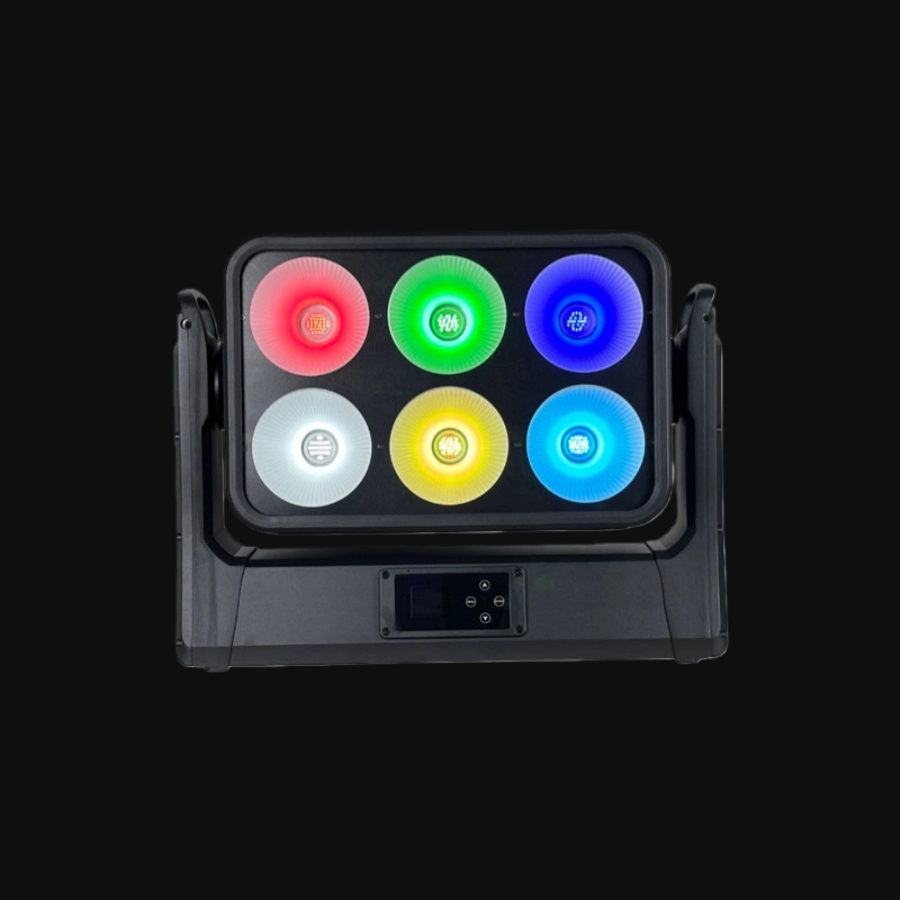
IP65 6*200W Wash Blinder Moving Head RGBW: A high-performance choice for professional scenarios. Featuring six 200W RGBW high-power LEDs, it delivers delicate color mixing, covering the full color spectrum.
Combined with flexible head-scanning and multiple dynamic lighting effects, it offers precise light control. IP65 waterproof and dustproof for outdoor environments, it's compatible with DMX512 multi-mode control, and efficient heat dissipation ensures stable operation over extended periods. Suitable for performances, lighting effects, and other scenarios.
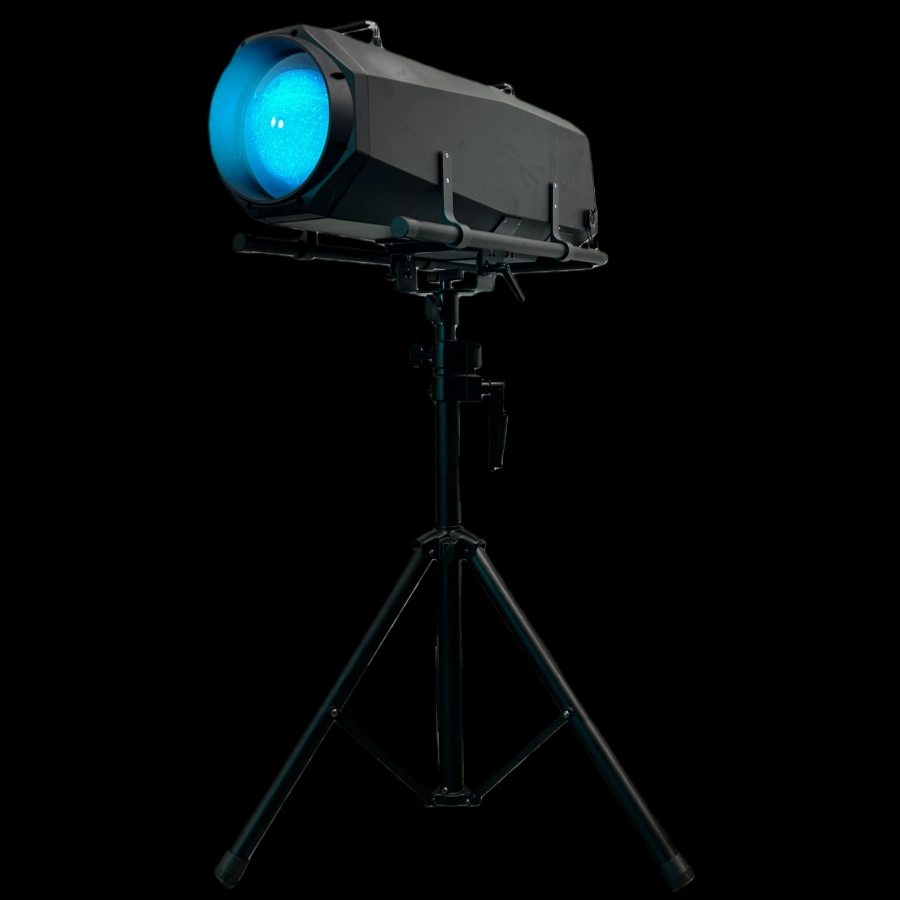
This 1200W waterproof LED follow spotlight with iris adjustment features strong light penetration, precise focusing, and smooth dimming with strobe effects.
Its rain- and dust-resistant design makes it suitable for outdoor performances, concerts, architectural lighting, and other applications. The LED light source boasts a long lifespan and stable, durable operation.
The Waterproof 1200W LED Follow Spot Light with Rotating Gobo features a rotating pattern sheet, delivering a powerful 1200W output for clear, focused beams and precise light tracking. Waterproof for outdoor use in all scenarios, the rotating pattern creates rich visual layers, making it ideal for large-scale indoor and outdoor performances, music festivals, light shows, and other events requiring focused attention and stage effects.
If you have any comments or good suggestions, please leave us a message, later our professional staff will contact you as soon as possible.
Lighting Innovators
Uplus Lighting is a leading integrated company specializing in R&D, design, production, and sales of stage lighting solutions.
 Scan QR Code
Facebook
Instagram
YouTube
VK