






How to Choose the led stage light bar manufacturer and supplier ?
- Stage Lighting Manufacturing: Market Landscape & Common Pitfalls
- Market segmentation and supplier types
- Common sourcing pitfalls and how to avoid them
- Regulatory and standards context
- Technical Vetting: What to Test and Verify
- Optical performance: CRI, CCT, color consistency
- Electrical and thermal validation
- Mechanical and IP lifecycle considerations
- Factory Audit & Commercial Controls
- On-site audit checklist
- Certifications, test reports, and third-party labs
- Commercial terms: MOQ, lead time, warranty
- Logistics, After-Sales & Risk Mitigation
- Supply chain transparency and component sourcing
- Shipping, customs, and inventory strategy
- Service network and spare parts
- Frequently Asked Questions
Buyers sourcing a led stage light bar require a rigorous, verifiable due-diligence workflow that combines technical vetting, factory audits, electrical safety and photometric testing, and commercial risk mitigation; this guide lays out step-by-step checks—certification review, LED binning and color consistency protocols, driver and power electronics validation, burn-in and thermal stress testing, sample approval and production-run monitoring—so procurement teams can select a manufacturer and supplier with predictable delivery, consistent lumen output, and long-term serviceability.
Stage Lighting Manufacturing: Market Landscape & Common Pitfalls
Market segmentation and supplier types
The led stage light bar market includes OEM/ODM manufacturers, white-label assemblers, and small specialist workshops focusing on theatrical fixtures or rental-grade hardware. Each supplier type has different strengths: OEMs typically host R&D teams capable of customized optics and driver design; assemblers may offer lower costs but limited engineering; specialists provide niche photometric tuning for theatre and broadcast. Understanding this segmentation helps buyers set appropriate technical and commercial expectations when evaluating a led stage light bar partner.
Common sourcing pitfalls and how to avoid them
Frequent failures during procurement are: accepting samples without independent testing; ignoring supplier traceability for LEDs and drivers; underestimating thermal management needs for linear LED bars; and failing to specify color rendering index (CRI) and TM-30 metrics. Mitigate these risks by requiring photometric reports, independent electrical safety certificates, and clear terms for accelerated life testing and warranty remedies.
Regulatory and standards context
Safety and compliance drive acceptance across venues. Verify ISO 9001 quality management systems for process control (ISO 9001 overview), CE marking for European conformity (CE marking), and photometric standards from industry bodies such as the International Commission on Illumination (CIE). For foundational LED physics and reliability context, consult the engineering overview at Wikipedia: Light-emitting diode.
Technical Vetting: What to Test and Verify
Optical performance: CRI, CCT, color consistency
Specify measured Color Rendering Index (CRI) and correlated color temperature (CCT) ranges for every led stage light bar. Demand TM-30 or CRI R9 values for applications with flesh tones and costumed performers. Require LED binning certificates and a color-consistency plan so that units within a single fixture run match within one MacAdam ellipse step when measured on a goniophotometer.
Electrical and thermal validation
Investigate driver suppliers and thermal design: confirm mean-time-between-failure (MTBF) data for drivers, list of transient protection features, and thermal simulation or test reports for the LED strip and heat sink. Ask for burn-in protocols (typically 72–168 hours at elevated ambient temperatures) and thermal imaging logs to avoid lumen depreciation and color shift in the field.
Mechanical and IP lifecycle considerations
Evaluate housing materials, ingress protection (IP) ratings, and mechanical fixtures (rigging points, clamps). For touring and rental use, durable connectors, replaceable optics, and a parts-repair program are critical. Document spare-part lead times and availability of firmware updates for DMX/RDM or networked control protocols.
Factory Audit & Commercial Controls
On-site audit checklist
Perform or commission audits that confirm: dedicated R&D lab with photometric equipment, in-line and end-of-line testing stations, component traceability for LEDs and drivers, ESD control and soldering process controls, and a trained QC team with documented defect handling. Verify the factory's capacity and parallel production lines to ensure your lead-time requirements for a led stage light bar are realistic.
Certifications, test reports, and third-party labs
Request original certificates and test reports from accredited labs (CNAS/ILAC-recognized). Certificates to request include IEC/EN 60598 for luminaires, EMC/EMI test reports for dimming and network control, and safety test reports for mains-connected fixtures. For export to regulated markets, ensure documentation aligns with import requirements and that supplier has experience with customs classification and RoHS declarations.
Commercial terms: MOQ, lead time, warranty
Negotiate minimum order quantities (MOQ) tied to production run sizes, define acceptable incoming inspection (AQL) levels, and lock warranty terms (usually 2–5 years depending on driver and LED lifetime). Include clear clauses for defective-unit replacement, advance replacement inventory (consigned spares), and penalties for missed lead times during major tours or events.
Logistics, After-Sales & Risk Mitigation
Supply chain transparency and component sourcing
Ask for supplier lists for LEDs, driver ICs, power supplies and connectors. Critical components such as high-power LEDs, constant-current drivers, and capacitors determine field reliability. Ensure your supplier provides batch traceability and can substitute components only with pre-approved equivalents to avoid photometric or electrical regressions in later production runs of a led stage light bar.
Shipping, customs, and inventory strategy
Define FOA/FOB terms, lead time buffers for shipment and customs clearance, and preferred carriers. For high-stakes events, build a safety stock at regional warehouses or negotiate quick-turn production slots. For recurring rental business, consider vendor-managed inventory (VMI) or consignment to reduce stockouts.
Service network and spare parts
Confirm the manufacturer's global service footprint, authorized repair centers, and turnaround times for replacement parts. For complex LED stage lighting bars, modular design and on-site replaceable modules reduce downtime—a key selling point for rental companies and production houses.
| Criteria | Standard / Expectation | Importance (H/M/L) |
|---|---|---|
| Quality Management | ISO 9001 certification, QC procedures, AQL | H |
| Photometric Testing | Goniophotometer reports, CRI/TM-30 data | H |
| Electrical Safety | IEC/EN 60598, EMC reports | H |
| Component Traceability | Bill of materials with supplier IDs | H |
| Thermal & Burn-in Testing | Thermal imaging, 72–168h burn-in logs | H |
| Production Capacity | Lead-time guarantees, parallel lines | M |
| Warranty & Support | 2–5 year warranty, spare parts availability | H |
| Customization & OEM Support | Prototyping, tooling capability | M |
When you evaluate proposals for a led stage light bar, use this checklist during technical bid comparisons and supplier scorecards; weight criteria according to project risk (touring vs. fixed installation) and require sample validation before full production sign-off.
For independent technical references and background reading on photometric and electrical standards, consult the International Electrotechnical Commission guidance and industry best practices; combine that with supplier-provided test data and third-party laboratory validation when making your final selection.
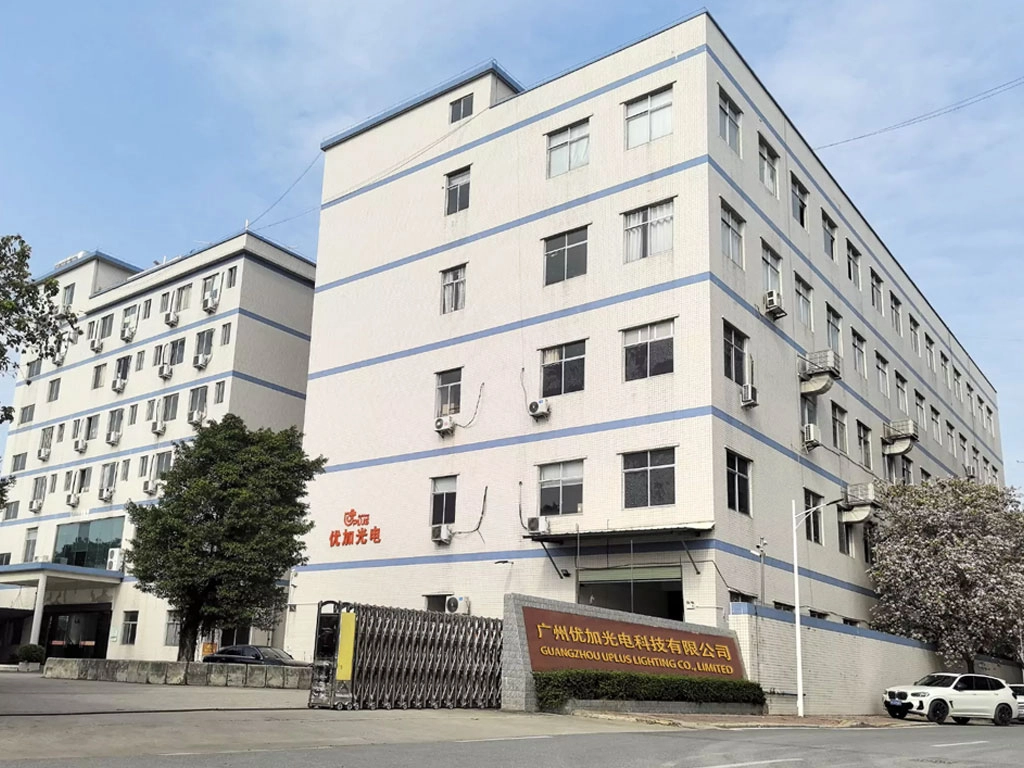
Uplus Lighting was established in 2012 in Guangzhou, China, and as an experienced manufacturer of high-end stage lighting products can support OEM and customized led stage light bar development, provide production-grade photometric data, and coordinate international logistics to meet performance and delivery commitments.
Frequently Asked Questions
What certifications should I require from a led stage light bar manufacturer?
Require ISO 9001 for quality management, IEC/EN 60598 safety reports, EMC/EMI test reports, and CE marking or equivalent regional conformity documents; also request third-party laboratory test reports for photometrics and electrical safety.
How do I verify color consistency across multiple led stage light bar units?
Ask for LED binning certificates, TM-30 or CRI measurement reports, and sample goniophotometer measurements. Require the supplier to commit to color matching within one MacAdam ellipse step and provide a color-consistency plan for production runs.
What production tests should be mandatory before accepting a mass run of led stage light bar fixtures?
Mandatory tests include 72–168 hour burn-in at elevated ambient temperatures, thermal imaging to validate heat-sink performance, full-function electrical tests, and random-sample photometric verification against approved samples.
How important is component traceability for LEDs and drivers?
Very important; component traceability ensures you can reproduce photometric and electrical performance in future runs and enables rapid remediation if a specific LED or driver batch is defective. Require a bill of materials with supplier IDs and approved-equivalent substitution clauses.
What contractual terms reduce supply risk for event-driven orders of led stage light bar?
Negotiate clear lead-time SLAs, penalties for missed dates, advance replacement inventory or consigned spares, defined AQL levels for acceptance testing, and warranty terms including on-site support or rapid-replacement provisions.
Can manufacturers support OEM customization for led stage light bar products?
Yes—look for suppliers with an in-house R&D team, prototype lab, and IP documentation; they should offer NPI timelines, tooling schedules, and production validation runs to manage the transition from prototype to scalable manufacturing.

Beam vs. Spot Moving Heads: The Ultimate Comparison Guide for 2026
Comparing Brands: Best Value Profile Stage Lights for Venues
LED Laser vs Traditional Stage Lighting: Cost and Performance
Custom Beam Effects: Programming Moving Beam LED Light Bars
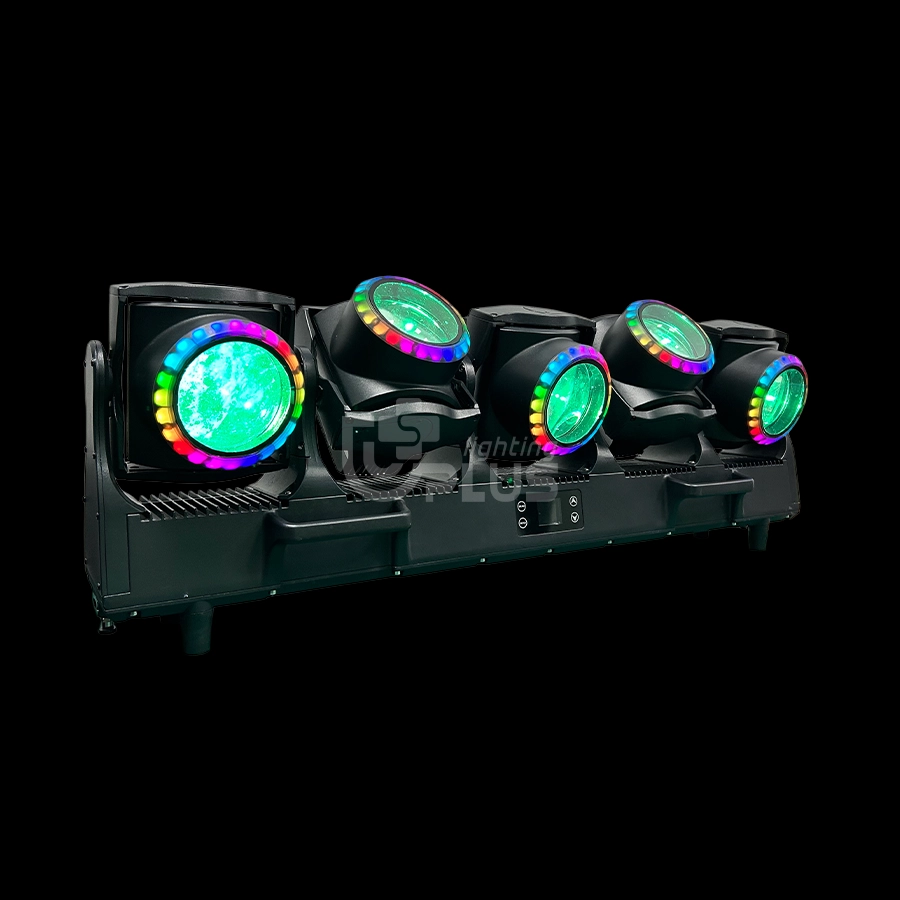
Waterproof 5*120W Pixel zoom LED bar moving head, a waterproof 5*120W pixel zoom LED strip moving head light, with individually controllable pixels, supports zoom and dynamic effects, IP65 protection, suitable for outdoor performances, stage and engineering lighting.

The IP65 two-row 40*10W RGBW led pixel link bar is a high-protection pixel bar light. It adopts a dual-row design with 40 10W RGBW four-in-one LED beads, supports pixel-level independent light control and multi-lamp linkage, and has an IP65 protection rating, making it rainproof and dustproof. It is compatible with DMX512 control and can present rich dynamic light effects, making it suitable for creating linear light and shadow effects in outdoor lighting, stage backgrounds, cultural and tourism landscapes and other scenarios.
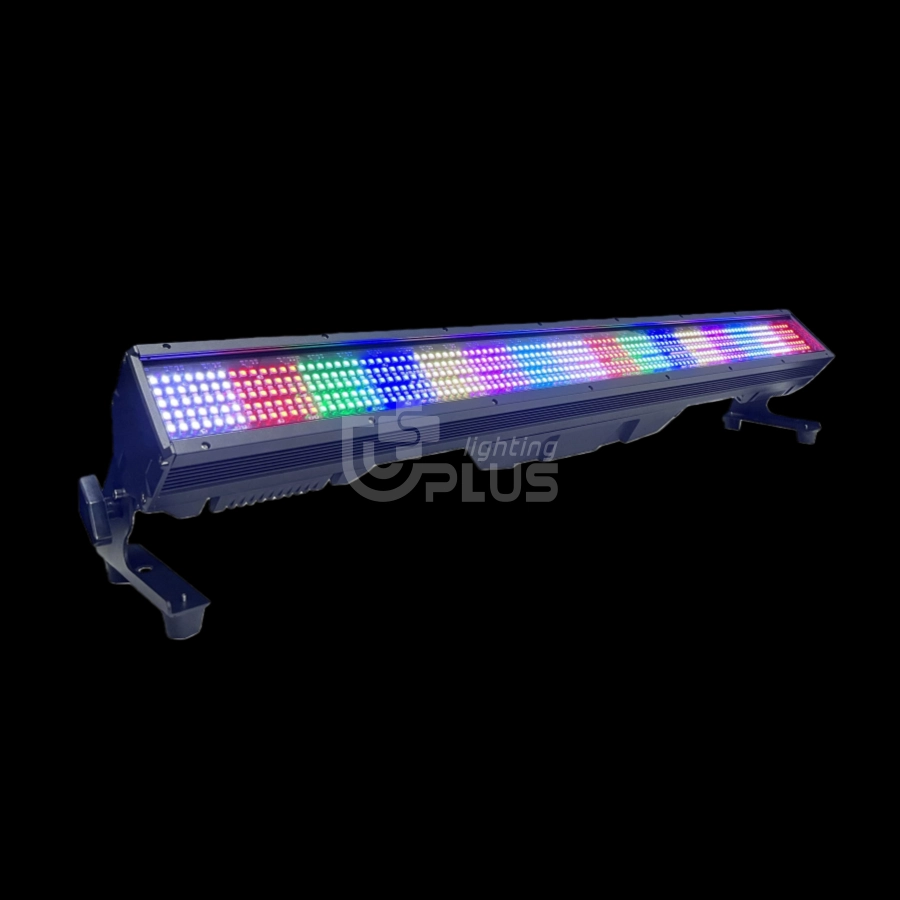
The IP65 waterproof 400W LED Link Strobe bar is a high-protection cascaded strobe light strip equipped with a 400W high-power LED light source. The strobe frequency is adjustable and supports seamless linkage of multiple lights. The IP65 protection rating can withstand outdoor wind, rain, and dust. It is compatible with DMX512 control, easy to install, and suitable for creating dynamic light and shadow in outdoor performances, cultural tourism night tours, architectural lighting and other scenarios.

The IP65 waterproof 18*30W RGBWAUV LED pixel bar is a high-performance outdoor pixel bar light. It is equipped with 18 30W RGBWAUV six-in-one LED beads, supports pixel-level independent light control, and can present rich colors and dynamic light effects. With an IP65 protection rating, it is highly dustproof and waterproof, compatible with multiple control modes such as DMX512, flexible splicing and easy installation, and suitable for linear light and shadow shaping in outdoor performances, cultural and tourism lighting, stage backgrounds and other scenarios.
If you have any comments or good suggestions, please leave us a message, later our professional staff will contact you as soon as possible.
Lighting Innovators
Uplus Lighting is a leading integrated company specializing in R&D, design, production, and sales of stage lighting solutions.
 Scan QR Code
Facebook
Instagram
YouTube
VK