






Beam vs. Spot Moving Heads: The Ultimate Comparison Guide for 2026
- What is the Difference Between Beam and Spot Moving Heads?
- Key Takeaways & Quick Summary
- Fixture Comparison Table
- Deep Dive: The Mechanics of Beam Moving Heads
- Deep Dive: The Optics of Spot Moving Heads
- The Rise of Hybrid Moving Heads in 2026
- Expert Tips: Common Mistakes When Choosing Moving Heads
- Stage Lighting Trends to Watch in 2026
- Why Global Partners Trust Uplus Lighting for High-End Moving Heads
- Case Study: Uplus Lighting in Action
- Conclusion
- FAQs About beam spot moving head
- What is the difference between a beam, spot, and wash light?
- Can a spot moving head be used as a beam?
- Are LED moving heads better than discharge lamp moving heads?
- What does an IP65 rating mean for moving heads?
- How do you control moving head stage lights?
- What is CMY color mixing?
- How much do professional moving head lights cost?
- Does Uplus Lighting provide OEM stage lighting services?
What is the Difference Between Beam and Spot Moving Heads?
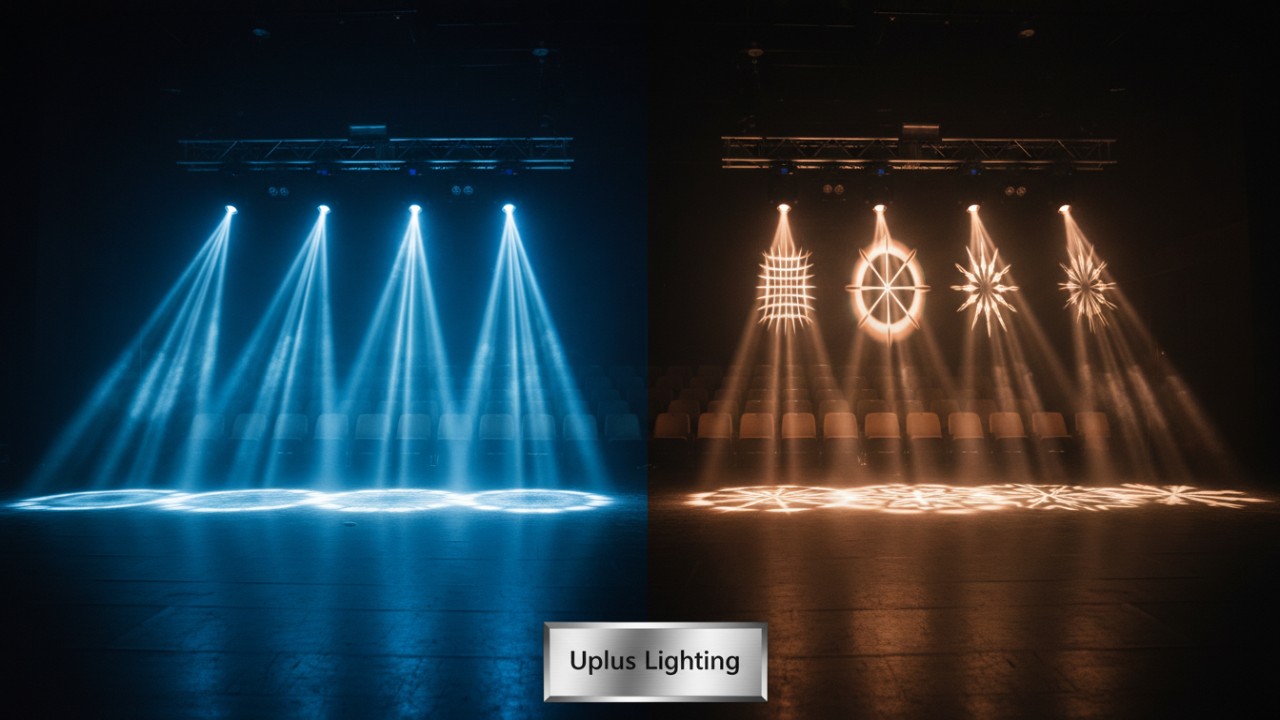
A beam spot moving head comparison reveals that a beam moving head produces a tight, highly concentrated, laser-like shaft of light designed to cut through atmospheric effects, while a spot moving head projects a wider, sharp-edged pool of light used to display patterns and highlight specific stage areas.
Understanding this fundamental difference in optics, beam angles, and output focus is essential for modern lighting designers looking to optimize their stage rigs in 2026. While they may look physically similar on the outside, the internal mechanisms dictate entirely different visual applications.
- Optics: Beam lights focus purely on intense, parallel brightness, whereas spot lights focus on clarity, edge definition, and visual texture.
- Beam Angles: Beam fixtures typically feature incredibly narrow angles ranging from 1 to 5 degrees. In contrast, spot fixtures offer much wider, variable zoom ranges (often 10 to 45 degrees or more).
- Applications: Beams are relied upon for dramatic aerial effects and creating a sense of boundary, while spots deliver targeted illumination for performers and scenic projection.
Key Takeaways & Quick Summary
The primary takeaways for selecting stage lighting in 2026 include understanding the specific roles of beam and spot fixtures, the rising dominance of hybrid moving head lights, and the critical importance of partnering with a reliable stage lighting OEM manufacturer.
By carefully evaluating your specific production needs, you can ensure a higher return on investment and a more spectacular visual experience for the audience. Utilizing the right fixture for the right moment prevents visual clutter and maximizes the emotional impact of the performance.
- Beam lights are best for high-energy visual impact, EDM festivals, and long-throw aerial effects.
- Spot lights are ideal for texturing stages, projecting gobos, and highlighting focal points in theaters.
- Hybrid fixtures (Beam/Spot/Wash) are becoming the industry standard in 2026 for maximizing rigging versatility.
- Choosing a reliable manufacturer with strict quality control ensures stable performance across grueling tour schedules.
Fixture Comparison Table
| Feature | Beam Moving Head | Spot Moving Head | Hybrid Moving Head |
|---|---|---|---|
| Primary Use | Aerial effects, cutting through fog | Highlighting performers, gobo projection | Multi-purpose stage versatility |
| Beam Angle | Very narrow (1° - 5°) | Medium to wide (10° - 45°+) | Variable (ranges across all modes) |
| Edge Quality | Soft but highly intense | Hard-edged, crisp, and sharp | Adjustable via motorized focus |
| Gobo Usage | Limited, mostly simple shapes | Extensive, complex glass patterns | Extensive, often with dual wheels |
| Investment Value | Moderate | Moderate to High | High (Best overall ROI) |
Deep Dive: The Mechanics of Beam Moving Heads
The mechanics of a beam moving head rely on intense discharge or high-wattage LED engines paired with ultra-narrow optics to create punchy, visible shafts of light that remain highly concentrated over exceptionally long throw distances across any venue.
Exploring these narrow beam angles shows exactly how these fixtures manage to pierce through dense atmospheric effects like fog and haze. As explained by Wikipedia, intelligent lighting relies on internal mechanical devices, such as high-speed stepper motors and dichroic filters, to rapidly manipulate these intense light beams before they exit the lens. Because the light is collimated into a near-parallel beam, the inverse-square law of light degradation is mitigated, allowing the beam to travel further without losing its perceived intensity.
Best use cases for beam fixtures include:
- EDM Concerts: Creating high-energy, rhythmic visual sweeps that match the tempo of the music.
- Large-Scale Festivals: Providing long-throw visibility that reaches audiences all the way at the back of massive outdoor arenas.
- Dramatic Aerial Sweeps: Enhancing the perceived scale, height, and depth of the stage architecture.
Deep Dive: The Optics of Spot Moving Heads
Spot moving heads utilize sophisticated optical lens trains to produce a wider beam angle with a hard, sharp edge, allowing for the precise projection of gobos, rotating prisms, and advanced CMY color mixing across performers or scenic elements.
Unlike the piercing nature of a beam, the spot is fundamentally about artistry, texture, and control. According to historical data from Wikipedia, selective visibility and the revelation of form are core functions of stage illumination, which are perfectly executed by the sharp focus of a spot fixture. By placing a gobo (a physical stencil or glass pattern) precisely at the focal point of the lens, the light projects a crisp image onto the backdrop. Furthermore, animation wheels and framing shutters allow designers to manipulate the shape and movement of the light dynamically.
Best use cases for spot fixtures include:
- Theaters and Opera Houses: Highlighting actors cleanly without spilling unwanted light onto the surrounding scenery.
- TV Studios: Providing consistent, high-CRI illumination that looks natural on broadcast cameras.
- Corporate Event Presentations: Projecting crisp company logos and branding elements onto walls or stages.
The Rise of Hybrid Moving Heads in 2026
Hybrid moving head lights represent a major technological leap in 2026, seamlessly transitioning between beam, spot, and wash modes within a single fixture thanks to highly advanced, variable zoom optical systems that eliminate the need for redundant inventory.
In the past, lighting designers had to compromise, as early hybrids were known to be a "jack of all trades, master of none." However, optical advancements have completely erased this stigma. Today, a premium hybrid fixture can produce an ultra-tight 2-degree beam, zoom out to a 40-degree spot, and drop in a frost filter to act as a wash light. The ROI advantage for large-scale event producers and rental companies is undeniable.
- Weight Reduction: Utilizing one fixture for three roles drastically reduces the overall rigging weight on the truss.
- Cost Efficiency: Having fewer fixtures lowers power consumption, reduces trucking space, and minimizes transport costs for national tours.
- Weather Resistance: Evaluating IP65 weatherproof hybrids is now standard practice for outdoor stadium productions, ensuring the rig survives rain and dust.
Expert Tips: Common Mistakes When Choosing Moving Heads
The most common mistakes when selecting a beam spot moving head include ignoring detailed photometric data, overlooking the necessity of consistent color mixing, and failing to verify the manufacturer’s after-sales support capabilities before making a large investment.
Professionals must look beyond the basic marketing spec sheets to ensure longevity, visual harmony, and operational reliability. A moving head is a complex electro-mechanical device; choosing the wrong unit can result in mid-show failures and compromised designs.
- Mistake 1: Ignoring photometric data and focusing only on stated wattage. A highly efficient 300W LED engine with superior optics can easily outperform a poorly designed 500W fixture. Always look at the true lumen output and center beam candela.
- Mistake 2: Overlooking the necessity of consistent CMY color mixing. If fixtures are not properly color-calibrated at the factory, commanding them all to produce a specific "cherry red" will result in mismatched, uneven hues across the stage.
- Mistake 3: Failing to consider the manufacturer's after-sales support and parts availability. Touring inevitably leads to wear and tear; if spare belts, motors, or lenses are not readily available, your investment becomes a dead weight.
Stage Lighting Trends to Watch in 2026
The most prominent stage lighting trends for 2026 include the massive shift towards ultra-efficient, high-CRI LED stage lighting fixtures, the increased demand for IP65-rated weatherproof units, and rapid advancements in AI-assisted automated tracking and DMX programming.
As global sustainability mandates tighten, the industry is aggressively moving away from traditional, power-hungry discharge lamps. Industry bodies such as PLASA have heavily influenced the push toward sustainable Ecodesign regulations, accelerating the adoption of these high-efficiency LED sources across the globe.
Key advancements driving the industry forward include:
- High-CRI LED Engines: Offering better color rendering for skin tones and costumes, effectively rendering traditional halogen lamps obsolete.
- All-Weather IP65: Completely sealed fixtures are eliminating the need for bulky, expensive inflatable rain domes at outdoor festivals.
- Automated Tracking: New software interfaces use AI to assist lighting operators, allowing moving heads to automatically track performers across the stage via RF tags without manual follow-spot operators.
Why Global Partners Trust Uplus Lighting for High-End Moving Heads
Established in 2012, Guangzhou Uplus Lighting Co., Ltd. is a trusted stage lighting OEM manufacturer globally recognized for delivering innovative, high-end moving heads backed by a highly skilled production team and strict, multi-stage quality control.
For 14 years, Uplus Lighting has been a cornerstone in the professional DMX stage lighting sector. We understand that rental companies, distributors, and project clients require equipment that will not fail under pressure. By manufacturing our products in-house in Guangzhou, China, we maintain total oversight of the engineering and assembly processes.
Our core advantages include:
- Comprehensive Product Range: We offer moving head lights, strobe lights, LED battery lights, static lights, LED theatre lights, LED follow spot lights, stage effect lights, and laser lights.
- Customization: We possess deep expertise in supporting OEM orders and developing customized product lines tailored specifically to your brand’s regional market demands.
- Uncompromising Quality: Our strict quality control protocols ensure stable performance, consistent beam quality, and durability that global partners trust implicitly.
Case Study: Uplus Lighting in Action
Since 2015, Uplus Lighting’s robust beam spot moving head fixtures and professional DMX stage lighting have successfully illuminated major concerts, opera houses, TV programs, and large-scale cultural events across the globe without compromising on stability.
Real-world application is the ultimate test of any intelligent lighting system. When a massive outdoor EDM festival requires hundreds of high-output fixtures to run continuously for a three-day weekend, there is no room for error. Our moving heads endure severe vibrations, extreme temperature shifts, and non-stop programming while delivering a flawless visual experience.
The tangible benefits of partnering directly with Uplus Lighting include:
- Stable Performance: Engineering that withstands the rigors of global touring and heavy daily use.
- Consistent Quality: Factory-level color calibration ensuring uniform output across every single unit in your inventory.
- Expert Support: Direct access to factory engineers providing rapid technical troubleshooting and long-term parts supply.
Conclusion
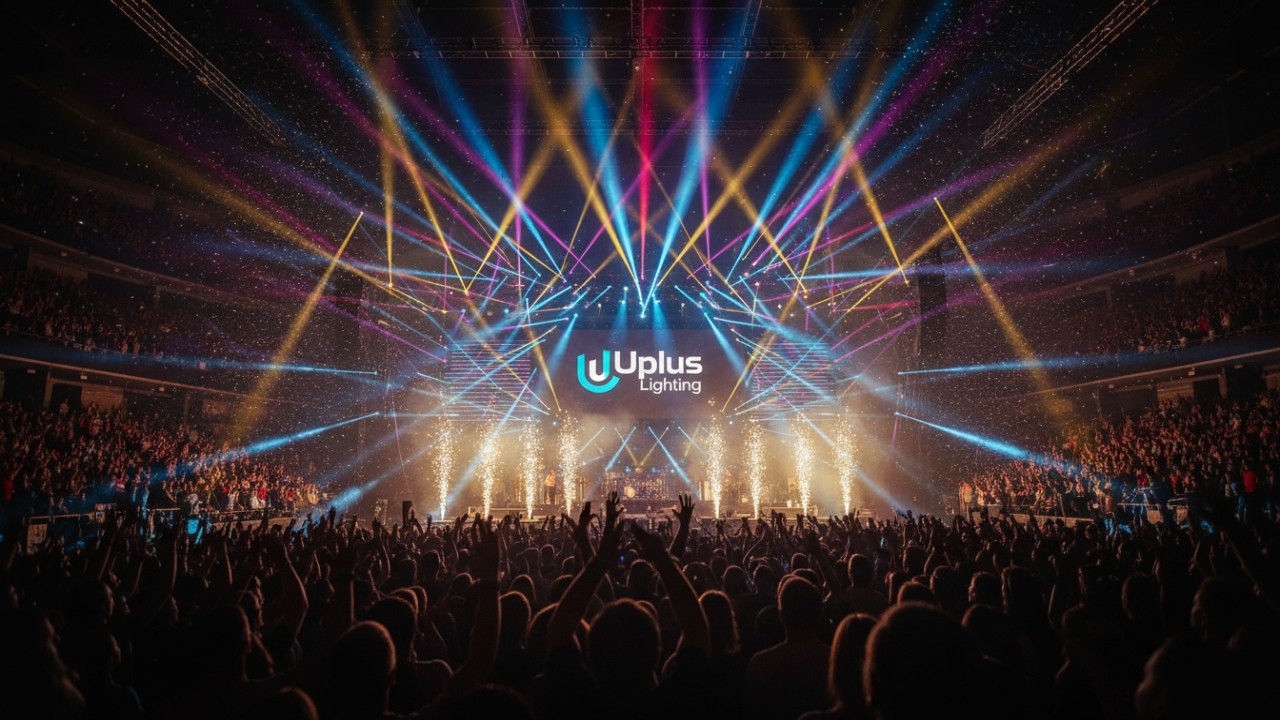
Whether you are designing a high-energy concert with piercing beam lights or an elegant theater production requiring precision spot lights, understanding your specific fixture needs is key to a spectacular and memorable show in 2026.
Embracing advanced optical technology—such as the transition to hybrid moving heads and high-CRI LED engines—ensures your lighting inventory remains relevant, highly profitable, and visually stunning. By partnering with an experienced manufacturer that prioritizes rigorous quality control and technical innovation, you safeguard your production against failure and elevate the audience's experience to new heights.
Contact us today to optimize your beam spot moving head strategy.
FAQs About beam spot moving head
What is the difference between a beam, spot, and wash light?
Beam lights create a narrow, punchy shaft of light designed for aerial effects. Spot lights have hard edges used to project gobos, logos, and patterns onto surfaces. Wash lights provide a soft-edged, wide pool of light to illuminate large stage areas smoothly and evenly.
Can a spot moving head be used as a beam?
While traditional spots cannot achieve the ultra-tight, concentrated angle of a true dedicated beam light, modern hybrid moving heads use highly advanced variable optical systems to switch between beam and spot modes effectively, offering the best of both worlds.
Are LED moving heads better than discharge lamp moving heads?
By 2026, LED moving heads have largely surpassed traditional discharge lamps due to their vastly lower power consumption, significantly longer operational lifespan, lower heat emission, and high-quality color rendering index (CRI).
What does an IP65 rating mean for moving heads?
An IP65 rating signifies that the moving head is completely protected against dust ingress and can withstand low-pressure water jets from any direction, making the fixture completely safe and reliable for unpredictable outdoor events and festivals.
How do you control moving head stage lights?
Moving heads are controlled using the universal DMX512 protocol. This data is transmitted via a physical lighting console or computer software, allowing lighting designers to remotely program and automate pan, tilt, color mixing, gobos, and beam intensity.
What is CMY color mixing?
CMY stands for Cyan, Magenta, and Yellow. It is a sophisticated subtractive color mixing system used in high-end moving heads to seamlessly blend these three primary filters, creating a virtually infinite palette of smooth, precise, and custom colors.
How much do professional moving head lights cost?
Prices vary widely based on lumen output, internal features, and brand recognition. Professional fixtures can range anywhere from $1,000 to over $10,000 per unit. Partnering directly with a factory manufacturer like Uplus Lighting can provide excellent ROI and cost savings for rental companies.
Does Uplus Lighting provide OEM stage lighting services?
Yes, Guangzhou Uplus Lighting Co., Ltd. has rich experience and extensive capabilities supporting OEM orders and customized product development for distributors, rental houses, and project clients globally.
Top 10 LED Stage Light Bars for Concerts and Theaters

The Ultimate Guide to Stage Profile Lights: Mastery for 2026 and Beyond
Specification Breakdown: CRI, TLCI, and Output for Profile Lights
How to Size Beam Angle and Lux for Moving Head Stage Lights

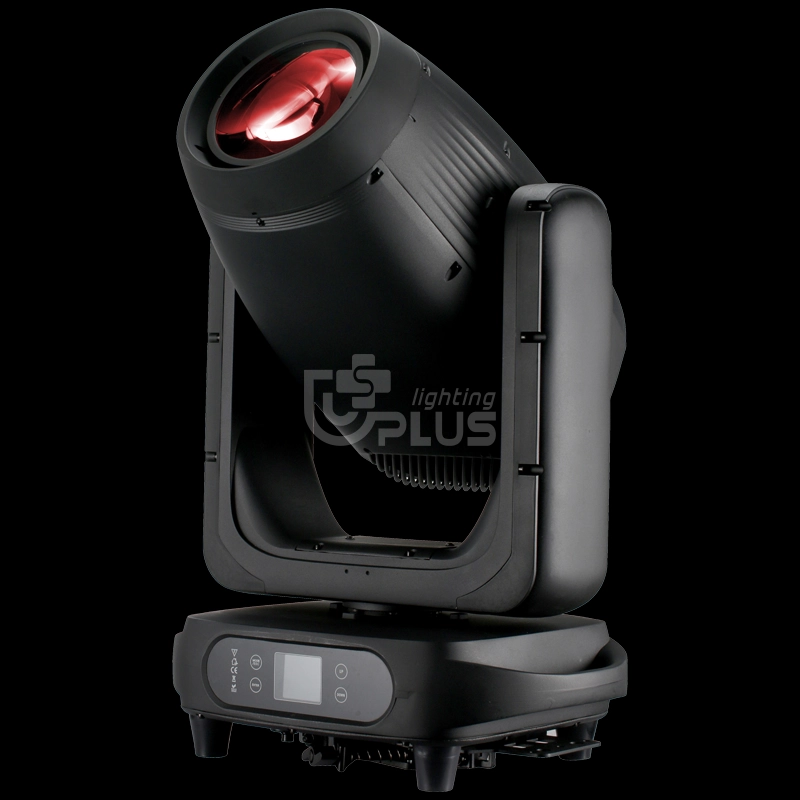
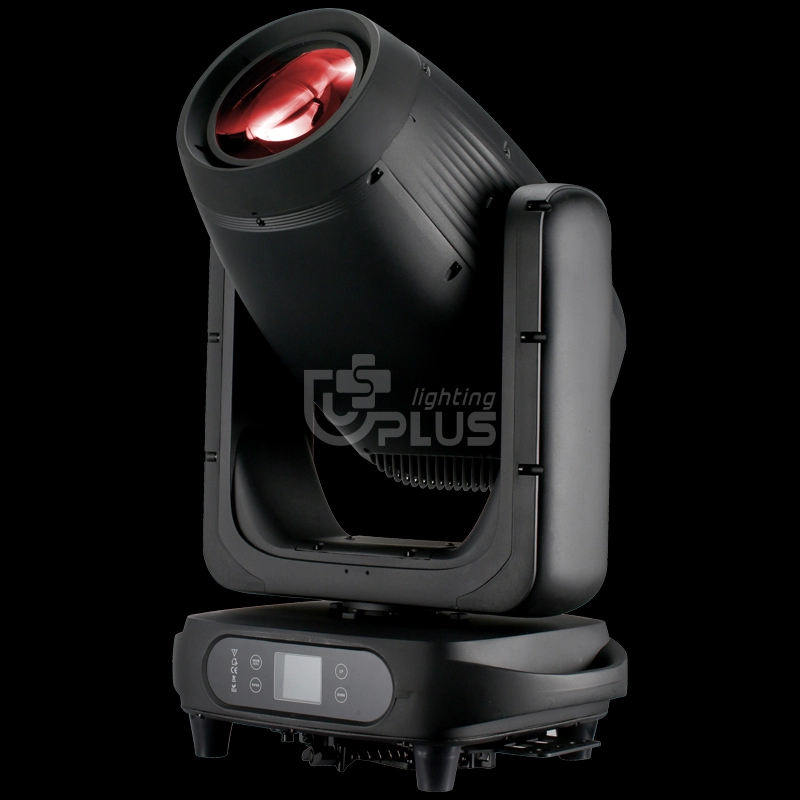
1000W Waterproof BSWF 4-in-1 Moving Head combines beam, spot, wash, and frame effects in one. IP-rated waterproof design, high-brightness output, precise control, ideal for outdoor & indoor stage events.
If you have any comments or good suggestions, please leave us a message, later our professional staff will contact you as soon as possible.
Lighting Innovators
Uplus Lighting is a leading integrated company specializing in R&D, design, production, and sales of stage lighting solutions.
 Scan QR Code

Facebook
Instagram
YouTube
VK