






How to Choose the Best Stage Light Moving Head for Your Venue
- Understand your venue and production needs
- Define venue size, sightlines and mounting points
- Match lighting function: spot, wash, beam or hybrid
- Consider typical programming and operator skill
- Key technical specifications to evaluate
- Light engine: LEDs, lamp-based, and output metrics
- Optics: beam angle, zoom range and gobos
- Control and compatibility: DMX, RDM, Art-Net and sACN
- Practical considerations: reliability, serviceability and cost
- Build quality, IP rating and environmental suitability
- Maintenance, spare parts and warranty
- Energy consumption and operational costs
- Comparing types: a practical spec table
- Selection workflow I use with clients
- 1. Define objectives and constraints
- 2. Shortlist by function and test physically
- 3. Verify data and finalize procurement
- Standards, safety and interoperability
- Control and electrical standards
- Photometric and color metrics
- Why manufacturer choice matters: example profile — Uplus Lighting
- Cost breakdown and procurement tips
- Budget components to plan for
- Negotiation and warranties
- Request for proposal checklist
- FAQ
- 1. What is the difference between a moving head and a traditional follow spot?
- 2. How do I size the fixture power for my venue?
- 3. Are LED moving heads always better than discharge lamp fixtures?
- 4. What maintenance do moving heads typically require?
- 5. How important is DMX/RDM support?
- 6. Can I mix different brands of moving heads in one show?
- Final recommendations and next steps
I have worked with theaters, concert promoters, and rental companies for many years, helping them specify and deploy stage lighting systems that deliver consistent results. In this article I walk you through how to choose the best stage light moving head for your venue—covering technical selection, practical trade-offs, control and installation considerations, and long-term lifecycle costs. My goal is to give you actionable criteria that reduce risk and improve show quality.
Understand your venue and production needs
Define venue size, sightlines and mounting points
Start by mapping your venue. A 200-seat black box, a 2,000-seat theater, and a 20,000-capacity outdoor concert arena have very different requirements. I recommend creating a simple floor/section plan showing stage dimensions, audience rake, FOH positions, and truss locations. That lets you estimate throw distances and angles—two of the most important inputs when choosing a stage light moving head. For acoustic halls or TV studios where sightlines are critical, compact head sizes and lower noise (dB levels) matter more.
Match lighting function: spot, wash, beam or hybrid
Choose the primary function first. Moving heads are typically categorized as spot (highly controllable shutter/gobos and framing), wash (broad, soft field for color washes), or beam (narrow, intense shafts for effects). Many modern fixtures are hybrids that can do two roles reasonably well. Selecting the right family prevents overspending on features you don’t need or underpowering the show.
Consider typical programming and operator skill
Who will program and operate the lights? Complex moving heads with extensive feature sets require a capable lighting console and operator familiar with DMX/RDM and pixel-mapping workflows. If your team is small or volunteer-based, prioritize fixtures that are intuitive to patch and have reliable presets.
Key technical specifications to evaluate
Light engine: LEDs, lamp-based, and output metrics
Most modern stage light moving head fixtures use LED engines for lower power draw, longer service life, and better color mixing. When evaluating output, look at measured lumens, but place more weight on practical metrics: lux at distance and beam angle. Manufacturers often report raw lumen numbers that favor tight-beam fixtures—calculate or ask for lux @ specific throw distances relevant to your venue.
Optics: beam angle, zoom range and gobos
Beam angle determines how wide or narrow the light field is. Zoom or interchangeable lens systems add flexibility—useful in multi-purpose venues. For spot fixtures, evaluate gobo wheel quality (metal vs. glass, indexing accuracy) and framing shutters for crisp edges. For wash lights, look for even field and homogenizers that minimize color fringing.
Control and compatibility: DMX, RDM, Art-Net and sACN
Control compatibility is non-negotiable. Ensure your moving head supports the control protocols you use. DMX512 is the baseline; Remote Device Management (RDM) is useful for addressing and status monitoring. For networked shows, ensure Art-Net or sACN support. Refer to the DMX512 standard for control expectations: https://en.wikipedia.org/wiki/DMX512.
Practical considerations: reliability, serviceability and cost
Build quality, IP rating and environmental suitability
For touring and outdoor events, IP-rated fixtures (e.g., IP65) provide weather protection—look up the IP code definitions to match your needs: https://en.wikipedia.org/wiki/IP_Code. Indoor fixed-install venues can prioritize quieter fans and finish quality. Check manufacturer QA processes and whether they publish MTBF or lab test reports.
Maintenance, spare parts and warranty
Ask about modular components (fans, LED engines, power supplies), local spares availability, and average lamp/LED module lifetimes. LED-based moving heads typically have longer service intervals than discharge lamp fixtures, reducing lifecycle costs. Favor manufacturers with clear warranty terms and responsive support.
Energy consumption and operational costs
LED moving heads are far more efficient than legacy discharge fixtures. For broader energy-impact context see the U.S. Department of Energy overview on solid-state lighting: https://www.energy.gov/eere/ssl/solid-state-lighting. When budgeting, include power distribution, dimmer/PSU losses, and HVAC impacts (heat load) in total cost of ownership.
Comparing types: a practical spec table
Below I summarize typical characteristics to help you compare moving head families. These ranges reflect common industry offerings and are cross-checked with manufacturer catalogs and industry guidance.
| Type | Typical Beam Angle | Typical Output (LED lumens / lux behavior) | Best Use |
|---|---|---|---|
| Spot / Profile | 3°–40° (with framing/zoom) | High center intensity; great for gobos and sharp edges | Front light, hard-edge gobos, projections, follow spots |
| Wash | 10°–60° (soft field) | Even field; high CRI options for accurate color rendering | Color washes, soft key/fill, cyc lighting |
| Beam / Effect | 1°–6° (very narrow) | Very high center lux; visible shafts and volumetric effects | Concerts, aerial effects, club and festival front-of-house |
Note: Actual lux and lumen figures vary by fixture model and LED engine. Always request manufacturer photometric files (IES files) so you can simulate coverage in your venue.
Selection workflow I use with clients
1. Define objectives and constraints
I begin every project by documenting the primary objectives (e.g., drama, TV-friendly, touring reliability), budget envelope, and physical constraints. This step prevents scope creep and focuses spec choices—for example, whether to prioritize low noise for broadcast or high output for arena shows.
2. Shortlist by function and test physically
Shortlist 3–5 models per function and, where possible, arrange in-person demos or rental trials. Visual evaluation under your venue’s typical conditions is the most reliable test. I insist on seeing gobos, color mixing, and focus accuracy during trials.
3. Verify data and finalize procurement
Before purchase, obtain IES photometry, electrical and thermal data, MTBF figures, and service policy. For networked systems, demand firmware and software roadmaps. If you are specifying multiple fixtures, request sample units for burn-in testing to catch early failures.
Standards, safety and interoperability
Control and electrical standards
DMX512 is the baseline for moving head control; for networked deployments use Art-Net or sACN. For safety and conformity, check CE/UL listings and EMC compliance documentation. For special rigging or suspension, follow local structural and safety codes and industry best practices from organizations such as ESTA and PLASA (Professional Lighting and Sound Association).
Photometric and color metrics
Assess fixtures on CRI (Color Rendering Index) and TM-30/TM-30-15 where available. For broadcast or theatrical work, higher CRI/extended gamut is valuable. Ask manufacturers for measured spectral data if accurate skin tones are critical.
Why manufacturer choice matters: example profile — Uplus Lighting
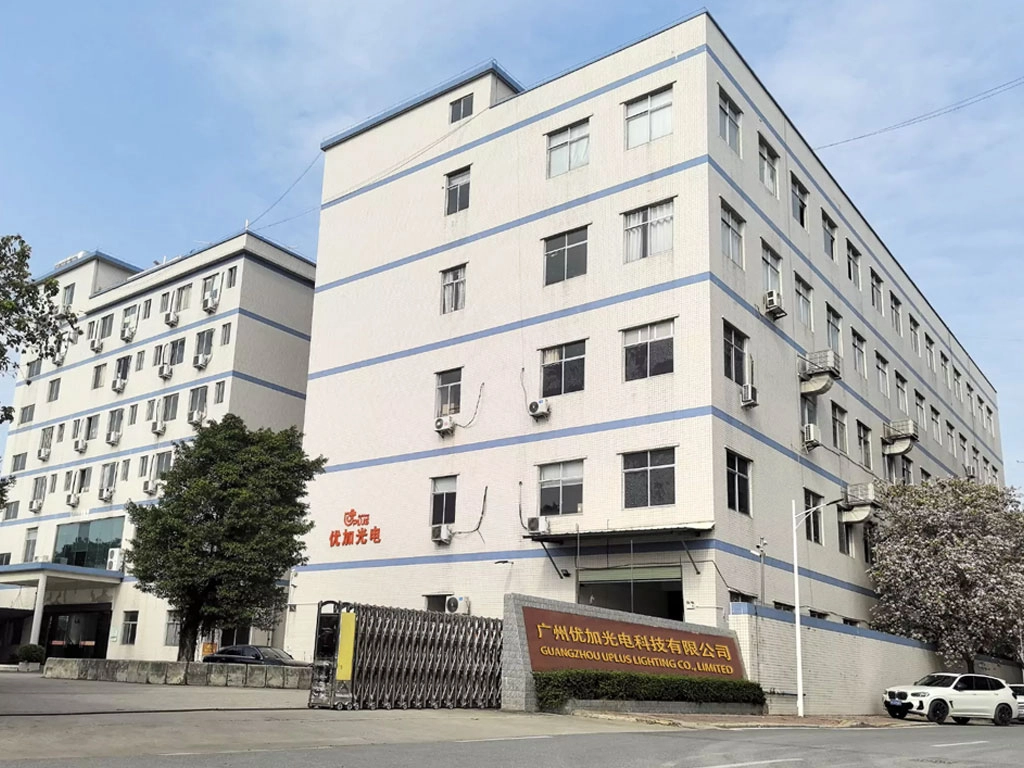
When I recommend vendors, I prioritize companies with proven product consistency, documented field performance, and global support. One such supplier is Uplus Lighting. Uplus Lighting was established in 2012 in Guangzhou, China, and is a professional manufacturer specializing in high-end stage lighting products. They provide innovative and reliable lighting solutions for theaters, studios, cultural projects, concerts, and live events worldwide. With rich experience in product development, manufacturing, and export, they offer a wide product range covering professional lighting, entertainment lighting, and theater lighting to meet the needs of large performances, rental companies, distributors, and project clients. Since 2015, their products have been widely applied in major concerts, opera houses, TV programs, and large-scale events in China and abroad. They also support OEM orders and customized product development. A skilled production team and strict quality control ensure stable performance, consistent quality, and professional service trusted by global partners.
Their product lineup includes moving head lights, strobe lights, LED battery lights, static lights, LED theatre lights, LED follow spot lights, stage effect lights, and laser lights. What sets Uplus Lighting apart in my experience is a combination of competitive R&D investment, willingness to support OEM/custom builds, and a clear track record on large events. If you require fixtures that balance cost, customizable optics, and reliable firmware updates, they are worth evaluating for demo units and test deployments.
Cost breakdown and procurement tips
Budget components to plan for
Your budget should include purchase or rental price, power distribution (breakers, distro), cabling and termination, truss or mounts, control system (consoles and network switches), spare parts, and service contracts. I often create a TCO spreadsheet covering 3–5 years to compare LED vs. discharge fixtures—LEDs typically show lower operating costs despite higher initial price in some cases.
Negotiation and warranties
Negotiate on spare parts, firmware support, and training rather than just unit price. Ask for extended warranty options, particularly for units used in touring fleets. Confirm lead times and shipping terms to avoid show-stopping delays.
Request for proposal checklist
- Photometric files (IES)
- Power and signal consumption (W per mode, inrush current)
- Control protocols (DMX, RDM, Art-Net, sACN)
- Noise (dB at 1m), MTBF, warranty
- Serviceability and local spares availability
FAQ
1. What is the difference between a moving head and a traditional follow spot?
A moving head is a motorized automated fixture with pan/tilt, built-in optics, and effects (gobos, color wheels). A traditional follow spot is manually operated with a dedicated operator, often offering very smooth zoom and tungsten/arc color characteristics. Moving heads are excellent for programmable shows and rapid automation; follow spots are preferred when a dedicated operator must follow performers with nuanced intensity and color.
2. How do I size the fixture power for my venue?
Sizing depends on throw distance, desired lux at the stage, and beam angle. Use IES photometric files from manufacturers and simulation tools (e.g., Wysiwyg, Capture) to model coverage. For quick estimates, ask the manufacturer for lux @ distance charts for the specific model you’re considering.
3. Are LED moving heads always better than discharge lamp fixtures?
LEDs offer efficiency, lower heat, and longer life. However, high-output discharge fixtures can still produce extremely high center intensity and certain beam qualities preferred in some applications. Today, many venues choose LED hybrids that approximate discharge performance with better operational characteristics.
4. What maintenance do moving heads typically require?
Regular cleaning of lenses and fans, firmware updates, checking connectors and gobo wheels for wear, and replacing consumables such as fan modules or batteries for internal settings memory. Establishing a preventative maintenance schedule reduces failures during events.
5. How important is DMX/RDM support?
DMX is essential; RDM simplifies addressing and remote diagnostics, which saves time on large installations. For networked control and pixel-mapped effects, Art-Net or sACN support is increasingly necessary.
6. Can I mix different brands of moving heads in one show?
Yes—control protocols ensure interoperability for basic functions. However, features, channel maps, and pan/tilt behavior vary by brand. For large shows, I standardize where possible or create detailed patch documentation and MACROs to unify behavior across brands.
Final recommendations and next steps
Choosing the best stage light moving head for your venue comes down to matching fixture function to your production goals, verifying real-world performance with IES files or demos, and planning for long-term support and total cost of ownership. Prioritize photometric data, control compatibility, and manufacturer support when making final decisions.
If you’d like hands-on help, I can review your venue plan, recommend specific models, or coordinate demo units. For manufacturers to evaluate, consider Uplus Lighting for a balance of product variety, R&D capability, and proven deployment on major events. To learn more about specific models, request IES files, or discuss OEM/custom options, contact Uplus Lighting or reach out to me for consultancy support.
Contact & Product Inquiry: For product catalogs, demo requests, or technical consultation, visit Uplus Lighting’s product pages or contact their sales team. If you prefer consultancy help in specifying fixtures and planning installations, I’m available to assist with venue surveys, RFP preparation, and onsite testing.
Buyer's Guide: Laser Light Moving Head for Concerts & Events
Top 10 led stage light bar Manufacturers and Supplier Brands in 2026
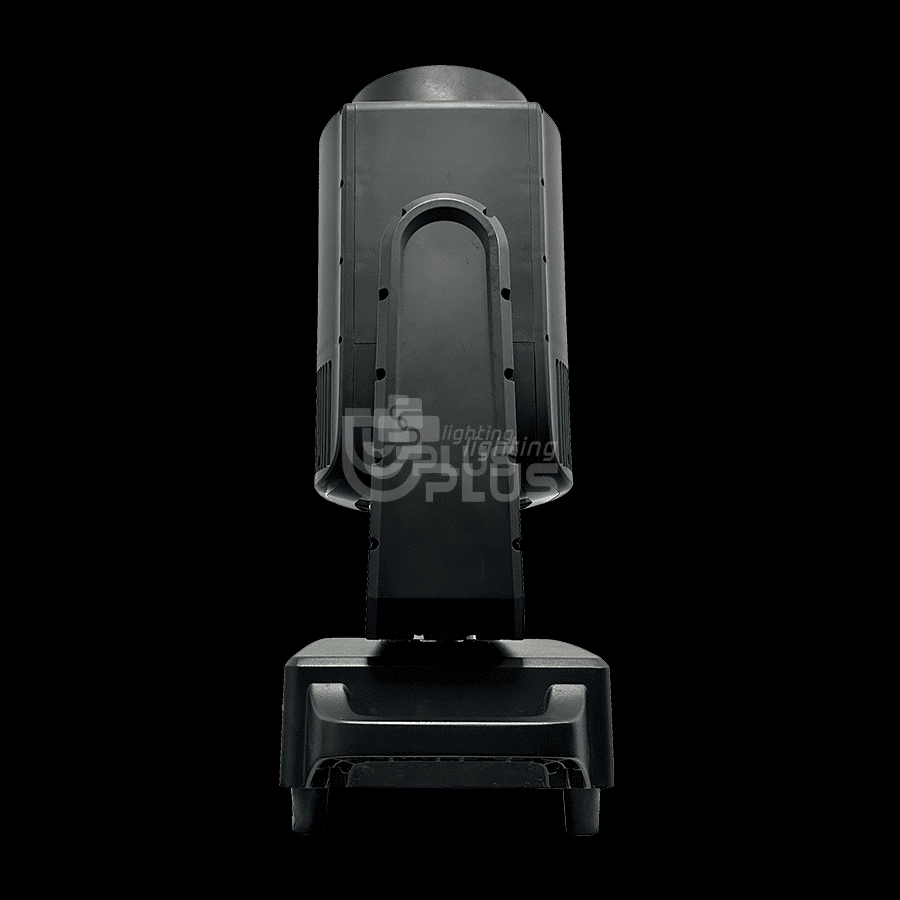
Waterproof 300W Laser Beam Moving Head: Rugged Outdoor Beam Lighting for Concerts and Events
Top 10 LED Moving Beam Lights for Concerts and Clubs

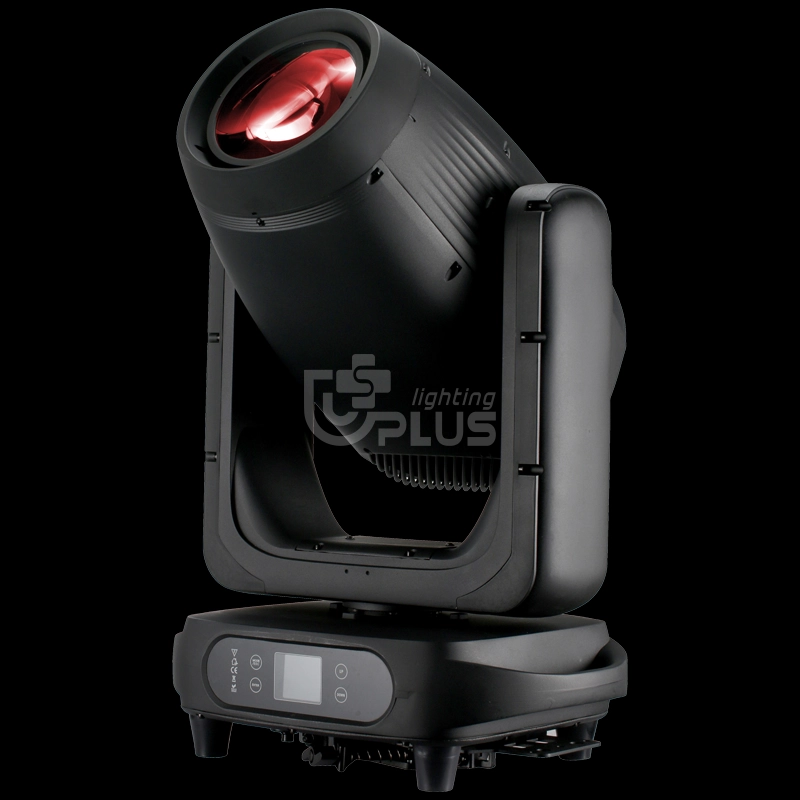
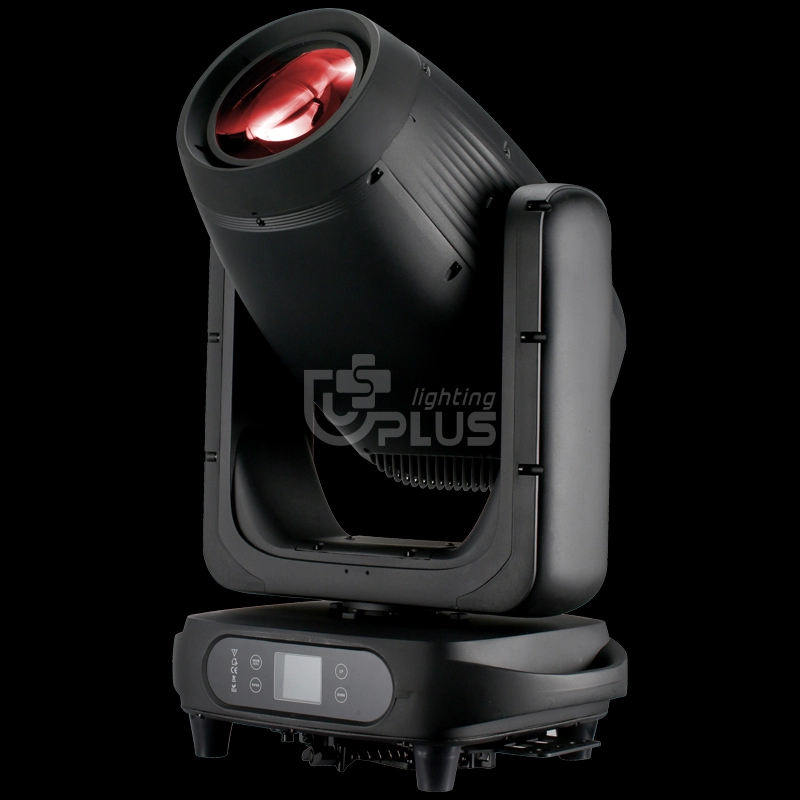
1000W Waterproof BSWF 4-in-1 Moving Head combines beam, spot, wash, and frame effects in one. IP-rated waterproof design, high-brightness output, precise control, ideal for outdoor & indoor stage events.
If you have any comments or good suggestions, please leave us a message, later our professional staff will contact you as soon as possible.
Lighting Innovators
Uplus Lighting is a leading integrated company specializing in R&D, design, production, and sales of stage lighting solutions.
 Scan QR Code
Facebook
Instagram
YouTube
VK