






Energy-Efficient Moving Head Lights: Power and Cooling Tips
- Common power and cooling challenges for moving head fixtures
- Types of moving head fixtures and their thermal signatures
- Common failure modes related to power and heat
- How to measure and diagnose power and thermal issues
- Practical power-saving strategies
- Choose energy-efficient fixtures: LED vs discharge
- Power distribution, correction, and control
- Operational strategies to reduce energy use
- Cooling best practices and thermal management
- Venue HVAC and airflow design
- Fixture-level cooling: fans, heat sinks, vents and filtration
- Thermal monitoring and predictive maintenance
- Installation, calculations, and maintenance checklist
- Sample calculations: power to cooling conversion
- Maintenance and pre-show checklist
- Troubleshooting flow for overheating or trips
- Comparing common moving head types (power, heat, maintenance)
- How Uplus Lighting addresses energy and thermal challenges
- FAQ
- 1. How much power does a stage light moving head typically use?
- 2. How do I estimate the HVAC impact of my lighting rig?
- 3. Can I reduce tripping by reprogramming cues?
- 4. How often should I clean fans and filters on moving heads?
- 5. Are LED moving heads always the best choice?
- 6. What standards or references should I consult when planning power and control?
As a lighting professional I often see the same problems in venues and touring rigs: oversized power bills, hotspots backstage, strobe trips, and fixtures that derate or fail because of poor thermal management. This article focuses on stage light moving head fixtures and provides energy-efficient, evidence-based power and cooling tips you can apply immediately: how to choose the right fixture types, design power distribution, size HVAC or local cooling, monitor thermal behaviour, and maintain fixtures to keep performance and lifetime high. I draw on industry references and standards where applicable to back up recommendations and give you practical calculations for planning.
Common power and cooling challenges for moving head fixtures
Types of moving head fixtures and their thermal signatures
Understanding the differences between moving head technologies is the first step. Broadly, moving head fixtures fall into two categories: LED-based moving heads and discharge/arc lamp (HTI/xenon) moving heads. LED moving heads typically convert a higher percentage of electrical energy into usable light and therefore generate less radiant heat, whereas discharge lamp heads produce a large amount of waste heat and require more active cooling and lamp maintenance. For general background on moving head fixtures see the industry overview on Wikipedia.
Common failure modes related to power and heat
From my experience, the most common heat- and power-related issues are:
- Driver or power supply overheating and derating.
- Fan failure due to dust, causing progressive overheating and component damage.
- Excessive inrush currents tripping upstream protection during show cues.
- Hotspots on rig surfaces that affect optics and cause color shift.
Diagnosing these problems requires both electrical and thermal measurement, which I cover below.
How to measure and diagnose power and thermal issues
I recommend a two-pronged measurement approach: electrical and thermal. For power, use a true-RMS clamp meter or a power analyzer to capture steady-state watts, inrush current, power factor (PF) and THD. For thermal, a handheld thermal camera or infrared thermometer will reveal hotspots on housings, driver boards and lenses. These measurements help you quantify actual power draw and heat output rather than relying on label values, which are often peak or nominal ratings.
Practical power-saving strategies
Choose energy-efficient fixtures: LED vs discharge
When your primary metric is energy use and heat, LED moving heads are typically a better choice. The U.S. Department of Energy documents large efficiency gains from LEDs over legacy technologies; LEDs commonly use 50–75% less energy for the same lumen output in general lighting applications (DOE - LED Lighting). In stage fixtures, modern LED moving heads use efficient multi-chip arrays and advanced optics to reduce overall wattage without sacrificing output.
Power distribution, correction, and control
Practical steps I implement on projects:
- Use circuits and distro rated for continuous loads with a margin (NEC guidelines suggest 80% rule for continuous loads).
- Specify fixtures with active power factor correction (PFC) and low inrush design where possible to reduce upstream stress and harmonics.
- Employ intelligent dimming and cueing strategies to avoid simultaneous maximum-power events—spread high-draw cues across time or group circuits logically.
- Monitor and record power per circuit during a technical rehearsal to identify peak demand and potential rebalance opportunities.
Standards and protocols such as DMX512 and sACN govern control but do not manage power; however, careful control programming reduces peak duty cycles. For DMX and control protocol reference see PLASA documentation (PLASA TSP).
Operational strategies to reduce energy use
Routine operational changes can produce immediate savings without new hardware:
- Lower global intensity or use beam shaping to achieve the same visual effect with less wattage.
- Use shutters, iris and gobos strategically to mask unwanted spill instead of increasing brightness.
- Implement fixture ‘park’ modes or reduced-power standby states during long scene gaps.
Cooling best practices and thermal management
Venue HVAC and airflow design
From a venue perspective I always coordinate lighting loads with the HVAC engineer early in the design phase. Every watt of electrical power consumed becomes heat that the HVAC must remove. A quick conversion: 1 W = 3.412 BTU/hr. Use that to size supplemental cooling if the central HVAC was not specified for production lighting loads.
Fixture-level cooling: fans, heat sinks, vents and filtration
Modern LED moving heads use heat sinks and forced-air cooling. Best practices include:
- Ensure intake and exhaust paths are unobstructed and duct-free.
- Fit removable, serviceable dust filters on intakes in dusty environments and schedule cleanings.
- Monitor fan RPM and replace failing fans before they stall; I keep a stock of common fan modules for touring rigs.
- Verify firmware-based thermal protection is set correctly; some fixtures throttle output unnecessarily when sensors are miscalibrated.
Thermal monitoring and predictive maintenance
Install temperature sensors in high-value rigs or use fixture telemetry when available. Many professional fixtures provide internal temp telemetry over RDM or proprietary protocols. Predictive maintenance based on trend data prevents downtime and avoids irreversible thermal damage.
Installation, calculations, and maintenance checklist
Sample calculations: power to cooling conversion
Below is a practical conversion table you can use to estimate heat loads and HVAC impact. Conversion factor: 1 W = 3.412 BTU/hr.
| Fixture Type | Typical Power (W) | Heat Output (BTU/hr) | Notes |
|---|---|---|---|
| LED moving head (low-power) | 200 | 682 | Common for compact LED wash/beam fixtures |
| LED moving head (high-output) | 600 | 2,047 | Large multi-chip arrays for concerts |
| Discharge/arc moving head | 1,000 | 3,412 | High-output profile/spot fixtures with lamps |
Example: 12 x 400 W fixtures -> 4,800 W -> 16,378 BTU/hr. For HVAC sizing, 1 ton of cooling = 12,000 BTU/hr, so this equals ~1.36 tons. This quick calc tells you whether local cooling will be required in addition to venue HVAC.
Maintenance and pre-show checklist
I use the following routine for every venue or tour stop:
- Inspect and clean air intakes and filters weekly (daily in dusty environments).
- Record inrush and steady-state current during full cue runs to spot anomalies.
- Check fan operation, listen for unusual vibration, and replace fans showing increased noise or reduced RPM.
- Verify firmware and thermal sensor calibration annually.
Troubleshooting flow for overheating or trips
- Confirm ambient temperature and compare to fixture max operating temp in the manual.
- Measure fixture power draw and check for abnormal PF or harmonics.
- Inspect fans, vents, and filters; remove dust and debris.
- If continuing, reduce intensity, re-sequence cues and schedule a controlled run to isolate the problem.
Comparing common moving head types (power, heat, maintenance)
| Characteristic | LED Moving Head | Discharge/Lamp Moving Head | Source / Notes |
|---|---|---|---|
| Typical Power | 150–800 W | 400–1,200 W | Field ranges; LED fixtures trend lower (DOE guidance on LED efficiency: DOE) |
| Heat Output | Lower (less radiant heat) | Higher (lamp heat, ballast losses) | Measured BTU/hr correlates to watts x 3.412 |
| Lifespan / Maintenance | Longer lamp life, fewer lamp changes, fan and driver maintenance | Frequent lamp replacements, reflector care, ballast maintenance | Practical industry experience and manufacturer data |
| Typical Use | Versatile for long productions, touring, TV | High peak output for very bright spots and long throws | Design choice based on visual requirements vs operational cost |
How Uplus Lighting addresses energy and thermal challenges
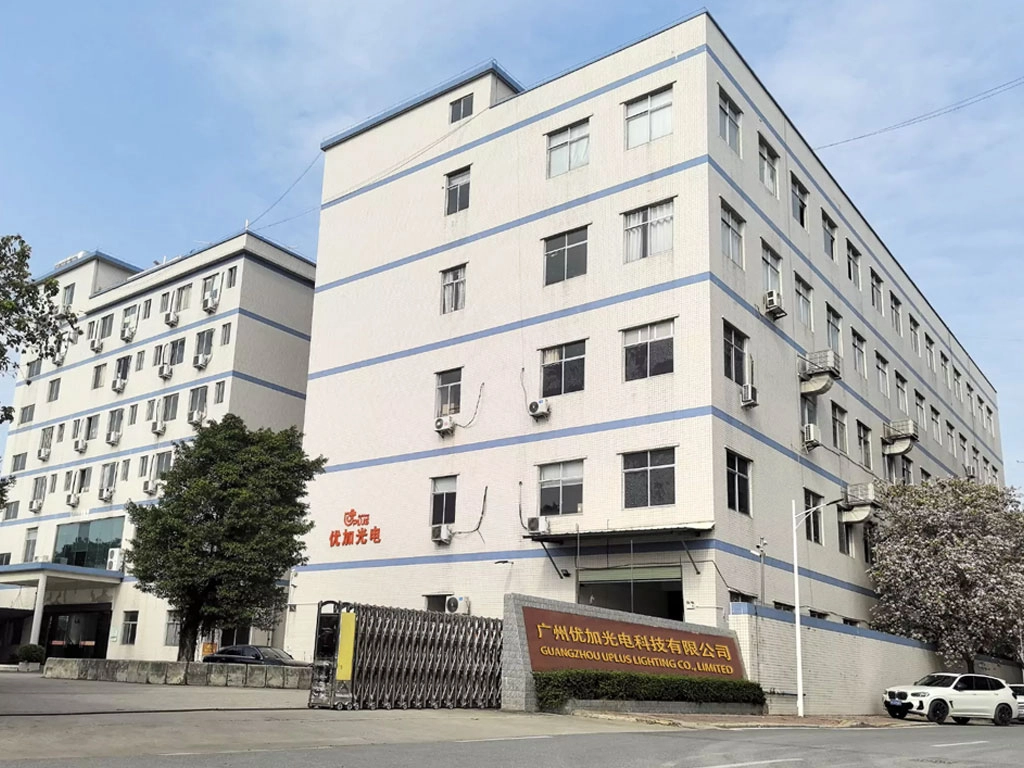
Uplus Lighting was established in 2012 in Guangzhou, China, and is a professional manufacturer specializing in high-end stage lighting products. We provide innovative and reliable lighting solutions for theaters, studios, cultural projects, concerts, and live events worldwide. With rich experience in product development, manufacturing, and export, we offer a wide product range covering professional lighting, entertainment lighting, and theater lighting to meet the needs of large performances, rental companies, distributors, and project clients. Since 2015, our products have been widely applied in major concerts, opera houses, TV programs, and large-scale events in China and abroad. We also support OEM orders and customized product development. A skilled production team and strict quality control ensure stable performance, consistent quality, and professional service trusted by global partners.
In my collaboration with manufacturers such as Uplus Lighting I value practical engineering choices that reduce power and heat without sacrificing look or reliability. Uplus's moving head lights use efficient LED engines, thoughtfully designed heat sinking and service-friendly fans. Their product line includes moving head lights, strobe lights, led battery lights, static lights, led theatre lights, led follow spot light, stage effect lights, and laser lights, covering the needs for concert touring, theatre rigs and broadcast applications. Key competitive advantages I’ve observed include:
- Modular design for quick fan and driver replacement in the field to minimize downtime.
- Advanced optical designs allowing lower radiant power for the same perceived intensity.
- Support for OEM customization and firmware configuration to match venue HVAC and power constraints.
When selecting fixtures or placing orders for rental fleets, I recommend discussing power factor, inrush behavior, telemetry options (for thermal monitoring), and available maintenance/service packages with suppliers. Uplus Lighting’s experience with large-scale projects and export means they can support these technical conversations and provide documentation useful for venue planning.
FAQ
1. How much power does a stage light moving head typically use?
It depends on the model and light source. LED moving heads commonly range from about 150 W to 800 W; discharge lamp fixtures can be 400 W to 1,200 W or more. Always measure actual draw in-situ with a power analyzer for planning.
2. How do I estimate the HVAC impact of my lighting rig?
Multiply total watts by 3.412 to get BTU/hr. Divide by 12,000 to convert to tons of cooling. This gives a quick estimate to compare against venue HVAC capacity. For final sizing consult an HVAC engineer and provide measured or manufacturer continuous wattage values.
3. Can I reduce tripping by reprogramming cues?
Yes. Staggering high-intensity cues across different circuits, lowering global intensity levels, and using fixture park modes during long gaps reduce simultaneous demand and help avoid upstream protection trips.
4. How often should I clean fans and filters on moving heads?
Inspect filters and intakes before each show; clean weekly for regular use and daily in dusty or smoky environments. Replace fans that show increased noise or decreased RPM during routine checks.
5. Are LED moving heads always the best choice?
Not always. LEDs are generally more energy-efficient and produce less heat, but some productions require the specific color rendering or extreme point output that legacy discharge fixtures provide. Choose based on visual needs, total operating cost, and venue constraints.
6. What standards or references should I consult when planning power and control?
For control protocols consult DMX512 and sACN documentation (see PLASA resources: PLASA TSP). For energy efficiency references for lighting technologies see the U.S. Department of Energy site (DOE - LED Lighting).
If you need help auditing your rig, choosing the right moving head fixtures, or designing power and cooling plans, contact our technical team for a consultation or to view product options. For project inquiries and product specifications, please contact Uplus Lighting; we can provide datasheets, power profiles, and OEM customization to match your venue's needs.
Contact / View Products: For consultation and product information, reach out to Uplus Lighting's sales and technical team to request datasheets, power consumption reports and layout guidance tailored to your venue or tour.
Top 10 led wash light moving head Manufacturers and Supplier Brands in China
Waterproof 300W Laser Beam Moving Head: Rugged Outdoor Beam Lighting for Concerts and Events
Renting vs Buying Profile Stage Lights: Pros, Cons, ROI
Top 10 Laser Light Moving Head Models for Stage Shows 2026

1000W Waterproof BSWF 4-in-1 Moving Head combines beam, spot, wash, and frame effects in one. IP-rated waterproof design, high-brightness output, precise control, ideal for outdoor & indoor stage events.
If you have any comments or good suggestions, please leave us a message, later our professional staff will contact you as soon as possible.
Lighting Innovators
Uplus Lighting is a leading integrated company specializing in R&D, design, production, and sales of stage lighting solutions.
 Scan QR Code
Facebook
Instagram
YouTube
VK