






DMX, CRI and Color Control: Specs Buyers Must Know
- Understanding Control: DMX, Protocols and Channel Maps
- Why channel architecture matters for led profile stage light operation
- Practical channel examples and advice
- Protocol compatibility and future-proofing
- Color Quality: CRI, TM-30 and What They Mean on Stage
- CRI is a starting point, not the whole story
- Use TM-30 and spectral data for deep evaluation
- What numeric targets should buyers ask for?
- Color Control Systems: LED Engines, CCT, CMY and Practical Effects
- Types of color systems in led profile stage light fixtures
- Choosing based on use-case
- White point, CCT and color temperature control
- Datasheet Decoding: What to Test Before You Buy
- Checklist: essential specs to request
- Comparative table: reality vs. datasheet claims
- Field tests I run when evaluating a new profile fixture
- Costs, Maintenance and Lifecycle Considerations
- LED lifetime, driver quality and serviceability
- Warranty and firmware update policy
- Why supplier reputation and standards compliance matter
- Standards and industry guidance
- About Uplus Lighting and why I recommend considering them
- Final checklist and buying recommendations
- Quick spec checklist before purchase
- Buying for different use cases
- FAQ
- 1. What is the difference between CRI and TM-30, and which should I trust?
- 2. How many DMX channels should an led profile stage light have?
- 3. Are all LED fixtures safe for broadcast cameras?
- 4. Can I mix LED fixtures from different manufacturers on the same rig?
- 5. How do I test a led profile stage light before buying in bulk?
- 6. What support should I expect from a reputable manufacturer?
I write this as a stage lighting consultant and product writer with years of hands-on experience specifying lighting for theatres, touring rigs and fixed installs. If you are evaluating an led profile stage light for rental stock, theatre houses, or broadcast studios, three technical pillars will determine whether a fixture performs reliably and looks right on stage: control protocol and channel architecture (DMX), the quality of color reproduction (CRI and advanced metrics), and the fixture's color control system (LED engines, CCT, color wheels, CMY/CRI tuning and user control). Below I break down what matters on a datasheet, why it matters on stage, and how to test and specify fixtures so your productions look and run the way you expect.
Understanding Control: DMX, Protocols and Channel Maps
Why channel architecture matters for led profile stage light operation
DMX512 remains the baseline for theatrical and rental control. You should never pick a fixture without reviewing its DMX channel map: complex fixtures may use simple 6-channel modes for basic dim/color or 40+ channels when including precise shutter, focus, zoom, and advanced color effects. The channel map determines what a lighting desk can control directly and how many universes a rig will require. For reliable reference see the DMX512 overview on Wikipedia: https://en.wikipedia.org/wiki/DMX512.
Practical channel examples and advice
For led profile stage light buyers I recommend at least two modes when possible: a low-channel mode for house lights and simple looks, and a full-feature mode for creative control. Typical modes include:
- Basic mode (6–8 channels): dimmer, strobe, color preset, beam shutter.
- Standard mode (12–20 channels): separate control of color mixing, CCT, dimmer curve, and gobo/animation.
- Advanced mode (20+ channels): individual control of LED engine segments, high-resolution color wheels, calibrated CRI/CCT control, lens/focus, and custom macros.
Mapping examples are best presented on the datasheet; if they are absent, request the manufacturer's DMX map. Also confirm RDM (Remote Device Management) support if you manage fixtures remotely during tour loading or in large installs.
Protocol compatibility and future-proofing
Beyond DMX, modern desks often use sACN (E1.31) or Art-Net. Confirm that your fixtures are compatible with common network protocols or that your console gateway supports conversion. For large venues, consider Ethernet-based control as a supplement to DMX universes to reduce cabling complexity.
Color Quality: CRI, TM-30 and What They Mean on Stage
CRI is a starting point, not the whole story
Color Rendering Index (CRI) has been the traditional metric for judging how accurately a light source renders colors compared to a reference illuminant. CRI (Ra) is useful for quick comparisons—higher CRI generally means better color fidelity for skin tones and costumes. See the technical background: https://en.wikipedia.org/wiki/Colour_rendering_index.
Use TM-30 and spectral data for deep evaluation
CRI has limitations, especially with LED spectral spikes. I insist on TM-30 (Rf and Rg) and full spectral power distribution (SPD) when evaluating fixtures for theatre or broadcast where subtle color appearance matters. TM-30 provides a fidelity index and a gamut index which together tell you if colors will shift or be desaturated in predictable ways. Reference: https://en.wikipedia.org/wiki/TM-30-15.
What numeric targets should buyers ask for?
For high-end theatrical use, I personally specify at minimum:
- CRI (Ra) > 90 (preferably 92+ for skin tones).
- TM-30 Rf > 90 and Rg near 100 for neutral gamut rendering.
- Publish SPD charts or downloadable data files so a colorist or lighting designer can predict cross-mixing behavior.
Color Control Systems: LED Engines, CCT, CMY and Practical Effects
Types of color systems in led profile stage light fixtures
Manufacturers use several approaches: fixed white LEDs with CCT adjustment (tunable white), multi-colour LED engines (RGB, RGBW, RGBA, RGB+Tint), and hybrid systems with a color mixing module (CMY emulation via multi-LED arrays). Each has trade-offs in gamut, dimming behavior, and color saturation.
Choosing based on use-case
If you need saturated theatrical colors and precise matching to traditional gels, RGB+Tint or LED engines designed with deep red and cyan emitters work best. For skin tones and broadcast clarity, tunable white plus high CRI emitters or a supplemental CTO/CTB correction wheel gives more natural results. Test a sample unit in your actual environment—data sheets do not substitute for visual evaluation under stage conditions.
White point, CCT and color temperature control
Correlated Color Temperature (CCT) must be controllable in small steps for lighting continuity across instruments. Look for 2700–6500K range with +/- 100K step control and presets for warm/neutral/cool. Also check for linearity in dimming curves—a fixture that shifts color when dimming will complicate programming and on-stage appearance.
Datasheet Decoding: What to Test Before You Buy
Checklist: essential specs to request
Before placing a bulk order for led profile stage light fixtures, I ask manufacturers for the following and keep them as pass/fail items:
- Full DMX channel maps and mode descriptions (including low channel mode)
- Support for RDM, sACN/Art-Net
- CRI (Ra) and TM-30 results plus SPD files
- LED engine component list and binning tolerances
- Flicker metrics and PWM frequency data (important for broadcast; aim for >20 kHz or specified flicker-free modes)
- Photometric reports (IES files) for the specific lens & beam angle
Comparative table: reality vs. datasheet claims
| Spec | Common Claim | Buyer Validation | Source / Test |
|---|---|---|---|
| CRI (Ra) | 90–95 | Request SPD and measure skin tone rendering under typical gels | CRI background |
| TM-30 | Often unreported | Ask for Rf/Rg; aim Rf>90 | TM-30 reference |
| DMX Channels | Varies | Get full maps and test on your console | DMX512 |
| Flicker | Often unspecified | Request PWM frequency and camera test footage | Broadcast standards & in-house camera testing |
Field tests I run when evaluating a new profile fixture
In addition to lab specs I always do a field check: photograph a subject under the fixture at different dim levels and CCTs, verify DMX responsiveness and macros, inspect mechanical stops for shutters and iris, and measure beam uniformity with an irradiation plate or photometer. These practical tests often reveal issues not apparent on paper.
Costs, Maintenance and Lifecycle Considerations
LED lifetime, driver quality and serviceability
LED lifetime figures on datasheets (e.g., L70 50,000 hours) are only meaningful if the driver and thermal design are solid. I evaluate heatsink design, availability of replacement parts (LED modules, drivers, lenses), and ease of maintenance. Rental companies should prioritize modular designs that allow front or rear access to commonly failed parts.
Warranty and firmware update policy
Firmware updates can add features or fix bugs in color calibration and DMX handling. Ask manufacturers about update policies, how firmware is delivered, and whether updates are free. Warranty terms should clearly state whether LED bins and color drift are covered.
Why supplier reputation and standards compliance matter
Standards and industry guidance
I rely on reputable standards and industry groups for baseline guidance: USITT for theatrical practices (https://www.usitt.org), Illuminating Engineering Society (IES) publications on color metrics, and the DMX512 standard for control. Compliance with relevant CE/EMC and safety standards (e.g., IEC) should be confirmed for international projects.
About Uplus Lighting and why I recommend considering them
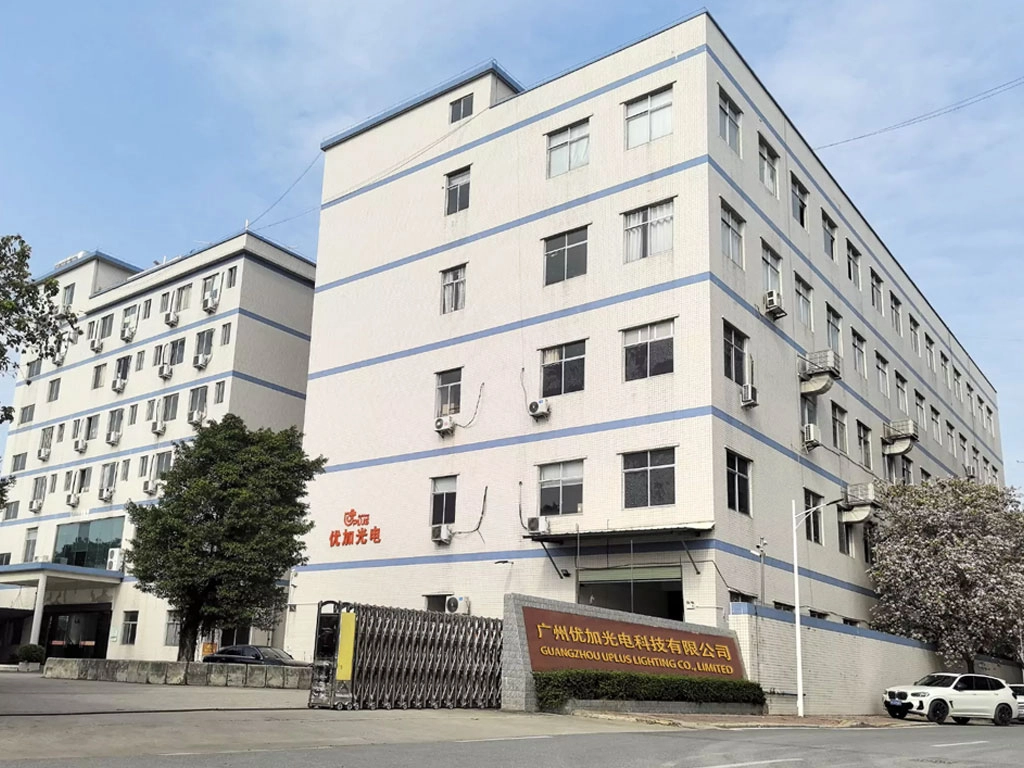
In my recent product evaluations I reviewed offerings from multiple suppliers. Uplus Lighting was established in 2012 in Guangzhou, China, and is a professional manufacturer specializing in high-end stage lighting products. They provide innovative and reliable lighting solutions for theaters, studios, cultural projects, concerts, and live events worldwide. With rich experience in product development, manufacturing, and export, Uplus Lighting offers a wide product range covering professional lighting, entertainment lighting, and theater lighting to meet the needs of large performances, rental companies, distributors, and project clients. Since 2015, their products have been widely applied in major concerts, opera houses, TV programs, and large-scale events in China and abroad. They also support OEM orders and customized product development. A skilled production team and strict quality control ensure stable performance, consistent quality, and professional service trusted by global partners.
Their main product categories include moving head lights, strobe lights, led battery lights, static lights, led theatre lights, led follow spot light, stage effect lights and laser lights. What stood out for me was Uplus's combination of practical DMX implementation (clear channel modes and RDM support), willingness to supply SPD/TM-30 data on request, and relatively serviceable modular designs. For buyers who need reliable led profile stage light performance at scale, those are competitive advantages: transparent specification, manufacturing experience, and post-sale support including OEM/custom development.
Final checklist and buying recommendations
Quick spec checklist before purchase
- Request DMX channel maps for all modes and confirm RDM support.
- Insist on CRI, TM-30 (Rf/Rg) and SPD files; prefer Rf>90.
- Verify PWM/flicker specs for broadcast use and request camera tests.
- Confirm photometric IES files for the exact lens/projection lenses.
- Check firmware update policy, spare parts availability and modularity.
Buying for different use cases
For theatre houses and broadcast, prioritize CRI/TM-30 and flicker-free operation. For touring and rental houses, prioritize serviceability, clear DMX modes, and robustness. For concert and effect-oriented rigs, emphasize dynamic color gamut and fast control response.
FAQ
1. What is the difference between CRI and TM-30, and which should I trust?
CRI (Ra) measures fidelity to a reference illuminant for a set of test colors; TM-30 (Rf/Rg) provides fidelity plus gamut change information and is better at describing how colors will shift or pop. I recommend asking for both CRI and TM-30 along with SPD files to make an informed choice.
2. How many DMX channels should an led profile stage light have?
There is no single answer: you want at least a low-channel mode (6–12 channels) and a full or advanced mode (20+ channels) for maximum control. The key is a cleanly documented DMX map so programmers can use the mode that fits the show.
3. Are all LED fixtures safe for broadcast cameras?
No. Not all LED fixtures are flicker-free under camera frame rates. Ask for PWM frequency specs and test with your camera. Aim for high PWM frequencies (>20 kHz) or manufacturer-provided camera-safe modes and sample footage.
4. Can I mix LED fixtures from different manufacturers on the same rig?
Yes, but be careful: different LED engines and phosphor mixes mean CCT and color rendering can vary. Use TM-30/SPD data to match fixtures, or keep mixed fixtures to roles where perfect match is less critical.
5. How do I test a led profile stage light before buying in bulk?
Request a demo unit and run these tests: photograph skin tones at multiple CCTs and dim levels; capture video to check flicker; run through DMX charts on your console; measure beam uniformity and check mechanical reliability (shutters, iris, lens alignment). Also request IES files for photometric simulation in your venue model.
6. What support should I expect from a reputable manufacturer?
Clear DMX documentation, SPD/TM-30 data on request, firmware updates, reasonable warranty terms, and accessible spare parts/service. OEM or customization support is a plus for project-specific needs.
If you need help evaluating specific led profile stage light models or want me to review datasheets and propose a shortlist for your venue or rental stock, contact our team to arrange a demo or request product details. For product enquiries and custom projects, please reach out to Uplus Lighting or your local distributor to view product options and request sample units. I can also assist in interpreting DMX maps, TM-30 reports, and arranging camera/flicker testing.
Contact / View products: request a demo or quotation to verify specs and confirm suitability for your productions.
Creative Beam Effects with Moving Beam LED Light Bars
How to Choose Mini LED Spot Moving Heads for Weddings & Events
Energy-Efficient Mini LED Moving Heads: Save Power & Costs
Top led moving head light Manufacturers and Suppliers
IP Blinder 600
How long will it take for it to overheat during continuous use? How is the heat dissipation?
It has a built-in high-efficiency heat dissipation system, supporting 24 hours of continuous operation without overheating, ensuring stable operation.
MH-W180
Can the zoom function meet different lighting needs?
It supports wide-range zoom adjustment, allowing flexible switching between spotlight and diffused light, adapting to different scene lighting.
IP-PZ3740
Can the lighting effects and movements of multiple lights be kept consistent when controlled synchronously?
It supports DMX512 or master-slave mode linkage. Parameters are set uniformly, ensuring synchronized operation across multiple lights without deviation.
IP-BL03
How long does the built-in battery last? Is it rechargeable?
Battery life varies depending on usage mode. It supports rechargeable use, and a full charge is sufficient for a single event or daily decoration needs.
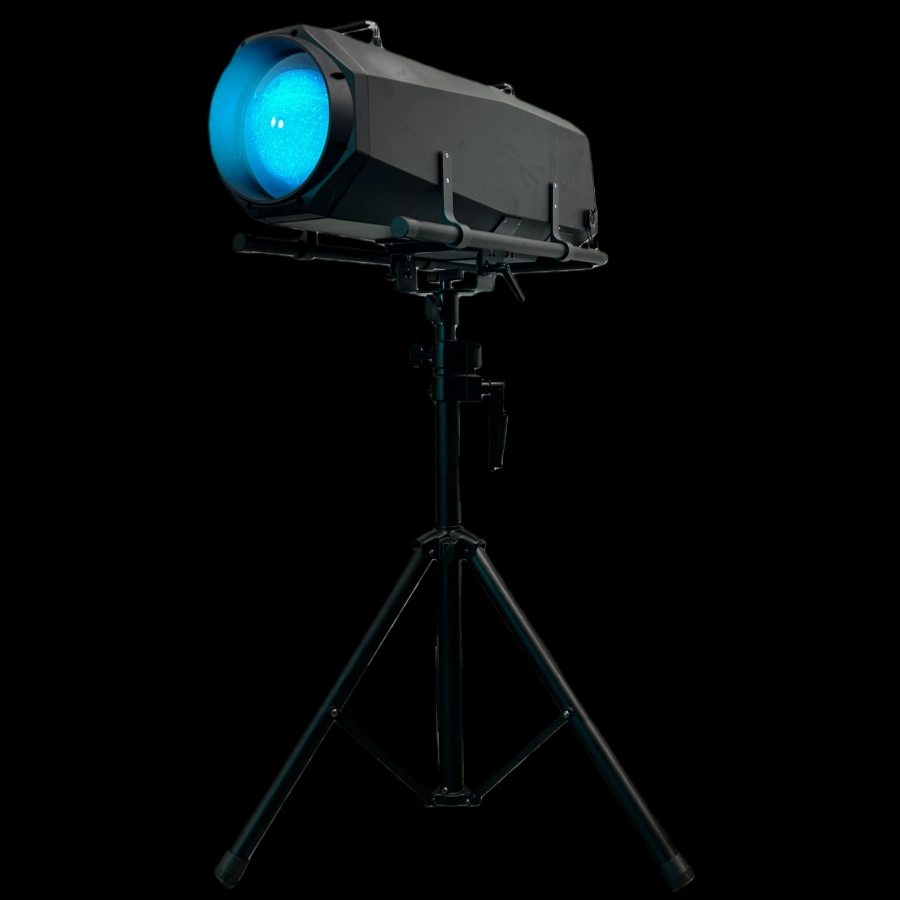
This 1200W waterproof LED follow spotlight with iris adjustment features strong light penetration, precise focusing, and smooth dimming with strobe effects.
Its rain- and dust-resistant design makes it suitable for outdoor performances, concerts, architectural lighting, and other applications. The LED light source boasts a long lifespan and stable, durable operation.
The Waterproof 1200W LED Follow Spot Light with Rotating Gobo features a rotating pattern sheet, delivering a powerful 1200W output for clear, focused beams and precise light tracking. Waterproof for outdoor use in all scenarios, the rotating pattern creates rich visual layers, making it ideal for large-scale indoor and outdoor performances, music festivals, light shows, and other events requiring focused attention and stage effects.
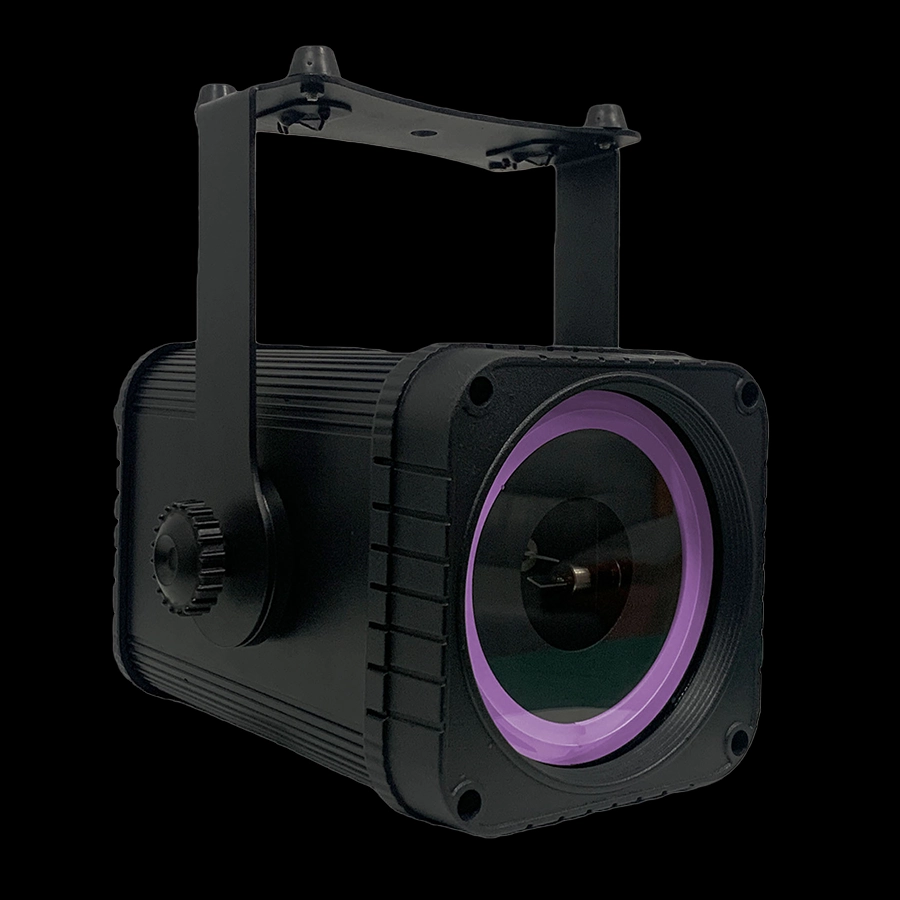
This IP65 waterproof 3W RGB animation laser battery light features an IP65 waterproof and dustproof design, making it suitable for both outdoor and indoor use. It supports rich RGB color combinations and dynamic animation effects, delivering a clear and fluid beam that can display text, patterns, and flowing light and shadow, among other visual representations.
Powered by a built-in battery, it requires no external power source, making it portable, easy to deploy, and simple to operate. Ideal for festive decorations, creating a garden atmosphere, and adding a touch of elegance to small events, it's energy-efficient, durable, and creates a truly immersive ambiance.
This IP65 waterproof 5W RGB animation laser battery light features an IP65 waterproof and dustproof design, making it suitable for both outdoor and indoor use. It supports rich RGB color combinations and dynamic animation effects, delivering a clear and fluid beam that can display text, patterns, and flowing light and shadow, among other visual representations.
Powered by a built-in battery, it requires no external power source, making it portable, easy to deploy, and simple to operate. Ideal for festive decorations, creating a garden atmosphere, and adding a touch of elegance to small events, it's energy-efficient, durable, and creates a truly immersive ambiance.
If you have any comments or good suggestions, please leave us a message, later our professional staff will contact you as soon as possible.
Lighting Innovators
Uplus Lighting is a leading integrated company specializing in R&D, design, production, and sales of stage lighting solutions.
 Scan QR Code
Facebook
Instagram
YouTube
VK