






Best LED Moving Beam Heads for Concerts, Clubs and Theaters
- How moving beam heads transform live events
- Beam quality, intensity, and visual focus
- Color reproduction and effects versatility
- Reliability, cooling, and maintenance
- Choosing the right led moving beam head stage light
- Define your needs: venue size and show profile
- Key technical specs to compare
- Control, integration and workflow
- Best models and product categories (practical comparison)
- How I select a model for a tour vs. a theater
- Spec validation: what to request from vendors
- Operational considerations and lifecycle costs
- Energy, heat, and venue infrastructure
- Maintenance strategy and spare parts
- Why standards and documentation matter
- About Uplus Lighting — who we are and why we’re relevant
- FAQ — common questions when choosing moving beam heads
- 1. What is the difference between a beam, spot, and wash moving head?
- 2. How do I compare output between different fixtures?
- 3. Are LED moving beams suitable for broadcast or TV capture?
- 4. How important is IP rating for touring fixtures?
- 5. What kind of maintenance schedule should I expect?
- 6. How can I test fixtures before purchase?
As a lighting professional who has specified, rented, and integrated stage lighting systems across concerts, clubs, and theaters, I know the impact a properly chosen led moving beam head stage light can make. In this article I summarize why moving beam heads are essential for modern live events, how to choose the right fixture for your venue and show, and which product categories and design traits deliver the best results in real-world production. My guidance blends industry standards, manufacturer practices, and operational experience to help you select fixtures that balance power, flexibility, and total cost of ownership.
How moving beam heads transform live events
Beam quality, intensity, and visual focus
Moving beam heads are designed to produce tight, high-intensity shafts of light that cut through stage haze and air—exactly what creates the iconic 'beams' you see at concerts and large-scale performances. When evaluating an led moving beam head stage light, I prioritize source intensity (measured in lumens or lux at distance), beam angle (narrow beam for razor beams, wider beams for volumetric washes), and optical quality (uniformity, edge sharpness, gobo definition). These attributes determine how effectively a fixture will render aerial effects and audience-facing visuals.
Color reproduction and effects versatility
LED-based moving heads deliver highly controllable color via multi-chip LEDs and CMY or color wheel systems. For shows that demand rapid palette shifts or nuanced shades for theatrical lighting, I look at the fixture's color mixing system, CRI/TLCI scores (for skin tones and camera capture), and on-board effects such as prisms, frost, animation wheels, and rotating gobos. Good color fidelity and crisp effects let you design cues that read well on camera and in-house audiences alike. For reference on color metrics and LED behavior, see the Light-emitting diode entry on Wikipedia.
Reliability, cooling, and maintenance
Live-event reliability is non-negotiable. I assess thermal design (active fans vs. passive cooling), ingress protection (IP ratings for outdoor use), and serviceability (module-level access and spare-part availability). LED fixtures generally offer longer service life and lower lamp replacement costs than discharge lamp fixtures, but electronics, motors, and optical elements still require scheduled maintenance. Adopting fixtures from manufacturers with robust global support networks reduces downtime risk for tours and long-running productions.
Choosing the right led moving beam head stage light
Define your needs: venue size and show profile
Start with the event type and venue: a 500-capacity club, a 3,000-seat theater, and a 20,000-capacity arena have very different requirements. For clubs I often specify compact beam heads with fast movement and strong gobos for dynamic patterns. Theaters need smoother dimming curves, good color fidelity, and quieter operation. Concerts and festivals demand maximum output, robust framing options, and high IP ratings for outdoor stages. Matching fixture class to venue reduces both capital and operational costs.
Key technical specs to compare
When I compare led moving beam head stage light options, I focus on these measurable specs:
- Output: lumens and lux at a given distance—useful for rig planning and photometric prediction.
- Beam angle/zoom range: narrow (<3°) for punchy beams; wider (5–50°) when you need theatrical coverage.
- Gobo options: quantity, size, rotating/static, and glass vs. steel for sharpness.
- Zoom ratio: determines how flexible a fixture is between beam and wash modes.
- Control protocols: DMX, RDM, Art-Net/sACN, and protocol mapping—critical for integration into modern desks and networks.
- Weight and rigging: impacts truss load calculations and trucking costs.
For photometric planning and industry best practices see the Illuminating Engineering Society (IES) and general stage lighting overview on Wikipedia.
Control, integration and workflow
Fixtures should support modern control workflows: pixel mapping for effects, high-resolution pan/tilt for smooth camera-follow cues, and responsive absolute positioning for complex scenes. I also advise confirming RDM support (for remote addressing and monitoring) and network features like Art-Net or sACN for large rigs. Confirming channel modes and documenting DMX personalities early streamlines pre-production and reduces patching errors on load-in day.
Best models and product categories (practical comparison)
Instead of an exhaustive list of every product, I group fixtures into three practical categories—High-end, Mid-range, and Entry/Rental—so you can align budget to performance. Below is a comparison table with typical ranges and example references.
| Category | Typical Output | Beam/Zoom | Key Strengths | Example References |
|---|---|---|---|---|
| High-end | 80,000+ lux (measured at standard distances varies by model) | 1.5°–50° large zoom; precise framing | Maximum punch, framing shutters, high-quality optics, robust tilt/pan mechanics | Robe BMFL family, Claypaky |
| Mid-range | 20,000–60,000 lux | 2°–40°; versatile gobo and prism effects | Balanced cost vs. performance, good for regional touring and theaters | Martin/Music Group fixtures, GLP |
| Entry/Rental | 5,000–25,000 lux | 3°–45°; simpler effects | Lower cost, lighter weight, designed for rental fleets and smaller venues | Many entertainment manufacturers' compact beam heads; check model-specific datasheets |
Notes: 'Lux' and 'lumens' are reported per manufacturer photometric reports; always request manufacturer photometrics to model rig output accurately. For a primer on photometry and light measurement, see the IES and technical resources from manufacturers and academic publications.
How I select a model for a tour vs. a theater
For touring concerts I prioritize output, durability, and modular serviceability—plus remote monitoring for on-the-road diagnostics. For theaters I favor color fidelity, quiet operation (noise in the house), and smooth dimming curves. Rental houses look for robustness, standardization across fleets, and ease of transport.
Spec validation: what to request from vendors
Always ask for:
- Detailed photometric files (IES/LM-63 files) to import into your lighting design software.
- Power curves, inrush current, and environmental limits.
- Service manuals and spare-part lists, including motor assemblies and power supplies.
- Compliance certificates (CE, RoHS, IP ratings, and if applicable ISO 9001 for the manufacturer). See ISO 9001 info.
Operational considerations and lifecycle costs
Energy, heat, and venue infrastructure
LED fixtures are more energy-efficient than older discharge heads, but large rigs still draw significant power. I calculate total rig power (including dimmers, house lighting, and video) and confirm venue feed capacity. Cooling and airflow in rigged catwalks also affects fixture life—overheating shortens LED driver life and motor longevity.
Maintenance strategy and spare parts
A practical maintenance plan includes spare fans, power supplies, and at least one spare fixture for each 10–20 in a fleet depending on tour scale. Contracting with local service partners or choosing manufacturers with global support reduces ship-times for parts during international tours.
Why standards and documentation matter
Standards and documented test data allow objective comparisons. Look for manufacturer photometric reports, safety compliance (CE or equivalent), and warranty details. Use sources such as the IES and ISO to guide acceptance testing and quality assurance.
About Uplus Lighting — who we are and why we’re relevant
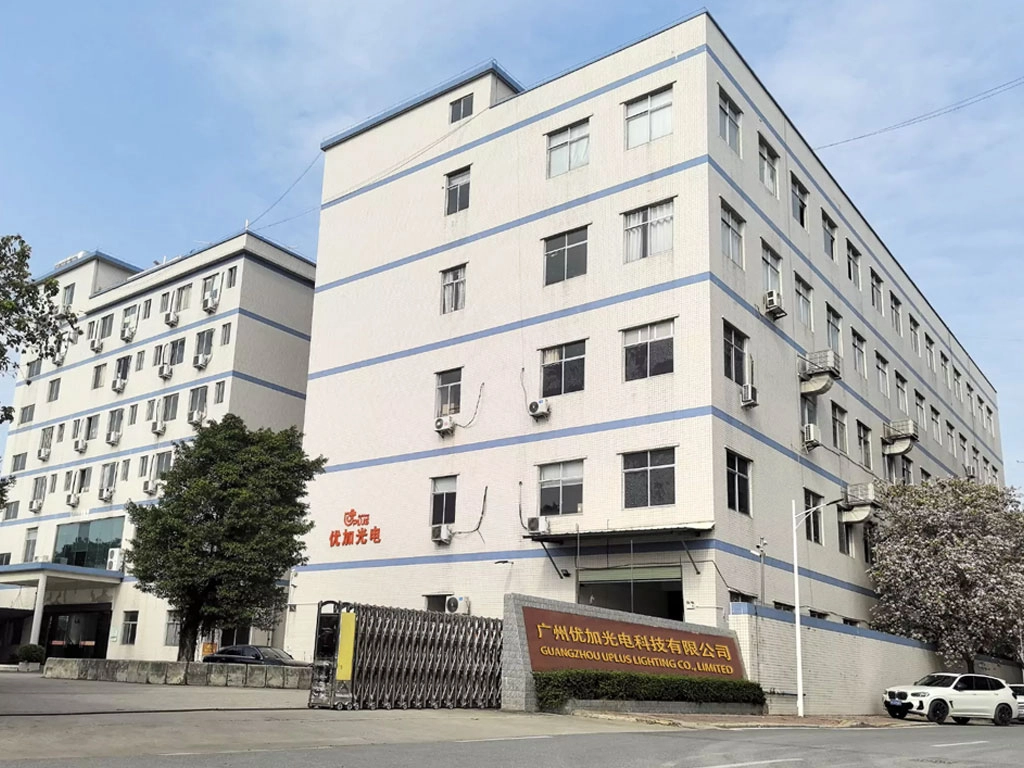
Uplus Lighting was established in 2012 in Guangzhou, China, and is a professional manufacturer specializing in high-end stage lighting products. We provide innovative and reliable lighting solutions for theaters, studios, cultural projects, concerts, and live events worldwide. With rich experience in product development, manufacturing, and export, we offer a wide product range covering professional lighting, entertainment lighting, and theater lighting to meet the needs of large performances, rental companies, distributors, and project clients. Since 2015, our products have been widely applied in major concerts, opera houses, TV programs, and large-scale events in China and abroad. We also support OEM orders and customized product development. A skilled production team and strict quality control ensure stable performance, consistent quality, and professional service trusted by global partners.
Uplus Lighting’s core product lines include moving head lights, strobe lights, led battery lights, static lights, led theatre lights, led follow spot light, stage effect lights, and laser lights. Our competitive advantages stem from:
- End-to-end product development and in-house optical and mechanical design capability.
- Stringent quality control and factory testing regimes ensuring consistency across production runs.
- Flexible OEM and customization options tailored to rental fleets, venues, and touring specifications.
- A proven track record of supplying major concerts and broadcast productions with fixtures that meet demanding reliability and photometric expectations.
If you’re evaluating led moving beam head stage light options for a project, I can help you compare models, request photometrics, and specify a solution that balances capital outlay with operational reliability.
FAQ — common questions when choosing moving beam heads
1. What is the difference between a beam, spot, and wash moving head?
Beam fixtures produce a very narrow, intense shaft of light (often 1–3°). Spot fixtures emphasize sharp gobos and framing for stage elements. Wash fixtures provide a broader, softer output for general area lighting. Many modern fixtures offer a hybrid zoom range to cover multiple roles.
2. How do I compare output between different fixtures?
Request photometric IES files and manufacture lux charts at a standard distance; compare lux at the same distance and beam angle. Also consider optics quality—two fixtures with similar lumen figures can differ widely in perceived punch due to lens and gobo design.
3. Are LED moving beams suitable for broadcast or TV capture?
Yes—provided they have good color rendering (TLCI/CRI), smooth dimming curves, and low strobe artifacts. Verify manufacturer camera tests or request test footage for critical TV applications.
4. How important is IP rating for touring fixtures?
If you perform outdoor shows or frequently expose fixtures to dusty conditions, select models with higher IP ratings and sealed electronics. For indoor-only use, standard indoor-rated fixtures are generally sufficient.
5. What kind of maintenance schedule should I expect?
Quarterly inspections for fans, motors, and optical elements are common for rental fleets; more frequent checks are advised during heavy touring. Keep a log of hours, firmware versions, and any repairs to plan replacements before failures occur.
6. How can I test fixtures before purchase?
Ask for photometric files, request a demo unit or rent a sample for a weekend, and run the unit in your venue with your desk and media servers. Testing under real conditions—fog/haze, camera capture, and full rig power—reveals integration issues early.
If you have specific show requirements, need help obtaining photometrics, or want tailored recommendations from Uplus Lighting’s product range (moving head lights, strobe lights, led battery lights, static lights, led theatre lights, led follow spot light, stage effect lights, laser lights), contact me to discuss your project or request product datasheets and pricing.
Contact/Request: Reach out to Uplus Lighting for quotes, OEM inquiries, and technical support. Visit our website or email us to schedule a demo or get customized fixture recommendations for your concert, club, or theater production.
How to Choose the Best Stage Light Moving Head for Your Venue
Best led moving beam light manufacturers and supplier brands
Weatherproofing and IP Ratings for Outdoor LED Stage Light Bars
DMX Features: Best Moving Head Lights for sale Companies
Hospitality
How energy-efficient are your devices?
We use the latest generation of LED lighting fixtures, which provide high brightness while significantly reducing energy consumption, saving more than 60% energy compared to traditional lighting fixtures.
How do your lighting systems adapt to different commercial space needs?
Our lighting design solutions can be completely customized according to the needs of different commercial spaces. Whether it's a hotel lobby, restaurant, or bar, we can provide you with the perfect lighting solution.
IP-BS906
What outdoor environments does IP65 protection cover?
Dustproof and waterproof, suitable for common outdoor scenarios such as rain and camping with dew.
IP-MH6200 2in1
What control methods does it support? Is a professional controller required?
Compatible with the DMX512 protocol, it supports self-running, voice-activated, and master-slave modes. It can be used with a professional console or operated independently.
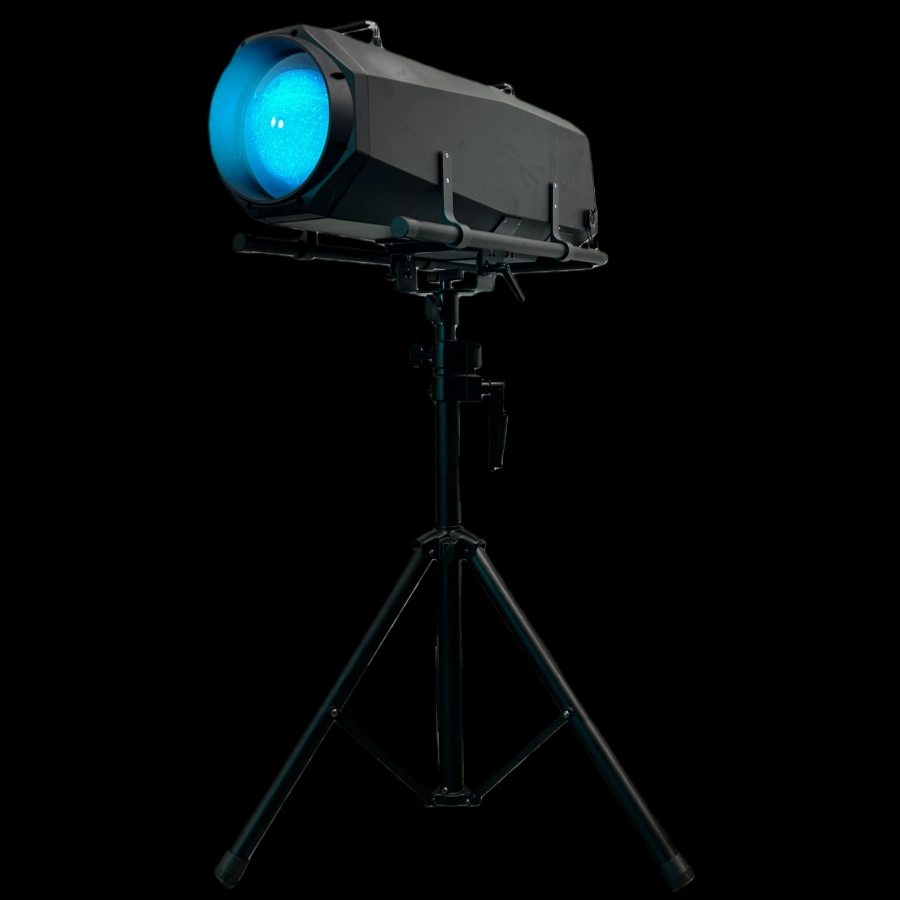
This 1200W waterproof LED follow spotlight with iris adjustment features strong light penetration, precise focusing, and smooth dimming with strobe effects.
Its rain- and dust-resistant design makes it suitable for outdoor performances, concerts, architectural lighting, and other applications. The LED light source boasts a long lifespan and stable, durable operation.
The Waterproof 1200W LED Follow Spot Light with Rotating Gobo features a rotating pattern sheet, delivering a powerful 1200W output for clear, focused beams and precise light tracking. Waterproof for outdoor use in all scenarios, the rotating pattern creates rich visual layers, making it ideal for large-scale indoor and outdoor performances, music festivals, light shows, and other events requiring focused attention and stage effects.
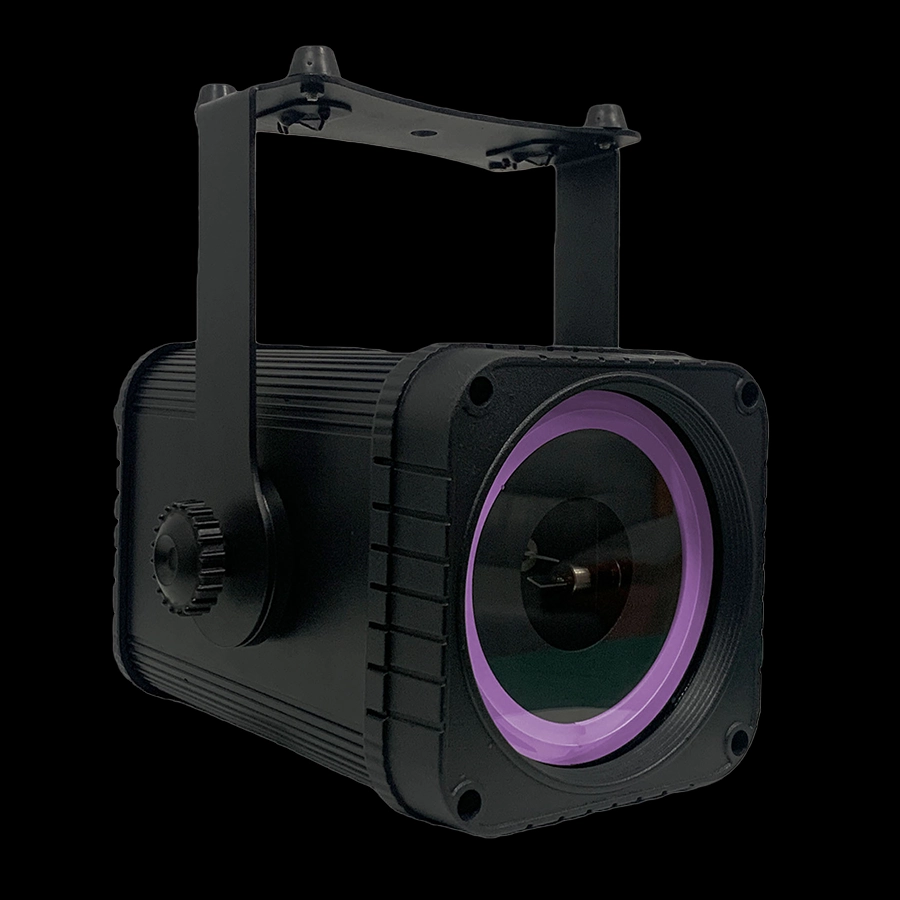
This IP65 waterproof 3W RGB animation laser battery light features an IP65 waterproof and dustproof design, making it suitable for both outdoor and indoor use. It supports rich RGB color combinations and dynamic animation effects, delivering a clear and fluid beam that can display text, patterns, and flowing light and shadow, among other visual representations.
Powered by a built-in battery, it requires no external power source, making it portable, easy to deploy, and simple to operate. Ideal for festive decorations, creating a garden atmosphere, and adding a touch of elegance to small events, it's energy-efficient, durable, and creates a truly immersive ambiance.
This IP65 waterproof 5W RGB animation laser battery light features an IP65 waterproof and dustproof design, making it suitable for both outdoor and indoor use. It supports rich RGB color combinations and dynamic animation effects, delivering a clear and fluid beam that can display text, patterns, and flowing light and shadow, among other visual representations.
Powered by a built-in battery, it requires no external power source, making it portable, easy to deploy, and simple to operate. Ideal for festive decorations, creating a garden atmosphere, and adding a touch of elegance to small events, it's energy-efficient, durable, and creates a truly immersive ambiance.
If you have any comments or good suggestions, please leave us a message, later our professional staff will contact you as soon as possible.
Lighting Innovators
Uplus Lighting is a leading integrated company specializing in R&D, design, production, and sales of stage lighting solutions.
 Scan QR Code
Facebook
Instagram
YouTube
VK