






- Product Positioning and Market Overview of Uplus Lighting MINI Series
- MINI740 Classic Appeal
- MINI760 Innovation and Upgrades
- Transitioning from Classic to Innovative
- Key Parameter Comparison: DMX512 Wash Light Performance
- Light Source and Brightness Output
- Zoom Range and Versatility
- Version Differentiation and DMX Channel Coverage
- Advanced RDM Support on MINI760
- Simplifying Stage Management
- Physical Dimensions, Portability, and Installation Considerations
- MINI740: Lightweight and Portable
- MINI760: Compact Yet Powerful
- Installation Flexibility
- Choosing Between MINI740 and MINI760: Application Scenarios
- Ideal Scenarios for MINI740
- Ideal Scenarios for MINI760
- Decision-Making Considerations
- Conclusion
MIN760 vs MINI740: In-Depth Comparison of Classic and Innovative Stage Lighting
Comparing the Uplus Lighting MINI740 and MINI760: This article provides a comprehensive analysis of the advantages and disadvantages of the two 7-LED stage washers, covering aspects such as light source, brightness, zoom, control protocol (DMX512/RDM), auxiliary lighting effects, size and portability, applicable scenarios, and maintenance costs. This helps lighting designers, rental companies, and project decision-makers make accurate selections.
In stage lighting, it will never be that easy to select the right equipment by looking at the number of LEDs or wattages. As they say, just because two fixtures might look the same on paper doesn't mean they are identical ain terms of performance, characteristics, and versatility in real-life applications. A couple of products with the same LEDs and similar power ratings can differ significantly in price, working flexibility, and stage effect potential. This is particularly true in the case of Uplus Lighting’s MINI740 and MINI760. Both products share seven high-power LEDs, yet they have been designed with very different goals in mind for the lighting designer and venue operator. Understanding the nuanced differences between these two models—including their brightness, wash light capabilities, DMX512 control options, and overall stage effect performance—can make the difference between a successful investment and a costly misstep. In this article, we provide a comprehensive comparison of the two models, highlighting their strengths, limitations, and ideal use scenarios to help professionals make informed decisions for their stage lighting setups, concert events, or performance spaces.
Product Positioning and Market Overview of Uplus Lighting MINI Series
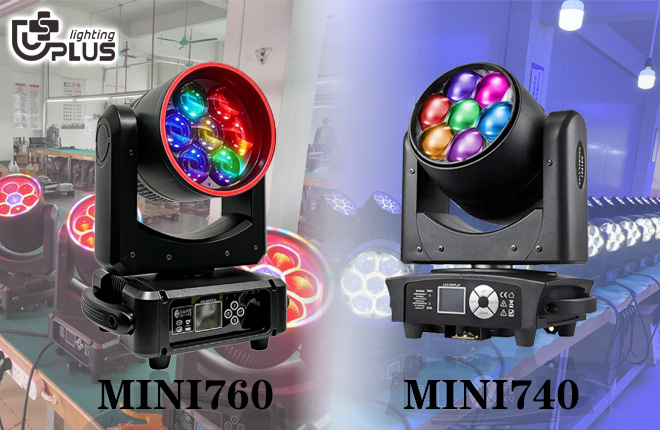
Before diving into the technical specifications, we should look at how the MINI740 and MINI760 fit in the product mix offered by Uplus Lighting. The MINI740 is viewed as a classic, reliable, and versatile workhorse that has established a broad reputation among lighting professionals; its appeal stems not only from its consistent performance but also its adaptability to a variety of stage environments that do not require advanced technical knowledge.
MINI740 Classic Appeal
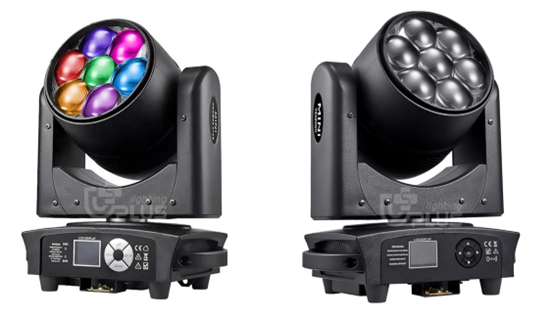
The MINI740 comes in three variations: pure wash color; single-point pixel control; and ring control. Each of these variations meets distinct needs and preferences of stage lighting professionals. The ring control version is especially interesting since it mimics the channel design of major professional brands; it can easily be integrated within complex stage environments. This provides a shorter learning curve to setup and enables the user to produce high-quality effects with minimal training. For clients looking for a cost-effective alternative to high-end brand fixtures or to reduce programming requirements, the MINI740 thus presents a highly attractive solution without short-changing reliable performance.
MINI760 Innovation and Upgrades
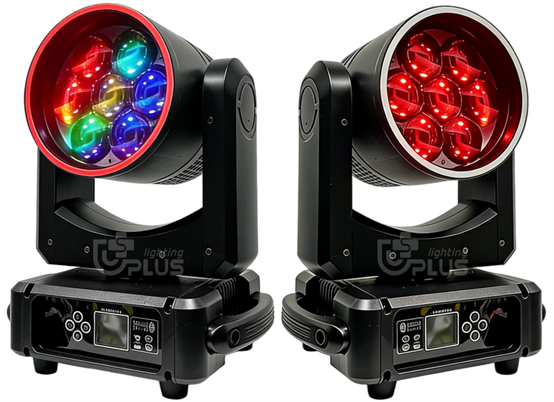
In contrast, the MINI760 demonstrates the Uplus Lighting approach to innovation and enhanced staging effects. The seven-LED architecture is maintained in this model, but individual LED wattage has been stepped up while auxiliary lighting elements have been installed to take creative possibilities even further. These additions make for dynamic color layering, deeper washes on a stage, and advanced visual effects that impact any kind of live performance. The feedback from the market indicates that for those venues aiming at visual creativity and immersive experiences, the MINI760 is especially sought-after. Its proficient combination of brightness, precision, and auxiliary effects makes it an ultimate tool in nightclubs, small theaters, and event spaces where visual innovation holds priority.
Transitioning from Classic to Innovative
Understanding the difference between the MINI740 and MINI760 is fundamental when planning a lighting installation. While MINI740 concentrates on a stable, compatible, and simple solution, MINI760 is an even brighter powerhouse with more freedom for creative design and advanced features with auxiliary lighting and remote monitoring options. These broad contrasting differences inform technical specifications, thus assisting lighting professionals in determining which model best suits their intended application-be it touring shows, concert stages, or more intimate performance venues.
Key Parameter Comparison: DMX512 Wash Light Performance
Some parameters are key in selection during stage lighting: LED configuration, brightness output, DMX control compatibility, and the versatility of visual effects. While MINI740 and MINI760 perform very well in these fields, some distinct points differentiate them in application, particularly in case of complex stage settings that require layered lighting effects.
Light Source and Brightness Output
Both models use seven RGBW LEDs, but the MINI760 increases individual LED power from 40W to 60W, raising total light output from 280W to 420W. Coupled with an overall 450W power consumption, the MINI760 delivers superior brightness, making it particularly effective for large venues or high-intensity projection needs. Additionally, the MINI760 features 33 extra 0.2W RGB auxiliary LED strips. These strips create layered wash effects and dynamic backlighting, enhancing stage depth and color richness. The MINI740 lacks this feature, focusing on simpler, straightforward wash lighting.
Zoom Range and Versatility
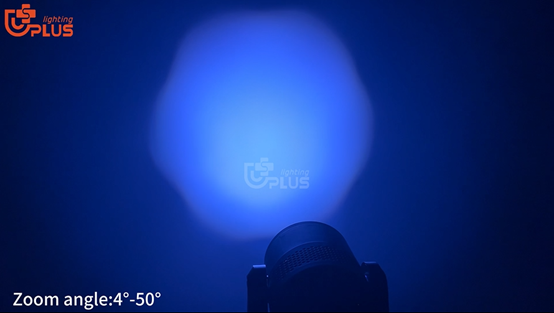
The zoom range significantly influences lighting adaptability. MINI740 offers a 4°–45° range, sufficient for medium to small venues. In contrast, MINI760 extends the zoom to 4°–50°, providing extra flexibility for both tight spot effects and broad stage washes. This increased range reduces the need for additional fixtures across different projects, optimizing both cost and setup efficiency.
Version Differentiation and DMX Channel Coverage
MINI740’s three versions cover a wide spectrum of user requirements. The first supports zoom with pixel effects and honeycomb features, offering 23/35/51 DMX channels. The second version prioritizes zoom with full LED brightness, covering 11/17 DMX channels. The third, the ring control version, mimics high-end systems with 17/21/21/29 DMX channels. This range ensures users of varying technical skill levels can find an appropriate solution. MINI760 has two versions. The first mirrors MINI740’s first version, supporting zoom with honeycomb and pixel effects. The second focuses on zoom and full LED brightness. While fewer in number, the auxiliary LED strips compensate by offering unique visual effects not available in MINI740.
Control Protocols, Maintenance, and Operational Ease
It is not only about brightness with stage lighting but also just as relevant control protocols, remote management, and ease of operation for complex productions. The DMX512 control method is supported by present MINI740 and 760, with the underlying features being synchronization between master and slave and effects triggered by sound.
Advanced RDM Support on MINI760
Extending its path of glory for the MINI760 is RDM. With Remote Device Management, operators monitor parameters remotely via DMX512 paths such as temperature, voltage, and operational state. This feature enhances maintenance thereof, particularly in venues with countless fixtures, saving inspection time from being done manually and lowering operational costs. Given a bigger stage setup, RDM of the MINI760 offers the advantage of spotting problems quickly so that troubleshooting can take place proactively, away from any kind of disruption to performance. With no RDM on the MINI740 that would suffice for the uncomplicated setup, already puts it in wanting state in the form of higher maintenance for larger installations.
Simplifying Stage Management
Combining DMX512 control, RDM monitoring, and auxiliary lighting, the MINI760 creates much better operating efficiency as well as creative scope. Lighting designers profit from remote monitoring, permitting them to fine-tune and update lighting scenes in real time. Meanwhile, the MINI740 is a trusted workhorse providing constant, reliable results demanded by venues who choose not to require advanced remote features but prefer simplicity and minimal maintenance.
Physical Dimensions, Portability, and Installation Considerations
The very weight and size of the fixture and ease of installation are very important in mobile productions, traveling shows, and venues where space is a limitation.
MINI740: Lightweight and Portable
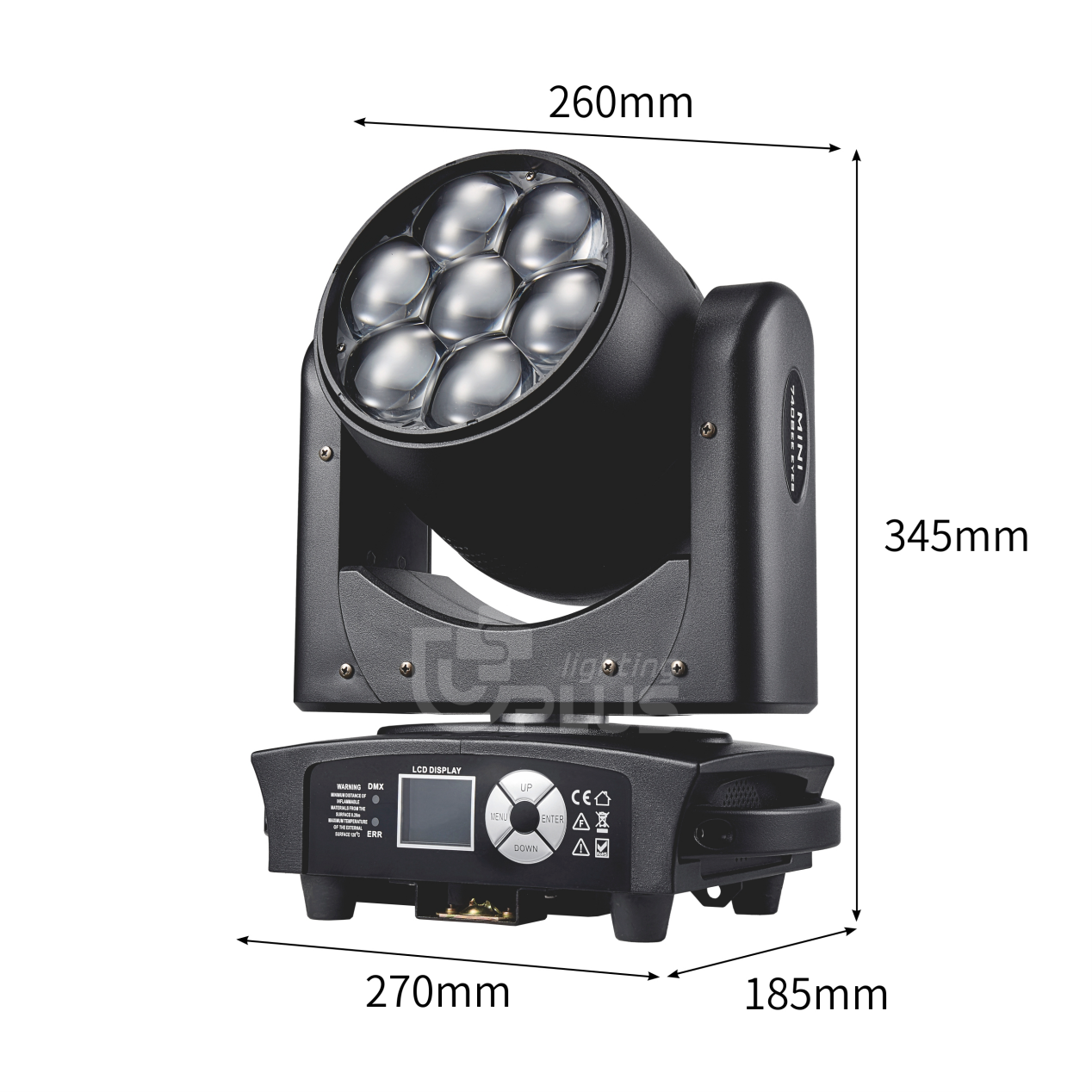
Measuring 340×273×170 mm and 5.75 kg, the transport of the MINI740 is easy to show, to be set for mobile production, or intime events. The lighter weight entails less handling, quick rigging, and less strain on technicians due to constant changes in setting. The MINI740 is great for theaters, small event spaces, or any venues where these fixtures may need to be moved or stored with great frequency.
MINI760: Compact Yet Powerful
Though MINI760 weighs 7.6kg and measures 296×220×387 mm, its form factor remains compact when viewed in light of the additional brightness and auxiliary lighting features. The slightly heavier weight is counterbalanced by the ability for it to deliver superior brilliance and more complex visual effects. For small stages, clubs, or any venue with limited installation space, the combination of high output, flexible zoom, and auxiliary LED strips of the MINI760 creates an ideal choice and proves that high performance does not equate to bulky fixtures.
Installation Flexibility
Both MINI740 and MINI760 are equipped with standard truss mount and rigging hardware for a wide array of installation options. MINI760’s compact build allows for close placement of multiple units, allowing for advanced lighting designs without overcrowding the stage. This flexibility means that designers can achieve a professional, immersive lighting environment even in tight spaces.
Choosing Between MINI740 and MINI760: Application Scenarios
Much of the choice of a fixture will depend on the requirements of the project at hand, the type of venue, and the visual effects it wishes to achieve. Each model excels in certain areas, and understanding this contrast allows professionals to match equipment to need.
Ideal Scenarios for MINI740
The MINI740 is the ideal option for users looking for the reliability of a classic, broad compatibility, and lightweight portability. The ring control version works hand in hand with high-end systems, requiring less training for technicians and making it easy to use while providing stable performance and predictability. Because it is much lighter, it can be easily handled and installed, which is why it is widely used in touring productions, theaters, and rental companies that transport and set fixtures repeatedly.
Ideal Scenarios for MINI760
The MINI760 is designed to satisfy all requirements in an imaginative and impactful environment where great brightness, layered wash effects, and remote monitoring of the floods are essential. Auxiliary LED strips, higher LED-wattage rates, and extended zoom will unite their functions for the club scene, small concert venues, and performance spaces that pay more attention to visual innovations. The RDM enables operational efficiency by ensuring smooth large setups run without much manual intervention: another powerful argument for the specter of modern caring and creative control-oriented stage productions.
Decision-Making Considerations
When deciding between MINI740 and MINI760, it is essential to look beyond such rudimentary specifications as LED count and wattage. DMX512 compatibility, use of additional light, zoom flexibility, RDM control, portability, and integration capacity all contribute to performance operational efficiency and quality of stage effects. Such quantifiable parameters would deliver maximum ROI on investment and a lighting system that serves both technical and artistic needs.
Conclusion
In conclusion, both MINI740 and MINI760 provide distinct advantages tailored to different lighting needs. The MINI740 emphasizes classic performance, lightweight portability, and broad system compatibility, making it suitable for stable, reliable setups and frequent relocation. In contrast, the MINI760 focuses on innovative visual effects, higher brightness output, auxiliary lighting, extended zoom range, and RDM-enabled remote monitoring, appealing to venues seeking creative flexibility, operational efficiency, and immersive stage experiences. When selecting the right Uplus Lighting fixture, consider your specific application, venue size, installation constraints, and desired visual impact to ensure the best possible performance and return on investment. For more details on Uplus Lighting’s MINI series and other advanced stage lighting solutions, including DMX512-compatible wash lights and immersive stage effects, visit Stage lighting manufacturer - Uplus Lighting to explore full specifications, product comparisons, and purchasing options.
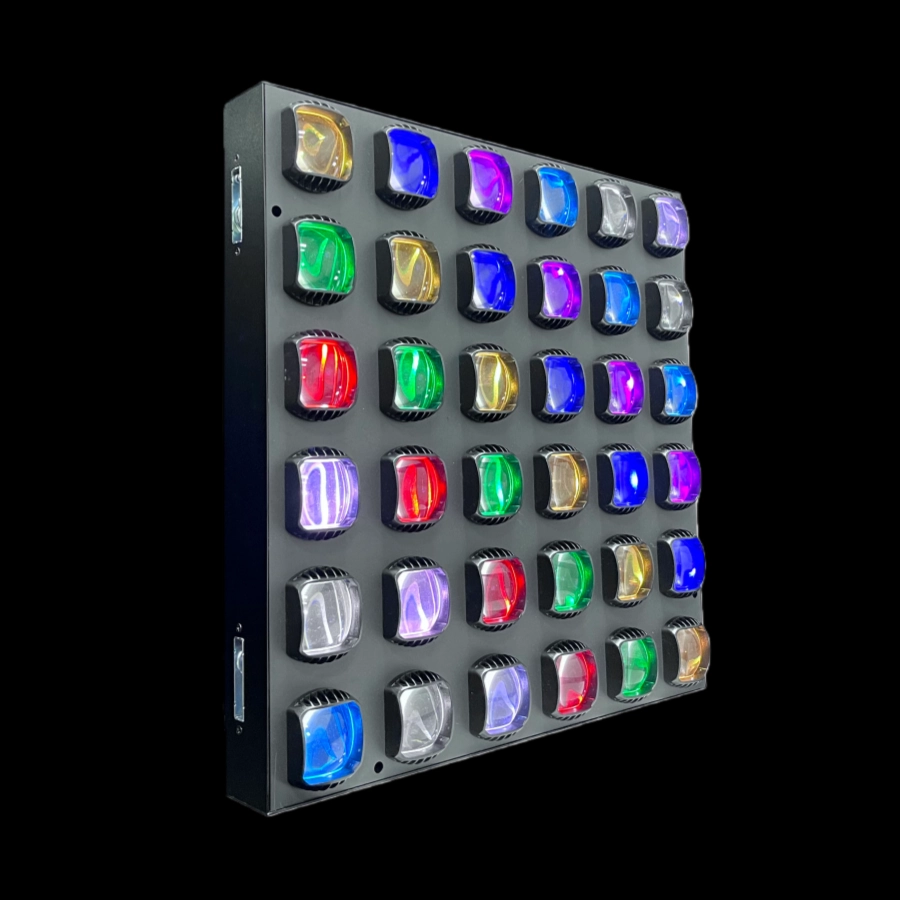
The 36*15W Matrix Panel light features an array of 36 high-brightness 15W LEDs, creating rich light and shadow matrix effects with precise light control. It is suitable for dynamic landscaping and ambient lighting in scenes such as stages, exhibition halls, and bars.
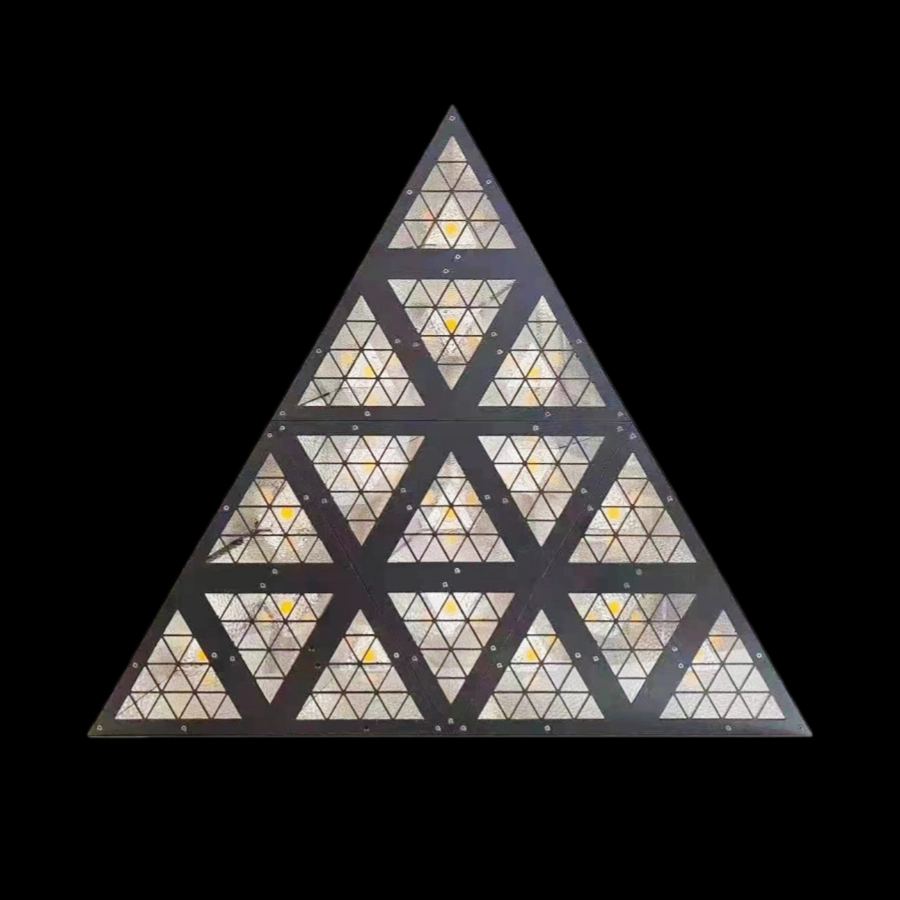
The Tri 16X30W LED Effect light is a three-zone multi-effect stage light equipped with 16 30W high-brightness LEDs. It features independent light control in three zones, enabling rich combinations of light and shadow. It supports dimming, strobe, and various dynamic lighting effects. It is compatible with DMX512 control, offers flexible installation, and is suitable for bars, parties, small performances, and banquet halls, easily creating a dynamic stage atmosphere with rich layers.
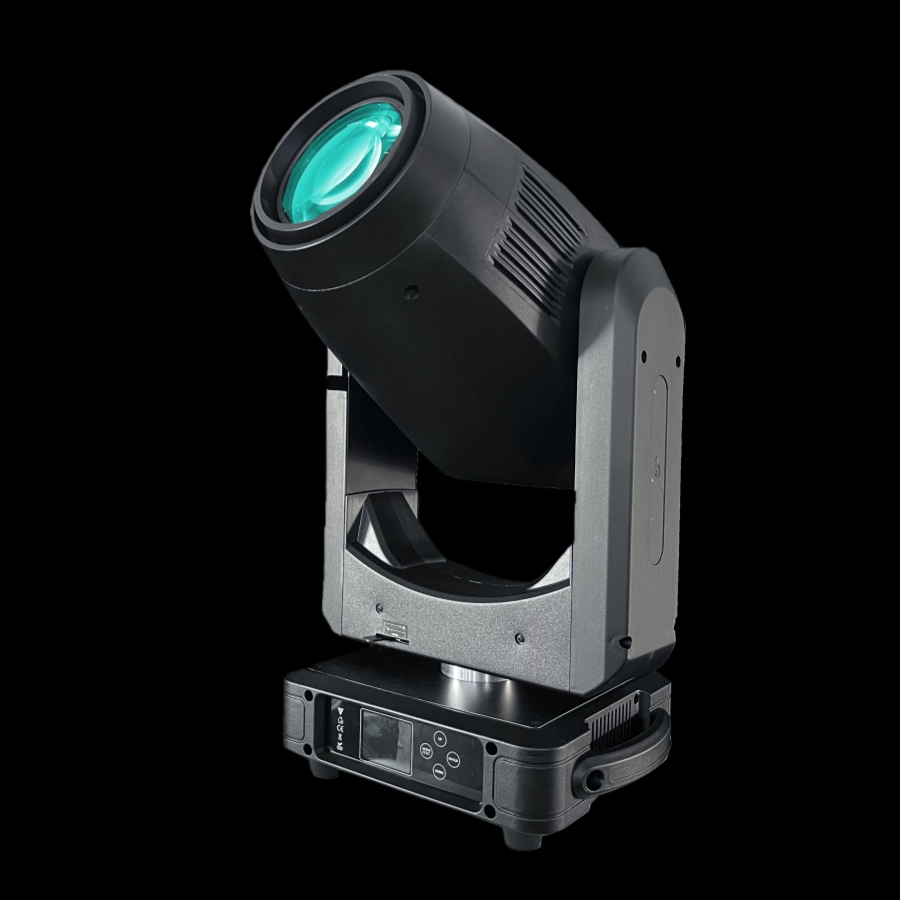
The 600W LED BSW 3-in-1 moving head with CMY and CTO features CMY color mixing and CTO color temperature adjustment, delivering a powerful 600W light output. It combines beam, color, and pattern effects into one, providing rich light effects and precise light control, making it suitable for core stage lighting scenarios such as large concerts, venue performances, and professional light shows.
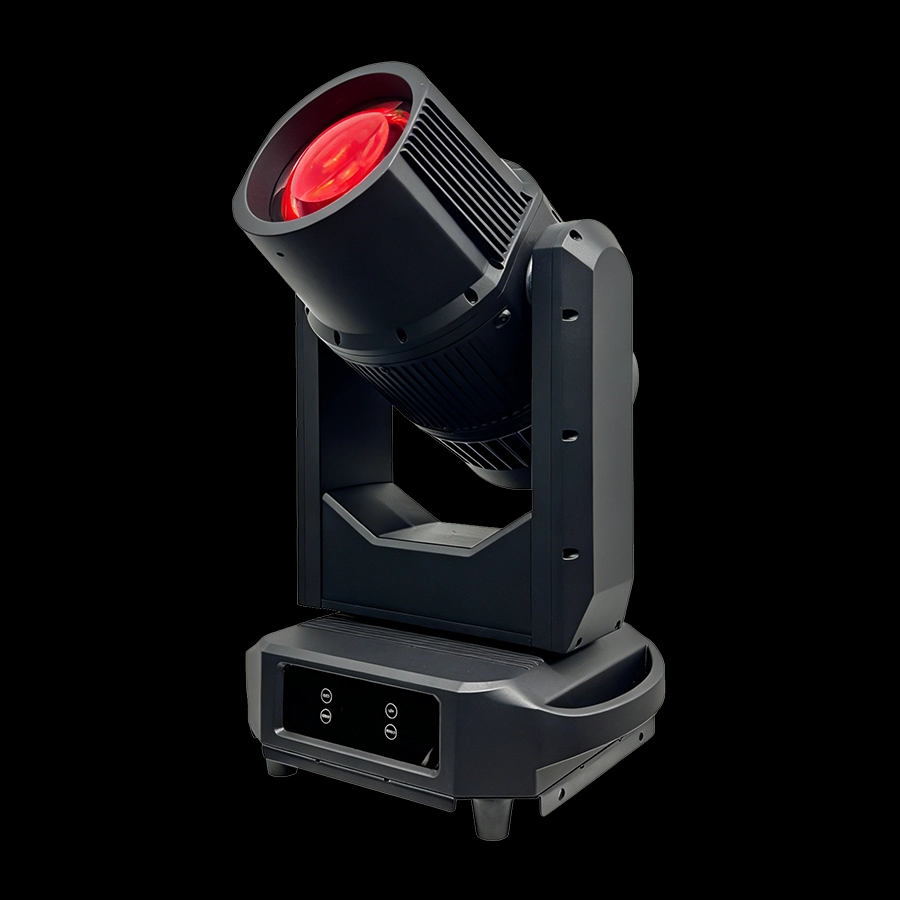
The IP65 420W beam moving head delivers a sharp, powerful beam with long range and strong penetration. IP65 dust and water resistant, it's suitable for complex outdoor environments and supports 360° flexible head movement, along with various dynamic lighting effects and dimming/flicker functions.
Compatible with DMX512/self-propelled mode, it features efficient heat dissipation and durability, making it suitable for outdoor scenarios such as performances, celebrations, and lighting effects.
Stay updated on our latest news
If you have any comments or good suggestions, please leave us a message, later our professional staff will contact you as soon as possible.
Lighting Innovators
Uplus Lighting is a leading integrated company specializing in R&D, design, production, and sales of stage lighting solutions.
 Scan QR Code
Facebook
Instagram
YouTube
VK