






- I. Introduction
- II. Overview of Four Common Types of Stage Lighting
- Spot/Profile Lights
- Wash Lights
- Moving Head Lights
- Follow Spot
- Ⅲ. Synchronous Application of Three and Four Types of Lighting Fixtures in Lighting
- IV. Selection and Configuration Recommendations (Based on Venue and Purpose)
- V. Installation and Maintenance Points
- FAQ (Frequently Asked Questions)
Detailed Explanation of Four Common Stage Lighting Types: Spotlights, Light Washers, Moving Head Lights, and Follow Spots — Stage Lighting Basics and
Understand the four most common types of stage lighting: spotlights, washers, moving head lights, and follow spots. This article details the function, common uses, selection criteria, and installation and lighting recommendations for each type of light, and includes answers to frequently asked questions and recommended keywords to help stage technicians, rental companies, and theaters optimize equipment selection and lighting effects.
I. Introduction
Stage lighting is a core element of visual expression in a performance. Different types of stage lighting fixtures serve different purposes: creating atmosphere, highlighting focal points, filling backgrounds, or creating special effects. Mastering the characteristics and usage scenarios of the four most common types of lighting fixtures can significantly improve performance effects and work efficiency.
II. Overview of Four Common Types of Stage Lighting
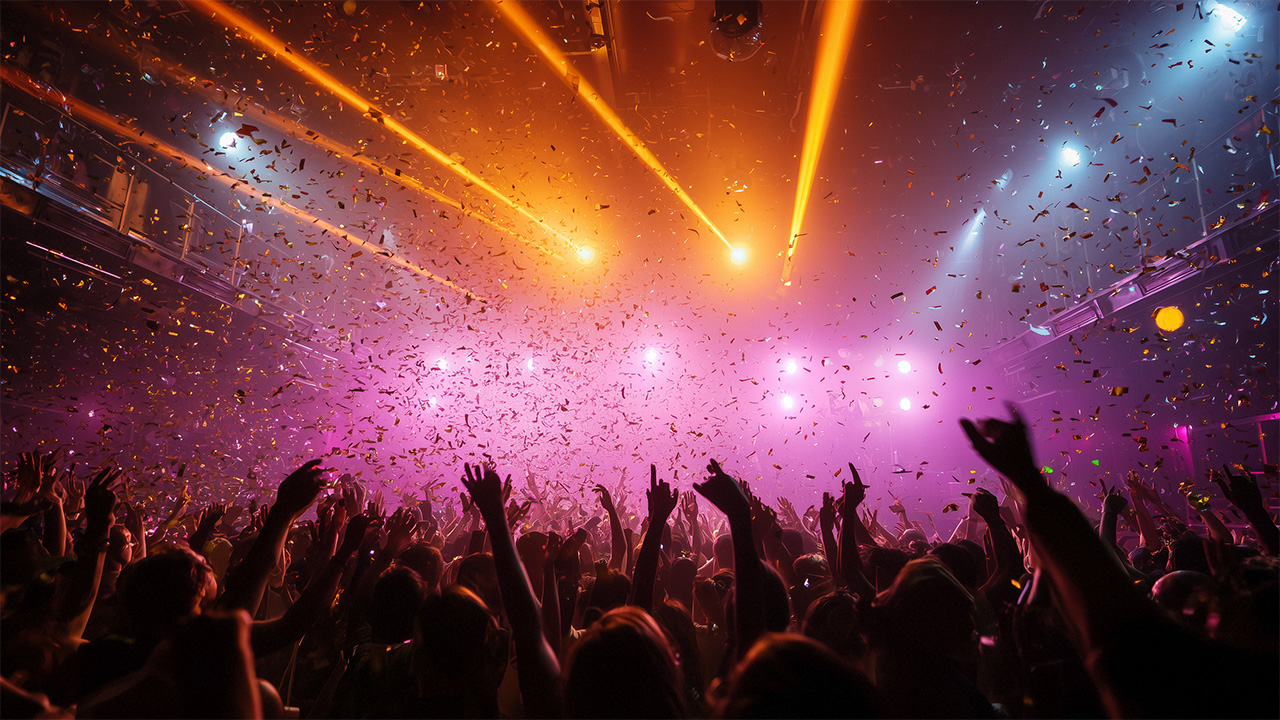
Spot/Profile Lights
Functions and Characteristics: Narrow beam, sharp edges, and precise imaging with gobo and focus adjustment. Typically used to highlight actors, speakers, or specific stage details.
Common Types: Traditional halogen/metal halide spotlights, LED spotlights, profile spotlights.
Usage Scenarios: Fixed-point lighting for main characters in dramas, shaping stage figures, pattern projection, and edge emphasis.
Selection Considerations: Optical quality, illuminance, adjustable color temperature, gobo compatibility, focus travel, and heat dissipation performance.
Wash Lights
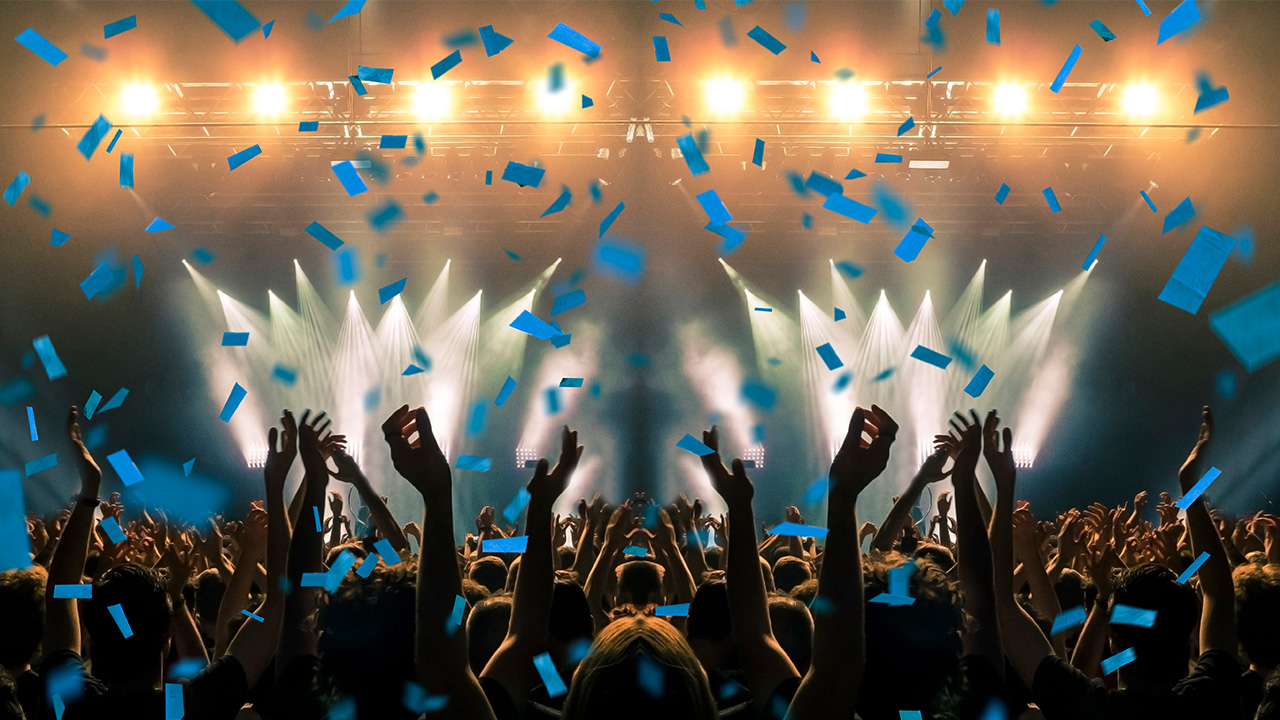
Functions and Characteristics: Outputs a wide, uniform light surface for overall stage or background lighting. Strong color mixing capabilities, quickly covering large areas.
Common Types: LED PAR lights, LED washers, linear/matrix washers.
Use Scenarios: Background color blocks, overall stage atmosphere, filling shadows, and stage color changes.
Selection Considerations: Color Rendering Index (CRI), beam angle, color system such as RGB/CMY or RGBAW, power, and heat dissipation.
Moving Head Lights
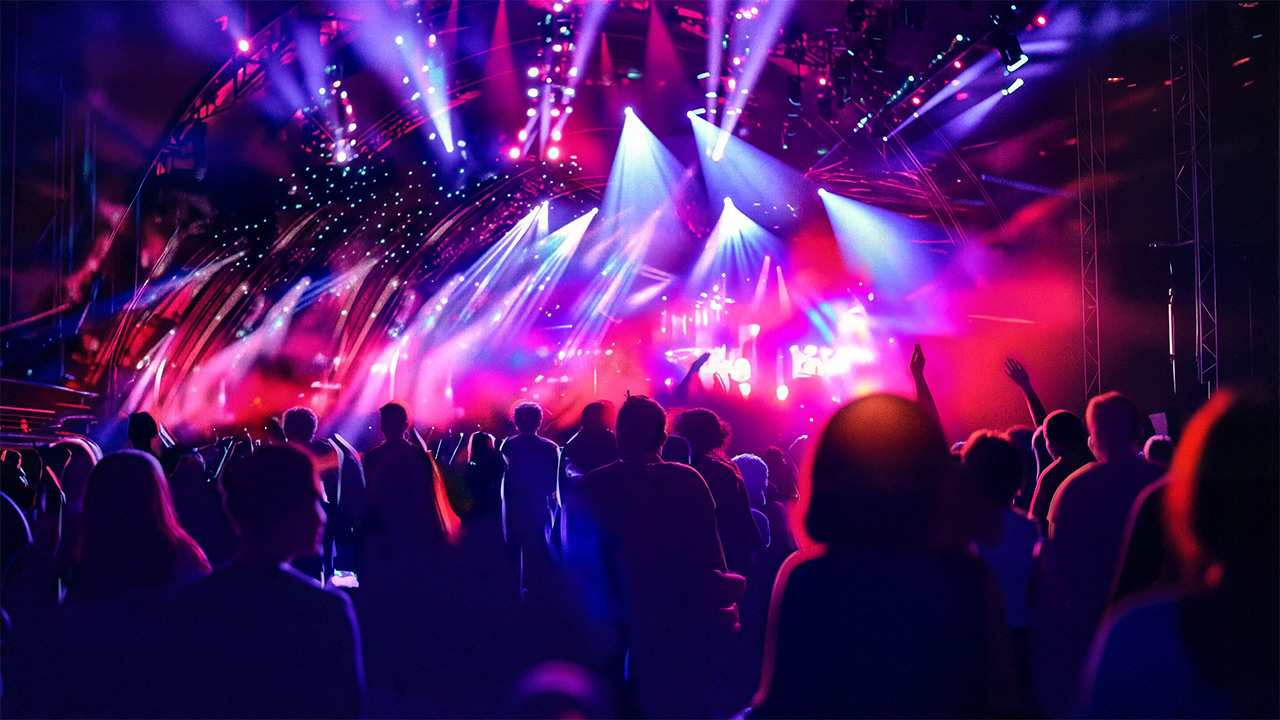
Features and Characteristics: Multifunctional lighting fixtures with programmable pan/tilt rotation (horizontal/vertical), zoom, patterning, prism, blade cutting, and high-speed movement, combining focusing and washing functions.
Common Types: Moving spotlight, moving washlight, moving beamlight.
Use Scenarios: Concert special effects, rhythm-synchronized lighting, stage dynamic tracking, projected patterns and cuts.
Selection Considerations: Speed and precision, optical brightness (Lux), effects accessories (prism, gobo), control protocol (DMX/RDM/Art-Net), reliability and ease of maintenance.
Follow Spot
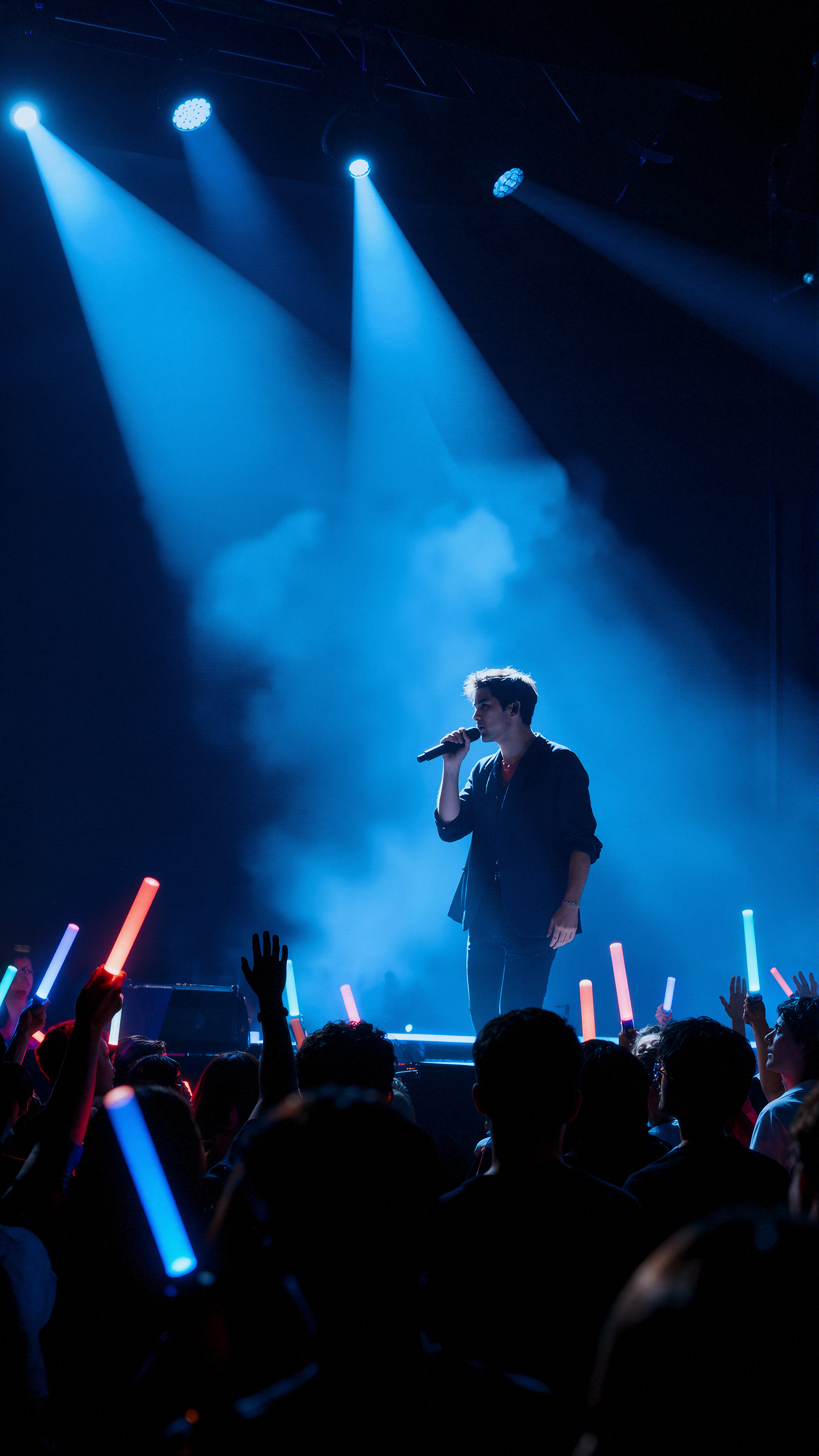
Function and Features: A powerful, fixed-point light controlled in real-time by a lighting operator to follow performers on stage. High brightness, adjustable color temperature and spot size.
Common Types: Manual follow spot, automatic/motorized follow spot (with tracking system).
Use Scenarios: Solo performances, hosting, highlighting important moments, replacing complex moving head lights for focused tracking.
Selection Considerations: Brightness and spot quality, color wheel or color gel, control feel, quiet operation and heat dissipation.
Ⅲ. Synchronous Application of Three and Four Types of Lighting Fixtures in Lighting
Key Light: Usually provided by a spotlight or moving spotlight, used to shape the subject's outline and expression.
Fill Light: A fill light responsible for softening shadows and balancing overall brightness.
Backlight/Hair Light: Used by moving head lights or spotlights to create depth and separate the background.
Effects/Embellishing: Moving head lights and follow spots are used for dynamic effects and focus tracking.
IV. Selection and Configuration Recommendations (Based on Venue and Purpose)
Small Theaters/Drama: Prioritize spotlights and a few washers, 1-2 manual follow spots or low-power moving heads.
Concerts/Large Events: Extensive coverage with high color rendering washers, several high-power moving heads combined with high-power follow spots and an intelligent control system.
Rental Companies: Choose modular, durable, and easy-to-maintain lighting fixtures, suitable for various performance types.
Budget Allocation: Prioritize purchasing high-quality optical components and control consoles; lighting fixtures can be upgraded in tiers according to their intended use.
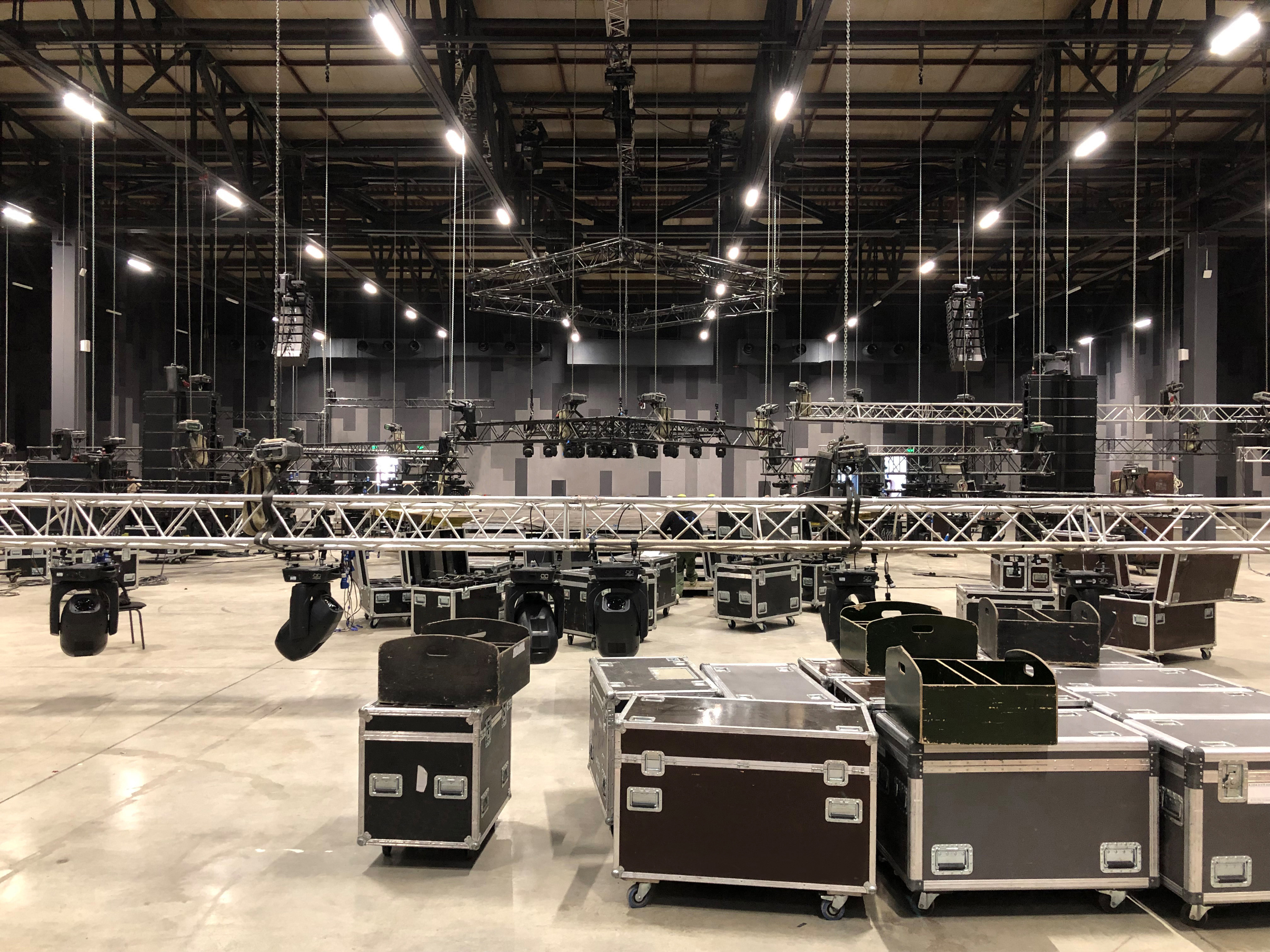
V. Installation and Maintenance Points
- Lighting design should be communicated in advance with the stage plan and program flow.
- Properly lay out power and signal cables, adhering to load and grounding specifications.
- Regularly clean optical components, check fans and heat dissipation, update firmware, and calibrate moving parts.
- Spare Parts Recommendations: Bulbs/LED modules, connecting cables, DMX connectors, spare fans, and blades.
FAQ (Frequently Asked Questions)
Are spotlights and washers interchangeable?
Spotlights are suitable for precise lighting, while diffusers are suitable for large-area uniform lighting. They are not completely interchangeable, but a moving head combines the functions of both and can partially replace traditional lights.
Can LED lights completely replace traditional lights?
LEDs are superior in terms of energy consumption, lifespan, and color, but for certain high-brightness, specific textures (such as the color temperature and penetration of some traditional lights), the scene requirements still need to be evaluated.
How many moving heads are needed?
It depends on the size of the venue and the desired effect: 4-6 for small stages, 8-16 for medium stages, and dozens for large performances, combined with follow spots and background lights.
How to improve stage color reproduction (color rendering)?
Prioritize lighting fixtures with a high color rendering index (CRI ≥ 90 or TLCI ≥ 90). Appropriate color temperature and on-site white balance settings are also important.
What skills are required for follow-spot operation?
Familiarity with rhythm and stage movement is required, along with stable techniques and communication skills. Automatic follow spot systems require positioning and programming abilities.
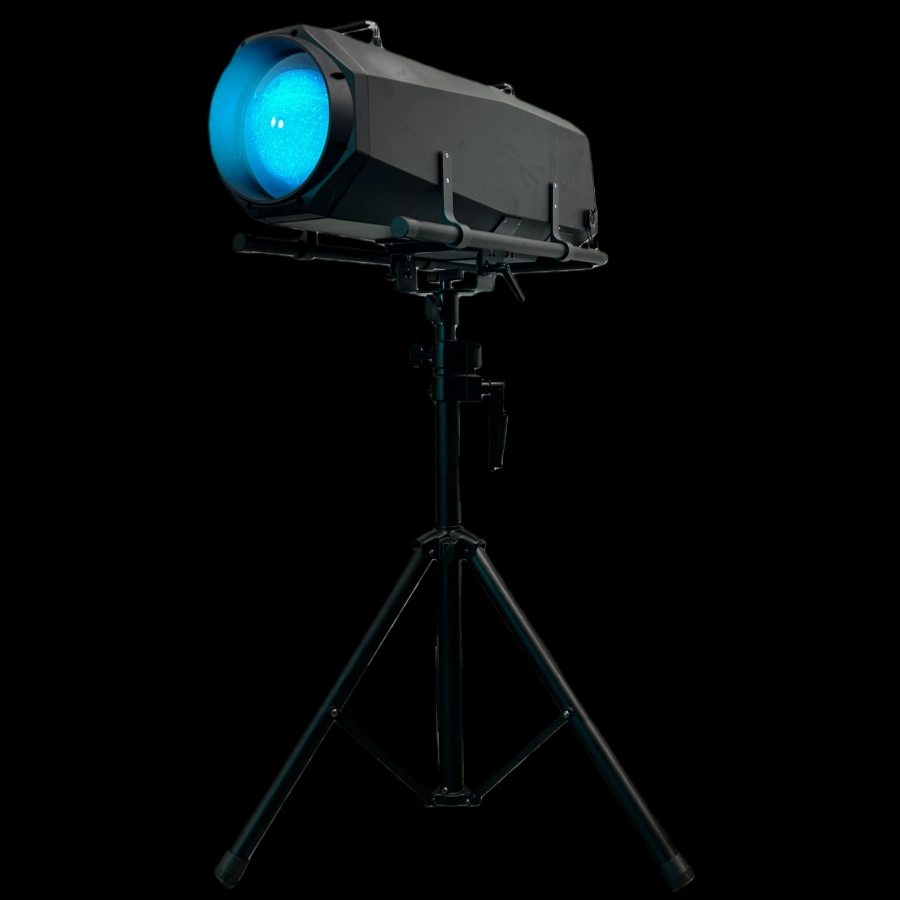
This 1200W waterproof LED follow spotlight with iris adjustment features strong light penetration, precise focusing, and smooth dimming with strobe effects.
Its rain- and dust-resistant design makes it suitable for outdoor performances, concerts, architectural lighting, and other applications. The LED light source boasts a long lifespan and stable, durable operation.
The Waterproof 1200W LED Follow Spot Light with Rotating Gobo features a rotating pattern sheet, delivering a powerful 1200W output for clear, focused beams and precise light tracking. Waterproof for outdoor use in all scenarios, the rotating pattern creates rich visual layers, making it ideal for large-scale indoor and outdoor performances, music festivals, light shows, and other events requiring focused attention and stage effects.
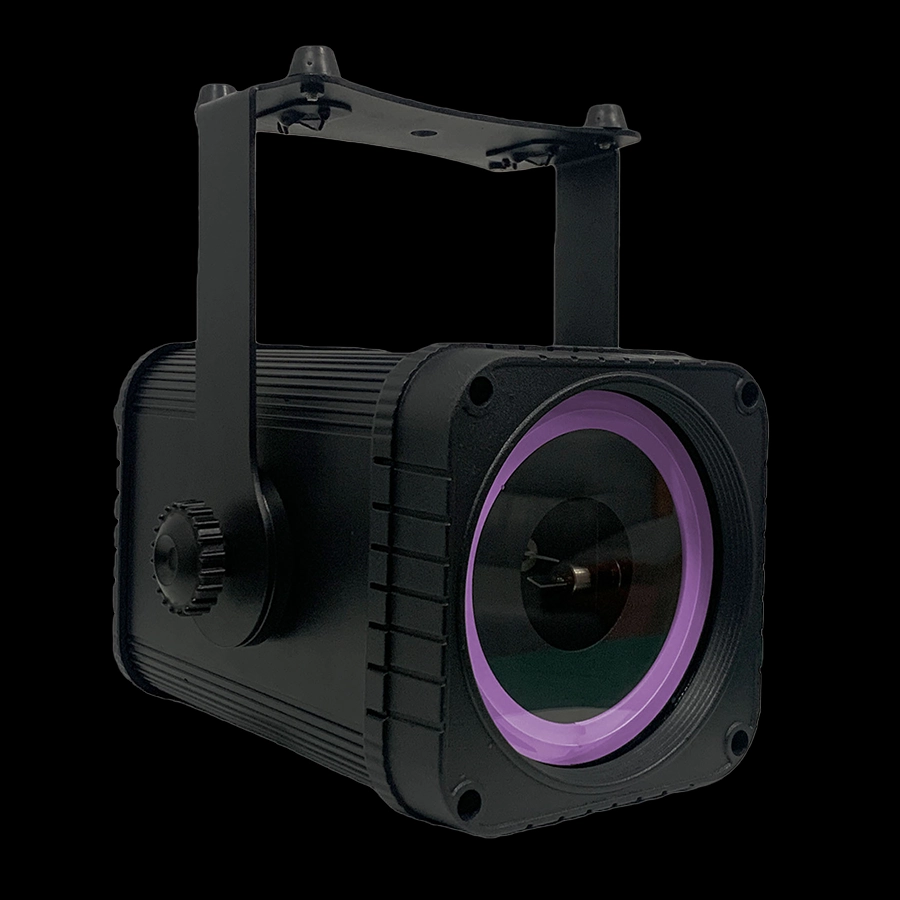
This IP65 waterproof 3W RGB animation laser battery light features an IP65 waterproof and dustproof design, making it suitable for both outdoor and indoor use. It supports rich RGB color combinations and dynamic animation effects, delivering a clear and fluid beam that can display text, patterns, and flowing light and shadow, among other visual representations.
Powered by a built-in battery, it requires no external power source, making it portable, easy to deploy, and simple to operate. Ideal for festive decorations, creating a garden atmosphere, and adding a touch of elegance to small events, it's energy-efficient, durable, and creates a truly immersive ambiance.
This IP65 waterproof 5W RGB animation laser battery light features an IP65 waterproof and dustproof design, making it suitable for both outdoor and indoor use. It supports rich RGB color combinations and dynamic animation effects, delivering a clear and fluid beam that can display text, patterns, and flowing light and shadow, among other visual representations.
Powered by a built-in battery, it requires no external power source, making it portable, easy to deploy, and simple to operate. Ideal for festive decorations, creating a garden atmosphere, and adding a touch of elegance to small events, it's energy-efficient, durable, and creates a truly immersive ambiance.
Stay updated on our latest news
If you have any comments or good suggestions, please leave us a message, later our professional staff will contact you as soon as possible.
Lighting Innovators
Uplus Lighting is a leading integrated company specializing in R&D, design, production, and sales of stage lighting solutions.
 Scan QR Code
Facebook
Instagram
YouTube
VK