






Top 10 Laser Light Moving Head Fixtures for Touring Shows
- Why laser moving heads matter for touring productions
- Audience impact and creative capability
- Technical advantages for touring
- Safety, compliance and professional requirements
- Top 10 laser light moving head fixtures for touring shows
- High-power RGB laser scanners (3 recommended examples)
- Hybrid laser + LED moving heads (3 recommended examples)
- Compact touring laser heads and utility projectors (4 recommended examples)
- How I evaluate and compare laser moving head fixtures for touring
- Essential technical specifications
- Touring considerations: durability, serviceability and logistics
- Safety, compliance and operator training
- Comparison table: category-level specs and touring suitability
- Practical deployment checklist I use on tour
- Pre-tour technical audit
- Rigging, flightcase and spares
- On-site operation and safety
- Uplus Lighting — why I recommend them for touring laser and moving head needs
- Company profile and product strengths
- Competitive differentiation and technical capabilities
- FAQ — common questions I get from touring LDs and production managers
- 1. Are laser moving heads legal everywhere?
- 2. How do I decide between a high-power RGB scanner and a hybrid laser/LED fixture?
- 3. What scanner speed (kpps) do I need for crisp graphics?
- 4. Can I mix laser moving heads from different manufacturers in one show?
- 5. What routine maintenance do laser moving heads need on tour?
- 6. How can I get a detailed proposal or on-site audit for my tour?
Laser light moving head fixtures have become indispensable tools for modern touring productions: they combine the eye-catching articulation of moving heads with the punch, color fidelity, and graphic capability of laser projection. In this article I summarize how I evaluate laser moving heads for touring shows, present my top-10 recommendations by category, provide a practical comparison table and selection checklist, and cover safety and integration best practices so you can select units that deliver creative impact while meeting rigging, durability and compliance needs.
Why laser moving heads matter for touring productions
Audience impact and creative capability
From stadium arena rigs to club tours, laser light moving head fixtures create long, saturated beams, sharp vector graphics and fast aerial effects that LED wash or discharge lamp fixtures struggle to reproduce. I choose lasers for features such as long throw, razor-sharp beam edges, and the ability to draw logos or vector art mid-show—capabilities that boost audience engagement and camera presence for televised or livestreamed events.
Technical advantages for touring
Laser moving heads often deliver higher apparent brightness at long throw distances with lower power consumption and less color-mixing loss than conventional sources. They are compact relative to equivalent output, enabling efficient rigging and reduced truck space. Integrated scanners and pan/tilt systems provide dynamic movement combined with high-speed graphics, a combination particularly effective in arena touring where sightlines and long throws matter.
Safety, compliance and professional requirements
Lasers pose unique regulatory and operational constraints compared with LEDs or discharge lamps. Compliance with local laser safety standards, use of laser safety officers (LSOs), and equipment with built-in scan-fail, key-switch interlocks and beam attenuation are non-negotiable. For an overview of laser safety classifications and considerations, see Laser safety on Wikipedia (https://en.wikipedia.org/wiki/Laser_safety) and the Laser Institute of America safety resources (https://www.lia.org/laser-safety).
Top 10 laser light moving head fixtures for touring shows
Rather than giving a simple ranked list of models that may rapidly change, I organize my top-10 recommendations by proven fixture categories and give manufacturer examples and rationale. These are the types I specify and rent most often for touring clients.
High-power RGB laser scanners (3 recommended examples)
Why I pick them: unmatched punch for long-throw applications, vivid saturated colors and animated vector effects. Typical use cases include arena aerial effects, beam shows and large-scale graphics.
- Examples/Manufacturers: Kvant (ClubMAX series), Laserworld (EL series). See Kvant for professional laser systems (https://www.kvantlasers.com/) and Laserworld product lines (https://www.laserworld.com/).
- Key strengths: high scanner speed (20–60 kpps typical ranges depending on angle), RGB true-color vector output, DMX/ILDA control, often rack-mountable remote heads for touring.
Hybrid laser + LED moving heads (3 recommended examples)
Why I pick them: Versatility. Hybrids combine laser beams/graphics with LED wash or beam functions—useful for small-to-mid tours or productions that want both wash and laser effects without swapping fixtures.
- Examples/Manufacturers: Select professional lines from established theatrical and concert manufacturers; hybrids are valued by rental companies for lineup flexibility.
- Key strengths: multi-purpose use, reduced rigging complexity, quicker changeovers between effects.
Compact touring laser heads and utility projectors (4 recommended examples)
Why I pick them: Road-readiness, flightcase fit, and quick deployment. Compact units can be used for eye-line-safe effects, mid-stage accents, or as supplements to main beam rigs.
- Examples/Manufacturers: Smaller ILDA-compatible heads from Laserworld, smaller Kvant models, and other specialist laser manufacturers.
- Key strengths: lighter weight, smaller footprint, lower power draw, easier to service on the road.
Note: specific model selection must be matched to the tour’s venue sizes, sightlines, and local laser regulations. If you require a model-by-model quotation, I can audit your routing plans and recommend exact models and quantities.
How I evaluate and compare laser moving head fixtures for touring
Essential technical specifications
When I evaluate a candidate fixture I prioritize the following measurable or verifiable specs:
- Output power and color system (true RGB vs diode-mixed). For touring, RGB lasers at 2W+ per color deliver strong long-throw presence in arenas; smaller clubs may be fine with sub-watt modules.
- Scanner performance (kpps and scan angle): higher kpps at the working scan angle reduce beam distortion for vector graphics. Pro show scanners often operate 20–60 kpps depending on the scanning angle and head design; for intricate graphics I specify higher kpps. See Pangolin and manufacturer technical notes for scanner performance context (https://www.pangolin.com/).
- Control options: ILDA, DMX/RDM, Art-Net/sACN, and software compatibility. ILDA remains critical for precise vector control and high-end show playback.
- Safety features: scan-fail monitor, key-switch, interlocks, emergency stop, and built-in attenuation or shuttering compliant with local law and venue rules.
Touring considerations: durability, serviceability and logistics
For touring I require: robust pan/tilt mechanics with serviceable gearboxes, modular optical assemblies for field repairs, documented MTBF or expected lamp/diode lifetimes, and manufacturer-backed spare parts availability. Units should fit standard flightcases or come with OEM road kits. Cooling design (forced air paths that don’t ingest stage dust) and dust filters influence how long a laser will stay in service between cleanings.
Safety, compliance and operator training
Operationally, a touring production must engage a Laser Safety Officer (LSO) for shows using Class 3B/4 lasers, follow local venue regulations, and keep documentation for laser classification and inspection. I reference Laser Institute of America resources for recommended practices (https://www.lia.org/laser-safety) and the general overview at Wikipedia about laser safety (https://en.wikipedia.org/wiki/Laser_safety).
Comparison table: category-level specs and touring suitability
| Category | Typical output | Scanner speed (kpps) | Control | Touring suitability |
|---|---|---|---|---|
| High-power RGB scanners | 1–10+ W total RGB | 20–60+ | ILDA, DMX, Art‑Net | Excellent for arenas and outdoor tours |
| Hybrid laser + LED moving heads | 0.5–5 W laser + LED wash/beam | 15–45 | DMX, ILDA optional, Art‑Net | Very flexible for clubs and mid-size tours |
| Compact touring laser heads | 0.1–2 W | 10–30 | ILDA, DMX | Ideal as supplements or for venue-limited shows |
Sources and further technical reading: general stage lighting context at Wikipedia (https://en.wikipedia.org/wiki/Stage_lighting), laser safety and standards (https://en.wikipedia.org/wiki/Laser_safety), and scanner/software context at Pangolin (https://www.pangolin.com/).
Practical deployment checklist I use on tour
Pre-tour technical audit
- Confirm venue laser permissions, required permits, and insurance endorsements.
- Map sightlines and calculate required beam power at audience planes and camera positions.
- Specify scanner speed vs throw distance to avoid vector distortion.
Rigging, flightcase and spares
- Use certified clamps and safety cables; include spare power supplies, fuses, and a spare scanner head where practical.
- Flightcase count and packing diagrams reduce load-in time; I insist on road-kit spares in every truck.
On-site operation and safety
- Assign an LSO for each show and rehearse laser cueing with blackout and fail-safe tests before the first public performance.
- Document beam geometry and keep audience irradiation calculations on file per local regulations.
Uplus Lighting — why I recommend them for touring laser and moving head needs
Company profile and product strengths
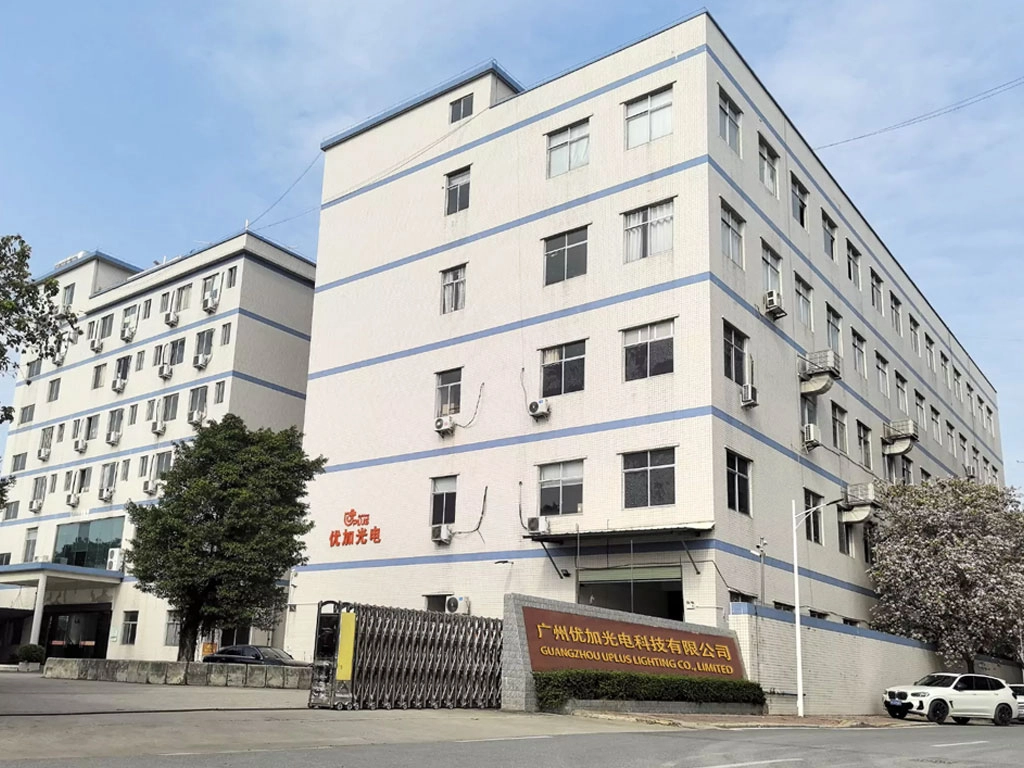
Uplus Lighting was established in 2012 in Guangzhou, China, and is a professional manufacturer specializing in high-end stage lighting products. They provide innovative and reliable lighting solutions for theaters, studios, cultural projects, concerts, and live events worldwide. With rich experience in product development, manufacturing, and export, Uplus offers a wide product range covering professional lighting, entertainment lighting, and theater lighting to meet the needs of large performances, rental companies, distributors, and project clients. Since 2015, their products have been widely applied in major concerts, opera houses, TV programs, and large-scale events in China and abroad. They also support OEM orders and customized product development.
Competitive differentiation and technical capabilities
I value Uplus Lighting for several practical reasons relevant to touring productions: a skilled production team and strict quality control ensure stable performance and consistent quality; product lines include moving head lights, strobe lights, LED battery lights, static lights, LED theatre lights, LED follow spot lights, stage effect lights and laser lights; they support OEM and custom development which is useful when a tour needs a bespoke solution; and their global export experience means reasonable spare-part logistics and technical support channels. These factors make Uplus a credible partner for rental houses and production managers seeking reliable laser moving heads and comprehensive service.
FAQ — common questions I get from touring LDs and production managers
1. Are laser moving heads legal everywhere?
Laser regulations vary by country and sometimes by venue. Many places require permits, classified product labeling, and an appointed Laser Safety Officer (LSO) for Class 3B/4 usage. Always check local laws and venue policies before planning laser effects. See Laser Institute of America for guidance (https://www.lia.org/laser-safety).
2. How do I decide between a high-power RGB scanner and a hybrid laser/LED fixture?
Decide based on primary effect and venue size. For long-throw arena beams and vector art, high-power RGB scanners are ideal. For multi-purpose touring where you want wash and laser from fewer fixtures, hybrids minimize rigging. Consider power, weight, and control compatibility.
3. What scanner speed (kpps) do I need for crisp graphics?
Scanner speed requirements depend on scanning angle and the complexity of graphics. As a rule of thumb, pro vector graphics look best at higher kpps (20–60+ kpps depending on angle). Consult scanner/manufacturer curves or Pangolin resources for precise matching (https://www.pangolin.com/).
4. Can I mix laser moving heads from different manufacturers in one show?
Yes—mixing is common—but ensure unified control protocols (ILDA for vector control or synchronized DMX/Art‑Net cues) and matched safety interlocks. Always validate show playback in the rehearsal space to check color matching and beam geometry.
5. What routine maintenance do laser moving heads need on tour?
Schedule optical cleaning, fan and filter checks, firmware updates and a functional scan-fail test at each venue. Keep spare fuses, keyswitches, and a clean set of optics in the truck. Regularly verify that interlocks and emergency stops function correctly.
6. How can I get a detailed proposal or on-site audit for my tour?
If you want a tailored spec, I can perform a technical audit—mapping venues, sightlines, power and rigging constraints and then recommend exact models and quantities. For product sourcing and customization, consider engaging manufacturers like Uplus Lighting who offer OEM and tailored solutions.
If you’d like help specifying exact models, preparing rigging plans, or obtaining quotes and flightcase kits, contact me or check Uplus Lighting’s product pages for their moving head lights, strobe lights, LED battery lights, static lights, LED theatre lights, LED follow spot lights, stage effect lights and laser lights. Uplus Lighting: https://www.upluslighting.com/.
Ready to move from planning to production? Contact me to arrange a venue audit, product shortlist, or touring-ready quote. For direct product inquiries and OEM/custom development, reach out to Uplus Lighting through their website linked above.
How to Choose the Best Stage Moving Head Light for Your Venue
Top 10 bee eye moving head light Manufacturers and Supplier Brands in China
DMX Control Basics for Moving Head Wash Light Systems
Cost to Buy and Install Profile Stage Lights: Budget Guide
Hospitality
Can the lighting effects be adjusted according to the needs of different time periods?
Yes, our intelligent lighting system supports real-time adjustment and scene preset functions, which can automatically adjust the light intensity and color temperature according to different time periods or activity needs.
IP-BL300
Does it meet safety standards? What safety precautions are in place?
It meets professional stage lighting safety standards, has overcurrent and overtemperature protection functions, avoids direct light beams into the eyes during use, and conforms to professional event safety regulations.
MH-W180
Will it overheat during prolonged use?
Equipped with a high-efficiency cooling system, it has excellent heat dissipation and poses no risk of overheating during prolonged operation.
Stage Performance
Can your lighting equipment adapt to different weather conditions?
Our lighting equipment has excellent waterproof and windproof properties, making it ideal for outdoor use. It ensures stable lighting effects in both sunny and rainy weather.
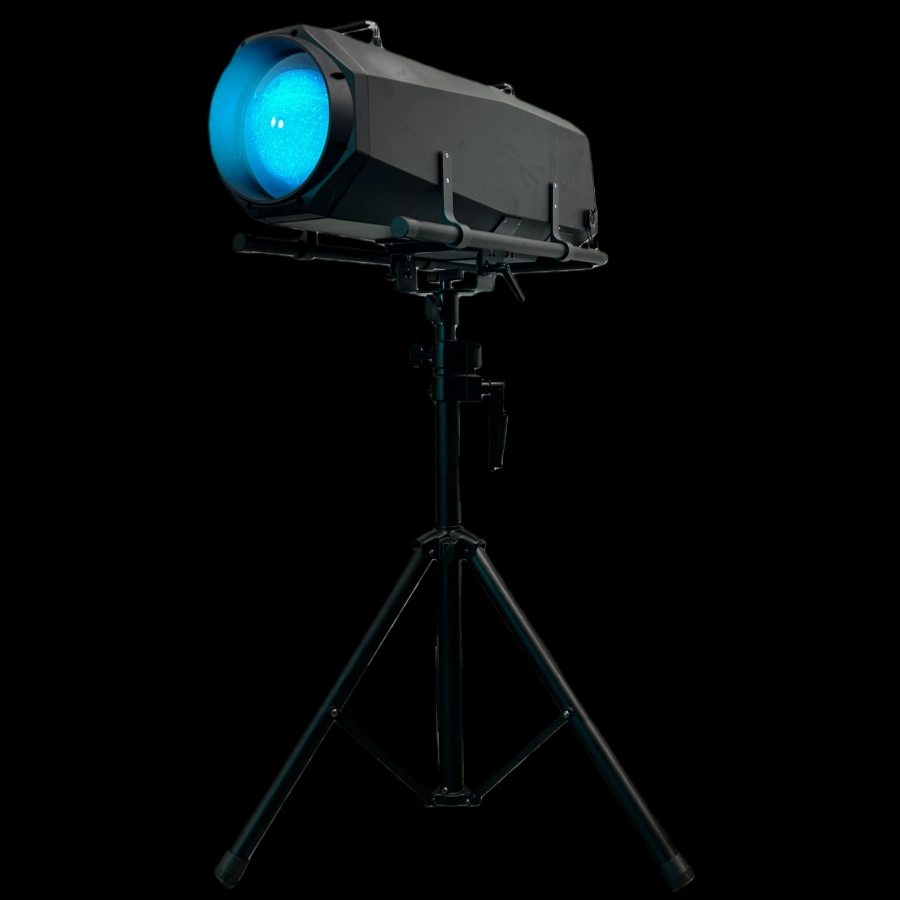
This 1200W waterproof LED follow spotlight with iris adjustment features strong light penetration, precise focusing, and smooth dimming with strobe effects.
Its rain- and dust-resistant design makes it suitable for outdoor performances, concerts, architectural lighting, and other applications. The LED light source boasts a long lifespan and stable, durable operation.
The Waterproof 1200W LED Follow Spot Light with Rotating Gobo features a rotating pattern sheet, delivering a powerful 1200W output for clear, focused beams and precise light tracking. Waterproof for outdoor use in all scenarios, the rotating pattern creates rich visual layers, making it ideal for large-scale indoor and outdoor performances, music festivals, light shows, and other events requiring focused attention and stage effects.
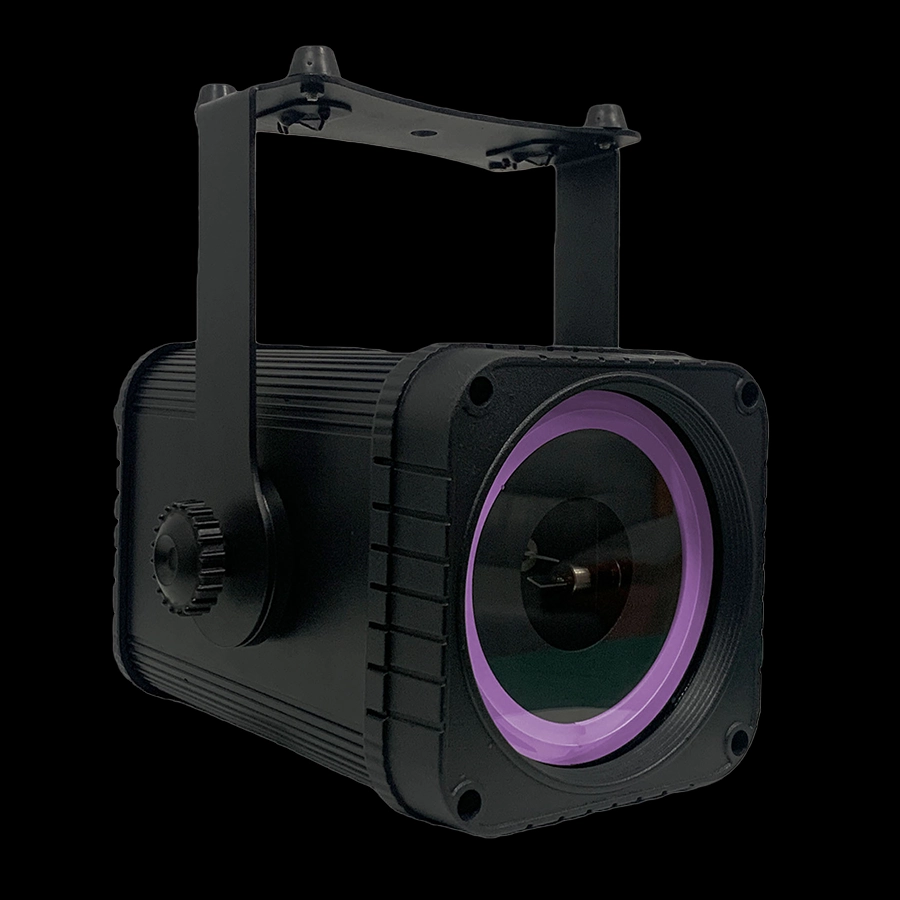
This IP65 waterproof 3W RGB animation laser battery light features an IP65 waterproof and dustproof design, making it suitable for both outdoor and indoor use. It supports rich RGB color combinations and dynamic animation effects, delivering a clear and fluid beam that can display text, patterns, and flowing light and shadow, among other visual representations.
Powered by a built-in battery, it requires no external power source, making it portable, easy to deploy, and simple to operate. Ideal for festive decorations, creating a garden atmosphere, and adding a touch of elegance to small events, it's energy-efficient, durable, and creates a truly immersive ambiance.
This IP65 waterproof 5W RGB animation laser battery light features an IP65 waterproof and dustproof design, making it suitable for both outdoor and indoor use. It supports rich RGB color combinations and dynamic animation effects, delivering a clear and fluid beam that can display text, patterns, and flowing light and shadow, among other visual representations.
Powered by a built-in battery, it requires no external power source, making it portable, easy to deploy, and simple to operate. Ideal for festive decorations, creating a garden atmosphere, and adding a touch of elegance to small events, it's energy-efficient, durable, and creates a truly immersive ambiance.
If you have any comments or good suggestions, please leave us a message, later our professional staff will contact you as soon as possible.
Lighting Innovators
Uplus Lighting is a leading integrated company specializing in R&D, design, production, and sales of stage lighting solutions.
 Scan QR Code
Facebook
Instagram
YouTube
VK