





How to Choose a Moving Head Strobe for Venue Size
- Understanding light output and beam control
- Lumens, lux and perceived brightness
- Beam angle, optics and throw distance
- Matching strobe technology to venue size
- Small venues (up to ~200 m²)
- Medium venues (200–1000 m²)
- Large venues and outdoor arenas
- Controls, safety and integration
- DMX, RDM and wireless control
- Thermal management and duty cycle
- Safety standards and compliance
- Practical selection checklist and product comparison
- Checklist I use before purchasing
- Comparison table: recommended specs by venue size
- Why Uplus Lighting is a practical partner for pro strobes
- Track record and manufacturing capabilities
- Product range, customization and competitive strengths
- Final selection tips and deployment advice
- Testing and photometric verification
- Power, rigging and redundancy planning
- Working with vendors and spec sheets
- FAQ
- 1. What is the difference between a moving head strobe and a traditional strobe lamp?
- 2. How many strobes do I need for a medium-sized venue?
- 3. Are LED strobes safe for performers and audiences?
- 4. Can I use moving head strobes outdoors?
- 5. How do I integrate strobes with my existing lighting rig?
- 6. What maintenance do moving head strobes require?
Choosing the correct moving head strobe for your venue is about more than raw power: it requires matching luminous output, beam control, flash characteristics, and system integration to the room geometry and production goals. In this article I walk through the measurements, calculations, and real-world trade-offs I use when specifying strobes for small clubs, mid-size theaters, and large arenas. I reference industry standards and provide a checklist and comparison table to make procurement and deployment straightforward.
Understanding light output and beam control
Lumens, lux and perceived brightness
When I evaluate a strobe, I start with the relationship between lumens and illuminance. Lumens quantify total luminous flux; lux measures illuminance on a surface (lumens per square meter). The simple formula lux = lumens / area (m²) helps estimate whether a fixture can achieve the required on-stage brightness. For reference, see the unit definitions on Lumen (Wikipedia) and Illuminance (Wikipedia).
However, perceived brightness of a strobe pulse depends on pulse peak output, duty cycle, and human visual response. A medium-power LED can appear brighter than a high-lumen continuous fixture if its pulse peak and timing are optimized. For crowd-facing effects, peak intensity and rise time matter as much as average lumens.
Beam angle, optics and throw distance
Beam angle determines how light distributes over distance. Narrow beams (3–10°) keep intensity concentrated for long-throw applications; wide beams (20–40°+) illuminate broader areas at close range. I always map fixture beam angle to venue geometry: a narrow-beam strobe in a small club will have hot spots and miss the stage, while a wide beam in a large arena wastes output.
For precise planning, use the beam spread formula to estimate spot diameter at distance: diameter = 2 × distance × tan(beam angle / 2). Combine that with expected lux targets to select LED power and optics.
Matching strobe technology to venue size
Small venues (up to ~200 m²)
Small clubs and black-box theaters demand compact fixtures that are flexible and not overwhelmingly bright. I typically specify moving head strobes with the following characteristics:
- LED power: 50–300W equivalent output
- Beam angle: 18–40° for stage wash compatibility; optional narrow gobos for effects
- Pulse capability: variable strobe up to 20–25 Hz with adjustable duty cycle
- DMX channel set: 8–16 channels for basic control
These fixtures give good coverage without over-lighting and are easy to rig on truss or floor stands. For portable systems, battery-backed LED strobes with remote control can be useful for quick installs.
Medium venues (200–1000 m²)
Mid-size theaters and live houses need strobes with higher peak output and better control. My recommendations include:
- LED power: 300–800W equivalent output
- Beam angle: 8–25° with interchangeable lenses or zoom for flexibility
- Pulse capability: high-frequency strobes up to 30–40 Hz and variable pulse shaping
- Control: DMX512 with RDM optional, higher channel count (16–32) for fine control
In this size class, thermal management becomes important because sustained high-duty cycles generate heat. Choose fixtures with proven cooling solutions—either passive heatsinks for lower-noise venues or actively cooled systems for heavy-duty rental use.
Large venues and outdoor arenas
For arenas and outdoor events I prioritize peak intensity, beam coherence, and system integration. Typical specs I specify:
- LED power: 800W+ or multi-emitter arrays designed for high peak output
- Beam angle: 3–12° for long throw and sharp beams
- Pulse capability: high-speed strobe with configurable burst modes and blackout reliability
- Control & redundancy: full DMX/RDM, sACN/Art-Net options, and redundant control paths
Large venues also require attention to photometric planning (lux at audience and stage positions) and coordination with broadcast requirements if shows are televised.
Controls, safety and integration
DMX, RDM and wireless control
Control flexibility is essential. DMX512 remains the industry standard for individual fixture control; see DMX512 (Wikipedia) for details. For modern installs I look for fixtures supporting RDM (remote device management) to simplify addressing and firmware updates. For large distributed systems, sACN or Art-Net and wireless DMX options can reduce cabling complexity, but I always plan for wired redundancy.
Thermal management and duty cycle
LED current, pulse duty cycle, and heat dissipation determine long-term reliability. Most manufacturers provide a recommended duty cycle (e.g., maximum continuous pulse percentage at a given ambient). Fixtures used in extended high-strobe modes need active cooling and thermal protection. I verify manufacturer thermal specs and, where possible, consult third-party test reports or photometric files.
Safety standards and compliance
Compliance with electrical and photobiological safety standards matters—particularly for touring and installed venues. Referencing recognized organizations is helpful: the International Electrotechnical Commission (IEC) provides many electrical safety standards. For general illumination and photobiological safety, consult IEC 62471 (photobiological safety of lamps and lamp systems). For venue lighting best practices, the Illuminating Engineering Society (IES) and local fire/safety authorities should be consulted prior to installation.
Practical selection checklist and product comparison
Checklist I use before purchasing
- Define target lux at performer/audience positions (use lux = lumens / area as a baseline).
- Map venue geometry and calculate throw distances and beam diameter.
- Choose beam angle and lens system that cover both near and far positions or specify zoom-capable heads.
- Verify peak pulse output, max strobe frequency, and duty cycle limits.
- Confirm control protocols (DMX/RDM/sACN/Art-Net) and channel requirements.
- Check thermal design, IP rating (if outdoors), and required power distribution.
- Confirm safety certifications and photobiological risk group (IEC 62471 references).
- Plan for redundancy and spares for touring applications.
Comparison table: recommended specs by venue size
| Venue Size | Typical Area | LED Power / Peak | Beam Angle | Max Strobe Rate | Control |
|---|---|---|---|---|---|
| Small club / black-box | Up to ~200 m² | 50–300W equivalent | 18–40° | Up to 20–25 Hz | DMX512 (8–16 ch) |
| Medium theater / live house | 200–1000 m² | 300–800W equivalent | 8–25° (zoom options) | Up to 30–40 Hz | DMX/RDM (16–32 ch), sACN optional |
| Arena / outdoor events | 1000 m²+ | 800W+ / multi-emitter arrays | 3–12° (long throw) | High-speed strobe with burst modes | DMX/RDM, sACN/Art-Net, redundant control |
Note: The table shows typical ranges. Always consult manufacturer photometric files (IES files) for precise lux predictions and beam behavior.
Why Uplus Lighting is a practical partner for pro strobes
Track record and manufacturing capabilities
I often specify fixtures from manufacturers that combine solid R&D, reliable QC, and global service. Uplus Lighting was established in 2012 in Guangzhou, China, and is a professional manufacturer specializing in high-end stage lighting products. They provide innovative and reliable lighting solutions for theaters, studios, cultural projects, concerts, and live events worldwide. With rich experience in product development, manufacturing, and export, they offer a wide product range covering professional lighting, entertainment lighting, and theater lighting to meet the needs of large performances, rental companies, distributors, and project clients. Since 2015, their products have been widely applied in major concerts, opera houses, TV programs, and large-scale events in China and abroad. Uplus supports OEM orders and customized product development, and their skilled production team and strict quality control ensure stable performance and consistent quality trusted by global partners.
Product range, customization and competitive strengths
Uplus Lighting's catalog includes moving head lights, strobe lights, LED battery lights, static lights, LED theatre lights, LED follow spot lights, stage effect lights, and laser lights. The competitive advantages I value are:
- End-to-end product development and OEM support—useful when a project requires custom strobe timing, color temperature or dim curve.
- Experience in major events—practical evidence of field reliability and production support for touring and installed systems.
- Range from compact to high-output moving head strobes—so you can standardize on one vendor across venue sizes.
- Quality control and technical service that reduce downtime and simplify warranty claims.
If you need fixtures tailored to your venue geometry or show control system, Uplus can customize beam optics, thermal solutions, and DMX/sACN interface options to meet technical and safety requirements.
Final selection tips and deployment advice
Testing and photometric verification
Before final purchase, I always request photometric files (IES or LDT) and, when possible, a demo unit for on-site testing. Use simple lux meters or a photometric app to verify that the strobe hits your required levels at stage and audience positions. For televised events, test under camera exposure settings to ensure strobes behave as intended under different shutter speeds.
Power, rigging and redundancy planning
Plan for power distribution: many high-output strobes draw significant inrush current. Use distribution racks with breakers sized to prevent nuisance trips. For touring rigs, specify spares (typically 5–10% of rig total) and a clear labeling system for fast replacement. Redundant control paths and power feeds are recommended for high-profile events.
Working with vendors and spec sheets
When reviewing spec sheets, look beyond headline lumens. Ask vendors for:
- Peak pulse intensity and measured lux at specified distances (with lens/beam angle specified).
- Duty cycle restrictions and thermal cutout behavior.
- Control protocol support and firmware update procedures.
- Photobiological safety classification and compliance documentation (IEC 62471 where applicable).
FAQ
1. What is the difference between a moving head strobe and a traditional strobe lamp?
Moving head strobes are integrated fixtures that combine directional optics, pan/tilt movement and electronic LED-based strobing. Traditional strobe lamps (xenon, discharge) produce very high instantaneous brightness but are bulkier, hotter and require lamp replacement. LED moving head strobes offer programmable pulse shapes, lower maintenance and easier integration with modern control systems.
2. How many strobes do I need for a medium-sized venue?
The quantity depends on layout, desired intensity and coverage. Use photometric planning: define lux targets for stage and audience areas, determine individual fixture lux at target distances (using IES files) and divide required area coverage accordingly. As a rule of thumb, medium venues often require multiple fixtures (6–20) depending on whether strobes also act as moving heads for beam effects.
3. Are LED strobes safe for performers and audiences?
LED strobes can pose photobiological risks if not properly assessed. Check manufacturer photobiological classification and conform to standards such as IEC 62471. Additionally, consider photosensitive epilepsy (PSE) risks; consult medical and broadcasting guidelines if your event will be televised or streamed, and provide warnings where appropriate.
4. Can I use moving head strobes outdoors?
Yes, but ensure fixtures have an appropriate IP rating for moisture/dust protection. Outdoor shows also demand ruggedized power distribution, weather considerations for optics and thermal behavior, and secure rigging. For outdoor applications, prefer fixtures with confirmed outdoor use testing and service support.
5. How do I integrate strobes with my existing lighting rig?
Confirm control protocols first (DMX512, RDM, sACN). Make sure your console supports the fixture's channel modes. For synchronization, use a single timecode or master clock where possible. If using wireless DMX, plan for signal integrity and fallbacks. Test sequences thoroughly before shows to ensure reliable blackout and re-entry behavior.
6. What maintenance do moving head strobes require?
Routine maintenance includes cleaning optics, checking cooling fans and heatsinks, verifying firmware updates, and testing control functions. For touring equipment, log operating hours and replace consumables (e.g., fans) on vendor-recommended schedules.
If you have specific venue dimensions or a show brief, I can help run the photometric calculations and recommend a short list of fixtures that meet your needs. For trusted solutions and OEM customization, consider Uplus Lighting's product range—moving head lights, strobe lights, LED battery lights, static lights, LED theatre lights, LED follow spot lights, stage effect lights, and laser lights. Contact Uplus Lighting or view products to discuss specifications, ordering, or on-site demo requests.
Contact / Product Inquiry: For consultation, custom development, or to request photometric data and demos, reach out to Uplus Lighting through their official channels. Their experience in major concerts, opera houses, and TV programs ensures practical, reliable lighting solutions for projects of any scale.
References: DMX512 standard details (Wikipedia DMX512), lumen & illuminance definitions (Lumen, Illuminance), strobe overview (Strobe light), IEC standards (IEC), Illuminating Engineering Society (IES).
Top 10 mini moving head lights Manufacturers and Supplier Brands in 2026
Top led moving head light Manufacturers and Suppliers
Profile Stage Lights Maintenance: Extend Lifespan & Reduce Costs
Weatherproofing and IP Ratings for Outdoor LED Stage Light Bars
About Customized Services
Custom packaging service?
We can design the packaging according to your requirements.
IP-BS906
What outdoor environments does IP65 protection cover?
Dustproof and waterproof, suitable for common outdoor scenarios such as rain and camping with dew.
About Cooperation Process
What warranty do your products come with?
Our products come with a one-year warranty. During this period, if there are any problems with our products, we will provide customers with the necessary accessories and related services.
IP-BL03
Is the laser brightness sufficient? What size space is it suitable for?
The 3W RGB laser has moderate brightness and a clear beam, suitable for small to medium-sized spaces such as courtyards, balconies, and small gathering places.
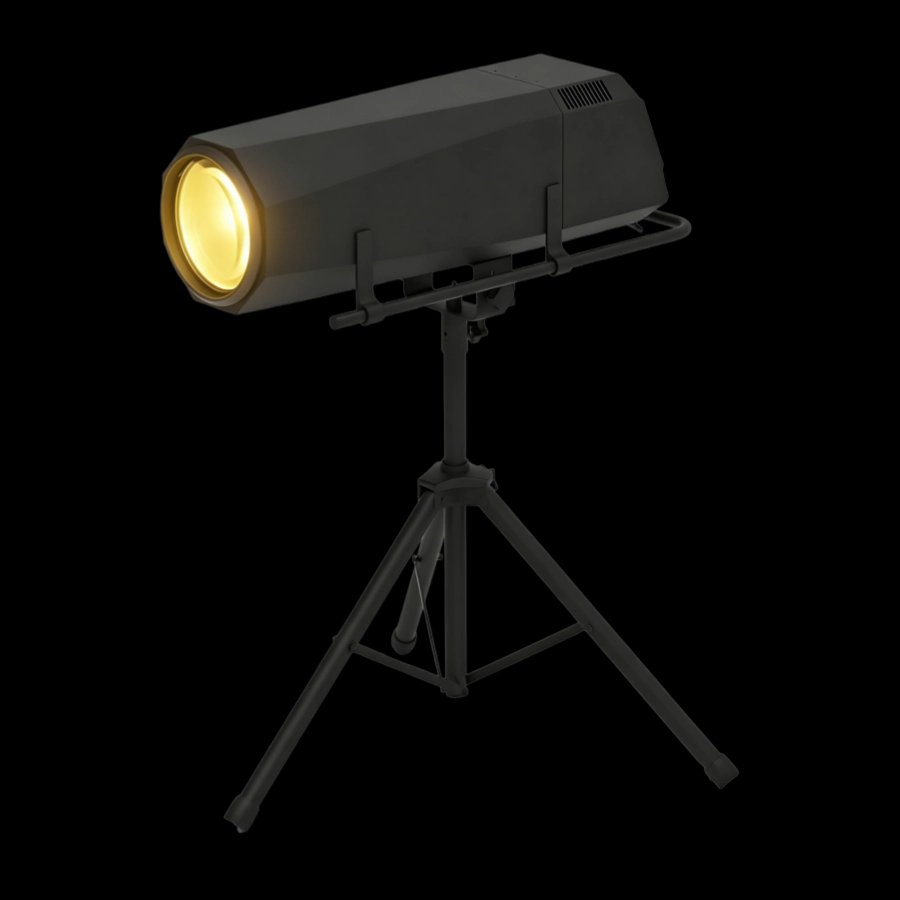
This 1200W waterproof LED follow spotlight with iris adjustment features strong light penetration, precise focusing, and smooth dimming with strobe effects.
Its rain- and dust-resistant design makes it suitable for outdoor performances, concerts, architectural lighting, and other applications. The LED light source boasts a long lifespan and stable, durable operation.
The Waterproof 1200W LED Follow Spot Light with Rotating Gobo features a rotating pattern sheet, delivering a powerful 1200W output for clear, focused beams and precise light tracking. Waterproof for outdoor use in all scenarios, the rotating pattern creates rich visual layers, making it ideal for large-scale indoor and outdoor performances, music festivals, light shows, and other events requiring focused attention and stage effects.
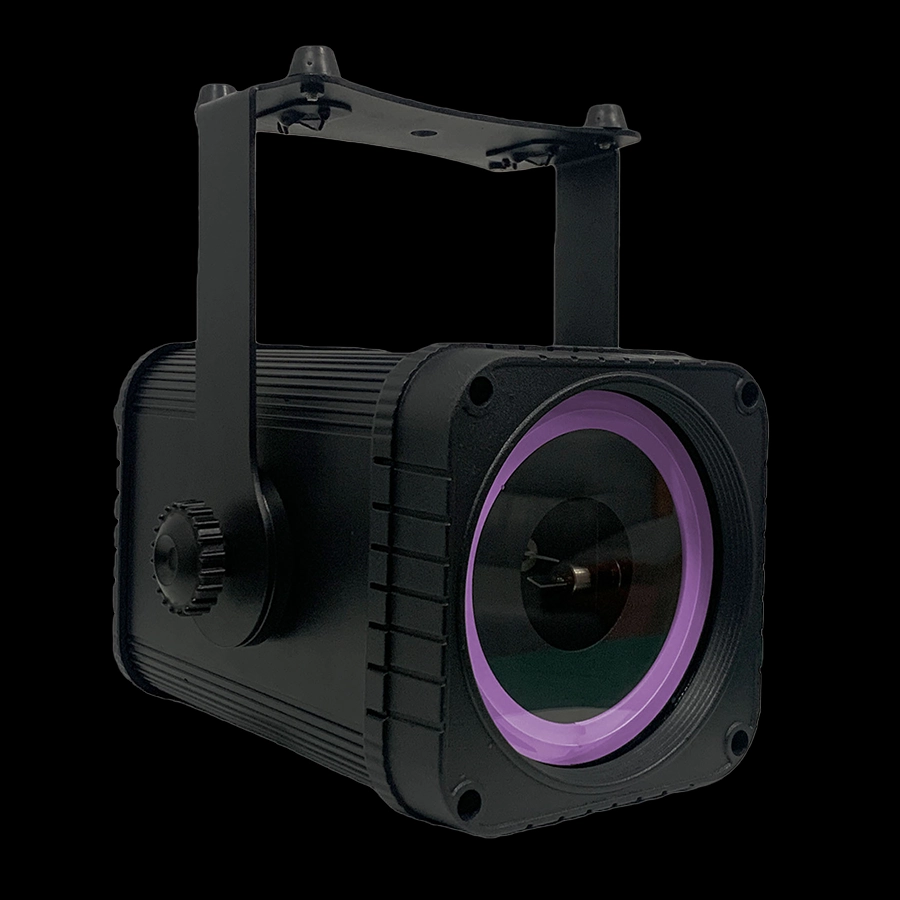
This IP65 waterproof 3W RGB animation laser battery light features an IP65 waterproof and dustproof design, making it suitable for both outdoor and indoor use. It supports rich RGB color combinations and dynamic animation effects, delivering a clear and fluid beam that can display text, patterns, and flowing light and shadow, among other visual representations.
Powered by a built-in battery, it requires no external power source, making it portable, easy to deploy, and simple to operate. Ideal for festive decorations, creating a garden atmosphere, and adding a touch of elegance to small events, it's energy-efficient, durable, and creates a truly immersive ambiance.
This IP65 waterproof 5W RGB animation laser battery light features an IP65 waterproof and dustproof design, making it suitable for both outdoor and indoor use. It supports rich RGB color combinations and dynamic animation effects, delivering a clear and fluid beam that can display text, patterns, and flowing light and shadow, among other visual representations.
Powered by a built-in battery, it requires no external power source, making it portable, easy to deploy, and simple to operate. Ideal for festive decorations, creating a garden atmosphere, and adding a touch of elegance to small events, it's energy-efficient, durable, and creates a truly immersive ambiance.
If you have any comments or good suggestions, please leave us a message, later our professional staff will contact you as soon as possible.
Lighting Innovators
Uplus Lighting is a leading integrated company specializing in R&D, design, production, and sales of stage lighting solutions.
 Scan QR Code
Facebook
Instagram
YouTube
VK