





LED vs Halogen Profile Stage Lights: Pros, Cons, Cost
- Understanding profile stage lights: function & terminology
- What is a profile (ellipsoidal) spotlight?
- Key components and terms
- Common applications
- Comparing LED and halogen profile stage lights
- Optical performance & beam quality
- Energy efficiency, heat and lifetime
- Color rendering and dimming behavior
- Practical pros and cons: what I recommend by use-case
- Pros of LED profile stage lights
- Cons of LED profile stage lights
- Pros and cons of halogen profile stage lights
- Costs, lifecycle economics and comparison table
- Upfront cost vs lifetime cost
- Sample 5-year lifecycle estimate (illustrative)
- Specification checklist: how I evaluate profile fixtures
- Optical and photometric data
- Color and control
- Serviceability and warranty
- Uplus Lighting: capabilities and how we fit your needs
- FAQs
- 1. Are LED profile stage lights as good as halogen for theatre?
- 2. How do I compare CRI and TM-30 numbers when selecting an LED profile?
- 3. What is the real payback period for switching to LED profiles?
- 4. Do LED profiles accept standard gobo sizes and accessories?
- 5. Are there any broadcast or camera considerations with LED profile lights?
- 6. How should I decide between replacing halogen fixtures individually vs. wholesale upgrade?
I’ve spent years specifying and testing profile stage lights in theatres, concert halls, TV studios and live-event rigs. In this article I summarize the practical differences between LED and halogen profile (ellipsoidal) fixtures—covering optical performance, color rendering, dimming behavior, heat and energy, lifetime, maintenance, and real-world cost—so you can choose the right fixture for your application and budget.
Understanding profile stage lights: function & terminology
What is a profile (ellipsoidal) spotlight?
Profile stage lights—often called ellipsoidal reflector spotlights (ERS), Lekos, or profile fixtures—are fixed-beam instruments used to produce sharp-edged beams, project gobos, and shape light precisely on stage. They are central to theatrical lighting because they combine controllable optics (iris, shutters) with interchangeable lenses to deliver focal control. For a general overview of stage lighting concepts, see Stage lighting (Wikipedia).
Key components and terms
When specifying profile fixtures I pay attention to: lamp/source type (halogen lamp or LED engine), lens tube options (e.g., 19°, 26°, 36°), shutter/iris quality, gobo size compatibility, color frame and gel-holder design, and dimming/fade characteristics. These elements determine beam quality, gobos sharpness, and integration with followspots or automated systems.
Common applications
I choose halogen profiles for productions that prioritize a particular tungsten quality or very smooth dimming for classical theatre and opera. LED profiles are my go-to for touring concerts, rental fleets, and venues aiming to cut energy and maintenance costs while adding color flexibility and long-term stability.
Comparing LED and halogen profile stage lights
Optical performance & beam quality
Historically, halogen (tungsten) sources in fixtures such as the classic Source Four produce a warm, continuous-spectrum light that many designers describe as 'naturally pleasing' on skin tones and fabrics. Halogen’s smooth spectral output can make color mixing intuitive when using gels. However modern LED profile optics have matured—LED engines with well-designed lenses and mixing chambers produce excellent beam homogeneity and sharp gobos comparable to halogen when specified correctly.
Energy efficiency, heat and lifetime
LED engines are significantly more energy-efficient and run much cooler at the fixture aperture. Typical LED profile fixtures consume 50–75% less power than equivalent halogen fixtures while producing similar usable light on stage. LEDs also offer long rated lifetimes (often 30,000–50,000+ hours before L70) compared to halogen lamp lifespans. For general LED lifetime and energy context see the U.S. Department of Energy Solid-State Lighting overview: DOE SSL. For lamp technology background see LED (Wikipedia) and Halogen lamp (Wikipedia).
Color rendering and dimming behavior
Color rendering (measured as CRI or newer metrics such as TM-30) is critical in theatre. High-quality LED profile fixtures now achieve CRI 90+ or TM-30 values acceptable for demanding productions, but not all LEDs are equal—check the specific engine datasheet. Halogen by its continuous tungsten spectrum inherently scores well for color rendering. Dimming is another area where halogen traditionally excels because the incandescent curve produces a warm color shift and very smooth fades. LEDs need well-designed LED drivers and dimming curves (or emulation modes) to recreate that behavior. For CRI fundamentals see Color rendering index (Wikipedia) and for industry guidance consult the Illuminating Engineering Society (IES).
Practical pros and cons: what I recommend by use-case
Pros of LED profile stage lights
- Energy efficiency: substantial power savings and lower HVAC loads.
- Long lifetime: fewer lamp changes and downtime; ideal for rental fleets.
- Color flexibility: multi-color engines can eliminate gel frames for many uses.
- Lower fixture temperature: safer handling and reduced backstage heat.
Cons of LED profile stage lights
- Higher upfront cost for comparable optical quality.
- Color fidelity varies—must verify CRI/TM-30 values per model.
- Dimming behavior and color shift need driver/firmware tuning to match tungsten ‘feels’.
Pros and cons of halogen profile stage lights
Halogen fixtures remain attractive for low-capex installs and for designers seeking the traditional tungsten response. They are generally less expensive upfront and simple to maintain (replace lamp). However, they consume more power, generate more heat at the instrument, and require frequent lamp replacement and socket maintenance—factors that increase operating cost and labor over time.
Costs, lifecycle economics and comparison table
Upfront cost vs lifetime cost
When advising clients I separate initial purchase price from total cost of ownership (TCO). LEDs typically cost more to buy but save on electricity, lamp replacements, and labor. Halogen fixtures are cheaper initially but incur regular lamp, gel, and cooling costs. Below I present a comparative table using realistic ranges; actual prices vary by brand, beam angle, and feature set.
| Specification | Typical Halogen Profile | Typical LED Profile |
|---|---|---|
| Initial fixture cost (USD) | $200 – $900 | $900 – $3,500 |
| Lamp/engine lifetime | 2,000 – 4,000 hours (lamp) | 30,000 – 50,000+ hours (L70) |
| Power consumption (comparable output) | 300 – 750 W | 60 – 300 W |
| Maintenance | Frequent lamp changes, socket wear | Minimal (driver/LED module service as needed) |
| Heat at aperture | High | Low to moderate |
| Typical CRI | 95+ (tungsten spectrum) | 80–95+ (model dependent) |
| Suitability for rentals/touring | Lower upfront cost; higher recurring costs | Higher upfront cost; lower operating costs; preferred for touring |
Sources: LED and halogen technology summaries: DOE SSL, Halogen lamp (Wikipedia), and industry best-practice guidance from IES.
Sample 5-year lifecycle estimate (illustrative)
For a theatre running 1,000 hours/year, I modelled simple TCO assumptions (energy cost $0.13/kWh): LED fixtures (150W average) vs halogen (575W). Over 5 years LEDs save energy costs which can offset higher capital within 3–5 years depending on local electricity and maintenance labor rates. Exact payback depends on fixture selection, usage hours, and power rates—ask suppliers for measured lumen maintenance (LM-80/L70) and complete fixture wattage.
Specification checklist: how I evaluate profile fixtures
Optical and photometric data
Request photometric reports (IES files), beam angle options, uniformity graphs, gobo resolution charts, and lens focal length options. An IES file allows accurate pre-visualisation in lighting design software and ensures the fixture will meet the designer’s requirements.
Color and control
Verify CRI and TM-30 values for fixture white output and any provided color-mixing gamut. Confirm dimming modes (linear, tungsten emulation) and DMX/RDM/Art-Net compatibility. For live television and broadcast always check flicker specifications and constant-current driver performance.
Serviceability and warranty
Check for modular LED engines, availability of spare parts (gobos, shutters, lenses), warranty terms on LED modules and drivers, and manufacturer support for firmware updates. I prioritize suppliers with documented repair centers or OEM spare availability.
Uplus Lighting: capabilities and how we fit your needs
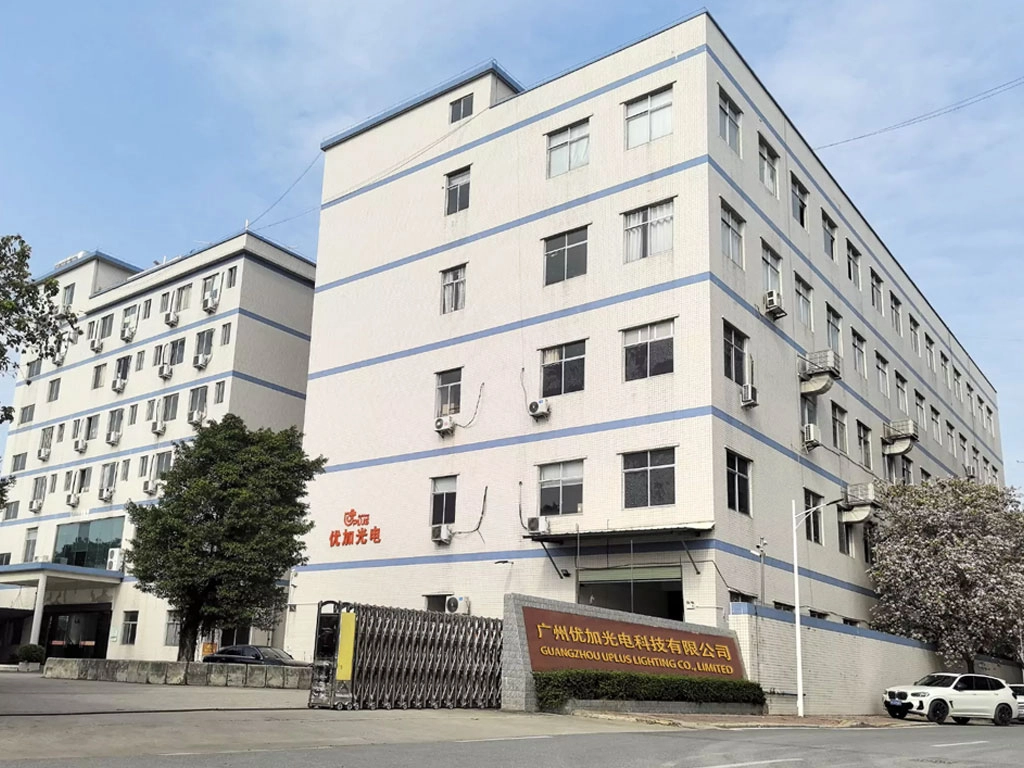
Uplus Lighting was established in 2012 in Guangzhou, China, and is a professional manufacturer specializing in high-end stage lighting products. We provide innovative and reliable lighting solutions for theaters, studios, cultural projects, concerts, and live events worldwide. With rich experience in product development, manufacturing, and export, we offer a wide product range covering professional lighting, entertainment lighting, and theater lighting to meet the needs of large performances, rental companies, distributors, and project clients. Since 2015, our products have been widely applied in major concerts, opera houses, TV programs, and large-scale events in China and abroad. We also support OEM orders and customized product development. A skilled production team and strict quality control ensure stable performance, consistent quality, and professional service trusted by global partners.
Uplus Lighting’s core products include moving head lights, strobe lights, LED battery lights, static lights, LED theatre lights, LED follow spot lights, stage effect lights, and laser lights. Our competitive advantages include:
- Product development experience and flexible OEM/ODM capabilities for custom optical and color solutions.
- Rigorous QC and long-term supply reliability—important for rental fleets and project continuity.
- Competitive pricing with professional-grade components to balance cost and performance.
If you are evaluating LED profile stage lights for a venue upgrade, a touring rig or a rental fleet, I recommend contacting Uplus Lighting for product specs, photometry, and sample testing. Their product range covers both LED and traditional-style fixtures and they can support custom lens sets, gobos, and control options to match specific project needs.
FAQs
1. Are LED profile stage lights as good as halogen for theatre?
Short answer: Yes—modern LED profile fixtures can match or surpass halogen in many applications, particularly where energy savings, color flexibility, and reduced maintenance are priorities. For productions that require the exact tungsten dimming aesthetic, you should test LED fixtures with tungsten-emulation modes before a full replacement.
2. How do I compare CRI and TM-30 numbers when selecting an LED profile?
CRI (Ra) gives a basic indication of color fidelity but TM-30 provides a fuller picture of color rendition and saturation changes. I look for CRI 90+ and review TM-30 Rf (fidelity) and Rg (gamut) to ensure the fixture renders skin tones and fabrics accurately. Ask the manufacturer for spectral power distribution (SPD) charts.
3. What is the real payback period for switching to LED profiles?
Typical payback ranges from 2 to 6 years depending on hours of use, local electricity cost, and maintenance labor. High-use venues and rental companies see faster ROI. Always run a site-specific lifecycle cost analysis including electricity, lamp replacements, and labor.
4. Do LED profiles accept standard gobo sizes and accessories?
Many LED profile fixtures are designed to accept standard gobo sizes, shutters, and iris accessories, but mechanical compatibility varies—confirm gobo diameter, holder depth, and shutter geometry before retrofitting into an existing rig.
5. Are there any broadcast or camera considerations with LED profile lights?
Yes—check flicker performance, PWM frequency of LED drivers, and color stability across dimming ranges. Request flicker test results and consult your camera/engineer team; many professional LED profiles are broadcast-compatible but you must verify the exact fixture model.
6. How should I decide between replacing halogen fixtures individually vs. wholesale upgrade?
Evaluate usage patterns: replace high-hour, hard-to-access, or high-heat-risk units first. For rental companies, a phased wholesale upgrade may deliver economies of scale and quicker fleet modernization. For fixed venues, prioritize front-of-house and frequently used fixtures where energy or cooling savings matter most.
If you’d like a fixture recommendation, photometric comparison, or a quote, contact Uplus Lighting for product datasheets, IES files and sample testing. We can help size a solution that balances optical performance, lifecycle cost, and creative needs. View our product range or request a consultation to discuss moving head lights, strobe lights, LED battery lights, static lights, LED theatre lights, LED follow spot lights, stage effect lights, and laser lights. Contact us to get started.
Contact / Request a quote: For specifications, IES files, and pricing, please reach out to Uplus Lighting via their official channels to arrange testing or OEM inquiries.
How to Choose the Right LED Stage Light Bar for Your Venue
Creative Beam Effects with Moving Beam LED Light Bars
Energy Efficiency and Cost Savings of LED Profile Stage Lights
Top 10 led beam moving head light Manufacturers and Supplier Brands
MH-W180
Is the light output soft and even, suitable for fill light scenarios?
It uses a dedicated surface light source, providing soft and even light, natural fill light, and adapting to various fill light needs.
IP-BL05
Can it be fixedly installed, or can it only be placed anywhere?
It can be placed directly on a flat surface or easily fixed, allowing for flexible selection based on the scene requirements.
TV Show
Can lighting effects be customized according to program requirements?
Absolutely! Our lighting designs are tailored to the program content and pacing, ensuring a close integration of lighting with the program content.
Stage Performance
Can your lighting equipment adapt to different weather conditions?
Our lighting equipment has excellent waterproof and windproof properties, making it ideal for outdoor use. It ensures stable lighting effects in both sunny and rainy weather.
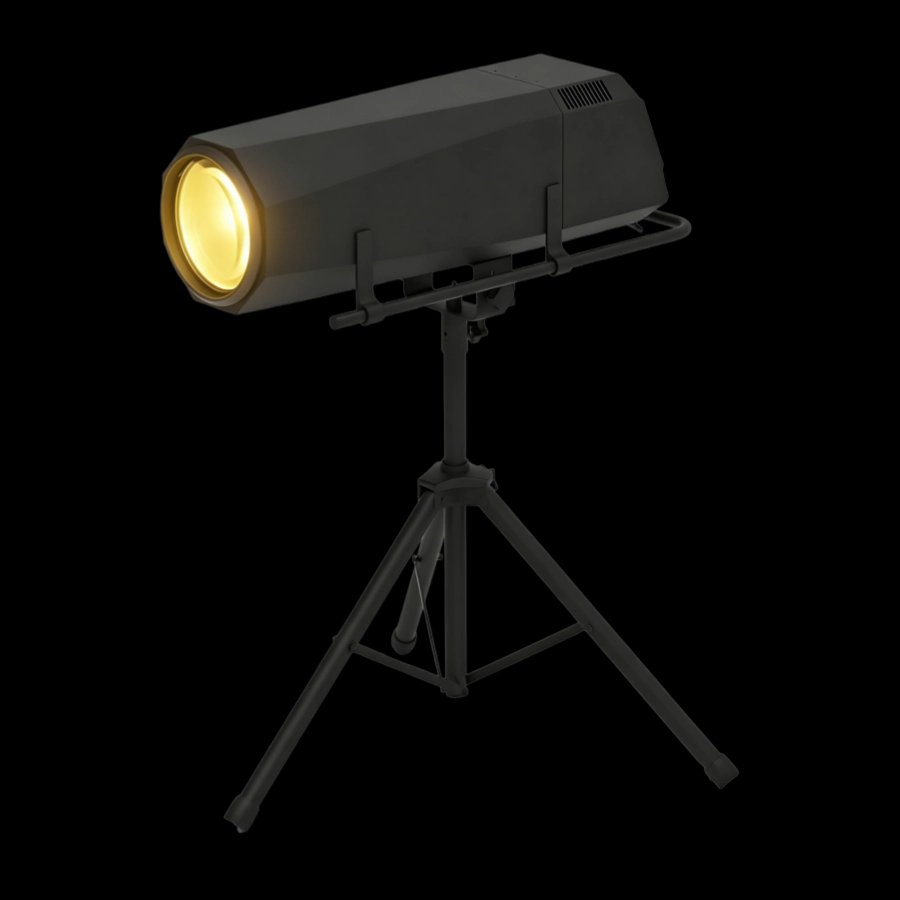
This 1200W waterproof LED follow spotlight with iris adjustment features strong light penetration, precise focusing, and smooth dimming with strobe effects.
Its rain- and dust-resistant design makes it suitable for outdoor performances, concerts, architectural lighting, and other applications. The LED light source boasts a long lifespan and stable, durable operation.
The Waterproof 1200W LED Follow Spot Light with Rotating Gobo features a rotating pattern sheet, delivering a powerful 1200W output for clear, focused beams and precise light tracking. Waterproof for outdoor use in all scenarios, the rotating pattern creates rich visual layers, making it ideal for large-scale indoor and outdoor performances, music festivals, light shows, and other events requiring focused attention and stage effects.
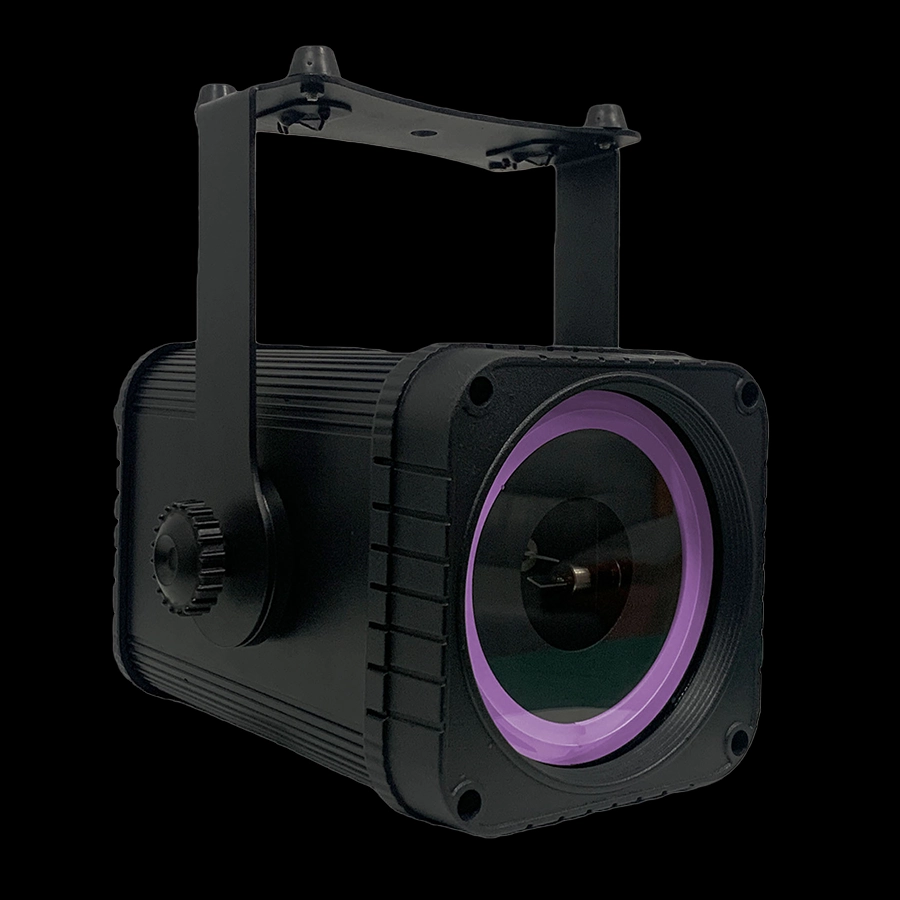
This IP65 waterproof 3W RGB animation laser battery light features an IP65 waterproof and dustproof design, making it suitable for both outdoor and indoor use. It supports rich RGB color combinations and dynamic animation effects, delivering a clear and fluid beam that can display text, patterns, and flowing light and shadow, among other visual representations.
Powered by a built-in battery, it requires no external power source, making it portable, easy to deploy, and simple to operate. Ideal for festive decorations, creating a garden atmosphere, and adding a touch of elegance to small events, it's energy-efficient, durable, and creates a truly immersive ambiance.
This IP65 waterproof 5W RGB animation laser battery light features an IP65 waterproof and dustproof design, making it suitable for both outdoor and indoor use. It supports rich RGB color combinations and dynamic animation effects, delivering a clear and fluid beam that can display text, patterns, and flowing light and shadow, among other visual representations.
Powered by a built-in battery, it requires no external power source, making it portable, easy to deploy, and simple to operate. Ideal for festive decorations, creating a garden atmosphere, and adding a touch of elegance to small events, it's energy-efficient, durable, and creates a truly immersive ambiance.
If you have any comments or good suggestions, please leave us a message, later our professional staff will contact you as soon as possible.
Lighting Innovators
Uplus Lighting is a leading integrated company specializing in R&D, design, production, and sales of stage lighting solutions.
 Scan QR Code
Facebook
Instagram
YouTube
VK