






LED stage profile light: benefits, savings and performance
- Understanding modern profile spotlights and their evolution
- From tungsten ERS to LED ellipsoidal: what changed
- Key functional expectations for a profile light
- Performance characteristics: optics, color rendering and dimming
- Optical precision and beam quality
- Color fidelity: CRI, TM-30 and spectral considerations
- Smooth dimming and flicker control
- Energy, lifecycle costs and measurable savings
- Power consumption and luminous efficacy
- Lifecycle cost comparison (energy + maintenance)
- Heat load and HVAC savings
- Practical considerations for adoption and field deployment
- Photometrics and selecting the right output
- Serviceability, modularity and repairability
- Control integration and dimming curves
- Quantifiable performance: what to request from manufacturers
- Photometric and spectral data
- Warranty, MTBF and maintenance policy
- Compliance and safety standards
- Why manufacturers like Uplus Lighting matter to buyers
- Manufacturer profile and track record
- Product portfolio and technical strengths
- Choosing a supplier: what sets a reliable partner apart
- Deployment tips and common pitfalls
- Don’t overspec watts—use measured lux targets
- Plan for spare parts and driver lifecycle
- Test on-camera and in-situ
- FAQ
- 1. What is a stage profile light and how does LED change its function?
- 2. How much energy can I expect to save by switching to LED profile fixtures?
- 3. Do LED profile lights give the same color quality as tungsten?
- 4. Are there any camera or flicker issues with LED profiles?
- 5. What maintenance differences should I expect?
- 6. Can I retrofit existing lanterns to LED or should I buy new fixtures?
- Contact and next steps
LED stage profile light (also known as LED profile spot or LED ellipsoidal) has become a core tool in modern theatre, broadcast and concert lighting. In this article I summarize the principal advantages, quantify expected energy and maintenance savings, and evaluate optical and color performance metrics that matter to designers and rental houses. I draw on published standards and industry data to make claims verifiable for buyers, technicians and specifiers.
Understanding modern profile spotlights and their evolution
From tungsten ERS to LED ellipsoidal: what changed
The traditional stage profile spotlight, often called an Ellipsoidal Reflector Spotlight (ERS), has been the designer's tool for precise beam shaping, gobo projection and edge control for decades (Wikipedia: Ellipsoidal reflector spotlight). Historically these fixtures used tungsten-halogen lamps (300W–2000W) or discharge sources such as HMI. The shift to LED profile lights replaces the lamp-based source with high-power LED engines and integrated electronic drivers, preserving optical control while reducing electrical and thermal burdens.
Key functional expectations for a profile light
As a specifier, I expect a profile light to provide: tight beam shaping (zoom or fixed), crisp shuttering and gobo projection, smooth dimming and color fidelity suitable for human skin tones and cameras. Modern LED profile lights meet these while adding variable color temperature, onboard color mixing, and networked control (DMX/RDM, Art-Net). Standards such as IES guidance and CRI/TM-30 metrics help quantify these attributes (Wikipedia: Color rendering index; Illuminating Engineering Society (IES)).
Performance characteristics: optics, color rendering and dimming
Optical precision and beam quality
LED profile lights retain the optical train of a conventional ERS—lens train, shutters and gobos—so beam shape and edge control remain excellent. The critical factor is the LED engine design: a single high-power LED with well-designed secondary optics or a homogenizing rod gives even field and crisp projection. When evaluating fixtures, examine measured beam uniformity and gobo edge definition from manufacturer photometric data.
Color fidelity: CRI, TM-30 and spectral considerations
Color rendering is often cited using CRI (Ra), but TM-30 (from IES) provides richer data on fidelity and gamut. LED profile lights for theatre typically target CRI >90 and TM-30 Rf values aligned with accurate skin tones. For broadcast or camera-heavy applications, consider fixtures with full-spectrum white LEDs or tunable white + color mixing and verify spectral power distribution (SPD) from the datasheet (CRI; IES standards).
Smooth dimming and flicker control
Smooth, theatrical dimming curves and low flicker are essential for on-camera use. LEDs require well-designed drivers and PWM or constant-current techniques tuned to avoid temporal artifacts. Check manufacturer test reports for flicker percentage and camera-safe modes (some fixtures provide selectable PWM frequencies for broadcast work).
Energy, lifecycle costs and measurable savings
Power consumption and luminous efficacy
One of the most tangible benefits of LED profile lights is energy efficiency. Typical tungsten profile fixtures consume 575W to 1,200W for a single fixture. A comparable LED profile unit commonly uses 120W–400W depending on output requirements. The U.S. Department of Energy documents that LED technology delivers markedly higher lumens per watt than incandescent and halogen sources (DOE: LED Basics).
Lifecycle cost comparison (energy + maintenance)
Below is a representative comparison of a traditional 750W tungsten profile vs a 300W LED profile. Numbers are illustrative but conservative; always validate with supplier photometrics and local electricity costs.
| Specification | 750W Tungsten Profile | 300W LED Profile |
|---|---|---|
| Rated power (typical) | 750 W | 300 W |
| Typical luminous efficacy | ~15 lm/W (source) | ~60–120 lm/W (engine) |
| Annual energy use (6 hr/day, 200 days) | 900 kWh | 360 kWh |
| Annual energy cost (@ $0.15/kWh) | $135 | $54 |
| Lamp/engine replacement (annualized) | $150–$300 (lamps, sockets, labor) | $30–$80 (LED engine amortized) |
| Estimated annual total cost | $285–$435 | $84–$134 |
These results show energy savings often exceeding 50% and significant reduction in maintenance and consumables. The DOE and industry white papers provide broader analyses of LED lifecycle benefits (DOE: LED Basics).
Heat load and HVAC savings
Lower fixture power reduces heat dumped into the stage house. This can reduce HVAC operating costs—an often overlooked saving—especially in enclosed theaters and studios where many fixtures run long hours.
Practical considerations for adoption and field deployment
Photometrics and selecting the right output
Match fixtures to required lux on stage rather than simply wattage. Request manufacturer IES files and test patterns to evaluate uniformity, beam angle, and required throw. For projection of gobos or tight beams, inspect sample output in-house when possible.
Serviceability, modularity and repairability
LED engines and drivers age differently from lamps. Choose fixtures with modular LED boards and accessible optics so that field service or LED module replacement is straightforward. Also verify firmware update mechanisms and DMX/RDM support for networked maintenance.
Control integration and dimming curves
Ensure the LED profile supports the control protocols you need—standard DMX512, RDM for remote addressing, Art-Net/sACN for networked systems—and provides selectable dimming curves for smooth theatrical fades and camera-safe operation.
Quantifiable performance: what to request from manufacturers
Photometric and spectral data
Ask for IES files, candela distributions and spectral power distribution (SPD) charts. SPD lets you evaluate how the light renders colors and skin tones. Verify CRI, TM-30, and correlated color temperature (CCT) ranges.
Warranty, MTBF and maintenance policy
Compare warranty terms (LED engine, power supply, optics), mean time between failures (MTBF) figures and documented in-service performance. Reputable manufacturers will provide field performance case studies and test data.
Compliance and safety standards
Check conformity to relevant standards and certifications (CE, RoHS, CB, IEC safety norms) and manufacturer test reports. For lighting performance guidance and metrics, see IES resources (IES).
Why manufacturers like Uplus Lighting matter to buyers
Manufacturer profile and track record
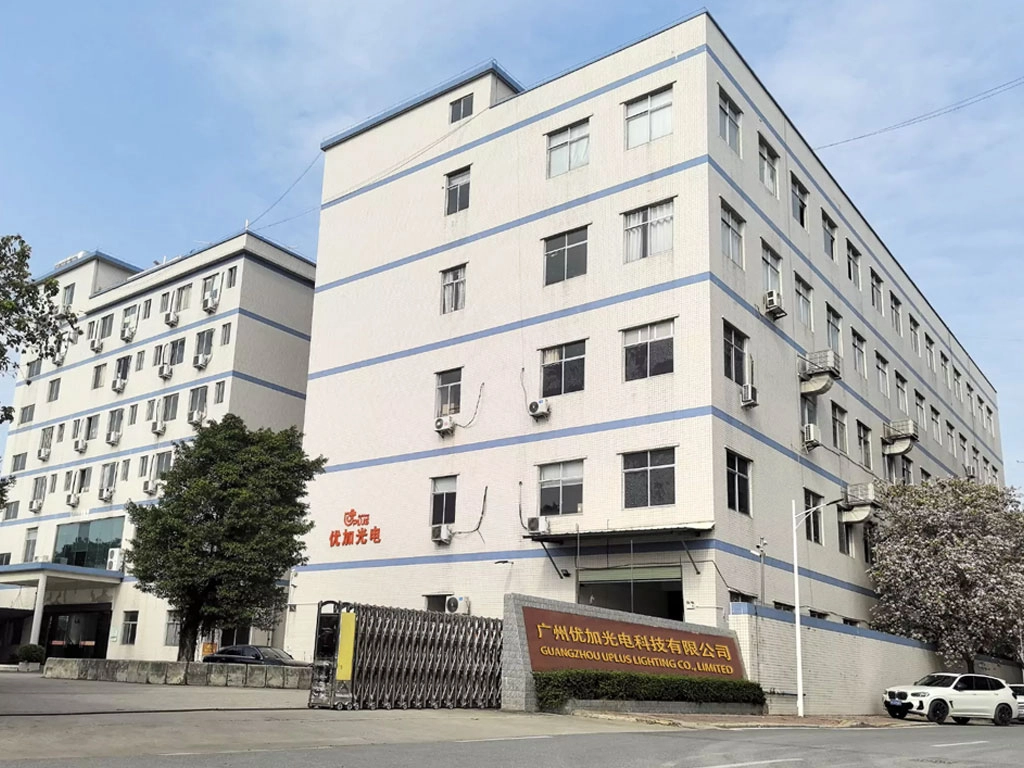
Uplus Lighting was established in 2012 in Guangzhou, China, and is a professional manufacturer specializing in high-end stage lighting products. We provide innovative and reliable lighting solutions for theaters, studios, cultural projects, concerts, and live events worldwide. With rich experience in product development, manufacturing, and export, we offer a wide product range covering professional lighting, entertainment lighting, and theater lighting to meet the needs of large performances, rental companies, distributors, and project clients. Since 2015, our products have been widely applied in major concerts, opera houses, TV programs, and large-scale events in China and abroad. We also support OEM orders and customized product development. A skilled production team and strict quality control ensure stable performance, consistent quality, and professional service trusted by global partners.
Product portfolio and technical strengths
Uplus Lighting's main products include moving head lights, strobe lights, led battery lights, static lights, led theatre lights, led follow spot light, stage effect lights, and laser lights. Their competitive strengths are in product R&D, OEM customization capacity, and experience delivering fixtures that balance optical precision with robust LED engine design—attributes critical for profile fixtures where beam quality and reliability matter.
Choosing a supplier: what sets a reliable partner apart
When selecting a supplier, prioritize: documented photometric performance, open technical data (IES/SPD files), clear warranty and spare-parts policy, and references from similar projects. Uplus Lighting's history in major productions and commitment to OEM/custom requirements are the kinds of assurances I look for when specifying systems for long-term installations.
Deployment tips and common pitfalls
Don’t overspec watts—use measured lux targets
Many users focus on wattage; instead specify required illuminance at the working plane. Use manufacturer IES files to calculate how many fixtures you need for even coverage and avoid excessive power consumption.
Plan for spare parts and driver lifecycle
Stock spare modules/drivers for quick swaps; LED engines are durable but drivers may fail earlier. Verify availability of replacement parts and local service options.
Test on-camera and in-situ
Always test LED profile lights under actual camera conditions and with the same lenses and settings used in production to detect any unwanted flicker or color shifts.
FAQ
1. What is a stage profile light and how does LED change its function?
A stage profile light (or profile spotlight) provides a controllable, hard-edged beam with shutters and gobo projection. LED profile lights replace the lamp with LED engines while preserving the optical components, offering similar beam control with added benefits like color tuning, lower power and less heat.
2. How much energy can I expect to save by switching to LED profile fixtures?
Savings vary by fixture and usage, but typical reductions are 40–70% in energy consumption relative to tungsten equivalents. Annual savings depend on hours of use and local electricity rates (see DOE: LED Basics).
3. Do LED profile lights give the same color quality as tungsten?
Modern LED engines can achieve CRI >90 and favorable TM-30 scores, often matching or exceeding perceived color fidelity of tungsten with the advantage of tunable CCT. Verify SPD and TM-30/CRI data for critical applications.
4. Are there any camera or flicker issues with LED profiles?
LEDs can exhibit flicker if drivers are poorly designed. Choose fixtures that provide camera-safe modes, documented flicker metrics, and selectable PWM frequencies for broadcast work.
5. What maintenance differences should I expect?
LED fixtures eliminate frequent lamp replacements but may require driver or module service. Overall maintenance time and consumable costs are typically much lower with LEDs.
6. Can I retrofit existing lanterns to LED or should I buy new fixtures?
Some retrofit lamp modules exist, but for best optical performance and serviceability I generally recommend complete LED-profile fixtures designed from the ground up. Retrofitting can compromise thermal management, optics and serviceability.
Contact and next steps
If you are evaluating LED profile lights for a theatre, TV studio, concert series or rental inventory, I recommend requesting sample photometric files (IES), SPD charts and on-site demonstrations where possible. For reliable high-end stage lighting products and OEM/custom development, consider Uplus Lighting’s product range and project experience. To discuss specifications, request IES files, or arrange a demo, contact your supplier or visit the manufacturer’s product pages.
Ready to evaluate LED profile solutions for your project? Contact Uplus Lighting for product details, customization options and photometric data to support your specification and procurement process.
Outdoor Moving Head Lights: IP Ratings and Weatherproofing
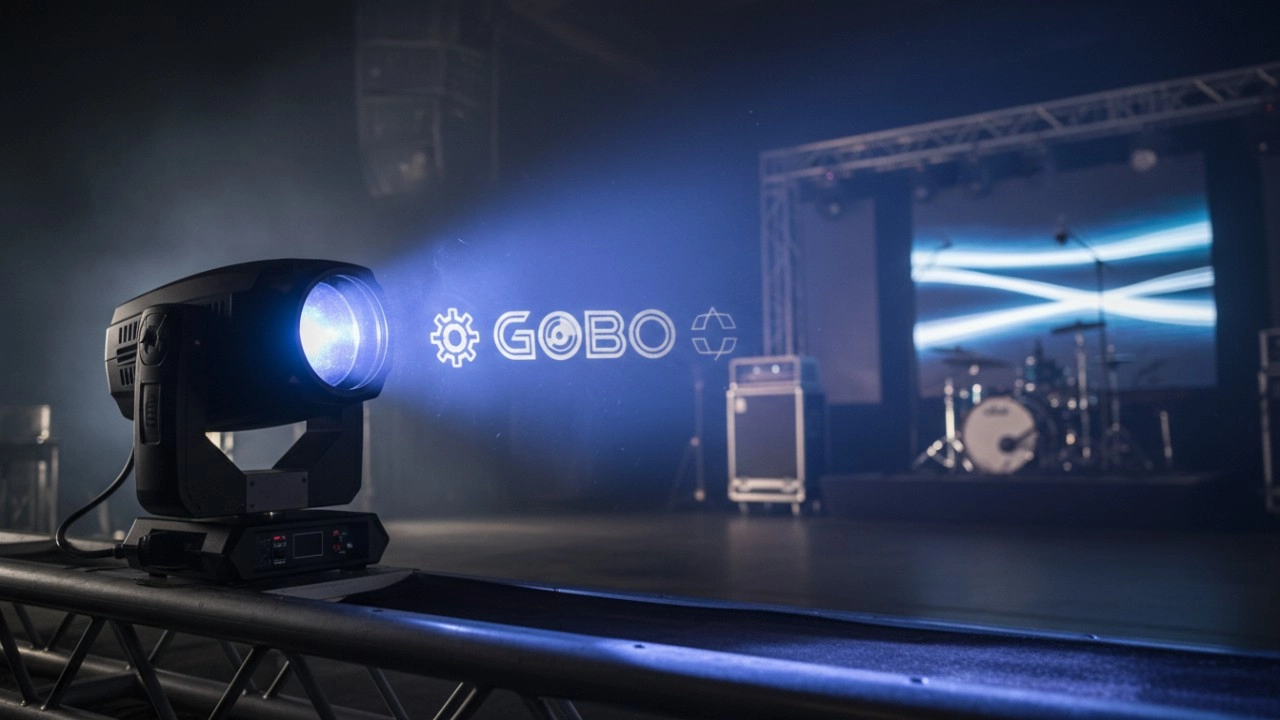
The 2026 Ultimate Guide to Gobo Moving Head Lights: Mastering Stage Projections
Case Studies: Mini LED Moving Head Lights in Clubs & Theaters
Customizing LED Stage Light Bars: Color, Effects, and Pixel Mapping
IP Mini Blinder
Will it overheat during continuous use?
Efficient heat dissipation from aluminum alloy, intelligent control, and no overheating during prolonged operation.
IP-W1820
Can IP65 protection be used in heavy rain and dusty environments?
Yes, it can withstand heavy rain and dust, and operate stably in complex outdoor environments.
IP-MH6200 4in1
Can it be used directly in heavy rain outdoors with IP65 protection?
It can withstand rain spray and dust, suitable for light rain and everyday outdoor scenarios. For heavy rain, additional protection is recommended.
IP-FP1200 IRIS
Will the performance be affected in strong light environments?
The light source has strong penetrating power, maintaining a clear beam even in strong outdoor light environments, with outstanding brightness in the focused area.
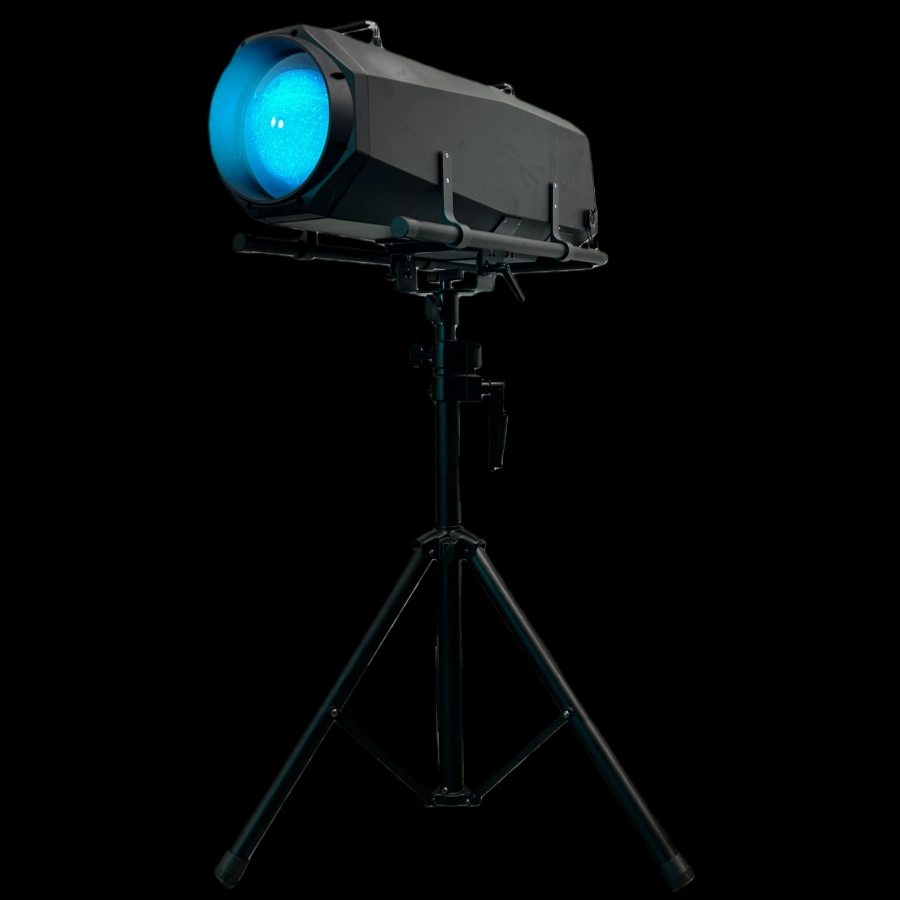
This 1200W waterproof LED follow spotlight with iris adjustment features strong light penetration, precise focusing, and smooth dimming with strobe effects.
Its rain- and dust-resistant design makes it suitable for outdoor performances, concerts, architectural lighting, and other applications. The LED light source boasts a long lifespan and stable, durable operation.
The Waterproof 1200W LED Follow Spot Light with Rotating Gobo features a rotating pattern sheet, delivering a powerful 1200W output for clear, focused beams and precise light tracking. Waterproof for outdoor use in all scenarios, the rotating pattern creates rich visual layers, making it ideal for large-scale indoor and outdoor performances, music festivals, light shows, and other events requiring focused attention and stage effects.
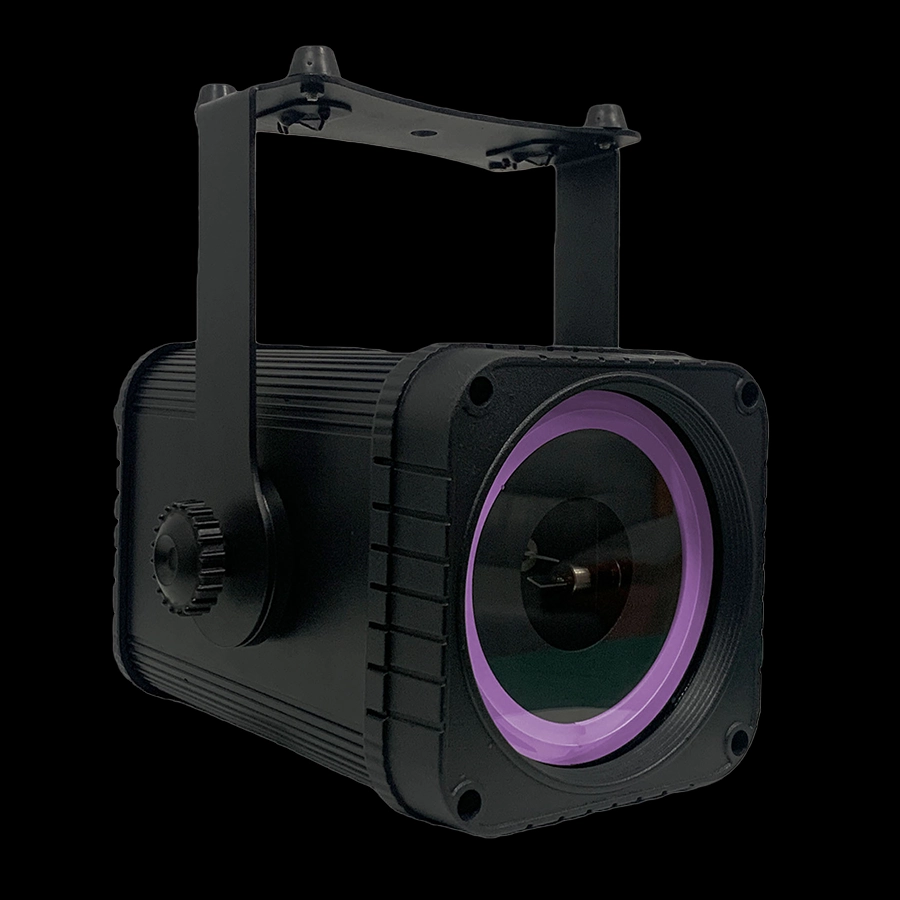
This IP65 waterproof 3W RGB animation laser battery light features an IP65 waterproof and dustproof design, making it suitable for both outdoor and indoor use. It supports rich RGB color combinations and dynamic animation effects, delivering a clear and fluid beam that can display text, patterns, and flowing light and shadow, among other visual representations.
Powered by a built-in battery, it requires no external power source, making it portable, easy to deploy, and simple to operate. Ideal for festive decorations, creating a garden atmosphere, and adding a touch of elegance to small events, it's energy-efficient, durable, and creates a truly immersive ambiance.
This IP65 waterproof 5W RGB animation laser battery light features an IP65 waterproof and dustproof design, making it suitable for both outdoor and indoor use. It supports rich RGB color combinations and dynamic animation effects, delivering a clear and fluid beam that can display text, patterns, and flowing light and shadow, among other visual representations.
Powered by a built-in battery, it requires no external power source, making it portable, easy to deploy, and simple to operate. Ideal for festive decorations, creating a garden atmosphere, and adding a touch of elegance to small events, it's energy-efficient, durable, and creates a truly immersive ambiance.
If you have any comments or good suggestions, please leave us a message, later our professional staff will contact you as soon as possible.
Lighting Innovators
Uplus Lighting is a leading integrated company specializing in R&D, design, production, and sales of stage lighting solutions.
 Scan QR Code
Facebook
Instagram
YouTube
VK