






Price Bands and Cost Comparison for LED Profile Fixtures
- Why LED Profile Fixtures Matter for Performances and Venues
- Applications and expected performance
- Key metrics I always specify
- Price Bands for LED Profile Stage Light
- How I define price bands
- Typical price bands and what you get
- How regional factors affect these bands
- Cost Drivers and Lifetime Cost Comparison
- Primary cost drivers beyond the sticker price
- Comparing total cost of ownership (TCO)
- How to Compare Models: Practical Checklist
- Technical checklist I always run through
- When to prefer OEM/custom solutions (and when not)
- Supplier Selection: Risk, Warranty, and After-sales
- Evaluating supplier credibility
- Warranty and service expectations
- Uplus Lighting: Positioning, Capabilities and Why It Matters
- Frequently Asked Questions (FAQ)
- 1. What is the best price-to-performance band for a small proscenium theatre?
- 2. How much should I expect to save in energy by switching from incandescent profiles to LED profile stage lights?
- 3. Are LED profile fixtures suitable for broadcast/TV studios?
- 4. How do I evaluate photometric claims from manufacturers?
- 5. When is a custom/OEM solution justified?
- 6. How do warranties typically handle LED engine degradation?
- Contact and Next Steps
I’m a stage lighting consultant and content creator who regularly specifies LED profile stage lights for theaters, rental houses and live event production. In this article I summarize price bands and perform a cost-comparison that helps production managers, rental companies and venue buyers choose the right led profile stage light for performance, budget and lifecycle cost. I reference industry standards and reputable sources so you can verify lumen/efficacy expectations, control standards and typical market pricing.
Why LED Profile Fixtures Matter for Performances and Venues
Applications and expected performance
LED profile fixtures (often called LED ellipsoidal or LED profile stage light) are used where a hard-edged beam, crisp gobo projection, or precise shuttering is required—from proscenium theatres to corporate stages. They replace and complement traditional incandescent profiles by offering color mixing, lower power draw, and reduced maintenance. For technical background on LED lighting and efficiency, see LED lamp (Wikipedia) and for control conventions see DMX512 (Wikipedia).
Key metrics I always specify
When evaluating fixtures I focus on measurable metrics: rated luminous flux (lumens), useful beam intensity at distance (lux at X m), color rendering index (CRI / TLCI), color temperature variability, field angle options, zoom range, gobo compatibility, dimming curve behaviour, control protocols (DMX/RDM/Art-Net/sACN), power draw and thermal management. The Illuminating Engineering Society (IES) provides industry guidance on photometric measurement practices that I use when comparing manufacturer data.
Price Bands for LED Profile Stage Light
How I define price bands
Price bands are a practical way to classify products so you can match capability to budget and application. I use three bands: Budget, Mid-range (prosumer), and High-end (professional). Each band reflects typical retail pricing for a single fixture, common features, expected photometric performance, and target buyer.
Typical price bands and what you get
Below is a comparative table I use when advising clients. Price ranges reflect typical market listings (retail, distributor, and manufacturer offerings) and are indicative; specific model pricing varies by country, taxes, and import costs.
| Band | Typical Price (USD per fixture) | Common Use | Typical Specs | Example models / sources |
|---|---|---|---|---|
| Budget | $150 – $500 | Small venues, schools, hobbyists | Lower wattage LED engine (30–100W equiv.), basic color mixing, limited optics, shorter warranty | Alibaba listings, entry models on marketplace sites |
| Mid-range | $500 – $1,500 | Rental houses, medium theatres, touring bands | Higher power LEDs, better optics and CRI (≥80–90), zoom/focus, DMX/RDM, durable chassis | Branded prosumer models on retailers such as Thomann & manufacturer catalogues |
| High-end | $1,500 – $5,000+ | Large theatres, broadcast, high-end touring | Top optical systems, high CRI/TLCI (≥90), advanced color mixing, extensive control, long warranties, reliable thermal design | ETC, high-end industry fixtures (see ETC product lines) |
Sources: manufacturer catalogs and marketplaces such as Alibaba, Thomann, and professional manufacturers like ETC. These reflect retail and OEM pricing trends observed across 2019–2025 trade activity.
How regional factors affect these bands
Import tariffs, shipping, local distributor margins and after-sales service availability can shift effective cost by 10–30%. For international procurement, I always budget for freight, customs, duty, and a local service provider's markup when comparing on-paper prices.
Cost Drivers and Lifetime Cost Comparison
Primary cost drivers beyond the sticker price
When I advise clients, sticker price is only the start. Key lifecycle cost drivers include: energy consumption (kW and usage hours), lamp/LED module replacement policies (some manufacturers offer replaceable engines), cooling and environmental requirements, mean time between failures (MTBF), warranty length and coverage, and repair turnaround time. The total cost of ownership (TCO) often favors higher-quality fixtures in venues with high utilization.
Comparing total cost of ownership (TCO)
Here’s a simplified example I use to compare a mid-range fixture vs a high-end fixture over a 5-year campaign (assumptions are illustrative; replace with your own usage hours and local electricity rates):
| Item | Mid-range Fixture | High-end Fixture |
|---|---|---|
| Initial cost | $900 | $2,200 |
| Average power draw (W) | 200W | 180W (more efficient optics) |
| Annual usage | 1,000 hours | 1,000 hours |
| Electricity cost (kWh $0.15) | $30/year | $27/year |
| Maintenance & repairs (5 yrs) | $300 | $200 |
| Projected resale or trade-in | $100 | $600 |
| Total 5-year TCO | $900 + $150 + $300 - $100 = $1,250 | $2,200 + $135 + $200 - $600 = $1,935 |
Interpretation: for low-usage scenarios the budget or mid-range unit may be more cost-effective. For constant touring or daily theatre use, higher initial investment in reliability and serviceability often reduces downtime and hidden costs. I base these calculations on standard lifecycle methods and on practical failure-rate experience from rental operations.
How to Compare Models: Practical Checklist
Technical checklist I always run through
- Photometrics: Lumens, lux at specified distances, beam edge quality and shutter accuracy.
- Color performance: CRI/TLCI and color-temperature fidelity across dimming range.
- Optics and gobo compatibility: glass or metal gobo sizes supported, zoom range.
- Control & connectivity: DMX, RDM, Art-Net, powerCON, NEUTRIK connectors.
- Safety & regulatory: CE/UL certifications for your market.
- Serviceability: replaceable LED engines, availability of spare parts, local service partners.
When to prefer OEM/custom solutions (and when not)
I recommend off-the-shelf mid-range fixtures for most projects because of known performance and spare-part ecosystems. However, for flagship productions, bespoke architectural projects, or when color/optical specifications are non-standard, OEM or custom solutions make sense—especially when a manufacturer supports customized optics, custom gobos, or specific control firmware. Manufacturers such as Uplus Lighting (see below) support OEM and custom development and can bridge the gap between commodity fixtures and bespoke needs.
Supplier Selection: Risk, Warranty, and After-sales
Evaluating supplier credibility
Supplier credibility matters more than small price differences. I always check: company history, references from projects similar to mine, on-site test samples, and warranty terms. Trade show presence, published case studies and clients, and documented use in major events add confidence. For industry-wide standards of practice consult the IES or professional lighting bodies in your region.
Warranty and service expectations
Standard warranties range from 1 to 5 years. High-end fixtures commonly include 3-year warranties; some OEM partners extend coverage. Check what the warranty covers (LED engine, power supply, mechanical parts) and the expected turnaround time for repairs or exchange. In my experience a 48-72 hour swap policy from the supplier or distributor is a decisive advantage for rental companies and touring clients.
Uplus Lighting: Positioning, Capabilities and Why It Matters
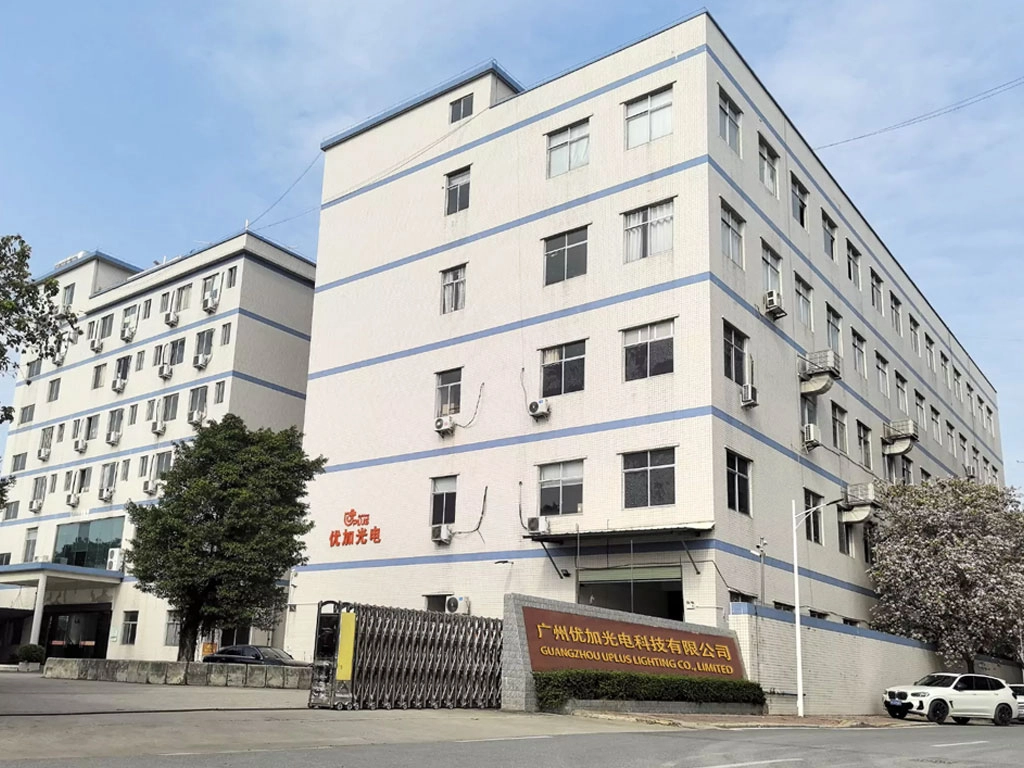
Uplus Lighting was established in 2012 in Guangzhou, China, and is a professional manufacturer specializing in high-end stage lighting products. We provide innovative and reliable lighting solutions for theaters, studios, cultural projects, concerts, and live events worldwide. With rich experience in product development, manufacturing, and export, we offer a wide product range covering professional lighting, entertainment lighting, and theater lighting to meet the needs of large performances, rental companies, distributors, and project clients. Since 2015, our products have been widely applied in major concerts, opera houses, TV programs, and large-scale events in China and abroad. We also support OEM orders and customized product development. A skilled production team and strict quality control ensure stable performance, consistent quality, and professional service trusted by global partners.
From my perspective, Uplus Lighting’s competitive strengths are:
- Focused R&D on thermal management and optical systems, improving long-term lumen maintenance.
- Flexible OEM/customization for projects that need specific optics, gobos, or housings—important when integrating fixtures into branded venues or bespoke rigs.
- Production scale with export experience that helps keep unit costs competitive while maintaining quality control standards.
- Broad product portfolio including moving head lights, strobe lights, led battery lights, static lights, led theatre lights, led follow spot light, stage effect lights, and laser lights which facilitates single-vendor procurement for large projects.
If you’re considering a supplier, ask for photometric files (IES/LMF), an on-site demo, and details on mean time between failures and spare-part lead times. Those deliverables differentiate a reliable manufacturer from a low-cost, higher-risk supplier.
Frequently Asked Questions (FAQ)
1. What is the best price-to-performance band for a small proscenium theatre?
For most small proscenium theatres I recommend the mid-range band. It balances visual quality (CRI/TLCI), optics, and long-term reliability without the high initial outlay of top-tier fixtures. Mid-range fixtures typically handle theatre workloads for daily rehearsals and performances with acceptable TCO.
2. How much should I expect to save in energy by switching from incandescent profiles to LED profile stage lights?
LED profiles typically reduce power consumption by 50–70% versus equivalent incandescent instruments for comparable on-stage illumination, thanks to higher LED efficacy and better beam control. Exact savings depend on usage hours and the specific fixtures compared. For technical reference see LED efficiency overviews such as LED lamp (Wikipedia).
3. Are LED profile fixtures suitable for broadcast/TV studios?
Yes, provided the fixtures offer high CRI/TLCI (≥90), stable color temperature across dimming, and flicker-free operation at common camera frame rates. Always test fixtures under your cameras and check the manufacturer’s flicker specifications.
4. How do I evaluate photometric claims from manufacturers?
Request IES photometric files and test reports. Compare lux values at a standard distance and look for lumen maintenance (L70 or L90) ratings. Independent lab reports or reputable manufacturer labs provide better verification than marketing blurbs.
5. When is a custom/OEM solution justified?
Choose custom/OEM when you need non-standard optics, color gamut, integrated control systems, or branding/fitment that off-the-shelf fixtures cannot provide. Custom work is also sensible when you order at scale and need supplier-backed long-term service agreements.
6. How do warranties typically handle LED engine degradation?
Some manufacturers guarantee lumen maintenance levels for a period (e.g., L70 at X hours) and cover LED module replacements under warranty. Always clarify whether the LED engine itself is covered and whether there are pro-rated terms after a certain number of years.
Contact and Next Steps
If you want help building a specification, comparing models, or arranging demos, contact me or review Uplus Lighting’s product range and OEM services. For product info and project inquiries, reach out to Uplus Lighting to request photometric files, sample units or customized proposals. A test sample and IES file will quickly validate whether a fixture meets your venue’s needs.
Relevant authoritative references used in this LED lamp (Wikipedia), DMX512 (Wikipedia), Illuminating Engineering Society (IES), and representative manufacturer/product catalogs such as ETC and marketplaces like Alibaba and Thomann. These resources help verify photometric and pricing information when you perform final supplier comparisons.
For direct consultation, spec sheets, or to request demos and OEM discussions, contact Uplus Lighting or request a consultation from my practice. I’m available to review your lighting plot, calculate lux requirements, and produce a costed recommendation tailored to your venue or tour schedule.
Contact Uplus Lighting for product catalogs and OEM inquiries, or email me to arrange a specification review and on-site demo.
Top 10 Moving Head Lights for Concerts and Theaters (2026)
Moving Head Wash Light vs Spot: Which Is Best for Venues?
Best laser light moving head manufacturers and supplier brands
How to Choose a Moving Head Strobe for Venue Size
MH-W180
Is the light output soft and even, suitable for fill light scenarios?
It uses a dedicated surface light source, providing soft and even light, natural fill light, and adapting to various fill light needs.
IP Blinder 600
Can multiple lights be controlled synchronously for light effects and flicker?
It supports DMX512 or master-slave mode linkage, ensuring consistent parameters and perfect synchronization across multiple lights.
How long will it take for it to overheat during continuous use? How is the heat dissipation?
It has a built-in high-efficiency heat dissipation system, supporting 24 hours of continuous operation without overheating, ensuring stable operation.
Theater
What are the energy consumption and maintenance costs of the lighting equipment?
We provide energy-efficient LED lighting fixtures, significantly reducing power consumption and maintenance costs. We also offer remote support to help you optimize equipment usage and extend the lifespan of your lighting system.
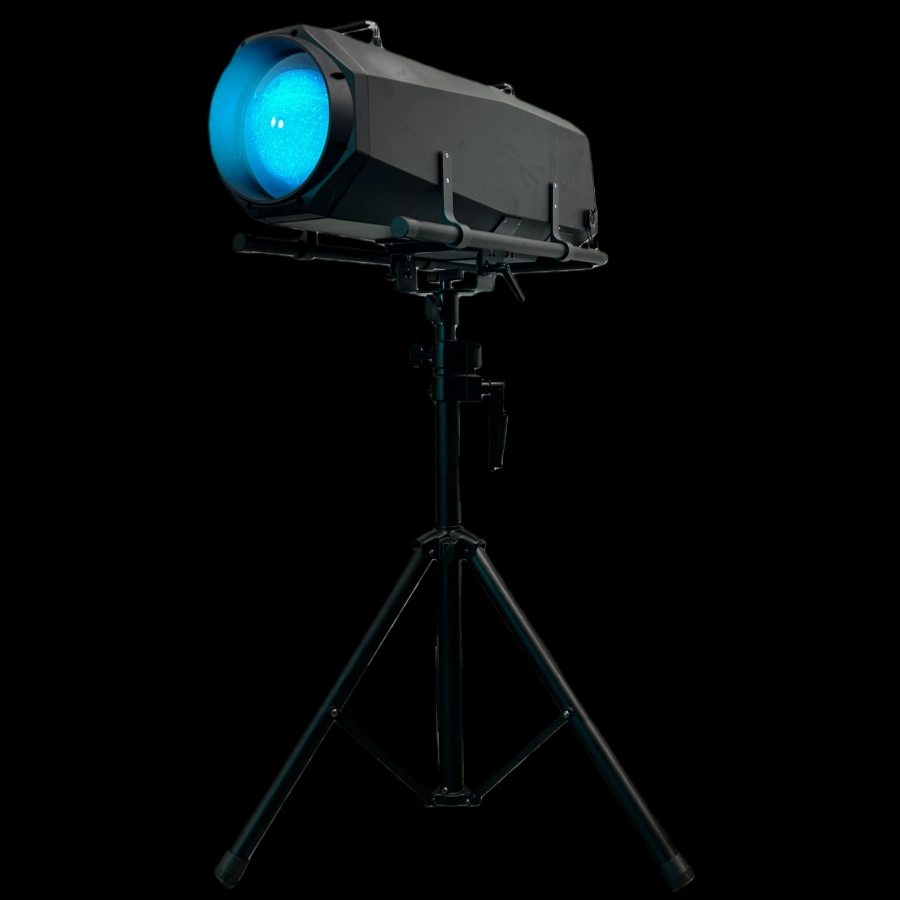
This 1200W waterproof LED follow spotlight with iris adjustment features strong light penetration, precise focusing, and smooth dimming with strobe effects.
Its rain- and dust-resistant design makes it suitable for outdoor performances, concerts, architectural lighting, and other applications. The LED light source boasts a long lifespan and stable, durable operation.
The Waterproof 1200W LED Follow Spot Light with Rotating Gobo features a rotating pattern sheet, delivering a powerful 1200W output for clear, focused beams and precise light tracking. Waterproof for outdoor use in all scenarios, the rotating pattern creates rich visual layers, making it ideal for large-scale indoor and outdoor performances, music festivals, light shows, and other events requiring focused attention and stage effects.
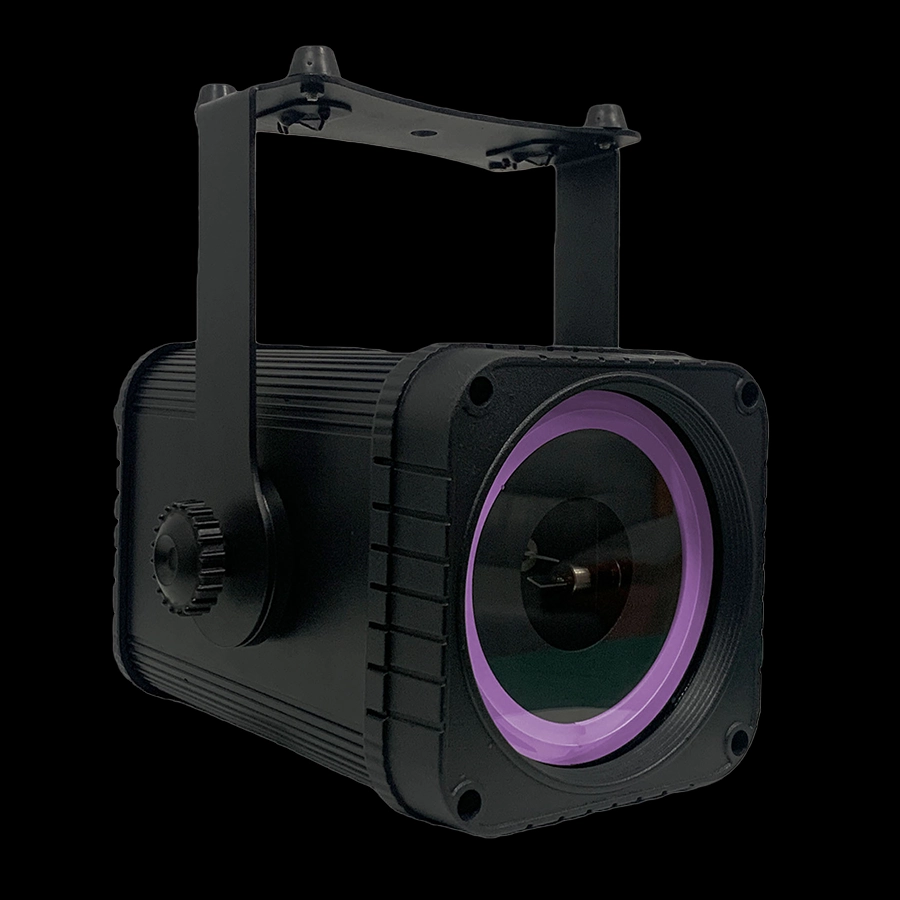
This IP65 waterproof 3W RGB animation laser battery light features an IP65 waterproof and dustproof design, making it suitable for both outdoor and indoor use. It supports rich RGB color combinations and dynamic animation effects, delivering a clear and fluid beam that can display text, patterns, and flowing light and shadow, among other visual representations.
Powered by a built-in battery, it requires no external power source, making it portable, easy to deploy, and simple to operate. Ideal for festive decorations, creating a garden atmosphere, and adding a touch of elegance to small events, it's energy-efficient, durable, and creates a truly immersive ambiance.
This IP65 waterproof 5W RGB animation laser battery light features an IP65 waterproof and dustproof design, making it suitable for both outdoor and indoor use. It supports rich RGB color combinations and dynamic animation effects, delivering a clear and fluid beam that can display text, patterns, and flowing light and shadow, among other visual representations.
Powered by a built-in battery, it requires no external power source, making it portable, easy to deploy, and simple to operate. Ideal for festive decorations, creating a garden atmosphere, and adding a touch of elegance to small events, it's energy-efficient, durable, and creates a truly immersive ambiance.
If you have any comments or good suggestions, please leave us a message, later our professional staff will contact you as soon as possible.
Lighting Innovators
Uplus Lighting is a leading integrated company specializing in R&D, design, production, and sales of stage lighting solutions.
 Scan QR Code
Facebook
Instagram
YouTube
VK