






LED Moving Beam Light Comparison: Features vs Price
- Understanding Moving Beam Lights
- What is a moving beam and how it differs from other moving heads
- Primary performance metrics I always check
- Why LED architecture and optics matter more than headline wattage
- Deciding Factors: Features that Matter
- LED engine: type, lifetime, and color system
- Optics and beam control: zoom, focus, gobos, and shutters
- Control, networking, and effects
- Price Segments Compared: What to Expect
- How I segment the market
- Feature vs price comparison table
- How price affects operational costs
- Selecting the Right Fixture for Your Use Case
- Concert touring and large festivals
- Theaters, broadcast, and fixed installations
- Rental houses and production companies
- Standards, Testing and Verification
- Why standards matter
- What tests I run before acceptance
- Documentation and certification
- Uplus Lighting: Capabilities and Why I Recommend Considering Them
- Practical Buying Checklist (My Recommended Process)
- Define application and performance targets
- Request data and run acceptance tests
- Negotiate warranty, spare parts, and firmware support
- Frequently Asked Questions (FAQ)
- 1. What is the difference between a moving beam and a moving spot?
- 2. How important is PWM frequency in LED moving beam lights?
- 3. Should I buy on wattage or lumens?
- 4. How many moving beams do I need for a small theater?
- 5. Are Chinese-manufactured fixtures reliable for pro touring?
- 6. How do I avoid color mismatch across fixtures?
- Contact and Next Steps
I have spent more than a decade specifying, testing, and deploying stage lighting instruments for theaters, concerts, corporate events, and broadcast studios. In this article I compare led moving beam light options by feature and price so you can choose the right fixture for your application — whether you are a rental house, a venue manager, a lighting designer, or a systems buyer. I focus on measurable performance (beam intensity, zoom range, color fidelity), control options (DMX/RDM, pixel mapping), serviceability, and total cost of ownership. I also reference industry standards and authoritative resources to support recommendations.
Understanding Moving Beam Lights
What is a moving beam and how it differs from other moving heads
A moving beam light is a type of moving head fixture designed to produce a tight, intense beam with a narrow beam angle (often 0.5°–6°) for long-throw aerial effects. It differs from moving spot and wash fixtures in optics and intended use: spots provide sharper gobo projection and framing, washes provide wide, even field illumination, while beams emphasize a concentrated column of light for aerial shafts and god-rays. For general context, see the stage lighting overview on Wikipedia.
Primary performance metrics I always check
When I evaluate a led moving beam light I track measurable metrics: LED radiometric output (reported as lumens or lux at a reference distance), beam angle and zoom range, color rendering or CCT options (CRI / CQS / TM-30 where available), refresh/strobe rates, thermal management and MTBF claims, and control protocols (DMX512-A / RDM). DMX512 remains the backbone of lighting control — see DMX512 for technical background.
Why LED architecture and optics matter more than headline wattage
Manufacturers often advertise LED wattage, but lumens and optical efficiency (how much light passes through the lens system) are more relevant to performance. A 600W LED engine with poor optics can deliver less usable beam than a 400W engine with a high-quality single-lens or multi-lens optical path. I always request photometric data (lux at given distances and beam angles) and spectral data when color fidelity matters.
Deciding Factors: Features that Matter
LED engine: type, lifetime, and color system
Modern led moving beam light fixtures use high-power multi-chip LEDs (often 4–20 chips) with reported lifetimes of 30,000–50,000 hours. Important follow-ups are LED binning information, thermal design, and whether the fixture uses phosphor-converted white LEDs or multi-color RGB(A)+W arrays. Fixtures with better color mixing and linear dimming deliver smoother fades and accurate colors for TV and broadcast work. For rigorous projects, ask for spectral power distribution (SPD) charts from the vendor.
Optics and beam control: zoom, focus, gobos, and shutters
Beam angle, zoom range, and lens quality shape the beam's look. A true beam fixture often offers motorized zoom (e.g., 1.8°–6°), high-quality glass lenses, and precise focus. Gobo wheels, prism/quad prisms, frost filters, and shutters add versatility. For aerial effects you want a fixture with minimal chromatic aberration and consistent beam edge at all zoom positions.
Control, networking, and effects
Beyond DMX channels, look for RDM support for remote configuration, support for Art-Net/sACN for large networks, and the ability to run internal macros and pixel-mapping if your design uses complex chases. High refresh rates (1–3 kHz PWM or higher for TV) are critical for broadcast to avoid flicker. Also verify firmware update procedures and spare-part availability for long-term support.
Price Segments Compared: What to Expect
How I segment the market
From my experience I divide led moving beam light options into three practical price tiers: Entry-level (budget fixtures for clubs, small houses), Mid-range (rental-grade with balanced performance), and High-end (tour/pro fixtures with High Quality optics and effects). Total cost depends on initial purchase price, maintenance, and reliability under continuous use.
Feature vs price comparison table
The table below summarizes typical specifications and price ranges you can expect in 2024–2026 market conditions. These ranges are based on manufacturer datasheets, distributor listings, and rental-house inventories I have audited over years of procurement and should be used as planning estimates. Always request photometric files (IES/PLX) for final selection.
| Segment | Typical LED Engine | Beam Angle / Zoom | Common Effects | Typical Price (USD per unit) |
|---|---|---|---|---|
| Entry-level | 200–400W multi-chip LEDs | 2°–8° (limited zoom) | Basic gobos, prism, limited color mix | $700–$1,800 |
| Mid-range | 400–800W high-power LEDs | 1.8°–10° (motorized zoom) | Interchangeable gobos, prisms, frost, high PWM | $1,800–$4,500 |
| High-end (rental/tour) | 700–1400W native LED engines or multi-source arrays | 0.5°–10° (large zoom, precise optics) | Advanced gobos, rotating prisms, framing shutters, high CRI | $4,500–$15,000+ |
Note: Price bands reflect fixture list prices and typical distributor pricing; rental nightly rates and shipping add-ons vary. For more on photometric measurement methods and reporting, consult the Illuminating Engineering Society (IES).
How price affects operational costs
Higher-end fixtures often reduce operational costs through better thermal design, longer LED lifetime, modular parts, and serviceability. In rental operations the uptime and lower failure rates often justify the High Quality; for a fixed installation, mid-range fixtures may offer the best value. I run a simple payback analysis comparing acquisition cost vs expected lifetime hours and maintenance events before recommending quantities.
Selecting the Right Fixture for Your Use Case
Concert touring and large festivals
For touring I prioritize narrow beams, fast pan/tilt, high CRI when actors or presenters are on stage, and ruggedized housings rated for frequent rigging. Features such as integrated encoders, spare parts availability across markets, and proven vendor service networks are decisive.
Theaters, broadcast, and fixed installations
Theaters require quiet operation, precise dimming curves, and excellent color rendering. Broadcast requires high PWM refresh and low flicker, verified by on-camera testing. For permanent installs I also consider replacement cycles, warranty, and whether the fixture supports centralized control via sACN/Art-Net.
Rental houses and production companies
Rental inventories need a balance: fixtures must be versatile and durable. Mid-range to high-end beams that support multiple effects, robust flight cases, and field-replaceable parts yield the best return on investment. I recommend establishing a checklist for incoming gear that includes photometric checks, firmware parity, and mechanical inspection.
Standards, Testing and Verification
Why standards matter
Test data should reference standardized measurement procedures. For electrical and control interoperability, DMX512-A and RDM are the baseline; for photometry, use IES-recommended practices. Consult DMX512 and the IES for guidelines.
What tests I run before acceptance
I run a battery of tests: full intensity photometry at multiple zoom settings, color mixing checks across the color palette, PWM/flicker testing on camera, temperature profiling under continuous operation, and mechanical endurance (pan/tilt cycles). These tests reduce surprises on the road and in critical performances.
Documentation and certification
Insist on CE/UL markings, EMC test reports, and where relevant, IP ratings for outdoor use. For fixed installations, warranty terms and local service support should be contractually assured.
Uplus Lighting: Capabilities and Why I Recommend Considering Them
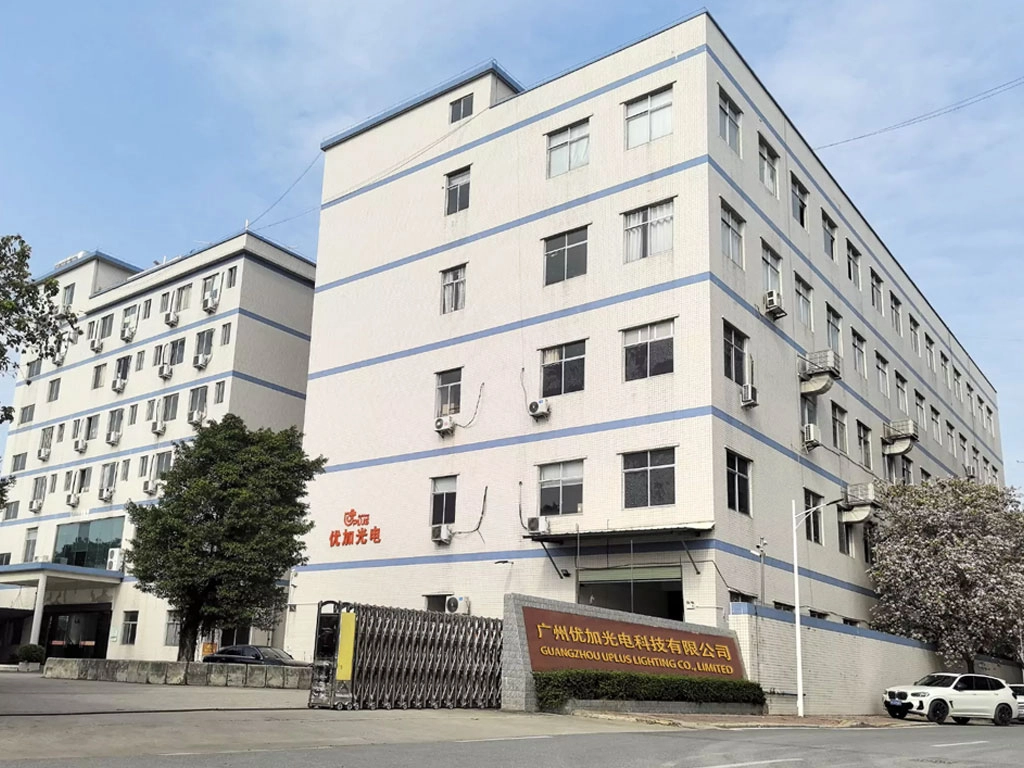
Uplus Lighting was established in 2012 in Guangzhou, China, and is a professional manufacturer specializing in high-end stage lighting products. I have reviewed product families and specifications from many suppliers; Uplus combines focused product development with OEM capability, making them a sensible contender for venues and rental companies seeking customized and cost-effective solutions.
Uplus offers a broad portfolio including moving head lights, strobe lights, led battery lights, static lights, led theatre lights, led follow spot light, stage effect lights, and laser lights. Their product range covers professional lighting, entertainment lighting, and theater lighting to meet the needs of large performances, rental companies, distributors, and project clients. Since 2015, their products have been applied in major concerts, opera houses, TV programs, and large-scale events in China and abroad.
Where Uplus stands out from other vendors is their combination of:
- Experience in product development and export, which supports consistent quality across batches;
- OEM support and customization for project-specific optics, gobos, and firmware;
- Skilled production teams and strict quality control leading to stable performance and reliable field operation;
- Competitive pricing across entry-to-high-end segments, often undercutting Western brands while meeting similar technical specifications.
If you need fixtures with tailored optics or specific firmware behaviors (for example, custom dimming curves or DMX personalities), Uplus supports customized product development that can be validated via pre-shipment testing and photometric files.
Practical Buying Checklist (My Recommended Process)
Define application and performance targets
List required beam angles, throw distances, color fidelity, and expected daily runtime. Separate requirements for touring vs installation (e.g., flight case vs fixed rigging).
Request data and run acceptance tests
Obtain IES files, SPD or CRI/CQS data, PWM frequency, and full photometric reports. Insist on a pre-shipment sample for functional testing and camera checks.
Negotiate warranty, spare parts, and firmware support
Ensure spare motors, lenses, and control boards are available, and get a defined SLA for firmware updates and technical support. This reduces downtime and long-term costs.
Frequently Asked Questions (FAQ)
1. What is the difference between a moving beam and a moving spot?
Moving beams produce narrow, intense columns ideal for aerial effects; moving spots focus on crisp gobo projection and framing. The optics and zoom ranges differ accordingly.
2. How important is PWM frequency in LED moving beam lights?
Very important for broadcast. Low PWM can cause flicker on camera. For TV work, specify fixtures with PWM frequencies in the kilohertz range or with documented flicker-free operation.
3. Should I buy on wattage or lumens?
Use lumens and photometric lux data at specific distances and beam angles. Wattage indicates power draw but not optical efficiency or beam usefulness.
4. How many moving beams do I need for a small theater?
It depends on stage size and design. As a rule of thumb, 4–8 mid-range moving beams can provide flexible aerial effects and specials for a small-to-medium theater; combine with static spots and washes for complete coverage.
5. Are Chinese-manufactured fixtures reliable for pro touring?
Yes—many manufacturers from China supply fixtures used in professional tours. Reliability depends on design, QC, and after-sales support. Evaluate specific vendors (warranty terms, parts availability) and run acceptance tests before committing to large inventories.
6. How do I avoid color mismatch across fixtures?
Request CCT/CRI consistency data, use the same fixture families or calibrate via color macros, and always ask for SPD or colorimetric test results. For critical applications, run camera tests under production conditions.
Contact and Next Steps
If you want help specifying a fleet of led moving beam light fixtures, conducting photometric acceptance tests, or comparing vendor proposals, I am available for consultation. To view product ranges or request OEM/custom options, consider Uplus Lighting for evaluation — they provide a wide selection from moving head lights to laser lights and support custom development for project needs. Contact Uplus Lighting or request sample photometric files before ordering to validate fixtures against your performance criteria.
For a direct product inquiry or to arrange a demo and quotation, please contact your supplier representative or visit the vendor site to download datasheets and IES files. Investing time in specification and testing saves significant operational headaches and cost overruns later.
Top 10 Laser Light Moving Head Fixtures for Touring Shows
Energy-Efficient Mini LED Moving Heads: Save Power & Costs
How to Choose Mini LED Spot Moving Head Lights for Venues
Maximizing ROI: Energy Savings with LED Moving Beam Lights
IP-BL03
What outdoor environments can IP65 protection handle?
It effectively prevents dust, and can withstand rain, dew, or splashes of water, making it suitable for both indoor and outdoor use.
IP Mini Blinder
Is the installation method flexible? What types of venues is it suitable for?
Supports hanging, wall mounting, and floor mounting; its mini design adapts to various outdoor venues.
IP-BL300
How heavy is the equipment? Is it easy to install and transport?
This is a professional-grade device with a stable body design, supporting standard stage installation interfaces (such as hanging and fixed placement). It comes with portable packaging, making transportation and installation suitable for professional scenarios.
IP-WASH6125
How to ensure consistent lighting effects when multiple lights are running simultaneously?
Supports DMX512 synchronous control and master-slave mode, allowing for unified parameter settings and ensuring complete synchronization of lighting effects and speed across multiple lights.
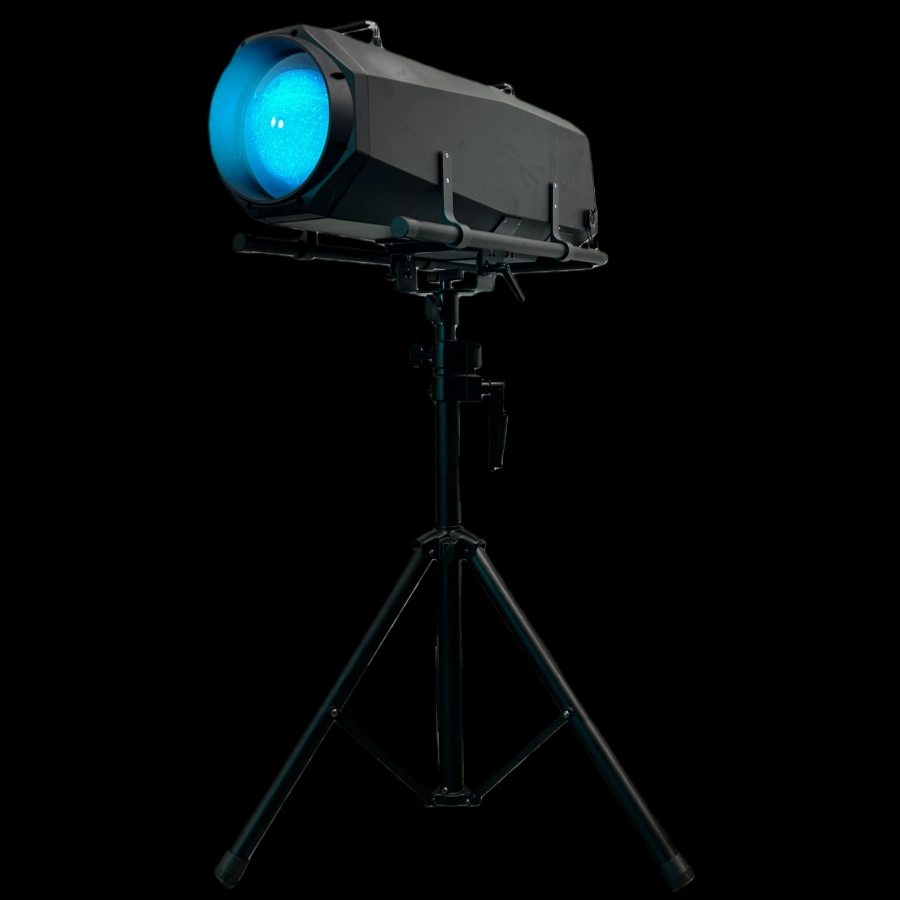
This 1200W waterproof LED follow spotlight with iris adjustment features strong light penetration, precise focusing, and smooth dimming with strobe effects.
Its rain- and dust-resistant design makes it suitable for outdoor performances, concerts, architectural lighting, and other applications. The LED light source boasts a long lifespan and stable, durable operation.
The Waterproof 1200W LED Follow Spot Light with Rotating Gobo features a rotating pattern sheet, delivering a powerful 1200W output for clear, focused beams and precise light tracking. Waterproof for outdoor use in all scenarios, the rotating pattern creates rich visual layers, making it ideal for large-scale indoor and outdoor performances, music festivals, light shows, and other events requiring focused attention and stage effects.
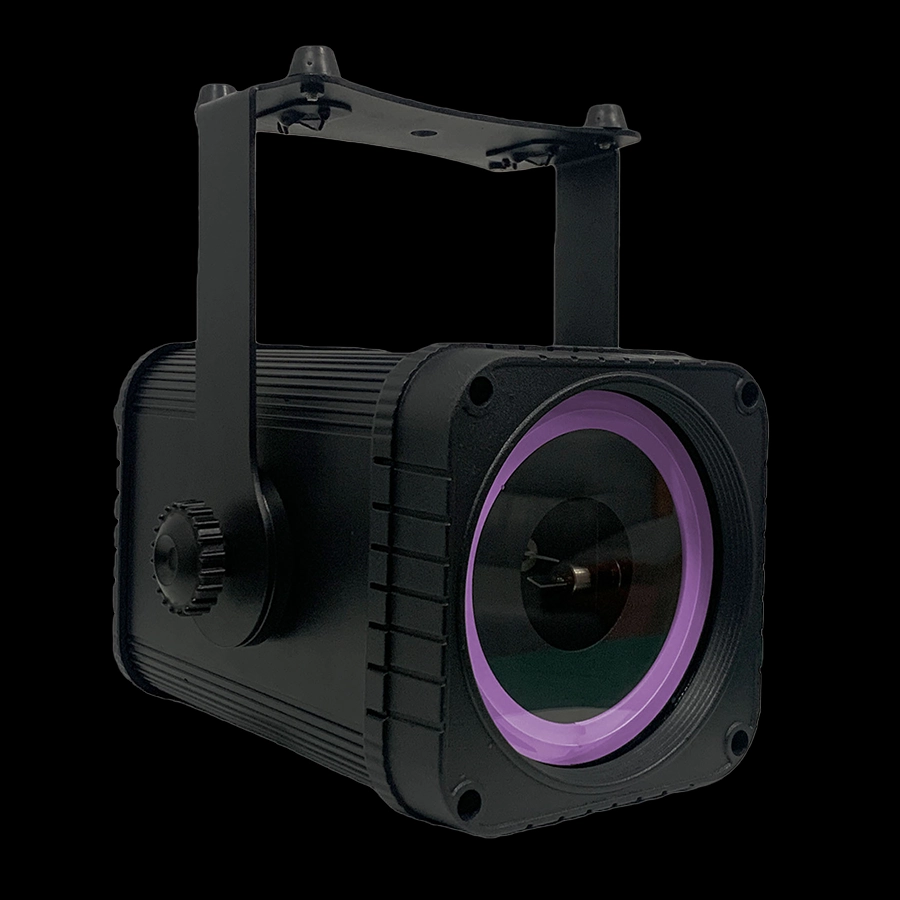
This IP65 waterproof 3W RGB animation laser battery light features an IP65 waterproof and dustproof design, making it suitable for both outdoor and indoor use. It supports rich RGB color combinations and dynamic animation effects, delivering a clear and fluid beam that can display text, patterns, and flowing light and shadow, among other visual representations.
Powered by a built-in battery, it requires no external power source, making it portable, easy to deploy, and simple to operate. Ideal for festive decorations, creating a garden atmosphere, and adding a touch of elegance to small events, it's energy-efficient, durable, and creates a truly immersive ambiance.
This IP65 waterproof 5W RGB animation laser battery light features an IP65 waterproof and dustproof design, making it suitable for both outdoor and indoor use. It supports rich RGB color combinations and dynamic animation effects, delivering a clear and fluid beam that can display text, patterns, and flowing light and shadow, among other visual representations.
Powered by a built-in battery, it requires no external power source, making it portable, easy to deploy, and simple to operate. Ideal for festive decorations, creating a garden atmosphere, and adding a touch of elegance to small events, it's energy-efficient, durable, and creates a truly immersive ambiance.
If you have any comments or good suggestions, please leave us a message, later our professional staff will contact you as soon as possible.
Lighting Innovators
Uplus Lighting is a leading integrated company specializing in R&D, design, production, and sales of stage lighting solutions.
 Scan QR Code
Facebook
Instagram
YouTube
VK