






LED Moving Beam Light Buying Guide: Features to Compare
- How modern stage lighting shapes performance
- Why the right beam matters
- Buyer intent and common use-cases
- Core technical features to compare
- 1. Light source: LED engine, power, and lumen output
- 2. Optics: beam angle, zoom range, and gobo quality
- 3. Color systems, mixing, and color temperature
- Control, reliability and operational features
- 1. Control protocols: DMX, RDM, Art-Net and sACN
- 2. Pan/tilt mechanics, tracking, and refresh rates
- 3. Strobe, refresh rate, and flicker-free operation
- Durability, maintenance and compliance
- 1. Construction, IP rating, and thermal management
- 2. Serviceability, spare parts and warranty
- 3. Standards and safety compliance
- Comparing beam, spot and hybrid moving heads: a quick table
- Selecting the right fixture for your application and budget
- 1. Touring/rental companies
- 2. Fixed installations (theatre, houses of worship, clubs)
- 3. Broadcast and TV
- Why supplier choice and after-sales matter — Uplus Lighting
- Practical checklist before purchase
- FAQ
- Q: What is the difference between a moving beam and a moving spot?
- Q: How do I ensure a fixture will be flicker-free on camera?
- Q: Are LED moving beams more energy-efficient than discharge equivalents?
- Q: What should I check about optics and gobos?
- Q: How important is IP rating for moving beam lights?
- Q: How do I evaluate serviceability for a rental fleet?
- Contact / View products
As a stage lighting consultant and content specialist with extensive experience in LED fixtures and intelligent moving heads, I wrote this guide to help buyers — from rental houses to theatre technical directors and production managers — compare the most important features of an LED moving beam light and make an informed purchase. The notes below emphasize measurable technical parameters, real-world reliability factors, and control/operational details that determine long-term value and performance for live events, TV, or fixed installations.
How modern stage lighting shapes performance
LED moving beam lights (also called moving head beam lights) are among the most visually impactful fixtures in contemporary lighting rigs. They deliver high-intensity, tightly focused beams that cut through atmosphere, create aerial effects, and emphasize stage architecture. Choosing the right LED moving beam is not just about peak brightness — it’s about matching beam quality, color and gobo fidelity, mechanical precision, and integration with your control and production workflows. For background on moving heads and the fundamentals of DMX control, see the Moving head and DMX512 pages on Wikipedia.
Why the right beam matters
A true beam fixture is designed to produce a narrow, parallel beam with minimal spill — typically used for aerial effects. The beam angle, optical design, and LED engine determine how visible and clean that beam looks. For television or theatrical front light, you might choose a different fixture class (e.g., moving spot or wash) rather than a pure beam light.
Buyer intent and common use-cases
Before comparing specs, define your primary use-case: touring/concert rental, fixed installation (clubs/theatres), broadcast/TV, or architectural events. Each use-case prioritizes different features: touring needs robust mechanics and rapid serviceability; installations need low noise and IP-rated housings; broadcast emphasizes color stability and flicker-free operation at high frame rates.
Core technical features to compare
1. Light source: LED engine, power, and lumen output
LED moving beam lights use high-output LED engines rather than discharge lamps. Key metrics to compare are LED wattage, total lumen output (or equivalent ANSI lumen where available), color system (RGB, RGBW, or multi-chip sources), and CRI/CRI-equivalent metrics if color rendering matters. Manufacturers sometimes quote peak luminous flux numbers that are measured under different conditions — prefer ANSI/IES-style measurements when available. The Illuminating Engineering Society (IES) provides useful references on photometric measurements: IES.
2. Optics: beam angle, zoom range, and gobo quality
Beam angle (often 1°–6° for narrow-beam fixtures) defines how tight and concentrated the beam is. Zoom-equipped beam lights offer variable beam angles (for example 3°–30°) enabling a fixture to act as a beam or spot. Check the quality of the lens elements, whether they are aspheric, and whether the unit uses a true optical zoom versus a fixed lens with focal adjustments. Gobo wheels (rotating/static) and prism options change the fixture’s creative capability — evaluate gobo resolution and how well gobos hold focus when zooming.
3. Color systems, mixing, and color temperature
High-end LED moving beams use multi-channel LED arrays for smooth mixing across the spectrum. Look for a wide color gamut, fine color mixing steps, accurate white presets (with color temperatures across 2700K–8000K where needed), and high CRI if rendering flesh tones is important. For broadcast, ensure the fixture can operate without visible color shifts at high frame rates.
Control, reliability and operational features
1. Control protocols: DMX, RDM, Art-Net and sACN
Modern fixtures should support DMX512 for backwards compatibility. Remote Device Management (RDM) lets you configure and monitor fixtures remotely over the DMX line, reducing setup time on large rigs. For networked systems, look for Art-Net and sACN support to transport DMX over Ethernet. For technical background see the DMX512 reference.
2. Pan/tilt mechanics, tracking, and refresh rates
Smoothness and accuracy of pan and tilt affect visual tracking and repeatability, especially in complex cueing. Stepper motors and encoders increase positional accuracy; gear backlash, pan/tilt speed, and the ability to store calibration data influence reliability. Ask for data on positional resolution (degrees per step) and max speed. Fixtures that support position feedback or absolute positioning simplify multi-fixture alignment on complex cues.
3. Strobe, refresh rate, and flicker-free operation
Strobe rates and PWM frequencies affect flicker on camera. Ensure the fixture’s LED driver supports high-frequency PWM or special camera modes to avoid banding at broadcast frame rates. Many manufacturers list “camera safe” or “flicker-free” operation up to certain frame rates — verify these claims in manufacturer datasheets and on-camera tests.
Durability, maintenance and compliance
1. Construction, IP rating, and thermal management
For outdoor or dusty environments choose units with an IP rating (see IEC 60529 IP Code). Thermal design determines LED lifetime and consistent light output: check for forced-air versus passive cooling, rated ambient temperature, and thermal shutdown behavior. Better cooling often extends LED lifetime and maintains color stability.
2. Serviceability, spare parts and warranty
Touring fixtures should allow rapid access to consumables (fans, power supplies, modules). Confirm availability of spare parts, modular replacement of engines or boards, and whether the manufacturer provides on-site service or swap programs. Warranty terms and Mean Time Between Failures (MTBF) figures, if provided, are useful benchmarks.
3. Standards and safety compliance
Ensure fixtures comply with relevant safety and electromagnetic compatibility standards for your markets (CE, RoHS, FCC, etc.). For photometric and electrical safety, many manufacturers reference test reports — request those for verification before purchase.
Comparing beam, spot and hybrid moving heads: a quick table
Below is a practical comparison of typical specification ranges you will encounter. These ranges are industry-typical and intended to help you compare candidates; always verify actual datasheets for a specific model.
| Characteristic | Beam (narrow) | Spot/Hybrid | Wash (for reference) |
|---|---|---|---|
| Typical LED power | 200–600 W | 150–1200 W (varies) | 100–1500 W |
| Beam angle | 1°–6° | 3°–30° (zoom models) | 15°–70° |
| Typical luminous flux (indicative) | 40,000–200,000 lm (narrow beam perceived brightness varies) | 20,000–150,000 lm | 10,000–120,000 lm |
| Use-case | Aerial beams, concert effects | Front/spot, aerial, gobos | Wash stage and color blending |
| IP Rating (typical) | IP20 (indoor) – IP65 (outdoor variants) | IP20 – IP65 | IP20 – IP68 |
Sources: general industry specifications and published fixture datasheets (examples available through manufacturer documentation) and lighting body recommendations such as the IES.
Selecting the right fixture for your application and budget
1. Touring/rental companies
If you run a rental company, prioritize mechanical robustness, modular serviceability, easy lamp/LED engine replacement, and clear spare-part availability. Rapid fan or power-supply swaps and firmware update procedures are important for turnaround. Durability and a global parts network minimize downtime.
2. Fixed installations (theatre, houses of worship, clubs)
Fixed venues typically require quiet operation, long service intervals, and consistent color reproduction. Noise ratings (dBA at 1 m) and thermal performance for ceiling-mounted fixtures matter. Consider IP-rated options for venues where dust or humidity is an issue.
3. Broadcast and TV
Broadcast demands flicker-free operation at video frame rates, accurate white balance presets, and predictable beam behavior under on-camera conditions. Ask for photometric reports, camera-test footage, and PWM frequency specifications.
Why supplier choice and after-sales matter — Uplus Lighting
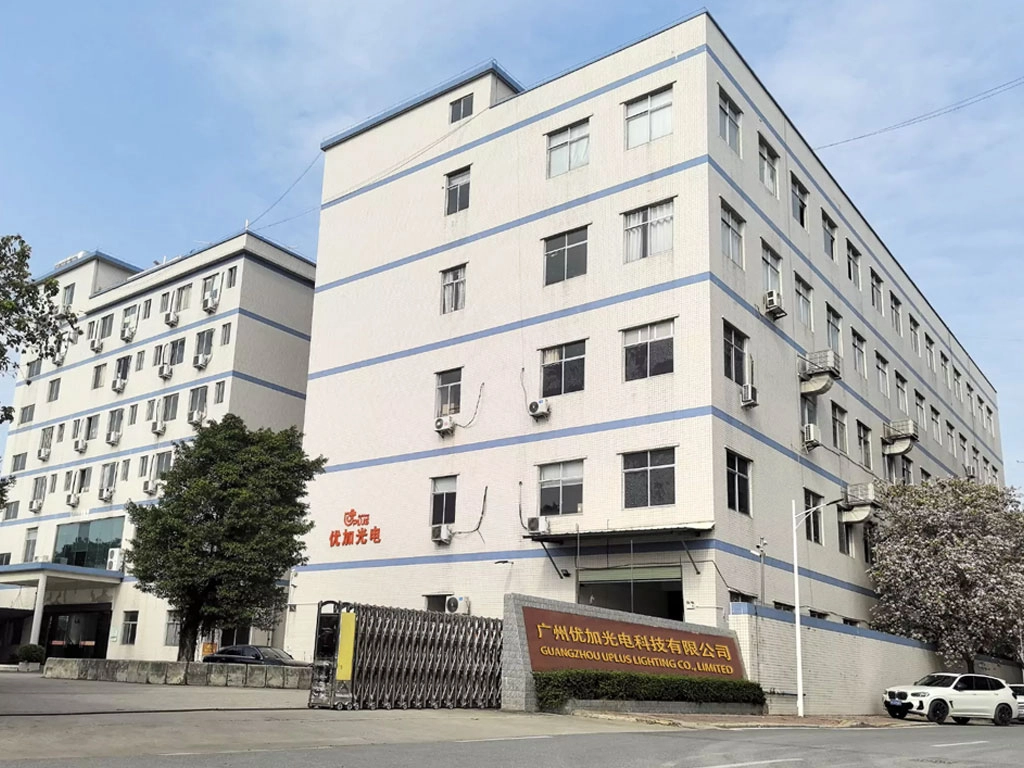
When choosing fixtures, supplier competence and manufacturing reliability are as important as the raw spec sheet. Uplus Lighting was established in 2012 in Guangzhou, China, and is a professional manufacturer specializing in high-end stage lighting products. We provide innovative and reliable lighting solutions for theaters, studios, cultural projects, concerts, and live events worldwide. With rich experience in product development, manufacturing, and export, we offer a wide product range covering professional lighting, entertainment lighting, and theater lighting to meet the needs of large performances, rental companies, distributors, and project clients. Since 2015, our products have been widely applied in major concerts, opera houses, TV programs, and large-scale events in China and abroad. We also support OEM orders and customized product development. A skilled production team and strict quality control ensure stable performance, consistent quality, and professional service trusted by global partners.
Uplus Lighting’s core product lines include moving head lights, strobe lights, LED battery lights, static lights, LED theatre lights, LED follow spot lights, stage effect lights, and laser lights. Where Uplus differentiates itself is in the combination of R&D experience, practical stage testing, and willingness to support OEM customization — important for rental fleets that require tailored features and branding. Their export experience means documentation, certifications and after-sales logistics are geared to global partners.
Practical checklist before purchase
- Define primary use-case: touring, installation, broadcast or mixed use.
- Request full photometric data and colorimetric reports; prefer ANSI/IES-style measures where possible.
- Verify control protocol support (DMX, RDM, Art-Net/sACN) and camera-safe modes.
- Confirm serviceability: spare-part lists, module-level replacement, and local support options.
- Ask for on-site demos or loaner fixtures to test in your environment and on camera.
FAQ
Q: What is the difference between a moving beam and a moving spot?
A: A moving beam produces a narrow, parallel beam with minimal spill intended for aerial effects. A moving spot usually has a wider beam, more sophisticated focus and shuttering, and often higher-quality gobos and modulation to light performers or set pieces. Many modern fixtures are hybrids offering a zoom range to perform both roles.
Q: How do I ensure a fixture will be flicker-free on camera?
A: Request the manufacturer’s PWM/frequency specifications and any camera-safe or high-speed modes. Ask for sample footage at your target frame rates. Fixtures with high-frequency LED drivers and explicit camera modes are preferable for broadcast.
Q: Are LED moving beams more energy-efficient than discharge equivalents?
A: Yes. LED engines typically provide better lumens-per-watt efficiency and produce less heat in the fixture envelope. This reduces cooling demands and increases operational lifetime, but actual efficiency depends on LED quality and thermal design.
Q: What should I check about optics and gobos?
A: Compare lens design (aspheric vs multi-element), zoom mechanism type, gobo material (glass gobos hold finer detail than metal), gobo repeatability during zoom, and presence of rotating gobo wheels and prisms. Also test focus across the zoom range.
Q: How important is IP rating for moving beam lights?
A: IP rating matters if you operate outdoors, in humid environments, or in dusty venues. Indoor touring and theatre rigs often use IP20 fixtures, while outdoor festivals need IP65 or better. Check the IP code for definitions.
Q: How do I evaluate serviceability for a rental fleet?
A: Look for modular subassemblies, user-replaceable fans, power supplies and LED modules, clear parts lists, and fast technical support. A manufacturer with global logistics and exchange options reduces downtime significantly.
Contact / View products
If you want tailored recommendations, OTA comparisons, or a demo list suited to your workflow, contact our product specialists. For product inquiries, OEM requests or to request a demo, email sales@upluslighting.com or request a quote via our website. We can arrange on-site demos, provide full photometric reports, and advise on rigging and control integration to match your production needs.
Further reading and standards referenced: DMX512 protocol (Wikipedia), moving head overview (Wikipedia), IP code / IEC 60529 (Wikipedia), Illuminating Engineering Society (IES).
Top 10 Laser Light Moving Head Models for Stage Shows 2026
Top 10 led par light Manufacturers and Supplier Brands in 2026
7 Crucial Mistakes to Avoid When Implementing City Color Light Systems in 2026
How to Choose the Best LED Stage Light Bar for Concerts
IP-BS906
Does the spliced design support unified control?
Yes, it supports pixel-level synchronization via a controller.
IP-WASH6125
Can the IP66 protection rating be used directly in heavy rain? Will water get in if left outdoors for a long time?
It can directly withstand heavy rain and strong dust. The sealed structure has undergone rigorous testing, and water will not get in even after long-term outdoor placement, ensuring stability.
IP-B1950
Can the IP66 protection be used in heavy rain or seaside salt spray environments?
It can directly withstand heavy rain, strong dust, and light salt spray. It is stable in complex outdoor environments for long-term use and requires no additional protection.
How is the accuracy of the 6-50° zoom adjustment? Can it be used in small spaces?
High zoom accuracy; the 6° narrow angle allows for precise focusing, suitable for localized lighting in small spaces, with no wasted light spots.
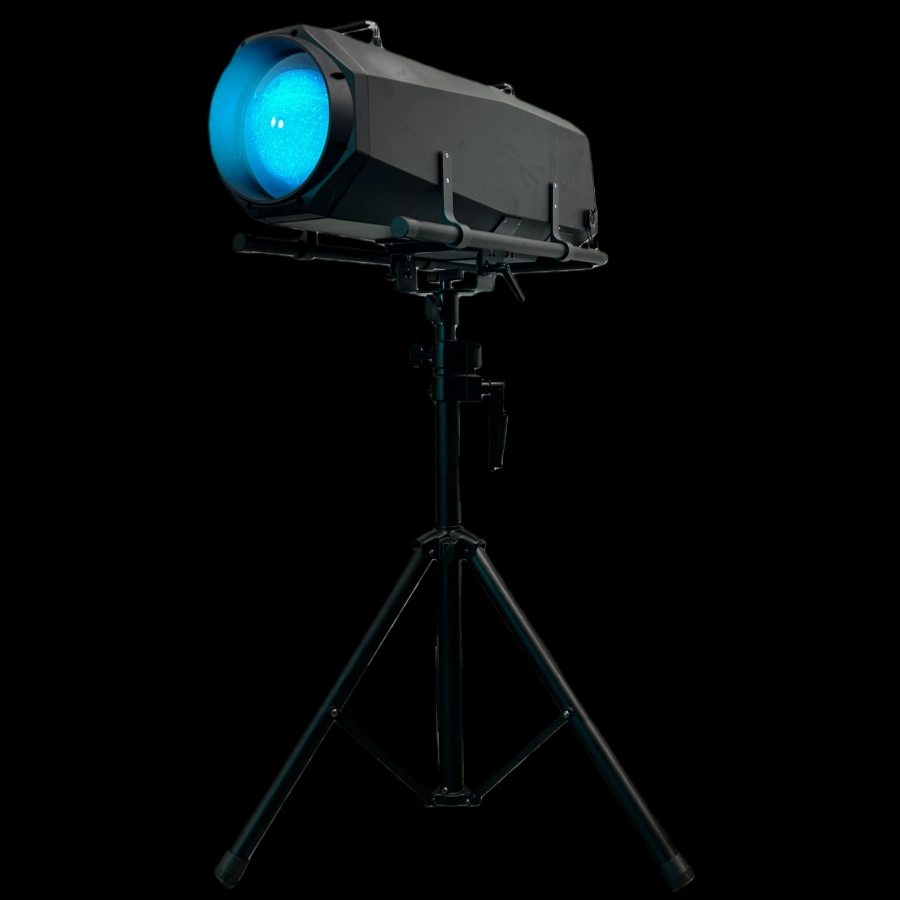
This 1200W waterproof LED follow spotlight with iris adjustment features strong light penetration, precise focusing, and smooth dimming with strobe effects.
Its rain- and dust-resistant design makes it suitable for outdoor performances, concerts, architectural lighting, and other applications. The LED light source boasts a long lifespan and stable, durable operation.
The Waterproof 1200W LED Follow Spot Light with Rotating Gobo features a rotating pattern sheet, delivering a powerful 1200W output for clear, focused beams and precise light tracking. Waterproof for outdoor use in all scenarios, the rotating pattern creates rich visual layers, making it ideal for large-scale indoor and outdoor performances, music festivals, light shows, and other events requiring focused attention and stage effects.
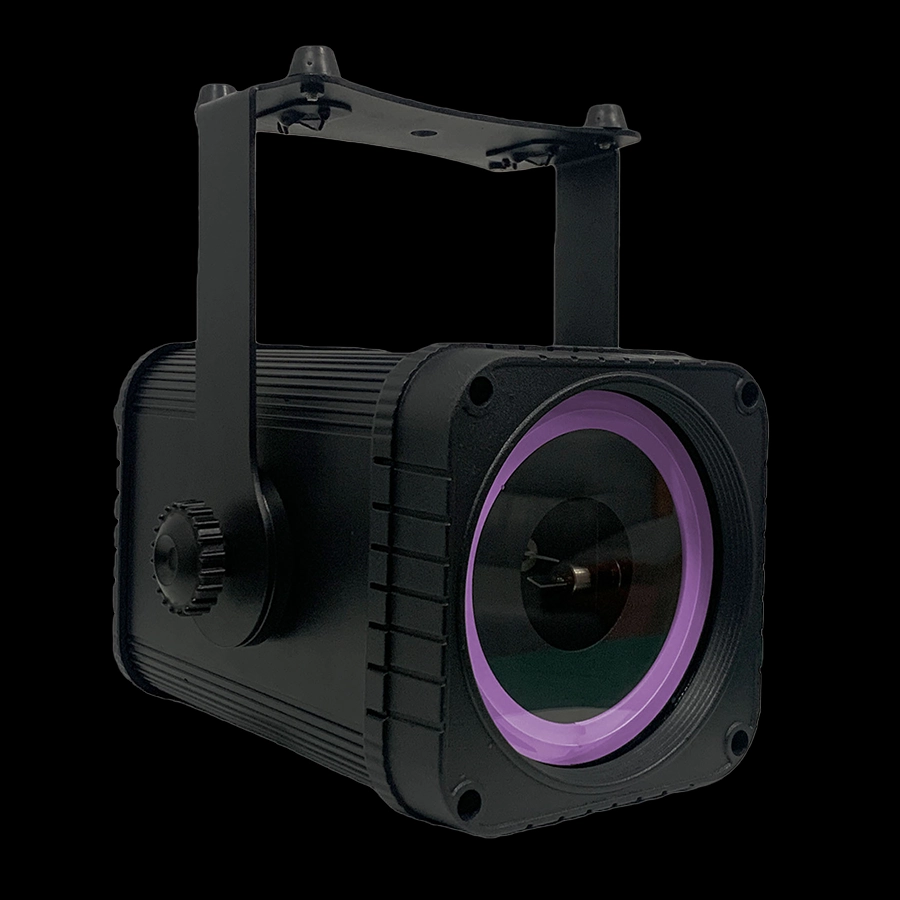
This IP65 waterproof 3W RGB animation laser battery light features an IP65 waterproof and dustproof design, making it suitable for both outdoor and indoor use. It supports rich RGB color combinations and dynamic animation effects, delivering a clear and fluid beam that can display text, patterns, and flowing light and shadow, among other visual representations.
Powered by a built-in battery, it requires no external power source, making it portable, easy to deploy, and simple to operate. Ideal for festive decorations, creating a garden atmosphere, and adding a touch of elegance to small events, it's energy-efficient, durable, and creates a truly immersive ambiance.
This IP65 waterproof 5W RGB animation laser battery light features an IP65 waterproof and dustproof design, making it suitable for both outdoor and indoor use. It supports rich RGB color combinations and dynamic animation effects, delivering a clear and fluid beam that can display text, patterns, and flowing light and shadow, among other visual representations.
Powered by a built-in battery, it requires no external power source, making it portable, easy to deploy, and simple to operate. Ideal for festive decorations, creating a garden atmosphere, and adding a touch of elegance to small events, it's energy-efficient, durable, and creates a truly immersive ambiance.
If you have any comments or good suggestions, please leave us a message, later our professional staff will contact you as soon as possible.
Lighting Innovators
Uplus Lighting is a leading integrated company specializing in R&D, design, production, and sales of stage lighting solutions.
 Scan QR Code
Facebook
Instagram
YouTube
VK