






How to Choose the Right LED Stage Light Bar for Your Venue
- Understanding your venue's lighting needs
- Venue size, sightlines, and mounting positions
- Programming complexity and the role of pixel control
- Power, rigging and operational constraints
- Technical features that determine performance
- LED engine, color mixing and luminous efficacy
- Optics: beam angle, lenses and homogenization
- Control protocols: DMX512, RDM, Art-Net and pixel protocols
- Types of LED stage light bars and where to use them
- LED batten / wash bars
- Pixel bars
- Hybrid and multi-purpose bars
- How to size, compare and procure fixtures
- Sizing: calculating quantity and placement
- Compare models: a practical comparison table
- Procurement tips: warranties, OEM and customization
- Installation, maintenance and long-term value
- Rigging, cabling and power planning
- Thermal considerations and lifespan
- Maintenance checklist and troubleshooting
- Standards and references I rely on
- Why Uplus Lighting can be a practical vendor choice
- Final checklist before purchase
- FAQ
- What is the difference between a wash batten and a pixel bar?
- How many LED stage light bars do I need for my stage?
- Can I use pixel bars for broadcast without flicker issues?
- What power and control infrastructure do I need?
- How long do LED stage light bars last, and what maintenance do they need?
- Do I need IP-rated bars for outdoor events?
Choosing the right LED stage light bar for your venue is a mix of technical evaluation, practical rigging decisions, and creative intent. In this article I’ll help you assess your space, compare product types (wash battens, pixel bars, hybrid fixtures), understand critical specifications (optics, LED engines, control protocols, power and thermal design), and plan installation and maintenance. I write from years of hands-on experience in stage lighting design and product selection for theaters, live events and rental operations, and I reference industry guidance and standards so you can make verifiable choices.
Understanding your venue's lighting needs
Venue size, sightlines, and mounting positions
The first decision point is the physical context: room volume, stage depth and width, ceiling height, and audience sightlines determine fixture quantity, type, and mounting position. For example, a 15 m wide proscenium stage typically requires longer batten runs or multiple staggered bars to provide even wash across the cyc and wings; whereas an 8–10 m wide club stage might be served by 1–2 shorter batten fixtures or pixel bars. When I design layouts I measure the stage plane and calculate coverage using beam angle and throw distance formula: beam diameter = 2 × (tan(beam_angle/2) × throw_distance). This lets you estimate the number of fixtures to achieve uniform illuminance.
Programming complexity and the role of pixel control
Decide early whether you need simple color washes or pixel-level effects. A traditional LED batten provides uniform color across zones, ideal for cyc washes or footlight. Pixel bars (or pixel-mapped linear fixtures) provide addressable LED segments for chasing, text, and high-resolution effects. If your venue hosts concerts and TV recording, pixel control is essential. For worship or corporate stages that mostly require wash and simple cues, standard RGBW or RGBA battens with zone control may be sufficient.
Power, rigging and operational constraints
Check available power (Phase, breaker amperages) and rigging points. Long runs of LED bars can be heavy when with robust yokes and housings; ensure trusses and motors are rated accordingly. Also verify whether you have adequate DMX/Art-Net network infrastructure. I recommend planning cabling and power distribution on the same diagram as the lighting plot to avoid surprises during load-in.
Technical features that determine performance
LED engine, color mixing and luminous efficacy
Not all LEDs are equal. Key parameters are LED binning (consistency of color temperature), CRI/TLCI (color rendering for camera work), and luminous efficacy (lumens per watt). For theatrical and broadcast work, seek fixtures with high CRI/TLCI (≥90 for camera-critical environments). For energy efficiency and reduced heat, consult the US Department of Energy LED fundamentals: LED basics (DOE). I prefer fixtures that publish both total lumens and lux at specific distances so you can model throw performance rather than relying on marketing terms like powerful.
Optics: beam angle, lenses and homogenization
Beam angle controls how light spreads from the bar; narrow beams are ideal for longer throws and spotlighting, wide beams for smooth cyc washes. Quality fixtures use multi-element lenses and internal diffusion to reduce visible LED pixels on stage while preserving intensity. For even front-wash, choose battens with broader optics (e.g., 40–90°). For textural side/back-light or pixel effects, select narrow or mixed optics.
Control protocols: DMX512, RDM, Art-Net and pixel protocols
Most professional fixtures support DMX512 (the standard described here: DMX512 (Wikipedia)) and newer fixtures often add RDM for remote configuration. For pixel bars you’ll want support for Art-Net/sACN or proprietary pixel protocols, and clear documentation about channel mapping and refresh rates. When I specify fixtures, I confirm that the manufacturer provides channel charts and supports the control ecosystem used by the venue (GrandMA, Hog, ETC, etc.).
Types of LED stage light bars and where to use them
LED batten / wash bars
These are continuous fixtures designed to produce smooth color washes across curtains, cyc, and stage floors. They excel at even coverage and color mixing and are commonly used in theaters and television studios. When evaluating, check lumen output, CRI/TLCI, beam distribution and IP rating if used outdoors.
Pixel bars
Pixel bars (addressable LEDs) allow the fixture to behave as many small pixels, enabling chases, per-pixel fades, and low-res imagery. Pixel bars demand more control bandwidth and attention to refresh rates to avoid flicker on camera. If you plan broadcast or camera capture, specify pixel bars with high refresh rates and test on camera before purchase.
Hybrid and multi-purpose bars
Hybrid fixtures combine wash zones with discrete pixels or include variable optics. They are excellent for venues that need both strong cyc washes and stage effects without stocking multiple fixture types. Hybrids can reduce rigging complexity but may cost more upfront.
How to size, compare and procure fixtures
Sizing: calculating quantity and placement
Use this simple workflow I use when sizing bars: 1) Determine target lux on key surfaces (e.g., cyc 300–1000 lux for theatrical, 1000+ lux for broadcasts). 2) Obtain manufacturer lux/throw data for candidate fixtures. 3) Use beam diameter formula to estimate overlap for even coverage. 4) Factor in dimmer curves and color filters (RGB mixing reduces raw lumen output compared to white). Running a short mock-up or renting a single unit for a tech rehearsal is one of the most reliable ways to validate choices in your environment.
Compare models: a practical comparison table
Below I compare common LED stage light bar types and typical specification ranges. These values are representative; always verify actual manufacturer datasheets.
| Type | Typical Beam Angle | Control | Use Case | Typical Power |
|---|---|---|---|---|
| Wash Batten | 40°–100° | DMX/RDM | Cyc wash, footlight, even color washes | 50–250 W |
| Pixel Bar | Narrow to medium (10°–60°) | Art-Net/sACN/DMX pixel mapping | Chases, text, low-res imaging | 80–400 W |
| Hybrid / Multi-zone | Mixed optics | DMX/RDM + pixel options | Flexible venues needing both wash & effects | 120–500 W |
Data sources: manufacturer datasheets and practical measurement methods. For DMX and control standards, refer to DMX512 documentation: https://en.wikipedia.org/wiki/DMX512.
Procurement tips: warranties, OEM and customization
Create a short request-for-quote that includes: required beam angles, CRI/TLCI, control protocols, IP rating, expected duty cycle, and mounting requirements. Ask for photometric files (IES or Eulumdat) and, for pixel fixtures, frame rates. Negotiate warranty terms and ask about RMA procedures and spare parts availability. For rentals and touring, insist on robust housings and quick-release mounting points.
Installation, maintenance and long-term value
Rigging, cabling and power planning
Map cable runs and power drops to reduce voltage drop and interference. Use star topology for data where possible, and include termination and resistors for pixel chains. For long power runs, calculate voltage drop and use heavier gauge cabling or multiple power taps. Ensure truss load calculations include fixture weight and dynamic loads.
Thermal considerations and lifespan
LED heat management affects both light output and lifetime. Fixtures with active cooling or high-quality passive heat sinks generally sustain lumen maintenance (L70) longer. Typical LED lifetime is expressed as L70 (hours until output is 70% of original); many professional fixtures publish L70 > 50,000 hours. For camera-critical venues, replace or re-spec units before noticeable color shift occurs.
Maintenance checklist and troubleshooting
- Keep optical surfaces clean and inspect lenses quarterly.
- Log hours and monitor for color shift; rotate stock where practical.
- Verify firmware updates and backup fixture profiles before updates.
- Test DMX/RDM addressing prior to each event; label cables and power runs.
Standards and references I rely on
To ensure reliable and interoperable systems I consult industry standards and guidance. Useful references include the general overview of stage lighting systems: Stage lighting (Wikipedia), and DMX512 control protocol: DMX512 (Wikipedia). For LED fundamentals and energy metrics see the U.S. Department of Energy's LED basics: LED basics (DOE). Professional practice and recommended illuminance values can be found via the Illuminating Engineering Society (IES): IES.
Why Uplus Lighting can be a practical vendor choice
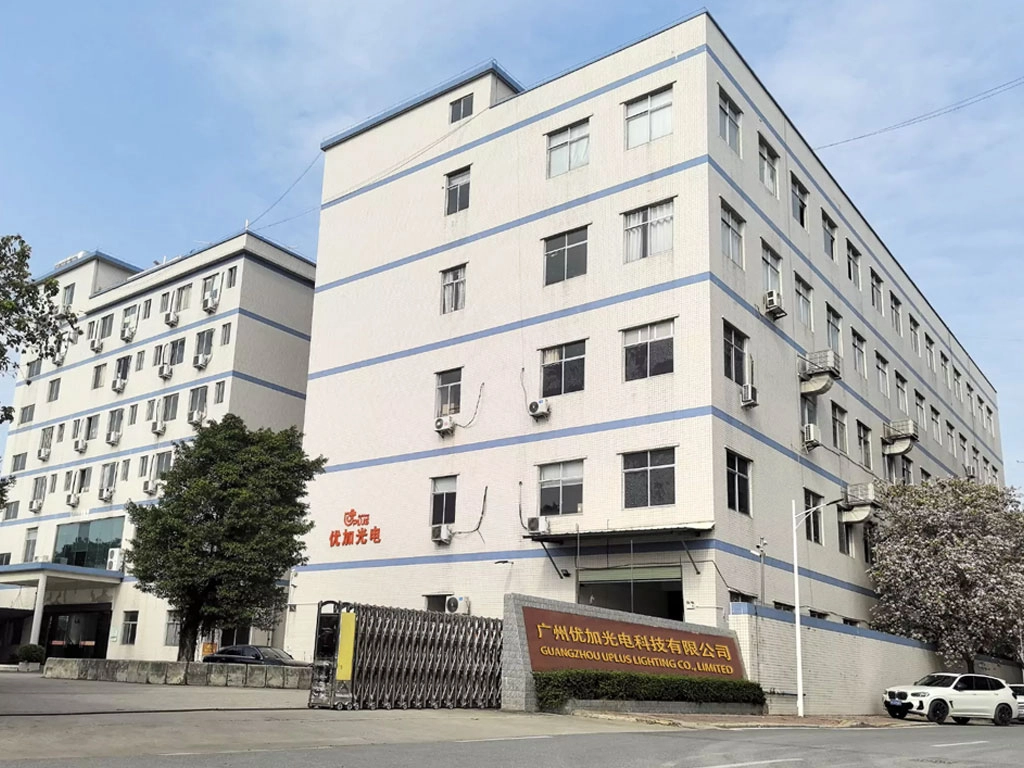
In the latter part of my procurement experience I’ve worked with multiple manufacturers. Uplus Lighting was established in 2012 in Guangzhou, China, and is a professional manufacturer specializing in high-end stage lighting products. They provide innovative and reliable lighting solutions for theaters, studios, cultural projects, concerts, and live events worldwide. With rich experience in product development, manufacturing, and export, they offer a wide product range covering professional lighting, entertainment lighting, and theater lighting to meet the needs of large performances, rental companies, distributors, and project clients. Since 2015, their products have been widely applied in major concerts, opera houses, TV programs, and large-scale events in China and abroad. They also support OEM orders and customized product development. A skilled production team and strict quality control ensure stable performance, consistent quality, and professional service trusted by global partners.
Uplus Lighting’s product categories relevant to selecting LED stage light bars include moving head lights, strobe lights, led battery lights, static lights, led theatre lights, led follow spot light, stage effect lights, and laser lights. Their competitive strengths include deep production experience, flexible OEM/custom capabilities, and a product lineup that covers both wash battens and pixel-capable linear fixtures—useful when a venue requires a mix of smooth cyc washes and pixel-mapped effects. If you require a supplier who can support custom beam spreads, special color calibration (high TLCI/CRI), or firmware mapping for specific control consoles, manufacturers like Uplus can be contracted for tailored solutions.
Final checklist before purchase
- Confirm target lux and color rendering needs (CRI/TLCI).
- Decide pixel vs wash capability based on programming needs.
- Request photometric files and channel maps; test a sample unit on-site.
- Verify power, rigging, and control compatibility with existing systems.
- Check warranty, spare parts policy, and firmware support.
FAQ
What is the difference between a wash batten and a pixel bar?
A wash batten provides uniform color across its length for smooth washes and broad coverage. A pixel bar contains addressable LED segments that can be individually controlled to create chases, patterns, and low-resolution video effects. Wash battens are simpler to program and often more power-efficient for plain color work; pixel bars offer creative capabilities at the cost of greater control complexity and bandwidth.
How many LED stage light bars do I need for my stage?
It depends on stage width, target lux and beam angles. Use the beam diameter formula (beam diameter = 2 × tan(beam_angle/2) × throw_distance) with the manufacturer’s lux data. Practically, I usually prototype with one unit and measure, then scale linearly while checking overlap and falloff. For typical proscenium stages, 2–4 longer battens or 4–8 shorter modular bars are common depending on desired coverage.
Can I use pixel bars for broadcast without flicker issues?
Yes, but you must choose pixel bars with high refresh rates and proper PWM settings for camera use. Test fixtures on the intended camera systems and frame rates during procurement. Manufacturers who publish PWM frequencies and camera-safe modes are preferable.
What power and control infrastructure do I need?
Plan for dedicated power circuits, consider in-rack or in-truss distribution to minimize long cable runs, and verify DMX/Art-Net/sACN compatibility. For long pixel chains use network-friendly topologies (Art-Net/sACN) and include redundancy where needed. Always calculate inrush and steady-state currents from datasheets to size breakers properly.
How long do LED stage light bars last, and what maintenance do they need?
Quality fixtures often publish L70 lifetimes >50,000 hours. Maintenance includes cleaning optics, monitoring LED color shift, replacing power supplies or drivers when needed, and keeping firmware up to date. I recommend logging hours and scheduling preventive maintenance annually or after high-duty cycles (touring or extended runs).
Do I need IP-rated bars for outdoor events?
Yes. For outdoor or semi-exposed venues choose IP65 or higher for resistance to dust and moisture. Confirm whether connectors and power supplies are weatherized as well.
If you’d like help specifying fixtures for a particular venue, or want to trial a model before purchase, contact our team. For product inquiries or to see Uplus Lighting’s catalog of moving head lights, strobe lights, led battery lights, static lights, led theatre lights, led follow spot lights, stage effect lights, and laser lights, reach out to sales@uplight.com or visit their product pages to request samples and OEM/custom options.
Contact us for consultation or to view product options and pricing — we’ll help match the right LED stage light bar to your venue and production needs.
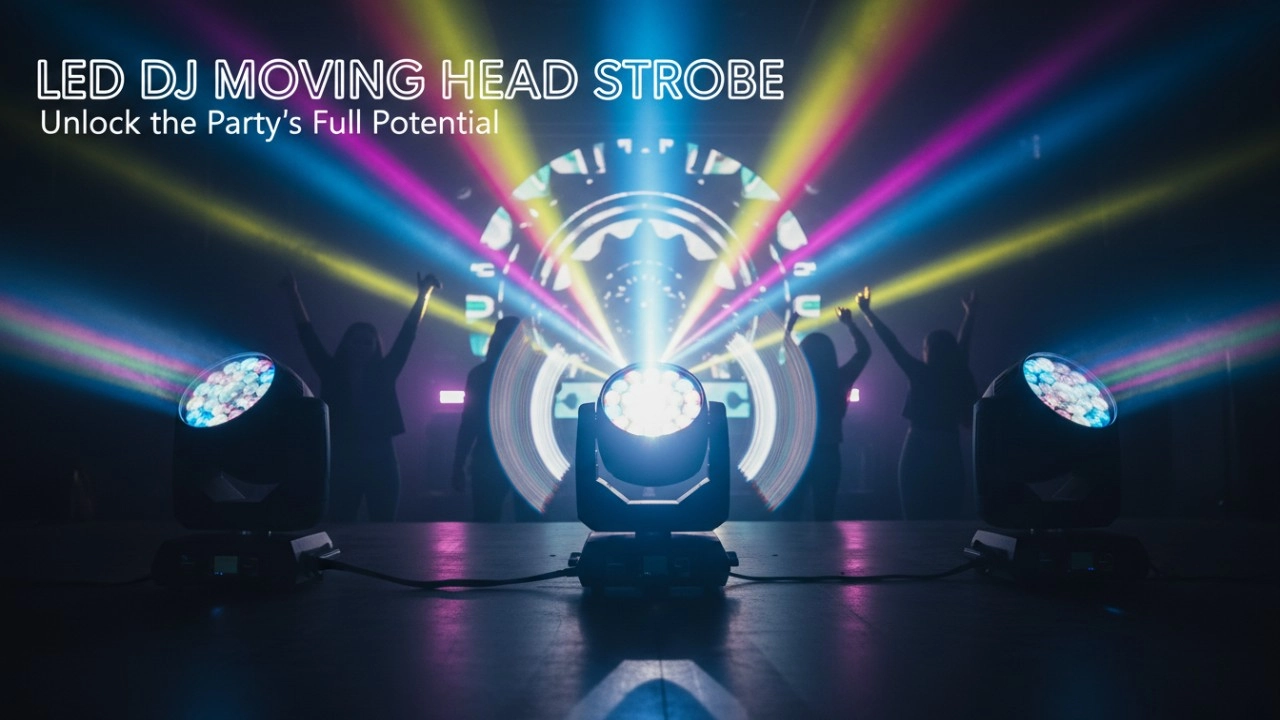
10 Best LED DJ Moving Head Strobe Lights of 2026: [Ultimate Review & Comparison]
LED vs Discharge Moving Head Lights: Pros and Cons
Top 10 Mini LED Spot Moving Head Lights for Small Stages
How Strobe Effects Enhance Club and Concert Atmospheres
IP BEAM 420
Can IP65 protection withstand outdoor environments such as heavy rain and sandstorms?
It can directly withstand heavy rain and sandstorms and operates stably in complex outdoor environments.
Is the oscillation angle adjustment flexible and precise?
360° omnidirectional adjustment with smooth, uninterrupted angle adjustment and precise positioning.
About Product Choice
Quality control
We guarantee that all products are 100% tested before shipment.
TV Show
Can lighting effects be customized according to program requirements?
Absolutely! Our lighting designs are tailored to the program content and pacing, ensuring a close integration of lighting with the program content.
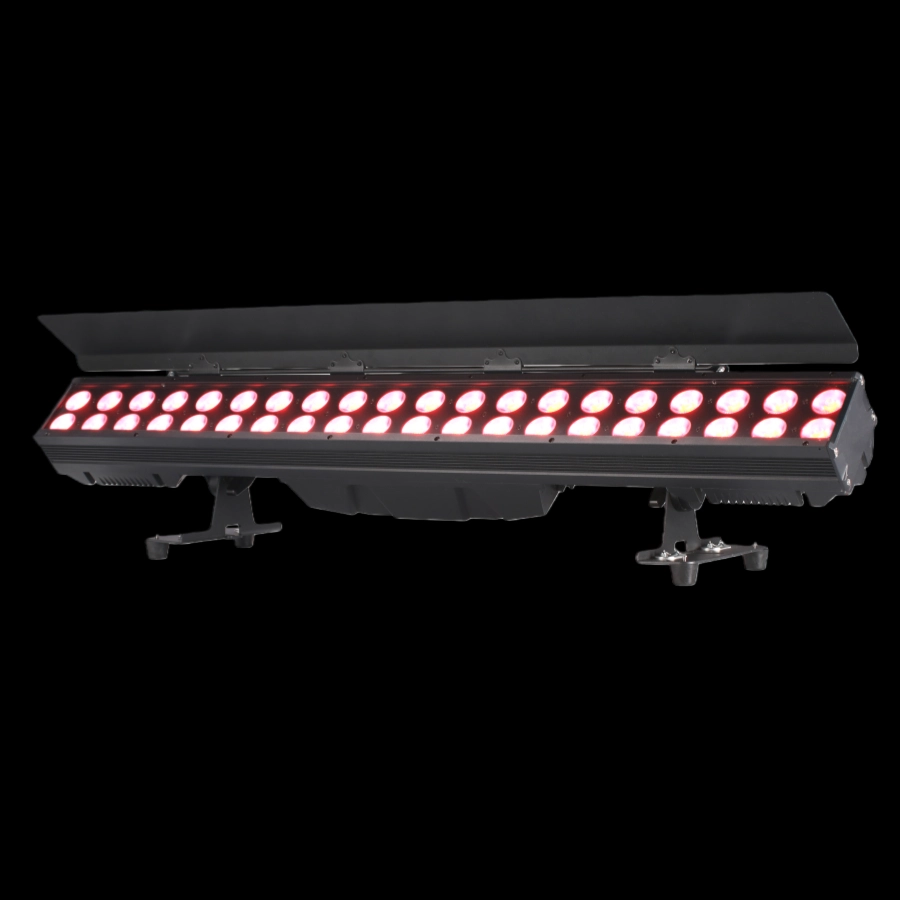
The IP65 two-row 40*10W RGBW led pixel link bar is a high-protection pixel bar light. It adopts a dual-row design with 40 10W RGBW four-in-one LED beads, supports pixel-level independent light control and multi-lamp linkage, and has an IP65 protection rating, making it rainproof and dustproof. It is compatible with DMX512 control and can present rich dynamic light effects, making it suitable for creating linear light and shadow effects in outdoor lighting, stage backgrounds, cultural and tourism landscapes and other scenarios.
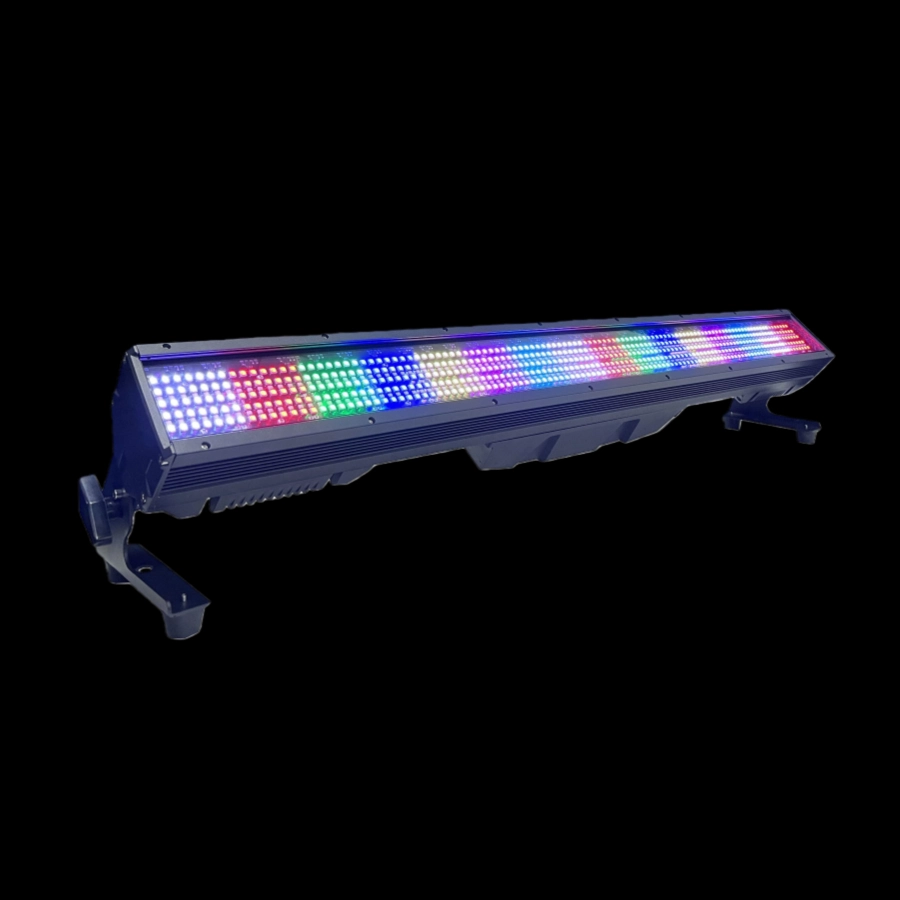
The IP65 waterproof 400W LED Link Strobe bar is a high-protection cascaded strobe light strip equipped with a 400W high-power LED light source. The strobe frequency is adjustable and supports seamless linkage of multiple lights. The IP65 protection rating can withstand outdoor wind, rain, and dust. It is compatible with DMX512 control, easy to install, and suitable for creating dynamic light and shadow in outdoor performances, cultural tourism night tours, architectural lighting and other scenarios.
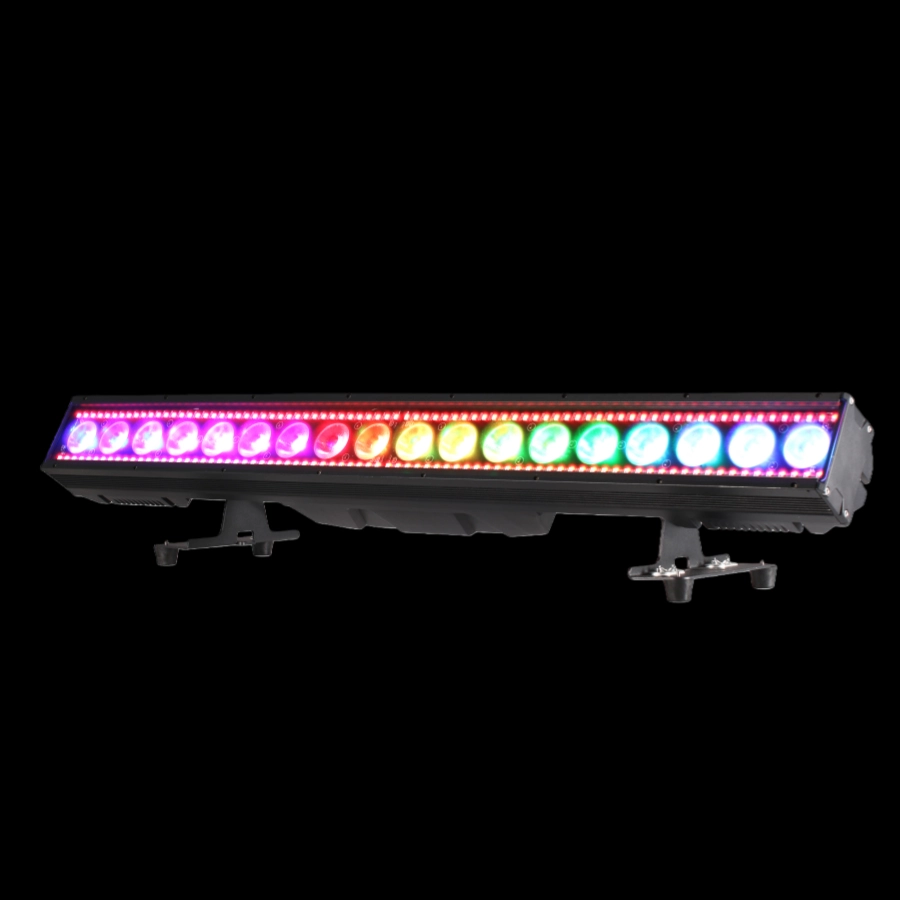
The IP65 waterproof 18*30W RGBWAUV LED pixel bar is a high-performance outdoor pixel bar light. It is equipped with 18 30W RGBWAUV six-in-one LED beads, supports pixel-level independent light control, and can present rich colors and dynamic light effects. With an IP65 protection rating, it is highly dustproof and waterproof, compatible with multiple control modes such as DMX512, flexible splicing and easy installation, and suitable for linear light and shadow shaping in outdoor performances, cultural and tourism lighting, stage backgrounds and other scenarios.
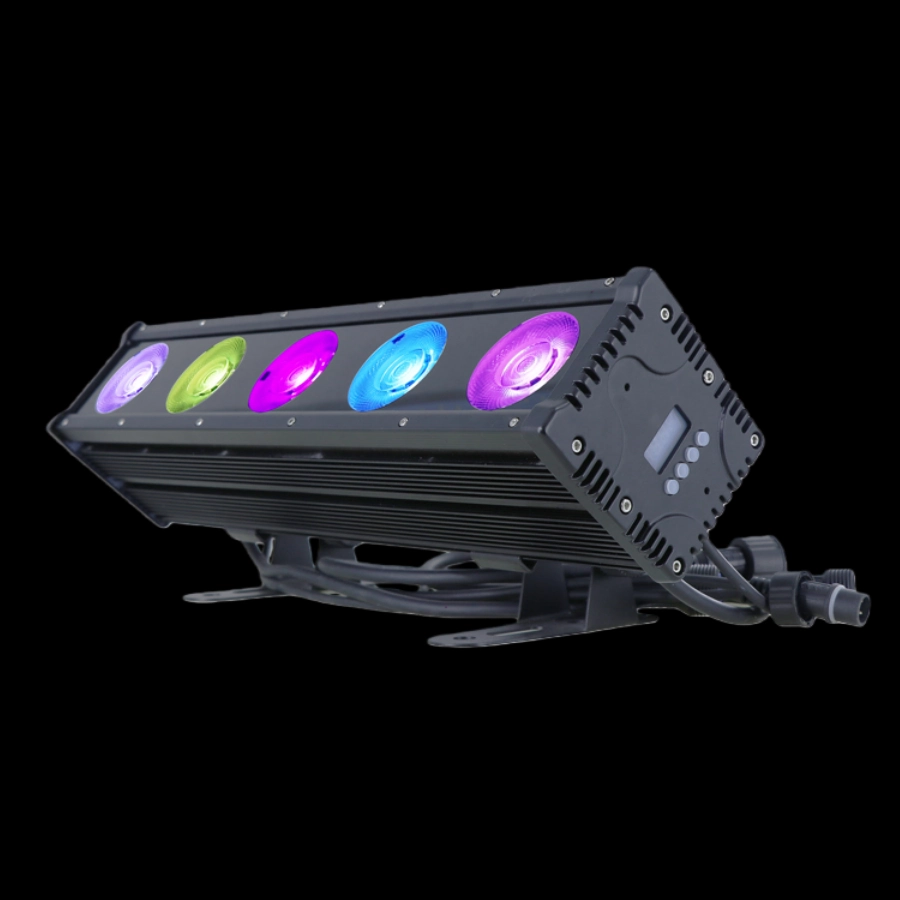
The Outdoor 5x45W COB Pixel BAR is a high-performance outdoor COB pixel light strip, equipped with five 45W RGBW four-in-one COB LEDs, each of which can be independently controlled, resulting in smooth color transitions and abundant brightness. It is IP65 protected against wind, rain, and dust, and supports DMX512/RDM/master-slave control, making it suitable for creative lighting designs in scenarios such as cultural and tourism landscape lighting, dynamic lighting of building facades, and outdoor stage effect lighting.
If you have any comments or good suggestions, please leave us a message, later our professional staff will contact you as soon as possible.
Lighting Innovators
Uplus Lighting is a leading integrated company specializing in R&D, design, production, and sales of stage lighting solutions.
 Scan QR Code
Facebook
Instagram
YouTube
VK