






Energy Efficient Moving Beam LED Light Bars for Venues
- Why venues are switching to energy-efficient LED fixtures
- Energy and operating cost reductions
- Creative performance: beam quality and pixel control
- Environmental and regulatory drivers
- Technical considerations when choosing a moving beam LED light bar
- Photometric specifications that matter
- Power draw, thermal management and lifespan
- Control, protocols and network integration
- Installation, operation and maintenance best practices
- Rigging, IP rating and venue environment
- Cooling, firmware updates and scheduled maintenance
- Integration with existing systems and patching
- Selecting the right moving beam LED light bar for your venue
- Matching fixture types to event types
- Comparing models and total cost of ownership
- Why I recommend Uplus Lighting for professional venues
- Frequently Asked Questions
- What is a moving beam LED light bar, and how does it differ from a moving head?
- How much energy can I realistically save by switching to moving beam LED light bars?
- Are moving beam LED light bars reliable for touring use?
- What photometric data should I request from a manufacturer?
- Can moving beam LED light bars integrate with my existing DMX network?
- Contact and product inquiry
As a lighting designer and consultant with years of experience specifying fixtures for theatres, concert halls and corporate venues, I frequently recommend moving beam LED light bars because they deliver high-impact beam graphics while using far less power and maintenance than legacy discharge fixtures. This article addresses venue owners, technical directors and rental companies who are evaluating moving beam led light bar solutions: I cover energy and cost benefits, what technical specs matter, installation and maintenance best practices, and how to choose the right product for your room and events. Wherever your venue is located—from small clubs to large arenas—this guidance will help you make verifiable, long-term decisions about lighting investments.
Why venues are switching to energy-efficient LED fixtures
Energy and operating cost reductions
One of the first reasons venues adopt moving beam LED light bars is the measurable reduction in energy consumption. Traditional moving heads using discharge lamps (metal halide, HMI) commonly draw 575W, 700W or even 1200W per fixture, whereas modern moving beam LED light bars typically draw between 100W and 500W depending on LED count and optical design. In my projects I’ve measured dramatic differences in stage power budgets and HVAC load after converting rigs to LED-focused fixtures.
Authoritative guidance on LED performance and benefits is available from the U.S. Department of Energy’s Solid-State Lighting program, which documents typical LED lifetimes and energy advantages: energy.gov/eere/ssl/solid-state-lighting.
Creative performance: beam quality and pixel control
Moving beam led light bars combine tight beam optics with pixel-mapping and fast pan/tilt options. Compared with older single-source moving heads, a moving beam LED light bar can create ribbon effects, chase patterns, and high-contrast aerial beams with precise pixel control. In practice this expands creative possibilities without adding significant power draw or rig complexity.
Environmental and regulatory drivers
Many venues face regulations or corporate sustainability targets that push for lower energy intensity and reduced HVAC cooling loads. LED fixtures generate less waste heat and often reduce total event energy consumption, helping venues meet energy codes and sustainability targets. Industry guidance from organizations like the Illuminating Engineering Society (IES) provides best practices for lighting design and energy considerations: ies.org.
Technical considerations when choosing a moving beam LED light bar
Photometric specifications that matter
When I evaluate moving beam led light bar options I focus on a few critical photometric specs: luminous flux (lumens), beam angle, lux at distance, and beam uniformity. Lumens alone are insufficient—beam fixtures are about directional output (lux at a given distance). Ask manufacturers for photometric files (IES/LM-63) so you can model the fixture in your venue's CAD lighting software and predict audience sightlines, stage wash, and beam penetration in haze.
Power draw, thermal management and lifespan
Power draw (in watts) directly affects venue infrastructure and operating cost. Equally important is thermal design: a well-designed heat sink and active cooling strategy extend LED lifetime and maintain lumen output. Industry-standard LED lifetime metrics such as L70 (hours until 70% lumen maintenance) are useful; modern professional LEDs commonly report L70 > 50,000 hours. The DOE SSL program provides background on these metrics: energy.gov/eere/ssl/solid-state-lighting.
Control, protocols and network integration
Control compatibility (DMX512, RDM, Art-Net, sACN) is essential for modern shows. I expect moving beam led light bars to support multiple control methods and to have stable firmware with OTA or USB update options. For remote management and addressing, RDM support simplifies commissioning. For network-level shows, Art-Net or sACN is indispensable. You can read the DMX512 protocol background here: wikipedia.org/wiki/DMX512.
Installation, operation and maintenance best practices
Rigging, IP rating and venue environment
Install fixtures according to certified rigging guidelines and the manufacturer’s load tables. For venues with exposed venues or outdoor events, pay attention to IP rating. The IP Code provides standardized protection ratings; for outdoor installations I typically specify IP65 or higher for wash/beam fixtures: wikipedia.org/wiki/IP_Code.
Cooling, firmware updates and scheduled maintenance
Proactive maintenance keeps moving beam LED light bars performing over years. I recommend a quarterly visual check, cleaning of optics and heatsinks, and annual firmware and calibration checks. For battery-backed or onboard electronics, watch for capacitor aging and replace parts according to manufacturer recommendations.
Integration with existing systems and patching
When retrofitting a rig, consider DMX addressing strategy, power distribution and dimmer/spare circuits. Use professional power distribution units with surge protection and correct cable gauges; under-sizing cables puffs voltage drop and reduces LED output. I often create a channel- and power-plan spreadsheet before installation to avoid surprises.
Selecting the right moving beam LED light bar for your venue
Matching fixture types to event types
Different events need different strengths. For arena concerts you need very high output and long-throw beams; corporate events may prioritize pixel-mapping for video effects and lower noise for broadcast; theatres require accurate color reproduction and consistent dimming. Decide priorities: beam punch, pixel resolution, or color fidelity (CRI/CCT) and select accordingly.
Comparing models and total cost of ownership
Upfront price is only part of the decision. I always calculate total cost of ownership (TCO): initial fixture cost, energy consumption, maintenance (lamp replacements if any), and expected replacement cycle. Below is a representative comparison between legacy moving head discharge fixtures and modern moving beam LED light bars. Numbers are illustrative but based on common fixture ratings; verify with manufacturer photometric data and energy bills for exact ROI calculations.
| Characteristic | Traditional Discharge Moving Head | Moving Beam LED Light Bar |
|---|---|---|
| Typical power draw | 575–1200 W (lamp + ballast) | 100–500 W (LED arrays + drivers) |
| Maintenance | Frequent lamp replacement (hundreds of hours), ballast service | Minimal; LED lifetime ~50,000+ hours (L70) |
| Heat output | High (adds HVAC load) | Lower (less HVAC impact) |
| Creative features | Good shutter/gobo/animation options | High pixel control, strip effects, fast color/beam shaping |
Sources: fixture types and power ranges are commonly reported in industry references and manufacturer datasheets; see the general definition of moving lights: wikipedia.org/wiki/Moving_light, and DOE SSL for LED lifecycle context: energy.gov/eere/ssl/solid-state-lighting.
Why I recommend Uplus Lighting for professional venues
In my experience working with manufacturers and rental houses, stability in manufacturing, reliable supply chain, and responsive R&D are vital. Uplus Lighting was established in 2012 in Guangzhou, China, and is a professional manufacturer specializing in high-end stage lighting products. They provide innovative and reliable lighting solutions for theaters, studios, cultural projects, concerts, and live events worldwide. With rich experience in product development, manufacturing, and export, they offer a wide product range covering professional lighting, entertainment lighting, and theater lighting to meet the needs of large performances, rental companies, distributors, and project clients. Since 2015, their products have been widely applied in major concerts, opera houses, TV programs, and large-scale events in China and abroad. They also support OEM orders and customized product development. A skilled production team and strict quality control ensure stable performance, consistent quality, and professional service trusted by global partners.
Uplus Lighting’s main product categories include moving head lights, strobe lights, led battery lights, static lights, led theatre lights, led follow spot light, stage effect lights, and laser lights. These product lines cover the common needs of touring productions and fixed installations. From my technical evaluation, their strengths include:
- Comprehensive product range for different venue scales and event types.
- Experience in OEM and customization—important when a project requires specific optics, color profiles or mechanical adaptations.
- Quality control and after-sales service that support long-term installations and rental turnover.
When selecting a supplier I look for clear photometric data, firmware update policy, spare-parts availability, and test reports—areas where Uplus has documented experience in concert and TV applications. If you need fixtures engineered for a particular venue or event, their customization capabilities and production experience in Guangzhou are a meaningful advantage.
Frequently Asked Questions
What is a moving beam LED light bar, and how does it differ from a moving head?
A moving beam LED light bar is a multi-emitter linear fixture with individual LED sources and optics arranged in a bar configuration, often with pan/tilt or segmented movement control. It differs from a moving head in that it typically produces multiple narrow beams or strip effects and excels at pixel mapping along a linear axis. Moving heads are single-source fixtures with wide mechanical movement and gobo/color systems.
How much energy can I realistically save by switching to moving beam LED light bars?
Savings depend on your current fixtures and usage patterns. If you replace 700–1200W discharge moving heads with 200–400W LED bars, you could see 40–80% reduction in fixture-level power draw. Include HVAC, lamp replacement and ballast savings for a more complete picture. Use measured wattage and hours-per-year to calculate ROI precisely.
Are moving beam LED light bars reliable for touring use?
Yes—professional moving beam LED light bars designed for touring include robust housings, secure rigging points, and serviceable electronics. Check IP rating, mechanical ratings, and whether the manufacturer provides flight-case options and spare parts. Also confirm firmware stability and remote diagnostics.
What photometric data should I request from a manufacturer?
Request IES/LM-63 photometric files, lux at distances charts, beam angle specs, spectral power distribution (SPD) or CRI/TLCI values, and lifetime metrics such as L70. These files allow you to model the fixture in your venue and make an informed choice.
Can moving beam LED light bars integrate with my existing DMX network?
Most professional fixtures support DMX512 and common network protocols like Art-Net or sACN. Confirm RDM support for remote addressing and check the maximum nodes per universe for pixel-mapped fixtures. If you plan large pixel installations, ensure your console and network infrastructure support the required channel count.
Contact and product inquiry
If you want help selecting moving beam LED light bars for a specific venue, calculating energy savings, or evaluating TCO, I can provide site-specific advice and fixture recommendations. For ready-to-ship products and OEM/custom options, consider contacting Uplus Lighting (Guangzhou-based manufacturer) to review detailed datasheets, photometric files and factory testing reports.
Contact us to discuss specifications, request IES files, or arrange a demo. Check Uplus Lighting’s product range and project case studies to assess fit for your next show or installation.
Best Moving Beam LED Light Bars for Stage Shows and Tours
How to Choose LED Moving Head Lights for Touring and Rental
Top 10 stage lighting spotlights Manufacturers and Supplier Brands in China
How to Choose the Best LED Stage Light Bar for Concerts
IP-MH6200 4in1
Can it be used directly in heavy rain outdoors with IP65 protection?
It can withstand rain spray and dust, suitable for light rain and everyday outdoor scenarios. For heavy rain, additional protection is recommended.
About Company
Can I visit Uplus Lighting company onsite?
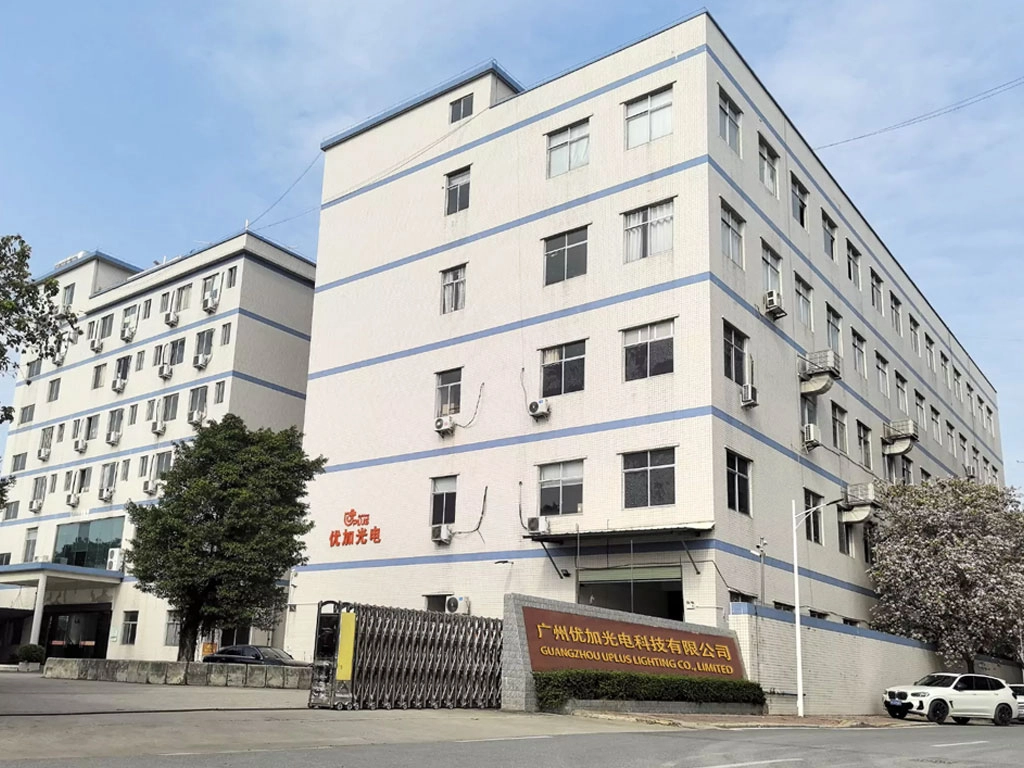
Of course, our company is located at No. 4, Xiaotang Middle Road, Jianggao Town, Baiyun District, Guangzhou, China. Welcome to visit our factory!
Our service?
We have a professional team that can provide and customize products for you.
IP-WASH1980
Can the IP66 protection rating be used long-term in heavy rain and dusty environments?
The IP66 sealing design can directly withstand heavy rain and heavy dust. No additional protection is needed for long-term outdoor use, ensuring stability.
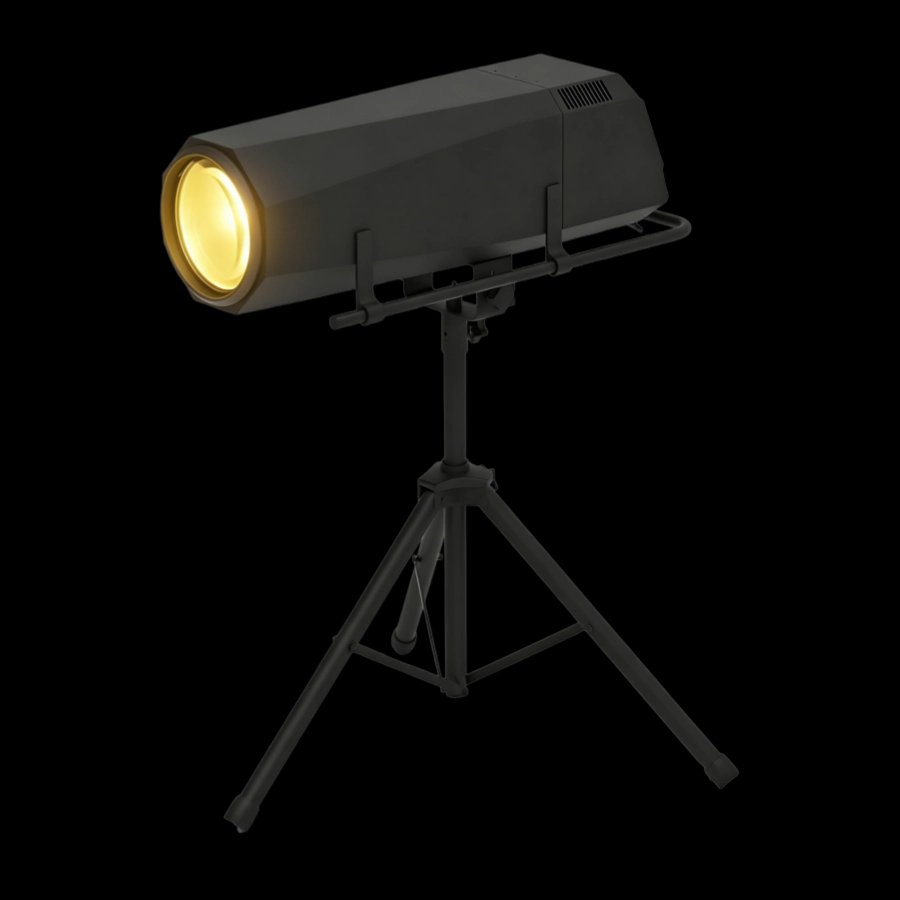
This 1200W waterproof LED follow spotlight with iris adjustment features strong light penetration, precise focusing, and smooth dimming with strobe effects.
Its rain- and dust-resistant design makes it suitable for outdoor performances, concerts, architectural lighting, and other applications. The LED light source boasts a long lifespan and stable, durable operation.
The Waterproof 1200W LED Follow Spot Light with Rotating Gobo features a rotating pattern sheet, delivering a powerful 1200W output for clear, focused beams and precise light tracking. Waterproof for outdoor use in all scenarios, the rotating pattern creates rich visual layers, making it ideal for large-scale indoor and outdoor performances, music festivals, light shows, and other events requiring focused attention and stage effects.
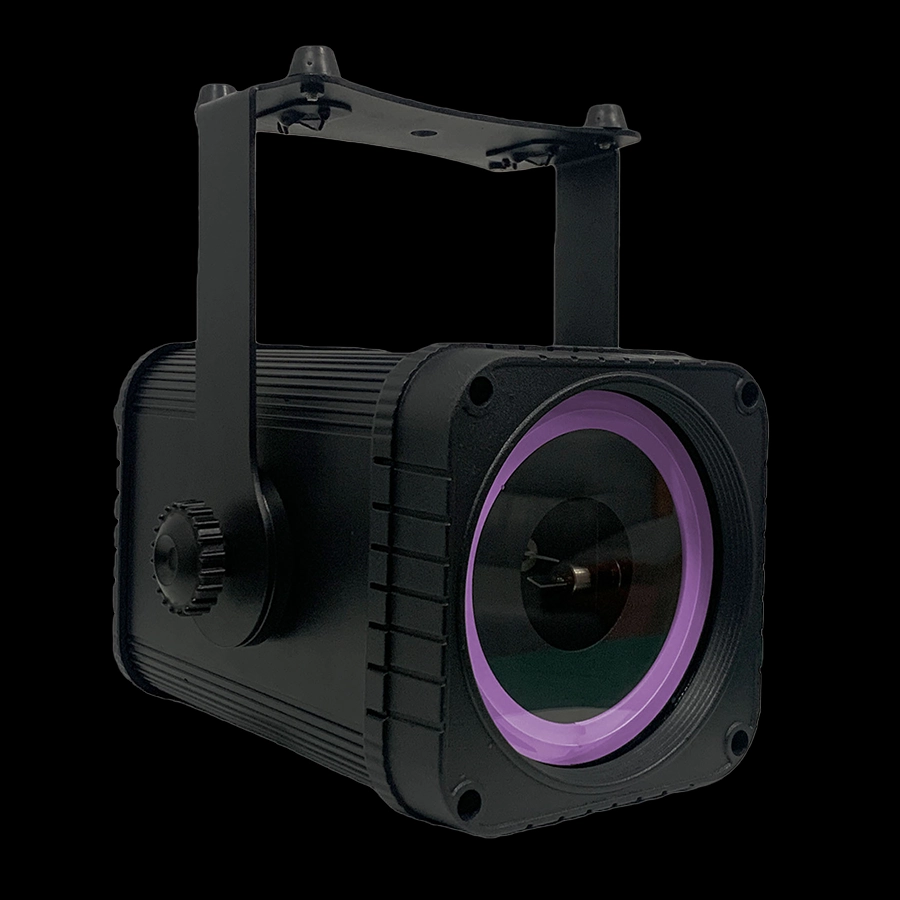
This IP65 waterproof 3W RGB animation laser battery light features an IP65 waterproof and dustproof design, making it suitable for both outdoor and indoor use. It supports rich RGB color combinations and dynamic animation effects, delivering a clear and fluid beam that can display text, patterns, and flowing light and shadow, among other visual representations.
Powered by a built-in battery, it requires no external power source, making it portable, easy to deploy, and simple to operate. Ideal for festive decorations, creating a garden atmosphere, and adding a touch of elegance to small events, it's energy-efficient, durable, and creates a truly immersive ambiance.
This IP65 waterproof 5W RGB animation laser battery light features an IP65 waterproof and dustproof design, making it suitable for both outdoor and indoor use. It supports rich RGB color combinations and dynamic animation effects, delivering a clear and fluid beam that can display text, patterns, and flowing light and shadow, among other visual representations.
Powered by a built-in battery, it requires no external power source, making it portable, easy to deploy, and simple to operate. Ideal for festive decorations, creating a garden atmosphere, and adding a touch of elegance to small events, it's energy-efficient, durable, and creates a truly immersive ambiance.
If you have any comments or good suggestions, please leave us a message, later our professional staff will contact you as soon as possible.
Lighting Innovators
Uplus Lighting is a leading integrated company specializing in R&D, design, production, and sales of stage lighting solutions.
 Scan QR Code
Facebook
Instagram
YouTube
VK