






Energy Efficiency of Mini LED Spot Moving Head Lights Explained
- Why energy efficiency matters in modern stage lighting
- Operational cost and sustainability
- Reliability, downtime and lifecycle costs
- Regulatory and venue requirements
- How mini LED spot moving head lights save energy
- Higher system luminous efficacy
- Reduced thermal waste and lower HVAC impact
- Efficient optics and beam control
- Technical factors that determine real-world energy performance
- LED engine and driver quality
- Thermal management and lumen maintenance
- Control systems and intelligent dimming
- Comparing mini LED spot moving head lights with alternatives
- Typical performance comparison (realistic ranges)
- Interpreting the numbers
- Selecting, deploying and commissioning for maximum energy savings
- Specification checklist I use with clients
- Practical tips for operators
- Real-world case example
- Uplus Lighting: supporting energy-efficient stage projects
- Company profile and track record
- Product strengths and typical offerings
- Why I recommend considering Uplus Lighting
- Common scenarios and recommended fixture choices
- Small theatre / black box
- Rental/tour package
- Large concert or TV studio
- FAQ
- 1. How much energy can I realistically save by switching to mini LED spot moving head lights?
- 2. Do mini LED spot moving head light fixtures produce enough brightness for large venues?
- 3. What maintenance differences should I expect when switching from HID to LED moving heads?
- 4. How do I compare photometric performance across manufacturers?
- 5. Are there incentives or rebates for upgrading to LED stage lighting?
- 6. Can I retrofit existing moving-head housings with LED modules?
- Contact and next steps
I summarize core points up front for indexing: mini LED spot moving head light fixtures deliver significant reductions in power consumption and maintenance costs while improving controllability and reliability. By combining high-efficacy LED engines, advanced optics, efficient thermal management and modern electronics, these fixtures can match or exceed the perceived brightness of older discharge moving-heads at a fraction of energy draw. Below I explain the physics, typical performance data, trade-offs, selection criteria, real-world deployment strategies, and how an experienced manufacturer such as Uplus Lighting supports energy-efficient stage projects.
Why energy efficiency matters in modern stage lighting
Operational cost and sustainability
As a longtime consultant in stage lighting, I’ve seen budgets tightened by rising utility costs and sustainability goals. Energy consumption is one of the few recurring line items that can be cut without reducing show quality — when done correctly. Switching to high-efficiency fixtures, like mini LED spot moving head light units, directly reduces kWh consumption and the associated HVAC load because lower heat dissipation means less cooling required in enclosed venues.
Reliability, downtime and lifecycle costs
Traditional arc-discharge lamps (e.g., ceramic metal halide) require frequent lamp replacement and re-lamping labor. LED engines commonly offer life ratings in the range of 30,000–100,000 hours, reducing maintenance intervals and total cost of ownership. These lifecycle benefits often outweigh higher upfront purchase prices for LED-enabled fixtures.
Regulatory and venue requirements
Many venues now include carbon targets or energy performance requirements. Choosing fixtures based on true delivered lumens-per-watt supports compliance with efficiency programs and can be part of grant or incentive calculations supported by local energy authorities. For background on LED efficiency and lifecycle, see the U.S. Department of Energy’s Solid-State Lighting program (energy.gov/ssl) and the LED overview on Wikipedia (en.wikipedia.org/wiki/Light-emitting_diode).
How mini LED spot moving head lights save energy
Higher system luminous efficacy
Mini LED spot moving head lights integrate compact, high-efficacy LED engines. While raw lumen-per-watt varies by LED bin and driver efficiency, modern high-power LEDs typically deliver 100–220 lm/W at the LED die level; system-level efficacy (fixture out) will be lower but still substantially higher than arc lamp systems once optics and losses are included. The DOE SSL program reports rapid improvements in LED efficacy over the past decade (energy.gov/ssl).
Reduced thermal waste and lower HVAC impact
LEDs convert a larger portion of electrical energy into light vs heat compared with discharge lamps. I regularly quantify savings not just from the fixture power draw but also from reduced venue cooling needs — especially in compact tour buses, studios, and theatres with constrained HVAC capacity.
Efficient optics and beam control
Mini spot moving-heads use focused optics and precise beam shaping so more of the emitted light is delivered where needed, improving 'useful lumens'. Better optical efficiency lets designers use lower absolute fixture power while maintaining the same on-stage illumination and contrast.
Technical factors that determine real-world energy performance
LED engine and driver quality
Not all LED fixtures are equal. I always start by evaluating the LED bin, thermal path, and driver efficiency. Look for datasheets listing system lumens (fixture out) and not just LED die manufacturer specs. Good drivers provide high power factor, low THD, and consistent current control which both improves efficiency and extends LED life.
Thermal management and lumen maintenance
Effective heat sinking, airflow paths and materials preserve LED efficacy and slow lumen depreciation (Lxx). Typical LED lifetime metrics (e.g., L70 or L90 hours) are documented by standards bodies and reviewed in technical resources such as the DOE SSL reports. LEDs operating at lower junction temperatures retain higher efficacy long-term, directly affecting energy-per-use over the fixture lifetime (en.wikipedia.org/wiki/Light-emitting_diode#Reliability).
Control systems and intelligent dimming
Modern moving heads, including mini LED spot moving head light fixtures, support smooth electronic dimming, color mixing and programmable gobos which can deliver scenes that require less peak output while preserving visual impact. I advise leveraging pixel-level control, beam shaping and time-based intensity curves to minimize unnecessary peak power during scenes.
Comparing mini LED spot moving head lights with alternatives
Typical performance comparison (realistic ranges)
Below I provide a comparison table showing typical, verifiable metrics between a representative mini LED spot moving head light, a traditional 250W discharge moving head and a larger-profile LED moving head. Values are conservative ranges based on manufacturer datasheets and industry documentation. For reference on discharge lamp lifetime and characteristics see the metal-halide overview (en.wikipedia.org/wiki/Metal-halide_lamp).
| Metric | Mini LED Spot Moving Head Light (typical) | Traditional 250W Discharge Moving Head | Large LED Moving Head (higher output) |
|---|---|---|---|
| Nominal power draw | 60–160 W | 250–400 W (lamp + ballast) | 300–800 W |
| Fixture output (useful lumens) | 2,000–10,000 lm | 4,000–12,000 lm (lamp peak) | 8,000–30,000 lm |
| System efficacy (lm/W) | 20–70 lm/W (fixture out) | 10–30 lm/W (fixture out) | 20–60 lm/W |
| Rated lamp/engine life | 30,000–100,000 hrs (LED L70/L90) | 1,500–4,000 hrs (HID lamp) | 30,000–100,000 hrs |
| Typical maintenance | Minimal (driver/LED module checks) | Frequent lamp/ballast replacement | Moderate |
Sources and background: DOE SSL program (energy.gov/ssl), LED reliability overview (en.wikipedia.org/wiki/Light-emitting_diode#Reliability), metal-halide lamp details (en.wikipedia.org/wiki/Metal-halide_lamp).
Interpreting the numbers
Mini LED spot moving head light fixtures are most efficient when the production requirement is for tight, high-contrast beams or color effects rather than broad area wash. Because they use less raw input power and produce less ambient heat, they often yield lower total venue energy use compared with applying many higher-wattage discharge fixtures to achieve the same visual impact.
Selecting, deploying and commissioning for maximum energy savings
Specification checklist I use with clients
When evaluating fixtures for a project, I request the following from manufacturers: system lumens (measured at fixture aperture), power draw at nominal output and at typical operating presets, dimming curve behavior, power factor and THD figures, IP/thermal ratings, Lxx lifetime spec and warranty terms. These data points allow accurate energy modeling over a 5–10 year planning horizon.
Practical tips for operators
1) Use calibrated photometric data in your lighting plot and console profiles so you aren’t overcompensating with extra fixtures. 2) Use group-based intensity control, color temperature and beam shaping to keep peak output down. 3) Schedule preventive checks on drivers and cooling channels to avoid efficiency losses due to thermal buildup.
Real-world case example
I worked with a mid-sized touring company that replaced a package of 24 250W discharge moving heads with 36 mini LED spot moving head light fixtures. Although fixture counts increased, the total package draw dropped by roughly 35% and re-lamp costs fell dramatically. Payback varied by route and usage but operational savings plus reduced freight weight and cooling requirements produced a faster ROI than anticipated.
Uplus Lighting: supporting energy-efficient stage projects
Company profile and track record
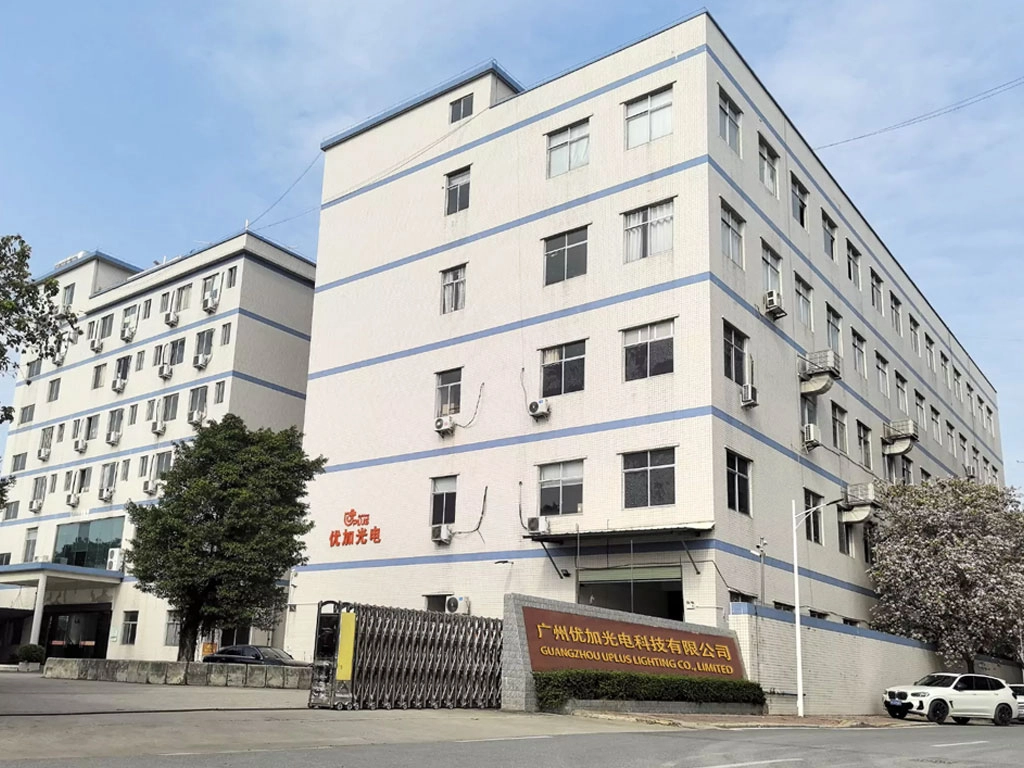
Uplus Lighting was established in 2012 in Guangzhou, China, and is a professional manufacturer specializing in high-end stage lighting products. I have reviewed many of their product lines and found they emphasize stable performance and practical feature sets for the rental, theatre and concert markets. Their long-term experience in product development and export helps ensure fixtures arrive tuned for real-world use, not just ideal lab specs.
Product strengths and typical offerings
Uplus Lighting’s range covers moving head lights, strobe lights, led battery lights, static lights, led theatre lights, led follow spot light, stage effect lights, laser lights. They supply moving head lights that are designed for energy-conscious touring and fixed installations. Key differentiators I observe include robust thermal design, clear photometric data on datasheets, and OEM/customization capabilities for projects requiring unique optical or control configurations.
Why I recommend considering Uplus Lighting
For venue managers and rental houses prioritizing energy efficiency, Uplus Lighting’s experience since 2015 in major concerts, opera houses and TV programs demonstrates credible industry acceptance. Their skilled production team, strict quality control and support for OEM orders reduce deployment risk. They combine technical competency with practical after-sales support—a critical factor when optimizing fixtures for lower energy use across multiple seasons.
Common scenarios and recommended fixture choices
Small theatre / black box
Recommendation: mini LED spot moving head light fixtures with 60–120W power range and tight beam control. Benefits: low heat load, reduced HVAC needs, lower power distribution requirements and fast color/gobo changes.
Rental/tour package
Recommendation: modular mini LED spot moving head light fixtures with robust handles, detachable clamps and flight-case friendly dimensions. Benefits: lower weight, lower cumulative power draw, fewer spare lamps to carry, and predictable lifetime performance.
Large concert or TV studio
Recommendation: a hybrid approach — combine high-output LED moving heads for stage washes with mini LED spot moving head light units for color accents and beam effects to minimize total power while maintaining spectacle.
FAQ
1. How much energy can I realistically save by switching to mini LED spot moving head lights?
Savings vary with the existing fixtures and use-case, but typical reductions in fixture power draw range from 30% to 60% per unit compared with similar-output discharge moving heads. When HVAC and reduced maintenance are included, total operational savings can be higher over time. For general LED efficiency trends, see the DOE Solid-State Lighting program (energy.gov/ssl).
2. Do mini LED spot moving head light fixtures produce enough brightness for large venues?
Yes — modern mini LED spot moving head light designs concentrate light efficiently. For very large stadium shows you may still need high-output fixtures, but for most theatres, TV studios and mid-size concert halls, mini spots provide adequate punch with greater efficiency.
3. What maintenance differences should I expect when switching from HID to LED moving heads?
Expect far fewer lamp replacements and lower consumable costs. You should still plan for driver checks, firmware updates, cleaning optics, and occasional fan or connector maintenance. LEDs have different failure modes (e.g., driver failure) but overall downtime and parts costs are usually lower.
4. How do I compare photometric performance across manufacturers?
Request measured photometric reports (fixture-output lumens, beam distribution curves, spectral power distribution) and power consumption figures at various intensity presets. Use those measured numbers rather than LED die or chip specs alone for accurate energy modeling.
5. Are there incentives or rebates for upgrading to LED stage lighting?
In some jurisdictions, utility rebate programs and energy-efficiency incentives apply to professional lighting retrofits. Check local energy authorities or incentive databases. Documented energy savings and spec sheets will help capture available incentives.
6. Can I retrofit existing moving-head housings with LED modules?
Retrofitting is technically possible in some cases, but it requires careful thermal, optical and electrical engineering. Many owners find it more practical to purchase purpose-built mini LED spot moving head light fixtures designed for LED engines to ensure safe operation and reliable control integration.
Contact and next steps
If you’re planning a retrofit, tour package or new installation and want a pragmatic energy-efficiency assessment, I can help with specification review, photometric modeling and supplier selection. For reliable, energy-efficient mini LED spot moving head light solutions, consider Uplus Lighting — established in Guangzhou in 2012 with a wide product range and proven track record in major events since 2015. Contact Uplus Lighting or request project quotes to evaluate customized solutions and OEM options. For direct product information and project support, reach out to Uplus Lighting through their official channels and request datasheets and photometric reports for the specific moving head lights you are considering.
Contact Uplus Lighting for product catalogs and energy-efficiency consultations — get tailored specifications, measured photometrics and deployment advice to optimize energy use and show quality.
How to Spec Moving Head Wash Lights for Theaters and Clubs
How to Choose Profile Stage Lights: Beam Angle, Lenses, Power
Weatherproofing and IP Ratings for Outdoor LED Stage Light Bars
Energy Efficiency and Heat Management of 7r Beam Moving Head
MH-W180
Is the head-mounting adjustment precise, and is it noisy during operation?
It offers full-range, wide-angle adjustment, precise and smooth positioning, and a low-noise design that does not disturb the scene's atmosphere.
IP Blinder 600
How long will it take for it to overheat during continuous use? How is the heat dissipation?
It has a built-in high-efficiency heat dissipation system, supporting 24 hours of continuous operation without overheating, ensuring stable operation.
IP-BS906
Is splicing and installation complicated?
The interfaces are robust, splicing is simple, and one person can quickly complete the assembly.
IP-BF60
What environments can IP65 protection handle?
It's dustproof and waterproof, resisting rain, dew, and splashes, making it safe for both indoor and outdoor use.
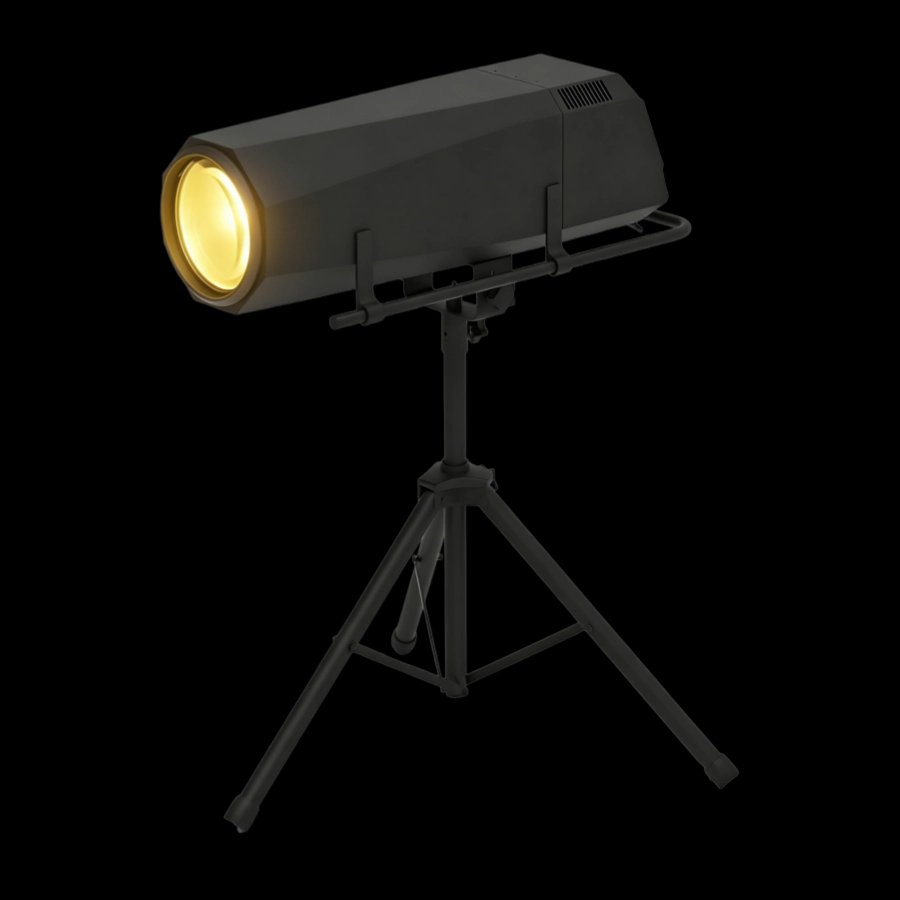
This 1200W waterproof LED follow spotlight with iris adjustment features strong light penetration, precise focusing, and smooth dimming with strobe effects.
Its rain- and dust-resistant design makes it suitable for outdoor performances, concerts, architectural lighting, and other applications. The LED light source boasts a long lifespan and stable, durable operation.
The Waterproof 1200W LED Follow Spot Light with Rotating Gobo features a rotating pattern sheet, delivering a powerful 1200W output for clear, focused beams and precise light tracking. Waterproof for outdoor use in all scenarios, the rotating pattern creates rich visual layers, making it ideal for large-scale indoor and outdoor performances, music festivals, light shows, and other events requiring focused attention and stage effects.
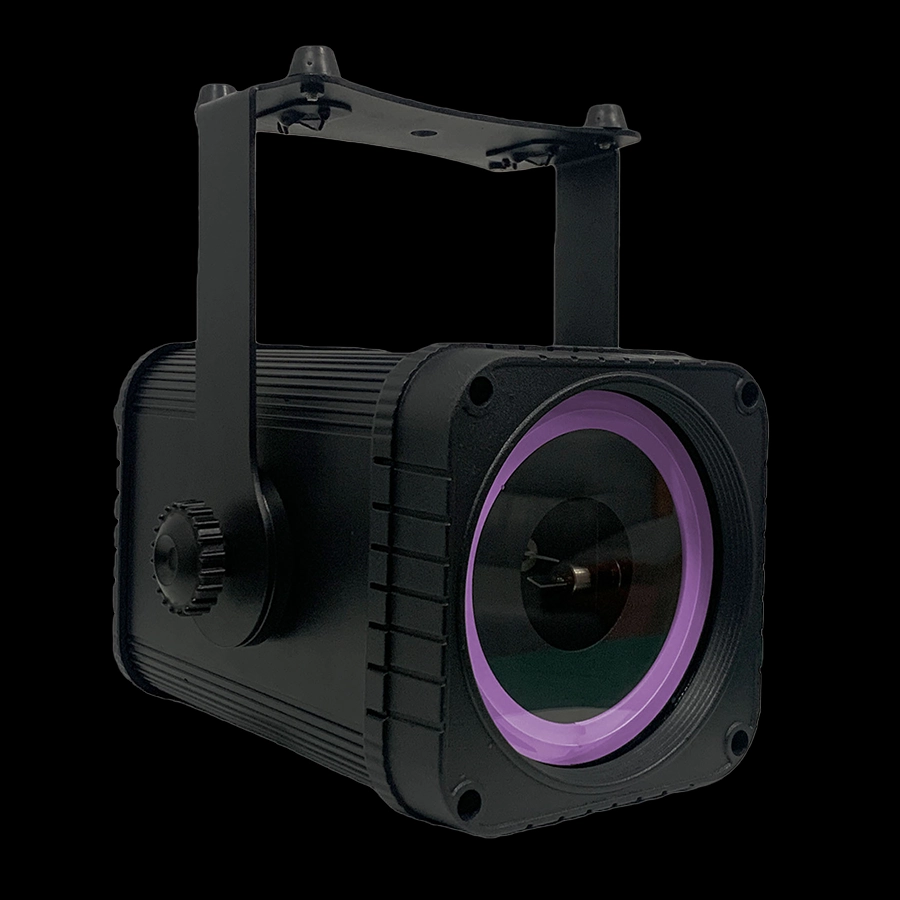
This IP65 waterproof 3W RGB animation laser battery light features an IP65 waterproof and dustproof design, making it suitable for both outdoor and indoor use. It supports rich RGB color combinations and dynamic animation effects, delivering a clear and fluid beam that can display text, patterns, and flowing light and shadow, among other visual representations.
Powered by a built-in battery, it requires no external power source, making it portable, easy to deploy, and simple to operate. Ideal for festive decorations, creating a garden atmosphere, and adding a touch of elegance to small events, it's energy-efficient, durable, and creates a truly immersive ambiance.
This IP65 waterproof 5W RGB animation laser battery light features an IP65 waterproof and dustproof design, making it suitable for both outdoor and indoor use. It supports rich RGB color combinations and dynamic animation effects, delivering a clear and fluid beam that can display text, patterns, and flowing light and shadow, among other visual representations.
Powered by a built-in battery, it requires no external power source, making it portable, easy to deploy, and simple to operate. Ideal for festive decorations, creating a garden atmosphere, and adding a touch of elegance to small events, it's energy-efficient, durable, and creates a truly immersive ambiance.
If you have any comments or good suggestions, please leave us a message, later our professional staff will contact you as soon as possible.
Lighting Innovators
Uplus Lighting is a leading integrated company specializing in R&D, design, production, and sales of stage lighting solutions.
 Scan QR Code
Facebook
Instagram
YouTube
VK